Elevate

On Sunday we kicked off a new series A Season Of Thanks looking at this verse:

Since you have been raised to new life with Christ, set your sights on the realities of heaven, where Christ sits in the place of honor at God’s right hand. Think about the things of heaven, not the things of earth.

Here’s the deal: If you elevate your thinking to positive things, your life will be more positive. The best place to start is thank-fullness = being full of thanks. Make it a habit in your life to find more things for which you can give thanks.

I searched the Twitterverse for some thoughts about elevated thinking…

Feel free to add your own in the comments below. Oh yeah, and come join us next Sunday for A Season Of Thanks part 2.

God Moments

Last week I was at the B2B (Business-to-Business) meeting in Cedar Springs. We were talking about events that bring people into the downtown area, like the Spook-tacular, at which we did our Light The Night carnival. The next item on the agenda was the upcoming Mingle With Kris Kringle event.

Out of the blue I was asked, “Hey, do you think you could setup a nativity scene?”

I wanted to say yes, but I was mulling over my response for a second. Someone else offered, “Yeah, just grab a couple of sheep and you’re good to go!”

<POW!> The proverbial light bulb went off, and I immediately said, “Yes! We’d be happy to do that!”

Right away I began texting a bunch of people in our church:

  • Can you sew some Middle Eastern first century costumes?
  • Can you build a manger?
  • Do you know where we can find some live animals?
  • How would you feel about playing an angel?
  • Have you ever considered playing the role of Joseph?

In a matter of just a few moments I got back a whole lot of Yeses. We’re under the gun to get everything done (we have to present this on December 3), but we’re going to make it happen.

Just imagine if I hadn’t been at that meeting … or if I hadn’t got so many yeses … or if I hadn’t wanted to take the risk … none of this may have happened.

I truly believe my steps are ordered by God. He places me in the right place at the right moment. So those moments are God moments where I get to say a wholehearted “Yes!”

When was your last God moment? How did you respond?

Take It Up A Notch

Listen to the podcast of this post by clicking on the player below, and you can also subscribe on AppleSpotify, or Audible.

King Josiah is widely regarded as one of the greatest reformers of Judah. He led a revival in Israel that led to the people cleaning out their idols and worshipping God in ways that hadn’t been seen since the time of King David.

This whole revival started with a Book. Not just any book, but the Book of the Law (the Bible).

When the king heard what was written in the book, God’s Revelation, he ripped his robes in dismay. And then he called for Hilkiah the priest, Ahikam son of Shaphan, Acbor son of Micaiah, Shaphan the royal secretary, and Asaiah the king’s personal aide. He ordered them all: “Go and pray to God for me and for this people—for all Judah! Find out what we must do in response to what is written in this Book that has just been found! God’s anger must be burning furiously against us—our ancestors haven’t obeyed a thing written in this book, followed none of the instructions directed to us.”

Josiah’s leadership was already stellar. The Bible describes Josiah this way: “He did what was right in the eyes of the Lord.” But 18 years into his reign as king, the Scriptures were rediscovered and his leadership went up a notch.

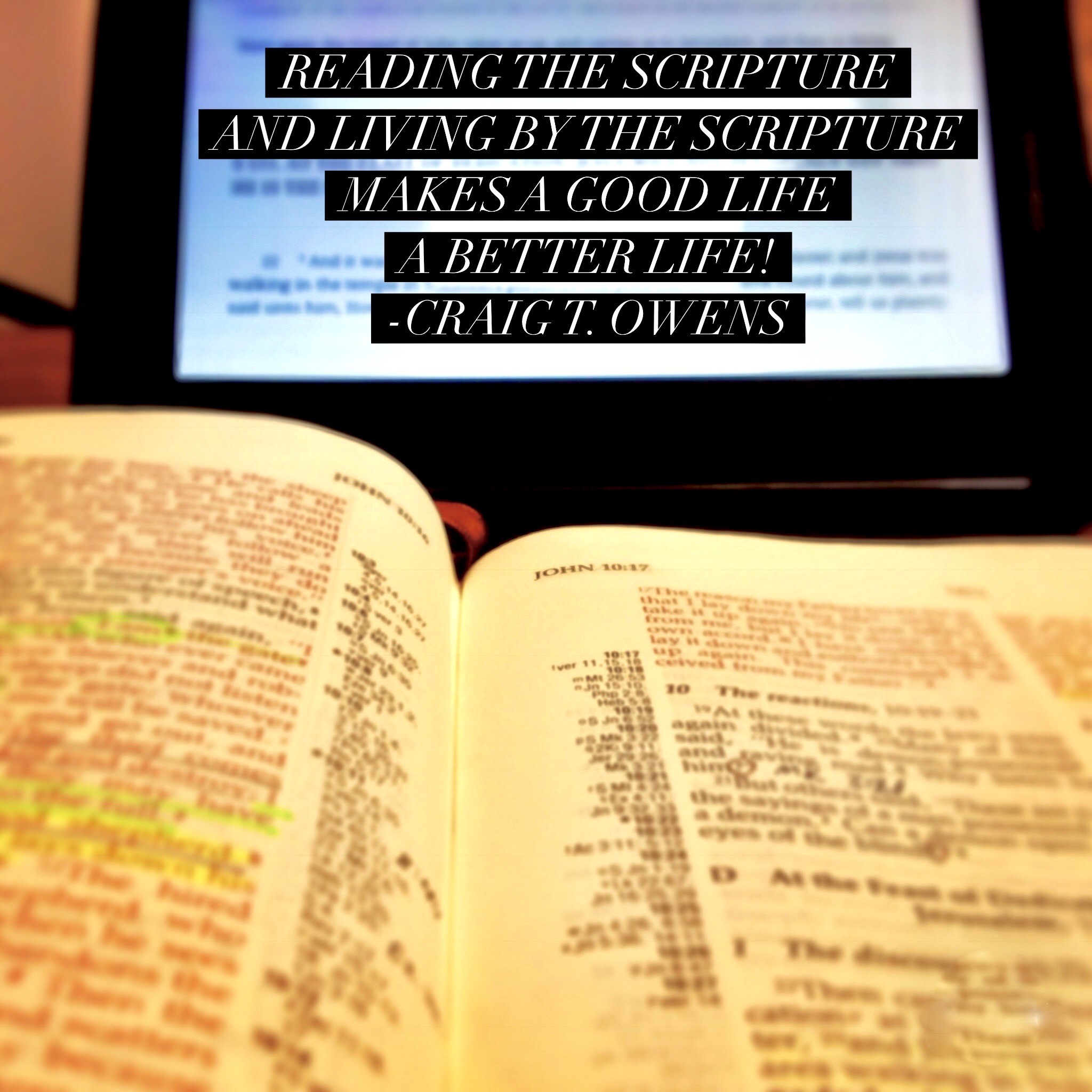
Reading the Scripture and living by the Scripture makes a good life a better life!

At the end of Josiah’s life, something is recorded about him that isn’t mentioned about any other king:

The prophet Jeremiah composed funeral songs for Josiah, and to this day choirs still sing these sad songs about his death. These songs of sorrow have become a tradition and are recorded in The Book of Laments.

Do you want to take your life up a notch? Get into God’s Word and let it get into you and change the way you think and live.

►► Would you please prayerfully consider supporting this ministry? My Patreon supporters get behind-the-scenes access to exclusive materials. ◀︎◀︎

Thursdays With Oswald—Work-In-Progress

This is a weekly series with things I’m reading and pondering from Oswald Chambers. You can read the original seed thought here, or type “Thursdays With Oswald” in the search box to read more entries.

Work-In-Progress

     If you are a worker whom God has sent, and have learned to live under His shadow, you will find that scarcely a day goes by without your Father revealing the need of further chastening. If any child of God is free from the goads of God, he is not in the line of the succession of Jesus Christ.

From Approved Unto God

The writer of Hebrews said the same thing

And have you forgotten the encouraging words God spoke to you as His children? He said, “My child, don’t make light of the Lord’s discipline, and don’t give up when He corrects you. For the Lord disciplines those He loves, and He punishes each one He accepts as His child.”

It’s true: No pain, no gain. God will continue to work on you and me as His child.

Spread It Out

What do you do when you get bad news? Scientists know that when we hear bad news, our stress hormone cortisol immediately surges into our bloodstream. This hormone unleashes a bunch of other things in our bodies: blood pressure goes up, heart rate increases, pupils dilate, sugar stores are released. In other words, your body prepares for action.

What about your brain? What does it do? Immediately your brain starts searching for a way to cope with the stress of the bad news. And the typical response is to return to well-worn pathways. In other words, do what I’ve always done before.

So perhaps the question is better stated: What have you done before when you got bad news?

  • Did you sulk?
  • Did you cry or get angry?
  • Did you get paralyzed, not knowing what to do?
  • Did you call a friend?
  • Did you just shake your head and try to ignore it?
  • Did you spread it out before God?

Huh? Judah’s King Hezekiah got some very bad news from a very mean general named Sennacherib. What did he do? He did what he had done before…

Hezekiah received the letter from the messengers and read it. Then he went up to the temple of the LORD and spread it out before the LORD…. “Give ear, LORD, and hear; open Your eyes, LORD, and see; listen to the words Sennacherib has sent to ridicule the living God.”

Hezekiah had the same physiological and psychological responses that you and I would have when facing such a huge threat. But his first response was his well-worn response. He did what he had always done before with bad news: he spread it out before the Lord.

We can start making a new pathway for our brain to follow. Instead of fight-or-flight, or ignoring, or paralysis, or calling a friend—take it to God and spread it out there. He knows your situation better than anyone else and He wants to help you.

Start making new neural pathways in your brain today by taking everything to God—even the so-called “little” things—so that when the really bad news comes, your brain will tell you to do what you always do: spread it out before the Lord.

Thinking About And

These are my “raw notes” from The And Conference. If anyone wants to add on, modify, or delete, please feel free.

Alan Hirsch

Cultural differences – imagine numbers 1-4 as barriers to even starting a conversation (m1-m4).

In western culture we’re pushing more toward m3 or m4. In fact, the gap between m0 and m1 is shrinking.

Our idea of church is 17 centuries old (tracing back to Constantine), so there is a HUGE assumption we’re making when we think “church.” From m0 to m1 is the church’s current domain. No cultural barriers have to be crossed. However, much of culture is in m3-m4.

If we act attractionally in a missional setting, we’ve extracted them from their “m” zone. New believers in 3-5 years after becoming a Christian will have no non-Christian friends. We’ve extracted them!

Most people feel good about God, Jesus, and spirituality. However, there are negative feelings about “church.” Most people remember or focus on only three things in their “perceived set.” Marketers try to get their product/service in that perceived set.

Jesus, yes; church, no. Kind of like iPhone, yes; AT&T, no. But now the Apple logo on the iPhone reminds people of AT&T.

The dechurched have been inoculated against the church.

Dream out-loud at high volume about what the church could be!

“As the Father sent Me, so I send you.” How did the Father send Jesus? He stepped into culture, He lived in the culture and spoke to people out of culture. Church should come out of mission, not mission out of church. Just like the Acts church didn’t require Gentile believers to adopt Jewish practices. So we don’t plant churches, we plant the Gospel and let the church grow out of that.

The Bible doesn’t know the difference between “clergy” & “laity.” Why do we persist in putting people in these categories?

————–

“Apostolic” is the Greek version of the Latin “missional.” We need an apostolic environment to take movements to a place of spontaneous expansion. The apostle is a catalyst to growth.

Paul starts churches which start churches = movement → expansion.

Paul then teaches. He is the custodian of the movement’s DNA. He is also the guardian of the purity of the DNA.

An “apostle” is not an apostle if it’s a top-down leadership. An apostle is a servant leader.

Ephesians 4

  • vv. 7-11  APEST = apostle, prophet, evangelist, shepherd, teacher.
  • vv. 12-16  maturity—cannot get to maturity without all of APEST. Most denominations focus just on S & T. “Shepherd” is only used once in the New Testament, and the New Testament says, “Not many of you should presume to be teachers.”

Leadership is a calling within a gifting. APEST gifts are given to everyone, but some are called to be leaders within their gifting.

APEST gifts carry more of a vocational weight. Gifts of the Spirit are more of empowerments for the moment. The gifts of Romans 12 are motivational/paradigmal gifts.

———-

Re-Jesus = a renewed focus on full Christology: most of our focus is on the Cross, resurrection & return. We need to include Incarnation & His life among humanity. We make Him Savior, but not Lord.

Re-mission = who God is must determine what the church does.

Re-organize = missional churches are responsive to the world around us. Our churches must be organized to be nimble.

Tim Stevens

Every new term that comes out tells us we’re doing church wrong. So Tim says “Missional schmissional!” and “Attractional schmactional!”

Most churches are defined as “Come to us.” But this only works for <40% of people. People are still “spiritual,” but they don’t like “church.”

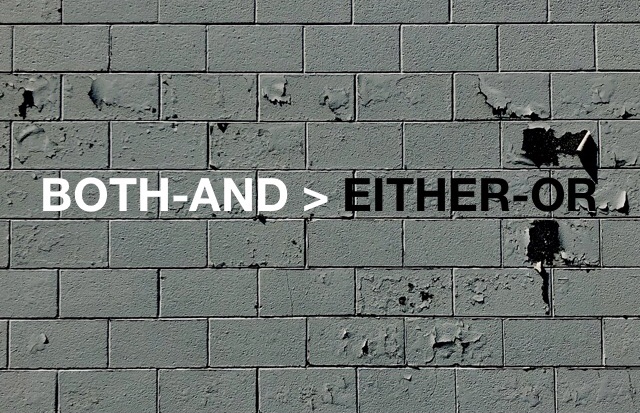
Do we attract the unchurched 60% OR missionalize the churched 40%. How about BOTH-AND? We have to help the 40% reach their 60%.

We can still say “Come and see,” but emphasize “So that” = “Come and see what Jesus does so that you can tell others.”

There is no one-plan-for-all method for churches to do BOTH-AND. Each church must discover what works for them in their community.

Jason Miller

Linear thinking is how our brains process info. That’s why telling stories with a plot twist is so powerful. Like when Jesus said, “You have heard… but I tell you….” Twists get people’s attention.

People in the world have had their imaginations devastated by culture who says love is conditional. When we talk about God’s unconditional love, it’s a plot twist they never imagined.

We have a mandate to do something beautiful. Beauty awakens imaginations to see God’s love. Like sympathetic vibrations: God’s beauty begins to resonate and awaken imagination.

“The church is God’s imagination to the world.”

Dave Ferguson

What can we do for those who won’t come to church?

Missional people (micro level) + Multiplying churches (macro level) = Missional movement

How to create a missional culture: (1) Ordain every member; (2) Lead with a “Yes”; (3) Make heroes of everyday people.

Saying “Yes” doesn’t mean funding the project or even announcing the project. It just means giving people permission to reach out.

Business paradigm that makes money but not movements: say “No” to anything that you haven’t fully researched.

Matt Carter

We can’t have “professional Christians” that do ministry & those that only receive ministry.

Christianity today needs to look like what we see in Acts.

What if instead of attracting new people to church, we released current attendees to do ministry?

What if it wasn’t “come and see” but “go and do”?

Small group success = seeing & addressing a need in the community. “Nothing builds community better than mission. When we aim at community, we may get it. But when we aim at mission, we get that and community too.”

Need to share success stories and failure stories. This creates a culture that let’s everyone know that it’s okay to try.

Hugh Halter

We need to redefine “disciple” because now we define them as “church attendee.”

Two categories: missional and sojourners. Missional people prepare the way for sojourners to become missionals by making the Kingdom of God tangible.

A better definition of disciple is apprentice. An apprentice is learning by doing; they’re hands-on.

Second decision environment = people choose to get more involved. For example, Sunday morning attendance is a first decision; a small group is a second decision.

Barriers to discipleship: individualism, consumerism, materialism. To overcome these barriers, Jesus put people in a place of tension. This typically can’t take place in a first decision environment.

Other ways to address these barriers: modeling, confrontation, action/reflection.

Jesus wasn’t interested in followers, but in disciples.

Rob Wegner

“Every member is a minister.” —Mark Beeson

Attractional churches use centripetal force to bring people in. Missional churches use centrifugal force to send people out.

Attractional is embedded inside missional. Attractional is the seed for missional. As Hirsch said, it’s more “extractional.”

Attractional seeds → Missional community → Extractional movement

Do we have to see church as institution and church as movement as opposites? Or co-existing? Genius of BOTH-AND!

Private Good Deeds

Betsy and I went to school conferences and discovered that our youngest son has been staying after school—by his own choice—to help his teacher tidy up the classroom. Are you kidding me?! This is the first I had heard of this. Wow, am I one proud Dad!

I’m not sure if he knows this verse or not, but Brandon is living out what Jesus said:

Don’t do your good deeds publicly, to be admired by others, for you will lose the reward from your Father in heaven.

He’s serving just because he wants to serve. I didn’t know about it, but his Heavenly Father did. Thank you, Brandon, for giving me this wonderful example of servant leadership!

Attractional Or Missional?

Yesterday was a full day at The And Conference. I’m so glad I came to this! All day long I had so many thoughts swirling through my head and emotions tugging at my heart.

The idea behind And comes from the conundrum of The Tyranny of Either-Or versus The Genius of Both-And. Is there a way for two seemingly opposing ideas to coexist, or even to enhance each other? In the case of this conference, the both-and/either-or tug is between attractional churches and missional churches.

Yesterday I listened to profound thinkers like Alan Hirsch, Rob Wegner, Hugh Halter, Matt Carter, and Dave Ferguson. Many of them shared their personal tension with the attractional/missional models. There were so many other terms that were thrown around too.

But sitting in my hotel room last night debriefing, I began to think about Jesus. He is the only One to ever balance both-and perfectly.

  • He both attracted and repelled people.
  • He both called and sent.
  • He was both in the church and in the community.
  • He was both religious and irreligious.
  • He spent time with both crowds and individuals.
  • He was both attractional and missional.

Of course, the Bible doesn’t use any of these terms—they’re all man-made—but Jesus embodied them all.

He embodied them.

He was Himself.

He is “I AM.”

That’s what I want: To be myself … be who God created me to be … be more and more conformed to the image of Jesus … be listening more attentively to the counsel of the Holy Spirit.

If I am myself, terms like missional and attractional will take care of themselves.

(By the way, I’ll be tweeting throughout the conference again today. Follow me on Twitter here, and search for the hashtag #and10.)

Lots Of Learning Opportunities

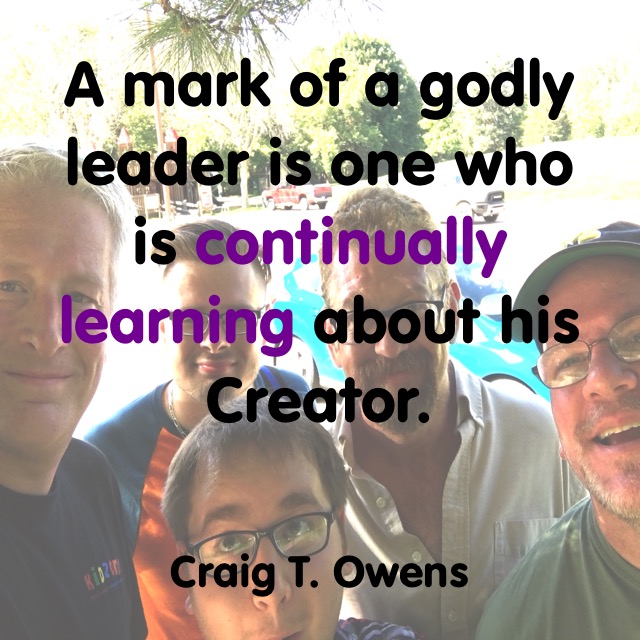
I love learning new things, listening to innovative ideas, and talking with other learners too. This weekend I’ll get to do a whole lot of this.

I’m heading to The Genius Of And Conference at Granger Community Church this morning. I love thinking about both-and when others are stuck on either-or. As an added bonus, I’m traveling and rooming with some innovative young leaders who are campus missionaries at Western Michigan University. I know we’ll have some great discussions around the topics we cover at the conference.

(By the way… for those of you who follow me on Twitter, I’ll be tweeting and blogging during the conference. The hashtag for the conference is #and10.)

Then our youth group is going to the Assembly of God Michigan District’s annual Youth Convention on Friday and Saturday. I love how fired up our youth get when they are worshipping, learning, and praying with their peers. Can’t wait to debrief with them when they return and let some of their passion rub off on me.

On Sunday we have a special guest speaker at Calvary A/G. Brad Leach is a dynamic young church planter. He planted a church in the metro-Detroit area, and just as it was really hitting its stride, he felt God calling him to leave Detroit and plant a new church in Philadelphia. I love that sensitivity to the Holy Spirit’s prompting, so I can’t wait to hear what word God has laid on Brad’s heart for our community. If you can, please come and join us this Sunday, November 7, at 10:30am.

I hope you are intentionally looking for opportunities to expand your horizons. As George Washington Carver noted, “How much of God are we missing because we don’t stop to listen to the many voices God uses to speak to us?”

Responding For Those Who Can’t

Do you know what empathy is? It’s not the same thing as sympathy. Sympathy is just wallowing with someone who is hurting, but empathy goes beyond that. Empathy is a compound word:

em- + -pathos = joined + feeling 

I feel what you feel, but I can respond like you should even when you think you can’t.

Sometimes people get paralyzed by their deep hurts, or crushing depression, or infuriating anger. Someone in sympathy feels the pain, the depression, the anger, but their involvement stops at the feeling stage.

Someone in empathy feels the hurt AND responds in an appropriately healthy way.

Check out what Paul wrote:

Who is weak without my feeling that weakness? Who is led astray, and I do not burn with anger? (New Living Translation)

When someone gets to the end of his rope, I feel the desperation in my bones. When someone is duped into sin, an angry fire burns in my gut. (The Message)

Paul took those feelings his friends and loved ones were experiencing and he turned them into positive action. This is challenging and desperately needed.

Sympathy is easy; empathy is hard work.

Sympathy keeps people paralyzed; empathy helps them move forward.

Sympathy enables people to remain unchanged; empathy gives people a healthy way to respond.

If you want to help your hurting, discouraged, or angry friend, don’t sympathize with her hurt, empathize to help her heal. By responding in a healthy way—a way she isn’t able to yet—and you will help her move to a place of wholeness.