Should We Listen To Critics?

Listen to the podcast of this post by clicking on the player below, and you can also subscribe on AppleSpotify, or Audible. 

Do you know this pair of cantankerous men from the Muppets? Statler and Waldorf sit in the balcony of the theatre and criticize everything that is happening on the stage. I mean everything! They have a good laugh at their barbs, but no one on the stage seems to find it humorous. 

Have you ever met people like this? How do you typically respond to their criticism? 

Unfortunately, those who are trying to do the right thing are often the targets of almost constant criticism. Abraham Lincoln said, “If I were to attempt to answer all the criticisms and complaints I receive, I would have no time for any other business.” 

President Lincoln was a great leader but he wasn’t without fault, so to certain extent we could expect a little bit of criticism from people who didn’t like his policies. But what about Jesus? It was prophesied about Him that He would be the target of criticism (Isaiah 53:3). 

(Check out all of the Scriptures in this post by clicking here.) 

Those out to get Jesus even criticized those who attended to Him. In Mark 14:1-5, they are criticizing a woman who poured perfume on Jesus out of her sincere desire to honor Him. Yet they spoke about her and her actions “indignantly” (v. 4), and they rebuked and criticized her (v. 5). The Greek word in this verse literally means he snorting of horses! 

Jesus stepped in to protect this God-fearing woman, “Why are you bothering her? Why are you criticizing this beautiful thing she had done for Me?” 

Notice that Jesus responded to the critics, but the woman did not respond. Does that mean that we never answer critics? Are we supposed to ignore them? 

First, let’s go back in time to the origin of the words critic and criticism. These words originally meant someone capable of giving a meaningful—perhaps even constructive or helpful—judgment. Think of a trained and skilled chef critiquing your recipe, as opposed to someone who cannot tell the difference between nutmeg and ginger. 

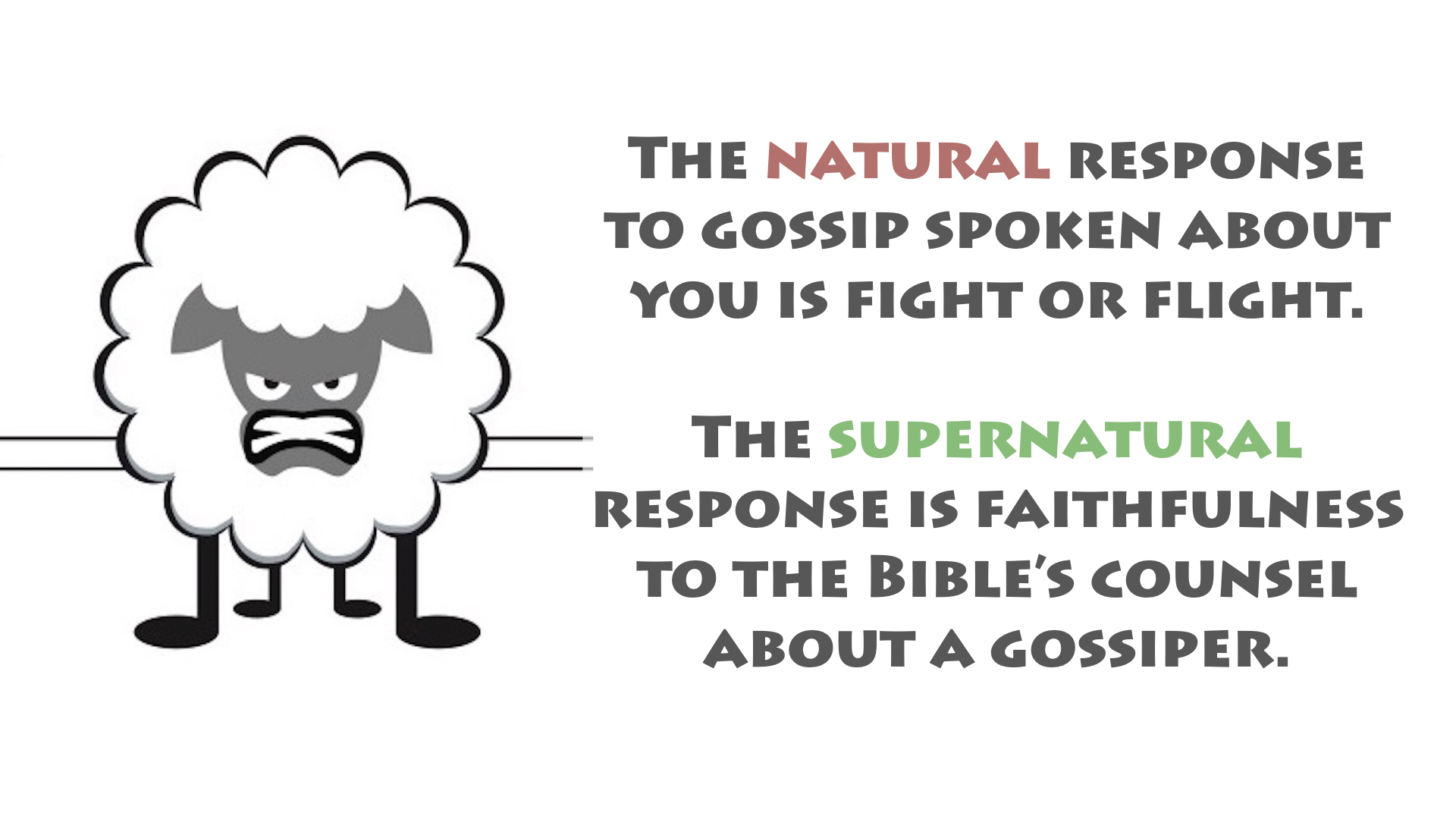
The natural response is to ignore all criticism. The supernatural response is prayerfully evaluate criticism. Solomon says there is such a thing as valid criticism (Proverbs 25:12). 

So who is a valid critic? 

(1) Someone who loves me (Proverbs 27:17; Ephesians 4:15). Paul loved Peter and respected his leadership role in the church, but he still criticized Peter when he messed up (Galatians 2:9, 11).  

(2) Someone who has experience or godly wisdom that we don’t yet have (Ecclesiastes 7:5). Micaiah had a word from God, even though King Ahab thought Micaiah simply didn’t like him (1 Kings 22:1-18). 

(3) Someone who wants to hurt me. Really!? Dick Brogden wrote, “The Lord uses critics to show us our own hearts, even if what they say is not fully true, informed, or even fair. There is almost always a germ of truth in what our critics (in their own pain and disappointment) shout at us. The wise [person] will humble himself and look for the truth embedded in every oppositional interaction.” As we saw previously from Psalm 26:2, when we hear words of criticism, we need to make it a matter of prayer. 

Jesus told the woman’s critics to “leave her alone” but He never defended Himself against the childish barbs (Isaiah 53:7; Matthew 27:13-14). I think we would do well to follow His example. So when criticized, take a deep breath, smile, hear them out, ask clarifying questions, and then say, “Thank you for sharing that with me. I’ll make this a matter of prayer.” 

They might accuse you, but you should turn it over to God (Psalm 109:4). 

The natural response is to respond all critics. The supernatural response is to respond like Jesus (see 1 Peter 2:21-23). 

Remember that quote from Abraham Lincoln we saw earlier? Here’s the rest of his quote—

“From day to day I do the best I can and will continue to do so till the end. If in the end I come out all right, then the complaints and criticisms and what is said against me will make no difference. But, if the end brings me out wrong, then ten angels coming down from heaven to swear I was right would still make no difference.” 

Ultimately, we are longing to hear Jesus say, “Well done.” If He cannot say that to us, does it really matter if everyone else praised us? But if Jesus says, “Well cone,” does it really matter the criticism others said about us? 

Let’s ask the Holy Spirit to help us respond supernaturally to our critics—listen prayerfully to ever critic, but only respond to them as Jesus did. 

If you have missed any of the other messages in this series When Sheep Bite Sheep, you can find them all here. And if you’re a pastor, be sure to check out my book When Sheep Bite. 

►► Would you please prayerfully consider supporting this ministry? My Patreon supporters get behind-the-scenes access to exclusive materials. ◀︎◀︎

Beware Of The Sneaky Bite

Listen to the podcast of this post by clicking on the player below, and you can also subscribe on AppleSpotify, or Audible. 

Check out a couple of ways I could greet you in this post:

  1. It’s great to see all of you today. I am really glad you stopped by my blog. 
  2. In fact, no one is as astute as you are. No one digs into the Scripture the way you do. There is no one else in the world that I would want visiting my blog today. 

What did I just do? I went from genuinely complimenting you to flattering you. I bit you. Flattery is a sneaky bite that we need to be aware of. 

A compliment is simply defined as an expression of praise or admiration. 

Flattery, on the other hand, crosses the line. It’s defined as trying to please someone by excessive or insincere praise. The reason why I call flattery a bite is because the flatterer is only thinking about himself, not about you. 

Flatterers are trying to get something for themselves. See how the rich young man tried to do this by flattering Jesus in Mark 10:17. The Amplified Bible brings out the man’s flattery more clearly: Teacher, You are essentially and perfectly morally good. 

(You can read all of the Scriptures I reference in this post by clicking here.)

This man was looking for the secret formula that would get him into Heaven, so he wasn’t complimenting Jesus but flattering Him to get a favorable answer. 

Jude described these pseudo-religious people as ones who “flatter others for their own advantage” (Jude 1:16). The NKJV says they use “great swelling words.” Peter describes these same kinds of people as speaking “great swelling words of emptiness” (2 Peter 2:18). 

Flatterers are trying to trip you up so they are recognized as your superior. Once again, we can see how tricksters tried this tactic on Jesus in Mark 12:14. We know they are insincere because of the background information Mark gives us in vv. 12-13. 

David described flatterers in Psalm 12:1-3. The AMPC says they talk “with flattering lips and double heart” and The Message paraphrases it, “Lies slide off their oily lips. They doubletalk with forked tongues” (v. 2). 

Solomon warns us of the net they are setting for us: Those who flatter their neighbors are spreading nets for their feet (Proverbs 29:5). 

Flatterers are trying to cover up their own sinfulness. David again diagnoses this in Psalm 36:1-4. This also means that sometimes we can flatter ourselves to avoid dealing with our own sin. 

It’s natural to want to hear a compliment, but we need supernatural discernment to protect ourselves from the sneaky bite of flattery. 

Look how Jesus did this in Mark 10:17-18. Remember the Amplified Bible that laid it on so thick? Jesus responded correctly: “There is no one essentially and perfectly morally good—except God alone” (v. 18). If we are going to do any comparing at all, let’s compare ourselves to our perfect God and Savior. Remember, we have done a self-check (Psalm 26:2) so we know what’s really there! 

Swallowing this flattery only fuels the pride inside us. C.S. Lewis warned, “It was through Pride that the devil became the devil; it is the complete anti-God state of mind. … Pride is a spiritual cancer: it eats up the very possibility of love, or contentment, or even common sense.” 

Look at the other example from Jesus in Mark 12:12-15. When Jesus sensed their flattery, He called it what it was: hypocrisy! 

What we all need instead is God-fearing friends who speak the truth in love (Proverbs 27:6, 9). 

Flattery makes you feel like you’re on top of the world. Flattery makes you forget the things the Holy Spirit has revealed to you that needs work. But Jesus asked, “What do you benefit if you gain the whole world but lose your own soul?” (Mark 8:36 NLT). 

The sincerest compliment we should all be living to hear is, “Well done, good and faithful servant! Enter into your Master’s happiness forever and ever!” No other voice matters! 

Check out the other messages in this series called When Sheep Bite Sheep by clicking here. And if you are a pastor, check out my book When Sheep Bite. 

►► Would you please prayerfully consider supporting this ministry? My Patreon supporters get behind-the-scenes access to exclusive materials. ◀︎◀︎
Go For The Win-Win

Listen to the podcast of this post by clicking on the player below, and you can also subscribe on AppleSpotify, or Audible. 

Christians should always be striving for a win-win in our relationships. If we try to “win” at the expense of other saints, we all end up losing. So it boils down to this: It’s either a win-win or it’s a lose-lose—there are no other options in God’s Kingdom. 

If you would like to watch the full sermon that this clip came from, you can find it here. 

You may also be interested in these related posts: 

►► Would you please prayerfully consider supporting this ministry? My Patreon supporters get behind-the-scenes access to exclusive materials. ◀︎◀︎
Time For A Self-Check

Listen to the podcast of this post by clicking on the player below, and you can also subscribe on AppleSpotify, or Audible. 

Have you ever heard this little saying: “To live above with saints we love, oh, that will be glory. But to live below with saints we know, well, that’s a different story”? I’ve found that it’s sometimes true! 

We love Psalm 133:1-3 when the saints are all together. What a great “selling point” to invite someone to be a part of the Christian community! But Psalm 41:7-9 is kind of embarrassing as David talks about former friends who have hurt him deeply. 

(Check out all of the Scriptures in this post by clicking here.)

But being bitten by a fellow sheep is a reality we all have experienced, and, sadly, we will probably have to deal with again in the future. There is a natural way we tend to react when we’ve been bitten, but there is also a supernatural response that the Bible consistently calls us to. This is the God-glorifying way we all need to strive for. 

In Acts 23, Paul is standing before the Sanhedrin. He opens his remarks by simply saying he has a clear conscience before God, and the high priest immediately orders that Paul be smacked on the mouth! That seems like a bit of an over-reaction on the part of the high priest, but maybe it was a bit of show of force to let Paul know who was really in charge. Paul responded with an immediate—and natural—reaction when he says, “God will slap you!” 

Paul is an old man by this time. He’s been through shipwrecks, beatings, imprisonments, gone without food, traveled more miles than he can count, and preached more sermons than he can remember. His body was giving out on him, and his eyesight was especially weak. Clearly, Paul didn’t realize to whom we was addressing his remarks. But when he became aware, he immediately owned up to his mistake. Paul offered no excuses or justifications, just a quick, simple, sincere apology. 

When you have been bitten (slapped) by another sheep, you should ask: 

  • Could I have provoked them by something I said or did? 
  • Could I have hurt them by something I didn’t say or do? 

David prayed a great prayer in Psalm 139:23. But this prayer is only effective if we are willing to accept that we may have been the agitator that led to the bite. In the last words that Job speaks in the Book of Job, he is very introspective. Check out all of the “If I have” statements throughout Job 31. 

In Psalm 26:2, David invites the Holy Spirit to check him three times! 

  • test me = scrutinize me 
  • try me = assay me 
  • examine me = refine me in the fire 

When we are bitten, we should be open to the possiblity that God is using this bite to get my attention—to make me aware of a fault in my life or something that’s been in a blind spot. 

So we should consider the following: 

  1. Has this kind of bite happened more than once? From different sheep? 
  2. Has a spiritually wise person attempted to address this with me before? 
  3. Do I ever admit that I’m at fault, or is it always the other person’s fault? 
  4. Do I find myself making a list of why they should apologize to me? 
  5. When was the last time I apologized to someone else? 

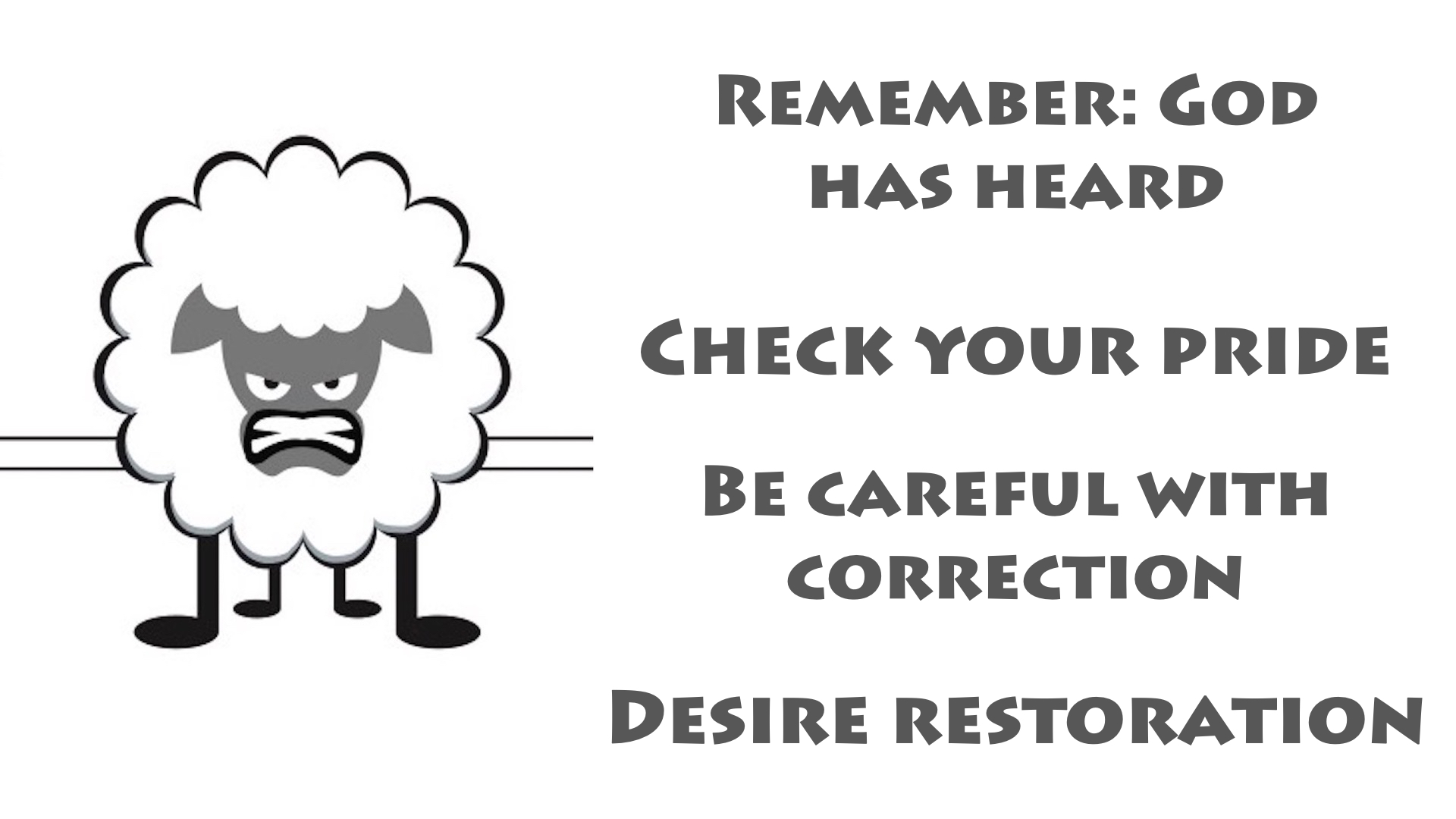
If the Holy Spirit reveals something in us, He will also empower us to make the change and make amends. The natural response is to place all the blame on others. The supernatural response to pray Psalm 26:2 before responding. 

If we react only the natural way, it is a lose-lose for us and for the whole pasture. But if we learn to respond in a supernatural way, it becomes a win-win for everyone. Listen to the wise words of King Solomon—

He who heeds instruction and correction is not only himself in the way of life but also is a way of life for others. And he who neglects or refuses reproof not only himself goes astray but also causes to err and is a path toward ruin for others. (Proverbs 10:17 AMPC) 

Let’s all strive for the supernatural response that is a win-win for the whole Kingdom of God! 

Please follow along with all of the messages in this series by clicking here. 

P.S. If you are a pastor, you may want to check out my book When Sheep Bite.

►► Would you please prayerfully consider supporting this ministry? My Patreon supporters get behind-the-scenes access to exclusive materials. ◀︎◀︎
When Sheep Bite Sheep

No one likes to be mistreated—especially when the one that hurts us is one we would have thought of as an ally or even a friend. 

These slights become even more painful when they take place inside the Christian community. When sheep bite sheep, our natural response is to lash out to try to even the scales of justice. But the Bible consistently and clearly calls Christians to pursue a supernatural response. 

Join me for a highly practical series of messages on how you can respond in a Christ-honoring way when you are bitten by another sheep in God’s pasture.

(By the way, if you are a church leader dealing with biting sheep, my book When Sheep Bite is a great resource for you.)

In this series we have addressed:

Murmuring Sheep

Listen to the podcast of this post by clicking on the player below, and you can also subscribe on AppleSpotify, or Audible. 

If you’re a shepherd leader, what do you do when the sheep under your care go, “Grrrr!”? 

To make sure that you haven’t done anything that caused the murmuring, you should humbly pray, “Search me, O God” (Psalm 139:23-24). And then, if you see you have done something wrong, repent and make things right. You may want to check out my blog post A Leader’s Sincere Apology. 

After this, Moses has given us in Exodus 16:8-9 two actions to take with murmuring sheep:

  1. If it wasn’t anything that you did, you need to remind yourself that the people are murmuring against God. 
  2. If it wasn’t anything that you did, you need to remind the sheep that they are murmuring against God. 

The other Scriptures I reference in this episode are Ephesians 4:15; Proverbs 27:5; Numbers 20:2-12. And the blog post I referred to in this video is How Are Godly Leaders To Use Their Authority. 

I would also encourage you to pick up a copy of When Sheep Bite to help you handle your murmuring sheep in a productive and God-honoring way. 

►► Would you please prayerfully consider supporting this ministry? My Patreon supporters get behind-the-scenes access to exclusive materials. ◀︎◀︎

My Article In “Influence Magazine”

I was thrilled to be asked to write an article for “Influence Magazine” based on my book When Sheep Bite.

This article is a synopsis of my entire book. So if you are interested in seeing what sort of content I have in When Sheep Bite, please check out this article.

If you are a pastor—or if you love your pastor—pick up your copy of When Sheep Bite today!

Links & Quotes

Whether you call it grit or stick-to-it-iveness, those who don’t give up easily are the ones who will become leaders by their example. Check out the conversation we had on The Craig and Greg Show.

I have a lot of new video content on my YouTube channel every week. Please check it out and subscribe so you don’t miss anything.

I was thrilled to be asked to write an article for Influence Magazine about the biting sheep that every pastor has experienced. I am praying that this article will help pastors recover and thrive in their shepherding ministry.

“Knowing our lowliness and Christ’s worthiness, we neither grovel nor saunter into the presence of God. And we do not go home flippant or weeping. In Christ, we will receive what we ask or what we should have asked.” —David Mathis

In 1 Thessalonians 5:19, the apostle Paul warns us not to quench the Holy Spirit. T.M. Moore asks, “How do we quench the Spirit?” and then gives Christians seven warning signs to avoid this quenching. Check out his post Joy In His Spirit.

I really enjoy these archeological biographies of biblical people and places. The Bible Archeology Report writes, “The Neo-Babylonian king, Amēl-Marduk (biblical Evil-Merodach) is only mentioned twice in Scripture (in 2 Kings 25:27–30 and the parallel passage, Jeremiah 52:31–34), both times in connection with the restoration of Jehoiachin, king of Judah.” In a separate post, John Stonestreet shares an archeological discovery in a Roman cemetery in Frankfurt of an amulet that shows that “the Gospel spread farther and faster than historians thought.”

Kenneth Blanchard shares his novel way of setting personal and business goals for the year in a post ‘Look forward to looking back at your goal success in 2025.’

Wolf Deterrent

Listen to the podcast of this post by clicking on the player below, and you can also subscribe on AppleSpotify, or Audible. 

As Paul is on his way to Jerusalem, he makes time to meet with the leaders of the Church in Ephesus. An important reminder Paul gives them comes from the example he lived out while he was in Ephesus: “For I have not hesitated to proclaim to you the whole will of God” (Acts 20:27). 

Some translations say “the whole counsel of God,” but I like the simple, straightforward wording in the KJV: “all the counsel of God.” In other words, Paul’s textbook was everything in the Scriptures. 

One of Paul’s traveling companions was Luke, who made frequent use of the Greek word boulē, which is translated “counsel.” He is the only Gospel writer to use this word, and then he uses it seven more times in the Book of Acts. Putting together Luke’s usage of boulē with the three other appearances in the New Testament, we can come up with a good overview of what Paul meant by “the whole will of God.” 

Boulē tells us that…

  • God’s purpose always prevails (Acts 2:23, 4:28, 5:38, 13:36; 1 Corinthians 4:5; Ephesians 1:11) 
  • Man’s counsel can be flawed (Luke 23:51; Acts 27:12, 42) 
  • God’s counsel if immutable (Hebrews 6:17) 
  • Men who mutate God’s counsel are the wolves that seek to destroy the flock (Luke 7:29-30; Acts 20:27-31)

(Check out all of these Scriptures by clicking here.)

Paul warned these Ephesians leaders: 

Keep watch over yourselves and all the flock of which the Holy Spirit has made you overseers. Be shepherds of the church of God, which He bought with His own blood. I know that after I leave, savage wolves will come in among you and will not spare the flock. Even from your own number men will arise and distort the truth in order to draw away disciples after them. So be on your guard!… (Acts 20:28-31, emphasis added) 

In my book When Sheep Bite I have a chapter called’ Driving Away the Wolves.’ In that chapter I point out—

  There is a phrase that is often associated with the behavior of wolves: a lone wolf. Normally, wolves travel and live in packs. The phrase “lone wolf” is associated with those who leave in order to find a mate, carve out their own territory, and then form their own pack. 

   Jesus said that His sheep hear His voice and follow Him. Lone wolves hear the shepherd’s voice but ignore it to follow their own pursuit of forming their own pack. Remember that these lone wolves don’t want to stay alone: they want to build their own following.

Jesus said we could spot imposters—wolves in sheep’s clothing—by their fruits (Matthew 7:15-20). Two evident fruits are: 

  1. Mutating the immutable counsel of God’s Word to suit their own needs 
  2. Ignoring or criticizing the whole counsel of God’s Word that godly shepherd leaders faithfully teach and preach

For shepherd leaders and their flocks, the whole counsel of God’s Word is the best wolf deterrent you can find! Another passage from my book says—

   David’s beautiful description of the Good Shepherd in Psalm 23 has a phrase that sounds unusual to my ears. He writes, “Your rod and Your staff, they comfort me.” How can such wooden instruments bring comfort to sheep? When the sheep know their shepherd has the rod of God’s Word in his hand and is skilled at using it, the sheep are far more relaxed around the shepherd. This is because a shepherd’s rod is not used against the sheep, but only against the enemies of the sheep. 

   Throughout the Old Testament, the rods in the hands of leaders were the symbol of their God-appointed authority (think of the staffs of Moses and Aaron). Those rods were symbolic of the words God had spoken to these shepherds to empower them to lead His sheep. In the New Testament setting, the Bible is described in similar terms. Shepherds are directed to correctly handle the rod of God’s Word, knowing that His Word is the only thing that can reliably care for the sheep by teaching, rebuking, correcting, and training (2 Timothy 2:15, 3:16). The sheep will welcome this; the wolves will fight against this. 

Pastors, immerse yourself in the whole counsel of God’s Word. Not just the parts that are comfortable for you or pleasant to preach about, but all of God’s Word! This will strengthen the rod of leadership God has given you, it will bring health and comfort to the sheep in your flock, and it will be a strong deterrent against the wolves that would seek to infiltrate your pasture. 

I would also humbly recommend that you pick up a copy of my book When Sheep Bite to help resource you to heal from old or ongoing injuries, and to fortify you to remain faithful to the call God has on your ministry. 

►► Would you please prayerfully consider supporting this ministry? My Patreon supporters get behind-the-scenes access to exclusive materials. ◀︎◀︎
The Benefits Of The Right Kind Of Pastoral Stress

I was very honored to be asked to share these thoughts on KarlVaters.com. I was able to interview Karl about his latest book De-Sizing The Church.

(Photo by Official Presidio of Monterey | Flickr)

Jesus was “made like His brothers in every way” (Hebrews 2:17), which means He was not immune to the ravages of stress, yet He never let that stress overwhelm Him.

No one wants more stress. But attempting to avoid all stress can carry negative results that we seldom take into account.

In this guest article, Craig T. Owens (whom I interviewed in The Church Lobby, Episodes 43 and 82 ) writes about how managing the right type of stress (called eustress) can be a benefit, especially in positions of responsibility, like pastoring.

— Karl Vaters

As a pastor, I’m sure your life is practically stress-free. I mean, what do we have to do with our days except commune with God in our quiet study time, and then descend from the mountain to share the words God has given us? Then we can bask in the approval of our congregations as we watch them seamlessly integrate our sermons into their daily lives.

What’s that you’re saying? It’s not like that for you?

Anyone who has been a pastor for any length of time knows how demanding a job it is to be a shepherd of the flock God has placed under our care. And then frequently our shepherding work becomes even more challenging when we have to attend to the needs of obstinate sheep, or heal from the bites of angry sheep.

At times, we may dream about a more stress-free pasture.

But we actually do ourselves, our flock, and the world around us a huge disservice if we are striving for a stress-free life.

The Power To Persevere

First, I don’t think that is even possible. Adam and Eve in the perfection of the Garden of Eden faced a stressful decision. And Jesus, the Perfect Man, was constantly dealing with the stressors that pushed in on Him.

But more importantly, stress is vital for our healthy growth. Recent studies have shown that moderate levels of stress keep our brain sharp. In fact, the study went on to state that a brain that is striving for zero stress (if that’s even possible) begins to become less adept at problem solving. In our attempts to totally eliminate stress, we are actually squeezing out our ability to adapt, overcome, and soar when we face future problems.

In this case, I am talking about the healthy stress that doctors call eustress. Whenever we face a challenge, our body releases a hormone called cortisol that prepares our mind and body for action. In other words, God designed a way for us to be successful in stressful times.

Eustress is the push against the forces that would ultimately pull down our physical health, our relationships, our mental health, and a host of other things if we simply opt to “go with the flow.”

I read this in a recent article from an organization called Fight The New Drug:

“In a world that often sells ways to avoid stress, it’s crucial to remember that stress can be healthy in moderation. Stress and anxiety can trigger neural and chemical processes in your body designed to help you respond to challenges. Stress researcher Daniela Kaufer explains that ‘some amounts of stress are good to push you to the level of optimal alertness for behavioral and cognitive performance.’ Her research on stress in rats has even demonstrated that intermittent stressful events can create new brain cells in the rats that actually improve their future mental performances.”

I love how modern-day psychology validates what the Bible has already told us! The Bible makes it clear that persevering through the stressors that come against us can make us stronger, healthier, and better equipped for the next challenge. We are also fortified to help others through their times of stress (James 1:2-4; Romans 5:3-5; 2 Corinthians 1:3-5).

(Check out all of the Scriptures in this article by clicking here.)

The Greek word in the Bible translated “persevere” means keeping focused on the goal despite the struggles that it takes to get there. Jesus used this same Greek word at the conclusion of His parable of the sower: “The seed on good soil stands for those with a noble and good heart, who hear the Word, retain it, and by persevering produce a crop,” a crop that Jesus said was a hundred times more than what was sown (see Luke 8:5–15).

The Holy Spirit will push us further than we think we can go to develop the spiritual muscles and endurance we need to shepherd the sheep under our care during their trying times. He knows that persevering produces a huge crop.

Easy Roads Teach Few Lessons

I love riding my bike on the White Pine Trail by my house. My long rides have a really fun stretch where I am flying downhill! But as fun and stress-free as that part is, I’m not really building anything of lasting value. However, when I am coming back uphill and I want to quit because my legs are burning and I can hardly breathe, that becomes a valuable struggle.

I cannot build endurance by any other way than to persevere, to push myself just a little bit more each time. When I want to quit, I pedal just a few more feet. Gradually, the uphill becomes less daunting.

A friend gave me a t-shirt that I like to wear on my rides. When I put the shirt on, the blue-lettered message says, “Do It!” but as I struggle uphill and the sweat begins to pour off my body and drench my shirt, a new message emerges: “Don’t Quit!”

I have learned that easy roads teach very few valuable lessons. But persevering through the stressors not only strengthens me, but it builds an empathy for others that I would have otherwise missed.

The poet Epictetus noted this about the mighty Hercules:

“What would have become of Hercules do you think if there had been no lion, hydra, stag or boar—and no savage criminals to rid the world of? What would he have done in the absence of such challenges?

“Obviously he would have just rolled over in bed and gone back to sleep. So by snoring his life away in luxury and comfort he never would have developed into the mighty Hercules.

“And even if he had, what good would it have done him? What would have been the use of those arms, that physique, and that noble soul, without crises or conditions to stir into him action?”

—Epictetus, The Discourses

So the next time you are thinking about avoiding something that causes stress in your life, why don’t you reframe that thought. Instead, think about how you can become stronger, healthier, and more empathetic toward others because you are committed to successfully navigating that stressful situation.

Don’t ask God to get you out of that stressful situation, but ask Him to help you get something out of that stressful situation.

Eustress, Not Distress

Please notice that I have been talking about the good stress (eustress), but there is also a dangerous stress which doctors call distress. If we are trying to overcome a challenge in our own strength alone, instead of relying on God’s supernatural help, or if we are allowing stress to keep us from our healthy habits, eustress can disintegrate into distress.

The stress hormone cortisol is naturally flushed from the body in two ways: physical exercise and proper sleep. Isn’t it interesting that when we are experiencing higher than usual amounts of stress that two of the areas that seem to disappear from our lives are time for exercise and nights with solid, uninterrupted sleep?

When we allow eustress to become distress, everything suffers. Our physical health is compromised, we have an increasingly difficult time coming up with creative solutions, our patience with difficult people is strained, and we find ourselves fighting irritability.

How Jesus Did It

Earlier I mentioned the stressors that Jesus faced, but notice that we never see Him responding inappropriately, acting in an unhealthy way, or “stressed out” by the needs of the sheep around Him. Keep in mind that Jesus was “made like His brothers in every way” (Hebrews 2:17), which means He was not immune to the ravages of stress, yet He never let that stress overwhelm Him. He never even allowed eustress to cross the line into distress.

How did Jesus keep stress in balance? I see so many healthy habits in His life. For instance, I see not only the regular habit of prayer to start His day (Mark 1:35), but I see Him withdrawing for a time of prayer or even a nap when He completed a stressful time of ministry (Luke 5:16).

Jesus encouraged His disciples in this as well. The disciples were excited to tell Jesus about their latest ministry but the activity around Jesus was so hectic that they couldn’t even find time to get a bite to eat, let alone take a deep breath to recover from their ministry. “Come with Me by yourselves to a quiet place and get some rest,” Jesus told them. And then “they went away by themselves to a solitary place” (Mark 6:30-32).

To keep yourself from becoming distressed, be deliberate about maintaining your healthy habits during your times of eustress. Eat healthy, get proper exercise, get a good night’s sleep, spend extra time in your Bible study and prayer time, and schedule time with healthy friends. All of these things will help you leverage all of the benefits of eustress, making you a stronger, more consistent and empathetic leader.