When God made His promise to Abraham, since there was no one greater for Him to swear by, He swore by Himself, saying, “I will surely bless you and give you many descendants.”And so after waiting patiently, Abraham received what was promised. (Hebrews 6:13-15)
After waiting patiently…
God’s promise did come, but Abraham had to wait a long, long time! One translation says that Abraham waited long and endured patiently. Another says, Abraham stuck it out and got everything that had been promised to him.
God’s promises DO come to those who patiently endure UNTIL the promise comes.
Hang on.
Don’t fret.
Keep focused.
Don’t lose heart.
Endure!
Endure patiently.
Stick it out.
Don’t give up.
Keep going.
Don’t stop.
Persevere until it comes.
God has determined to show us the abundance of His promises, the faithfulness of His word, the trustworthiness of His promises.
Ask Abraham. He’ll tell you that it’s so worth it to hang on until God fulfills His word.
God’s counsel is unchangeable.
His wisdom is profound.
His treasures are immeasurable.
His delights are beyond comparison.
His hope is secure
His word endures.
His promises are sure.
Don’t give up. Patiently endure another day. God’s promise IS coming!
This is a weekly series with things I’m reading and pondering from Oswald Chambers. You can read the original seed thought here, or type “Thursdays With Oswald” in the search box to read more entries.
Spiritual Grit
Salvation is God’s “bit,” it is complete, we can add nothing to it; but we have to bend all our powers to work out His salvation. It requires discipline to live the life of a disciple in actual things. “Jesus knowing…that He was come from God, and went to God,…took a towel…and begin to wash the disciples’ feet” [John 13:1, 4]. It took God Incarnate to do the ordinary menial things of life rightly, and it takes the life of God in us to use a towel properly. … And we can do it every time because of the marvel of God’s grace. …
A stoot hairt tae a stae brae (i.e. a strong heart to a difficult hill). The Christian life is a holy life; never substitute the word “happy” for “holy.” We certainly will have happiness, but as a consequence of holiness. Beware of the idea that so prevalent today that a Christian must always be happy and bright, “keep smiling.” That is preaching merely the gospel of temperament. If you make the determination to be happy the basis of your Christian life, your happiness will go from you; happiness is not a cause but an effect that follows without striving after it. …
There is something in us that makes us face temptation to sin with vigor and earnestness, but it requires the stout heart that God gives to meet the cares of this life. I would not give much for the man who had nothing in his life to make him say, “I wish I was not in the circumstances I am in.” “In the world you will have trouble; but be of good cheer! I have overcome the world” [John 16:33]—“and you will overcome it too, you will win every time if you bank on your relationship to Me.” Spiritual grit is what we need.
From Studies In The Sermon On The Mount
If you have placed your faith in what Jesus did for you on Calvary, and if you have asked the Father to forgive you of your sins, then His Holy Spirit resides in you.
Therefore, you have all that you need to be successful every single time. The question is: Am I using the spiritual grit that God gives me to be holy? Or am I merely looking for a way to be happy?
Allow me to introduce myself in the Aramaic fashion—I am Craig bar Raymond. I am proud of my father and want my name to always be associated with his, so I remember my heritage by telling people I am Craig son of Raymond.
If I wanted to be a little more formal I might introduce myself as Craig Bar Raymond Bar Colson, or even Craig Bar Raymond Bar Colson Bar Walker, to honor my forefathers back four generations.
People took great pride in their family heritage. They wanted to keep their connection to their family and their tribe intact and known to those around them. It’s how they kept their standing in their community.
That’s why it’s odd that Luke—the premier historian that he is—introduces us to a man he simply calls “a blind man” in the city of Jericho. Luke was always so precise in mentioning names throughout both his Gospel and the Book of Acts, and it appears that this man does have a name. In the Gospel of Mark he is called Bartimaeus, and presumably Luke used Mark as one of his source documents. So why would Luke omit this guy’s name?
Keep in mind that “bar” simply means “son of,” so although Mark calls him Bartimaeus, his name is really something like “_________ son of Timaeus.” Is that because he was born blind and his parents didn’t even name him? Or was he thought so little of that people couldn’t remember his first name? Maybe it’s because Timaeus means unclean, defiled, polluted. So this blind beggar is really just the Anonymous son of Filth!
This beggar is looking for alms in Jericho when he hears a commotion. He asks what is happening and is told, that Jesus of Nazareth is passing by.
This man knows the reputation of Jesus, recalling that He has even opened blind eyes. Immediately he shouts, “Jesus, son of David have mercy on me!” Son of David is a title only used twice in the New Testament (also see Matthew 15:22), and both times by desperate people who wouldn’t take “no” for an answer.
Actually, his phrase is in the form of a command, so he really says, “Jesus, son of David, have mercy on me NOW!”
“Who do you think you are, you nameless beggar,” the townspeople rebuke him. “How dare you demand anything of anyone! Shut your mouth, you worthless piece of filth!”
Undeterred, this man now raises his voice to a shriek and repeats, “JESUS, SON OF DAVID, HAVE MERCY ON ME NOW!”
This shriek gets Christ’s attention and He stops dead in His tracks. He commands that this man be brought to him.
Check out the confidence this blind man shows—he throws his cloak aside to get to Jesus. Why is that significant? Because he’s blind! If he can’t see, how is he going to find his cloak again? Who would ever want to help him?
Jesus asks him, “What do you want me to do for you?” He was testing him: did he want a hand-out? did he want revenge on the cruel people in Jericho? did he want to get back at his parents?
He specifically prays, “I want to see.” Jesus is moved by compassion (Matthew 20:34) and says, “Your faith has made you whole.” The blind man immediately is healed!
What was his faith that healed him? It was a loud, insistent, persistent, won’t-take-no-for-an answer, audacious request. The crowd said he was asking too much, but Jesus was moved to compassion by his insistence and boldness and answered his prayer.
That community may have forgotten that man’s name. Maybe the blind man had even forgotten his own name. But God hadn’t!
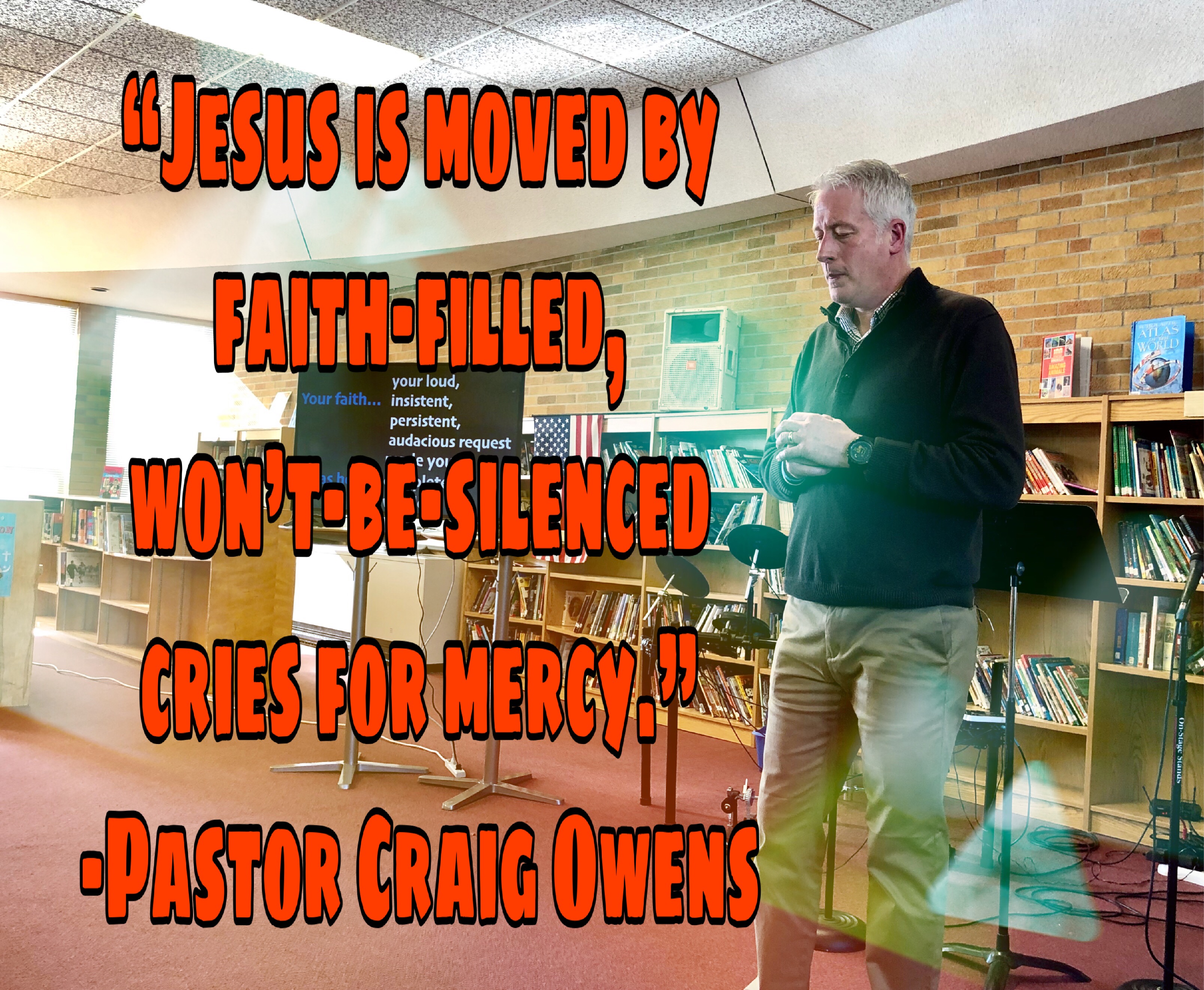
Jesus is moved by faith-filled, won’t-be-silenced cries for mercy. He wants to answer your specific requests. You aren’t an anonymous son or daughter of filth. You aren’t marginalized, worthless, or overlooked by your Heavenly Father.
God knows your name. He knows your need. He is passing by. Cry out to Him again and again and again! When He answers your prayer, you are made whole and our Heavenly Father is glorified.
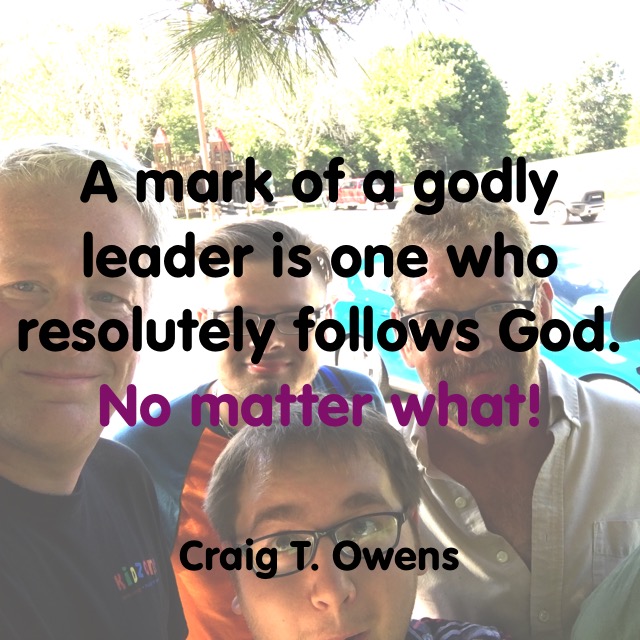
A mark of a godly leader is one who resolutely follows God. No matter what!
Jesus calls His followers to the same path He walked—“No one who puts a hand to the plow and looks back is fit for service in the kingdom of God” (Luke 9:62)
It’s hard because people reject a resolute man.
It’s hard because the accommodations along the way are uncertain.
It’s hard because I have to give up my right to myself.
But the reward is incomparable—Heaven forever with Jesus!
This is part 33 in my series on godly leadership. You can check out all of my posts in this series by clicking here.
Have you ever been in the right place at the right time to experience something wonderful? Maybe you got to meet someone important, or you got the job, or you got the money, or you got to ride in that fancy car.
Some will call you “lucky” or say you “caught a break,” but both of those statements imply that something unexpected happened to you.
Is it still “lucky” to be in the right place at the right time if you knew ahead of time that it was coming? For praying Christians, to be in the right place at the right time when we are expecting God to provide is called “an answer to prayer.”
David prayed, “In the morning, Lord, You hear my voice; in the morning I lay my requests before You and wait expectantly” (Psalm 5:3). The Aramaic word for prayer means “to set a trap.” If we pray, and we live in expectation, then it isn’t luck when we’re in the right place at the right time, but it’s a “trap” that caught the answer to our prayer.
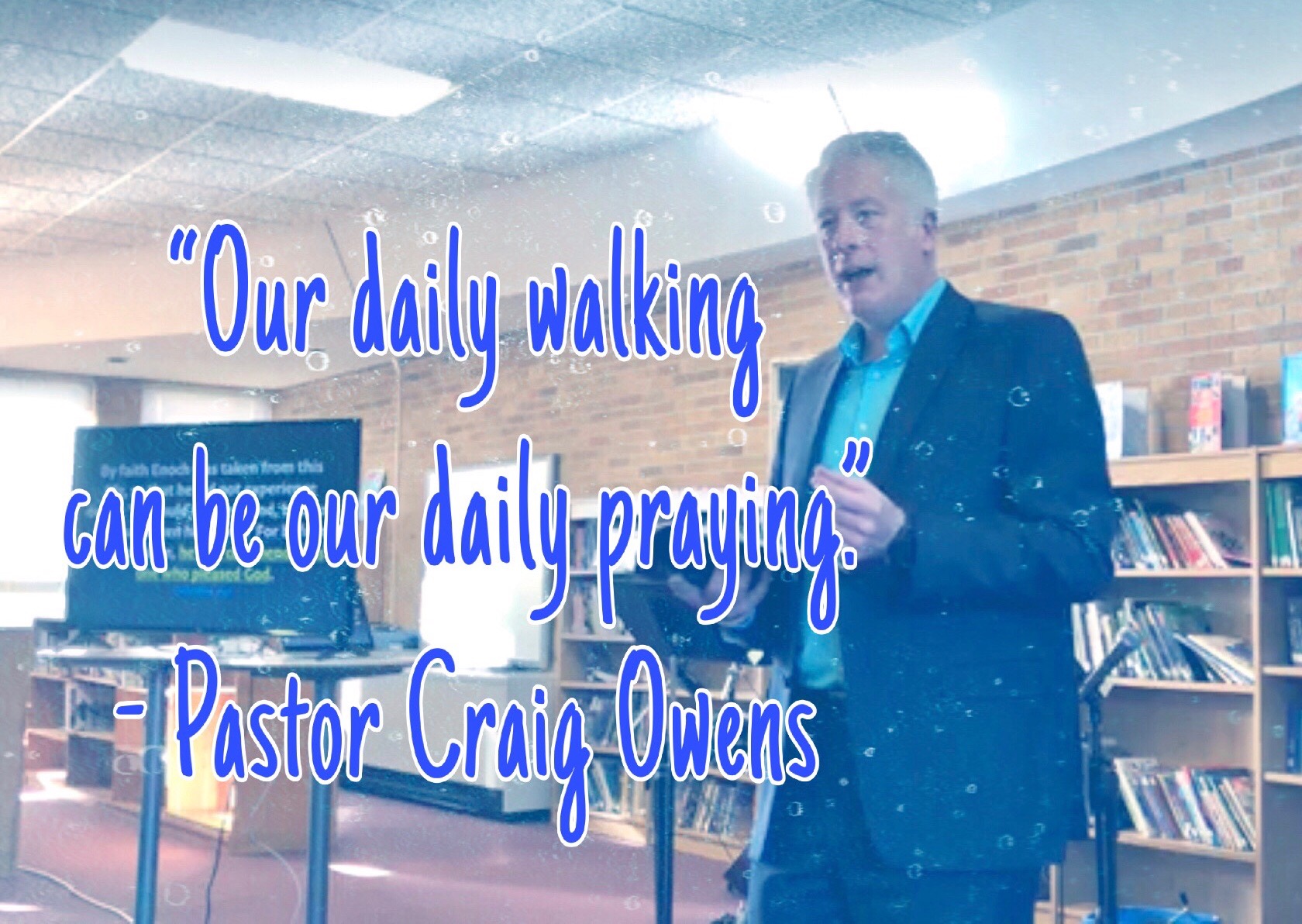
Our daily walking can be our daily praying, as long as we’re walking in faith in the direction God pointed us.
One man who—literally!—walked this principle out was Elisha.
Before we look at Elisha’s expectant, prayerful walking, let’s look at his prayer request—
When they reached the other side, Elijah said to Elisha, “What can I do for you before I’m taken from you? Ask anything.” Elisha said, “Your life repeated in my life. I want to be a holy man just like you” (2 Kings 2:9 MSG).
Elisha was essentially asking to be like Elijah’s firstborn son, to be his spiritual heir. This was the original promise God gave when He told Elijah to anoint Elisha as his successor (1 Kings 19:16). From that point onward, Elisha steadily walked in expectation of God answering this prayer.
Elisha wouldn’t stay in a place of military victory, or in a significantly spiritual place, or even in a place surrounded by godly leaders. Elisha wouldn’t be held back by a lucrative family business, or the warning words of friends or his spiritual mentor, or even the seemingly uncrossable Jordan River. He kept on walking (see 2 Kings 2:1-15).
He kept on walking.
He kept on walking until “suddenly” God showed up and answered his prayer.
But was it really “suddenly”? Elisha knew it was coming. He believed what God had promised. He clung to it even when Elijah told him he had asked “a difficult thing.” Elisha kept on walking until he was in the right place at the right time to receive all that God had planned.
If you have prayed in faith, start walking. Settling anywhere else is robbing yourself of a blessing and robbing God of glory.
Just keep walking! And let your walking be your praying.Don’t get discouraged. Don’t settle. Don’t stop eagerly expecting that the next step you took could be the “suddenly” you’ve been waiting for. Just keep walking!
Join me this Sunday as we learn a valuable lesson from another bold pray-er from the Bible.
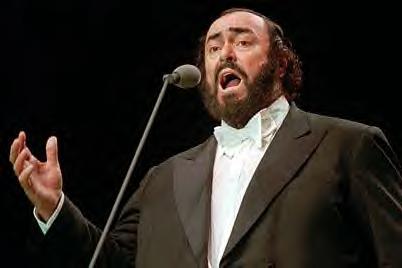
“When I was a boy, my father, a baker, introduced me to the wonders of song. He urged me to work very hard to develop my voice. Arrigo Pola, a professional tenor in my hometown of Modena, Italy, took me as a pupil. I also enrolled in a teachers college. On graduating, I asked my father, ‘Shall I be a teacher or a singer?’
“‘Luciano,’ my father replied, ‘if you try to sit on two chairs, you will fall between them. For life, you must choose one chair.’
“I chose one. It took seven years of study and frustration before I made my first professional appearance. It took another seven to reach the Metropolitan Opera. And now I think whether it’s laying bricks, writing a book—whatever we choose—we should give ourselves to it. Commitment, that’s the key. Choose one chair.” —Luciano Pavarotti (emphasis added)
This is a weekly series with things I’m reading and pondering from Oswald Chambers. You can read the original seed thought here, or type “Thursdays With Oswald” in the search box to read more entries.
Second Mile Christianity
To go the second mile means always do your duty, and a great deal more than your duty, in a spirit of loving devotion that does not even know you have done it. … The supreme difficulty is to go the second mile with God, because no one understands why you are being such a fool. The summing up of Our Lord’s teaching is that it is impossible to carry it out unless He has done a supernatural work in us. …
The interests of the Son of God and of the disciple are to be identical. How long it takes to manifest that identity depends on the private history of the disciple and his Lord. …
We do not need the grace of God to stand crises; human nature and pride will do it. We can buck up and face the music of a crisis magnificently, but it does require the supernatural grace of God to live twenty-four hours of the day as a saint, to go through drudgery as a saint, to go through poverty as a saint, to go through an ordinary, unobtrusive, ignored existence as a saint, unnoted and unnoticeable. The “show business,” which is so incorporated into our view of Christian work today, has caused us to drift far from Our Lord’s conception of discipleship. It is instilled in us to think that we have to do exceptional things for God; we have not. We have to be exceptional in ordinary things, to be holy in mean streets, among mean people, surrounded by sordid sinners. That is not learned in five minutes.
Jesus calls His disciples to go the second mile. Others won’t understand us, and few (if any) people will applaud us for doing so.
Like a novice runner, maybe we can’t go the whole second mile the first time out. Maybe not even the second or third time. But can we go a bit further the second time than we did the first? And a bit further the third time than we did the second? That’s what discipleship is all about: Letting Jesus help us go a bit further each time.
If you stick with it, soon you will be going the second mile and not even realize it. Other may not realize it either, but God always sees when we do, and He is pleased!
I don’t mean to say that I have already achieved these things or that I have already reached perfection. But I press on to possess that perfection for which Christ Jesus first possessed me. No, dear brothers and sisters, I have not achieved it, but I focus on this one thing: Forgetting the past and looking forward to what lies ahead, I press on to reach the end of the race and receive the heavenly prize for which God, through Christ Jesus, is calling us. (Philippians 3:12-14)
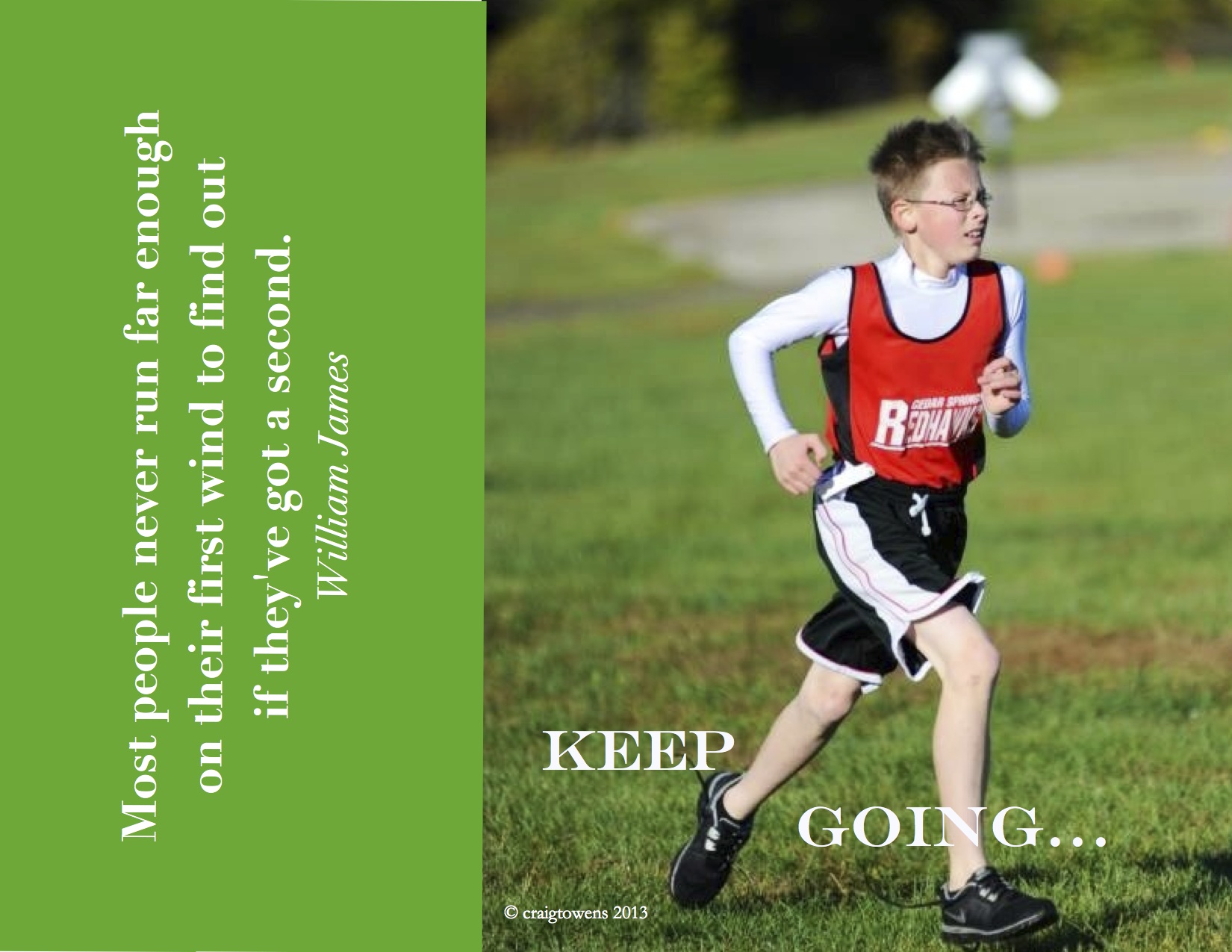
“Most people never run far enough on their first wind to find out if they’ve got a second.” —William James
When things go wrong, as they sometimes will,
When the road you’re trudging seems all uphill,
When the funds are low but the debts are high,
And you want to smile but you have to sigh,
When care is pressing you down a bit…
Rest if you must, but don’t you quit!
Life is queer with its twists and turns,
As every one of us sometimes learns,
And many failures turn about
When we might have won had we stuck it out.
Don’t give up though the pace seems slow…
You may succeed with another blow.
Often the struggler has given up
When he might have captured the victor’s cup;
And he learned too late when the night came down,
How close he was to the golden crown.
Success is failure turned inside out…
And you can never tell how close you are
It may be near when it seems so far.
So stick to the fight when you’re hardest hit
It’s when things seem worst that you must not quit. —Edgar A. Guest



 Give me a man with an aim,



 Craig T. Owens