It Is Finished (book review)

It Is FinishedDavid Wilkerson was a gentle man (yes, I did intend for that to be two words). The best definition I’ve heard of gentleness is “strength under control,” and that certainly describes Rev. Wilkerson’s words in It Is Finished: Finding Lasting Victory Over Sin.

Pastor Wilkerson’s words carry all of the weight and authority of an Old Testament prophet crying out, “This is what God says!” But his message is delivered with the lovingkindness of a gentle shepherd. Rev. Wilkerson is hard on those things that keep Christians at a distance from God, but loving on those at-a-distance Christians.

It Is Finished is a series of eleven sermons delivered by Pastor Wilkerson just prior to his death. They deliver a powerful message of God’s redemptive love from a man who was constantly learning what that love really meant. He shares his own personal struggles with feeling accepted by God’s love, and then presents a hope-filled message for all of us to accept the Holy Spirit’s invitation to enter into greater intimacy with our loving Heavenly Father.

These sermons are easy to read and will lift your spirits to new heights in God. I recommend this book to all Christians, but especially to those who struggle with feeling accepted by God.

I am a Chosen Books book reviewer.

Thursdays With Oswald—Redemption

This is a weekly series with things I’m reading and pondering from Oswald Chambers. You can read the original seed thought here, or type “Thursdays With Oswald” in the search box to read more entries.

Redemption

   Redemption is easy to experience because it cost God everything, and if I am going to be regenerated it is going to cost me something. I have to give up my right to myself. I have deliberately to accept into myself something that will fight for all it is worth, something that will war against the desires of the flesh, and that will ask me to go into identification with the death of Jesus Christ, and these things produce a struggle in me. …

   The result of the Redemption in my life must be that I justify God in forgiving me. …In what way are you different in your life? does the reality of the Redemption at work in you justify God in having forgiven you?

From Baffled To Fight Better and Biblical Ethics

I like to think of the death and resurrection of Jesus this way: It cost Him so much, and He wants everything He paid for.

Jesus didn’t coast through, He wasn’t wishy-washy about His decision to go to the Cross, neither was He forced into such a horrific death by crucifixion.

Jesus willingly and lovingly went “all in” to pay the redemption price for our sins. So I’m challenged by Oswald Chambers’ question: Does the reality of the Redemption at work in you justify God in having forgiven you? Does my life show how grateful I am for the price Jesus paid?

Love The Sinner

Love the sinnerIf anyone sees his brother commit a sin…he should pray…. (1 John 5:16)

The King James Version says this a little more poetically, “If any man see his brother sin a sin.” The Greek does not have the indefinite “a” in front of sin, and the verb tense makes this an ongoing process, so it’s probably more accurate to say it like this: “If anyone sees his brother sinning sins.”

The apostle John is head-over-heels in love with Jesus. So time and time again his counsel is for us also to fall more in love with God, and to demonstrate this by loving others. There is no more loving thing we can do for someone sinning sins than to pray for them (see also Galatians 6:1 and James 5:19-20).

John doesn’t ask us to catalogue their sins; otherwise he would have said “a sin” or even “their sinS.” We are not to be the sin police trying to document each and every infraction! Instead, when we see a brother or sister with a lifestyle that is separated from the love of God, we need to pray for them.

I think John might ask us to pray that they would see the love of God so clearly that the love of sin would become cold and pale and unattractive.

11 Quotes From “Jesus Is _____”

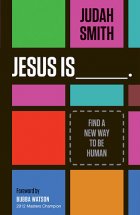
Jesus Is _____Judah Smith has a fresh, clear way for us to view Jesus and His love for us. You can read my full review of Jesus Is _____ by clicking here. Below are 11 quotes from this book that got me thinking—

“The Pharisees were zealous for the law, but they didn’t understand the love of God. They imposed judgment without mercy, punishment without love, criticism without understanding. In the name of hating sin, the Pharisees ended up hating sinners. Perhaps worst of all, they concluded that their aloofness from sinners was what made them holy. The measuring stick of their goodness was the badness of the people they rejected. …Before we get too furious at the Pharisees, though, realize that inside each of us is a Pharisee trying to get out. It’s happened to me. No sooner do I conquer a bad habit than I become the biggest critic of anyone who still does what I just stopped doing. I find that righteous indignation comes a lot easier than humility and compassion. Mentally chastising the bad deeds of other people is more comfortable than dealing with my own.”

“Rather than rejecting people out of a false sense of superiority, rather than judging and condemning those whose lives don’t measure up to my standard of holiness, I need to remember that I am still desperately in need of Jesus’ grace.”

“Besides writing off bad people, we too quickly write off ourselves. We swing from the self-righteous side of the pendulum (That filthy sinner deserves to go to hell!) to the self-condemning side (I’m a filthy sinner who deserves to go to hell!). Both extremes come from focusing on rules rather than on a relationship with Jesus.”

“I think if Jesus had one shot at fixing us, He’d tell us how much He loves us. …Jesus loves us right now, just as we are. He isn’t standing aloof, yelling at us to climb out of our pits and clean ourselves up so we can be worthy of Him. He is wading waist-deep into the muck of life, weeping with the broken, rescuing the lost, and healing the sick.”

“When we realize that grace is a Person, not a principle, abusing grace is no longer an option. It’s easy to abuse a principle, to manipulate a system, or to excuse away a doctrine. But it’s much harder to abuse a person or violate a relationship.”

“Rules are not bad, but they can’t save anyone. The best a rule or a law can do is set a boundary and threaten punishment for crossing that boundary. People still decide to obey the rule or not. …Rules are meant to lead us to relationship, not to replace relationship. …Focusing too much on rules and too little on grace tells children that what they do is more important than who they are. …These principles aren’t just for parenting. This is how our relationship with God works. For God, it’s more about relationship than about rules. Far more.”

“When we make up rules because we are afraid people will sin, we end up doing an end run around faith. It’s not fear that saves us—it’s faith. Fear of failure has a sneaky way of becoming a self-fulfilling prophesy. …Make rules and follow rules as needed, but don’t focus on rules. Focus on faith. Focus on grace. Focus on Jesus. …Here’s the bottom line: everything that rules can do, grace can do better, and more besides.”

“Rules address behavior, but they don’t deal with the heart. They don’t adjust attitudes. They don’t heal the inconsistencies and fractures deep in our souls that could destroy us in the end. Grace, on the other hand, is internal. It works on a heart level. Where rules attempt to force us to do the opposite of what we want, grace actually changes what we want. It creates internal consistency and integrity. Doing what is right becomes much easier. …When we focus on Jesus instead of a code of conduct, when grace changes our desires so we are internally motivated and not just externally restrained, we become a lot more fun to be around.”

“Grace wasn’t free for Jesus. It cost Him everything. That is precisely why we should receive it freely. The most insulting thing we could do is reject this costly gift and say, ‘No thanks, God, I got this.’ Please don’t tell me Jesus was beaten and mutilated and tortured so we could try to save ourselves through our paltry good deeds. Don’t cheapen Jesus’ sacrifice by trying to pay Him back.”

“The point isn’t to quit thinking about sin. It’s to quit thinking about self and to think about Jesus. It’s to become God-conscious, not me-conscious. Do you know what law does? Law makes us self-conscious. When we are self-conscious, we become sin-conscious. We take our eyes off Jesus, and we focus on our failures, our weaknesses, our shortcomings. And we end up sinning even more because that’s all we can think about. But grace makes us God-conscious. When we live by grace, we are continually amazed by the love, goodness, and holiness of God. When we think about Him, that motivates us to act like Him. Are you struggling with sin? You don’t need more willpower. You need more of Jesus. Loving Jesus, not avoiding sin, is the focal point of our lives.”

“Holiness results in happiness, and happiness is an expression of holiness. The two go together. I am happier because I am holy, and it’s easier to be holier because I am happy. Because of the good news, because of Jesus, I can be both holy and happy—what a concept!”

Total Victory!!

Listen to the podcast of this post by clicking on the player below, and you can also subscribe on AppleSpotify, or Audible. 

“People outside the Christian tradition spend their time arguing the divinity of Christ. People inside the Christian tradition spend their time arguing the humanity of Christ.” —Jesus: A Theography by Leonard Sweet & Frank Viola

Jesus came to earth fully human. This cannot be overstated, as it is crucial to how we can defeat temptation.

Our First Parents (Adam and Eve) listened to the tempting words of the devil, which caused them to sin against God. By this treachery, they handed over the dominion of earth to satan, and he has used that to keep people bound in deathly fear since that time (see Hebrews 2:14-15). But at the moment of sin—even as God was pronouncing judgment—there was an implicit promise made of the salvation Jesus would bring. God’s promise was that Eve’s offspring would crush satan under His foot (Genesis 3:15).

This is why it was so important that Jesus be totally human in His work on earth, that He share in our humanity in every way (Hebrews 2:14, 17).

The devil has three weapons he uses: the lust of the flesh, the lust of the eyes, and the pride of life (1 John 2:16). Notice how he used these in his successful temptation of Adam and Eve—

  • The fruit was good for food = the lust of the flesh.
  • The fruit was pleasant to the eyes = the lust of the eyes.
  • The fruit was desirable to make one wise…to be like God = the pride of life.

Because this was successful for him, satan tempted the Second Adam (Jesus) using the exact same strategy—

  • Turn these stones to bread = the lust of the flesh.
  • I will give you the kingdom of the world and their glory = the lust of the eyes.
  • Cast yourself down from here and angels will protect you = the pride of life.

Jesus didn’t overcome these temptations because He was God. Jesus overcame them as a Man anointed by the Spirit of God! Jesus used the same weapons that are available to us: the Word of God and the anointing of the Holy Spirit. Not only do we have these two weapons, but we also have a victorious Savior who is helping us!

Because Jesus overcame temptation as a Man, He is able to help those who are being tempted (Hebrews 2:18).

For we do not have a high priest who is unable to empathize with our weaknesses, but we have One who has been tempted in every way, just as we are—yet He did not sin. (Hebrews 4:15)

Therefore He is able to save completely those who come to God through Him, because He always lives to intercede for them. (Hebrews 7:25)

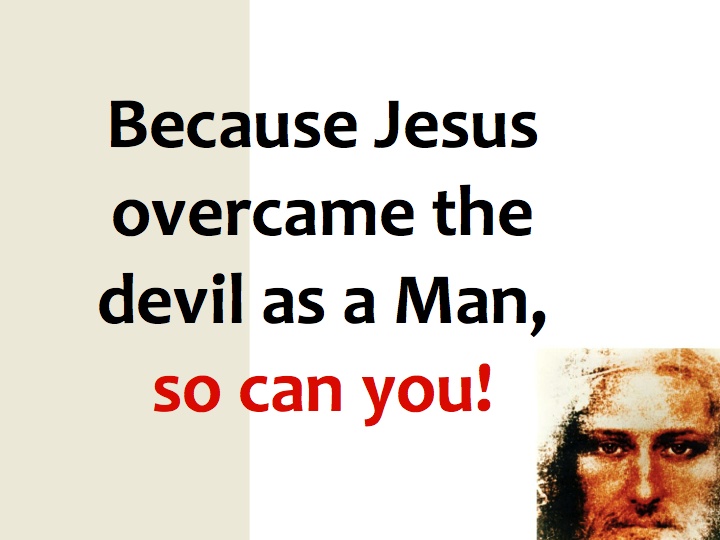
Because Jesus overcame the temptations of satan as a man, you can too! 

To Him who is able to keep you from stumbling and to present you before His glorious presence without fault and with great joy—to the only God our Savior be glory, majesty, power and authority, through Jesus Christ our Lord, before all ages, now and forevermore! Amen. (Jude 24-25)

If you have missed any of the messages in this series called Who Is Jesus?, you can find them all here.

►► Would you please prayerfully consider supporting this ministry? My Patreon supporters get behind-the-scenes access to exclusive materials. ◀︎◀︎

O Lord, Forgive

A friend of mine gave me some solid counsel a number of years ago that has always stuck with me: The mark of a maturing Christian is one who is closing the gap between sin and repentance.

Sin is open treason against God. Why would I want to overlook it or excuse it?! Once I recognize it as sin, why would I want to hold on to it?!

If we freely admit that we have sinned and confess our sins, He is faithful and just (true to His own nature and promises) and will forgive our sins—dismiss our lawlessness—and continuously cleanse us from all unrighteousness—everything not in conformity to His will in purpose, thought, and action. (1 John 1:9 AMPC) 

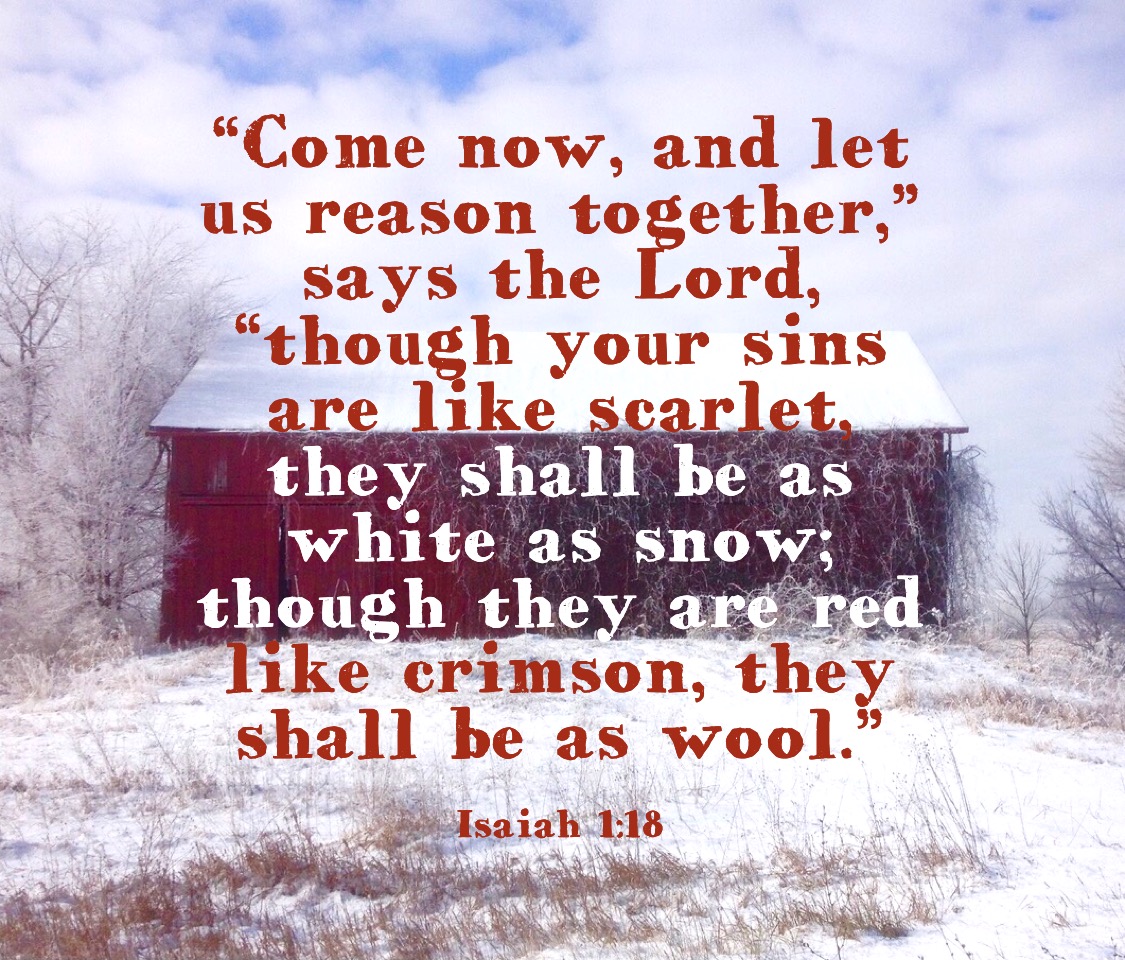
“Come now, let’s settle this,” says the Lord. “Though your sins are like scarlet, I will make them as white as snow. Though they are red like crimson, I will make them as white as wool.” (Isaiah 1:18) 

May we all take the time to reflect on our words and actions to see if we have sinned, and then to quickly confess that sin and ask for our loving God’s forgiveness.

“If my soul has turned perversely to the dark;

If I have left some brother wounded by the way;

If I have preferred my aims to Yours;

If I have been impatient and would not wait;

If I have marred the pattern drawn out for my life;

If I have cost tears to those I loved;

If my heart has murmured against Your will,

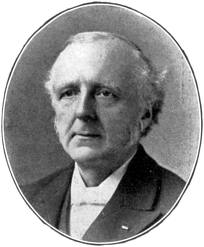
O Lord, forgive.” —F. B. Meyer

19 Quotes From “Who Do You Think You Are?”

Who Do You Think You AreWho Do You Think You Are? by Mark Driscoll is an insightful journey through the book of Ephesians. You can read my full book review by clicking here. Below are some of the passages that especially stood out to me.

“This world’s fundamental problem is that we don’t understand who we truly are—children of God made in His image—and instead define ourselves by any number of things other than Jesus. Only by knowing our false identity apart from Christ in relation to our true identity in Him can we rightly deal with and overcome the issues in our lives.”

“What you do doesn’t determine who you are. Rather, who you are in Christ determines what you do.”

“Our worship never starts and stops. It’s not limited to a building in which we attend sacred meetings and sing worship songs. Rather, our entire life is devoted to pouring ourselves into someone or something. Saying it another way, we’re ‘unceasing worshippers.’ We aren’t created to worship, but rather we’re created worshipping.”

“While it’s not a sin to plan and strive for a better tomorrow, it is a sin to set one’s joy and identity on who we will be, what we will do, or what we will have tomorrow in our own efforts rather than on Christ today and who He will make us, what He will have us do, and what He will give to us tomorrow.”

“While it’s true that sin has affected the totality of our persons, including our minds, wills, and emotions, we fail to say all that the Bible does regarding our identity when we place undue focus on our depravity as fallen sinners and ignore our dignity as created image bearers and our new identity as redeemed Christian saints. While a non-Christian is totally depraved, a Christian is in Christ.”

“A saint does sin. But a Christian is one who has saint as their constant identity and sinner as their occasional activity. For the Christian, there is a vital difference between having sin and being sin.”

“Sin may explain some of your activity, but it’s not your identity. Your identity is in Christ, and because of your new identity, by God’s grace through the Holy Spirit’s power, you can change your activity. Because you are a new person positionally in Christ, you can live a new life practically by the power of the Holy Spirit. This truth is deeply helpful and vitally practical.”

“Pride is our enemy and humility is our ally. Pride compares us to other sinners; humility compares us to our sinless Savior. Pride covets the success of others; humility celebrates it. Pride is about me; humility is about Jesus and other people. Pride is about my glory; humility is about God’s glory. Pride causes separation from God; humility causes dependence on God. Pride is pregnant with all sins; humility is pregnant with all joys. Pride leads to arrogance; humility leads to confidence. Pride causes me to do things in my own strength; humility compels me to do things in God’s strength. …None of us, with the exception of Jesus Christ, can ever say we’re truly humble. Instead, all we can say is that we’re proud people pursuing humility by the grace of God.”

“In Christ, you’re graced. You’re chosen by grace, saved by grace, kept by grace, gifted by grace, empowered by grace, matured by grace, and sanctified by grace. You persevere by grace, and one day will see Jesus, the best Friend you’ve ever had, face-to-face, by grace.”

“God is as equally glorified when we praise Him for His unmediated grace as when we’re thankful for those through whom He chooses to deliver it. …We’re to thank God for being faithful to His people and to thank His people for being faithful to Him.”

“Before we can understand and embrace our identity in Christ, we must first accept our identity apart from Christ. Becoming a Christian is not merely accepting the truth about Jesus as our Savior. It’s also accepting the truth about ourselves as needy sinners.”

“Because afflictions cost us so much, they are too precious to waste. Though God may not cause your affliction, He can use your affliction for His glory, others’ good, and your growth, if you are in Christ.”

“Our God didn’t suffer so that we wouldn’t suffer. He suffered so that when we do suffer, we can become more like Him and point more people to Him.”

“Too many Christians pit knowledge against experience and the head against the heart. The truth is, both are needed to grasp God’s love. The love of God is what happens when the truth in our heads captivates the affections of our hearts, which spurs us on to grasp the love of God in our lives. …As the love of God increasingly captivates our hearts and we grasp onto his love, we’re changed and become increasingly mature in Christ because our affections determine our actions.”

“Sometimes, Christians shy away from involvement in a local church because they see faults with the church. Ironically, the fact that they see a lack may indicate that there’s a need for them and their gifts. Rather than complaining, it’s better to humbly start serving to meet a church’s needs and invite others to also help.”

“Through the power of the Holy Spirit, God helps us live holy lives and enables us to obey Him. In this way, regeneration is the opposite of religion, which tragically teaches that if you obey God, He will then love you. The exact opposite is true. Regeneration reveals that because God loves us, we can obey Him by the power of the Holy Spirit. You have new power in Christ.”

“Your Father is perfect, loving, gracious, merciful, patient, holy, helpful, and generous. The more you get to know Him through Scripture, prayer, song, service, and time with your brothers and sisters in Christ, the more you will come to love and enjoy Him. Your desires will change from sin to holiness, and you’ll increasingly want to be like your Dad. You’ll love what He loves and hate what He hates.”

“As Christians, our goal is not to merely experience behavior modification by changing how we act and react. Our primary goal is getting to know, love, and trust God as our Father.”

“The last thing the church needs is cowards that treat the Bible like an artifact more fit for a museum than a weapon for the battlefield.”

God’s Workmanship (book review)

God's WorkmanshipWhether in a lecture, a sermon, a book, or a magazine article, Oswald Chambers challenges me like few other authors do. God’s Workmanship is a collection of lectures and articles which were odds-and-ends until his wife compiled them just prior to her death.

Many people know Chambers through his highly popular devotional My Utmost For His Highest. In that devotional book, Chambers shares a short thought, usually centered around a single passage of Scripture. In God’s Workmanship, the feel is very much the same. Each of the nearly 50 pieces which comprise this book are based around a single verse or a short passage from the Bible, but Chambers has more “space” to elaborate on his themes than he did in his devotional book.

The topics are varied, but rich. Themes such as grace, redemption, truth, possessions, personal relationships, the Bible, personal devotions, God’s holiness, sin, blessings, and suffering are covered so succinctly, eloquently, and biblically. Next to My Utmost, God’s Workmanship is a great introduction to the breadth of Oswald Chambers’ godly wisdom.

Incapable Of Innocence

Incapable of innocenceThis is God’s description of ancient Israel, but it sounds a lot like modern-day America to me. God said they (we) have…

  • Broken My covenant
  • Revolted against My law
  • Rejected what is good
  • Appointed rulers without My consent
  • Made idols
  • Acted as if My laws don’t apply to you
  • Practiced a meaningless religion (see Hosea 8)

And then God asks them (us) this question—

How long will you be incapable of innocence?

God’s question triggers a bunch of additional questions…

  • What are we waiting for?
  • Why don’t we repent of our sins?
  • What’s keeping us from returning wholeheartedly to God?
  • How much longer will we remain incapable of innocence?
  • How much longer will we tempt God’s mercy?

I’m not waiting for them to change; I’ve got to change. I must recognize my sin, repent of my sin, and return wholeheartedly to God. Will you join me in this?

Preying Or Praying

Listen to the podcast of this post by clicking on the player below, and you can also subscribe on AppleSpotify, or Audible.

I wrapped up our Ticked Off! series yesterday with a sad story. It appears right in the opening pages of the Bible, and it’s a story where one man’s anger preys on him, like a lion on a wounded animal.

Now Able kept flocks, and Cain worked the soil. In the course of time Cain brought some of the fruits of the soil as an offering to the Lord. But Able brought fat portions from some of the firstborn of his flock. The Lord looked with favor on Able and his offering, but on Cain and his offering He did not look with favor. So Cain was very angry, and his face was downcast. 

Then the Lord said to Cain, “Why are you angry? Why is your face downcast?” If you do what is right, will you not be accepted? But if you do not do what is right, sin is crouching at your door; it desires to have you, but YOU MUST MASTER IT.” (Genesis 4:2-7, emphasis added)

We’re not sure exactly why “the Lord looked with favor on Able and his offering, but not on Cain and his offering.” Except we know that the Bible says obedience is better than sacrifice. In other words, it’s not what they brought as a sacrifice, but how they brought their sacrifice. Apparently, Able’s heart was worshipful and Cain’s was begrudging.

Able’s heart was focused on God; Cain’s heart was focused on himself. That’s why Cain became so selfishly angry, because he wasn’t getting what he thought he deserved!

This anger was setting up Cain for disaster. Anger itself is not a sin, but unaddressed anger can put us on a slippery slope toward sin!

Notice God told Cain, “YOU must master it.” God can’t help us until we stop trying to help ourselves. God wants to help us defeat the crouching lion of sin, but we have to ask him to help us.

Sadly, there is no biblical record of Cain asking God for His help. Instead in the next verses Cain—so consumed by his anger that he cannot think straight—murders his own brother. Cain was preyed upon by anger because Cain didn’t pray about his anger.

The devil is looking for any opening at all where he can pounce on you. And Ephesians 4:26-27 says that unaddressed anger is just such an opening. Don’t let your anger defeat you as it did Cain. Confess your anger to God (Psalm 32:1-5) and let God help you defeat the crouching lion of anger.

Sin is PREYing. You must be PRAYing.

If you want to check out the other messages in our series called Ticked Off! you may click here.

►► Would you please prayerfully consider supporting this ministry? My Patreon supporters get behind-the-scenes access to exclusive materials. ◀︎◀︎