Another Christmas Message?!?

Christmas presentBelieve it or not, I actually heard a pastor say this: “I’m not sure I’m going to preach a Christmas message this year. It’s the same story all over again, and everyone’s already heard it.”

Are you kidding me?!?

This is the greatest story. Ever! God coming to earth—the Infinite invading our finite world—yields infinite possibilities in how to re-tell this story. One of the biggest cop-outs there could ever be is to say, “I couldn’t possibly think of another way to tell the Christmas story.”

Pray. Ask the Holy Spirit to illuminate your mind. Read the story again. Insert yourself into the story. Imagine how those first century characters felt. Re-read the story in a different translation. Slow down. Soak in the text.

There are so many ways to share this amazing story. It’s not just another Christmas message. It’s THE greatest story that can be shared in an infinite number of ways.

Pastor, may God give you a fresh view of this amazing story!

What Does It Mean To Fear God?

Fear GodWhat does it mean to fear God? Does it mean we cower before Him? That He is utterly unapproachable? Or maybe it means we’re always looking over our shoulder wondering if God is coming after us in anger?

Let me ask the question another way:

  • Are you afraid that you won’t buy the right Christmas gift for someone?
  • Are you afraid that you’ll forget someone?
  • Are you afraid that your response won’t be right when you open a gift?
  • Are you afraid you’ll offend a family member by something you say or do?
  • Do other people’s opinion of you factor into your decisions?

If you answered “Yes” to the above questions, you have a fear problem. That is: you fear letting other people down.

I think this was the issue for Joseph in the Bible (Matthew 1:18-25). When he found out that Mary was pregnant before their marriage, Joseph carefully deliberated his response. Based on the meaning of the words had in mind and considered, and examining the way the angel told Joseph to “Fear not,” it appears that Joseph, too, lived in this same fear of letting others down.

But here’s the issue: Joseph placed greater value on people’s opinions than he did on God’s opinion. And what makes it even worse is that Joseph simply assumed what people would say about him, as he never actually asked anyone.

The angel challenged Joseph to re-evaluate his value system. To give greater weight to God’s opinion than to man’s opinion. In short, to change his fear of man to fear of God.

That’s really what it means to fear God: To give greater weight to His Word and His opinion than to anyone or anything else.

The wise king Solomon explored everything he could to find the meaning of life. He tried money, education, art, travel, women, food, power, and the like. At the end of his exploration, he came to this conclusion—

Now all has been heard; here is the conclusion of the matter: Fear God and keep His commandments, for this is the whole duty of man. (Ecclesiastes 12:13).

We should be living for the approval of an Audience of One. 

We should be longing to hear, “Well done, good and faithful servant” from our Creator. 

We should be listening only for the applause from nail-scarred Hands. 

“The remarkable thing about fearing God is that when you fear God you fear nothing else, whereas if you do not fear God you fear everything else.” —Oswald Chambers

If you have missed any of the messages in our Fear Not! series, you can find them all by clicking here.

Are You Worthy Of God’s Favor?

Listen to the podcast of this post by clicking on the player below, and you can also subscribe on Apple, Spotify, or Audible. 

Today some call her “the holy mother” and revere her as a saint. But 2000 years ago, Mary saw herself as only an ordinary, faceless, fame-less, Israelite girl.

  • She came from Nazareth (a town of which people said, “Can anything good come from Nazareth?!”)
  • Nazareth was in the region of Galilee (an area of which people said, “No one special has ever come from Galilee”)
  • She was pledged to be married (probably a marriage that she had no say in)
  • And she was a young teenager

What did Mary think of herself? We can infer her self-image from what went on her mind when God’s angel greeted her with the words, “Greetings, you who are highly favored! The Lord is with you.”

She was greatly troubled and wondered what kind of greeting this might be. Psychologists today would describe Mary’s response as inner dissonance—the feeling that something is not quite right, but she couldn’t put her finger on exactly what was wrong. The phrase greatly troubled is a single Greek word which means agitated and perplexed by doubts.

In short: the way the angel greeted Mary didn’t jive with the way Mary saw herself (see Luke 1:26-38).

Mary, like many of us still today, didn’t think she was worthy of God’s attention, let alone His special blessings.

But the word the angel used when he said she was highly favored is a wonderful word! It’s root word is grace, and it only appears twice in the New Testament. This word means God’s grace which is constantly reaching out to us, even when we’re unaware of it. Look at the other passage where this word is used—

God decided in advance to adopt us into His own family by bringing us to Himself through Jesus Christ. This is what He wanted to do, and it gave Him great pleasure. So we praise God for the glorious grace He has poured out on us who belong to His dear Son. (Ephesians 1:5-6 NLT)

How amazing! God wants to adopt you! It’s something that brings Him great pleasure, so He constantly pours out the blessing of His grace on us!

Are you worthy of God’s favor? YES!! Not because you did anything to earn it, but because Jesus paid the price for you on the Cross.

Now you need to respond the way Mary did. The angel told Mary to “Fear not!” The verb tense implies that Mary needed to stop fretting about her (un)worthiness, and simply accept the grace that God was extending to her. In other words, she needed to see herself as God saw her.

Mary’s response should be our response: “I am the Lord’s servant. May it be to me as you have said.”

If you have missed any of the messages in our Fear Not! series, you can find them all by clicking here.

►► Would you please prayerfully consider supporting this ministry? My Patreon supporters get behind-the-scenes access to exclusive materials. ◀︎◀︎

Showers Of Blessings

My Word will not return emptyAs the rain and the snow come down from heaven, and do not return to it without watering the earth and making it bud and flourish, so that it yields seed for the sower and bread for the eater, so is My word that goes out from My mouth: It will not return to Me empty, but will accomplish what I desire and achieve the purpose for which I sent it. (Isaiah 55:10-11)

Pastor, please carefully read these words from Oswald Chambers, written nearly a century ago, but still so relevant for us today—

“God’s Word is a seed. The ‘seed-thought’ idea is one that preachers and evangelists need to remember. We imagine we have to plough the field, sow the seed, reap the grain, bind it into sheaves, put it through the threshing machine, make the bread—all in one discourse. … 

“The truth is we don’t believe God can do His work without us. We are so anxious about the word, so anxious about the people who have accepted the word; we need not be, if we have preached what is a word of God it is not our business to apply it, the Holy Spirit will apply it. Our duty is to sow the word, see that it is the word of God we preach, and not ‘huckster’ it with other things, and God says it will prosper in the thing whereto He sends it. …

“He says, ‘My word…will not return to Me empty.’ Every temptation to exalt the human, human experience, human interests and blessings, will fall short; the only thing that prospers in God’s hands is His own word.”

From God’s Workmanship, emphasis added

I need to be reminded of that again. Perhaps, my fellow pastor, you needed it to. This Sunday just preach the word God has given you, and then let the Holy Spirit take it from there. God WILL bring the harvest in His time.

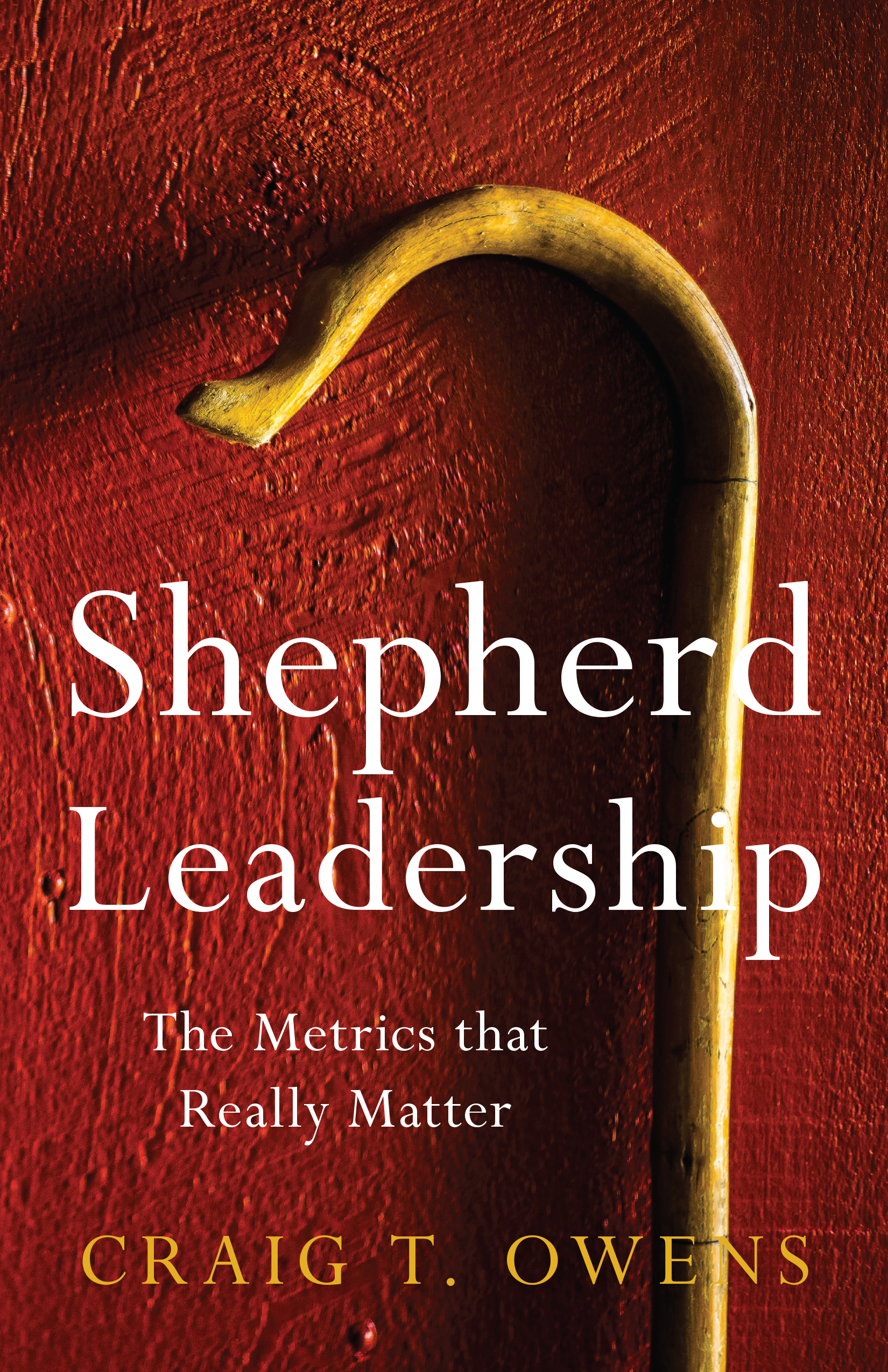
UPDATE: In the final chapter of my book Shepherd Leadership (a chapter entitled “Applause”) I wrote this:

      Did you catch that? Twice Paul reminds us that it is God who makes things grow [1 Corinthians 3:4-8]. God, not man. So is the only successful ministry the one that harvests? How did they harvest without someone watering the seed? What exactly were they watering if no one had planted any seeds? And even with everyone doing the work, it is still God who makes things grow. 

      According to Paul, what does God reward? It’s not numeric growth, but shepherds “will be rewarded for their own hard work … the work the Lord gave us.”

Preach Christ

My Dear Pastor,

“Preach Christ… He is the whole gospel. His person, offices, and work must be our one great, all-comprehending theme.” —Charles Spurgeon

Your Spiritual Patellar Reflex

Listen to the podcast of this post by clicking on the player below, and you can also subscribe on Apple, Spotify, or Audible.

If you’ve ever been to a doctor’s office, you have probably experienced the patellar reflex test. It might be better known as the “knee-jerk reaction.” This is when the doctor taps your knee just below the kneecap to test your body’s involuntary response. How you respond (or don’t respond) tells the doctor a lot about your nervous system’s health.

Did you know that we have a spiritual patellar reflex too?

Consider this verse—

Do not be anxious about anything, but in everything, by prayer and petition, with thanksgiving, present your requests to God. (Philippians 4:6)

How you respond spiritually to stressful things says a lot about your spiritual knee-jerk reflex.

We see this spiritual knee-jerk reflex in the well-known story of Daniel in the lion’s den. Some of the guys who were jealous of Daniel trick the king into passing a law that forbids everyone from praying to anyone other than the king. Look at Daniel’s spiritual knee-jerk reflex:

Now when Daniel learned that the decree had been published, he went home to his upstairs room where the windows opened toward Jerusalem. Three times a day he got down on his knees and prayed, giving thanks to his God, just as he had done before. (Daniel 6:10)

Daniel’s knee-jerk reaction was to hit his knees in prayer!

This is because hitting his knees in prayer was a spiritual habit for Daniel. Check out this key phrase: he got down on his knees and prayed, giving thanks to his God, just as he had done before. The verb tense here is one that means unbroken continuity. In other words, Daniel always prayed, so when anxious times came his spiritual knee-jerk reflex was to do what he always did: Pray, giving thanks to God.

It’s this lifestyle that prompted me to coin the word givingthanksgiving. Giving thanks shouldn’t just be on Thanksgiving Day. It should be a regular activity. And if it is, hitting our knees in prayer will become our spiritual knee-jerk reflex as well.

I want to do better at living this way. I want to pass the spiritual knee-jerk reflex test just like Daniel did. How about you?

Check out the other message in this two-part series series here.

►► Would you please prayerfully consider supporting this ministry? My Patreon supporters get behind-the-scenes access to exclusive materials, like this exclusive video in which I take my supporters behind the scenes of my thought process in designing my confrontation flowchart. ◀︎◀︎

givingthanksgiving

Thanksgiving Day is fast approaching, and families are already making their travel plans, and meal plans, and football-watching plans, and Black Friday shopping plans. Whew! That’s a lot to pack into one weekend! 

So what if we don’t try to pack it into just one weekend?

What if we made sure that Thanksgiving was not just a day, but every day was a day of giving thanks?

What if giving thanks was more than just Thanksgiving?

That’s what we’ll be exploring and learning about from God’s Word over the next two Sundays. I hope you will be able to join me for this eye-opening, heart-challenging two-part series called givingthanksgiving.

And if you can’t join us in person, I challenge you to take some time to answer the question for yourself: What if giving thanks was more than just Thanksgiving? If this were true, how much sweeter your life would be!

If you missed either of the messages in this series, check them out here:

Sola Deo Gloria

God wants to be glorified in your church service! That’s probably a “Duh!” statement, right? After all, who would disagree with that one?

But did you know God also wants to be glorified when you’re eating your dinner? And when you’re out with your friends? And when you’re on your job? And in your marriage? And in your private thought life?

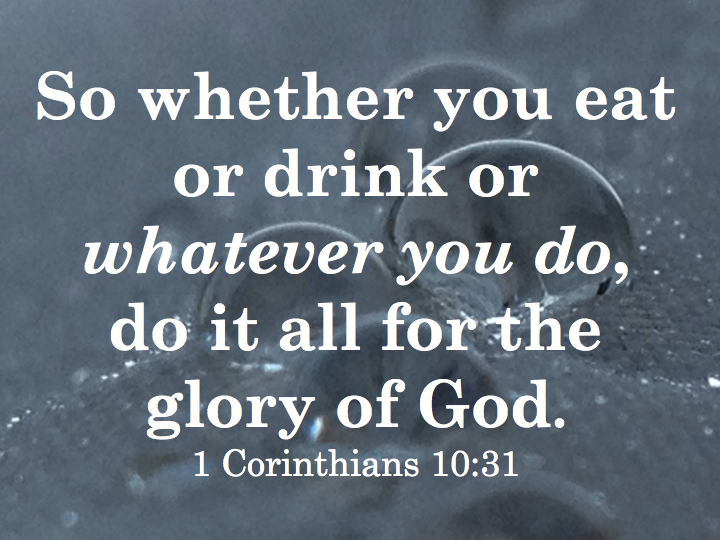
Sola Deo gloria means that everything we do is only for the glory of God.

So whether you eat or drink or whatever you do, do it all for the glory of God. (1 Corinthians 10:31)

Sola Deo gloria means that there are no sacred/secular compartments in your life. You don’t have some activities that are for God and other activities that are not for God. All of life is for Him and for His glory.

“The shop, the barn, the scullery, and the smithy become temples when men and women do all to the glory of God! Then divine service is not a thing of a few hours and a few places, but all life becomes holiness unto the Lord, and every place and thing, as consecrated as the tabernacle and its golden candlestick.” —Charles Spurgeon

It borders on arrogance for me to say, “God, this is what I’m going to do and I want You to bless it.”

A better way to say it is like this: “God, what will bring You the most glory as I go to work? Or have a conversation with a friend? Or enjoy an evening out with my spouse? Or spend some time watching TV?”

What will bring You the most glory? If you ask this question, the Holy Spirit will answer it. Instead of you asking God to bless what you are going to do, He will show you what He’s already blessing—the ways in which He will be most glorified—and then you can go do that.

Try it this week: Ask the Holy Spirit to show you how you can bring glory to God in all that you do. Sola Deo gloria!

If you have missed any of the messages in this series, you can find them all here.

UPDATE: After posting this, I ran across a video from John Piper about God’s glory and I wanted to share it with you…

Sunday Recap

I know we covered a lot of ground today in part 5 of the Sola series. Several folks have asked me to make available the resources I shared this morning, so here they are. Enjoy!

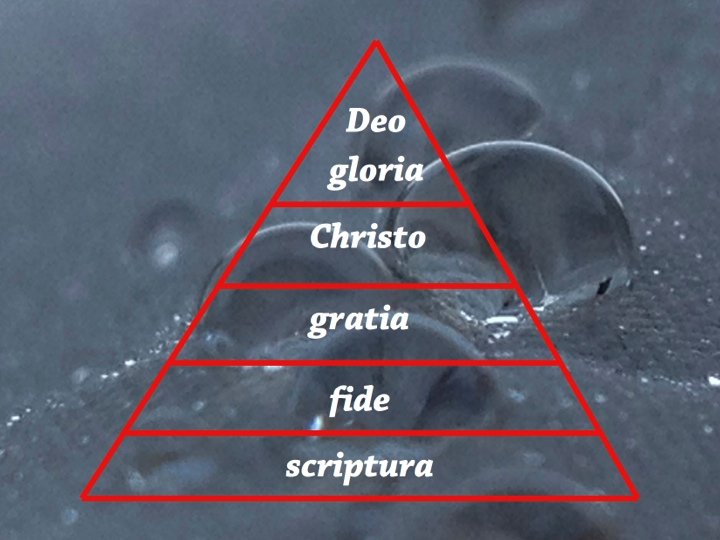
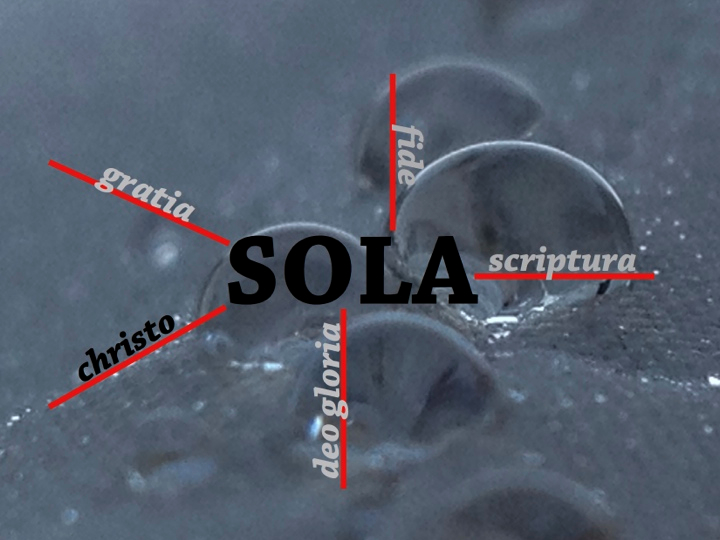
The “Sola pyramid” shows how each of the sola statements build on each other, pointing to the apex of God’s glory.

  • Sola scriptura is the foundation because it gives us the authority of God’s Word on which we build all the other statements.
  • Faith comes by hearing the Word (sola scriptura) and so it leads to the understanding of sola fide.
  • God’s mercy is extended to us in justification, but then his grace is the amazing, above-and-beyond gift to us in sola gratia.
  • We remember grace with this acrostic: God’s Riches At Christ’s Expense. So grace is possible sola Christo—only through the work of Jesus Christ.
  • Jesus Himself said that all He did was to bring glory to the Father, so sola Deo gloria becomes the penultimate focal point of everything else.

Here are the quotes I shared:

“We were made to know and treasure the glory of God above all things; but when we trade that treasure for images, everything is disordered. The sun of God’s glory was made to shine at the center of the solar system of our soul. When it does, all the planets of our life are held in their proper orbit. But when the sun is displaced, everything flies apart. The healing of the soul begins by restoring the glory of God to its flaming, all-attracting place at the center.” —John Piper

“The shop, the barn, the scullery, and the smithy become temples when men and women do all to the glory of God! Then divine service is not a thing of a few hours and a few places, but all life becomes holiness unto the Lord, and every place and thing, as consecrated as the tabernacle and its golden candlestick.” —Charles Spurgeon

“If God’s glory is the only all-satisfying reality in the universe, then to try to do good for people, without aiming to show them the glory of God and ignite in them a delight in God, would be like treating fever with cold packs when you have penicillin.” —John Piper

Let your light so shine before men that they may see your moral excellence and your praiseworthy, noble, and good deeds and recognize and honor and praise and glorify your Father Who is in heaven. (Matthew 5:16, Amplified Bible)

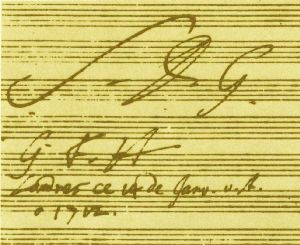
And, finally, here is the picture of George Friederic Handel’s signature on all his music. “S.D.G.” is Sola Deo gloria, which appears before the initials “G.F.H.” of his own name.

Sola Christo

Sola Christo means that it is by Christ’s work alone are we saved. We must get this firmly in our minds, and be aware of anything which reduces Christ, augments Christ, or replaces Christ. 

I don’t believe in studying cults (the counterfeit). Instead, I study the Real, the Authentic, the One and Only. I want to know Jesus so well, that I can easily spot a counterfeit.

God is Spirit (John 4:24)

Jesus is God made flesh (John 1:14)

God is invisible; Jesus is the visible representation of the Godhead (1 Timothy 1:17; Colossians 1:15; Isaiah 9:6)

There’s no way to the Father but through Jesus (1 Timothy 2:5-6)

Jesus wasn’t created; He is Creator (John 1:1-3)

Jesus isn’t a greater angel; He is God (Philippians 2:6)

Jesus isn’t a superior human being; He became a human to save us (Philippians 2:7-8)

Jesus did have a physical body (Luke 24:39)

Jesus did feel pain, experience emotion, wrestle with temptation; get tired and hungry (Matthew 4:2; Matthew 26:38; Hebrews 4:15)

Jesus actually physically died on the Cross and was actually physically resurrected (1 Peter 3:18; 1 Corinthians 15:3-8, 12-28)

Jesus is fully Man and fully God without diluting either of them (Matthew 3:16-17)

Jesus is…

Creator

Sustainer

Savior 

Redeemer

King

Judge

Lord

That’s my King!

If you have missed any of the messages in this series, you can find them all here.