Not Shaken

“Anyone have a nice, neat, organized life that never gets rocked by anything unexpected?” he asked, not expecting anyone to answer. Let’s be honest: There’s a whole lot of shaking going on!  Not just now, but it’s always been this way. Even in 1000 BC when David wrote Psalm 62. 

Let me walk you through this psalm and offer a couple of observations. 

In the first two verses, David’s declaration sounds very religious. It sounds like what he’s supposed to say in difficult times. Yet some doubt is obviously creeping in because David refers to himself as a leaning wall and a tottering fence. It’s here that David has his first Selah pause. 

Selah—pause and calmly consider what’s happening. “If God is really such a strong rock and fortress, could bad guys really slip by Him? Is it likely that they could be trying to knock me over without God knowing about it?” Of course not! God knows exactly what is happening to me, and He’s allowed it to happen for a reason.  

After pausing to consider this, David makes a statement that sounds like he’s repeating the first verse. But notice that this time David is talking to himself: “I don’t believe God is my refuge just because my parents believed it, or just because it sounds religious. I declare it because it is true!” It’s good to preach the Word of God to our shaking souls! 

Verse 6 is a word-for-word repeat of verse 2 with one minor exception. Look at it in the NKJV: “I shall not be greatly moved” (v. 2). This means that in David’s mind there is still a possibility of getting knocked over. But then in verse 6: “I shall not be moved” has no qualifiers. Or as Matthew Henry commented, “I may be shocked, but I shall not be sunk.” 

After making the declarations of verses 1-2 his own in verses 5-6, David can no longer be called a hypocrite when he now encourages others to declare God’s salvation for themselves (vv. 7, 8). Then he invites everyone to Selah again, this time to weigh the Rock of God with the ways of men. He declares that mankind and his plans are only a breath, not even close to the weightiness of God! 

The word alone” dominates the first eight verses of this psalm. David is emphasizing that God alone is our refuge. As Augustine wrote, “God, You arouse us so that praising You may bring us joy, for You have made us for Yourself, and our hearts are restless until they find rest in You.” And C.S. Lewis added, “So few of us will really rest all on Him if He leaves us any other support.” 

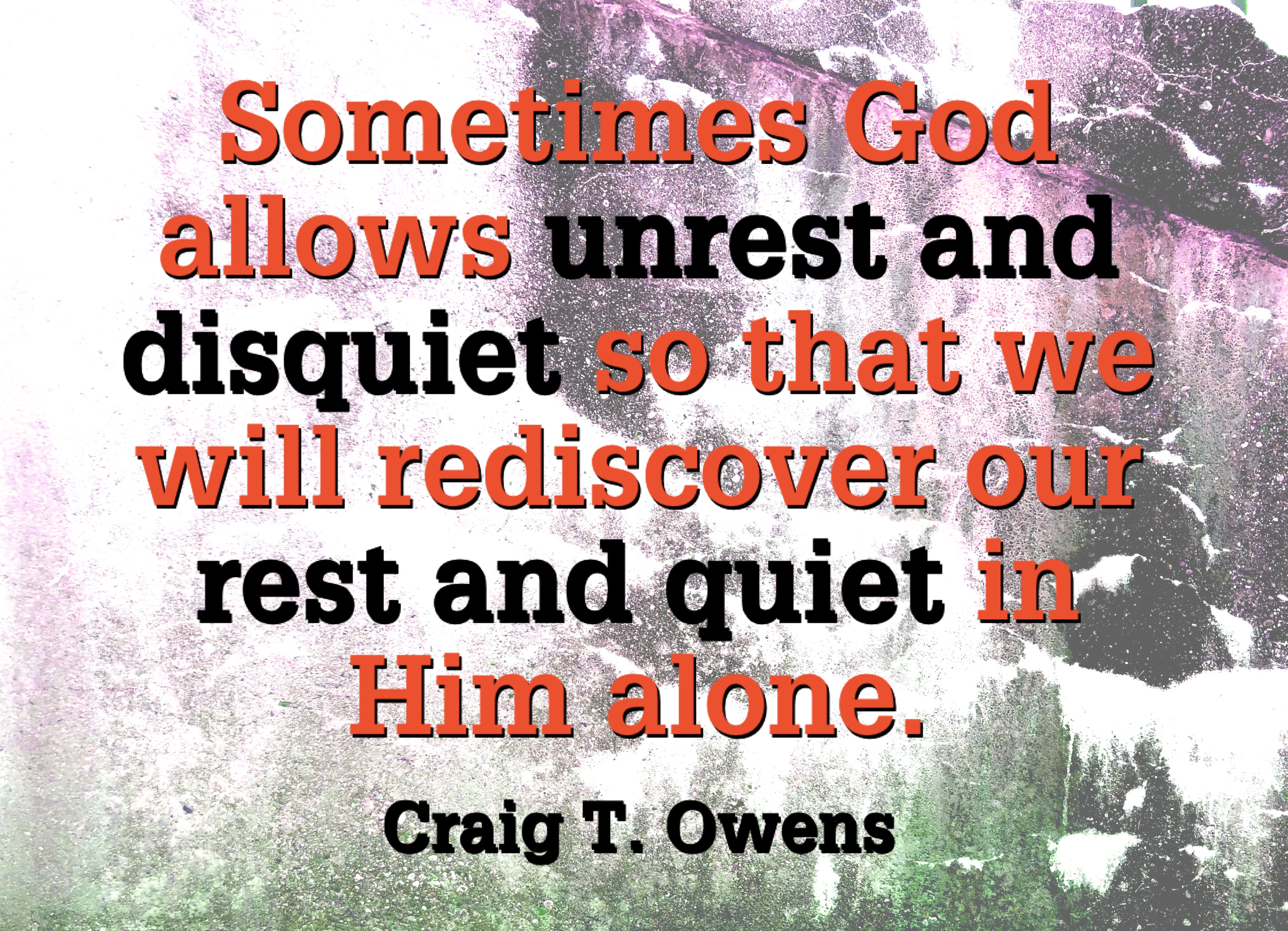
Sometimes God allows unrest or disquiet SO THAT we will rediscover our rest and quiet in Him alone. 

During times of shaking, David calls us twice to Selah pause to reach the same conclusion he has reached—

  • Nothing is stronger than our God
  • No one is more loving than our God

You can stand firm on a God that is powerful enough to help, and loving enough to want to help. HE ALONE is our security! Let times of shaking reveal to you the flimsy supports of this world that you may have come to rely on, and then run to THE strongest, most loving place possible: God’s presence! 

If you’ve missed any of the other posts in our Selah series, you can find the complete list of them by clicking here. 
Run To The Banner

Psalm 60 may have the longest introduction of any of the psalms, and it gives us some key historical information. David has been successful against the Philistines and the Moabites, and now he is fighting in Mesopotamia. While the army was focused elsewhere, the Edomites must have seen an opportunity to attack Israel, where they won a temporary victory (see the intro to Psalm 60 and 2 Samuel 8:1-3). 

David’s reflexive response to this temporary setback was not retaliation or blaming, but remorse and repentance. In verses 1-4 he says “You have” five times, acknowledging that God allowed this temporary defeat. He also acknowledges that only God can restore. 

Then David comes to the Selah pause: But You have raised a banner for those who fear You—a rallying point in the face of attack. Selah. (NLT) 

The Selah here is David calling us to evaluate our options just as he did. We are to consider things like: 

  • God’s help vs. our own strength 
  • the benefits of righteousness vs. the consequences of sin
  • depending on God vs. depending on man 
  • rallying under God’s banner vs. rallying under our own banner 

It’s interesting to note that in the list of David’s long string of victories in 2 Samuel 8, we read this: “The Lord gave David victory wherever he went” (v. 6). But how can that be since the Israelites were temporarily defeated by the Edomites? 

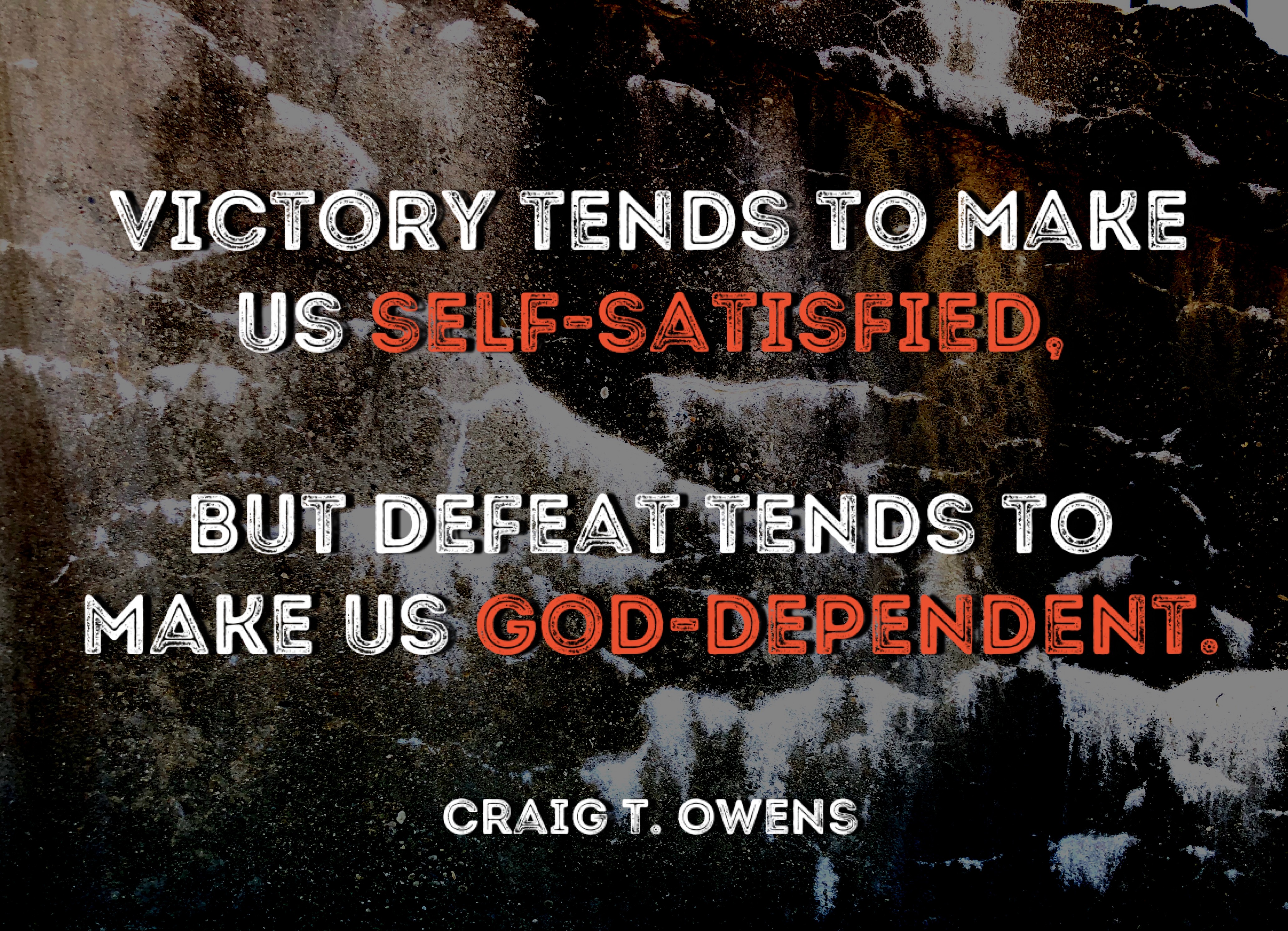
I think this is the key principle—We are more vulnerable to an attack (and a temporary defeat) after a victory than after a defeat. Why is that? Because victory tends to make us self-satisfied, but defeat tends to make us God-dependent. 

When David confesses that God has allowed this temporary defeat, he is really confessing that he had attempted to navigate things on his own. Perhaps he thought his strategy would keep Israel secure, or that his men were trained and resourced enough to be victorious, or that David didn’t even have to pay attention to the Edomites any longer. 

Whatever went through David’s mind, it was clear that he had become more self-satisfied than he was God-dependent. So David correctly recognized that he needed to run to God’s banner. He recognized that was the only secure place for him to stay. 

The Bible DOESN’T say “resist the devil and he will flee from you,” but it DOES say “submit yourself to God—run to His banner and stay under His banner—and then you can resist the devil and he will flee from you.” 

Look at the keywords in the final verse of Psalm 60: “With God we will gain the victory, and He will trample down our enemies.” 

WE WILL only because HE WILL. 

Has there been a temporary setback in your life? Repent and run to the banner of God. 

Have you felt under attack? Humble yourself and run to the banner of God. 

Have you recently won a victory? Stay humble and keep on running to the banner of God! 

If you have missed any of the other posts in this Selah series, you can find the full list by clicking here.

Trespassers

Psalm 59 is the prequel to David being betrayed by the Ziphites as well as the incident in the cave between himself and King Saul. 

This psalm is also called an imprecatory psalm, which is the theological way of saying, “Get ‘em, God!” Since King Saul has sent assassins to try to kill David, you can understand why David is praying this way. But I sort of wonder why he inserts a Selah pause after two rather angry-sounding sentences in verses 5 and 13. 

When we are reading—or even praying—an imprecatory prayer, here are some important things to keep in mind: 

  • This prayer is inspired by the Holy Spirit. All of the words in the prayer, including the Selah pauses, are directed by the Holy Spirit. Getting our angry thoughts out in God’s presence is the safest place to vent. 
  • This is a prayer for justice because an injustice has been done, not just a prayer because David is upset with someone. 
  • Since this prayer says, “Get ‘em, God,” it’s a prayer that turns matters over to God as the Ultimate Judge, taking the judgment out of my hands. 

Really this is a prayer that seeks to balance something vital: The desire to see evil punished while at the same time desiring to see all evildoers come to salvation. 

Think of it this way: When I sin, do I want to meet a God of justice or a God of mercy? Since we are to treat others the way that we would want to be treated, if I want to receive God’s mercy, I have to desire that for others too. Even those evildoers who have hurt me. 

David’s first Selah pause comes after saying that he is innocent of any offense or wrongdoing. When we pray an imprecatory prayer, we would do well to ask the Holy Spirit to search our hearts to reveal any trespasses we have committed (see Psalm 19:12-13; 139:23-24). 

David’s second Selah pause comes after he says, “Then it will be known to the ends of the earth that God rules over Jacob.” Is my “Get ‘em, God” prayer a desire for me to be seen as the overcomer or for God to be seen as glorious? 

As long as my focus is on my trespassers, my focus is off my God. 

I cannot be consumed by thoughts of “them” because then I rob myself of thoughts of Him! 

So when you get angry enough at someone who has trespassed against you that you want to pray a “Get ‘em, God” prayer, Selah pause and pray, “Holy Spirit… 

  • …show me my trespasses; 
  • …help me forgive my trespassers; and
  • …help me to focus on my God, and not on my trespassers or my forgiven trespasses.” 

If you have missed any of the other messages in our Selah series, you can find links to all of them listed here. 

Messes

My good friend Josh Schram shared a powerful message in our Selah series. 

David is the anointed king, but instead of living in a palace, he’s living in a cave. From this cave, David gave us Psalm 57. 

Here are some of my takeaways from Josh’s message, but I would encourage you to watch this 20-minute video for yourself

Takeaways: 

  • To get where God needs me to be, I often have to go through things I never expected. 
  • Even my “cave times” are directed by God. 
  • “David didn’t get down on Saul’s level; he got down on his knees.” —Josh Schram 
  • If David had taken matters into his own hands, what would his legacy have been? Instead, he worshiped God, and let God take care of Saul. 
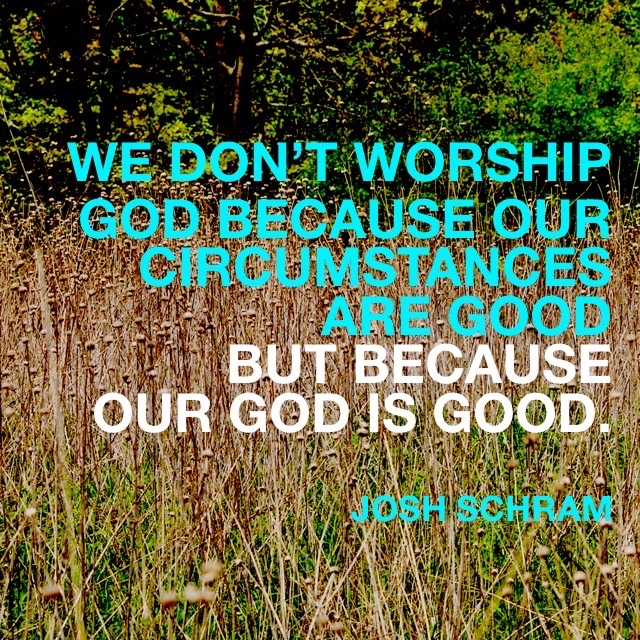
  • “We don’t worship God because our circumstances are good but because our God is good.” —Josh Schram 
  • My little messes become big messes when I try to handle them myself. I need to run to my Heavenly Father for help with all of my messes! 

If you have missed any of the messages in our Selah series, you can access all of them by clicking here. 
Interrupt Your Anxious Thoughts

Listen to the podcast of this post by clicking on the player below, and you can also subscribe on Apple or Spotify.

David taught us how to pray after we’ve been stabbed in the back. Aren’t you glad that you can pray this prayer just once and everything is all better?! 

Oh, wait. It doesn’t really work that way, does it? At least it hasn’t for me. After I’ve been hurt, it takes quite a while to get to a place of healing. We have cliches for this sort of thing—phrases like “Once bitten, twice shy” and “Fool me once, shame on you; fool me twice, shame on me.” 

We begin to react to the past instead of reflecting and responding in the present.  

It’s interesting that those who compiled the Psalter placed Psalm 55 where they did. There is no introduction that gives us a background or setting, but David still seems to be looking for those “Ziphites” that betrayed him to King Saul. 

Here’s an important physiological and psychological truth: Our brains cannot tell the difference between a real threat and an imagined threat. Our physical bodies react the same way in response to any threat. 

It’s interesting to note that both Selahs in Psalm 55 are in the middle of a sentence, almost as if David is interrupting his own thoughts. Which, I believe, is exactly what he’s doing. 

As this psalm opens David is still praying, but he’s praying about his internal threats: 

  • my thoughts trouble me 
  • I am distraught 
  • I notice the conversations and the stares of potential enemies  
  • my heart is in anguish 
  • I feel like terrors of death, fear and trembling, and horror are closing in on me! 

This leads to David’s fight/flight response (although really, it’s his flight response): “Oh, that I had the wings of a dove! I would fly away and be at rest—I would flee far away and stay in the desert.

David has been listening to himself, and he finally at least attempts to put a halt to these distressing thoughts with his first Selah—which means “pause, and calmly think of that.” 

Most of our natural reactions are driven by fear. But fear—by its very nature—is limiting. Fear keeps us tunnel-visioned on the perceived threat. Fear closes us off to accepting any new information. Fear limits our creative responses. Fear perpetuates more fear. 

So David tries a second time to Selah. He is attempting to interrupt his negative thoughts—to stop listening to himself and start talking to himself. To move from a self-preserving reaction to a God-glorifying response requires a Selah pause to reflect. Reflecting on things like:

  • Where will these thoughts ultimately take me? 
  • How has God responded before? 
  • What does God’s Word say? 
  • Could I imagine Jesus responding the way I’m responding? 
  • What changes can I make? 

I love David’s conclusion: “But as for me, I TRUST IN YOU.” He’s saying, “I’m not going to listen to those negative fears anymore. It’s time to put my trust in God.”  

David had to do this “evening, morning, and noon”—again and again and again! Until finally he could say, “I will cast all my cares on the Lord and He will sustain me; He will never let me fall” (Psalm 55:22). 

This is what Jesus promises us, “Come to Me, all of you who are tired and have heavy loads, and I will give you rest” (Matthew 11:28). 

If you’ve missed any of the messages in our Selah series, you can access them all by clicking here. 

How To Pray When You’ve Been Stabbed In The Back

Sadly, some of the people who do us the most harm are those whom we least expected to hurt us. They seemed to have our back, but then they are stabbing us in the back! 

It’s sad, but it shouldn’t be totally unexpected. Matthew Henry said it well: “Never let a good man expect to be safe and easy till he comes to heaven. … It is well that God is faithful, for men are not to be trusted. 

David learned that lesson. He rescued the town of Keilah from the Philistines, only to hear that King Saul has called out his army to destroy Keilah and kill David. This prompted David to leave Keilah and flee to the Desert of Ziph. It appears that David has given Saul the slip, but the Ziphites send a message to the king saying, “We know where David is hiding, and we’ll gladly hand him over to you.” 

Here’s the painful part for David: Both Keilah and Ziph were in Judah—David’s tribe! His own family—that should have had his back—stabbed him in the back instead! 

I wish I could say this was a once-in-awhile thing, but we all know that it’s not. In fact, this sort of betrayal probably happens more often than we would care to admit. 

It was during this time of betrayal by the Ziphites that David wrote the 54th Psalm. In the opening verses, David laments the ruthless, Godless men that have betrayed him. And then comes that word of pause: Selah. 

I believe this Selah may have come when “Jonathan went to David at Horesh and helped him find strength in God” (1 Samuel 23:16). One of the definitions of Selah is to weigh things to see what is more valuable. Notice that Jonathan took David’s attention off his evil betrayers and turned it to his loving God. So in the very next phrase after the Selah we read David saying, “Surely God is my help; the Lord is the One who sustains me.” 

Notice four key components of David’s prayer—

  1. David’s motive for praying. In the opening verse, he says, “Your Name…Your might.” To me, that sounds a lot like the opening words to the model prayer Jesus taught us: “Hallowed be Your Name.” 
  2. David’s prayer. He said, “Hear my prayer, O God; listen to the words of my mouth.” It’s interesting to note that David says nothing to the Ziphites themselves, but he only speaks of them when he is alone with God in prayer.  
  3. Prayer’s result. David didn’t have to try to make things right on his own because God took care of it—evil recoiled on those who stabbed David in the back. 
  4. David’s praise. Notice the words “I will praise Your Name…[You] have delivered me.” Again, this praise and focus on God sounds like the end of the model prayer Jesus taught us: “Yours is the kingdom, and the power, and the glory forever!” 

When enemies assail, when you have been stabbed in the back, don’t look to men for help and don’t take matters in your own hands. Instead take a Selah. Consider that God is worthy of your attention, and not the “ruthless men” who hurt you. Turn your pain over to God and say with David: Surely God is my help; the Lord is the One who sustains me. 

Evil will recoil on evildoers, you will be kept safe, and you will be vindicated by God’s might! 

If you missed any of the messages in our Selah series, you can find them all by clicking here. 

Doing Justice The Right Way

Once I was asked to teach a class on business ethics but I said, “I can’t because there’s no such thing as ‘business ethics.’ There is only ethics: Either something is right or it’s not.” 

I think the same concept holds true for “social justice.” There is no such thing: Either something is just or it’s not. 

For those situations that are truly unjust, the Bible tells us how to handle them. But first, let’s get a sense of what the Bible actually means by the word “justice.” 

Psalm 50 is a courtroom scene, with God Himself presiding as the Judge, summoning all of creation into His presence (see Psalm 50:1-6). Just before The Judge begins to speak, the psalmist Asaph calls on us to Selah—or pause to consider—after saying, “The heavens proclaim God’s righteousness.” 

The New Living Translation has this verse saying, “The heavens proclaim His justice…” and the Amplified Bible uses both words: “The heavens declare His righteousness (rightness and justice)….” So which word is it: righteousness or justice? 

The Hebrew word (tsedeq) means something that is ethically right. In other words, something for which God sets the objective standard for rightness and wrongness. There is another Hebrew word that is often very closely associated with tsedeq, and that is justice (mishpat): that is the penalty for violating tsedeq. 

But here’s where things get really interesting. We usually associate the idea of justice with retribution (or payback), but God’s justice is usually portrayed as restoration. 

In other words, God’s mercy is so strong and His desire for us to be restored into right standing with Him is so passionate, that His default is restorative mercy. 

God’s response to our acts of unrighteousness wasn’t to rain down retributive justice on us, but to send His Son to earth to make restorative mercy available! 

In his first public sermon, Jesus quoted the prophet Isaiah. The last words Jesus read about His mission on earth were “to proclaim the year of the Lord’s favor.” He left off the last phrase in Isaiah which said, “and the day of vengeance of our God.” Favor (restoration) now; judgment (retribution) later for those who would not accept the restoration Jesus made available. 

Back in the Psalm 50 courtroom, God tells us the wrong way to address injustice: with angry, demeaning words (Psalm 50:19-20).  

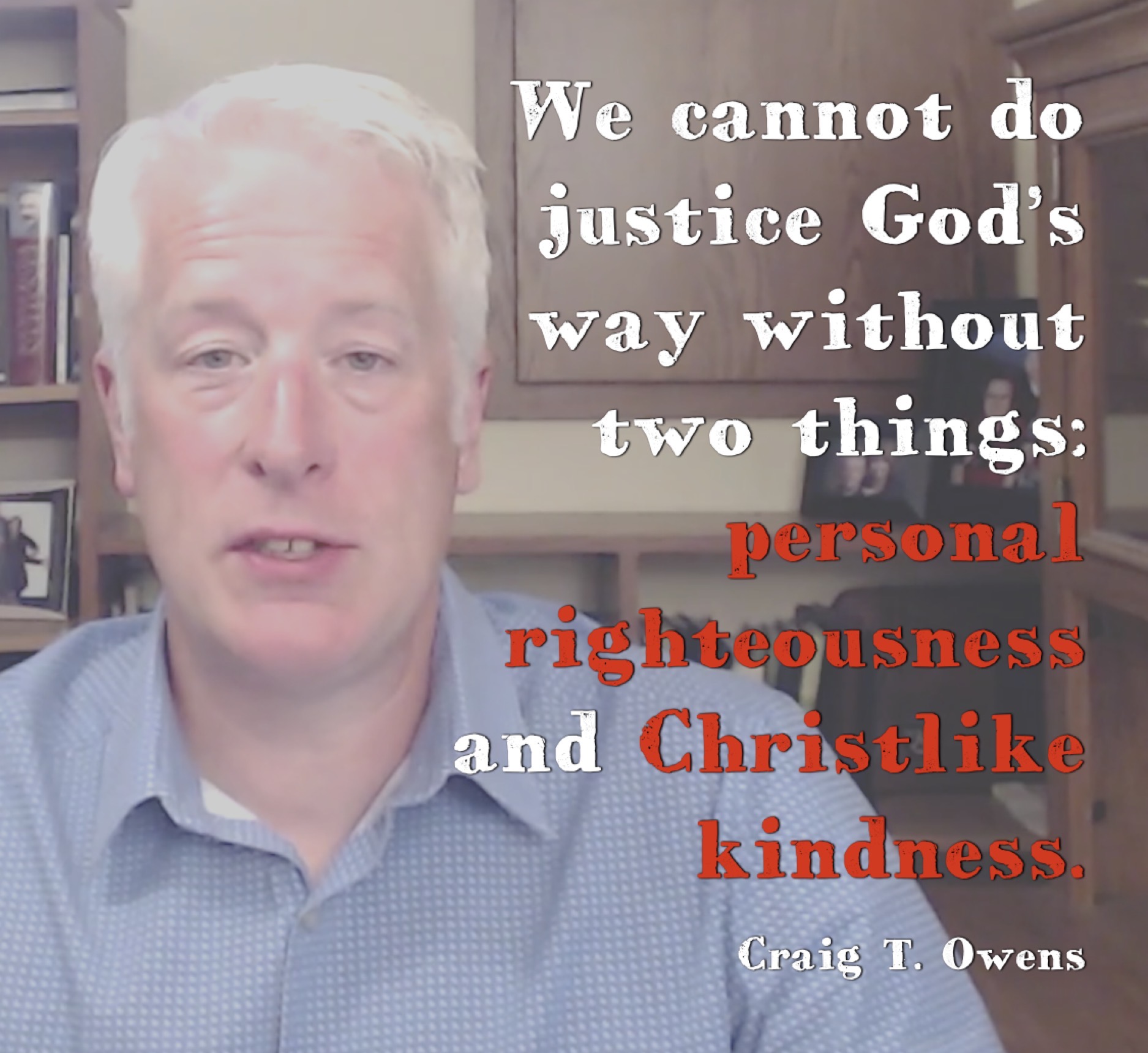
We CANNOT do justice God’s way without two things: 

  1. Personal righteousness which comes from Jesus in us (Romans 5:1); otherwise, we’re just hypocrites pointing out the exact same injustice that’s in ourselves. 
  2. Kindness. “But let the one who boasts boast about this: that they have the understanding to know Me, that I am the Lord, who exercises kindness, justice and righteousness on earth, for in these I delight,” declares the Lord. (Jeremiah 9:24)

And what does the Lord require of you but to do justly, and to love kindness and mercy, and to humble yourself and walk humbly with your God? (Micah 6:8)

The darkness of injustice is the absence of light. Jesus says to us, “You are the light of the world” (Matthew 5:14). 

The hate of injustice is the absence of love. Jesus says to us, “A new command I give you: Love one another. As I have loved you, so you must love one another. By this everyone will know that you are My disciples, if you love one another” (John 13:34-35). 

Here are my takeaways—

  1. Let God be The Judge. 
  2. Make sure I am in right standing with God through my relationship with Jesus Christ. 
  3. If I see injustice, address it with kindness, light, and love.

If you have missed any messages in this current series in the Selahs in the Psalms, you can get caught up by clicking here.

Selah

The word Selah appears nearly 70 times in the Bible, almost exclusively in the Psalms. Although it is primarily a musical term, it applies beautifully to our summer series. 

Selah can mean…

  • a pause from the noise to reflect;
  • a preparation for an exciting accent; or 
  • a reflective time of consideration

Throughout the Psalms, Selah appears at the end of a verse, at the end of the psalm, or sometimes even mid-sentence. But each one of them is perfectly placed by the Spirit-inspired authors to get us to take a breath and deeply contemplate what we just read or sang. 

Summertime is typically a time for us to pause from our regular routine. Perhaps it’s a vacation, time with friends and family, driving around with the windows down and the music blasting, or just a quiet walk through woods or along a beach. In any case, whether we realize it or not, we’re actually doing Selah in these break-from-the-routine activities. 

Join me this Sunday as we continue our summertime look at each of the Psalms that ask us to Selah. I think you will find that this Sunday summertime pause will be both refreshing and encouraging. You can join me either in person or on Facebook Live. 

Since this is a continuation of our summer series, you can check out the Selahs we discussed in 2018 by clicking here, and the messages from the summer of 2019 are here.

The messages for this summer are:

Year-End Review (2019 edition)

Ten years ago God called me to pastor at Calvary Assembly of God, and we have so thoroughly enjoyed our time in Cedar Springs! One of the really cool things I get to do is teach an amazing group of people every Sunday. Here’s a recap of the series and messages from 2019.

Boldly Praying—As a general rule, God would like us to pray much more boldly than we typically do. Jesus told us that we could pray mountain-moving prayers, but C.S. Lewis rightly observed, “If we consider the unblushing promises of reward and the staggering nature of the rewards promised in the Gospels, it would seem that our Lord finds our desires, not too strong, but too weak.” 

Christ’s Passionate Journey—In action movies, the crucial moment usually is filmed in slow motion. The Gospels do the same as Jesus approaches the Cross. For example, Mark doesn’t mention anything about the birth of Jesus and only gives us one verse to tell about satan’s temptation of Jesus in the wilderness. But he uses nearly 40% of his writing to describe the last week of Christ’s life. 

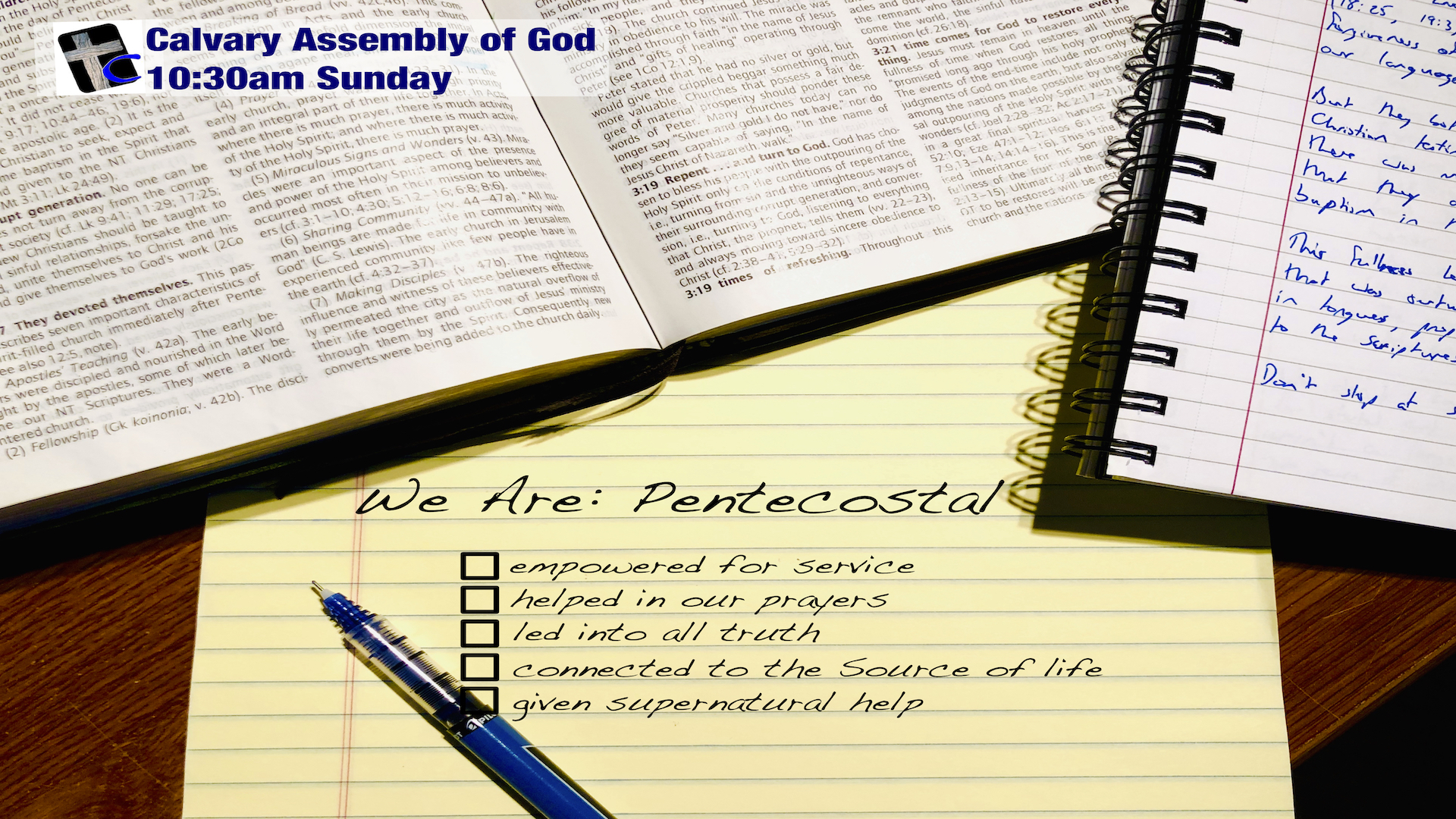
We Are: Pentecostal—Pentecost for over 1000 years was a celebration in Jerusalem that brought in Jews from all over the world. But on the Day of Pentecost that came just ten days after Jesus ascended back into heaven, the meaning of Pentecost was forever changed! 

Is That In The Bible?—Sometimes things that sound “biblical” aren’t actually in the Bible at all, and sometimes they are there but are misquoted. 

Selah—When you see this word in the Bible it can mean either a pause from the noise to reflect on something, a preparation for an exciting accent, or a reflective time of consideration. We are working our way through the Selahs in the Psalms.

Major Lessons From Minor Prophets—The five major prophets consist of 182 chapters, whereas the 12 minor prophets only have 67 chapters. The volume of these prophets writing may be minor, but their content carries major messages of meteoric power!  

Fading Gratitude—Looking back at the history of God’s people in the Bible, there is a distinct up-and-down cycle. I believe their slipping away from God can be directly linked to their forgetfulness. If there is a peril in our forgetfulness, there is also a power in our thankfulness!

The Carols Of Christmas—How many “old familiar carols” have you heard Christmas after Christmas until the words have almost lost their meaning? If we’re not careful, any song repeated too often can lose the richness of its original intent. 

We will be returning to a couple of these series in 2020, and we’ll be launching some brand new ones as well. In either case, if you don’t have a home church in the northern Kent County area, I would love to have you join us! 

How To Respond To Evildoers

I’m sure if I asked for a show of hands, everyone of you would put up a hand (or maybe even two!) to the question, “Has someone done something bad to you?” 

The real issue is not if we’ve been the victim of evildoers doing evil things; the real issue is how to respond to evildoers that do evil things. 

In Psalm 52, David tells us that he wrote this prayer after a vile man named Doeg had done atrociously evil things to a whole town of innocent people. Worse yet: these people were simply trying to help David!

David was fleeing for his life from King Saul, forcing him to leave home with just the clothes on his back. He stopped at the village of Nob and asked Ahimelech the priest for food and a weapon. That act, in King Saul’s mind, was worthy of death. None of Saul’s soldiers would carry out his command to execute the priest, but Doeg quickly responded. Doeg not only killed Ahimelech, but he killed the 85 priests with him, and then he proceeded to annihilate everything and everyone left in the village of Nob. Only one man escaped to tell David what happened. 

When David begins this psalm, he uses the words you or your 14 times in just the first five verses. David is addressing Doeg, almost holding up a mirror to his evil deeds. By contrast, the word I is used five times in just the last two verses of this prayer. 

That tells me that we have to work on this problem of evil from two different directions. We need to see evildoers in their evil, and we need to see a godly response to evildoers. As with many Hebrew poems, the most important principle is in the middle—Surely God will bring evildoers down to destruction, but He will protect the righteous (v. 5). 

In the opening words, David asks Doeg, “Why do you boast of evil?” The word for boast in Hebrew is halal—this is usually the word we translate Hallelujah! In other words, Doeg has put his evil on the throne of his life and is saying “Hallelujah!” to it. A downward slide of all sorts of evil words and evil deeds spiral out from this until the climax: Surely God will bring judgment. 

Notice David says “God” (not you) “will” (not might) take care of this. 

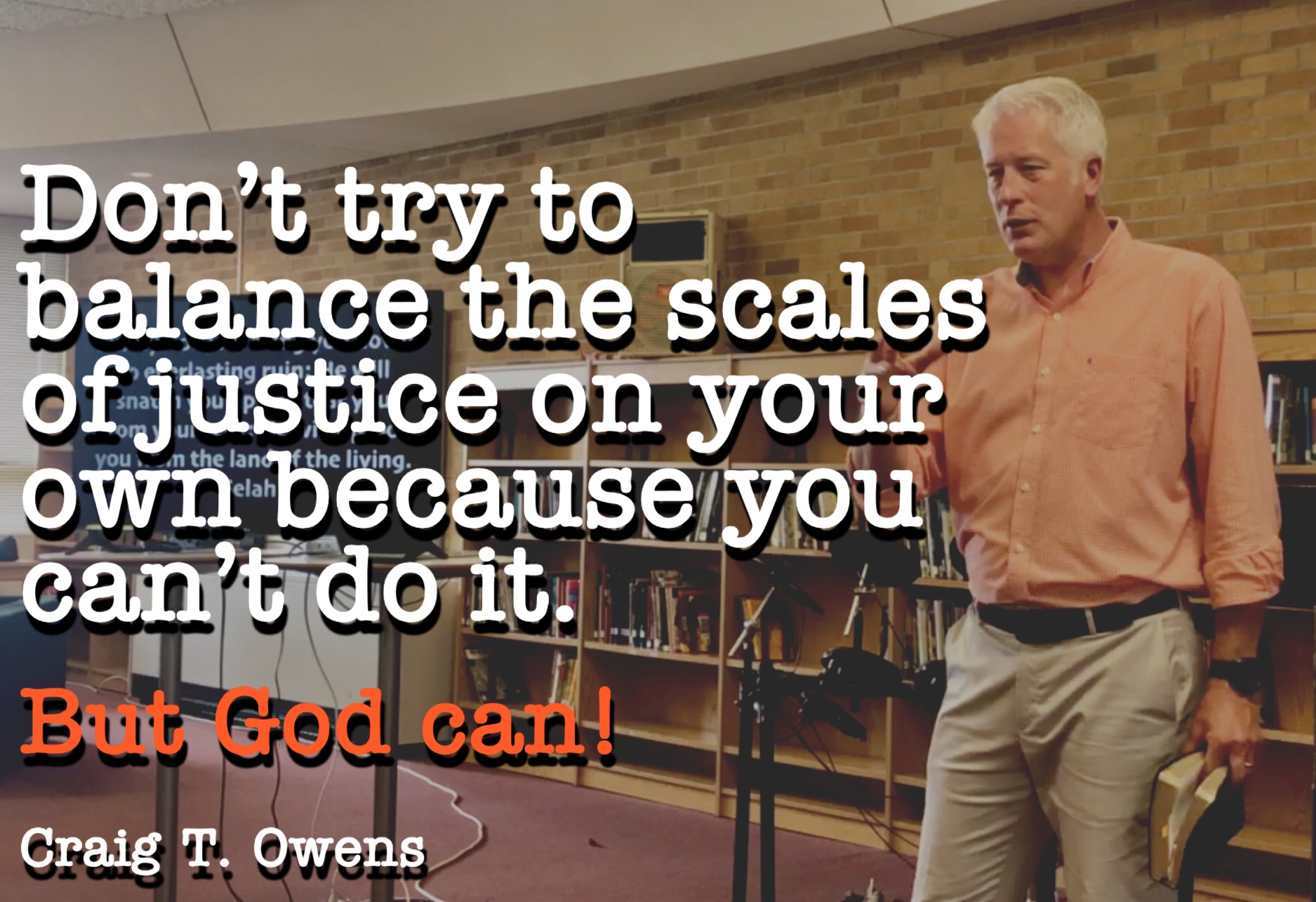
Now let’s look at it from a righteous perspective. Working backwards from verse 9 to verse 5, we see whereas Doeg was praising his evil deeds, David is praising God. David recognizes that it’s only in God’s presence that he can be free, and it’s only God that can ultimately balance the scales of justice. 

▶️ My friend, you cannot make things right. Only God can do this. Please, please, take your eyes off the evildoer that did evil things to you, and put your eyes on the Perfect Judge. He alone can balance the scales of justice. ◀️

So here are four lessons for all of us to learn—

  1. When evildoers do evil things to you, talk to God about them; don’t talk to your enemies and don’t even talk to your friends.
  2. Continue to redirect your heart and thoughts to God’s unfailing love, and away from thoughts of retribution—even if you have to do this a hundred times a day.
  3. When evildoers afflict you, look in the mirror of God’s Word to see if there is anything for which you need to repent and then ask forgiveness.
  4. When judgment comes, don’t gloat. John Bradford, when he saw a cartful of men going off to be hanged said, “There goes John Bradford but for the grace of God.”

In this video I reference our series on the Selahs in the book of Psalms. If you missed any of these, please click here to find a list of the other topics we covered.