Remember not the sins (the lapses and frailties) of my youth or my transgressions; according to Your mercy and steadfast love remember me, for Your goodness’ sake, O Lord. … The troubles of my heart are multiplied; bring me out of my distresses. Behold my affliction and my pain and forgive all my sins of thinking and doing. Consider my enemies, for they abound; they hate me with cruel hatred. (Psalm 25:7, 17-19 AMPC)
In this prayer, it appears that David’s enemies are his own accusing thoughts brought on by his sinfulness.
The way to vanquish the internal enemies that accuse and torment us is to bring our “sins of thinking and doing” into the light of our Savior’s presence—only there will we be freed from those enemies.
Listen to the podcast of this post by clicking on the player below, and you can also subscribe on Apple, Spotify, or Audible.
The London Times asked, “What’s wrong with the world today?”
In his characteristic wit and candor, G.K. Chesterton responded with a letter:
“Dear Sir,
I am.
Yours, G.K. Chesterton”
I hear the same humble honesty in Ezra’s prayer:
O my God, I am ashamed and embarrassed to lift up my face to You, my God, for our iniquities have risen above our heads and our guilt has grown even to the heavens. … Now, our God, what shall we say after this? For we have forsaken Your commandments (Ezra 9:6, 10).
This isn’t a word for “back then” or exclusively for Israelites—this is still a word for all of us today.
Several years ago I was asked to sign a joint letter from local pastors condemning a couple of headline-making heinous activities. In part of my response to these pastors, I wrote,
“I’m not sure if a letter to the editor is an appropriate response or not. But if this is the correct response for us, I am very hesitant to sign my name to a letter that calls out merely one of many sins. The problem we face is a singular one: sin.
“The solution is also a singular one: Jesus.
“A response that merely denounces evil acts is not, in my mind, effective. Such a letter is only highlighting sins, but not the solution.”
This, also, is what I see Ezra doing. It may have been one particular sin that got his attention (in this case, intermarriage with non-believers) but he then confesses their universal condition: the sin of departing from God’s commandments.
It’s so easy to spot sins in society, shake our heads in disgust, and say, “They should know better! What’s wrong with the world today? Someone should do something about that!”
Instead, any and every sinful expression we observe should send us to our knees saying, “But for the grace of God, I would be guilty of the same thing. God, be merciful to me, a sinner. I confess my sin and plead for Your mercy and forgiveness.”
Revival will never be a widespread response until it is first an individual response.
When we began as individuals to confess “my sin,” others will soon join with us in confessing “our sin” (see Ezra 9:4). That attitude is the seed of revival.
If you are a pastor and would like to join other pastors in a weekly prayer time for revival, please email T.M. Moore to get plugged into this strategic online gathering.
This is a weekly series with things I’m reading and pondering from Charles Spurgeon. You can read the original seed thought here, or type “Thursdays With Spurgeon” in the search box to read more entries.
Listen to the podcast of this post by clicking on the player below, and you can also subscribe on Apple, Spotify, or Audible.
My Element
But our citizenship is in heaven. And we eagerly await a Savior from there, the Lord Jesus Christ, Who, by the power that enables Him to bring everything under His control, will transform our lowly bodies so that they will be like His glorious body. Therefore, my brothers and sisters, you whom I love and long for, my joy and crown, stand firm in the Lord in this way, dear friends! (Philippians 3:20—4:1).
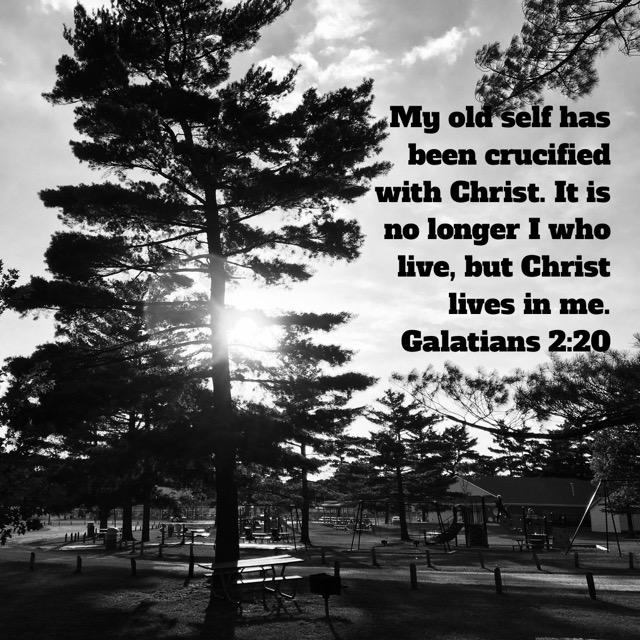
Do you know what it is to feel that the life that is in you is first in Christ and still flows from Him, even as the life of the branch is mainly in the stem? ‘I live; yet not I, but Christ lives in me’ (Galatians 2:20). This is to be in Christ! …
This expression is very short but very full: ‘In Christ.’ Does it not mean that we are in Christ as the birds are in the air that buoys them up and enables them to fly? Are we not in Christ as the fish are in the sea? Our Lord has become our element—vital and all surrounding! In Him we live, move, and have our being. He is in us, and we are in Him. We are filled with all the fullness of God because all fullness dwells in Christ and we dwell in Him.
From The Watchword For Today: “Stand Fast”
Years ago I was taking a class, and the teacher asked us to write down some of the different roles we had in our life. I wrote down things like son, brother, employee, team captain. After everyone had finished their lists, the teacher asked the students to share some of their roles. As each one listed a role, the rest of the class would raise a hand if that role also applied to them. One person said, “Christian,” and nearly every hand in the classroom went up. Except mine.
Being a Christian is not a role I step into; it’s who I am. It impacts everything I think and everything I do.
Birds don’t step into the air when they want to fly. Fish don’t run to the water when they want to swim. Birds and fish always live in their element. We are in our element in Christ when we can always say, “In Him I live, and move, and have my being.”
The devil has always used doubt and uncertainty—“Did God really say…” he asked Eve, and “Are you really the Son of God,” he mocked Jesus. He wants to do the same thing to you today, making you think you have somehow missed out on being in Christ.
But if Christ is your Savior and your Lord, stand fast in that. Let nothing move you. Counteract the devil’s doubt-inciting accusations with truthful as-it-is-written statements from God’s Word. Immerse yourself in Christ and make Him your constant element—just as a branch connected to a stalk, or a bird in the air, or a fish in the ocean. You are in Christ, Christ is in you, and Christ is in the Father. Which means Jesus has taken you into the Father with Him. Live, and move, and have your very being in His presence every single moment!
Listen to the podcast of this post by clicking on the player below, and you can also subscribe on Apple, Spotify, or Audible.
On Resurrection Sunday we celebrate the greatest Gift ever—Jesus our Savior conquered sin and death!
I don’t know about you, but many times when I’m given a gift, I feel like I need to give a gift back to the giver. I want this gift to seem appropriate for the gift I was given so that the other person knows that I really appreciated their thoughtfulness. But there is a danger if we try to do this with God’s Gift to us.
One of the psalmists wondered how to repay God. After praising God for the salvation He worked, the psalmist asks, “How can I repay the Lord for all His goodness to me?” (Psalm 116:1-6, 12).
As I said, not only is there a danger in trying to give God a gift that somehow reciprocates what He’s given to us, but how do you give a gift to the One who needs nothing (see Acts 17:25; Psalm 50:9-12)?
Let me try to explain it this way. What if a rich friend gave me a house, all its furnishings, and all its food? He said, “I want to provide this place for you to live and not concern yourself with your housing or food needs. The house has no mortgage, I will pay for the utilities, and I will keep your kitchen stocked with food.”
I would, of course, exclaim, “Wow! Thank you!” But what if I then began to make monthly mortgage payments, or started leaving money in the cupboard to pay for the groceries? Wouldn’t I really be saying to my friend, “I’m not sure you can afford this.” Or maybe even, “Let me give you something so you won’t think me ungrateful and then end up taking back your gift.”
In my attempt to give back to my generous friend, I’m really questioning his resources that will allow this gift to continue or his motivation for blessing me.
The psalmist in Psalm 116 gives us two ways we can express our gratitude to God for His Gift of Jesus (Psalm 116:13-14).
I will lift up my cup of salvation. This isn’t lifting up a cup to say, “Cheers,” but lifting it up for a continual refilling because He is the only Source that can refill it.
I will fulfill my vows to the Lord. One picture of our relationship with Jesus is a marriage, where Jesus is the Bridegroom and we are the bride. At almost any wedding you may attend, the bride and groom make vows to each other that essentially say, “I only have eyes for you. My heart is only longing for you. I’m devoted to you forever, no matter what!”
In my Good Friday message, I said that Jesus IS the perfect Gift. When He said, “It is finished,” He left nothing undone.
For me to then say, “Thank you for that Gift. Now I must do _____,” is to really say, “I don’t think the Gift was perfect. There are still some things needed to complete it.”
Or it might be fear speaking that says, “If I don’t give something back, You may withdraw Your Gift from me!”
I think these stem from two misconceptions:
Misconception #1: “God does loving things.” Truth #1: Yes He does, but more than that God IS love.
God is love. He could never love you more than He already does, so stop trying to earn His love. And He could never love you less than He already does, so stop worrying.
Misconception #2: “God supplies my needs.” Truth #2: Yes He does, but more than that God IS provision.
God is provision. He never runs low. He is never dependent on someone else. He is never short-changed. He knows exactly what you need, and He can perfectly provide for you each and every moment.
Don’t try to repay God for sending His Son Jesus, but celebrate God’s Perfect Gift by continuing to let Him fill your cup of salvation, honoring your vows to Him, and living securely and joyfully in His love and provision.
This is a weekly series with things I’m reading and pondering from Charles Spurgeon. You can read the original seed thought here, or type “Thursdays With Spurgeon” in the search box to read more entries.
Listen to the podcast of this post by clicking on the player below, and you can also subscribe on Apple, Spotify, or Audible.
No Other Name
But our citizenship is in heaven. And we eagerly await a Savior from there, the Lord Jesus Christ, Who, by the power that enables Him to bring everything under His control, will transform our lowly bodies so that they will be like His glorious body. Therefore, my brothers and sisters, you whom I love and long for, my joy and crown, stand firm in the Lord in this way, dear friends! (Philippians 3:20—4:1).
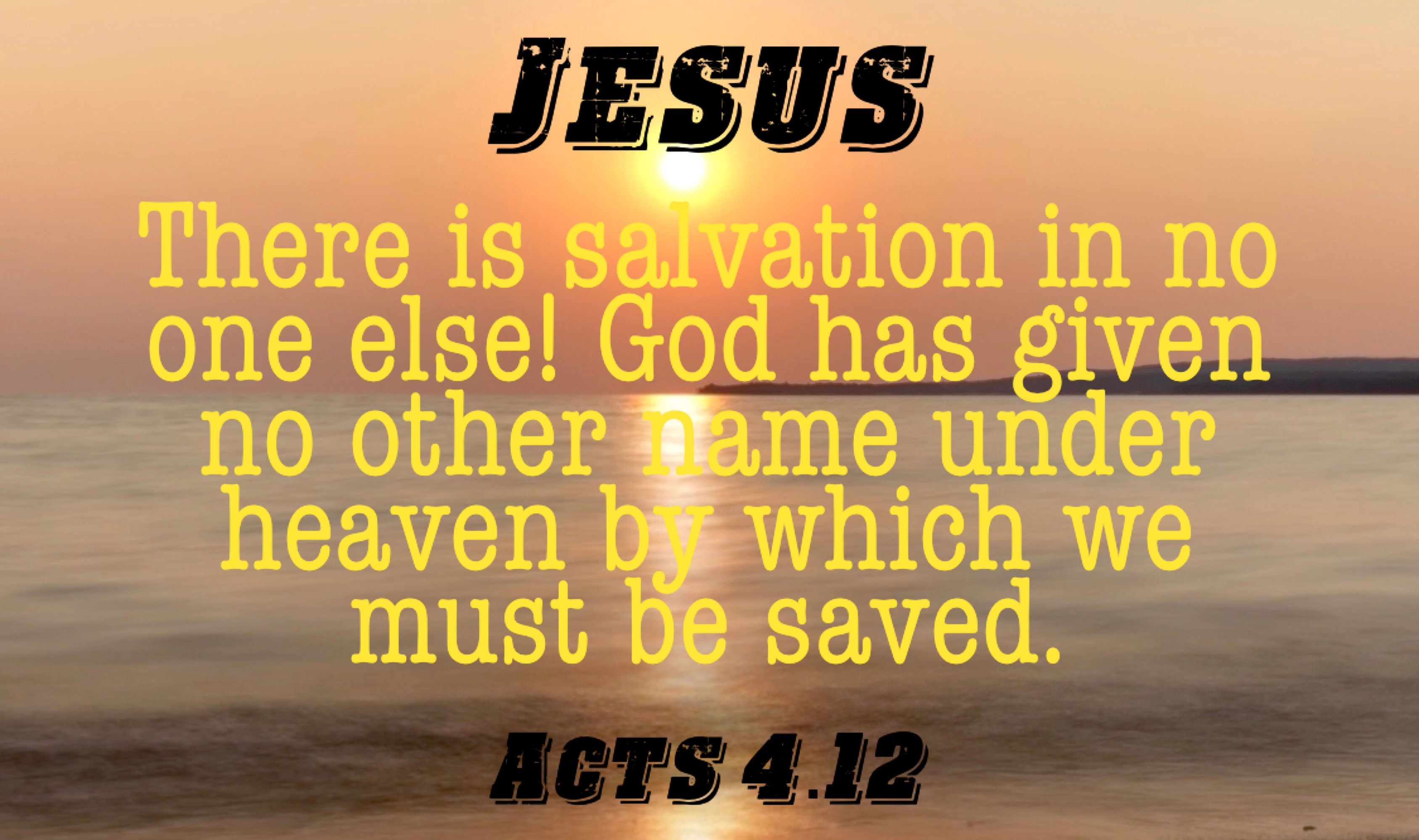
What is it to be in the Lord? Well, brothers and sisters, we are in the Lord vitally and evidently when we fly to the Lord Jesus by repentance and faith and make Him to be our refuge and hiding place. Is it so with you? Have you fled out of self? Are you trusting in the Lord alone? Have you come to Calvary and beheld your Savior? … There is no shelter for a guilty soul but in His wounded side! Have you come there? Are you in Him? Then stay there. You will never have a better refuge! In fact, there is no other. No other name is given under heaven among men whereby we must be saved [Acts 4:12]. I cannot tell you to stand fast in the Lord unless you are there. Hence my first inquiry is, are you in Christ? Is He your only confidence? In His life, His death, and His resurrection, do you find the grounds of your hope? Is He Himself all your salvation and all your desire? If so, stand fast in Him.
From The Watchword For Today: “Stand Fast”
I am reminded of two of the stanzas from a Charles Wesley hymn:
This is a weekly series with things I’m reading and pondering from Charles Spurgeon. You can read the original seed thought here, or type “Thursdays With Spurgeon” in the search box to read more entries.
Listen to the podcast of this post by clicking on the player below, and you can also subscribe on Apple, Spotify, or Audible.
Don’t Let Your ‘Well Begun’ Be Only ‘Half Done’
But our citizenship is in heaven. And we eagerly await a Savior from there, the Lord Jesus Christ, Who, by the power that enables Him to bring everything under His control, will transform our lowly bodies so that they will be like His glorious body. Therefore, my brothers and sisters, you whom I love and long for, my joy and crown, stand firm in the Lord in this way, dear friends! (Philippians 3:20—4:1).
The start is not everything, but it is a great deal. It has been said by the old proverb that ‘well begun is half done,’ and it is certainly so in the things of God. … See to it that you lay a good foundation. It is better to have no repentance than a repentance that needs to be repented of! It is better to have no faith than a false faith! It is better to make no profession of religion than to make an untruthful one! … We should learn early on the difference between grace and merit, between the purpose of God and the will of man, between trust in God and confidence in the flesh. If we do not start aright, the further we go, the further we will be from our desired end and the more thoroughly in the wrong we will find ourselves.
In the biblical passage Spurgeon used as his text, we read some important words. First of all, we need to live as citizens of Heaven, not as citizens of Earth. That means we need to always follow God’s laws, not the passing fads of culture.
Second, the apostle Paul calls Jesus both Savior and Lord. We don’t get to choose one and ignore the other. We cannot say, “Thank You, Jesus, for saving me, but I’ll take it from here.”
Finally, we need to not only stand firm, but as Paul also says in another letter, “So, if you think you are standing firm, be careful that you don’t fall!” (1 Corinthians 10:12). No assumptions. No coasting. No merely going through the motions of Christianity, but keeping a humble heart that responds to the correcting word from the Holy Spirit.
Let’s make sure that our walk with Jesus is never described as only “half done.” But instead, let’s begin well, walk well, and rejoice to hear our Savior say, “Well done, good and faithful servant!”