[King David] appointed Levites to minister before the ark of the Lord and to celebrate by calling to mind, thanking and praising the Lord, the God of Israel: … O give thanks to the Lord, call on His name; make known His doings among the peoples! Sing to Him, sing praises to Him; meditate on and talk of all His wondrous works and devoutly praise them! … Earnestly remember the marvelous deeds which He has done, His miracles, and the judgments He uttered as in Egypt. … Be mindful of His covenant forever, the promise which He commanded and established to a thousand generations. … Declare His glory among the nations, His marvelous works among all peoples. (1 Chronicles 16:4, 8-9, 12, 15, 24 AMPC)
Calling to mind … meditate … earnestly remember … be mindful. All these things lead to both worship and proclamation.
Recalling to mind all that God has done for us in the past, all that He is for us now, and all that He will do in the future gives us a song of praise. This praise is to be proclaimed among all people—both fellow worshipers and those who don’t know God as their Savior yet.
The more we meditate on Who God is, the more we praise Him; the more we praise Him, the more compelling our testimony to the nations becomes.
Listen to the podcast of this post by clicking on the player below, and you can also subscribe on Apple, Spotify, or Audible.
I was honored to be invited to offer the commencement address for some amazing students graduating from the Parent Teacher Co-op program.
I think we rush too quickly through our celebrations. It seems that at each milestone, we pause only briefly to move on toward the next milestone. But if we don’t celebrate well, we are actually setting ourselves up for a disappointing future.
It’s very telling that after the perfection of Creation, God took time to celebrate His own handiwork. And then He called us to do the same. That’s what a sabbath really is: A time to celebrate what God has done for us, and what He has empowered us to do for His glory. I think the reason many older people become more contemplative and nostalgic is because they rushed through their life without taking time for sabbath celebrations.
If you look at the history of the Israelites, you will see majestic mountain peaks followed by depressing valleys. What sent them sliding into their valley was one thing: forgetfulness. Time and time again, God sends His prophet to chastise the Israelites for failing to take a sabbath rest. They forgot to honor God and celebrate Him, but instead they rushed along to the next thing. What brought them out of their valley and back to the mountain was also one thing: remembering. Celebrating God for who He is.
So I challenged these graduates—and you—with this. At each milestone in your life…
Thank God for His blessings
Celebrate your own hard work.
Recognize the help you’ve received from others.
Determine which lessons to keep, which to enhance, and which to leave behind.
Find someone to share the journey with you.
Don’t forget to remember!
I would suggest at a minimum celebrating the sabbath each week as God gave us that example, but you may find that you have a moment to celebrate even a small win in the middle of the day in the middle of your week. If you do that, I think your appreciation for God’s blessings will keep you even more dependent on His abiding presence.
You may also be interested in a couple of related blog posts and videos:
Listen to the podcast of this post by clicking on the player below, and you can also subscribe on Apple, Spotify, or Audible.
I want to give you a leadership practice that is going to set you apart from the crowd. It’s all about leveraging an amazing feature God has designed in our brain.
Listen to the audio-only version of this podcast by clicking on the player below, or scroll down to watch the video.
Greg and I think that a great way to take your leadership to the next level is by paying attention to people. Keeping an eye out for the small details and remembering them shows people you care, which in turn makes them much more receptive to the leadership you want to pour into their lives.
[0:15] Memorial Day is coming up
[0:54] Great leaders remember the little details about others
[3:05] We share how leaders can leverage their retention of the details of others’ lives
[6:37] Exceptional leaders give way more than they take
[8:21] How do we get out of our own way so we can get to know others better?
[10:47] Greg and I both have some personal examples of how we learned to remember the details
[14:26] Leaders can lift up those around them by just doing the little things well
[16:24] John Maxwell wrote a “people principle” that I unpack
[17:47] Greg learned a lesson from his grandparents about “taking a drive” to observe important people and places
Check out this episode and subscribe on YouTube so you can watch all of the upcoming episodes. You can also listen to our podcast on Spotify and Apple.
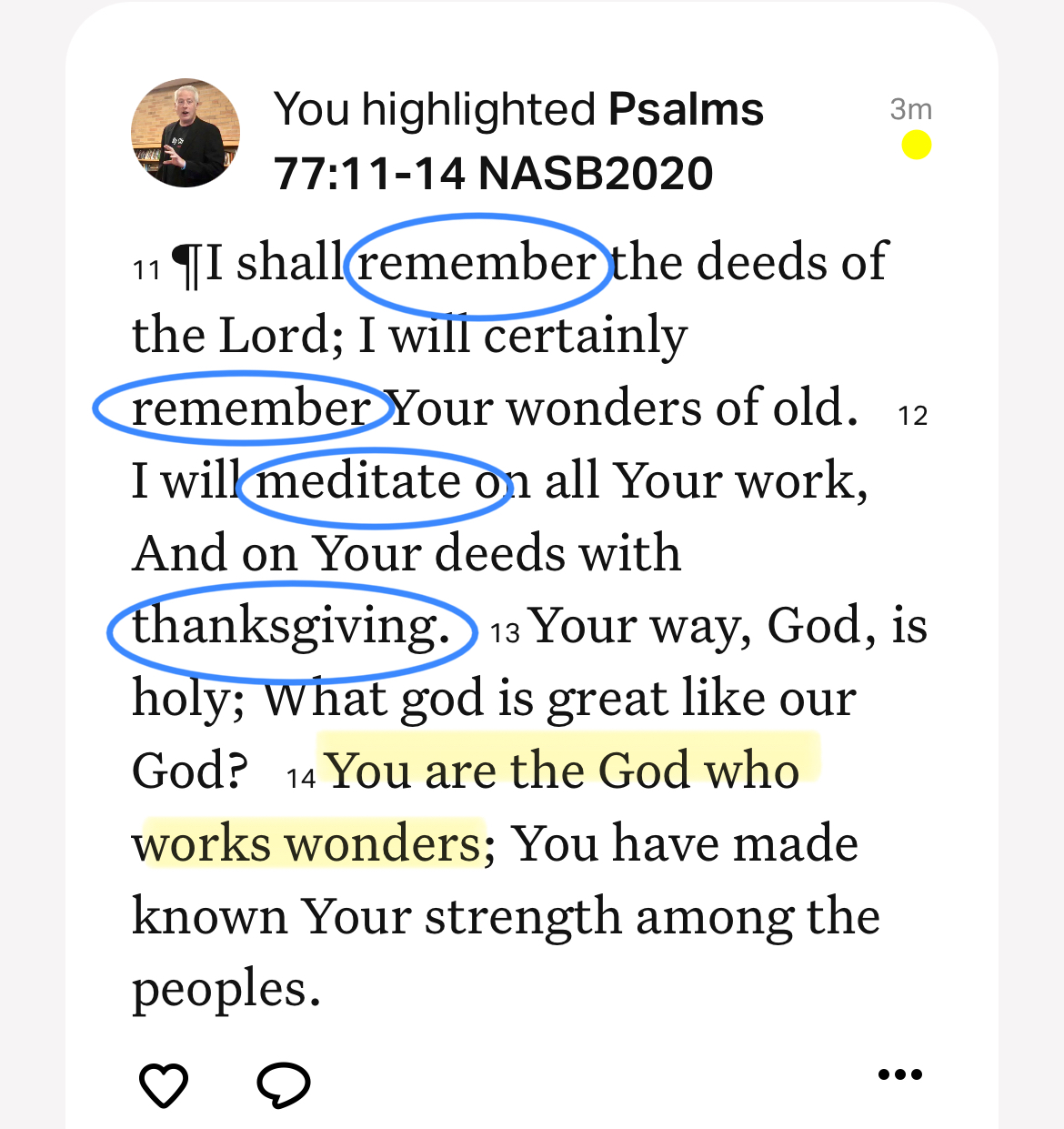
Remembering all God has done is the antidote to any fear or anxiety that we may feel. Recalling who God is and what He has done cannot help but lead us into worship of our awesome King! Then, as the words of an old chorus remind us—
🎶 In the presence of Jehovah
God Almighty, Prince of Peace
Troubles vanish, hearts are mended
In the presence of the King 🎶
I have shared a couple of other insights from Psalm 77 here:
Listen to the podcast of this post by clicking on the player below, and you can also subscribe on Apple, Spotify, or Audible.
Without a doubt, Jesus had the most robust mental health of anyone who has ever walked planet Earth! Dr. Luke, a trained physician, captures this in just one verse (Luke 2:52) where he talks about how Jesus grew in a wholly healthy way, and Luke lists Christ’s mental health as the first priority.
I’m sure there have been plenty of times when someone asks you about something you like or dislike or why you do something the way you do, you probably don’t tell them the facts but you tell them a story. We have a story for everything we like, everything we do, and everything we avoid.
It’s good to rehearse these stories and to really listen to them. If we don’t really listen to them, we cannot learn from them; if we don’t learn from them, we rob ourselves of robust mental health.
From some of our stories, there is a regret that comes from three enemies. These enemies are all tied to our stories about our past and they are would’ve, could’ve, and should’ve—“If only I would’ve…” and “Things would be different today if I could’ve…” and “I should’ve known….”
One of the ways we need to talk back to those thoughts is like this, “I only know the would’ve, could’ve, and should’ve now because I’m older and more experienced. I didn’t know those things in the past so it was impossible for me to have done something differently.” Even the apostle Paul noted, “When I was a child, I talked like a child, I thought like a child, I reasoned like a child. When I became a man, I put the ways of childhood behind me” (1 Corinthians 13:11).
If we don’t talk back to those regrets of yesterday, we will have doubts about today: Will I make another mistake today? Do I have what it takes to meet today’s challenges? What will others think of me if I mess up? If we don’t address those doubts we have today, that will cause us worry and stress about tomorrow.
Regret … doubt … worry … stress. Those don’t really sound like words that contribute to positive mental health, do they?
Here’s the thing we need to remember—Learning from our yesterdays is healthy, but trying to relive our yesterdays is both unhealthy and unproductive!
Dr. William Osler said, “If the load of tomorrow is added to that of yesterday and carried today, it will make the strongest falter.”
Four times in just ten verses, Jesus told His followers not to worry about tomorrow (Matthew 6:25-34). He ties that worry about tomorrow to having little faith. That lack of faith comes from our doubts, and those doubts come from our past regrets.
T.G.I.F.—thank God it’s Friday!—is an escapism. It’s not wanting to deal with the regrets, doubts, and worry by trying to push them to some distant time. It doesn’t allow us to really concentrate on today. The Bible constantly brings us back to the present.
Today is used 203 times in the NIV Bible
Tomorrow is mentioned 56 times
Yesterday is only used 8 times
Jesus taught us to pray, “Give us today our daily bread” (Matthew 6:11) so that we won’t let past regrets spiral downward into daily doubts and then anxiety about tomorrow. Elizabeth Elliot wisely counseled, “One reason we are so harried and hurried is that we make yesterday and tomorrow our business, when all that legitimately concerns us is today.”
Christians that want to be mentally healthy should continually replace a T.G.I.F. mindset with T.G.I.T.—thank God it’s today!
Taking a line from Joshua who said, “Choose for yourselves this day whom you will serve” (Joshua 24:15), here are four things we need to choose to remember each day.
Choose to remember that God uses all things—even our would’ve, could’ve, and should’ves—for our good and for His glory (Romans 8:28).
Choose to forget those old, self-limiting, stress-causing stories (Philippians 3:13).
Choose to believe that God is doing something new—something I never could have planned (Isaiah 43:18-19).
Choose to believe that God can help you tell a new story about your past (Genesis 41:51).
You have to choose each day to say “Thank God it’s today! Thank God that I’m not who I was yesterday! Thank God that He is using my would’ve-could’ve-should’ve moments from yesterday to prepare me for today! Thank God that He is teaching me a new story!”
If you’ve missed any of the previous messages in our series on a Christian’s mental health, you can find them all here.
As Moses called the Israelites to keep three main feasts each year—Passover, Weeks (or Pentecost), and Tabernacles—he said the purpose was to remember.
Closely linked to all three of these feasts was another important word: celebrate (vv. 10, 13, 15).
This remembering and rejoicing on a regular schedule was to keep God’s people aligned with God’s intimate and ongoing involvement in their lives. As a result, an attitude and an action should become just as ongoing in the lives of God’s people—
The attitude: joyful gratitude (vv. 11, 14)
The action: joyful giving (vv. 10, 15, 17)
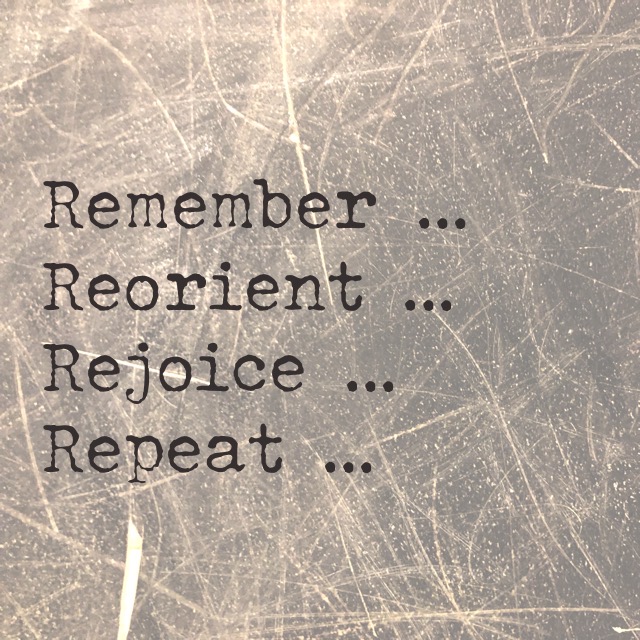
These three set times were to be a time of reorientation. They were not supposed to be the only three times God’s people remembered what God had done, celebrated His goodness, let joy overflow their hearts, and let giving overflow to others. These reorientation times should excite us to live like this every single day!
That’s why Paul wrote, “Rejoice in the Lord always. I will say it again: Rejoice!” (Philippians 4:4).
What celebrations can you build into your life that will help you
Have you ever noticed the up-and-down track record of the Israelites? We see them worshiping God, enjoying His abundance, with their enemies on the run in one chapter, only to see them worshiping idols, barely scraping by, with their enemies closing in on them.
What led to the downturn from freedom and abundant blessing to slavery and scarcity? I think it’s summed up in two words: They forgot.
Asaph captures this idea in the 78th Psalm. And if we’re honest with ourselves, Israel’s history is our history too.
There is a peril in our forgetfulness!
“When we have much of God’s providential mercies, it often happens that we have but little of God’s grace, and little gratitude for the bounties we have received. We are full and we forget God: satisfied with earth, we are content to do without Heaven. Rest assured it is harder to know how to be full than it is to know how to be hungry—so desperate is the tendency of human nature to pride and forgetfulness of God.” —Charles Spurgeon (emphasis added)
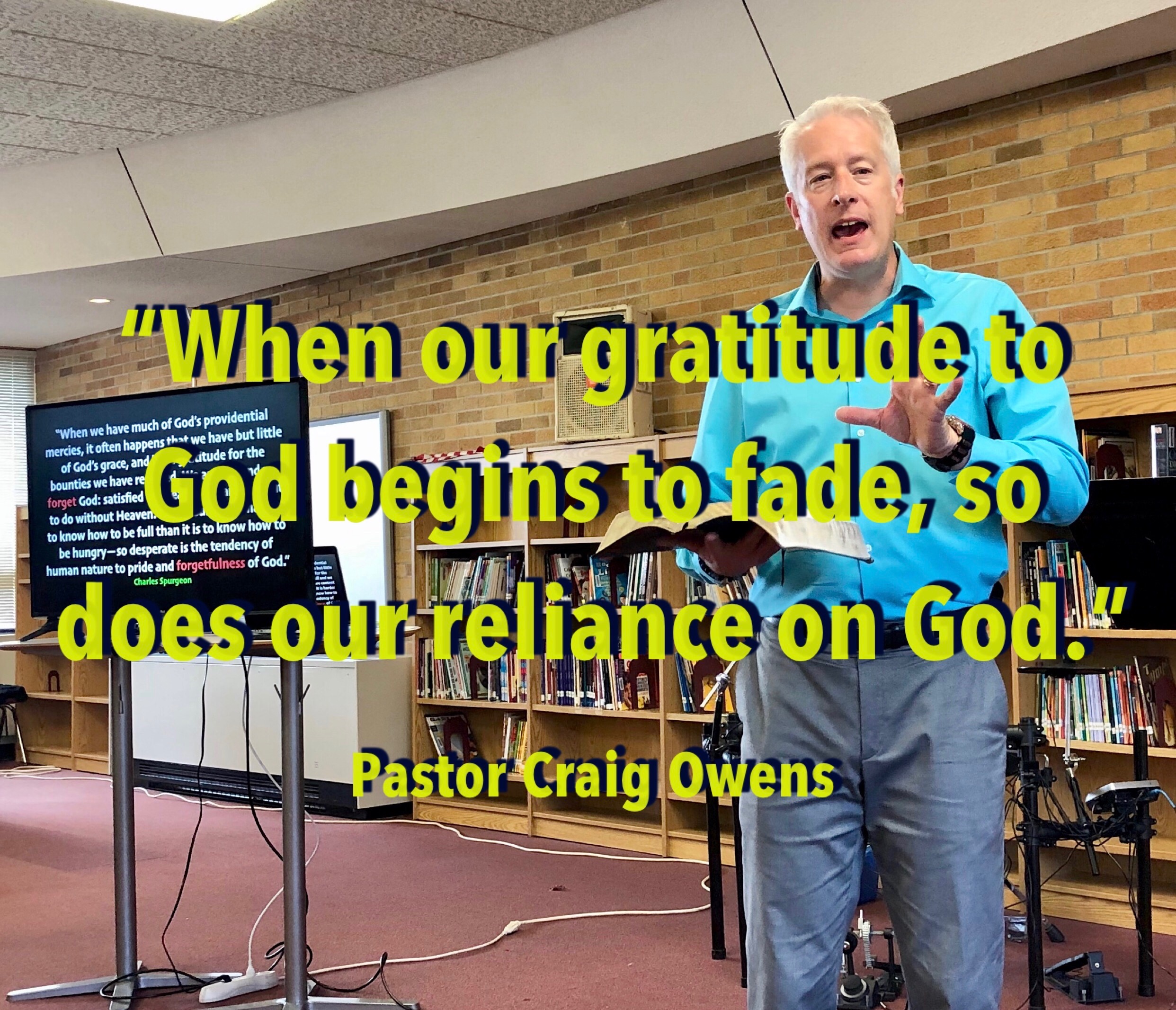
When our thoughts about God begin to fade, so does our gratitude to God. When our gratitude to God begins to fade, so does our reliance on Him.
The dictionary defines some important terms:
Ungratefulness—not giving due return for benefits conferred
Unthankfulness—not repaying the blesser with thanks
I don’t think anyone consciously chooses to be ungrateful, but if we don’t choose to actively remember our blessings—and our Blesser—we will become ungrateful. So what if we began to think differently about the definition of gratitude?
Forgetfulness—to cease to think of something
Gratitude—to continue to think of Someone (with that Someone being God!)
When we are continually thankful—when we don’t let our gratitude fade—it keeps God’s blessings at the forefront of our minds. Gratitude—continuing to think of Someone—makes us completely God-reliant.
Moses had a good idea to help us to continue to think of God’s blessings—
Impress them on your children. Talk about them when you sit at home and when you walk along the road, when you lie down and when you get up. Tie them as symbols on your hands and bind them on your foreheads. Write them on the doorframes of your houses and on your gates. (Deuteronomy 6:7-9)
What if you posted reminders of God’s blessings all over the place? What if you made it almost impossible to forget God? What if you were constantly thinking of your blessings?
Join us for our series called Fading Gratitude during the month of November.
I will utter dark sayings of old, which we have heard and known, and our fathers have told us. We will not hide them from their children, telling to the generation to come the praises of the Lord… (Psalm 78:3-4).
If George Santayana* was right about the dangers of unlearned history lessons for the general population, he identified something even more vital for those who follow God.
Asaph recounts a history of God’s people where God blessed them, the people became complacent in His blessing, until they turned from God and became subject to His wrath. The cycle, sadly, repeats again and again.
Asaph wants today’s generation to learn this lesson and to break this cycle.
He calls on this generation to continually remind the next generation of God’s blessings for obedience, and God’s judgment for disobedience—
Make them known to their children (v. 5).
The children who would be born, that they may arise and declare them to their children (v. 6)
For today’s parents this means…
No complacency.
No assumptions.
No letting kids “figure it out on their own.”
Constant diligence.
Constant communication.
May this generation speak words of life to the generation to come!
* George Santayana said, “Those who do not learn from history are doomed to repeat it.” And he also noted, “A child educated only in school is an uneducated child.”
“But, in a larger sense, we can not dedicate—we can not consecrate—we can not hallow—this ground. The brave men, living and dead, who struggled here, have consecrated it, far above our poor power to add or detract. The world will little note, nor long remember what we say here, but it can never forget what they did here. It is for us the living, rather, to be dedicated here to the unfinished work which they who fought here have thus far so nobly advanced. It is rather for us to be here dedicated to the great task remaining before us—that from these honored dead we take increased devotion to that cause for which they gave the last full measure of devotion—that we here highly resolve that these dead shall not have died in vain—that this nation, under God, shall have a new birth of freedom—and that government of the people, by the people, for the people, shall not perish from the earth.” —Abraham Lincoln



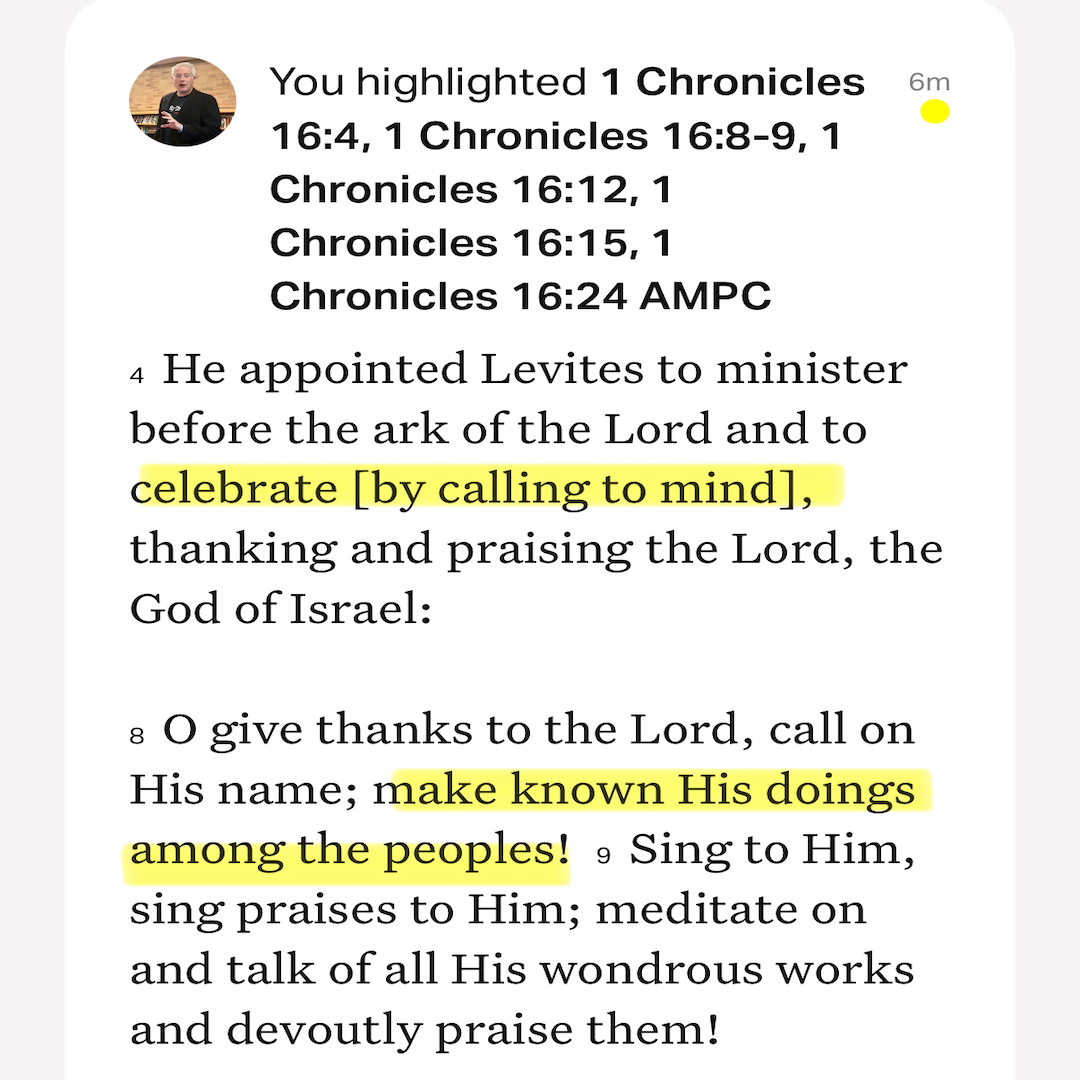 [King David] appointed Levites to minister before the ark of the Lord and to celebrate by calling to mind, thanking and praising the Lord, the God of Israel: … O give thanks to the Lord, call on His name; make known His doings among the peoples! Sing to Him, sing praises to Him; meditate on and talk of all His wondrous works and devoutly praise them! … Earnestly remember the marvelous deeds which He has done, His miracles, and the judgments He uttered as in Egypt. … Be mindful of His covenant forever, the promise which He commanded and established to a thousand generations. … Declare His glory among the nations, His marvelous works among all peoples. (1 Chronicles 16:4, 8-9, 12, 15, 24 AMPC)









 Craig T. Owens