[Each chapter in the Book of Proverbs contains thoughts that fit into a theme; they are not just random thoughts gathered together. In this “Saturday In The Proverbs” series, I will share a theme that I see in each chapter. But the cool thing about God’s Word is that you may see an entirely different theme. That’s great! If you do, I would love for you to share it in the comments below.]
He who is often rebuked, and hardens his neck, will suddenly be destroyed, and that without remedy (Proverbs 29:1).
God gives us SO MANY opportunities to experience His blessings, but when we continually flout His laws, we squander what we could have enjoyed.
“Love is not our only emotional need. Psychologists have observed that among our basic needs are the need for security, self-worth, and significance. …
“My sense of self-worth is fed by the fact that my spouse loves me. … We reason, If someone loves me, I must have significance. …
“I am significant. Life has meaning. There is a higher purpose. I want to believe it, but I may not feel significant until someone expresses love to me. When my spouse lovingly invests time, energy, and effort in me, I believe that I am significant. Without love, I may spend a lifetime in search of significance, self-worth, and security.
“When I experience love, it influences all of those needs positively. I am now freed to develop my potential.I am more secure in my self-worth and can now turn my efforts outward instead of being obsessed with my own needs. True love always liberates. …
“Love is not the answer to everything, but it creates a climate of security in which we can seek answers to those things that bother us.” —Dr. Gary Chapman
As Peter wraps up his letter, he reminds us of his purpose in writing to us aliens and strangers—
encouraging you = speaking encouraging words to your heart.
testifying that this is the truth = speaking thoughtful words to your head.
But Peter also says that he wrote this letter “with the help of Silas”—some translations even say “by Silas”—indicating that Peter needed someone to come alongside him with words of encouragement and strength, as much as he needed to deliver those words to fellow Christians.
Peter mentions three people that were alongside him. These folks are instructive for us too:
Silas
Peter called Silas a faithfulbrother. The Greek word he uses for brother is adelphos, a word which usually meant someone who shared the same parents. But Peter modifies this to mean a Christian brother whose heartbeat with the love of Jesus the way his did; someone who shared the same Heavenly Father.
Silas was a recognized church leader and a companion of Paul (Act 15:22, 30-32, 40). He had quite an extensive and impressive resume, and he also had the full endorsement for such notable people as James, Paul, and Peter.
She who is in Babylon
Babylon is a code word almost universally agreed to be Rome, but there is some debate as to whom the “she” is. Some think this is the church-in-exile in Rome, and some think this is Peter’s wife (Matthew 8:14; 1 Corinthians 9:5).
Whether the church or Peter’s wife, they/she are anonymous servants of God, but never for a moment forgotten by God, nor is their reward going to be lacking (Matthew 6:1, 4).
Mark
Peter calls Mark my son. Again, he takes a word that originally meant “my offspring” and changes it to mean Mark was his protegé.
Mark listened to and recorded Peter’s accounts of Christ’s earthly ministry and wrote the first Gospel that was produced. His Gospel became one of the main reference documents that Matthew and Luke referred to in writing their Gospels.
Here’s the point—There are no dispensable people in the Church!
You may be like Silas with many talents and an impressive resume and references. Or you may be like the “she” who is an anonymous helper to others. Or you may even by like Mark who made mistakes but was given a second chance to make good on your commitment.
You need a Silas, a she, and a Mark in your life. And you just may need to be one of those to someone else.
“You can deceive yourself with beautiful thoughts about loving God. You must prove your love to God by your love to your brother; that is the one standard by which God will judge your love to Him. If the love of God is in your heart you will love your brother.” —Andrew Murray
So let me ask you to consider something vital: Are you remaining faithful to your Christian family?
[Each chapter in the Book of Proverbs contains thoughts that fit into a theme; they are not just random thoughts gathered together. In this “Saturday In The Proverbs” series, I will share a theme that I see in each chapter. But the cool thing about God’s Word is that you may see an entirely different theme. That’s great! If you do, I would love for you to share it in the comments below.]
“The most common cause of living beneath our capacity is that we have chosen to walk alone rather than to walk together. You will never sustain greatness or fulfill your God-given calling if you see people as an obstacle to your destiny rather than as essential to fulfilling God’s purpose in your life. …
“The truth is, there are relationships that will keep you from the life God created you to live. There are people whom you need to extricate from your life because they pull you back to the person you were rather than forward to the person you must become. Yet this must never blind us to the deeper truth. We were not created to do life alone, and if we want people to be for us, then there need to be people whom we are for. …
“People don’t slow you down; the wrong people slow you down. When you choose the right people, when you find your people, your life begins to come together in a way that it never could when you walk alone. …
“When you surround yourself with great people, it elevates who you are. If you want to have great character, surround yourself with people of great character. If you want to take great risks, surround yourself with a tribe of risk takers. If you want to live a life of adventure, then choose a tribe that makes life an adventure. You will become who you walk with. So imagine the implications if you decide to walk with Jesus.” —Erwin McManus, in The Last Arrow
You can check out my review of The Last Arrow by clicking here. You can also check out some other quotes I’ve shared from this book here.
Dr. Les Parrott dives into the loving life of Jesus and takes us with him to discover the five was Jesus loved. Check out my full book review by clicking here, and then enjoy some of the quotes I especially liked.
“The great hindrance to true enjoyment is our willingness to settle for pitiful pleasures.”
“What keeps us from being mindful? I can answer this question with one word: agendas. … Every one of us has the capacity to set aside our self-interest, temporarily. We have the ability at any time to press the pause button on what we want. … That’s the moment we become mindful.”
“Loving like Jesus is not efficient. It takes time away from our own agenda-driven pace.”
“Jesus was shockingly accessible to anyone who felt undesirable or unwanted—lepers, Gentiles, tax collectors, the poor and persecuted, pagans and sinners. He wasn’t like other ‘holy men’ in Judea. His fellow rabbis operated on the principles of exclusion and isolation.”
“If you want to love like Jesus, you can’t limit your love to people who deserve it.”
“God is happy to give unconditional acceptance and unmerited grace to all who will receive it.”
“We can’t give grace to others when we are aren’t receiving it ourselves. When we’re busy earning acceptance from God, we start to think everyone else should earn it too. Judgmentalism creeps in. Self-righteousness appears. … When we aren’t cognizant of God’s unconditional acceptance in our own lives, we can’t give it to others.”
“If you want to love like Jesus, you can’t shy away from what you know is right and true. You can’t remain silent just to go unnoticed. Loving like Jesus is not for the chickenhearted. It requires a fierce commitment to being authentic. It requires a bold commitment to being a truth-teller. … No one accused Jesus of being a pushover—or winsome.”
“Self-giving is selfishness in reverse. It is not concerned with benefits, and it expects nothing in return. … It comes down to motive. You can be a giver and still expect something in return. … True self-giving is offering the best of who you are to others, and it comes with no strings attached.”
“The long and short of it is that we love like Jesus when we allow Jesus to love through us. It’s not about our effort. We are not trying to imitate Jesus. It’s an inside job. It’s about being a channel for His love.”
“Loving like Jesus isn’t achieved as much as it is received.”
“The word intuition comes from the Latin word intueri, which is roughly translated as meaning ‘to contemplate.’ You see, our intuition stems from what we are considering, what we are sensitive to or attuned to do. … So, if you want to hear from God, you’ve got to slow down enough to clear your head and be attuned to His Spirit. That’s when the sacred gift of God’s whisper is heard—when you become accustomed to His voice.”
Over the years, I have gleaned so many helpful relationship lessons from Dr. Les Parrott so I was excited when I heard about Love Like That. But what Dr. Parrott taught in this book was completely unexpected—how to love like Jesus loves.
The title of the book is taken from The Message paraphrase of a verse in the Bible: Observe how Christ loved us. His love was not cautious but extravagant. He didn’t love in order to get something from us but to give everything of Himself to us. LOVE LIKE THAT(Ephesians 5:2).
Wow! Love like Jesus? How can we do that? Let me jump to the end of the book first. If you’re like me, sometimes you think the meat of the book is in the chapters and there is little value in a conclusion or appendix, but that is definitely not the case in Love Like That. In these two valuable sections, Dr. Parrott answers the question more specifically for us: HOW can I love like Jesus?
The five main chapters of the book identify five ways Jesus loved. Each chapter has a definition of that trait, a self-test on how you currently measure up (which you can also take online), an example of how Jesus loved like that, the hindrances that keep us from loving like that, and how to overcome those hindrances.
This book opened my eyes—and my heart—to how I can do a much, much better job of loving like Jesus loves. The way Dr. Parrott presents this information makes it seem like something even I can do. For the sake of others in your life, please read Love Like That.
[Each chapter in the Book of Proverbs contains thoughts that fit into a theme; they are not just random thoughts gathered together. In this “Saturday In The Proverbs” series, I will share a theme that I see in each chapter. But the cool thing about God’s Word is that you may see an entirely different theme. That’s great! If you do, I would love for you to share it in the comments below.]
Good things—the best of things—usually require hard work. They don’t just come to us but we have to discover them. However, the good things are always worth the effort!
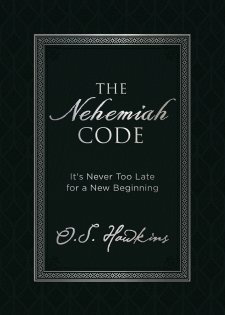
All of us have opportunities where we need to rebuild something that has fallen apart. O.S. Hawkins uses the example of Nehemiah in the Bible to teach us highly applicable rebuilding principles. You can check out my full book review by clicking here.
“One never rebuilds until he personally identifies with the need and weeps over the ruins. … Sadly, there are many who are simply not grieved or burdened about the walls in their lives that are broken and in need of rebuilding. It has been far too long since some of us have ‘sat down,’ much less ‘wept, and mourned for many days.’”
“Those who play the blame game never get the task of rebuilding completed.”
“True rebuilders identify with the fears and failures of those around them. They take personal responsibility for the situation—even if the problems didn’t begin with them.”
“Opportunities most often come our way when we are knocking on the door and not simply waiting for an opportunity to knock.”
“Nehemiah was able to convince the people to adopt his vision because he followed three vital rules in goal setting: they were conceivable, believable, and achievable.”
“Note the repetition of the plural personal pronouns in his challenge: ‘we … us … we’ (Nehemiah 2:17). Nehemiah was smart enough to incorporate a lot of plural pronouns. He was subtly motivating his people to work with him and not for him.”
“Nehemiah left us a stellar example to follow by laying out five important principles that are essential to the delegation process: set clear objectives with specific tasks, pick the right person for the right job, be an example yourself, hold others accountable, and be generous in giving genuine pats on the back.”
“When it comes to personal relationships, we all need someone to whom we are accountable. Someone who will remind us of God’s standards and give a gentle nudge—or shove—when we stray from those standards. Without such a friend, the result is often self-reliance, self-righteousness, self-sufficiency, and self-centeredness, rather than God-centeredness.”
“The fatigue factor is often at the root of our own failures. We simply give out and become too tired to go on, so we are then tempted to give in and to give up. When fatigue sets in during the rebuilding process, it brings along with it a loss of perspective, and little things often become much bigger than they really are. …Fatigue pulled their focus from their goal and placed it upon the rubbish, which led to frustration.”
“People have a way of rallying around a cause if they are convinced that God is in the midst of it. Which voice do the troops hear from your mouth? Is it the voice of Sanballat and ‘We won’t’? Is it the voice of Judah and ‘We can’t’? Or is it the voice of Nehemiah and ‘God will!’?”
“At last, the goal was in sight. The finish line. ‘Mission Accomplished’ just ahead. But be warned: this is the most dangerous point in any rebuilding process. This is when the enemy comes along with one final attempt to divert us from our goal. …It is not so much how long our personal race may be, nor even how difficult the obstacles we face along the way, but it is how we finish that matters most.”
I love studying biblical leadership principles, the people who follow or violate those principles, the outcomes of their decisions, and the lessons that we can apply today from those stories. Probably everyone has had something fall apart in their lives that needed to be rebuilt. If so, you will love the biblical leadership principles that O.S. Hawkins reveals in The Nehemiah Code.
Nehemiah comes on the scene after the Jewish people have been in exile for 70 years, but they are now allowed to return to their homeland. However, there’s an embarrassing problem: the walls around Jerusalem are in utter disrepair and the city gates have been burned away to ash. The returning exiles are wringing their hands over this sorry state of affairs for a long time until a rebuilding leader named Nehemiah comes on the scene.
O.S. Hawkins shares the leadership principles Nehemiah employs to get the walls rebuilt and the gates rehung—a massive project that he was able to accomplish in just 52 days! But the powerful thing about the way Rev. Hawkins shares these principles is that they are all applicable to rebuilding projects we face today.
Maybe you don’t have city walls to rebuild, but perhaps your marriage has crumbled, or your status at work has fallen apart, or you’ve done damage to your integrity. Whatever rebuilding project you need to undertake, you will find principles in The Nehemiah Project that you will be able to put into practice today! As Rev. Hawkins says over and over: It’s never too late for a new beginning.
Whether you have a rebuilding project of your own, you would like to come alongside a friend who is rebuilding something in their own life, or you are simply a God-honoring leader that wants to expand your leadership capacity, this book will help you soar.



 God gives us SO MANY opportunities to experience His blessings, but when we continually flout His laws, we squander what we could have enjoyed.







 Craig T. Owens