12 Quotes From “The Autobiography Of Charles Spurgeon”

Charles Spurgeon lived exactly as he preached. What a delight that is! Check out my full book review of his Autobiography by clicking here. Also, be sure to check out my weekly Thursdays With Spurgeon series, where I share longer passages from this Prince of Preachers. 

“My sole hope for heaven lies in the full atonement made upon Calvary’s Cross for the ungodly. On that I firmly rely. I have not the shadow of a hope anywhere else.” 

“While my brief term on earth shall last, I should be the servant of Him who became the Servant of servants for me.” 

“For I am persuaded there are more delights in Christ, yea, more joy in one glimpse of His face than is to be found in all the praises of this harlot-world, and in all the delights that it can yield to us in its sunniest and brightest days.” 

“I have found, in my own spiritual life, that the more rules I lay down for myself, the more sins I commit. The habit of regular morning and evening prayer is one that is indispensable to a believer’s life, but the prescribing of the length of prayer, and the constrained remembrance of so many persons and subjects, may gender unto bondage and strangle prayer rather than assist it.” 

“There is nothing that more tends to strengthen the faith of the young believer than to hear the veteran Christian, covered with scars from the battle, testifying that the service of his Master is a happy service, and that, if he could have served any other master, he would not have done so, for His service is pleasant and His reward everlasting joy.” 

“I went to my chamber and told my little griefs into the ears of Jesus. They were great griefs to me then, though they are nothing now. When on my knees I just whispered them into the ear of Him who had loved me with an everlasting love, oh, it was so sweet! If I had told them to others, they would have told them again, but He, my blessed Confidant, knows all my secrets, and He never tells again.” 

“That God predestined, and yet that man is responsible, are two facts that few can see clearly. They are believed to be inconsistent and contradictory to each other. If, then, I find taught in one part of the Bible that everything is foreordained, that is true; and if I find, in another Scripture, that man is responsible for all his actions, that is true. And it is only my folly that leads me to imagine that these two truths can ever contradict each other.” 

“It was said of an old Greek philosopher that he wrote over his door, ‘None but the learned may enter here.’ But Christ writes over His door, ‘He who is simple, let him turn in hither.’” 

“I used to think, sometimes, that if they had degrees who deserved them, diplomas would often be transferred and given to those who hold the plow handle or work at the carpenter’s bench; for there is often more divinity in the little finger of a plowman than there is in the whole body of some of our modern divines. ‘Don’t they understand divinity?’ someone asks. Yes, in the letter of it, but as to the spirit and life of it, D.D. often means Doubly Destitute.” 😀

“When I came to New Park Street Chapel, it was but a mere handful of people to whom I first preached; yet I can never forget how earnestly they prayed. Sometimes they seemed to plead as though they could really see the Angel of the covenant present with them, and as if they must have a blessing from Him. More than once, we were all so awestruck with the solemnity of the meeting that we sat silent for some moments while the Lord’s power appeared to overshadow us. All I could do on such occasions was to pronounce the benediction and say, ‘Dear friends, we have had the Spirit of God here very manifestly tonight; let us go home and take care not to lose His gracious influences.’ Then down came the blessing; the house was filled with hearers, and many souls were saved. I always give all the glory to God, but I do not forget that He gave me the privilege of ministering from the first to a praying people.” 

“It is the extremity of unwisdom for a young man, fresh from college or from another charge, to suffer himself to be earwigged by a clique, and to be bribed by kindness and flattery to become a partisan, and so to ruin himself with one half of his people.” 

“It is of no use to rise before an assembly and hope to be inspired upon subjects of which one knows nothing. If anyone is so unwise, the result will be that, as he knows nothing, he will probably say it, and the people will not be edified. But I do not see why a man cannot speak extemporaneously upon a subject that he fully understands. Any tradesman, well versed in his line of business, could explain it without needing to retire for meditation, and surely I ought to be equally familiar with the first principles of our holy faith. I ought not to feel at a loss when called upon to speak upon topics that constitute the daily bread of my soul.” 

8 Quotes From “The Jesus Who Surprises”

Dee Brestin has given us an excellent “starter’s guide” to help you discover Jesus on every page of the Old Testament. Be sure to check out my full book review by clicking here. 

“Every time we sin, it is because we do not trust the goodness of God, so we endeavor to meet our needs our way.” 

“The blood of innocent lambs spills throughout the pages of the Old Testament but ceases when John the Baptist heralds Jesus as the Lamb of God. Jesus is the only Lamb who can take away our sins (Hebrews 10:4, 10). All other sacrificial lambs were simply a foreshadowing of the One to come.” 

“What satan wants to do is cause attachment disorder between God and us. … satan wants to convince us that God does not love us and does not want the best for us so that we will back away and stop talking to Him, throwing away our only lifeline.” 

“Think about what makes Jesus so angry over and over again—it is the pretense and dishonesty of the Pharisees. He is not angry with Job, Naomi, the prophets, or the psalmists who lament, and indeed He often comes running to them. But He is angry with the Pharisees. They put up a façade, a wall that keeps them from experiencing intimacy with the Lord, and one day He may surprise them by saying, ‘I never knew you; depart from Me’ (Matthew 7:23).” 

“Recording and retelling increases memory—memory that is sorely needed in times of trouble.” 

“God knows the shaking of our world can awaken us to understand what is transitory and what is eternal. If we press into Him, we will discover what can never be shaken.” 

“Prayer is not getting God to give you what you want but dialoguing with Him, listening to Him, submitting to Him, and asking Him to give you what He wants, even if it is costly.” 

“Love is not love if it is only grace. That is enablement.” 

8 Quotes From “When Faith Fails”

We’ve all been there: an unexpected calamity has rocked our faith, making us question what we previously believed to be true. What do we do with these times of doubt? Dominic Done has given us a helpful resource in his book When Faith Fails. Please check out my full book review by clicking here. 

“An anonymous fourteenth-century mystic once said that we find ourselves ‘in a cloud of unknowing.’ That is why we doubt. We don’t always see the sky. However, what we have to be reminded of here is that all of this was part of God’s design. He purposefully made it like this. He built limits into the system. It wasn’t an accident. He knew we would have to live with so many unknowns. And yet He chose for the human story to look this way. … When God decided to create, He could have said yes to a thousand other possibilities. But He didn’t. He chose this world. He chose you. He chose me. Limits and all. And still, He called it ‘good.’ All of this means that doubts are normal. They’re a natural consequence of living in this world.” 

“If all we care about is certainty, we lose the beauty of mystery. If all we value is explanation, we lose the joy of exploration.” 

“We need to stop vilifying those who live in the tension of conflicted faith. Doubt isn’t a malevolent demon that we need to exorcise out of our brothers and sisters with sanctimonious words. It’s part of their story. It’s part of my story. Jude 22 says, ‘Be merciful to those who doubt.’” 

“What if God made the world like this to push us to deeper faith? … Doubts aren’t just an obstacle; they’re an opportunity. Uncertainty can lead us into the beautiful mystery we call God.” 

“What’s vital to note here is that when the Bible uses the word doubt it’s different from the word unbelief (Matthew 14:31 and Hebrews 3:19). This is important because some Christians assume that doubt and unbelief are synonymous. They’re not. Doubt can lead to unbelief, just as doubt can lead to faith. But the two are not the same. Doubt says, ‘I am unsure of what is right.’ Unbelief says, ‘I don’t care about what is right.’ Doubt is searching for the light. Unbelief is choosing to gouge out your eyes. Doubt is pursuing truth, wherever it may lead. Unbelief is content with a lie. Doubt exists somewhere between belief and unbelief. Doubt is the moment of tension, which in and of itself isn’t good or bad. It’s somewhere in between. … Doubt isn’t the end of the story; it’s the suspense within it.” 

“Doubt’s greatest strength is secrecy.… But if we name our doubts and drag them into the light, we may find resolution, or we may discover the tension of authentically living in a doubt-filled faith.” 

“Abraham and Sarah doubted God’s promise (Genesis 17:17-22; 18:10-15). Gideon doubted his calling (Judges 6:36). Job doubted God’s character (Job 7:20-21). John the Baptist, whom Jesus called ‘the greatest of all the prophets,’ doubted if Jesus was the Messiah (Matthew 11:1-6). Peter doubted his faith (Mark 14:66-72). Thomas doubted the resurrection (John 20:24-29). The list goes on. Scripture doesn’t edit out the stories of those who struggled to believe. It weaves their heart-rending struggles into the narrative.” 

“If your faith is being shaken by the suffering you see, don’t be content with cheesy Christian truisms or Facebook clichés. … Lean into the chaos. Cry out to God. Talk to people who have gone through pain and have come out on the other side awash with hope. Immerse yourself in Scripture’s lament and redemption. Dare to say, ‘I will not let You go until You bless me.’” 

The Devil Isn’t Scared Of You

This is part 2 in our series looking at phrases that sound biblical and then asking, “Is that in the Bible? 

Statement #2—Resist the devil and he will flee from you. Is that in the Bible? Yes, those words are there, but we need some perspective. 

First of all, demons are real and they are dangerous. No, the devil and his henchmen are not behind every calamity we face. C.S. Lewis explained it well—

“There are two equal and opposite errors into which our race can fall about the devils. One is to disbelieve in their existence. The other is to believe, and to feel an excessive and unhealthy interest in them. They themselves are equally pleased by both errors and hail a materialist or a magician with the same delight.” —C.S. Lewis 

Some people think there is a struggle between Jesus and satan that has an uncertain outcome, almost like Jesus and satan are locked in an epic arm wrestling duel. But the victory is already assured—Jesus has already won (Acts 10:38; 1 Corinthians 15:26, 54-58)!  

But while we are on Earth, we are living in a battle zone. Jesus said the devil’s agenda was pretty straightforward—steal, kill, destroy. He tries to accomplish this in a number of ways: everything from lying to us, to intimidation, to misquoting Scripture. 

And that’s where we need to be aware. Yes, the words “Resist the devil and he will flee from you” are in the Bible, but they are only valid when spoken in light of the first part of the verse—“Submit yourself to God.” 

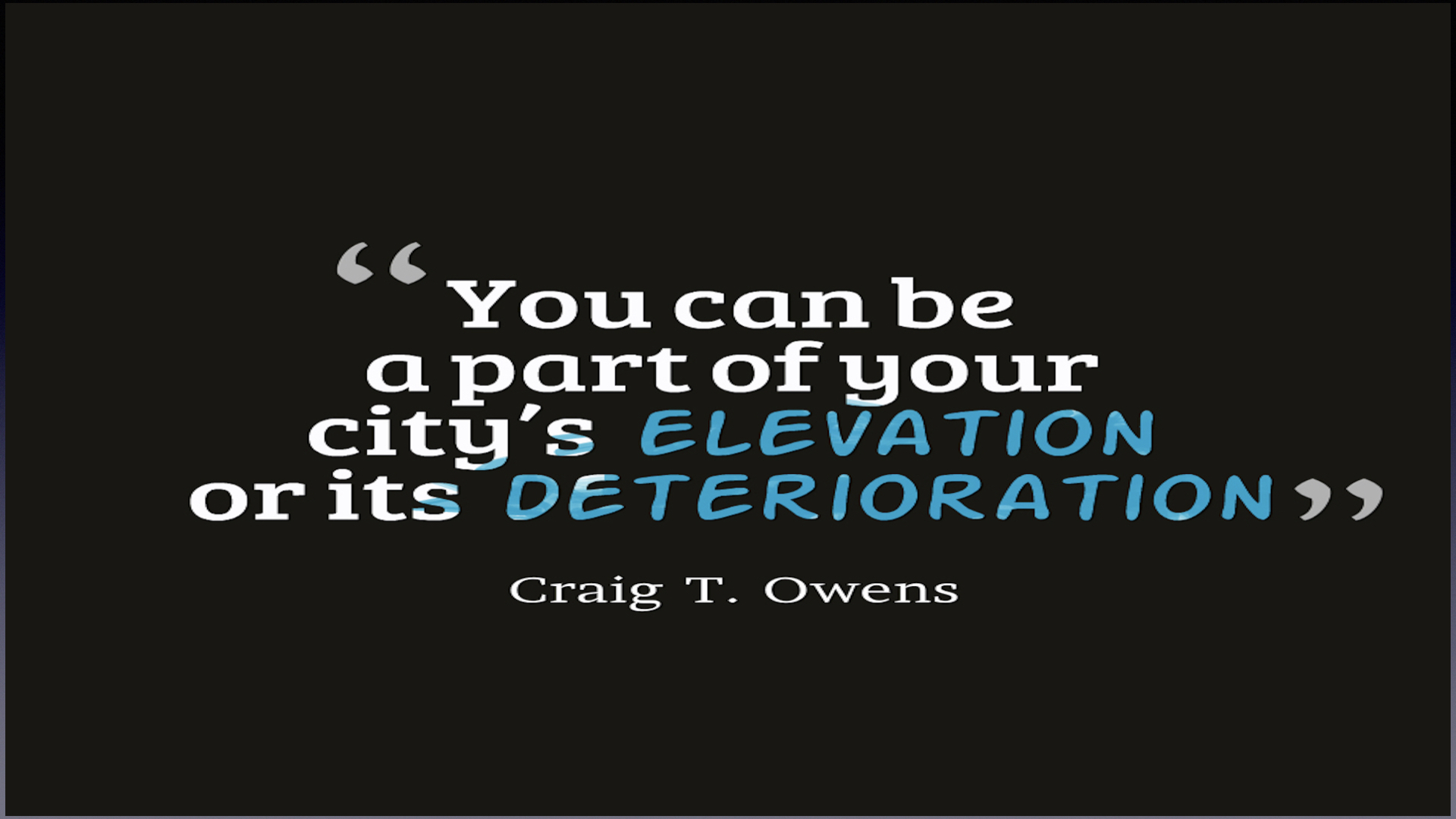
“satan is not scared of your show of force toward him, but of your show of submission to God.” —Craig T. Owens 

There were some guys who tried to invoke the name of Jesus in a spiritual battle, and they ended up running out of the house bleeding and naked (Acts 19:11-16)! 

Last time I said that God helps those who cannot help themselves. The prayer He loves to respond to is, “God, help!” If ever we face a situation that we cannot help ourselves, it’s dealing with demons. We can’t, but God can! 

So before anything else submit yourself to God. Hide under the shadow of His wings, let Him be your shield and your defender. Only then will the devil flee from you (see Psalm 91). 

Remember: the devil lies. He can even use Scripture to lie. His lie is getting you to believe you can resist him on your own. The truth is he’s not afraid of who you are, but he flees when he sees Whose you are!

9 Quotes From “40 Days With Jesus”

Sarah Young does a masterful job in helping us hear Jesus speak to us in the first-person, as she weaves Scripture together so beautifully. Check out my full book review by clicking here. 

“Taste and see that I am good. The more intimately you experience Me, the more convinced you become of My goodness.” 

“Follow Me one step at a time. … Keep your mind on the present journey, enjoying My Presence. Walk by faith, not by sight, trusting Me to open up the way before you. … I set the pace in keeping with your needs and My purposes.” 

“Walking in the light of My presence blesses you in many ways. Good things are better and bad things are more bearable when you share them with Me. As you bask in My Love-Light, you are better able to love others and enjoy fellowship with them. You are less likely to stumble or fall because sins are garishly obvious in My holy Light. As you walk in this Light with Me, I encourage you to exult in My righteousness.” 

“Although your new self is being conformed to My image, this process does not erase the essence of who you are. On the contrary, the more you become like Me, the more you develop into the unique person I designed you to be.” 

“Holiness is letting Me live through you. Since I dwell in you, you are fully equipped to be holy. Pause before responding to people or situations, giving My Spirit space to act through you. Hasty words and actions leave no room for Me; this is atheistic living. I want to inhabit all your moments—gracing your thoughts, words, and behavior.” 

“Talk with Me about every aspect of your day, including your feelings. Remember that your ultimate goal is not to control or fix everything around you; it is to keep communing with Me. A successful day is one in which you have stayed in touch with Me, even if many things remain undone at the end of the day.” 

“Do not let your to-do list (written or mental) become an idol directing your life. Instead, ask My Spirit to guide you moment by moment.” 

“Exceeding Joy is for both you and Me. I delight in you now, but this Joy will be astronomically magnified when you join Me in Glory. The Joy you will experience in heaven is so far beyond anything you have known on earth that it is indescribable. Nothing can rob you of this glorious inheritance which is imperishable and will not fade away.” 

“Thankfulness is not some sort of magic formula; it is the language of Love, which enables you to communicate intimately with Me.” 

Does Self-Help Get God’s Help?

This is part 1 in our series looking at phrases that sound biblical and then asking, “Is that in the Bible? 

Statement #1—God helps those who help themselves. Is that in the Bible? No, it is not! 

The reason why I think people have accepted this as biblical is an incorrect view of God. 

  1. Humanism says God is us, which makes us believe, “If it’s going to be, it’s up to me.” 
  2. Fatalism says there is no God and therefore no meaning to life, which makes us believe, “The outcome is what it is and no one has any say in the matter.” 
  3. Deism says there is a God, but it’s hard to get His attention, which makes us believe “He is either disinterested in me or unapproachable. He’s only available for the ‘big’ things.” 

The Bible flat-out rejects all three of these isms. 

Instead, we see a loving, approachable God. One who is both all-powerful and all-loving. He says things like…

  • I made you and know everything about you, and I remain infinitely interested and intimately involved in your life 
  • Come to Me and I will give you rest
  • I want you to cast all your anxieties on Me
  • Don’t be anxious about anything, but tell Me about everything that troubles you (Psalm 139:1-18; Matthew 11:28-29; 1 Peter 5:7; Philippians 4:6)

Not only is “God helps those who help themselves” untrue, but the exact opposite is also true—God helps those who cannot help themselves! 

In Isaiah 40:28-29, we read that God gives strength to the weary and increases the power of the weak. 

“Yes, it is our strength, not our weakness, that is our hindrance and stumbling block.” —Horatius Bonar 

God gives power to the weak. He gives strength to those with no might of their own. God does NOT help those who think they can help themselves! God helps those who cannot help themselves! This is what Jesus came to do, and why we should rejoice in the fact that He does indeed help those who could never rescue themselves (Isaiah 53:4-5; 2 Corinthians 12:9)!

It is our can’ts that God uses as His opportunities to show how limitless He is. Our limitations magnify His love and His power. 

One of the best prayers you could ever pray is simply, “God, help!” This simple prayer acknowledges in just two words that you can’t but He most assuredly can! 

But those who wait for the Lord—who expect, look for, and hope in Him—shall change and renew their strength and power; they shall lift their wings and mount up close to God as eagles mount up to the sun; they shall run and not be weary, they shall walk and not faint or become tired. (Isaiah 40:31 AMP) 

Join me next week as we continue to explore various statements and ask, “Is that in the Bible? 

Is That In The Bible?

A meme that makes me chuckle every time I see it is a “quote” attributed to Abraham Lincoln in which he says, “The problem with quotes found on the internet is that they are often not true.” 

(Not to spoil the joke for you, but unless Lincoln knew how to time travel to the future, I don’t think he knew about the modern internet! 😂) 

I love this meme because it captures something that so many people fall into: a quick acceptance of a statement without verifying its source or thinking through the implications of the statement’s truthfulness. 

Some insightful comments sound Shakespearean, but William never wrote them. 

Some pieces of wisdom sound Socratic, but Socrates never taught them. 

Some religious maxims sound godly, but the Bible never recorded them. 

I would like to invite you to join me in a new series we are beginning this Sunday called Is That In The Bible? I think you may be surprised to discover just how many phrases we call biblical aren’t, and how many phrases there are that we never realized are actually in the Bible. 

By the way, if you have a phrase that you would like to have us explore in this series, please leave it in a comment below. 

In this installment of this series, we asked: Is this in the Bible…

9 Quotes From “Shepherding God’s Flock”

T.M. Moore has given pastors a phenomenal training resource in Shepherding God’s Flock. Please be sure to check out my full book review by clicking here. 

“The work of church leaders today—and especially of that class of leaders called elders, with which this study is concerned—has been shaped and conditioned more by the temper of our times than by the teaching of God’s Word.” 

“According to Paul, any church that does not have in place elders—and other leaders working with them—who are functioning as shepherds is a church that is not in order.… A church without a strong ministry of shepherding is a flock without genuine pastoral care, oversight, and equipping. It may be very active, even happy, and may be ‘growing’ in what some consider impressive ways. But without shepherding as the framework and integrating dynamic, such a church will always be something less than what God intends.” 

“Where the work of shepherding is being faithfully pursued, the gospel goes forth with power, lost sheep are located, and the flocks of God grow as He adds new souls to the fold.” 

“Where faithful shepherds are at work, the Lord’s sheep will be well fed. Both milk and the meat of the Word will be their daily diet, according to the needs and callings of each. Well-fed sheep are healthy, strong, and fruitful in their own contributions.” 

“The work of shepherding begins in relationships of mutual love and trust, spiritual friendships where sheep and shepherd know, love, and care about one another.” 

“Only when the people feel known and loved, and only when they know and love those who are called to lead them—only then will they be willing to follow where the shepherds of the church are seeking to take them.” 

“In the Christian life, people tend to live up to or achieve, not the level of their abilities, for their abilities are virtually limitless, given the presence of the indwelling Spirit of God. Rather, they tend to live up to the level of their vision—of what they see for their lives in Christ. Unless we are leading them into God’s vision for their lives, the people of God will settle for something less than the prize of the upward call of God in Christ Jesus.” 

“When temptation arises we can follow one of two courses. Either we will fall through temptation into sin, or we will grow through temptation into a higher stage of sanctification. … The shepherd’s task is twofold: first, he must help the Lord’s sheep to recognize temptation, by grounding them firmly in the law and Word of God; second, he must equip and encourage them in finding the way of escape from temptation, so that they may grow as the Lord intends.” 

“Jesus’ approach to bearing witness was thus energetic, proactive, continuous, compassionate, and pioneering. Should we expect anything less from the shepherds He has left to bring other lost sheep into His fold?”

20 Helpful Thoughts On Criticism

“Criticism is something you can avoid easily—by saying nothing, doing nothing and being nothing.” —Aristotle 

“The Lord uses critics to show us our own hearts, even if what they say is not fully true, informed, or even fair. There is almost always a germ of truth in what our critics (in their own pain and disappointment) shout at us. The wise leader will humble himself and look for the truth embedded in every oppositional interaction.” —Dick Brogden [see 2 Samuel 16:5-12] 

“Feedback is the breakfast of champions.” —Ken Blanchard 

“Criticism can be received as a gift from God. It is an opportunity to pray, search Scripture, evaluate your own heart, and offer grace to others. The right response to criticism should not be retaliation or pride (which just perpetuates hurt), but rather humility.” —Jeremy Carr

“There is a growing trend to attack, criticize, and resent anyone who has talent or achievements that sets them apart from others. This tendency extends to those who resent the efforts of leaders who challenge the status quo. Opponents of change initiatives often attempt to marginalize leaders by attacking their character and questioning their motives. If the messenger is flawed, then the message and vision they offer cannot be trusted. As disappointing as it is, these challenges come with the territory of leadership.” —Dr. J. Lee Whittington

“If I were to attempt to answer all the criticisms and complaints I receive, I would have no time for any other business. From day to day I do the best I can and will continue to do so till the end. If in the end I come out all right, then the complaints and criticisms and what is said against me will make no difference. But, if the end brings me out wrong, then ten angels coming down from heaven to swear I was right would still make no difference.” —Abraham Lincoln

“If a ministry is God-anointed, it doesn’t matter who criticizes it. If it’s not anointed, it doesn’t matter who praises it.” —Rick Warren 

“Your critics have information that your friends are withholding.” —John Maxwell 

“God never gives us discernment so that we may criticize, but that we may intercede.” —Oswald Chambers 

“No leader is exempt from criticism and his humility will nowhere be seen more clearly than in the manner in which he accepts and reacts to it.” —J. Oswald Sanders 

“Criticism may not be agreeable, but it is necessary. It fulfills the same function as pain in the human body: It calls attention to an unhealthy state of things.” —Winston Churchill 

“Every man needs a blind eye and a deaf ear, so when people applaud, you’ll only hear half of it, and when people salute, you’ll only see part of it. Believe only half the praise and half the criticism.” —C.H. Spurgeon 

“Any fool can criticize, condemn and complain—and most fools do. But it takes character and self-control to be understanding and forgiving.” —Dale Carnegie

“A mark of a godly leader is one so focused on God’s plan that he pays no attention to his critics or enemies.” —Craig T. Owens

“Never be afraid of honest criticism. If the critic is wrong, you can help him; and if you’re wrong, he can help you. Either way, somebody’s helped.” —A.W. Tozer 

“It’s so much easier to teach correct principles than it is to know and love a person. It’s so much easier to give brilliant advice than to empathize and be open. It’s so much easier to live independently than to live interdependently. It’s so much easier to be a judge than to be a light. It’s so much easier to be a critic than to be a model.” —Stephen Covey

“When is it inappropriate to praise a critical person? One: When you are being criticized for outright sin, and the criticism is accurate. If what is said is true, the tension you feel will be relieved only one way: confession. Two: when you are falsely accused of sin. Sin is a serious charge, obviously more serious than those ‘against you’ realize or they would have done their homework.” —Blaine Allen

Don’t let an arrow of criticism pierce your heart unless it first passes through the filter of Scripture.” —Mark Batterson

“There is no better antidote for unjust criticism than a clear conscience before God.” —James Hernando

“It is not the critic who counts; nor the many who point out how the strong man stumbles, or where the doer of deeds could have done them better. The credit belongs to the man in the arena, whose face is marred by dust and sweat and blood, who strives valiantly… who knows the great enthusiasms, the great devotions, who spends himself in a worthy cause, who at the best knows in the end the triumph of high achievement, and who at the worst, if he fails, at least fails while daring greatly, so that his place shall never be with those cold and timid souls who have never known neither victory nor defeat.” —Teddy Roosevelt 

On Full Display

In the same way, let your good deeds shine out for all to see, so that everyone will praise your heavenly Father. (Matthew 5:16)

Jesus wants Christians to be leaders, to be pacesetting examples. That means that Christian leaders must be comfortable with others carefully watching their lives. 

A mark of a godly leader is one who is comfortable with public scrutiny.

“It is bad enough to be blind ourselves. It is a thousand times worse to be a blind guide.” —J.C. Ryle 

“Live an exemplary life among the natives so that your actions will refute their prejudices. Then they’ll be won over to God’s side and be there to join in the celebration when he arrives.” —1 Peter 2:12 MSG 

Sermons must be practiced as well as preached…. If a man teach uprightly and walk crookedly, more will fall down in the night of his life than he built in the day of his doctrine.” —John Owen 

Be a walking, talking, living example of what you preach, in every silent moment of your life, known and unknown; bear the scrutiny of God, until you can prove that you are indeed an example of what He can do.” —Oswald Chambers 

“Behave yourselves wisely—living prudently and with discretion—in your relations with those of the outside world (the non-Christians)…” —Colossians 4:5 AMP

“We hear that some people in your group refuse to work [or are behaving irresponsibly; are living/walking in idleness/disorder]. They do nothing but busy themselves [meddle; interfere] in other people’s lives. We command those [such] people and beg [urge; encourage; exhort] them in the Lord Jesus Christ to work quietly [or settle down] and earn [eat] their own food.” —2 Thessalonians 3:11-12 EXB)

“We should make less excuses for the weaknesses of a Christian than for any other man. A Christian has God’s honor at stake. When a man is regenerated and bears the Name of Christ the Spirit of God will see to it that he is scrutinized by the world, and the more we are able to meet that scrutiny the healthier will we be as Christians.” —Oswald Chambers 

This is part 37 in my series on godly leadership. You can check out all of my posts in this series by clicking here.