Leaders would help their teams by (1) having shorter meetings, and (2) ensuring their language is clear and concise. Check out the full conversation about “Jargon” on this episode of the Craig and Greg Show.
In a fascinating article about the ways the planet Jupiter protects Earth, the conclusion is spot-on: “Jupiter is more than merely a beautiful planet in the tapestry of the night sky. Its massive size and powerful gravity make it a mighty guardian of Earth. From protecting us from dangerous space debris to helping maintain stable orbits, Jupiter’s influence is essential for life on our planet. Proof of our solar system’s complex design is everywhere around us. It’s easy to see that our world seems purposely made rather than just being a result of random chance causes. From the stars to the tiniest particles, everything in our universe is balanced and works together in a coordinated system. As science progresses and uncovers more about our solar system, scientists keep finding out how perfectly suited our solar system is for life.”
T.M. Moore encourages us to pray for the Church. “The Church is the in-time agency through which the Kingdom comes on earth as it is in heaven. The Kingdom is a spiritual realm; the Church is a physical entity. But is is also a spiritual one; thus it partakes of two worlds at once, and is able to channel the spiritual into the physical to make all things new. The Church is both the sign that the Kingdom has come and the outpost from which the Kingdom advances in the world. Our text is a watershed moment of Jesus’ earthly ministry, and it signals an important focus for every believer’s life and prayers.”
“Celebrate what you’ve accomplished, but raise the bar a little higher each time you succeed.” —Mia Hamm
Timothy D. Padgett asks, “Is there such a thing as Judeo-Christianity?” This is an interesting read, but I especially liked this passage: “This is key. When we speak of Judeo-Christianity, we’re not talking about salvation. We are talking about philosophy, even worldview. A Christian worldview must be just that: Christian. A faithful Jew apart from Christ is no more saved than a devout Muslim or an honest atheist, and any philosophy that leaves out the Incarnation will lack its ultimate hope.”
“A human being without a friend is like a beast: for he lacks someone with whom he can share his joy in prosperity and his sadness in adversity, to whom he may unburden his mind when he is preoccupied, with whom he may talk whenever he has had a particularly sublime or illuminating insight…That person is completely alone who has no friend.” —Aelred of Rievaulx
John Stonestreet and Dr. Glenn Sunshine point out that there are some “who believe that AI is a vehicle through which trans-dimensional, non-human intelligences are communicating with us.” Their post is called The Rise of Technopaganism. Of course, this is nothing new: The apostle Paul addressed mankind creating its own god and worshiping it, just as some are now doing with AI.
“It’s better to look ahead and prepare than to look back and regret.” —Jackie Joyner-Kersee
Listen to the podcast of this post by clicking on the player below, and you can also subscribe on Apple, Spotify, or Audible.
We tend to be pretty self-centered creatures, filtering everything through our lens. This becomes especially true when we are going though a difficult time.
When I walked through a dark valley, I battled both physical and spiritual forces. People attacked me, but so did my own thoughts. “Why me?” and “I didn’t do anything to deserve this!” led to prayers like, “God, why didn’t You protect me from this? Why won’t you get me out of this?”
Do you hear a common theme? I didn’t while I was in the midst of the battle, but perhaps you hear it—“Why me? I didn’t do anything to deserve this! God, why didn’t You protect me from this? Why won’t You get me out of this?”
In his book Winning With People, John Maxwell shared ‘The Big Picture Principle’: “The entire population of the world, with one minor exception, is composed of others.”
On the other side of my dark valley I learned something about my time in the dark valley—I had grown:
I could help others diagnose depression
I could empathize with others
I could share helpful strategies to those who were struggling
I could intercede for them in prayer
My definition for intercede is to pray for people in a meaningful way because they are too beat up to pray for themselves.
In order to pray for them, I have to know what and how to pray. I can’t know what and how to pray unless I have firsthand experience. So perhaps my dark valley wasn’t for me, but for someone else (see Romans 8:28; 2 Corinthians 1:3-11).
I have talked and blogged so many times about the phrases “one another” and “each other” throughout Scripture. That means that Christian faith is best seen when we are with each other, supporting one another.
Jesus taught us to pray, “Our Father” (Matthew 6:9). The “our” signifies we are praying…
…with Jesus—John 14:13-14
…with other saints—Matthew 18:18-20
Even more than praying with us, Jesus intercedes for us (Hebrews 4:15-16). And Jesus gives us the Holy Spirit (John 14:26) who also intercedes for us and with us (Romans 8:26-27).
We join with our High Priest, helped by our Advocate, as we pray to our Heavenly Father on behalf of our brothers and sisters.
Listen to the interceding and expectation of a joyful answer that David writes in Psalm 20, and also notice how the saints are together—
May the LORD answer you when you are in distress; may the name of the God of Jacob protect you.May He send you help from the sanctuary and grant you support from Zion.May He remember all your sacrifices and accept your burnt offerings.May He give you the desire of your heart and make all your plans succeed.May we shout for joy over your victory and lift up our banners in the name of our God. May the LORD grant all your requests.Now this I know: The LORD gives victory to His anointed. He answers him from His heavenly sanctuary with the victorious power of His right hand.Some trust in chariots and some in horses, but we trust in the name of the LORD our God.They are brought to their knees and fall, but we rise up and stand firm.LORD, give victory to the king! Answer us when we call!
My cousin Dick Brogden wrote, “Jesus never intended us to suffer alone. We may not physically be able to cross oceans or deserts and sit in lonely cells with colleagues—but we are intended to traverse that distance spiritually and to bear the burdens of our brothers in prayer. Followers of Jesus under duress are empowered to bear unimaginable suffering when they know that they do not agonize alone.”
In your prayer time, I encourage you to ask the Spirit to show you lessons you have learned in your dark valleys, and then begin to intercede for your fellow brothers and sisters with the help you have already received.
“You have to expect things of yourself before you can do them.” —Michael Jordan
“The sun, with all those planets revolving around it and dependent on it, can still ripen a bunch of grapes as if it had nothing else in the universe to do.” —Galileo Galilei
“Physical care is vital to vigilance. HALT is the acronym often used by therapists to remind people of when they can be most vulnerable it stands for: hungry, angry, lonely, tired. Simply going to bed on a regular schedule to get a good night’s rest can help one’s brain be more focused on positive habits and more alert to fight temptations. Not only eating but also eating well can improve mood and feelings of well-being. Regular exercise keeps the mind more focused, the body feeling great, and improve sleep.” —Sam Black, in The Porn Circuit
“Leadership can be a lonely business filled with great amounts of soul-draining human interactions but little soul-filling intimacy. Without some safe-harbor relationships where we can lay down all of the armor and weapons needed to face the world and relax in confidence and unguarded communion, we become vulnerable to two debilitating frames of mind and spirit—the victim and the martyr. Allowed to blossom into resentment or a self-justification for seeking EGO-soothing instant gratification, these twin demons have been the downfall of many a leader in every walk of life.” —Kenneth Blanchard and Phil Hodges, in Lead Like Jesus
Listen to the podcast of this post by clicking on the player below, and you can also subscribe on Apple, Spotify, or Audible.
If you’re a shepherd leader, what do you do when the sheep under your care go, “Grrrr!”?
To make sure that you haven’t done anything that caused the murmuring, you should humbly pray, “Search me, O God” (Psalm 139:23-24). And then, if you see you have done something wrong, repent and make things right. You may want to check out my blog post A Leader’s Sincere Apology.
After this, Moses has given us in Exodus 16:8-9 two actions to take with murmuring sheep:
If it wasn’t anything that you did, you need to remind yourself that the people are murmuring against God.
If it wasn’t anything that you did, you need to remind the sheep that they are murmuring against God.
Listen to the podcast of this post by clicking on the player below, and you can also subscribe on Apple, Spotify, or Audible.
Last week I asked you to recall a time that your children were asking you for something they really, really wanted. How many times did they ask? If you said, “No” to their first request, did they immediately stop asking? Probably not. And that’s good, because Jesus tells us to keep PUSHing (Luke 11:9-10).
Let’s recall the story Jesus told to illustrate the kind of importunity that God responds to. Jesus used the example of a friend going to his neighbor’s house with a request for bread. No matter how many times the neighbor said, “No,” the man continued to ask and knock (vv. 5-8). Jesus concluded by saying that the neighbor would eventually get us and give his friend “as much as he needs.”
That is the key word: needs vs. wants.
Jesus told us “your Father knows what you need, but He wants to give us so much more than what we are asking for—He wants to give us His Kingdom (Luke 12:30-32). A need is a necessity (Psalm 34:10 AMPC; Matthew 6:8), but wants are merely selfish desires (James 4:3).
Loving parents know the difference between needs and wants and therefore they know how to respond to the requests from their children. Jesus pointed out that if we “evil” parents know this, how much more does our all-wise, all-loving, all-knowing Heavenly Father know this (Luke 11:11-13)!
When my kids ask me for something—when they are asking, seeking, knocking—I want to give them the best. But sometimes the best thing means I have to say, “No.” I don’t give them candy for breakfast. I don’t let them drive a car when they’re 7 years old. I don’t give them responsibilities which they are unprepared to manage. They may want all of these things, and they may even enjoy these things for a fleeting moment. But they don’t need them and the end result could be dangerous or even disastrous!
Jesus says that we human parents even in our very limited wisdom know that giving our children their immediate wants may prevent them from receiving what they really need. My “No” may really mean a better “Yes,” if they will trust me.
Do you know a surefire way to determine if what you are PUSHing for is a want or a need? A temper tantrum! When we start throwing a fit, it probably means we are looking for a want to be supplied, not a need. Psalm 25:9 tells us that God loves to supply the needs of the humble who say, “Father, You know best.”
What if I changed “suffering” with “God’s loving ‘no’” in this passage—
Not only so, but we also glory in God’s loving “No,” because we know that God’s loving “No” produces perseverance4 perseverance, character; and character, hope. And hope does not put us to shame, because God’s love has been poured out into our hearts through the Holy Spirit, who has been given to us. (Romans 5:3-5)
Our hope in our heavenly Father’s best “Yes” is vital for our ongoing prayer live (Isaiah 30:18)!
Our all-wise, all-loving Father KNOWS what is best for us. But still, Jesus directs us to continue asking, seeking, and knocking. Keep PUSHing until His best “Yes” is given, found, and opened.
God’s loving “No” is only so that He can give you His best “Yes”!
T.M. is beginning a series on the ministry of the apostle Paul. He writes, “Paul was able to accomplish great things against great odds not because he was such an enthralling preacher (he was not) or had so many resources to invest in his work (he did not), but because he had such great confidence in his message and his Lord.” Check out this series.
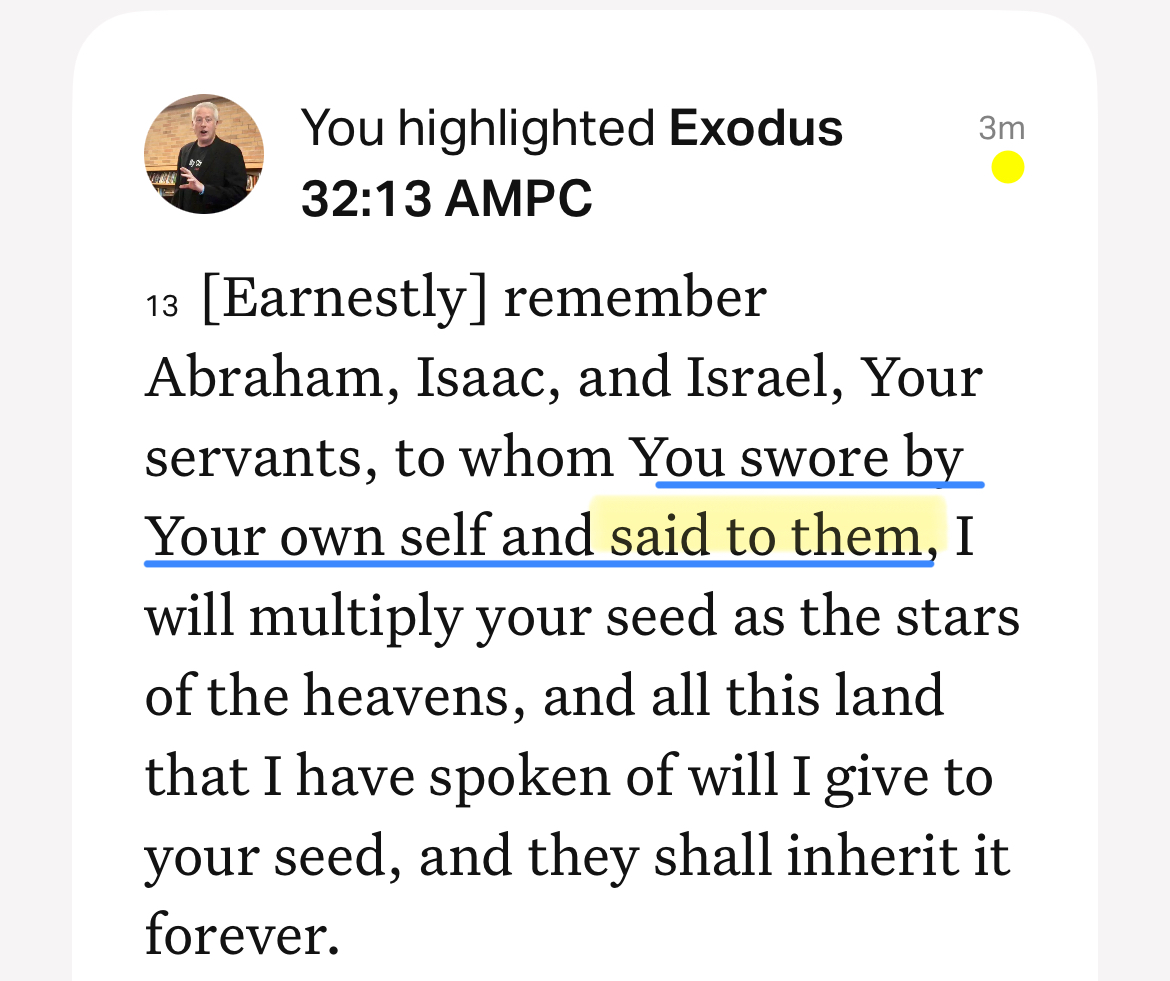
As a father, it always got my attention when my kids would remind me, “Dad, you said….” Not that God ever forgets anything He has promised, but when He hears Moses say, “You swore by Your own self and said to them,” He is pleased because this means that Moses is banking his faith on God’s unchangeable word. Let’s follow this example from Moses and use God’s Word to form our prayers to Him.
The ICR reports, “If the earth is 4.6 billion years old, virtually every square inch of the Earth’s surface would experience a host of erosive events.” But the fact that paleontologists have found so many well preserved foot tracks is a testament to both the Creation and Flood accounts recorded in biblical history.
“When ‘Aunt’ Fanny Lack, a 100-year-old Hoopa Indian woman, accepted Christ and was healed in 1920, she became a local sensation on the Hoopa Indian Reservation in northern California.” This is an amazing story!
“When you hate, the only person that is suffering is you because most of the people you hate don’t know it and the rest don’t care.” —Medgar Evers
Axis’ Culture Translator reported, “A study from World found that 26% of respondents admitted to flirting with a chatbot or AI, either for fun or unknowingly.” I love Axis’ conclusion: “Although social media was initially pitched as a supplement to real-life social interactions, the slope from supplement to replacement is steep. This Valentine’s Day, remind your teens that although real-life relationships can be difficult, we need both the affirmation and pushback that comes with them.”
Greg Morse shares the very real danger of shepherding God’s flock. He writes, “I enlisted to teach, preach, shepherd, and guide—but also to suffer, defend, and die, if the Lord should choose. As a son with his mother, a husband with his wife, a father with his children, so a pastor with his sheep. I am to defend them against all enemies foreign and domestic—spiritual and physical.” Pastors, I encourage you to read this article.
Listen to the podcast of this post by clicking on the player below, and you can also subscribe on Apple, Spotify, or Audible.
Parents, I want you to think back to your children asking you for something they really wanted. How many times did they ask? How many different ways did they ask? What sort of strategies did they use? Did you ever sense any hesitation in them coming to you to make their request?
Do you have this firmly in mind? Good, because this is how Jesus explains prayer.
Jesus called God His Father, and when His disciples asked Him how to pray, Jesus instructed them to address God as “Father” (Luke 11:1-2).
Hindus don’t call God “father” but they flip it around by saying, “Father is like God” to teach children to respect their earthly fathers.
Buddhists don’t believe in a God that anyone can worship or even have a relationship.
Islam gives Allah 99 names, but not one of the names is “Father.”
Jewish rabbis don’t see how anyone other than Jewish people can even think of God as their Father, but even they don’t presume to address Him that way in their prayers.
And yet Jesus tells us to come to prayer to the Almighty Creator and Sustainer of the universe with, “Father.” There is intimacy in that title. There is an understanding of knowingness and trustworthiness in that title. There is an implied belief of perfect provision in that title.
We looked at Luke 11:9-10 previously, and we saw especially how the Amplified Bible brings out the idea of asking again and again and again. But is this what Jesus really meant for us to do? Don’t you feel a bit like a pest asking this way?
The disciples asked Jesus to teach them to pray (Luke 11:1-4), but then Jesus gave them an un-asked-for illustration to make His point (vv. 5-8).
The Greek word for “boldness” in v. 8 is translated “shameless persistence” or “sheer persistence” or “shameless audacity” in various biblical translations. In the Greek, it’s a unique word (anaideia) which means without shame.
The sleeping friend—although he was tired and the request for bread came at an inconvenient time—still wanted to honor his friend. Or more precisely, he wanted to preserve the honor of his friend.
There’s another Greek word (hypomone) that I would define as stick-to-it-iveness. Two great examples are Bartimaeus (Mark 10:46-52) and the Syrophoenician mother (Matthew 15:21-28).
In light the the story of the Good Samaritan in the previous chapter of Luke, I think this friend was practicing the Golden Rule: he wouldn’t want to lose standing in the community or be embarrassed by being an ill-equipped host, so he helped supply his neighbor.
“Give us each day our daily bread” (Luke 11:3) hallows God as our Father. Our Father is the Bread Supplier and He never wants His children forsaken or embarrassed—
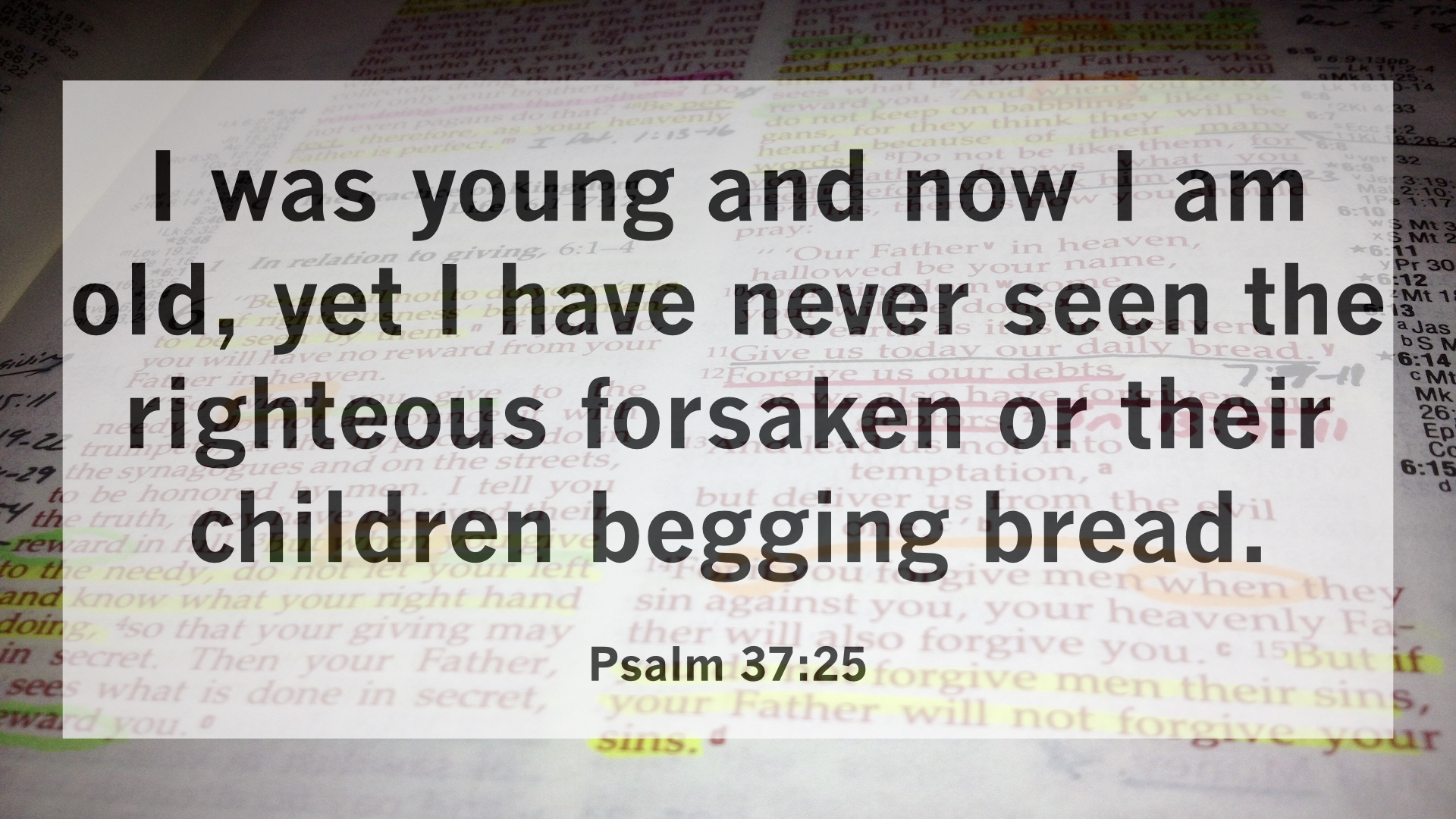
I was young and now I am old, yet I have never seen the righteous forsaken or their children begging bread. (Psalm 37:25)
The conclusion to the instructions Jesus gives us about prayer are continual asking, persistent seeking, and audacious knocking! P.U.S.H. = pray until something happens!
“Our giving depends much on the state of our minds at the moment. When depressed, we have no pleasure in giving; we either refuse, or we give merely to get quit of the applicant. Darkness of mind shrivels us up, makes us selfish, neglectful of others. When full of joy, giving seems our element—our joy overflows in this way; we cannot help giving; we delight in applications; we seek opportunities of giving. So with the blessed God. Being altogether happy, His delight is to give; His perfect blessedness flows out in giving. We can never come wrongly to such an infinitely happy Being.” —Horatius Bonar
Our importunate requests are opportunities for God to show His unequaled supply to others—to exalt His name. For that request, God will “get up and give you as much as you need” (Luke 11:8).
We are to keep on PUSHing for our Father’s “yes.”
Check out all of the other messages in this prayer series by clicking here.
When we pray the closing words of the prayer Jesus gave us—“For Yours is the kingdom, and the power, and the glory forever. Amen!”—we are both acknowledging God’s awesomeness and we are asking for our lives to display this reality.
“He who loves iniquity does not love his fellow man, for ‘he who loves iniquity does not love, but rather hates his own soul.’ And certainly he who does not love his own soul will in no way be capable of loving the soul of another.” —Aelred of Rievaulx (1109-1167)
Steven Lee shows us the biblical principles that God forms us through failure. One passage especially stood out to me because it is a central thought to both of my books. Lee writes, “God measures success according to faithfulness: ‘One who is faithful in a very little is also faithful in much’ (Luke 16:10). Do we strive for success as defined by God? Are we seeking to be faithful with all that he has entrusted to us—time, talents, and treasure? Or have we adopted the lying weights and measures of our world? Will our labors result in hearing the words ‘Well done, good and faithful servant’ (Matthew 25:23)? Put aside striving for the world’s facade of perfection.”
“The measure of who we are is what we do with what we have.” —Vince Lombardi
T.M. Moore teases us with this: “The most important question we can ask guides us in answering many other questions besides, questions such as, ‘Whom should I marry?’ and ‘How can I stop wasting time?’ and ‘What’s the best way to use my wealth?’’ Any question that helps us answer those and a myriad other questions that might arise during the day must be pretty important. Indeed, it must be the most important question any of us could ask.” What is that most important question? Check out his thought-provoking answer.
“Life is not a spectator sport. If you’re going to spend your whole life in the grandstand just watching what goes on, you’re wasting your life.” —Jackie Robinson
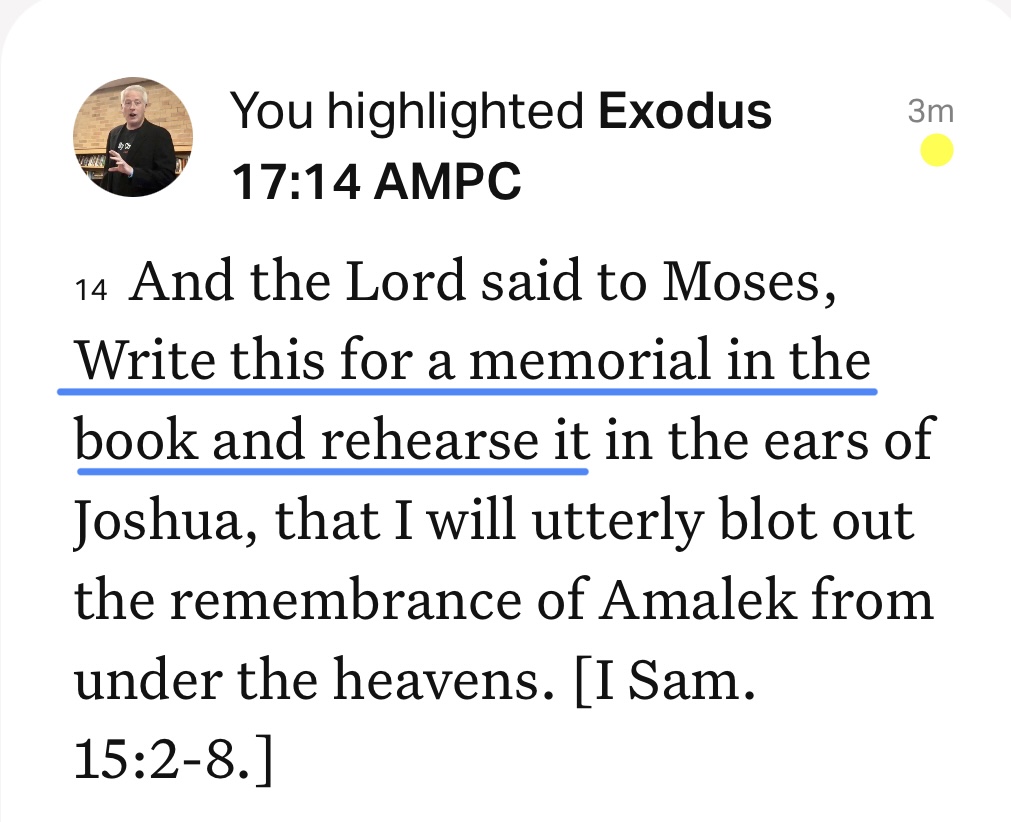
When God gives you a victory, write it down (see Exodus 17:14). When God gives you a promise, write it down. Then read it regularly so you don’t forget it. This will keep you grateful, it will keep you expectant, and it will keep you dependent on the victory-giving, promise-keeping God.
Listen to the podcast of this post by clicking on the player below, and you can also subscribe on Apple, Spotify, or Audible.
Politics are a reality for anyone who lives under a human government. But Christians need to be cautious that we don’t put more weight on temporal politics than we do on the eternal Kingdom of God.
You can check out the full sermon that this clip came from here.
And I’ve shared quite a bit about praying for those in governmental leadership positions:



 Leaders would help their teams by (1) having shorter meetings, and (2) ensuring their language is clear and concise. Check out the full conversation about “Jargon” on this episode of the Craig and Greg Show.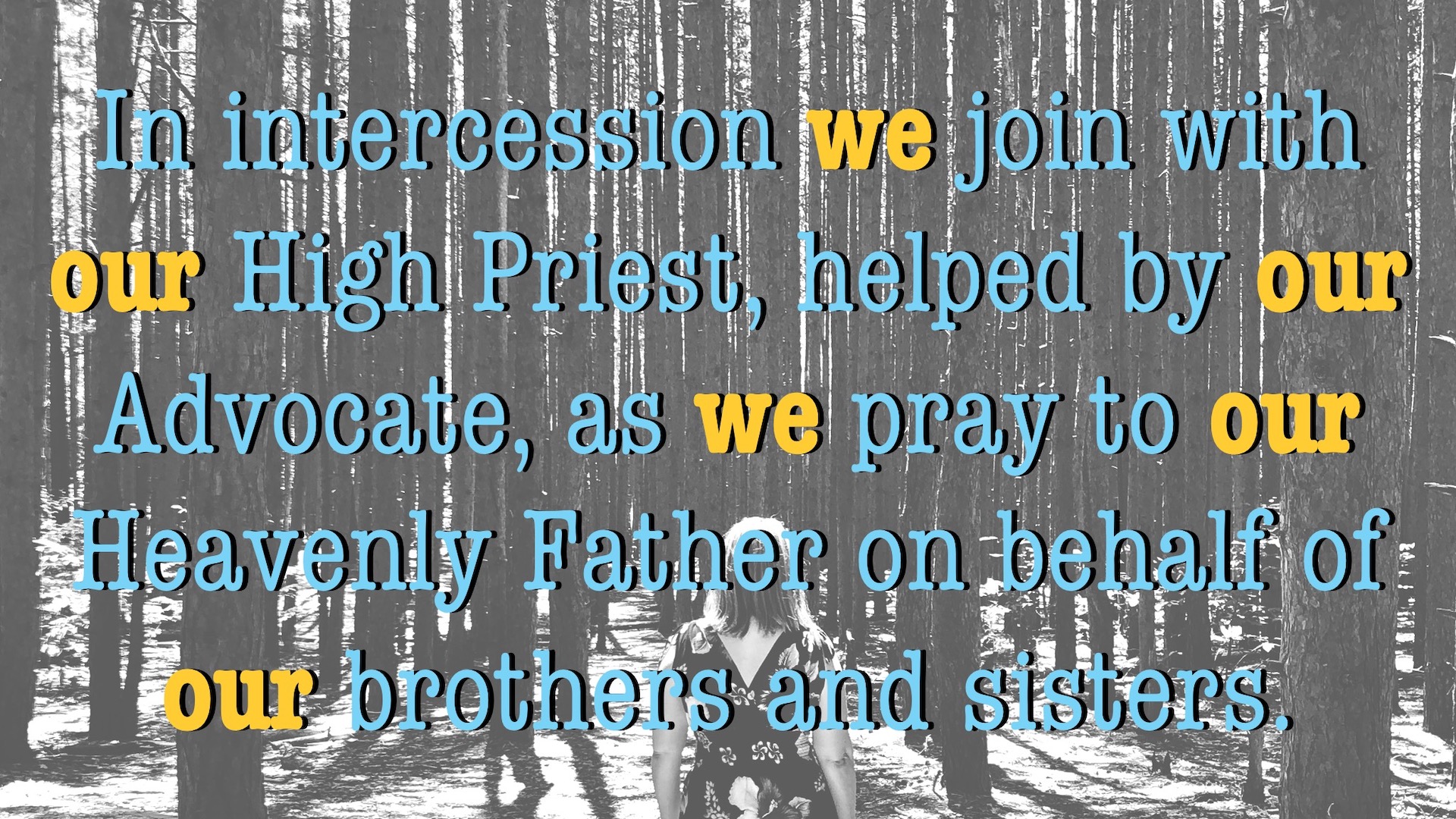




 Craig T. Owens