[0:38] We prefer preventative care both physically and in our leadership health
[1:40] When should we use assessments?
[3:10] Assessments can help leaders get an objective perspective on themselves and their team members
[4:36] We need windows of insight into ourselves first before we start working with our teammates
[5:40] What’s the goal of assessments?
[7:40] There are no “wrong answers” in assessment results
[9:39] How do leaders share the results of assessments with the whole team?
[13:31] When we have insight about our teammates, it helps us grow and understand each other
[15:34] Intuition and assessments work really well together
[17:01] What if an assessment appears to raise a warning flag?
[18:02] Leaders should use their assessments to setup their teammates for consistent success
[19:35] Assessments allow leaders to craft a complete team
[20:37] An outside coach can help your organization know what assessments to use and how to implement the results of any assessments
Check out this episode and subscribe on YouTube so you can watch all of the upcoming episodes. You can also listen to our podcast on Spotify and Apple.
Premier athletes know the value of flexibility for keeping them in the game. I think we would be wise to practice flexibility in our relationships too—this is definitely a game-changing move! Check out my weekly Monday Motivation videos on my YouTube channel.
“The bravest are surely those who have the clearest vision of what is before them, glory and danger like, and yet notwithstanding, go out to meet it.” —Thucydides
One of my YouVersion friends (Nikki) commented a great reminder: “God can do way more with my surrender than with my striving.”
Thomas Zimmerman was an influential leader in the early days of the Assembly of God fellowship’s history. “Over a 50-year period, Thomas F. Zimmerman (1912-1991) served the Assemblies of God as pastor, district official, department leader, assistant general superintendent, and general superintendent. His leadership greatly increased the influence of the Pentecostal movement in the evangelical world, as well as in the broader American religious landscape.”
I post quality content nearly every day. If you don’t have time to read all that I share, please let me read it for you. The Craig T. Owens Audio Blog is just like this blog, except you get to hear me read my blog posts. Check it out my podcast on Spotify, Apple, and even Audible.
“The word ‘hell’ is used in the New Testament fourteen times, twelve times by Jesus Himself. It is not a myth created by dismal and angry preachers. It is a solemn warning from the Son of God who died to deliver sinners from its curse. We ignore it at great risk.” —John Piper
Christian apologist and cold-case detective J. Warner Wallace wrote, “the battleground on the abortion issue is beginning to shift, and this shift is going to cause us to rethink our approach to the debate.” Pro-life advocates need to check out Wallace’s post Justifying Homicide: The Future Battleground In The Abortion Debate.
Jim pastors a very large church, I pastor a small church, and John coaches pastors who pastor every size church in between. We are all in agreement that when it comes to the vitality of both the church and the pastor, the size of the church or its budget is not the best metric to monitor. Take a listen…
None of us are anti-growth when it comes to the church, but we are pro-health. Jim said it well: We will get what we focus on. If we just want numbers, the numbers may explode, but people may explode (or implode) in the process. But if we focus health, we will get healthy—both the pastor and the congregation.
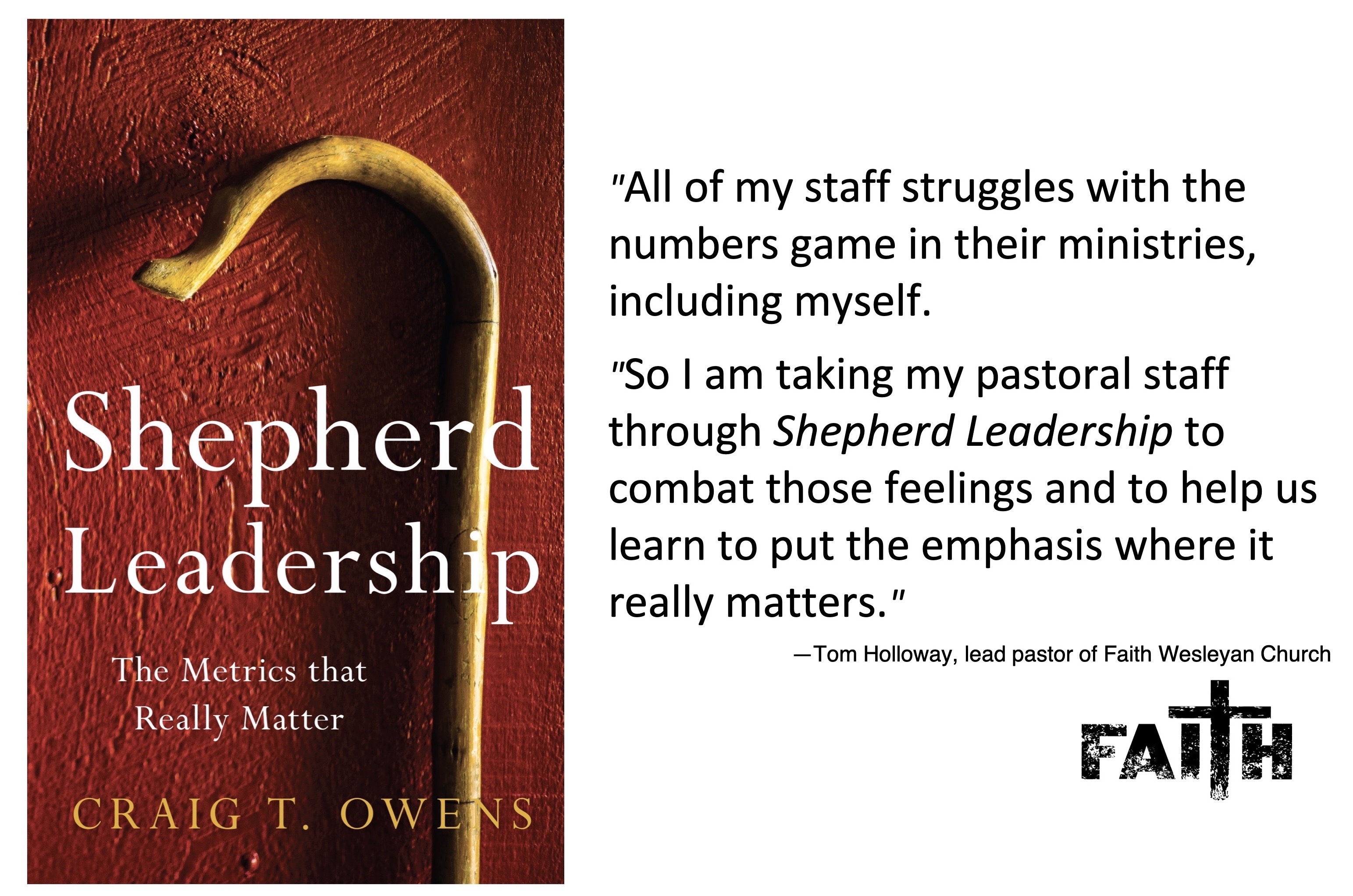
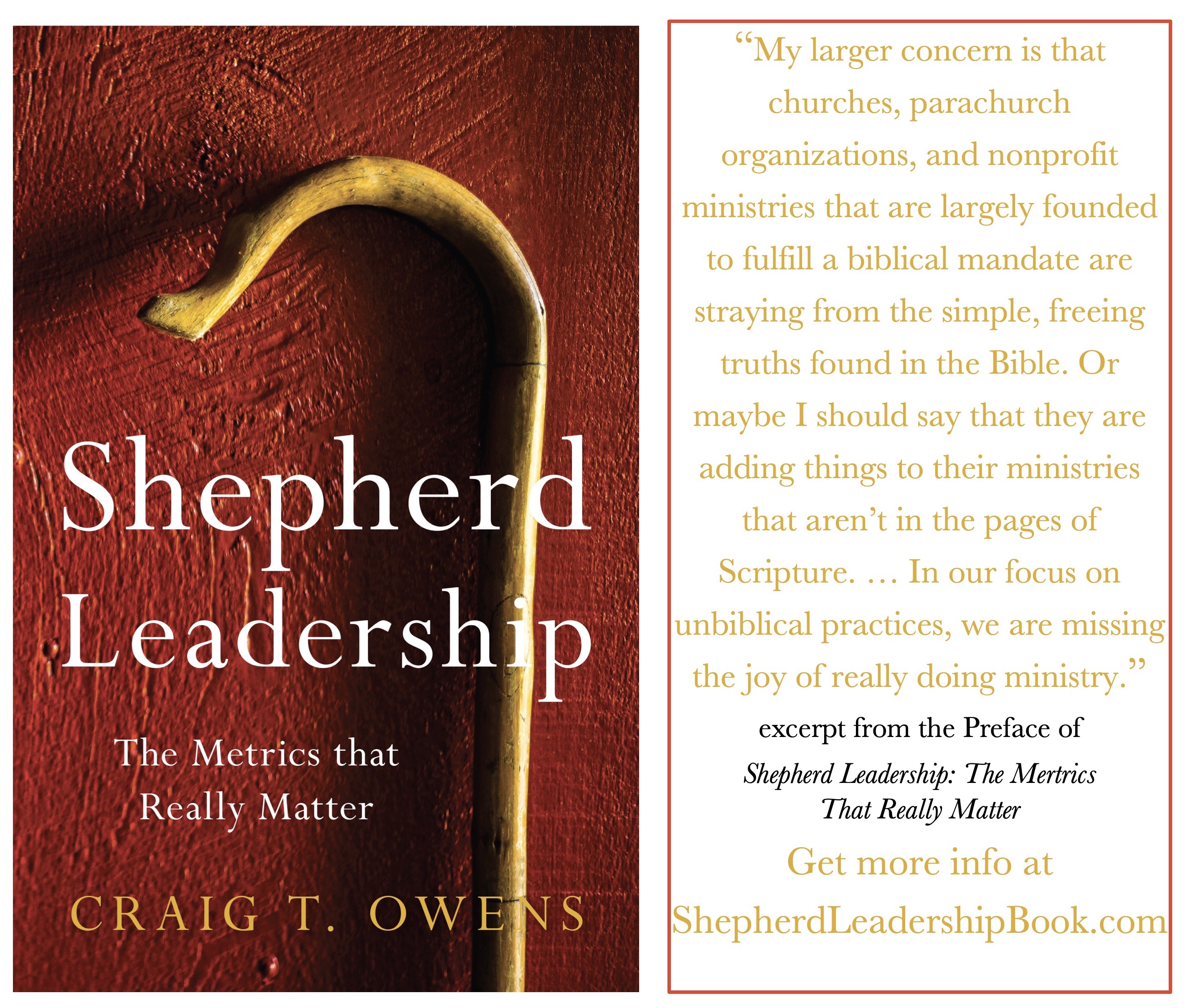
This idea is the reason behind my book Shepherd Leadership, especially the subtitle “The metrics that really matter.” I am so grateful to hear that my book is helping pastors and church boards realign their thinking along biblical practices, and that Shepherd Leadership is even being used as a textbook in a pastoral training school. I believe my book can be of assistance to you too.
I’ll be sharing more clips from this Leading From Alignment interview soon, so please stay tuned. Shepherd Leadership: The Metrics That Really Matter is available in print or ebook, and in audiobook through either Audible or Apple.
Listen to the podcast of this post by clicking on the player below, and you can also subscribe on Apple, Spotify, or Audible.
I had a great time on the Thriving In Ministry podcast with Kyle Willis while his podcast partner Dace Clifton was on sabbatical.
From all of the podcasts and interviews they had done, Kyle shared with me how so many pastors find it difficult to take a Sabbath break. Kyle noted that a pastor’s day of rest seems to bump into everyone else’s day of work.
That passage in Mark 6 that I mentioned is instructive for leaders in a couple of ways. First, Jesus was looking out for His teammates. He saw that they were tired and He called them to a place of rest. Good shepherds are always tuned in to the needs of the flock around them. As David said in Psalm 23, the Good Shepherd knows when to lead us to quiet pastures and still waters.
Second, I see that Jesus was also tuned in to Himself. Even though He was trying to get to a quiet place, He took time to minister in teaching and food to a crowd that was described as “sheep without a shepherd.” When this time was finished, Jesus took time alone to pray (Mark 6:46).
I think sometimes leaders have sabotaged their own health and effectiveness by saying things like, “This is quitting time” or “This is my day off.” Instead, we should listen to the Holy Spirit giving us insight like, “Take a break now. It’s time to go to a quiet pasture. It’s time to recharge in prayer.”
Leaders, don’t stick rigidly to your schedule but stay tuned in to yourself. Listen for the unmistakable voice of the Holy Spirit giving you wisdom. I have a section of five chapters in my book Shepherd Leadership that deal with every aspect of a leader’s health. Please pick up a copy today.
I’ll be sharing more clips from this Thriving In Ministry interview soon, so please stay tuned. Shepherd Leadership: The Metrics That Really Matter is available in print or ebook, and in audiobook through either Audible or Apple.
[19:25] What can we do with the notes from the books that we read?
[21:53] Greg has a new book coming out soon. Stay tuned for Sage Advice
Check out this episode and subscribe on YouTube so you can watch all of the upcoming episodes. You can also listen to our podcast on Spotify and Apple.
Jim asked me to share the motivation behind my book Shepherd Leadership. I especially wanted to highlight why we used the subtitle “The metrics that really matter.” Check this out…
As Jim pointed out, far too many pastors get frustrated because “my church hasn’t 10x’d in the last 10 years” and so they feel like a failure. Nowhere is this type of measurement for church effectiveness found in the New Testament. Instead, pastors are called to faithfulness and excellence.
If you are a pastor, please pick up a copy of my book. I have recently been joining church staff meetings as they use Shepherd Leadership as a discussion starter. If you would like me to join you either in person or via a Zoom meeting, please get in touch with me.
I’ll be sharing more clips from this Leading From Alignment interview soon, so please stay tuned. Shepherd Leadership: The Metrics That Really Matter is available in print or ebook, and in audiobook through either Audible or Apple.
Jeff and I spent a good chunk of our time talking about the health of pastors. I think it is very important for shepherd leaders to be wholly healthy because we cannot give to our flocks what we don’t possess ourselves.
One of the things that is very interesting to me is the parallels between maintaining our physical health and maintaining our spiritual health. When it comes right down to it, our physical health can be optimized by getting a handle on four key elements: (1) proper diet, (2) regular exercise, (3) appropriate rest and recovery, and (4) regular times of evaluation and adjustment.
Our spiritual health is optimized with these same four elements.
As my friend Josh Schram reminded me, “Health is not just a big one-time choice. Health is small daily choices.” Jesus made these daily choices to eat well, exercise regularly, rest when needed, and make the adjustments His Father spoke to His heart. He set us an example for healthy spiritual growth that will keep us in a place to grow our shepherd leadership capacities.
I have found that we are much more likely to make and stick to a plan to get physically healthy when we have a workout friend or someone who is holding us accountable. The same is true for our spiritual health. So pastor, don’t try to get and stay healthy on your own, but get a trusted friend or two working out alongside you.
In my book Shepherd Leadership, I have five chapters that focus on a leader’s mental, physical, spiritual, and relational health. I hope you will pick up a copy to help you operate at peak healthiness.
If you want to catch up on some of the other clips I’ve already shared from this interview, you can find them here, and I’ll be sharing more clips from this 200churches interview soon, so please stay tuned. Shepherd Leadership: The Metrics That Really Matter is available in print or ebook, and in audiobook through either Audible or Apple.
[13:56] How do leaders “call out” what’s in our team members?
[16:01] A leader’s self-assessment is key to how well we motivate others.
[18:23] Are company-wide benefits demotivating? How can we switch this up?
[20:30] Does the carrot-or-stick method of motivation actually work?
[21:10] Greg shares a quote about how dreams can help motivation.
[22:51] Great leaders don’t assume, but they ask important questions.
[23:53] Our coaching huddles can help you individualize your leadership motivational skills and practices.
Check out this episode and subscribe on YouTube so you can watch all of the upcoming episodes. You can also listen to our podcast on Spotify and Apple.
After I had shared a little of my background about how God directed me into the pastorate, John asked us our thoughts about pastors working some sort of vocational job before stepping into the role as a pastor.
I thought this exchange of ideas was pretty solid. Check this out…
One of the things I highlight in my book Shepherd Leadership is the danger of business metrics creeping into our churches. I think a pastor who has both vocational and ministry training is better equipped at spotting this shift of metrics and then making the necessary adjustments. If you are a pastor, I highly recommend that you pick up a copy of my book.
I’ll be sharing more clips from this Leading From Alignment interview soon, so please stay tuned. Shepherd Leadership: The Metrics That Really Matter is available in print or ebook, and in audiobook through either Audible or Apple.
Listen to the podcast of this post by clicking on the player below, and you can also subscribe on Apple, Spotify, or Audible.
Perhaps you’ve heard the phrase, “The best laid plans of mice and men often go awry.”
This is a line from a poem written by Robert Burns in 1785 called To A Mouse. The story behind the poem is Burns had been plowing his field and destroyed a nest that a mouse had been working all day to build. His poem was written as an apology. The famous line from the Scottish poet actually is written like this—
The best laid schemes o’ Mice an’ Men
Gang aft agley,
An’ lea’e us nought but grief an’ pain,
For promis’d joy!
That phrase “gang aft agley” means often go awry.
Do you ever feel this way? Like your perfectly planned agenda got derailed before you even finished breakfast? Or that your To Do list never quite gets “To Done” by the end of the day?
I had a great time on the Thriving In Ministry podcast with Kyle Willis while his podcast partner Dace Clifton was on sabbatical. We had planned to discuss how to help pastors get some rest so they could be at their optimal health, but our best laid plans definitely “gang aft agley”! We had multiple technical issues before we could even start recording, and then just as we talked about how pastors could find a way to rest, well, this happened…
Ah yes! Plans gone awry, indeed!
But here is an important principle for all of us to remember. The Bible says this: We can make our plans, but the Lord determines our steps (Proverbs 16:9). That means the thing that I call “an interruption” may be something or someone God has sent my way.
I used to really struggle with this, saying things like, “My plans never work out.” Until one day I heard the distinct voice of the Holy Spirit ask me, “Whose plans?”
Now listen, you who say, “Today or tomorrow we will go to this or that city, spend a year there, carry on business and make money.” Why, you do not even know what will happen tomorrow. What is your life? You are a mist that appears for a little while and then vanishes. Instead, you ought to say, “If it is the Lord’s will, we will live and do this or that.” (James 4:13-15)
Pastor, look at the life of Jesus. He often tried to get away for a time of rest, but people with needs showed up. His well-laid plans appeared to go awry. But He had compassion on them because He viewed them “like sheep without a shepherd” (Matthew 9:36; Mark 6:34). Jesus then found time to sabbath later.
Don’t view people with needs as an interruption or as something that derails your plans, but thank God for sending them your way. Then listen to the Holy Spirit showing you how and when you can get the rest you need to be energized to accomplish the rest of the items on your agenda.
I’ll be sharing more clips from this Thriving In Ministry interview soon, so please stay tuned. Shepherd Leadership: The Metrics That Really Matter is available in print or ebook, and in audiobook through either Audible or Apple.



 [0:38] We prefer preventative care both physically and in our leadership health







 Craig T. Owens