Disagreeing Agreeably

Listen to the podcast of this post by clicking on the player below, and you can also subscribe on Apple or Spotify.

Why do disagreements have to become so, well, disagreeable?

Is it possible to disagree agreeably?

It’s not easy, but I think it’s possible.

When I was younger I couldn’t stand the idea of “losing” an argument: I always had to be right. I think I’ve matured a bit (at least, I hope I have), and I no longer feel the same way. So here are a few lessons I’ve learned:

(1) Remember the person I’m disagreeing with is my brother or sister. God has created both of us, so that makes us siblings.

(2) Always go for win-win. Don’t look out only for your own interests, but take an interest in others, too (Philippians 2:4).

(3) Choose your battles wisely. You can’t make everything an issue worth dying over. Thomas Jefferson wisely said, “In matters of principle, stand like a rock; in matters of taste, swim with the current.”

(4) Redefine the “win.” What does it mean to win? Is it to put someone else in their place? That doesn’t seem very healthy. Perhaps a “win” is when values or principles are agreed to, although the way they are applied may be very different from person to person.

(5) Leave the baggage behind. Don’t bring previous hurts into a new situation. Don’t assume this new person will act like someone else from your past.

We’re all different people, so we’re going to have disagreements. The key: let’s find a way to disagree agreeably.

If you have other thoughts about how to disagree agreeably, I would love it if you would share them in the comments.

►► Would you please prayerfully consider supporting this ministry? ◀︎◀︎
Hmmm

Feats of thinking may create reputation, but habits of thinking create character. —A.W. Tozer

If this is true, then I’ve got some questions to ask myself:

  • How do I think?
  • How am I processing the world around me?
  • Do I see the hand of God in daily events?
  • Can I find His truth at work?
  • Am I learning from what I experience each day?
  • Do I think positively or negatively?
  • Do difficulties cause faith or fear?
  • Am I thinking long enough?
  • Do my thoughts produce a Christ-like attitude?
  • Do I take time to think about my thoughts?

Two more thinking quotes for today:

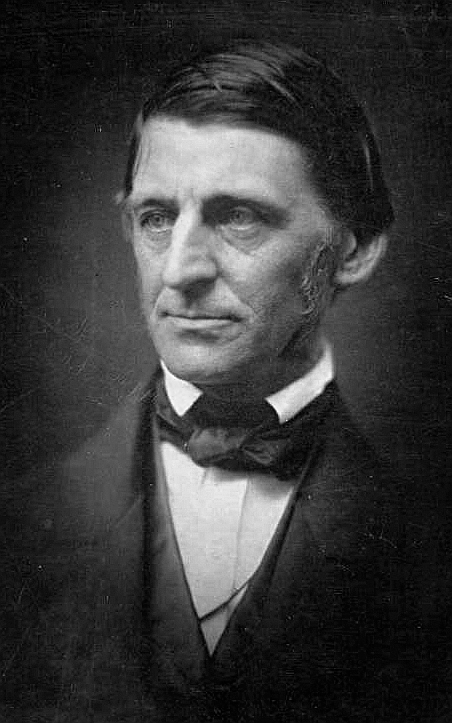
Life consists of what a man is thinking about all day. —Ralph Waldo Emerson

Summing it all up, friends, I’d say you’ll do best by filling your minds and meditating on things true, noble, reputable, authentic, compelling, gracious—the best, not the worst; the beautiful, not the ugly; things to praise, not things to curse.Philippians 4:8

Timothy

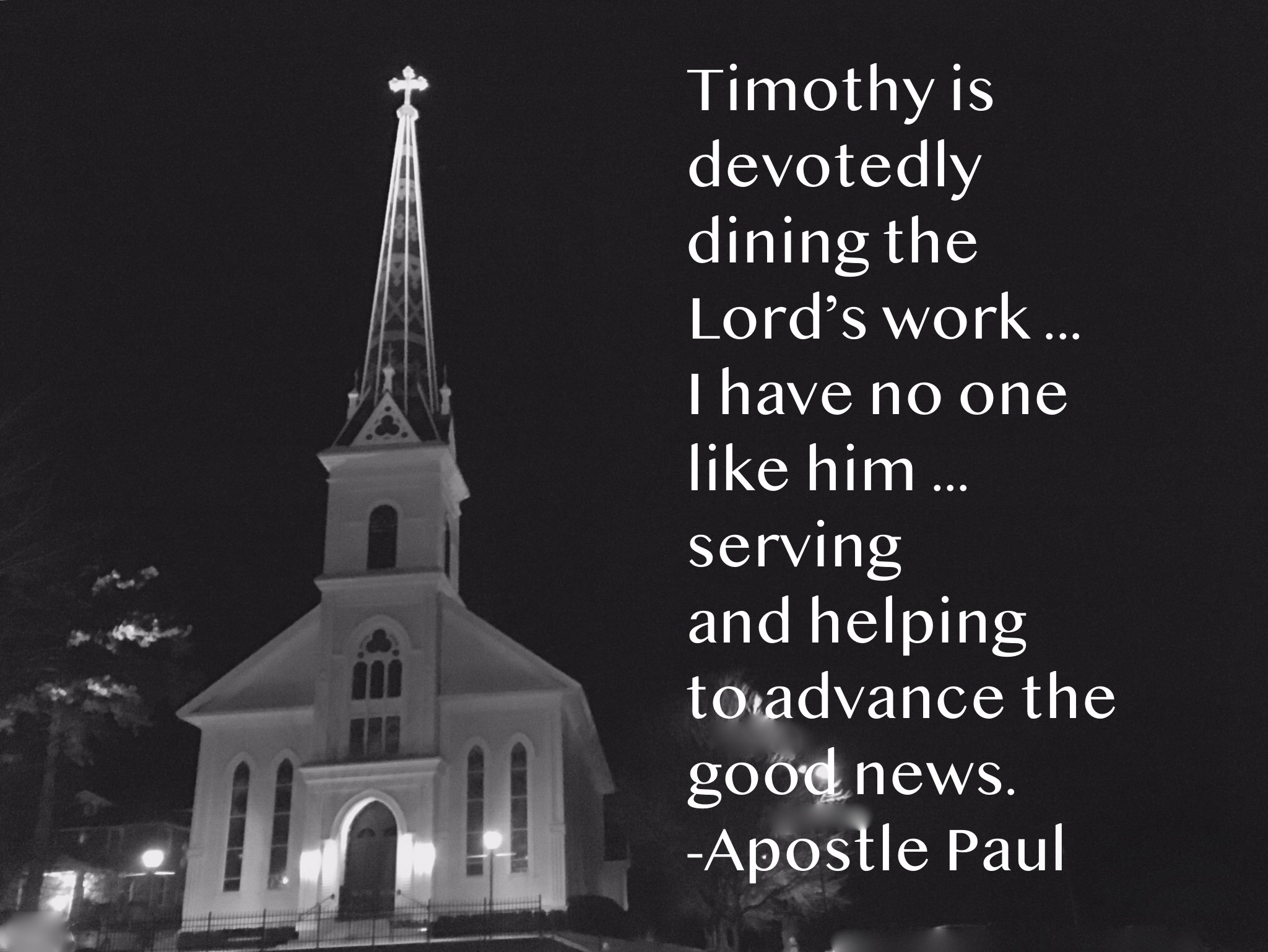
Timothy was a young man that was one of the Apostle Paul’s protégés. Check out just a few things Paul had to say about him:

  • He works so hard for the Master. (1 Corinthians 16:10)
  • I have no one like him—no one of so kindred a spirit—who will be so genuinely interested in your welfare and devoted to your interests. …But you know how Timothy has proved himself. Like a son with his father, he has served with me in preaching the Good News (Philippians 2:20, 22)
  • We sent him to strengthen you, to encourage you in your faith, and to keep you from being shaken by the troubles you were going through. (1 Thessalonians 3:2-3)
  • I sent to you Timothy, who is my beloved and trustworthy child in the Lord, who will recall to your minds my methods of proceeding and course of conduct and way of life in Christ. (1 Corinthians 4:17)
  • TIMOTHY’S THE REAL DEAL! (Philippians 2:22)

[Check out all of the above Scriptures by clicking here.]

I am striving to live up to this “Timothy” standard. I am also working hard to invest in the next generations of Timothys.

Here’s where I believe it all starts: Timothy loved God and served others. May that be said of all of us too.

Thought Patrol

Have you ever found yourself in circumstances that weren’t exactly what you had planned or hoped for? You know, things are just not going your way? What do you do then? How do you handle this? I suggest the first place to start is by thinking about your thinking.

I know that may sound a little unusual, but I have often times had to stop to think about what I’m thinking about. To ask myself, “Why am I thinking that?”

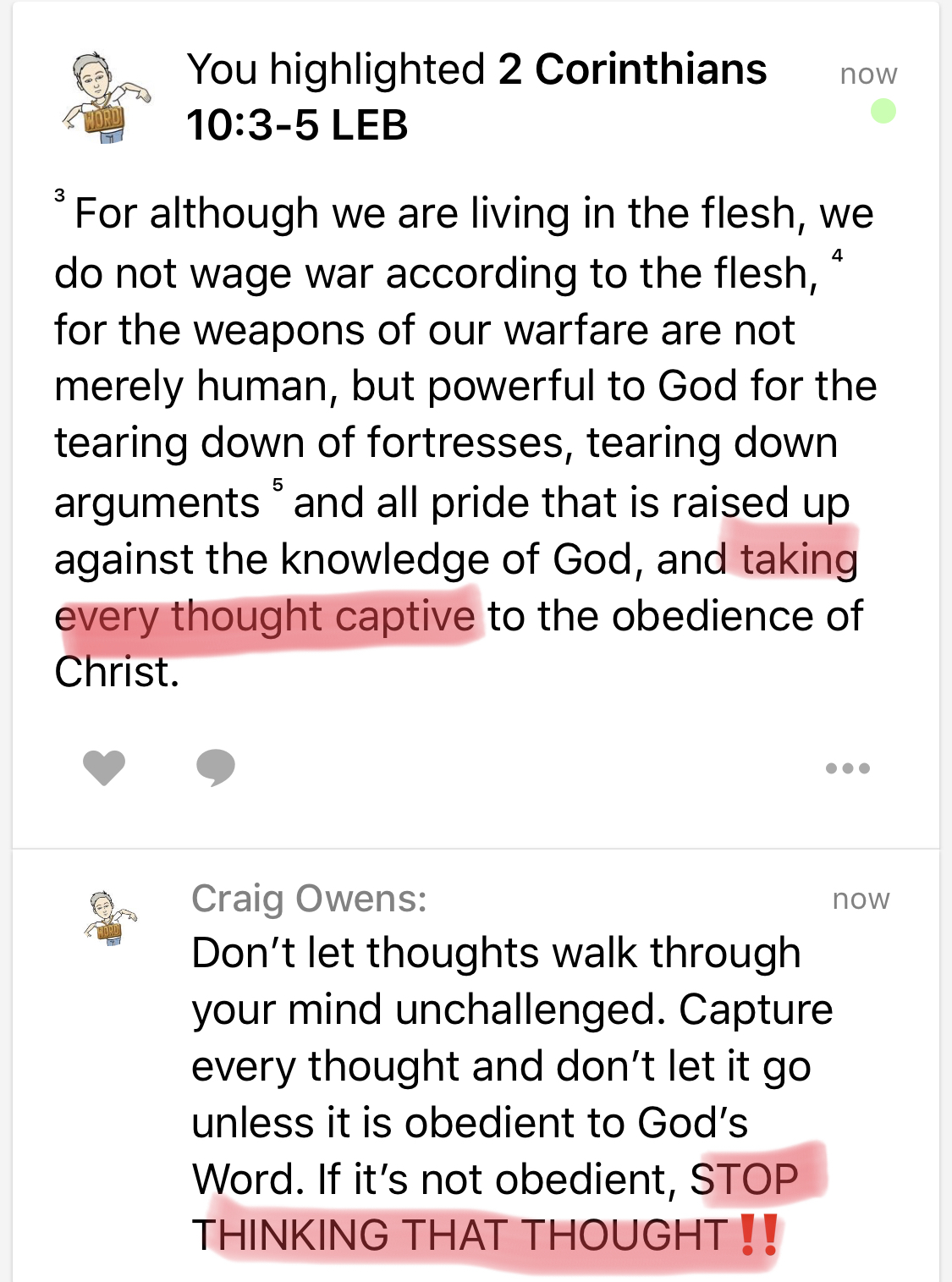
I believe this is what the Bible is really saying when it tells us to take every thought captive. If we don’t, our negative thoughts can lead us to unplanned places and can keep us trapped there. But if we will take time to think about what we’re thinking about, we can discover the key to freedom from that undesirable place.

A few quotes to get us started:

“No man has ever succeeded who kept his mind on negative things… and no man ever rises above his thoughts of himself.” —C.M. Ward

“You are today where your thoughts have brought you. You will be tomorrow where your thoughts take you.” —James Allen, As A Man Thinketh

“They themselves are makers of themselves by virtue of the thoughts which they choose and encourage; that mind is the master-weaver, both of the inner garment of character and the outer garment of circumstance, and that, as they may have hitherto woven in ignorance and pain they may now weave in enlightenment and happiness.” —James Allen, As A Man Thinketh

“Only when you assume full accountability for your thoughts, feelings, actions, and results can you direct your own destiny; otherwise, someone or something else will.” —Roger Conners, Tom Smith & Craig Hickman, The Oz Principle

“Summing it all up, friends, I’d say you’ll do best by filling your minds and meditating on things true, noble, reputable, authentic, compelling, gracious—the best, not the worst; the beautiful, not the ugly; things to praise, not things to curse. Put into practice what you learned from me, what you heard and saw and realized. Do that, and God, who makes everything work together, will work you into his most excellent harmonies.” —Philippians 4:8, The Bible

Let’s all work on patrolling our thoughts today.

Worrywart

“Worry indicates we’re not willing to let God handle certain things—at least not in His way, and certainly not in His time.” —Craig Groeschel, in The Christian Atheist

Worry is a control issue

…that is, I want to be in control.

Worry is a sovereignty issue

…that is, I think I know best how things should work out.

Worry is a trust issue

…that is, I trust God only when things are happening on my timeframe.

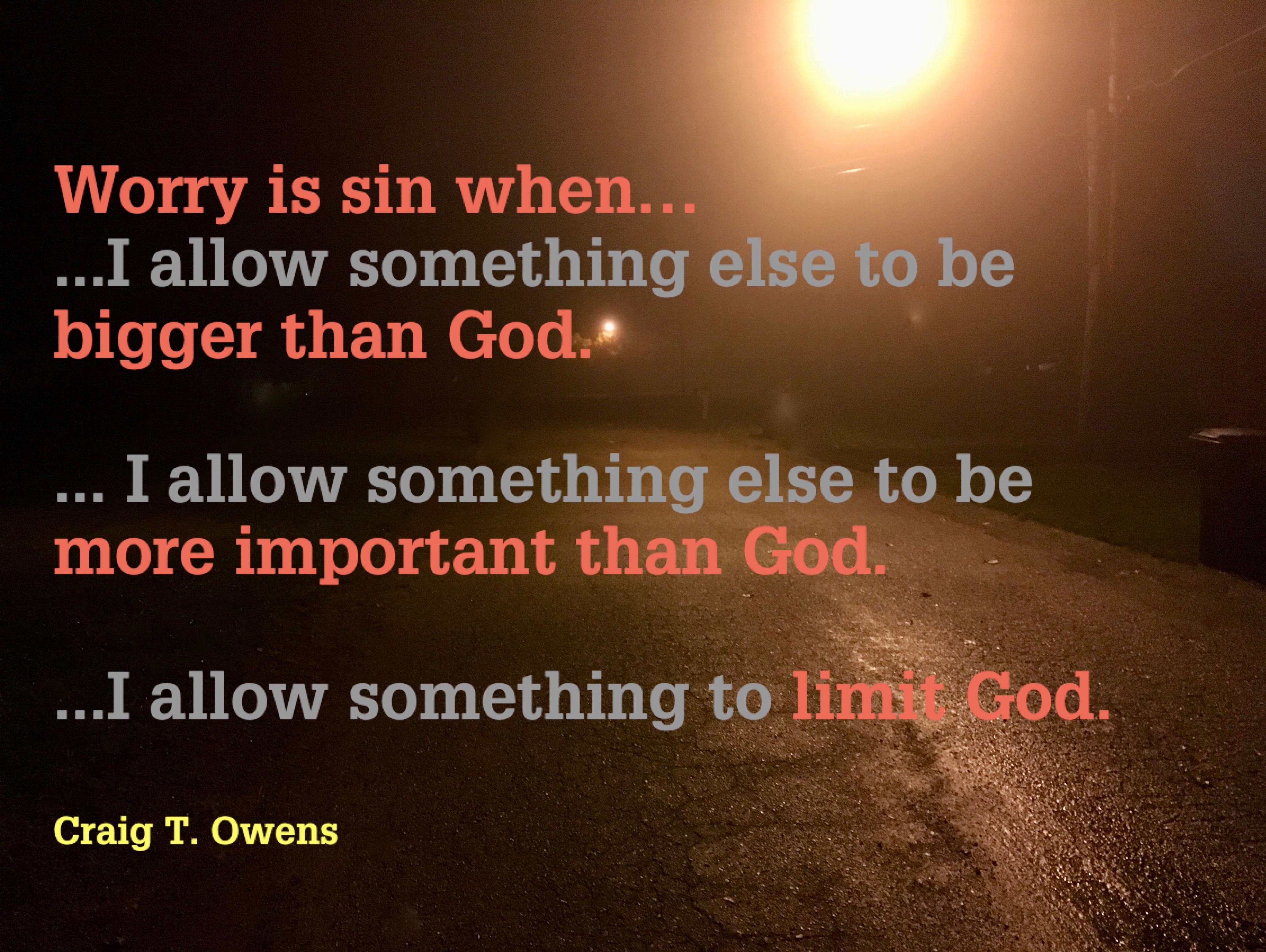
Bottom line: Worry is sin when

  • …I allow something else to be bigger than God.
  • …I allow something else to be more important than God.
  • …I allow something to limit God.
  • …I look more to myself for solutions than I look to God.

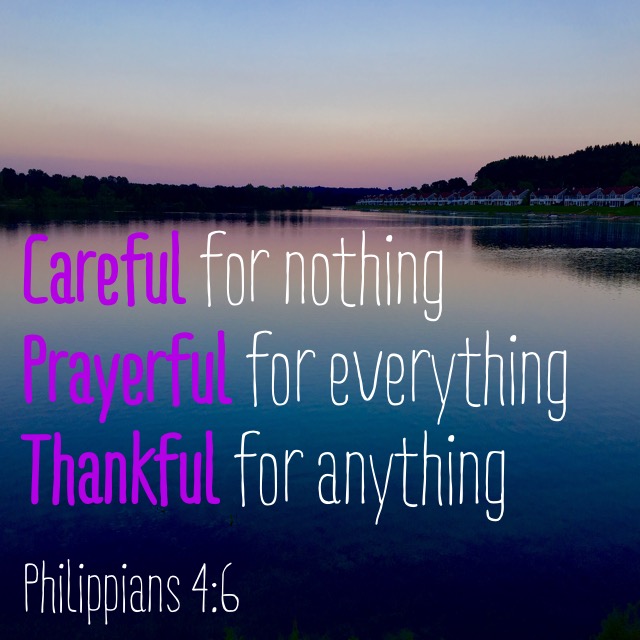
Any worry should be a call to prayer: Don’t worry about anything; instead, pray about everything. Tell God what you need, and thank Him for all He has done. Then you will experience God’s peace, which exceeds anything we can understand. His peace will guard your hearts and minds as you live in Christ Jesus. (Philippians 4:6-7)

Any extended worry should be a call to repentance: Jesus commands us four times, “Do not worry” (Matthew 6:25-34).

Worry can be disguised in a lot of different forms, but it’s still worry. And it’s still sin. I’m working on this.  

A Day In The ER

Betsy had been experiencing a lower back pain for a couple of days, but yesterday morning it really intensified. She made an appointment to see her doctor, and after just a few minutes of being examined her doctor announced, “I need to send you to the ER. I think you might have a kidney stone.”

So I swooped in, picked up my bride, and off to the ER we went. After the tests there, the doctors believe that it is not a kidney stone but a severe muscle spasm.

I’m grateful for…

  • …the fact that ER trips for our family are few and far between.
  • …relatively easy access to medical care.
  • …the wisdom of doctors.
  • …the kindnesses of nurses.
  • …the genius of scientists who design medicines.
  • …health insurance.
  • …technology that allowed me to communicate with family during this time.
  • …friends who pitched in to help.

I’m not anxious to make another ER trip anytime soon, but it was a good time to look around and recognize how much I have to be grateful for every single day.

What are you grateful for today?

The Power Of -Ing

Have you ever heard someone say something like:

  • “Wow, look at her. She arrived in style!”
  • “I think I’ve finally arrived.”

This is weird because arriving implies stopping. When I’m driving to the store and I arrive at the store, I don’t keep on driving; I stop at the store. That’s the whole reason I left my house in the first place.

So when we talk about people arriving, do we really mean that they are supposed to stop and park? Correct me on this, but I think the only time we stop in life is when life stops. In other words: We’re dead!

We don’t really want to arrive, do we? We want to hit goals and then keep on going. We want to keep on “ing”ing. Here’s how I’m trying to leverage the power of ing:

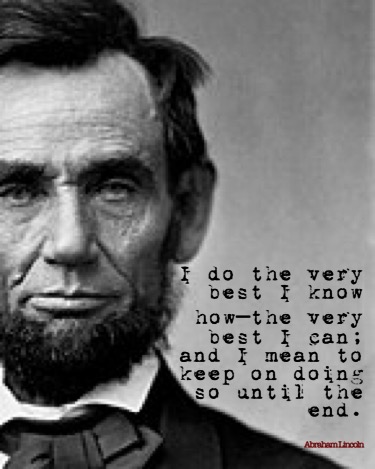
I love the words of Abraham Lincoln, who knew the power of ing:

“I do the very best I know how—the very best I can; and I mean to keep on doing so until the end.”

Don’t arrive. Don’t stop. Keep on “ing”ing the right things—God’s things—and see how God will bless your efforts. There is an incredible power in ing!

Spurred On

There are times when it’s not so nice to have someone behind me who is pushing me forward. Like when I’m standing in the check-out line at the grocery store. After all, I can only go as fast as the person in front of me, right? So I start to have this imaginary conversation with the shopper behind me, “Look, you can nudge and prod and bump me all you want, but I can’t go any faster.”

But it’s a whole different story when the way in front of me is wide open. Now my imaginary conversation changes, “Okay, here we go! You’re nudging and prodding is really going to make me fly now!”

I think this is might have been what the Apostle Paul was thinking when he wrote, “Follow me as I follow Christ.” In essence, it was a thank you note to those behind him, “Thank you for spurring me on to preach better, teach better, live better, be better.”

Here’s what Jesus did for us: He was spurred on both by those of us who would be following Him and by the calling of His Heavenly Father. We do this by keeping our eyes on Jesus, the champion who initiates and perfects our faith. Because of the joy awaiting Him, He endured the Cross, disregarding its shame. Now He is seated in the place of honor beside God’s throne.

So Paul said he could follow that example in his own life. Not that I have already obtained all this, or have already been made perfect, but I press on to take hold of that for which Christ Jesus took hold of me. Brothers, I do not consider myself yet to have taken hold of it. But one thing I do: Forgetting what is behind and straining toward what is ahead, I press on toward the goal to win the prize for which God has called me heavenward in Christ Jesus.

I’m in awe of what God has called me to do.

I’m grateful for the way Jesus has opened up the way for me.

I’m thankful for those who spur me on every day. Especially my family and my congregation. You make me want to preach better, teach better, live better, be better. Thank you!

Who’s spurring you on?

I Am What I Think I Am

Years ago I read a book that transformed the way I read and studied. This one book probably caused me to become a more discriminating reader than any other factor. Although it’s less than 50 pages long, As A Man Thinketh by James Allen revolutionized my thinking. Over the last couple of days, I’ve been listening to the audiobook as I have been driving around.

Here’s a quote from James Allen:

A man is literally what he thinks, his character being the complete sum of all his thoughts. … A noble and Godlike character is not a thing of favor or chance, but is the natural result of continued effort in right thinking, the effect of long-cherished association with Godlike thoughts.”

This is what the Bible says about the seeds of great thoughts:

“Finally, brethren, whatever things are true, whatever things are noble, whatever things are just, whatever things are pure, whatever things are lovely, whatever things are of good report, if there is any virtue and if there is anything praiseworthy—meditate on these things.”

What are you thinking about today? What’s going in? You are making yourself by what you are thinking, so choose those thought-stimulators wisely.

Satisfied Service

I started a conversation last week about being a servant (you can catch up here).

Serving should be a two-way street. Contrary to the way that some people look at servanthood, being a servant is not the same thing as being a doormat. Consider two key verses:

  • Each of you should look not only to your own interests, but also to the interests of others. (Philippians 2:4)
  • Submit to one another out of reverence for Christ. (Ephesians 5:21)

We should look equally to others’ needs as well as our own needs. Zig Ziglar says it this way, “You can have everything in life you want, if you will just help other people get what they want.”

This can be manipulation if you’re simply looking to someone else’s interests as a form of flattery or as a quid pro quo. But if you are truly serving—if you truly have the other person’s best interests in mind—if you are willing to submit to them out of reverence for Christ, serving can be liberating.

Last week Rick Warren tweeted, “The more self-centered I am, the more unsatisfied I’ll be.” I retweeted with this addition, “So the more I serve, the more satisfied I’ll be.” I believe that.

Try it for yourself—it works!