What Is Shalom?

Shalom is the Hebrew word for peace. Some of the best definitions of shalom include ideas of completeness, soundness, and wholeness. One Jewish rabbi commented that when you say “Shalom” to someone, you’re really saying, “may you be full of well-being.” Or another way of thinking of shalom is—nothing missing, nothing broken. 

Some have tried to describe shalom as the absence of conflict, but that’s not quite accurate. On the verge of going into the Promised Land to fight their enemies, God commanded Aaron to speak a blessing of peace of the people (Numbers 6:24-26). And just before Jesus said, “Blessed are those who are persecuted because of righteousness,” He said, “Blessed are the peacemakers” (Matthew 5:9-10). 

Shalom is not controlled by outward circumstances. Shalom is a deep-seated, rock-solid, unshakable assurance that I am in God’s hand. 

Isaiah describes how we live in shalom like this—

You will guard him and keep him in perfect and constant peace whose mind—both its inclination and its character—is stayed on You, because he commits himself to You, leans on You, and hopes confidently in You. (Isaiah 26:3)

How do we do keep our mind stayed on God? The Apostle Paul says, “We take captive every thought to make it obedient to Christ” (2 Corinthians 10:5). Psychologists call this process metacognition: when we think about what we’re thinking about. It’s being aware of our anxious thoughts that are robbing us of shalom and then talking back to them. 

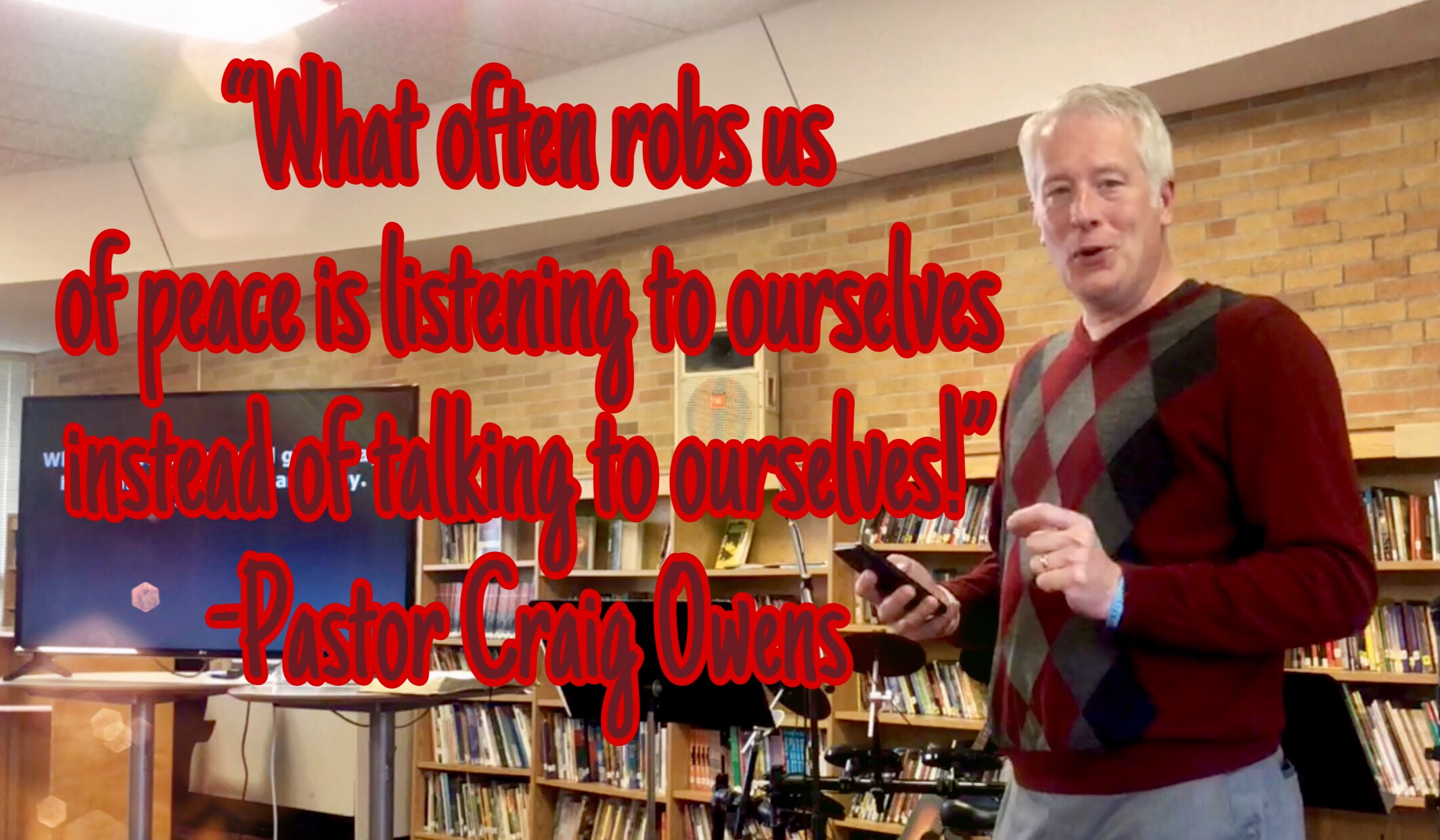
What often robs us of peace is listening to ourselves instead of talking to ourselves! 

Someone once asked evangelist Smith Wigglesworth, “Smith, how do you feel?” He replied, “I never ask Smith how I feel. I tell him how he feels!” Exactly right! 

Why do we make our thoughts obedient to Jesus? Because one of the titles given to Jesus before He was born was Prince of Peace (Isaiah 9:6), and Jesus assures us that His peace is unlike anything we can ever find in earthly things (John 14:27, 16:33). 

God’s peace is always there, but our divided minds keep us from experiencing His peace. So Isaiah tells us to keep our mind steadfast on God’s goodness, and Paul says the same thing—Don’t fret or worry. Instead of worrying, pray. Let petitions and praises shape your worries into prayers, letting God know your concerns. Before you know it, a sense of God’s wholeness, everything coming together for good, will come and settle you down. It’s wonderful what happens when Christ displaces worry at the center of your life. (Philippians 4:6-7)

I want to encourage you to practice what the Bible calls capturing your thoughts—or what psychologists call metacognition. Ask yourself, “Why am I thinking that?” Capture those thoughts and make them obedient to Christ. Don’t let your worrisome thoughts rob you of God’s shalom.

Join me this Sunday as we take a closer look at the “shalom cycle,” including the things that can derail it. 

Shalom

God makes a promise in Isaiah about His perfect peace being made available to His people. 

Ahhh, who wouldn’t want God’s perfect peace?! Sadly, many people actually block God’s peace from coming into their hearts. You see, God’s peace is always there, but there are things we humans frequently do that keeps us from experiencing His perfect peace. 

The Hebrew word for peace is shalom, which is a word packed with rich meaning! There are things God-loving people can do to keep shalom at the center of their lives, and I want to share these things with you. 

Please join me this Sunday as we begin a 4-part series looking at what shalom is, how we can keep it humming in our lives, as well as the warning signs that would indicate to us a breakdown of shalom is on the horizon. 

Please join me either in person or on Facebook Live for this life-changing series.

12 Quotes From “The Strenuous Life”

Teddy Roosevelt believed firmly that a nation rose or fell as individuals exercised strong character or lived a slothful life. He not only preached it, he lived it! The Strenuous Life is a collect of TR’s speeches that emphasized what he called “the manly characters.” Check out my full book review by clicking here. 

“We do not admire the man of timid peace. We admire the man who embodies victorious effort; the man who never wrongs his neighbor, who is prompt to help a friend, but who has those virile qualities necessary to win in the stern strife of actual life.” 

“A man’s first duty is to his own home, but he is not thereby excused from doing his duty to the State; for if he fails in this second duty it is under the penalty of ceasing to be a freeman. In the same way, while a nation’s first duty is within its own borders, it is not thereby absolved from facing its duties in the world as a whole; and if it refuses to do so, it merely forfeits its right to struggle for a place among the peoples that shape the destiny of mankind.” 

“If we stand idly by, if we seek merely swollen, slothful ease and ignoble peace, if we shrink from the hard contests where men must win at hazard of their lives and at the risk of all they hold dear, then the bolder and stronger peoples will pass us by, and will win for themselves the domination of the world. Let us therefore boldly face the life of strife, resolute to do our duty well and manfully; resolute to uphold righteousness by deed and by word; resolute to be both honest and brave, to serve high ideals, yet to use practical methods. Above all, let us shrink from no strife, moral or physical, within or without the nation, provided we are certain that the strife is justified, for it is only through strife, through hard and dangerous endeavor, that we shall ultimately win the goal of true national greatness.” 

“Scant attention is paid to the weakling or the coward who babbles of peace; but due heed is given to the strong man with sword girt on thigh who preaches peace, not from ignoble motives, not from fear or distrust of his own powers, but from a deep sense of moral obligation.” 

“Strive manfully for righteousness, and strive so as to make your efforts for good count.” 

“We are in honor bound to put into practice what we preach; to remember that we are not to be excused if we do not; and that in the last resort no material prosperity, no business acumen, no intellectual development of any kind, can atone in the life of a nation for the lack of the fundamental qualities of courage, honesty, and common sense.” 

“If a man permits largeness of heart to degenerate into softness of head, he inevitably becomes a nuisance in any relation of life. If sympathy becomes distorted and morbid, it hampers instead of helping the effort toward social betterment.” 

“The quality of self-help is so splendid a quality that nothing can compensate for its loss; yet, like every virtue, it can be twisted into a fault, and it becomes a fault if carried to the point of cold-hearted arrogance, of inability to understand that now and then the strongest may be in need of aid, and that for this reason alone, if for no other, the strong should always be glad of the chance in turn to aid the weak.” 

“The Bible always inculcates the need of the positive no less than the negative virtues, although certain people who profess to teach Christianity are apt to dwell wholly on the negative. We are bidden not merely to be harmless as doves, but also as wise as serpents. It is very much easier to carry out the former part of the order than the latter; while, on the other hand, it is of much more importance for the good of mankind that our goodness should be accompanied by wisdom than that we should merely be harmless. If with the serpent wisdom we unite the serpent guile, terrible will be the damage we do; and if, with the best of intentions, we can only manage to deserve the epithet of ‘harmless,’ it is hardly worth while to have lived in the world at all.” 

“The boy who is going to make a great man, or is going to count in any way in after life, must make up his mind not merely to overcome a thousand obstacles, but to win in spite of a thousand repulses or defeats.” 

“Softness of heart is an admirable quality, but when it extends its area until it also becomes softness of head, its results are anything but admirable.” 

“A man is worthless unless he has in him a lofty devotion to an ideal, and he is worthless also unless he strives to realize this ideal by practical methods. He must promise, both to himself and to others, only what he can perform; but what really can be performed he must promise, and such promise he must at all hazards make good.” 

More quotes from TR are coming soon, so stay tuned! 

Saturday In The Proverbs—What A Waste! (Proverbs 29)

[Each chapter in the Book of Proverbs contains thoughts that fit into a theme; they are not just random thoughts gathered together. In this “Saturday In The Proverbs” series, I will share a theme that I see in each chapter. But the cool thing about God’s Word is that you may see an entirely different theme. That’s great! If you do, I would love for you to share it in the comments below.]

He who is often rebuked, and hardens his neck, will suddenly be destroyed, and that without remedy (Proverbs 29:1).

God gives us SO MANY opportunities to experience His blessings, but when we continually flout His laws, we squander what we could have enjoyed. 

We waste things like…

  • …personal growth (vv. 1, 19)
  • …nurturing relationships (vv. 2, 5, 8-11, 24, 27)
  • …wealth (v. 3)
  • …leadership opportunities (vv. 4, 12, 14, 18, 26)
  • …escape from heartache (vv. 6, 15, 17, 20, 21)
  • …relieving others’ suffering (v. 7)
  • …revelation / insight (vv. 13, 19)
  • …growing in righteousness (v. 16)
  • …lasting peace (vv. 22, 23, 25)

Don’t waste what God wants to give you! 

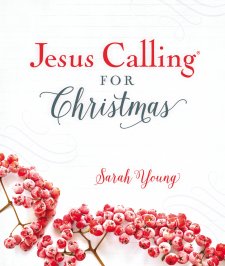
Jesus Calling For Christmas (book review)

I love how Sarah Young turns Scripture into Jesus addressing us in the first-Person! As we are approaching the Christmas season when we celebrate Christ’s First Advent on Earth, Sarah has used her God-given talent to tell us what Jesus Himself says about His Advent, and what the joyful implications are for us today, in her newest book Jesus Calling For Christmas. 

Most people usually think of Christmas as a time of joy, peace, and celebration. But this season should carry even greater meaning for Christians who know that we are celebrating Joy and Peace personified in Jesus Christ. So Sarah, reminding us of what Jesus would say, tells us, “In the midst of this busy Advent season, keep bringing your focus back to My holy Presence. Remember that Immanuel has come, and rejoice!” 

This book is easily readable around a family dinner table, or as a bedtime reading with children. The Christmas scenery captured in this book is beautiful, the words of Jesus are easy to understand, and the corresponding Scriptures make it easy to see how Christ’s arrival on Earth fulfilled all that was prophesied about Him. 

Children already seem to have a wide-eyed wonder about Christmas time, and adults would do well to learn from them. In fact, Sarah writes Jesus saying, “Gaze at the Glory of My birth, just as the shepherds did, and respond with childlike wonder.”

Children of all ages—even the “grownup” ones!—can experience Christ’s Advent in a whole new way by reading Jesus Calling For Christmas together this season. 

I am a Thomas Nelson book reviewer. 

Saturday In The Proverbs—The Blessings Of Integrity (Proverbs 19)

[Each chapter in the Book of Proverbs contains thoughts that fit into a theme; they are not just random thoughts gathered together. In this “Saturday In The Proverbs” series, I will share a theme that I see in each chapter. But the cool thing about God’s Word is that you may see an entirely different theme. That’s great! If you do, I would love for you to share it in the comments below.]

…integrity… (Proverbs 19:1).

Integrity is wholeness—it brings its own blessings because a person of integrity…

  • …is wise (vv. 1, 8, 20, 27)
  • …doesn’t fall into the haste-makes-waste trap (v. 2)
  • …is at peace with God (v. 3)
  • …knows true friendship (vv. 4, 6, 7, 19)
  • …is never punished for lying (vv. 5, 9, 28, 29)
  • …gets promoted to leadership (v. 10)
  • …preserves relationships (vv. 11, 12, 13, 14, 25, 26)
  • …is satisfied with his work (vv. 15, 23, 24)
  • …guards his soul (v. 16)
  • …serves others without an agenda (v. 17)
  • …disciplines only in love (vv. 18, 25)
  • …walks in God’s ways (vv. 21, 23)
  • …is kind to others (v. 22)

“With integrity you can experience freedom. Not only are you less likely to be enslaved by the stress that comes from bad choices, debt, deceptiveness, and other negative character issues, but you are free to influence others and add value to them in an incredible way.” —John Maxwell

How true: Integrity = Freedom to live a satisfying life!

Hold On!

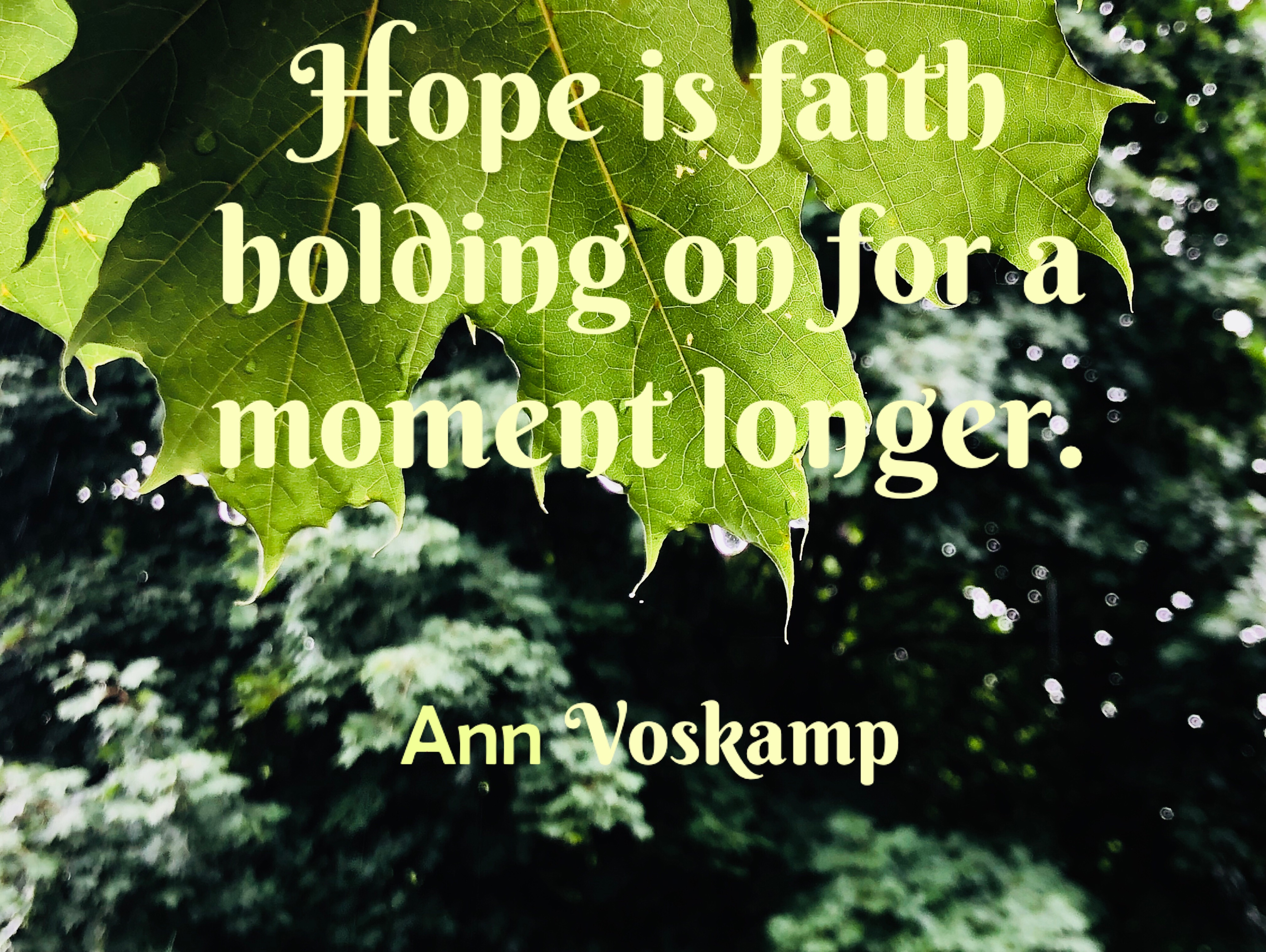
Hope is faith holding on for a moment longer. 

“When it’s hard to hold on—no one holds on to what is cool. They hold on to Christ. When it’s hard to hold on, no one holds on to what is hipster. They hold on to Him who is holy and healing. When it’s hard to hold on—we don’t hold on to trendy, we hold on to the True Vine; we don’t hold on to the prevailing and popular, because we hold on to the Prince of Peace and the true Perfecter of our faith.” —Ann Voskamp, in The Way Of Abundance

Check out my review of The Way Of Abundance here, and check out some other quotes from this wonderful book here.

Grudges Can Block God’s Blessings

In Psalm 7, some guy named Cush is giving David trouble. How much trouble? David felt like Cush was a lion about to rip him apart! 

We would naturally expect David to cry out for God’s help from this tormentor (which he does in the opening verses), but then what David does next is quite unexpected—he asks to God to search his heart to see if he might be the cause for Cush’s attack: 

  • Have I done something wrong?
  • Is there guilt on my hands?
  • Have I done such an evil to cause him to attack? 
  • Have I somehow robbed Cush of something? 

This introspection in God’s presence was apparently a regular habit for David. He made this a regular habit when the heat was on, and also when he was at peace (see Psalm 139:23-24). 

Not only did David want to make sure his hands were clean, but he also wanted to make sure he wasn’t carrying a grudge against Cush. A grudge is a feeling of anger or resentment toward someone who has wronged us. But the most devastating thing about a grudge is that it takes our eyes off God and places them on our tormentor. 

In other words, as long as we hold a grudge, we continue to give our tormentor power over our lives. 

So after asking those introspective questions, David writes Selah. One definition of this word—which is probably quite appropriate here—is pause, and calmly think of that. 

After this Selah pause of introspection in God’s presence, David must have felt clear of any guilt (because we don’t see him repenting, as is his habit), but we also see him being very careful of not holding on to a grudge against Cush. 

David then begins to affirm in the remaining verses that God is more than capable of handling evil people and keeping the righteous protected. David determines that he will give thanks to the Lord because of His righteousness, and will sing praise to the name of the Most High (v. 17). 

Here’s an important thing for anyone who has been injured by someone else to remember—

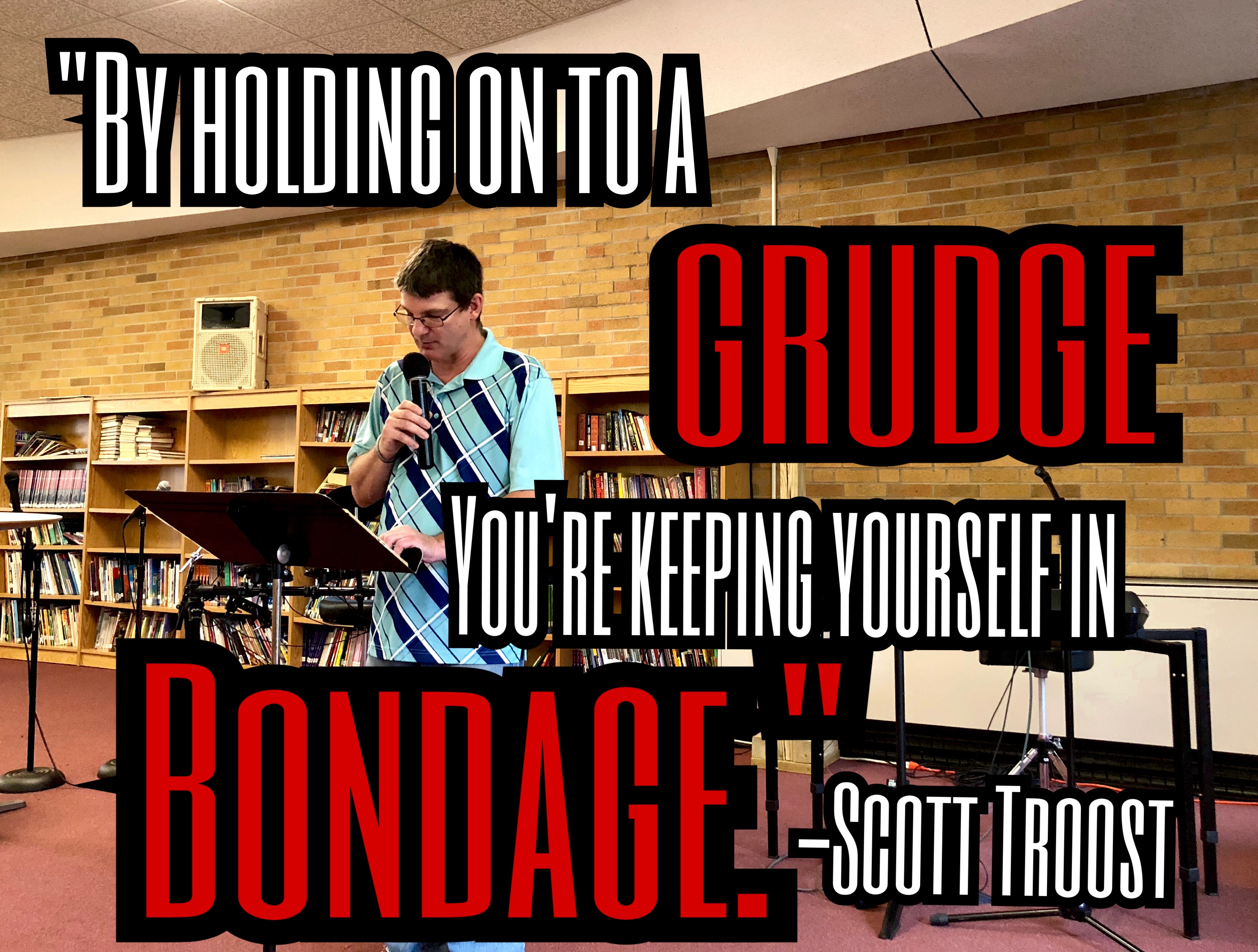
By holding on to a grudge, you’re holding yourself in bondage! 

How can your hands be free to receive God’s blessings if your hands are full of the grudges you are holding? 

Learn from David’s Selah these two lessons when someone torments you: 

  1. Ask God: am I to blame? If so, repent. If not, ask question 2.
  2. Ask God: am I holding on to a grudge? If so, let it go so your hands are free to receive God’s blessings! 

Join me next Sunday as we continue our look at the Selahs in the Psalms. 

Saturday In The Proverbs—Don’t Do This … But Do This (Proverbs 3)

[Each chapter in the Book of Proverbs contains thoughts that fit into a theme; they are not just random thoughts gathered together. In this “Saturday In The Proverbs” series, I will share a theme that I see in each chapter. But the cool thing about God’s Word is that you may see an entirely different theme. That’s great! If you do, I would love for you to share it in the comments below.]

My son, do not … but … (Proverbs 3:1).

This chapter of Proverbs is filled with these contrasts—don’t do this, but do this instead—and then Solomon shared the blessings that follow when we do the right thing. 

Don’t forget God’s Word BUT keep it in your heart. Blessing—long life and peaceful days. 

Don’t lose sight of mercy and truth BUT find ways to remind yourself. Blessing—favor with God and man.

Don’t lean on your own understanding BUT lean on God’s wisdom. Blessing—God’s direction.

Don’t become enamored with yourself BUT fear God and avoid evil. Blessing—health and strength.

Don’t hoard God’s gifts to you BUT honor God with your possessions. Blessing—overflowing blessings.

Don’t despise God’s correction BUT learn from it. Blessing—wisdom, understanding, happiness.

Don’t forsake God’s wisdom BUT keep it squarely in front of your eyes. Blessing—grace, safety, security, sweet sleep, no fear, confidence.

Don’t withhold good from your neighbor BUT love your neighbor. Blessing—God’s blessing in your home.

Bottom line: Don’t do it your way, but do it God’s way!

Poetry Saturday—Bells Across The Snow

O Christmas, merry Christmas,
Is it really come again,
With its memories and greetings,
With its joy and with its pain!
There’s a minor in the carol
And a shadow in the light,
And a spray of cypress twining
With the holly wreath tonight.
And the hush is never broken
By laughter light and low,
As we listen in the starlight
To the “bells across the snow.”
O Christmas, merry Christmas,
’Tis not so very long
Since other voices blended
With the carol and the song!
If we could but hear them singing,
As they are singing now,
If we could but see the radiance
Of the crown on each dear brow,
There would be no sigh to smother,
No hidden tear to flow,
As we listen in the starlight
To the “bells across the snow.”
O Christmas, merry Christmas,
This never more can be;
We cannot bring again the days
Of our unshadowed glee,
But Christmas, happy Christmas,
Sweet herald of good will,
With holy songs of glory
Brings holy gladness still.
For peace and hope may brighten,
And patient love may glow,
As we listen in the starlight
To the “bells across the snow.” —Frances Ridley Havergal