You may also want to check out my blog post and video The Value of Journaling where I talk about how I capture thoughts, prayers, conversations from others, Scripture verses and more when I’m facing a big decision.
Listen to the podcast of this post by clicking on the player below, and you can also subscribe on Apple, Spotify, or Audible.
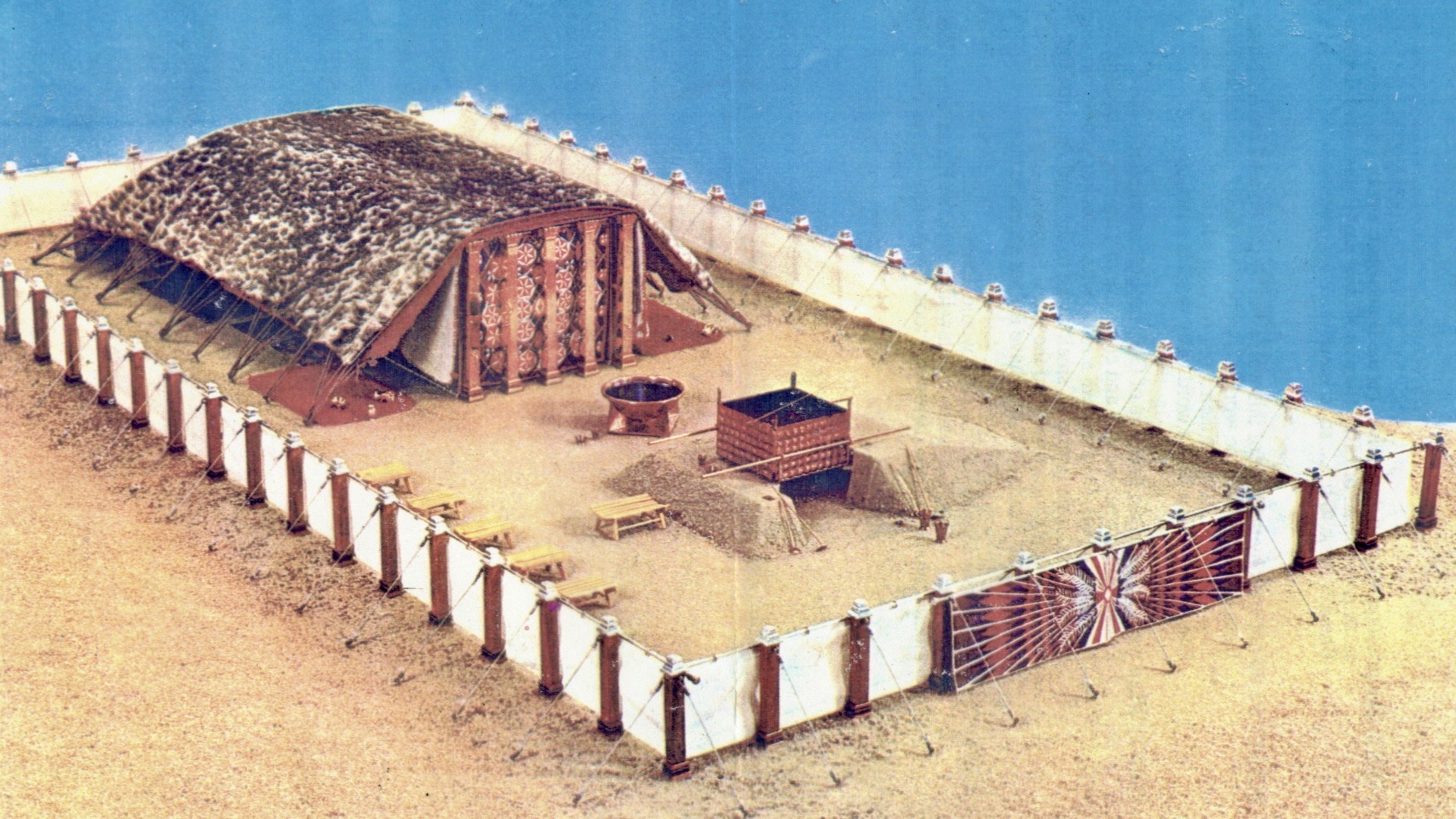
I was absolutely fascinated by a Messianic Jew’s insights on the Old Testament Tabernacle, and how every aspect of it pointed to Jesus the Messiah.
The overview of the construction of the Tabernacle starts in Exodus 25 and covers the next fifteen chapters in that book. Here are a few of my main takeaways from my friend’s teaching.
The materials for the Tabernacle are brought as a freewill offering given by freed slaves (Exodus 25:1-2). This gold, silver, bronze, linens, and other materials were gifts from the Egyptians when the Israelites left on the night of the Passover.
The Tabernacle is at the center of the Israelite camp (Numbers 2:1-34), signifying God’s presence in the center of our lives. When the Israelite community moved out, the tribe of Judah went first. Judah means “praise.” What a great reminder to let praise to God be at the forefront of all we do!
In Exodus 27:16, the materials to be used for the curtains compromising the entrance to the Tabernacle are blue, purple, and scarlet. The blue is for sky (Heaven), the purple designates royalty, and the scarlet signifies the blood of the sacrifices. Jesus came to earth as royalty from Heaven, and by His shed blood He opens the way for all of us to be with Him in Heaven forever! Jesus said He was the only way to Heaven (Hebrews 2:14-15; John 14:6).
The bronze altar for cleansing was just inside the entrance (Exodus 27:1-8). The worshiper offered this sacrifice in place of their sin. The priests would then move to the laver to wash off the dirt of the world. It’s important to note that the priests wash at the laver, not in the laver. Jesus is the One who washes us and cleanses us (Ephesians 5:26).
There are four different coverings over the Holy Place. As the priest progresses farther into the Holy Place, the coverings become thicker, so less outside light is visible.
First covering (Exodus 26:1) was blue, purple, and scarlet yarns (like the colors at the entrance) with cherubim woven into the fabric. The priests looking up would see these angels.
Second covering (v. 7) was goat’s hair. Goats were used for sin offerings, reminding the priests that there was a sacrifice to cleanse them so they could approach the presence of God.
Third covering (v. 14) was a red-dyed ram skin, showing the blood that covers us.
Fourth covering (v. 14) was the durable leather of a badger. Now there would have been very little light from outside, but the angels would still be seen for those inside the Holy Place.
In the Holy Place was the showbread (sometimes called the bread of presence) pointing to Jesus as our Bread of Life (Exodus 25:23-30; John 6:35). Also in the Holy Place was the lampstand filled oil (vv. 31-37). Only one stick holds the oil and supplies the other six branches. The priests could only work by the light of God. Jesus is our light (John 8:12). And we also find the altar of incense here (30:1-7). This was a unique perfume that wasn’t used anywhere else. The prayers of the saints that arise before the throne in Heaven as said to rise as incense (Psalm 141:2; Revelation 5:8). Worshipers in God’s presence are saturated with the aroma of Jesus (2 Corinthians 2:14-15).
In the Holy of Holies is the ark of the covenant of the Lord (25:10-22). Inside the ark were the stone tablets that contained the Ten Commandments. On top of the ark, overshadowed by the wings of two huge cherubim angels, was the mercyseat or atonement cover. Notice that mercy is over the Law, and that the blood of the sacrifice of Jesus covers my disobedience and makes me at one with God (the literal definition of atonement).
How beautifully all of these aspects of the earthly Tabernacle point to Jesus (Hebrews 8:5, 10:1)! And even more amazingly, Jesus fulfilled every requirement in this Tabernacle to make it possible for all who put their faith in Him to enter the Heavenly Tabernacle and remain in His presence for ever and ever!
Listen to the podcast of this post by clicking on the player below, and you can also subscribe on Apple, Spotify, or Audible.
A bite we have all experienced is gossip. We called flattery the sneaky bite, but I think gossips believe they are actually being sneaky—that somehow they are getting away with their gossip.I think gossip is also sneaky because we can be pulled into a gossipy conversation almost without realizing what is happening.
That’s because gossip usually has a veneer of truth on it. That thin coating of truth may be sugary sweet, but the words hide a bitter poison that is intended to undermine the one that is being talked about. Twice Solomon says, “The words of a gossip are like choice morsels” (Proverbs 18:8, 26:22). The Contemporary English Version translates this verse even more graphically: “There’s nothing so delicious as the taste of gossip! It melts in your mouth.” But Solomon also warns, “A perverse person stirs up conflict, and a gossip separates close friends” (Proverbs 16:28).
Moses had married a Cushite woman, a marriage that was neither morally nor legally wrong. If someone simply said, “Moses married a woman from Cush” they would have been speaking the truth. The gossips (Miriam and Aaron) want to use a truthful statement for the purpose of making a case to prove their point. These siblings crossed the line when they stopped talking about the idea and start talking about Moses. This is especially true when their conversation about Moses was to make him look inferior or to make themselves look superior.
I think a label that is very apropos for this is “character assassination.” An assassin gets close enough to strike, but also has an alibi to cover themselves. So, too, the gossip can inject their poison to denigrate someone’s character, but then use the alibi of saying, “What? Did I say something untruthful?”
There is truth in their questions that God has used all three of them to delver messages and to sing worship songs, but in light of their statement in verse 1 they are clearly asking these questions with poisonous intent. You can especially spot gossip by this characteristic sign: They talk about a person, but they won’t talk to that person. We are not told to whom Miriam and Aaron may have been speaking to in verse 2, but it certainly wasn’t Moses. That means they were trying to get other people to rally to their side.
When we have been the target of a gossip’s words, we should follow the example that Moses gave us.
Remember that God has heard the gossip (Numbers 12:2b, 4-8).
Check your pride (v. 3). If you feel you must address the gossip, you must address the topic without attacking the gossiper (see Romans 12:17-18).
Be careful of who you are correcting. It’s best to let God do the correcting (Numbers 12:8-9), but if do need to speak to the person, be cautious of adding fuel to the fire (Proverbs 9:7-9).
Desire restoration. Moses interceded for Miriam’s healing (Numbers 12:13), and Jesus has the idea of restoration and unity in the Church in mind in Matthew 18:15-16.
Stay away from the unrepentant gossiper. If the gossiper doesn’t acknowledge their sin, we have to limit our interaction with that sheep (Matthew 18:17) . After Miriam was healed of her leprosy, there is no other mention of her until she died which is probably an indication that Moses didn’t have any additional conversations with her. Paul gave Timothy similar counsel about Alexander (1 Timothy 1:19-20; 2 Timothy 4:14-15).
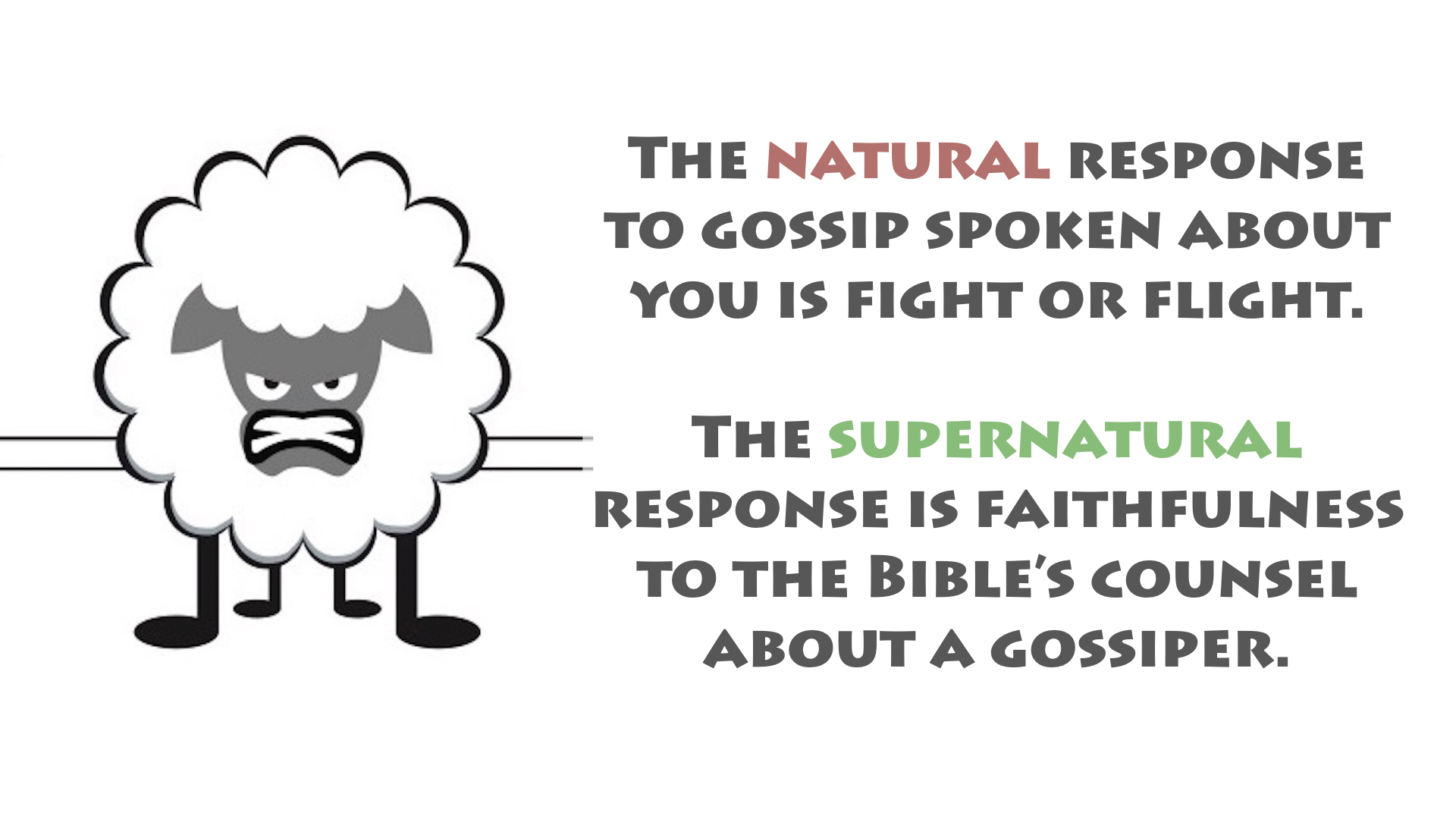
The natural response to gossip spoken about you is fight or flight. The supernatural response is faithfulness to the Bible’s counsel about a gossiper.
And one final word to all of us: Don’t become a gossip yourself!
Just as God hears those gossiping about you, He hears you gossiping about others!
Don’t…
…talk about people who aren’t in the room. Remember the Golden Rule of treating others the way you want to be treated (Luke 6:31).
…share information that isn’t yours to share (Proverbs 25:9).
…listen to a gossip. If they gossip to you about others, they will gossip about you to others!
Gossip, as Solomon warned us, separates even the closest of friends. We must identify it and deal with both the gossip and the gossiper in a God-honoring, biblically-sound way. And we must avoid becoming a gossip ourselves.
If you’ve missed any of the other sheep bites we’ve talked about in this series, you can find them all by clicking here. And if you are a pastor, check out my book When Sheep Bite, where I address the bites of sheep from a leadership paradigm.
Listen to the podcast of this post by clicking on the player below, and you can also subscribe on Apple, Spotify, or Audible.
There is one word that people seem to speak that is blocking the blessings that God wants to send to them.
Check out this latest episode of The Podcast.
Get into God’s Word, and let His Word build your faith to cling to Him in faith until His promise ultimately appears. Don’t let the negative people around you, or your current circumstance, or anything else cause you to walk away from the blessing God wants to give you!
Listen to the podcast of this post by clicking on the player below, and you can also subscribe on Apple, Spotify, or Audible.
I have always been both intrigued and encouraged by the blessing Moses was instructed to give the the priests to pronounce over God’s people.
Tell Aaron and his sons, “This is how you are to bless the Israelites. Say to them: ‘The Lord bless you and keep you;the Lord make His face shine on you and be gracious to you;the Lord turn His face toward you and give you peace.’” (Numbers 6:23-26)
After giving this blessing, God then says, “And they shall put My name upon the Israelites, and I will bless them” (Numbers 6:27 AMPC).
What does it mean to put God’s name on me?
I think the Bible shows that it means—
I feel the heaviness of His holiness AND
I feel the security of His surrounding presence.
I feel the unapproachableness of His perfect righteousness AND
I feel the welcoming embrace of His atonement.
I feel how unworthy I am AND
I feel how worthy He is.
I know that He knows everything about me AND
I know He still loves me with an unquenchable love.
I know He is the holy Judge AND
I know He is the Forgiver of my sins.
I know that His Holy Spirit convicts me of my sins AND
I know the His Holy Spirit helps me get free of those sins.
What an inexpressible, overflowing-with-joy, irrepressible, unshakable assurance I have in my relationship with my Heavenly Father, through the work of Jesus Christ, and the assurance of the Holy Spirit. This is indeed a blessing that the no one else but my God can put on me!
P.S. You may also be interested in another take on the priestly blessing in my post The Blessing.
Listen to the podcast of this post by clicking on the player below, and you can also subscribe on Apple, Spotify, or Audible.
If you’re a shepherd leader, what do you do when the sheep under your care go, “Grrrr!”?
To make sure that you haven’t done anything that caused the murmuring, you should humbly pray, “Search me, O God” (Psalm 139:23-24). And then, if you see you have done something wrong, repent and make things right. You may want to check out my blog post A Leader’s Sincere Apology.
After this, Moses has given us in Exodus 16:8-9 two actions to take with murmuring sheep:
If it wasn’t anything that you did, you need to remind yourself that the people are murmuring against God.
If it wasn’t anything that you did, you need to remind the sheep that they are murmuring against God.
Listen to the podcast of this post by clicking on the player below, and you can also subscribe on Apple, Spotify, or Audible.
The Israelites were barely out of Egypt, freed from 400 years of captivity, and they begin grumbling against Moses, their God-appointed leader—
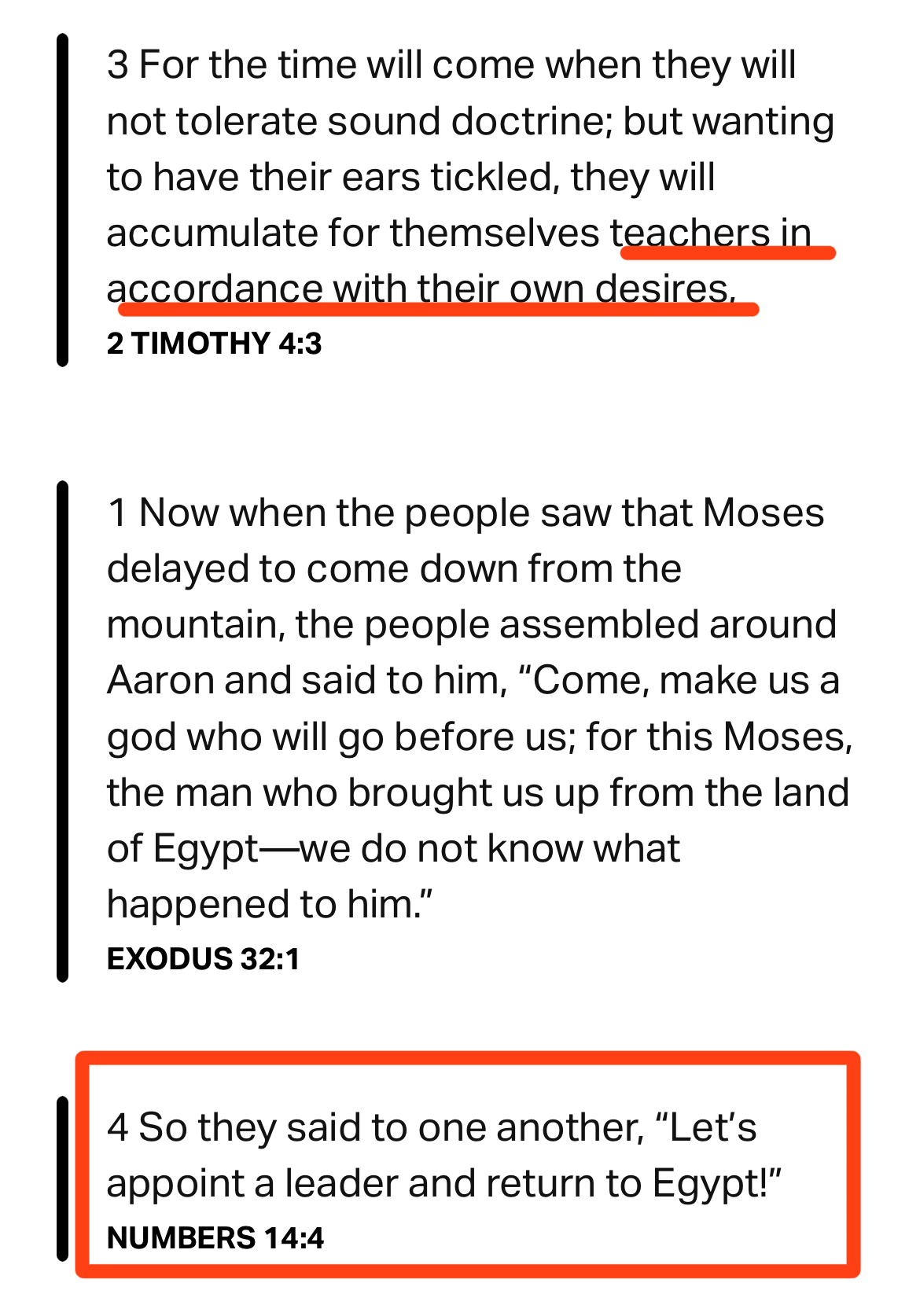
Now when the people saw that Moses delayed to come down from the mountain, the people assembled around Aaron and said to him, “Come, make us a god who will go before us; for this Moses, the man who brought us up from the land of Egypt—we do not know what happened to him.” (Exodus 32:1)
Then later, on the borders of their promised land, they were again doubtful that Moses truly had heard from God. “So they said to one another, ‘Let’s appoint a leader and return to Egypt!’” (Numbers 14:4).
Have you ever wondered why these disgruntled people didn’t just leave on their own? If they truly thought that going to their Promised Land was impossible, why not just pack up their possessions and leave?
Instead, they said, “We need a leader to help us leave.” In reality, they are really saying, “We need a leader that will help us do what we want to do.”
Human nature is always looking for someone to validate their evil desires—to assure them that they are okay.
Except they’re not okay. They are rebelling against God!
⛔️ There is a warning here for all of us. When we are looking for a leader to validate our feelings instead of looking to God for an unchangeable, objective standard to obey, we are in a dangerous place!
Paul warned his friend Timothy, ”For the time will come when they will not tolerate sound doctrine; but wanting to have their ears tickled, they will accumulate for themselves teachers in accordance with their own desires” (2 Timothy 4:3).
⛔️ There is also a warning here for leaders. Watch out when people come to you, asking you to lead or teach in a way that sanctions the way they want to live. You are in a dangerous place if you give in to the rabble’s demands!
Paul also warned Timothy, “Be diligent to present yourself approved to God as a worker who does not need to be ashamed, accurately handling the word of truth” (2 Timothy 2:15).
Leaders, always remember that it doesn’t matter how many people follow you or tell you how wonderful you are. The only thing that matters is hearing the Judge say to you either, “Depart from Me, I never knew you” or “Well done, good and faithful servant!” (see Matthew 7:21-23; 25:14-23).
Godly leaders don’t live for the momentary approval of fickle people, but they live focused on the eternal pleasure that only comes when they stay singularly attuned to our unchangeable God.
If you are a leader, you may also want to check out these two related posts:
Listen to the podcast of this post by clicking on the player below, and you can also subscribe on Apple, Spotify, or Audible.
It is so much easier to complain than to compliment. We can slide into the negative conversations almost without thinking about it.
In one of the last things that Paul wrote to Timothy—as he’s in prison, quite possibly awaiting execution—he warns his friend against the darkness of the last days (2 Timothy 3:1-5). We need to engage our minds, our wills, and our emotions to not go with the flow of culture’s negativity.
Remember the wise words from George Santayana: “Those who do not learn from history are doomed to repeat it.” The apostle Paul said this before Mr. Santayana (1 Corinthians 10:1-6). We need to learn the lessons of the dangers of forgetfulness that leads us to ingratitude.
Even before Paul, the Old Testament is filled with repeated reminders to remember God’s blessings and gratefully look to Him to supply every need. Let’s unpack some lessons on the importance of gratitude from Israel’s history in Psalm 106.
In Psalm 106:7, the Israelites forget what God has done for them in Egypt. Now that they appear to be pinned between the Red Sea and the onrushing Egyptian army, their forgetfulness becomes grumbling against God (Exodus 14:10-12).
In Psalm 106:13-14, instead of being grateful for the miraculous supply of manna, the Israelites are grumbling about the meat they don’t have (Numbers 11:4-6).
Here’s the lesson for us to learn: God wants to teach us to be thankful for His daily provisions for us (Joshua 5:12; Matthew 6:11).
In Psalm 106:21, 28-29, the next generation of Israelites didn’t remember to be thankful because they had seldom heard their parents express gratitude (Judges 2:10-11).
Here’s the lesson for us to learn: Our daily thankfulness fortifies future generations (Psalm 37).
Here is the repeated pattern we see—
Thankfulness → Forgetfulness → Fearful / Selfish attitudes → Susceptible to the temptation to grumble against God
Thankfulness → Remembering → Joyful / Secure attitudes → Fortified against the temptation to grumble against God
Jim Cymbala said, “Ingratitude to God is the first step toward backsliding and departure from God. So, it is to our benefit to have a thankful heart toward God.”
Let’s put into practice this lesson from King David: “Praise the Lord, O my soul, and forget bot all His benefits” (Psalm 103:2).
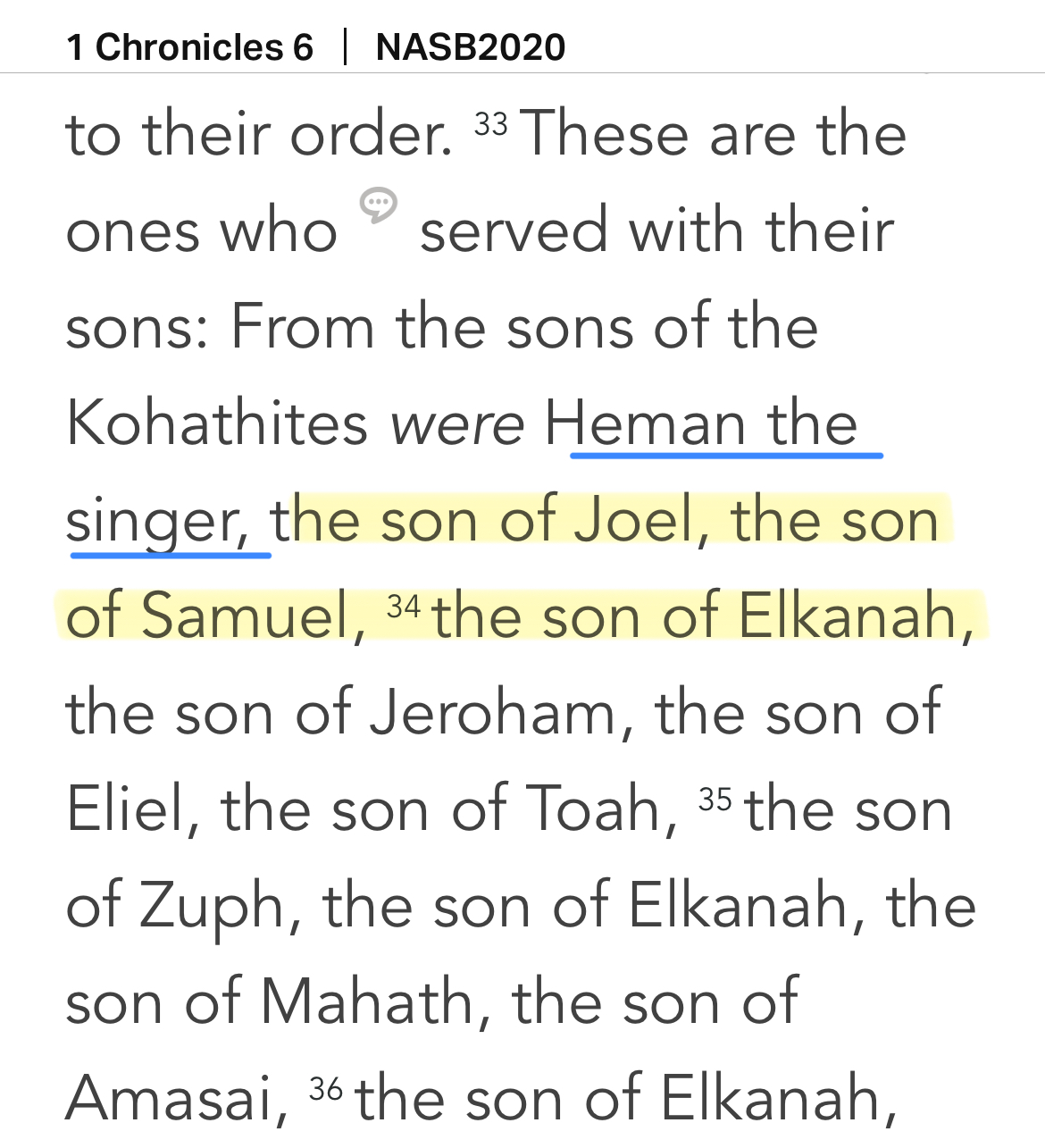
The psalmist Heman is the grandson of Samuel. “These are the ones who served with their sons: From the sons of the Kohathites wereHeman the singer, the son of Joel, the son of Samuel, the son of Elkanah, the son of Jeroham, the son of Eliel, the son of Toah” (1 Chronicles 6:33-34; 1 Samuel 1:1, 20).
Samuel came from the line of Levites (specifically the Kohathites), which is the same family to which Moses, Aaron, and Miriam belonged. While the tabernacle of the Lord was mobile in the wilderness, the Kohathites were responsible for carrying the furnishings of the tabernacle (Numbers 4:4-20).
When the permanent temple was constructed in Jerusalem, the responsibility of the Kohathites changed. They now oversaw the worship in the temple, and Heman is listed as the chief worship leader, with others to his right and left. “Heman’s brother Asaph stood at his right hand, Asaph the son of Berechiah, the son of Shimea. … On the left hand were their kinsmen the sons of Merari: Ethan the son of Kishi, the son of Abdi, the son of Malluch” (1 Chronicles 6:39, 44).
And then we see Heman’s family line continuing in the roles of worship leaders after him: ”All these were the sons of Heman the king’s seer to exalt him according to the words of God, for God gave fourteen sons and three daughters to Heman. All of these were under the direction of their father to sing in the house of the Lord, with cymbals, harps, and lyres, for the service of the house of God. Asaph, Jeduthun, and Heman were under the direction of the king. Their number who were trained in singing to the Lord, with their relatives, all who were skillful, was 288“ (1 Chronicles 25:5-7).
The Book of Psalms contains just one psalm that Heman composed (Psalm 88).
Listen to the podcast of this post by clicking on the player below, and you can also subscribe on Apple, Spotify, or Audible.
People get into fights for lots of silly reasons. But one thing that causes many hurt feelings and harsh responses is gossip. This is one of the “sheep bites” I discuss in great detail in my book When Sheep Bite.
In the chapter “When Sheep Gossip About You,” I wrote—
The first part of the antidote when you have heard gossip spoken about you is to remember that God has also heard the gossip spoken about you. This is what Jesus demonstrated for us. Peter, who was there to hear all of the gossip spoken about Jesus, wrote, “He did not retaliate when He was insulted, nor threaten revenge when He suffered. He left His case in the hands of God, who always judges fairly” (1 Peter 2:23 NLT). …
There was no need for Moses to respond to these gossipers because the One “who always judges fairly” said to these gossipers, “Why then were you not afraid to speak against My servant Moses?” (Numbers 12:8). When God takes up our cause, let’s not try to take it out of His perfectly just hands. …
Just because God has called you to be His under-shepherd, and just because you may have been innocent of wrongdoing, you don’t have license to “lord it over” those who have gossiped about you. Moses described himself as humble—more humble than anyone else. He wasn’t bragging, but he wrote those words under the inspiration of the Holy Spirit. An insecure leader feels the need to defend himself against any slight against his character, whether it is a real or perceived attack. But the humble leader knows that God’s calling comes with God’s protection.
Solomon wrote, “Avoiding strife is an honor for a person, but any fool will quarrel” (Proverbs 20:3).
Anyone can start a fight—it’s not hard at all! Especially when someone has spoken foolishly, ignorantly, or even maliciously against you in their gossip.
Butonly strong people can walk away from a fight.
Only wise people can remain quiet when a fool tries to provoke them into an argument.
Only God-fearing people can entrust themselves to the One who keeps perfect records of the insults and slander thrown at them—just as Jesus did.
Be that kind of leader!
If you are a pastor, you know the painful bites of gossip. This is just one of several sheep bites I diagnose to help shepherd leaders find a healing, biblical response. Please check out my book When Sheep Bite.