Who Looks Good?

Listen to the podcast of this post by clicking on the player below, and you can also subscribe on AppleSpotify, or Audible. 

The Gospel of John introduces John the baptizer to us like this, “He himself was not the Light; he came only as a witness to the Light” (John 1:8). 

  • John had a similar birth announcement as Jesus had (Luke 1:11-14, 28-33) 
  • John’s birth prompted a Holy Spirit-inspired song from his father that resonates with Mary’s Magnificat (Luke 1:46-55, 68-70) 
  • The early years of John are described in much the same terms as how Luke describes the early years of Jesus (Luke 1:80, 2:52) 
  • John quoted Scripture and taught with very similar authority as Jesus did (Matthew 3:1-12; Luke 3:1-19) 

Yet for all their similarities, John knew that he was only a herald of Jesus (John 1:19-27). 

John was not the Light—he was only a witness to the Light.

I am not the Light—I am only a witness to the Light. 

You may think that this statement is pretty obvious, and I did too. But as I read these words from John 1:8 again, it caused me to reevaluate just how much I really believe this. 

Do I remember this when no one compliments my sermon? Do I remember this when what I thought was an insightful comment on a verse of Scripture gets hardly any “likes” on my social media channels? Do I remember this when I am complemented and my posts are appreciated? 

Who exactly am I trying to make look good: me or Jesus?

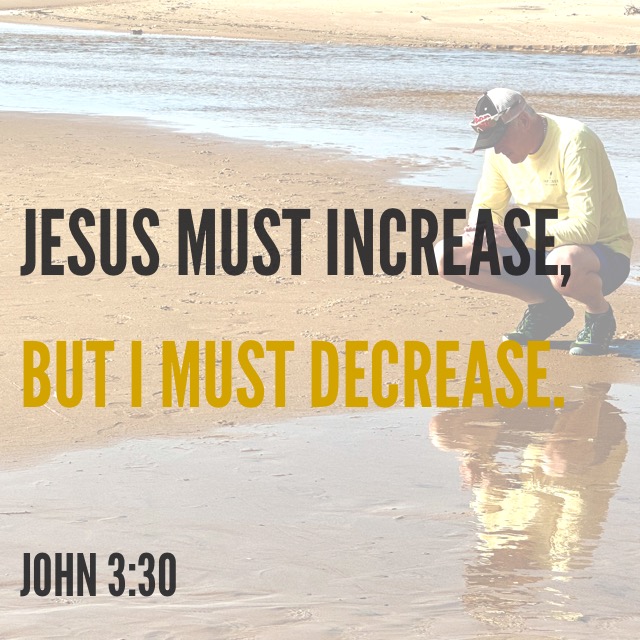
I want John’s desire to become my desire and my prayer: “Jesus must increase, but I must decrease” (John 3:30). 

(Please check out all of the Scriptures I referenced in this post by clicking here.)

►► Would you please prayerfully consider supporting this ministry? My Patreon supporters get behind-the-scenes access to exclusive materials. ◀︎◀︎

The Craig And Greg Show: Setting Goals, Making Changes

Listen to the audio-only version of this podcast by clicking on the player below, or scroll down to watch the video.

Goal-setting and change-making are integral parts of a leader’s job. However, it can often feel like actually accomplishing these tasks is one of the hardest parts of the job! In this episode, Greg and I dive into how to successfully set and accomplish goals, and how to strategically create change in a way that doesn’t disenfranchise your team.

  • [0:30] Why aren’t more people successful in their goal-setting? 
  • [1:30] Focusing on too many things can paralyze a leader.
  • [3:48] Leaders—by definition—have a lot of things on their plates. How do we find the areas that are the most strategic for us to change?
  • [5:28] Leaders need to set a place of change that the entire team can stick to.
  • [7:02] Leaders must learn to trust their teammates to get tasks done.
  • [9:01] Changes are vital for us personally and organizationally, but we must choose those changes strategically and carefully.
  • [10:02] Celebrating accomplishments in meeting our goals is very important.
  • [12:08] How do leaders find the speed of change?
  • [13:39] Enlisting and energizing change agents in the organization will extend a leader’s influence.
  • [15:57] Leader’s shouldn’t make key decision when they are exhausted or distracted.
  • [19:12] Greg shares a helpful acrostic for F.O.C.U.S.
  • [21:29] A coach can be invaluable in helping you be successful in all of your change initiatives. This is where we can help you.

Check out this episode and subscribe on YouTube so you can watch all of the upcoming episodes. You can also listen to our podcast on Spotify and Apple.

Links & Quotes

Mental health tip: Stop beating yourself up because of what you did or didn’t do in the past. Learn from it and keep moving forward. Check out a whole series of posts and videos on a Christian’s mental healthI have lots of new content every week, which you can check out on my YouTube channel.

“God cannot part with His grace, or goodness, or strength, as an external thing that He gives us, as He gives the raindrops from heaven. No; He can only give it, and we can only enjoy it, as He works it Himself directly and unceasingly. And the only reason that He does not work it more effectually and continuously is, that we do not let Him. We hinder Him either by our indifference or by our self-effort, so that He cannot do what He would.” —Andrew Murray, Waiting on God 

The unlimited genius of our All-wise Creator is seen so clearly in the unique and beautiful design of each snowflake. Check out these amazing photographs!

“You don’t have to be a fantastic hero to do certain things—to compete. You can be just an ordinary chap, sufficiently motivated to reach challenging goals.” —Sir Edmund Hillary

Biblical archaeologist Joel Kramer takes viewers into a hidden cave to show them an ancient Christian inscription that offers direct extra-biblical, archaeological evidence for Jesus.

Making Better Resolutions

Listen to the podcast of this post by clicking on the player below, and you can also subscribe on AppleSpotify, or Audible. 

Is New Year’s Day really the best time to make a resolution? Well, maybe! Here are some thoughts to help you be more successful whenever you resolve to make some healthy changes in your life.

Check out this episode of The Podcast.

If you would like to go a little deeper on this, check out these posts I previously shared:

Here are a bunch of ways to get in touch with me and follow along with other projects on which I am involved

►► Would you please prayerfully consider supporting this ministry? My Patreon supporters get behind-the-scenes access to exclusive materials. Like a first look at the cover of my brand new book. ◀︎◀︎

Find Your New Motivation

Whether 2023 was a year to remember or a year you would rather forget, it’s time to move ahead in 2024! 

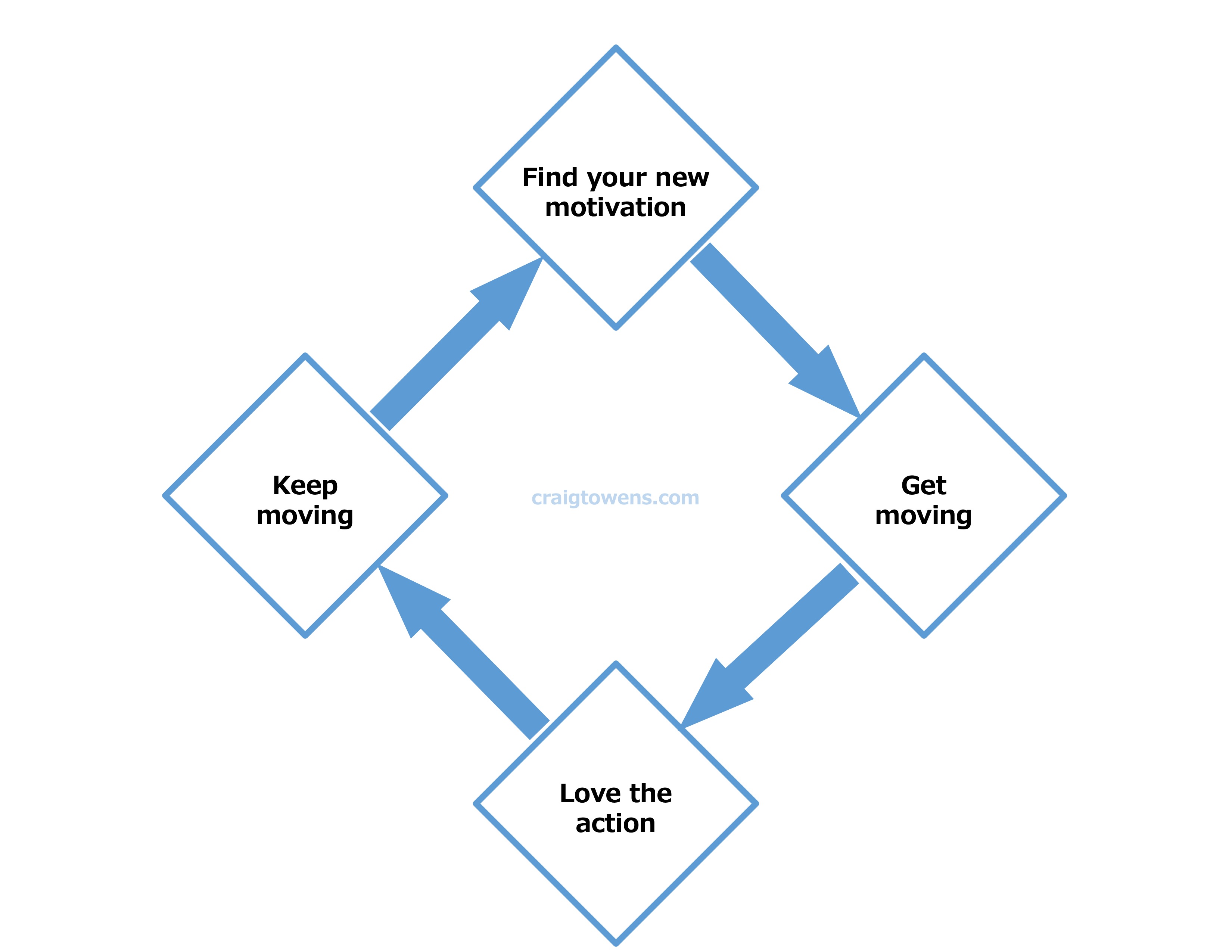
Find your new motivation → Get moving → Love the action → Keep moving forward → Find your new motivation! 

If you’re stuck on any step, let me know how I can help.

Links & Quotes

God’s grace is so amazing. It keeps coming in like waves on a shore. God’s grace is unearned by our efforts, undeserved despite our sins, and unending for all of eternity! Check out this full message hereI have lots of new content every week, which you can check out on my YouTube channel.

“The humble servant of God is grateful for God’s past blessings, unashamed of his daily dependence on God, and confidant of God’s loving reply to every new request.” —Craig T. Owens

“There’s no shame in failing. The only shame is not giving things your best shot.” —Robin Williams

I’ve often said that praying, “God, here are my plans; please bless them” is an arrogant prayer. Instead, humility prays, “God, what would You have me do.” Proverbs 19:21 makes this point clearly. In his commentary on The Book of Proverbs, Dick Brogden noted on this verse, “God always gets His way over man’s ideas. In our hubris we think we know better than God, so we either make plans and then ask for His endorsement or we stand in judgment of what He is doing as if He should have asked us to endorse His plans. Folly judges only by results in Machiavellian crudity, but things going right doesn’t necessarily mean they were right, and things going wrong doesn’t necessarily mean we were wrong. Let us remember we are prophets, priests, and proclaimers, not pragmatists.”

“You don’t have to be a fantastic hero to do certain things—to compete. You can be just an ordinary chap, sufficiently motivated to reach challenging goals.” —Sir Edmund Hillary

Speaking of an exemplary work ethic, David Mathis writes, “However firsthand your experience as a soldier, athlete, or farmer, Scripture stands ready to fill in, supplement, recast, or override our personal experiences (or lack thereof) and teach us a Christian work ethic—for our own joy, the good of others, and the glory of Christ.” The biblical text Mathis uses to help us learn this Christian work ethic is 2 Timothy 2:1-7.

Marvin Olasky has a sobering and insightful post entitled “United States of Abortion.” He wrote, “For nearly four centuries, the frequency of abortion in America has depended on how citizens and residents answered five questions.” The five questions—and his five answers—are a mini history lesson on which all Christians should reflect.

Wave Nunnally has a fascinating look at the ritual purity that was required in order to enter various parts of the Temple in Jerusalem.

“If you are ever inclined to pray for a missionary, do it at once, wherever you are. Perhaps he may be in great peril at that moment.” —Amy Carmichael

From the vastly large solar system to the microscopic level, the beauty and genius of our Creator is seen. A new report published in the journal Nature delves into the complexity of our tiny cilia. Only an all-wise Creator could fashion something so precise!

If you are looking for an easily accessible online library (especially for researching older books), check out the Internet Archive.

Though a professing atheist, Richard Feynman poetically mused that “you might say the ‘hand of God’ wrote that number, and ‘we don’t know how He pushed His pencil.’” What number is that? Physicists call it alpha (α): “That number is 0.00729735256—approximately 1/137. This is the fine-structure constant. It appears everywhere in the equations of quantum physics.” Another remarkable signpost to a magnificent Creator!

The Craig And Greg Show: Motivated Leadership

Listen to the audio-only version of this podcast by clicking on the player below, or scroll down to watch the video.

On this episode of “The Craig And Greg Show” we talk about: 

  • [0:48] What does the dictionary say about motivation? What do we say about motivation? 
  • [2:03] Motivation comes in “different packages”
  • [3:48] How can we individualize motivation?
  • [5:53] How does coachability mesh with motivation?
  • [7:20] Is 100% self-motivation possible?
  • [7:49] Greg’s story about a leader’s frustration with unmotivated people 
  • [9:44] Does yelling ever motivate people?
  • [12:52] A teammate’s love language can give you insight into how to motivate them.
  • [13:56] How do leaders “call out” what’s in our team members?
  • [16:01] A leader’s self-assessment is key to how well we motivate others.
  • [18:23] Are company-wide benefits demotivating? How can we switch this up?
  • [20:30] Does the carrot-or-stick method of motivation actually work?
  • [21:10] Greg shares a quote about how dreams can help motivation.
  • [22:51] Great leaders don’t assume, but they ask important questions.
  • [23:53] Our coaching huddles can help you individualize your leadership motivational skills and practices.

Check out this episode and subscribe on YouTube so you can watch all of the upcoming episodes. You can also listen to our podcast on Spotify and Apple.

7 More Quotes From “Start With The Heart”

Dr. Kathy Koch has given parents—and anyone else who works with children—a marvelously helpful resource in her latest book Start With The Heart. Be sure to check out my full book review by clicking here. 

“God created you and your children with five core, basic needs that must be met. These needs are interrelated. The health of one influences the others:

  • Security—who can I trust?
  • Identity—who am I?
  • Belonging—who wants me?
  • Purpose—why am I alive?
  • Competence—what do I do well?” 

“Children who know their purpose will often choose to look for peers with similar goals and interests. They will want to hang out with people who affirm them and their purpose and be willing to end relationships that are not joyful and purposeful.” 

“When you parent so your children believe three things, their hearts will be impacted and they will be motivated to succeed. This translates into less stress and anxiety and more peace. … Children who believe these things don’t want to be average. They are willing to work for more. … Children’s character will be more Christlike. They’ll want to be more others-centered than self-centered. They’ll be compassionate, brave and able to stand up for themselves and others. 

  1. I have value. Children who do know they have value are often motivated intrinsically, from the inside. They internally recognize what is good for them and respond accordingly.
  2. Learning matters. When children believe they have worth, they are more likely to value learning. … Children who value learning will exhibit many positive character traits, including teachability. This will be true even when they are not convinced that your requests or planned activities are relevant. They’ll pay attention anyway because they know they matter and learning matters. These beliefs strengthen children’s purpose and give rise to competence.
  3. My future can be bright.” 

“Which is better: ‘Be on time!’ or ‘Don’t be late!’? Do you hear the difference? Which one is positive? ‘Be on time’ communicates ‘I believe you’re capable of this.’ It’s more hopeful. It’s about what you want your children to do. ‘Don’t be late’ reminds them of how they’ve frustrated you.” 

“Carol Dweck…has consistently found that children praised for using effort tackled more challenging tasks than those praised just for ability or for the quality of their work.” 

“Sometimes have children tell you what they think they did before you offer your opinions. If they are relatively accurate, affirm them specifically. When they’re not, have the conversation.” 

“Working to provide feedback that can be described with the following attributes will serve you and your children well—specific, believable, helpful, and thoughtful.” 

You can also check out the first set of quotes I shared from Start With The Heart by clicking here.

10 Quotes From “Start With The Heart”

Kathy Koch has given parents, teachers, and anyone who works with younger children, and excellent resource to improve your relationship with your kiddos and empower them to greater success. Check out my full book review of Start With The Heart by clicking here. 

“For your children to want what you want for them, for changes to occur, and for improvements to remain, your hearts must be intertwined. Your motivational power and influence over their obedience comes out of the love you have for each other.” [see Proverbs 23:26] 

“Affirm your children when they do use the character qualities you’re emphasizing and correct them when they don’t. … Specifically, look for gratitude and joy. The lack of one or both of these emotions causes children (and adults) to use character qualities inconsistently.” 

“Here is my list of understandings that can secure children’s hearts and increase your influence so you’ll be able to motivate them to be responsible, brave, and so much more.

  • Parent by faith
  • Parent with grace and mercy
  • Forgive quickly and often
  • Ask to be forgiven quickly and often
  • Tell your children you are confident in God
  • Prioritize children, not their behavior
  • You can dislike what children do while you still like and love them
  • Be who you want your children to be
  • Raise the children you were given, not the children you wish you had
  • Remember needs and wants are different
  • Listen when children are little if you want them to talk with you when they’re older
  • When children have a problem, remember they are not the problem
  • Teach children to fail well
  • Prioritize progress, not perfection” 

“Children are even more susceptible to the influences around them. We should have and model solid character so our behavior, attitudes, and decisions glorify God. We should also prioritize our character so we don’t lead a child astray. Making every effort to use these qualities ourselves matters. And, of course, apologizing when we don’t is key to maintaining a positive relationship.” 

“The desire to develop self-control is birthed in self-respect. Self-control makes it possible to use other character qualities successfully.” 

“Do we choose to see our children’s circumstances and respond appropriately? Although consistency is usually appropriate when raising and motivating children, if we don’t have compassion and individualize our reactions and decisions when it’s appropriate, why would our children? Modeling this character quality matters tremendously.” 

“Initiative: Children may never develop this quality if you remind them of everything they must do. Rather, it’s birthed when you help them grow in appropriate independence. … Is it possible that your children may not be motivated as you’d like because you rescue them to early, too often? … I know you value the things you worked hard for. Don’t rob children of that same satisfaction. Allow them to persevere.” 

“Prayer is a powerful tool—use it! Your personal and specific prayers for your children communicate your deep love for them and your dependence on God. Your prayers are a significant way your children learn who you hope they’ll be and what you hope they’ll do. Pray they’ll develop a heart for Christ. Model and teach what they need for their heart to be transformed into His likeness. This will change their character and, therefore, their motivation and motives, too.” 

“Just making statements like these can be empowering:

  • I need to take off arguing and put on first-time obedience.
  • I need to take off bullying and put on kindness.
  • I need to take off distractions and put on focus.
  • I need to take off ‘I don’t want to’ and put on ‘do it anyway.’” 

“This might surprise you, but all children are motivated. … It doesn’t help to ask, ‘How do I get my kids motivated?’ Rather, we need to ask, ‘How can I redirect their motivation?’” 

Stay tuned: more quotes coming soon…

Start With The Heart (book review)

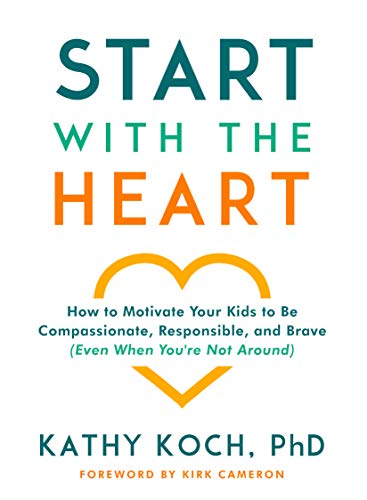
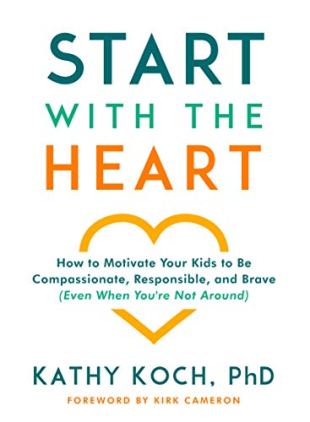
Dr. Kathy Koch has parenting insights that are unlike few others. Her ministry is called Celebrate Kids, and that’s exactly what she teaches parents and teachers to do in her book Start With The Heart.

Not only does Dr. Kathy lean into her formal training in education—as an elementary teacher, a middle school coach, and a university professor—but she supports all of her instructional insights with an unabashed reliance on the wisdom found in the Bible. This is a winning combination!

Dr. Kathy explains the rationale behind the title and message of her latest book, “Capturing your child’s heart and parenting to keep it may be more important than anything else you do. Your love for your children and your desire for them to trust Christ for their salvation matters greatly. For you to have motivational power to help them make that commitment, mature in their faith, and love God more fully, you must start with their heart.” 

Start With The Heart isn’t about manipulating children or coercing them into a more desirable behavior. The focus is on your child’s heart so that he or she will be internally motivated to make good choices even when you aren’t around. 

Every chapter introduces a new concept which is built on the chapter before it. As the book progresses, you will begin to see how each parenting principle is interdependent and reinforcing with all the other principles. The close of each chapter turns the mirror back on us parents as Dr. Kathy asks, “What about you?” She also shares some helpful “Things To Do” and “Things To Think About” bullet points to wrap up each chapter. 

I would recommend Start With The Heart for parents and teachers of younger children. And not just the book, but check out the Celebrate Kids website for ongoing insights from Dr. Kathy. 

I am a Moody Publishers book reviewer.