4 Quotes By & About George Washington In “Humility”

HumilityI thoroughly enjoyed Dr. David Bobb’s book Humility (you can read my full book review by clicking here). The book was partially a challenge for us to cultivate this virtue in our individual lives and in the fabric of our nation. So Dr. Bobb uses several biographies of notable Americans to illustrate the power of humility. These are some quotes by and about George Washington.

“In [George] Washington’s early haste to achieve greatness, he sometimes let his ambition outpace virtue. He gradually realized this, and he calibrated his actions accordingly. Rather than just cloaking his ambition, Washington recognized that the more he served others and the cause of justice, the more his success would matter. The less his ambition was about his own fame, the more he would deserve the honors he received. Virtue in this sense, he discovered, can be its own reward.” —David Bobb

“I consider it an indispensable duty to close this last solemn act of my official life, by commending the interests of our dearest country to the protection of Almighty God, and those who have the superintendence of them, to His holy keeping.” —George Washington’s resignation speech

“I hope I shall always possess firmness and virtue enough to maintain (what I consider the most enviable of all titles) the character of an honest man, as well as prove (what I desire to be considered in reality) that I am.” —George Washington 

“Of all the dispositions and habits which lead to political prosperity, religion and morality are indispensable supports.” —George Washington’s farewell address

Links & Quotes

link quote

These are links to articles and quotes I found interesting this weekend.

Victory! FCC Pulls The Plug On Its Unconstitutional Plans

John Maxwell talks about delegation: Overloaded & Underempowered

“Before I became a Christian I do not think I fully realized that one’s life, after conversion, would inevitably consist in doing most of the same things one had been doing before, one hopes, in a new spirit, but still the same things.” —C.S. Lewis

“The only people with whom you should try to get even are those who have helped you.” —John E. Southard

“I’m a fool for Christ. Whose fool are you?” —John Wimber

“Holiness is not freedom from temptation, but power to overcome temptation.” —G. Morgan Campbell

Are environmentalists going too far? The War On Humans

[VIDEO] The more I hear Sen. Ted Cruz, the more I like him. “I don′t work for the party bosses.”

Eric Metaxas on a baby′s innate sense of morality: Babies & The Not-So-Blank Slate

“Forget others’ faults by remembering your own.” —John Bunyan

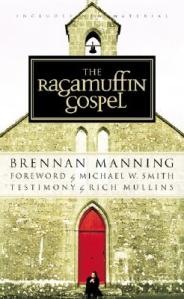
22 Quotes From “The Ragamuffin Gospel”

Ragamuffin GospelThe Ragamuffin Gospel by Brennan Manning really resonated with me. You can read my full book review by clicking here, but below are some of the quotes I especially appreciated.

“The institutional church has become a wounder of the healer rather than a healer of the wounded.” 

“Personal responsibility has replaced personal response. We talk about acquiring virtue as if it were a skill that can be attained, like good handwriting or a well-grooved golf swing. In the penitential seasons we focus on overcoming our weaknesses, getting rid of our hang-ups, and reaching Christian maturity. We sweat through various spiritual exercises as if they were designed to produce a Christian Charles Atlas. Though lip service is paid to the gospel of grace, many Christians live as if only personal disciplines and self-denial will mold the perfect me. The emphasis is on what I do rather on what God is doing. In this curious process God is a benign old spectator in the bleachers who cheers when I show up for morning quiet time.”

“God has a single relentless stance toward us: He loves us. He is the only God man has ever heard of who loves sinners. False gods—the gods of human manufacturing—despise sinners, but the Father of Jesus loves all, no matter what they do.” 

“Jesus comes not for the super-spiritual but for the wobbly and the weak-kneed who know they don’t have it all together, and who are not too proud to accept the handout of amazing grace.”

“The Word we study has to be the Word we pray.”

“We must never allow the authority of books, institutions, or leaders to replace the authority of knowing Jesus Christ personally and directly. When the religious views of others interpose between us and the primary experience of Jesus as the Christ, we become unconvicted and unpersuasive travel agents handing out brochures to places we have never visited.”

“Whatever past achievements might bring us honor, whatever past disgraces might make us blush, all have been crucified with Christ and exist no more except in the deep recess of eternity.” 

“It is unimaginable to picture a wooden-faced, stoic, joyless, and judgmental Jesus as He reclined with ragamuffins.”

“We miss Jesus’ point entirely when we use His words as weapons against others. They are to be taken personally by each of us.” 

“The saved sinner is prostrate in adoration, lost in wonder and praise. He knows repentance is not what we do in order to earn forgiveness; it is what we do because we have been forgiven. It serves as an expression of gratitude rather than an effort to earn forgiveness. Thus the sequence of forgiveness and then repentance, rather than repentance and then forgiveness, is crucial for understanding the gospel of grace.”

“Maybe this is the heart of our hang-up, the root of our dilemma. We fluctuate between castigating ourselves and congratulating ourselves because we are deluded into thinking we save ourselves. We develop a false sense of security from our good works and scrupulous observance of the law. Our halo gets too tight and a carefully disguised attitude of moral superiority results. Or we are appalled by our inconsistency, devastated that we haven’t lived up to our lofty expectations of ourselves. The roller coaster ride of elation and depression continues. Why? Because we never lay hold of our nothingness before God, and consequently, we never enter into the deepest reality of our relationship with Him. But when we accept ownership of our powerlessness and helplessness, when we acknowledge that we are paupers at the door of God’s mercy, then God can make something beautiful out of us.” 

“Honesty is such a precious commodity that it is seldom found in the world or the church. Honesty requires the truthfulness to admit the attachment and addictions that control our attention, dominate our consciousness, and function as false gods. I can be addicted to vodka or to being nice, to marijuana or being loved, to cocaine or being right, to gambling or relationships, to golf or gossiping. Perhaps my addiction is food, performance, money, popularity, power, revenge, reading, television, tobacco, weight, or winning. When we give anything more priority than we give to God, we commit idolatry. Thus we all commit idolatry countless times every day.”

“To be alive is to be broken. And to be broken is to stand in need of grace. Honesty keeps us in touch with our neediness and the truth that we are saved sinners. There is a beautiful transparency to honest disciples who never wear a false face and do not pretend to be anything but who they are. … Getting honest with ourselves does not make us unacceptable to God. It does not distance us from God, but draws us to Him—as nothing else can—and opens us anew to the flow of grace.” 

“When we wallow in guilt, remorse, and shame over real or imagined sins of the past, we are disdaining God’s gift of grace. Preoccupation with self is always a major component of unhealthy guilt and recrimination. … Yes, we feel guilt over sins, but healthy guilt is one which acknowledges the wrong done and feels remorse, but then is free to embrace the forgiveness that has been offered.”

“The evil one is the great illusionist. He varnishes the truth and encourages dishonesty. ‘If we say, “We have no sin,” we are deceiving ourselves, and the truth has no place in us’ (1 John 1:8). satan prompts us to give importance to what has no importance. He clothes trivia with glitter and seduces us away from what is real. He causes us to live in a world of delusion, unreality, and shadows.” 

“At Sunday worship, as in every dimension of our existence, many of us pretend to believe we are sinners. Consequently, all we can do is pretend to believe we have been forgiven. As a result, our whole spiritual life is pseudo-repentance and pseudo-bliss.”

“The way we are with each other is the truest test of our faith. How I treat a brother or sister from day to day, how I react to the sin-scarred wino on the street, how I respond to interruptions from people I dislike, how I deal with normal people in their normal confusion on a normal day may be a better indication of my reverence for life than the antiabortion sticker on the bumper of my car.” 

“A little child cannot do a bad coloring; nor can a child of God do bad in prayer.”

“The call asks, Do you really accept the message that God is head over heels in love with you? I believe that this question is at the core of our ability to mature and grow spiritually. If in our hearts we really don’t believe that God loves us as we are, if we are still tainted by the lie that we can do something to make God love us more, we are rejecting the message of the Cross.” 

“There are some real problems with projecting the perfect image. First of all, it’s simply not true—we are not always happy, optimistic, in command. Second, projecting the flawless image keeps us from reaching people who feel we just wouldn’t understand them. And third, even if we could live a life with no conflict, suffering, or mistakes, it would be a shallow existence. The Christian with depth is the person who has failed and who has learned to live with it.”

“We project into the Lord our own measured standard of acceptance. Our whole understanding of Him is based in a quid pro quo of bartered love. He will love us if we are good, moral, and diligent. But we have turned the tables; we try to live so that He will love us, rather than living because He has already loved us.” 

“No greater sinners exist than those so-called Christians who disfigure the face of God, mutilate the gospel of grace, and intimidate others through fear. They corrupt the essential nature of Christianity.”

20 Quotes From “The Highest Good”

The Highest GoodSome of my most highlighted books are Oswald Chambers’ books, so The Highest Good was no exception. It was difficult to narrow down, but here are 20 of my favorite quotes from this book. (If you would like to read my book review of The Highest Good, click here).

“If I am a child of God, distress will lead me to Him for direction. The distress comes not because I have done wrong, it is part of the inevitable results of not being at home in the world, of being in contact with those who reason and live from a different standpoint.” 

“Spiritual insight is not for the purpose of making us realize we are better than other people, but in order that our responsibility might be added to.”

“God expects us to be intercessors, not dogmatic fault-finders, but vicarious intercessors, until other lives come up to the same standard.” 

“In times of prosperity we are apt to forget God, we imagine it does not matter whether we recognize Him or not. As long as we are comfortably clothed and fed and looked after, our civilization becomes an elaborate means of ignoring God. … But remember God’s blessing may mean God’s blasting. If God is going to bless me, He must condemn and blast out of my being what He cannot bless. ‘Our God is a consuming fire.’ When we ask God to bless, we sometimes pray terrible havoc upon the things that are not of God. God will shake all that can be shaken, and He is doing it just now.”

“God intends our attention to be arrested, He does not arrest it for us. … We are apt to pay more attention to our newspaper than to God’s Book, and spiritual leakage begins because we do not make the effort to lift up our eyes to God.” 

“The majority of us do not enthrone God, we enthrone common-sense. We make our decisions and then ask the real God to bless our god’s decision.”

“When I wish I was somewhere else I am not doing my duty to God where I am.” 

“Let us not be so careful as to how we offend or please human ears, but let us never offend God’s ears.”

“We have not only lost Jesus Christ’s idea of righteousness, but we laugh at the Bible idea of righteousness; our god is the conventional righteousness of the society to which we belong.” 

“It is so absurd to put our Lord as Teacher first, He is not first a Teacher, He is a Savior first. He did not come to give us a new code of morals: He came to enable us to keep a moral code we had not been able to fulfill. … If He is a Teacher only, then He is a most cruel Teacher, for He puts ideals before us that blanch us white to the lips and lead us to a hell of despair. But if He came to do something else as well as teach—if He came to re-make us on the inside and put within us His own disposition of unsullied holiness, then we can understand why He taught like He did.”

“The only way to get out of our smiling complacency about salvation and sanctification is to look at Jesus Christ for two minutes and then read Matthew 5:43-48 and see Who He tells us we are to be like, God Almighty, and every piece of smiling spiritual conceit will be knocked out of us for ever, and the one dominant note of the life will be Jesus Christ first, Jesus Christ second, and Jesus Christ third, and our own whiteness nowhere. Never look to your own whiteness; look to Jesus and get power to live as He wants; look away for one second and all goes wrong.”

“For the past three hundred years men have been pointing out how similar Jesus Christ’s teachings are to other good teachings. We have to remember that Christianity, if it is not a  supernatural miracle, is a sham.”

“The point is that Jesus saw life from God’s standpoint, and we don’t. We won’t accept the responsibility of life as God gives it to us, we only accept responsibility as we wish to take it, and the responsibility we wish to take is to save our own skins, make comfortable positions for ourselves and those we are related to, exert ourselves a little to keep ourselves clean and vigorous and upright; but when it comes to following out what Jesus says, His sayings are nothing but jargon. We name the Name of Christ but we are not based on His one issue of life, and Jesus says, ‘What shall it profit a man, if he shall gain the whole world’—and he can easily do it—‘and lose his own soul.’” 

“It is remarkable how little Jesus directed His speech against carnal and public sins, though He showed plenty of prophetic indignation against the sins of a wholly different class, He preached His grandest sermon to a bad, ignorant woman (John 4:10-14), and one of His most prominent disciples was a publican named Matthew. The one man He ever said He wanted to stay with was another publican called Zaccheus, and some of the most fathomless things He said were in connection with a notoriously bad woman (Luke 7:36-50). … Jesus aroused the conscience of the very worst of them by presenting the highest good.”

“Ask yourself, then, what is it that awakens indignation in your heart? Is it the same kind of thing that awakened indignation in Jesus Christ? The thing that awakens indignation in us is the thing that upsets our present state of comfort and society. The thing that made Jesus Christ blaze was pride that defied God and prevented Him from having His right with human hearts.” 

“If we know that we have received the unmerited favor of God and we do not give unmerited favor to other people, we are damned in that degree.”

“‘If ye then, being evil…’ (Luke 11:13). Jesus Christ is made to teach the opposite of this by modern teachers; they make out that He taught the goodness of human nature. Jesus Christ revealed that men were evil, and that He came that He might plant in them the very nature that was in Himself. He cannot, however, begin to do this until a man recognizes himself as Jesus sees him.” 

“The holiest person is not the one who is not conscious of sin, but the one is more conscious of what sin is. … The purer we are through God’s sovereign grace, the more terribly poignant is our sense of sin. … Sin destroys the capacity of knowing what sin is. … We shall find over and over again that God will send us shuddering to our knees every time we realize what sin is, and instead of increasing hardness in us towards the men and women who are living in sin, the Spirit of God will use it as a means of bringing us to the dust before Him in vicarious intercession that God will save them as He has saved us.”

“‘God is able to make all grace abound toward you.’ Have you been saying, ‘I cannot expect God to do that for me’? Why cannot you? Is God Almighty impoverished by your circumstances? Is His hand shortened that it cannot save? Are your particular circumstances so peculiar, so remote from the circumstances of every son and daughter of Adam, that the Atonement and the grace of God are not sufficient for you? Immediately we ask ourselves these things, we get shaken out of our sulks into a simple trust in God. When we have the simple, childlike trust in God that Jesus exhibited, the overflowing grace of God will have no limits, and we must set no limits to is.” 

“The love of God rakes the very bottom of hell, and from the depths of sin and suffering brings sons and daughters to God.”

Politics In The Pulpit

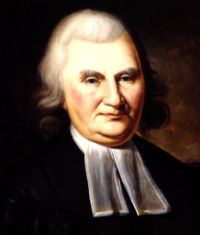
John Witherspoon

John Witherspoon

Is there right time to address politicized topics from the pulpit? I believe there is, but I believe we must make sure we’re not promoting our opinion but standing up for biblical principles.

Pastors were pivotal in swaying public opinion prior to the American Revolution and in the abolition of slavery in the United States. One pastor that spoke forcefully and biblically about the independence of the thirteen colonies was John Witherspoon—

“If your cause is just—you may look with confidence to the Lord and intreat [sic] Him to plead it as His own. You are all my witnesses, that this is the first time of my introducing any political subject into the pulpit. At this season however, it is not only lawful but necessary, and I willingly embrace the opportunity of declaring my opinion without hesitation, that the cause in which America is now in arms, is the cause of justice, of liberty, and of human nature.”

Commenting on the decision of Rev. Witherspoon to address this topic from the pulpit, theologian T.M. Moore wrote—

“Preachers tend to stay away from sticky moral and political issues, simply because they know it riles up certain folks for them to do so. Witherspoon spoke out in his day because the cause of the nation was just. But so many unjust causes are afoot in our nation at the moment, that for pastors not to speak up and equip their people to understand the times and know what we as communities should do, is not only a betrayal of our Founders, but a betrayal of their calling and of the Word of God (Ezekiel 33).”

That’s a strong statement: Pastors that don’t speak out on the immoral issues of our time are betraying their calling. I tend to agree with him. What do you think? Is there a time and place for politics in the pulpit?

You may also want to check out my videos How Christians can live biblically in an election season and The Church should be pre-political

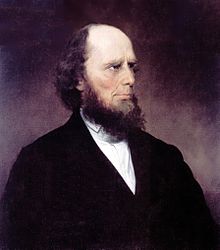
“Brethren, The Fault Is Ours…”

Pastor, these are incredible words spoken by the great Charles Finney nearly 140 years ago! I encourage you to take the time to hear these words with an open heart.

I believe it is a fact generally admitted that there is much less conscience manifested, by men and women, in nearly all the walks of life, than there was forty years ago. There is justly much complaint of this, and there seems to be but little prospect of reformation. The rings and frauds and villainies in high and low places, among all ranks of men, are most alarming, and one is almost compelled to ask: “Can nobody be safely trusted?” Now, what is the cause of this degeneracy? Doubtless there are many causes that contribute more or less directly to it; but I am persuaded that the fault is more in the ministry and public press than in any and all things else. It has been fashionable now for many years to ridicule and decry Puritanism. Ministers have ceased, in a great measure, to probe the consciences of men with the spiritual law of God. So far as my knowledge extends, there has been a great letting down and ignoring the searching claims of God’s law, as revealed in his Word. This law is the only standard of true morality. “By the law is the knowledge of sin.” The law is the quickener of the human conscience. Just in proportion as the spirituality of the law of God is kept out of view will there be manifest a decay of conscience. …The proper guardians of the public conscience have, I fear, very much neglected to expound and insist upon obedience to the moral law.

… The true Gospel is not preached where obedience to the moral law as the only rule of life is not insisted upon. Wherever there is a failure to do this in the instructions of any pulpit it will inevitably be seen that the hearers of such a mutilated Gospel will have very little conscience. …The universal literature of the present day shows conclusively that the moral sense of the people needs toning up, and some of our most fascinating preachers have become the favorites of infidels, skeptics of every grade, Universalists, and the most abandoned characters.

… My beloved brethren in the ministry, is there not a great want in the public inculcations of the pulpit upon this subject? We are set for the defense of the blessed Gospel and for the vindication of God’s holy law. I pray you let us probe the consciences of our hearers, let us thunder forth the law and Gospel of God until our voices reach the capital of this nation, through our representatives in Congress. It is now very common for the secular papers even to publish extracts of sermons. Let us give the reporters of the press such work to do as will make their ears and the ears of their readers tingle. Let our railroad rings, our stock gamblers, our officials of every grade hear from its pulpit, if they come within the sound, such wholesome Puritanical preaching as will arouse them to better thoughts and a better life. Away with this milk-and-water preaching of a love of Christ that has no holiness or moral discrimination in it. Away with preaching a love of God that is not angry with sinners every day. Away with preaching a Christ not crucified for sin.

… Brethren, our preaching will bear its legitimate fruits. If immorality prevails in the land, the fault is ours in a great degree. If there is a decay of conscience, the pulpit is responsible for it. If the public press lacks moral discrimination, the pulpit is responsible for it. If the church is degenerate and worldly, the pulpit is responsible for it. If the world loses its interest in religion, the pulpit is responsible for it. If satan rules in our halls of legislation, the pulpit is responsible for it. If our politics become so corrupt that the very foundations of our government are ready to fall away, the pulpit is responsible for it. Let us not ignore this fact, my dear brethren; but let us lay it to heart, and be thoroughly awake to our responsibility in respect to the morals of this nation. —Charles Finney (December 4, 1873)