Doctors Don’t Heal

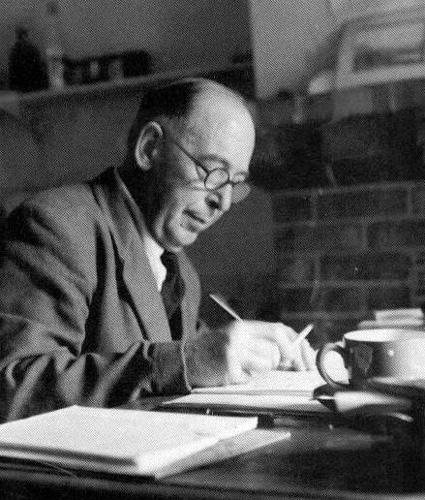
C.S. LewisI recently re-read C.S. Lewis’ book Miracles (you can read my full book review by clicking here). As you may have noticed, after reading and reviewing books on this blog, I also like to share some quotes that caught my attention. Doing this with Lewis is difficult, because in order to get the context of a particular quote, I think I would have to cite almost a full page or more. So I have been slowly sharing some quotes from Miracles that require not as much context, or I will provide a bit of background to set the stage.

For other quotes from this book see Miracle Or “Cheating”?Miracles And NatureChristianity And PantheismCorrecting The PantheistAbsolute FactThe Central MiracleThe Miracle of Freewilland Checkmate.

“There is a sense in which no doctor ever heals. The doctors themselves would be the first to admit this. The magic is not in the medicine but in the patient’s body—in the vis medicatrix naturæ, the recuperative or self-corrective energy of Nature. What the treatment does is to stimulate Natural functions or to remove what hinders them. We speak for convenience of the doctor, or the dressing, healing a cut. But in another sense every cut heals itself: no cut can be healed in a corpse.” —C.S. Lewis

God says He will not share His glory with anyone or anything.

So it is not medicine that heals, but God Who heals by giving scientists the insight to make medicines. It is not doctors who heal, but God Who gives doctors wisdom to create the environment in which healing can occur.

All healing of the body is a miracle, but all healing comes from God.

11 Quotes From “Holy Fire”

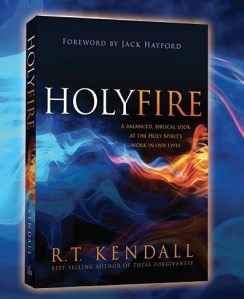
Holy FireHoly Fire by R.T. Kendall is an excellent book for dyed-in-the-wool Pentecostals, and for those who believed the operational gifts of the Holy Spirit have ceased. You can read my book review by clicking here. Below are a few quotes I highlighted in this book.

“So if you feel threatened by the Holy Spirit, is it because you are happily in your comfort zone? Are you afraid of what the Holy Spirit might do to you? What He would require of you? What He might ask you to do? Do you think you will lose something if you make yourself vulnerable and totally open to Him? Are you afraid He will embarrass you? Do you think you will lose your identity? Do you think you might have to change?”

“The canon of Holy Scripture is closed. It is final. Absolute. Incontrovertible. It is God’s complete and final revelation. No word that will come in the future will be equal to the Bible in level of inspiration. This means that any leading, prophetic word, word of knowledge, or vision one may have today must cohere with Holy Scripture. If it doesn’t, it must be rejected.”

“The Holy Spirit is our best and only reliable Teacher. In fact, He is the only Teacher who matters. Whatever teaching you hear or read (including this book)—whoever the preacher or teacher, if the Spirit does not apply it and witness it to your heart (which He is most capable of doing), you should learn to hold that teaching in abeyance—if not dismiss it.” 

“The Spirit ‘guides’ us into truth—showing what is there but what cannot be seen without Him opening our eyes. It is humbling for prideful people to admit to the need of the Holy Spirit. The cost? Our pride being shattered. But once we are broken and enabled to see our stubbornness, the Spirit will show us amazing things—in Scripture.”

“The Holy Spirit leads us to praise the Lord Jesus as He deserves.” 

“Don’t come short of discovering how real God is because some well-meaning person says this kind of relationship with God is not possible today.”

“Unbelief is doubt that degenerates to a conscious act of the will. … But when we consciously decide that God did not say what He did—and we can do it better; or that He is not going to keep His word—or manifest Himself, and then put ourselves above His Word, we cross over a line. This is dangerous stuff.” 

“Do you know the context of Hebrews 13:8? Verses 7 and 9 point to one thing: sound teaching. … Whereas we have a perfect right to apply Hebrews 13:8 against cessationist teaching, the immediate context refers to doctrine. Sound theology. The writer wanted the teaching of Jesus to remain the same yesterday and today and forever. Knowing His Word and His ways.”

“What if God in some cases keeps some skeptics from seeing the miraculous even though it actually takes place? What if miracles are largely for those believers in God’s family who have accepted the stigma of being ‘outside the camp’ (Hebrews 13:13)? After all, why didn’t the resurrected Christ appear to everybody on Easter Sunday? One might choose to argue that this would have been a reasonable thing to do if God truly wanted everybody to believe on His Son. Why did Jesus reveal Himself only to a few? Why didn’t Jesus knock on Pontius Pilate’s door on Easter morning and say, ‘Surprise!’? Why didn’t Jesus go straight from the empty tomb to Herod’s palace and say, ‘Bet you weren’t expecting Me!’ He appeared only to a few—those who were His faithful followers. I also suspect that God sometimes allows just a little bit of doubt when it comes to the objective proof of the miraculous. This keeps us humbled. And sobered.” 

“The Holy Spirit can therefore be quenched by a doctrine that does not allow for Him to show up. … It also seems to me that one of the more serious fallouts of being a cessationist is that it can eliminate any expectancy for God to work powerfully in our hearts and lives. One may become too content with his or her sheer intellectual grasp of the gospel. The consequence is that we don’t even consider—much less expect—that God will manifest His power in our lives.”

“This to me is serious—and a very precarious position to take, namely, ruling out categorically the possibility of God manifesting His glory in signs and wonders today and deleting a great portion of the Bible for today. Consider how much the Bible has to say about God’s power. Healing. Signs and wonders. Revelation of truth by the Holy Spirit. Consider what is left in Holy Scripture when you rule out the miraculous or the gifts of the Holy Spirit.”

Links & Quotes

link quote

Some good reading this weekend:

“It is bad to pursue something good negligently; it is worse to expend many labors on an empty thing.” —Hugh of St. Victor

A ground-breaking scientist of the 16th and 17th centuries who was (gasp!) a Christian: William Harvey.

Could the IRS do anything to make itself more unpopular?” Yep! Read more in New IRS Revelations.

“In the worst temptations nothing can help us but faith that God’s Son has put on flesh, is bone, sits at the right hand of the Father, and prays for us. There is no mightier comfort.” —Martin Luther

“Most of us are like the disciples. We see one miracle, and we are satisfied to talk about it for the rest of our lives. Yet, if we really knew God and let Him be God to us, we would ask Him for so much more.” —David Wilkerson

Great (not!): States Face Overwhelming Reality Of Obamacare.

Gratitude is a “chosen attitude.” Read more in Dr. Tim Elmore’s post The Inverse Relationship Between Gratitude And Entitlement.

Checkmate

C.S. LewisI recently re-read C.S. Lewis’ book Miracles (you can read my full book review by clicking here). As you may have noticed, after reading and reviewing books on this blog, I also like to share some quotes that caught my attention. Doing this with Lewis is difficult, because in order to get the context of a particular quote, I think I would have to cite almost a full page or more. So over the next few weeks I plan to share some quotes from Miracles that require not as much context, or I will provide a bit of background to set the stage.

Lewis called the Incarnation of Jesus the grandest miracle of all. Here he discusses how God didn’t have to scramble to create an alternative plan because satan tempted Adam and Eve to sin, and thus need a Savior, but that God used satan’s own strong point to defeat him.

“So much for the sense in which human Death the result of sin and the triumph of satan. But it is also the means of redemption from sin, God’s medicine for Man and His weapon against satan. In a general way it is not difficult to understand how the same thing can be a masterstroke on the part of one combatant and also the very means whereby the superior combatant defeats him. Every good general, every good chess player, takes what is precisely the strong point of his opponent’s plan and makes it the pivot of his own plan. Take that castle of mine if you insist. It was not my original intention that you should—indeed, I thought you would have had more sense. But take it by all means. For now I move thus … and thus… and it is mate in three moves. Something like this must be supposed to have happened about Death. … Jesus tasted death on behalf of all others. He is the representative ‘Die-er’ of the universe: and for that very reason the Resurrection and the Life. Or conversely, because He truly lives, He truly dies, for that is the very pattern of reality. Because the higher can descend into the lower He who from all eternity has been incessantly plunging Himself in the blessed death of self-surrender to the Father can also most fully descend into the horrible and (for us) involuntary death of the body.”

 For other quotes from this book see Miracle Or “Cheating”?Miracles And NatureChristianity And PantheismCorrecting The PantheistAbsolute FactThe Central Miracle, and The Miracle of Freewill.

The Miracle Of Freewill

C.S. LewisI recently re-read C.S. Lewis’ book Miracles (you can read my full book review by clicking here). As you may have noticed, after reading and reviewing books on this blog, I also like to share some quotes that caught my attention. Doing this with Lewis is difficult, because in order to get the context of a particular quote, I think I would have to cite almost a full page or more. So over the next few weeks I plan to share some quotes from Miracles that require not as much context, or I will provide a bit of background to set the stage.

Lewis referred to the Incarnation of Jesus (His coming to earth to live as a human being) the “central” or “grand” miracle. But equally as miraculous is that Creator God would fashion us in such a way that we would need Jesus as our Savior. The idea of a creator as a cosmic clockmaker, Who simply wound up His creation and let it run is a very safe, controllable god. But that is not how The Creator chose to create…

“Let Man be the only one among the myriad of rational species, and let him be the only one that has fallen. Because he has fallen, for him God does the great deed; just as in the parable it is the one lost sheep for whom the shepherd hunts. Let Man’s preeminence or solitude be one not of superiority but of misery and evil: then, all the more, Man will be the very species into which Mercy will descend. For this prodigal the fatted calf, or, to speak more suitably, the eternal Lamb, is killed. But once the Son of God, drawn hither not by our merits but by our unworthiness, has put on human nature, then our species (whatever it may have been before) does become in one sense the central fact in all Nature: our species, rising after its long descent, will drag all nature up with it because in our species the Lord of Nature is now included.”

For other quotes from this book see Miracle Or “Cheating”?Miracles And NatureChristianity And PantheismCorrecting The PantheistAbsolute Fact, and The Central Miracle.

The Central Miracle

C.S. Lewis at his deskI recently re-read C.S. Lewis’ book Miracles (you can read my full book review by clicking here). As you may have noticed, after reading and reviewing books on this blog, I also like to share some quotes that caught my attention. Doing this with Lewis is difficult, because in order to get the context of a particular quote, I think I would have to cite almost a full page or more. So over the next few weeks I plan to share some quotes from Miracles that require not as much context, or I will provide a bit of background to set the stage.

Lewis talks a great deal about the Creator entering His creation, quoting from passages in the Bible that talk about Christ’s pre-existence before Time, and His choice to descend into Nature.

“The central miracle asserted by Christians is the Incarnation. They say that God became Man. Every other miracle prepares for this, or exhibits this, or results from this. … Everywhere the great enters the little—its power to do so is almost a test of its greatness. In the Christian story God descends to re-ascend. He comes down; down from the heights of absolute being into time and space, down into humanity; down further still, if embryologists are right, to recapitulate in the womb ancient and pre-human phases of life; down to the very roots and seabed of the Nature He has created. But He goes down to come up again and bring the whole ruined world up with Him. One has the picture of a strongman stooping lower and lower to get himself underneath some great complicated burden.”

For other quotes from this book see Miracle Or “Cheating”?Miracles And NatureChristianity And PantheismCorrecting The Pantheist, and Absolute Fact.

Absolute Fact

C.S. LewisI recently re-read C.S. Lewis’ book Miracles (you can read my full book review by clicking here). As you may have noticed, after reading and reviewing books on this blog, I also like to share some quotes that caught my attention. Doing this with Lewis is difficult, because in order to get the context of a particular quote, I think I would have to cite almost a full page or more. So over the next few weeks I plan to share some quotes from Miracles that require not as much context, or I will provide a bit of background to set the stage.
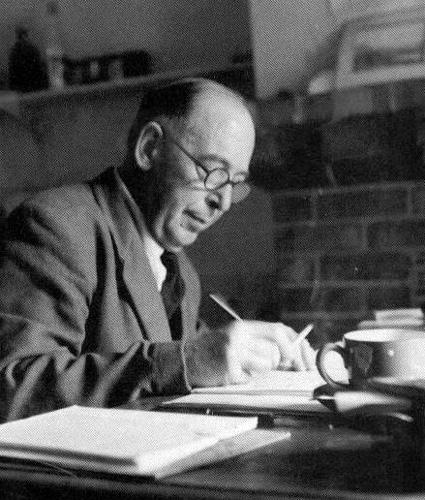
Lewis took head-on the idea that God is everywhere or can be in everything, that all paths will ultimately lead to Him. This, Lewis firmly states, is not the case. God is definite and so there is a definite way to come to Him.

“We say that God is ‘infinite.’ In the sense that His knowledge and power extended not to some things but to all, this is true. But if by using the word ‘infinite’ we encourage ourselves to think of Him as a formless ‘everything’ about whom nothing in particular and everything in general is true, then it would be better to drop that word altogether. Let us dare to say that God is a particular thing. Once He was the only Thing: but He is creative, He made other things to be. He is not those other things. He is not ‘universal being’: if He were there would be no creatures, for a generality can make nothing. He is absolute being—or rather the Absolute Being—in the sense that He alone exists in His own right. But there are things which God is not. In that sense He has a determinate character. Thus He is righteous, not amoral; creative, not inert. The Hebrew writings here observe an admirable balance. Once God says simply I AM, proclaiming the mystery of self-existence. But times without number He says, ‘I am the Lord’—I, the ultimate Fact, have this determinant character, and not that. And men are exhorted to ‘know the Lord,’ to discover and experience this particular character. …

“God is basic Fact or Actuality, the source of all other facthood. At all costs therefore He must not be thought of as a featureless generality. If He exists at all, He is the most concrete thing there is, the most individual, ‘organized and minutely articulated.’ He is unspeakable not by being indefinite but by being too definite for the unavoidable vagueness of language. … An impersonal God—well and good. A subjective God of beauty, truth and goodness, inside our own heads—better still. A formless life-force surging through us, a vast power which we can tap—best of all. But God Himself, alive, pulling at the other end of the cord, perhaps approaching at an infinite speed, the hunter, king, husband—that is quite another matter.”

I posted other passages from Miracles under Miracle Or “Cheating”?Miracles And Nature, and Correcting The Pantheist.

Correcting The Pantheist

C.S. Lewis at his deskI recently re-read C.S. Lewis’ book Miracles (you can read my full book review by clicking here). As you may have noticed, after reading and reviewing books on this blog, I also like to share some quotes that caught my attention. Doing this with Lewis is difficult, because in order to get the context of a particular quote, I think I would have to cite almost a full page or more. So over the next few weeks I plan to share some quotes from Miracles that require not as much context, or I will provide a bit of background to set the stage.

Democritus was a Greek philosopher who proposed the universe was made up of invisible atoms and empty space. The atoms perpetually bounced around and sometimes connected with other atoms to form our tangible universe. Erwin Schrödinger put a ‘concreteness’ or ‘definiteness’ to the atomic theories previous held. In other words, Democritus saw an almost pantheistic, indescribable vagueness about Nature, whereas Schrödinger gave it definition. Lewis says that Christians need to put Monotheistic definitions on Nature and Supernature. 

“At every point Christianity has to correct the natural expectations of the Pantheist and offer something more difficult, just as Schrödinger has to correct Democritus. At every moment he has to multiply distinctions and rule out false analogies. He has to substitute the mappings of something that has a positive, concrete, and highly articulated character for the formless generalities in which Pantheism is at home.” 

 “If God is the ultimate source of all concrete, individual things and events, then God Himself must be concrete, and individual in the highest degree. Unless the origin of all other things were itself concrete and individual, nothing else could be so; for there is no conceivable means whereby what is abstract or general could itself produce concrete reality. Bookkeeping, continued to all eternity, could never produce one farthing. Metre, of itself, could never produce a poem. Bookkeeping needs something else (namely, real money put into the account) and metre needs something else (real words, fed into it by a poet) before any income or any poem can exist. If anything is to exist at all, then the Original Thing must be, not a principal nor a generality, much less an ‘ideal’ or a ‘value,’ but an utterly concrete fact.”

For more quotes from this book, check out Miracle Or “Cheating”? and Miracles And Nature.

Christianity & Pantheism

C.S. Lewis at his deskI recently re-read C.S. Lewis′ book Miracles (you can read my full book review by clicking here). As you may have noticed, after reading and reviewing books on this blog, I also like to share some quotes that caught my attention. Doing this with Lewis is difficult because in order to get the context of a particular quote, I think I would have to cite almost a full page or more. So over the next few weeks, I plan to share some quotes from Miracles that require not as much context, or I will provide a bit of background to set the stage.

In this passage, Lewis refers to Flatlanders. This is a reference to a fascinating book called Flatland by Edwin Abbott, in which a 3-dimensional Sphere visits the 2-dimensional world called Flatland and speaks with Square. It was a favorite book of not only Lewis but Albert Einstein as well.

“The popular ‘religion’ excludes miracles because it excludes the ‘living God’ of Christianity and believes instead in a kind of God who obviously would not do miracles, or indeed anything else. … If ‘religion’ means simply what man says about God, and not what God does about man, then Pantheism almost is religion. … The old atomic theory is in physics what Pantheism is in religion—the normal, instinctive guess of the human mind, not utterly wrong, but needing correction. Christian theology and quantum physics are both, by comparison with the first guess, hard, complex, dry and repellent. … The Pantheist and Christian agree that we are all dependent on God and intimately related to Him. But the Christian defines this relation in terms of Maker and made, whereas the Pantheist (at least of the popular kind) says, we are ‘parts’ of Him, or are contained in Him. … Pantheist and Christian also agree that God is super-personal. The Christian means by this that God has a positive structure which we could never have guessed in advance, any more than a knowledge of squares would have enabled us to guess at a cube. He contains ‘persons’ (three of them) while remaining one God, as a cube contains six squares while remaining one solid body. We cannot comprehend such a structure any more than the Flatlanders could comprehend a cube. But we can at least comprehend our incomprehension, and see that if there is something beyond personality it ought to be incomprehensible in that sort of way. The Pantheist, on the other hand, though he may say super-personal really conceives God in terms of what is sub-personal—as though the Flatlanders thought a cube existed in fewer dimensions then a square.”

For other quotes from this book, see Miracles Or “Cheating”? and Miracle And Nature.

Miracles And Nature

C.S. Lewis at his deskI recently re-read C.S. Lewis’ book Miracles (you can read my full book review by clicking here). As you may have noticed, after reading and reviewing books on this blog, I also like to share some quotes that caught my attention. Doing this with Lewis is difficult, because in order to get the context of a particular quote, I think I would have to cite almost a full page or more. So over the next few weeks I plan to share some quotes from Miracles that require not as much context, or I will provide a bit of background to set the stage.

Lewis talks at great length how Nature (and our natural laws) had to come out of something, which he calls Supernature. What we commonly refer to as a miracle is not a miracle in the sense of natural laws being broken, but in Nature accommodating Supernature. Thus, Lewis writes…

“This perhaps helps to make a little clearer what the laws of Nature really are. We are in the habit of talking as if they caused the events to happen; but they have never caused any event at all. … Thus in one sense the laws of Nature cover the whole field of space and time; in another, what they leave out is precisely the whole real universe—the incessant torrent of actual events which makes up true history. That must come from somewhere else. To think the laws can produce it is like thinking that you can create real money by simply doing sums. … It is therefore inaccurate to define a miracle as something that breaks the laws of Nature. It doesn’t. … The divine art of miracle is not an act of suspending the pattern to which events conform but of feeding new events into that pattern. It does not violate the laws proviso, ‘If A, then B’: it says, ‘But this time instead of A, A2,’ and Nature, speaking through all her laws, replies, ‘Then B2’ and naturalizes the immigrant, as she well knows how. She is an accomplished hostess. A miracle is emphatically not an event without cause or without results. Its cause is the activity of God: its results follow according to Natural law.”

For another quote from this book, see Miracle Or “Cheating”?