Listen to the podcast of this post by clicking on the player below, and you can also subscribe on Apple, Spotify, or Audible.
Far too many leaders spend more time making sure things look good on the outside than they do addressing whether things are good on the inside. Of course, I’m talking about issues like character, and humility, and servant-mindedness.
Greg and I addresses this on a recent episode of our leadership podcast The Craig and Greg Show.
Listen to the podcast of this post by clicking on the player below, and you can also subscribe on Apple, Spotify, or Audible.
Every business owner needs to be prepared for an eventual transition. Whether it be retirement, moving on to a new opportunity, or an M&A offer, nobody can run their business forever. In today’s episode Greg and I sit down to discuss Greg’s new book The Business Baton.
[0:35] “Keep your eye on the ball” is important for more than just sports, and far too often business owners forget this advice during the transition process.
[2:48] In chapter seven of The Business Baton, Greg discusses how to manage the pace of a transition.
[4:04] A Navigator can help you keep your focus on running your company during a transition.
[5:34] Greg talks about a few common reasons business owners take their eye off the ball.
[12:50] What does an owner disengaging do to the morale of the company?
[16:53] I share an interesting statistic from The Business Baton.
[19:26] An owners ongoing productivity is essential for maintaining the value of the organization.
[23:49] The Business Baton contains real case studies from organizations that Greg has worked with in the past, so you will likely see examples that line up with your industry.
[25:04] Greg and I share a section from The Business Baton about productivity.
Check out this episode and subscribe on YouTube so you can watch all of the upcoming episodes. You can also listen to our podcast on Spotify and Apple.
Listen to the podcast of this post by clicking on the player below, and you can also subscribe on Apple, Spotify, or Audible.
As both a consultant and in one-on-one conversations with colleagues, I have lost count of how many times I’ve heard leaders tell me how incompetent their teammates are. When I have gently asked how they could help their teammates improve, the response is usually something like, “I think they are giving me all they have right now.”
There is an age-old leadership principle that goes something like this—
A poor leader doesn’t believe his people can achieve more than they already are, so he stops training them and stops expecting great things from them. His people soon discover the level of performance their leader will settle for, and then gravitate to that level.
The leader then assumes that’s all that his people are capable of achieving, so he accepts it as fact and quits challenging his people to get better.
So both reinforce what the other believes, and the vicious downward cycle continues.
How sad!
But I have found that exemplary leaders believe the best is still to come. They challenge their teammates to strive for greatness. They take time to train, resource, and encourage them to strive for the next level. They don’t beat them up or give up on them when they stumble, but they treat stumbles as learning opportunities. They always believe their teammates can achieve more.
If you were on a team with a leader like that, wouldn’t you want to live up to those expectations? Of course you would! So instead of the vicious downward cycle I just outlined, an environment like this creates a virtuous cycle that keeps pulling people upward.
The apostle Paul talked in virtuous terms about his teammates. He wrote publicly about Timothy (I have no one else like him—Philippians 2:20), Epaphroditus (my brother, co-worker and fellow soldier—Philippians 2:25), Mark (he is helpful to me in my ministry—2 Timothy 4:11), and Luke (the beloved physician and faithful comrade—Colossians 4:14), to name just a few.
Even when he had to speak a challenging, correcting word to the saints in Corinth, he still believed the best for them—
I am not sorry that I sent that severe letter to you, though I was sorry at first, for I know it was painful to you for a little while. Now I am glad I sent it, not because it hurt you, but because the pain caused you to repent and change your ways. … I am very happy now because I have complete confidence in you. (2 Corinthians 7:8-9, 16 NLT)
I love that phrase: I have complete confidence in you!
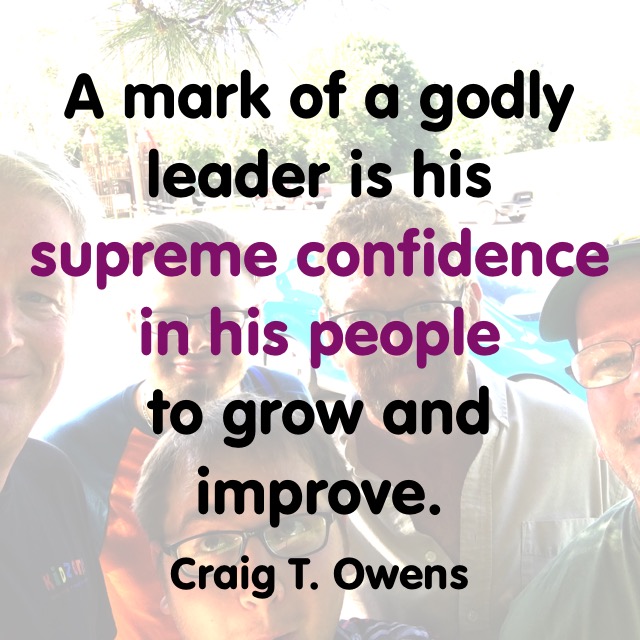
A mark of a godly leader is his supreme confidence in his people to grow and improve.
If you feel like your teammates just aren’t measuring up, can I suggest that you take a look in the mirror? It may be that your expectations of them are too low, that your attitude toward them has been squelched, and that your words and actions are perpetuating a downward cycle.
By changing your attitude toward your teammates, you can put the brakes on that downward pull, and begin a brand new virtuous cycle that pulls your entire team—and your whole organization—up to heights where they have never gone before!
This is part 82 in my series on godly leadership. You can check out all of my posts in this series by clicking here.
“You have to expect things of yourself before you can do them.” —Michael Jordan
“The sun, with all those planets revolving around it and dependent on it, can still ripen a bunch of grapes as if it had nothing else in the universe to do.” —Galileo Galilei
“Physical care is vital to vigilance. HALT is the acronym often used by therapists to remind people of when they can be most vulnerable it stands for: hungry, angry, lonely, tired. Simply going to bed on a regular schedule to get a good night’s rest can help one’s brain be more focused on positive habits and more alert to fight temptations. Not only eating but also eating well can improve mood and feelings of well-being. Regular exercise keeps the mind more focused, the body feeling great, and improve sleep.” —Sam Black, in The Porn Circuit
“Leadership can be a lonely business filled with great amounts of soul-draining human interactions but little soul-filling intimacy. Without some safe-harbor relationships where we can lay down all of the armor and weapons needed to face the world and relax in confidence and unguarded communion, we become vulnerable to two debilitating frames of mind and spirit—the victim and the martyr. Allowed to blossom into resentment or a self-justification for seeking EGO-soothing instant gratification, these twin demons have been the downfall of many a leader in every walk of life.” —Kenneth Blanchard and Phil Hodges, in Lead Like Jesus
Listen to the podcast of this post by clicking on the player below, and you can also subscribe on Apple, Spotify, or Audible.
My podcast partner Greg Heeres asked me if I had found one thing that really worked in developing or deepening relationships. My answer is short and to the point.
Listen to the podcast of this post by clicking on the player below, and you can also subscribe on Apple, Spotify, or Audible.
In today’s episode, Greg and I discuss what it means to be a healthy leader. We break down the various facets of leadership health, and highlight why each piece is part of an essential structure that supports all of the other parts. This was a very important part in my book Shepherd Leadership.
[0:12] Greg and I are looking dapper today!
[1:26] We have both gone through the process of writing books.
[2:30] I reveal the section of my book Shepherd Leadership that has gotten the most attention.
[6:01] I highlight the development of Jesus as recorded in the Gospel of Luke.
[8:40] All aspects of health are important because they support each other.
[10:06] What happens when we get bumped?
[12:25] How do we maintain healthy relationships?
[15:11] Investing time into yourself gives you a greater capacity to serve others.
[16:50] What signs should we watch for that tell us a relationship is strained?
[17:52] Leaders should empower others to solve problems instead of always solving them on their own.
[18:54] It’s easier to avoid relational health in the short-term, but it will hurt you down the road.
[21:28] What’s the best way to improve a relationship?
[22:55] If we have a desire to improve a relationship, how can we get the other person to reciprocate?
[25:40] What was my “aha” moment when writing Shepherd Leadership?
[27:11] Maximize Leadership is a great coaching resource for you.
Check out this episode and subscribe on YouTube so you can watch all of the upcoming episodes. You can also listen to our podcast on Spotify and Apple.
Listen to the podcast of this post by clicking on the player below, and you can also subscribe on Apple, Spotify, or Audible.
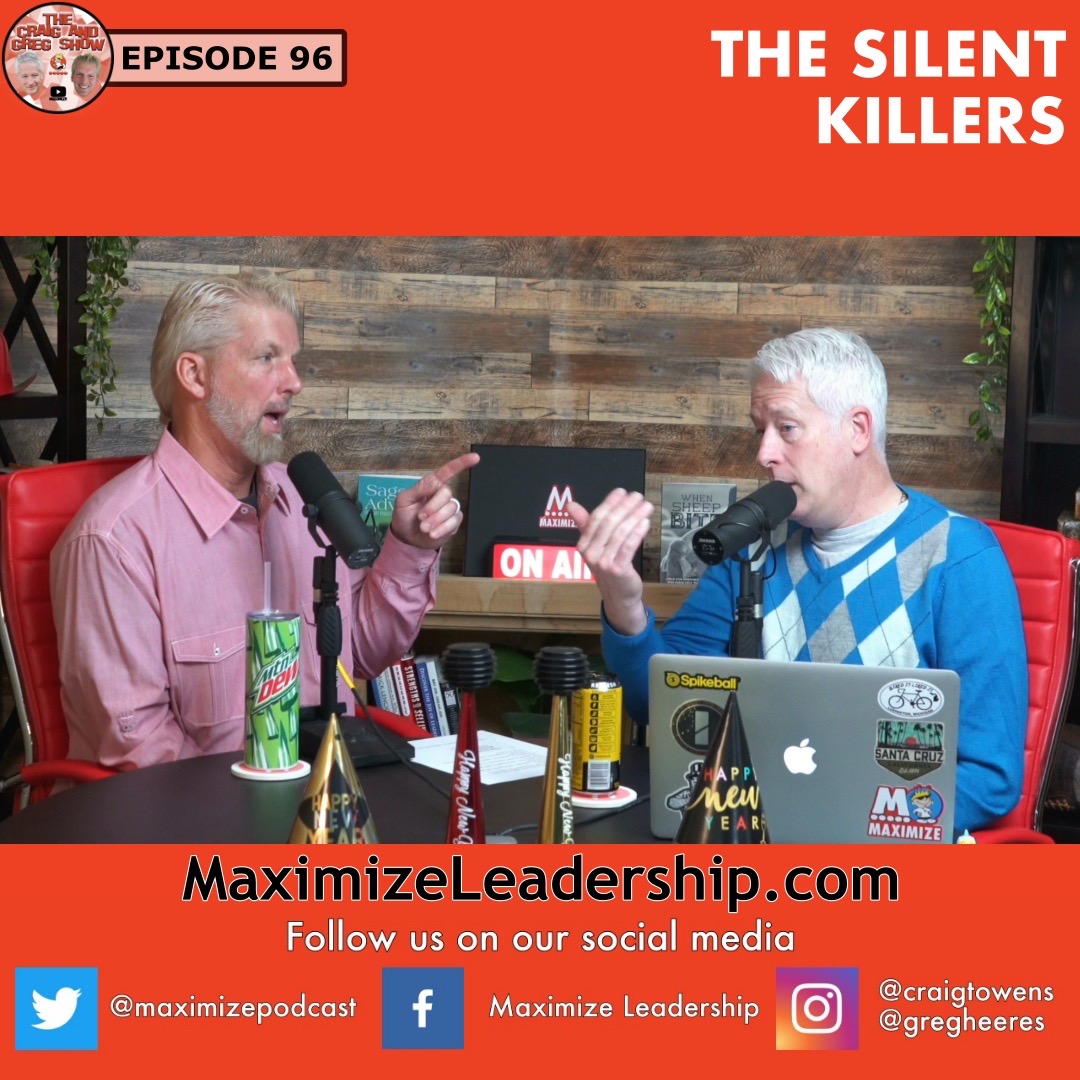
To you the term “silent killer” might conjure visions of a lone assassin from a spy movie, or perhaps more mundane but equally deadly things like high blood pressure or carbon monoxide leaks. In today’s episode Greg and I are discussing toxic behaviors that creep into the workplace. They aren’t quite as deadly as the ones listed above, but can still cause massive anger, frustration, and discord in your organization. Join us as we discuss some of the most prevalent toxins we’ve seen, and highlight how you as the leader are responsible for being the safeguard against them.
[0:20] Toxic things can sneak into our workplace unless we proactively look for them.
[1:35] Leaders need to be honest with their team so their team feels they can be honest with them in return.
[3:43] Greg and I discuss some of the toxic behaviors we have seen that create problems in the workplace.
[3:54] -Gossip
[4:51] -Office Politics
[6:42] -Negative Competition
[8:37] -Negativity
[10:20] -Bureaucracy
[12:46] -Braggadocio
[14:12] -Bashing
[14:46] Toxicity will come to every organization. We as leaders shine in the way we deal with it.
[17:47] When I wrote Shepherd Leadership, I spent two chapters discussing the balance between confidence and humility because of how important it is.
[19:08] One of our main jobs as leaders is to develop others, but toxicity squashes that.
[20:26] A coach can come alongside you to be the “detector” for the silent killers that might be lurking in your organization.
Check out this episode and subscribe on YouTube so you can watch all of the upcoming episodes. You can also listen to our podcast on Spotify and Apple.
Listen to the podcast of this post by clicking on the player below, and you can also subscribe on Apple, Spotify, or Audible.
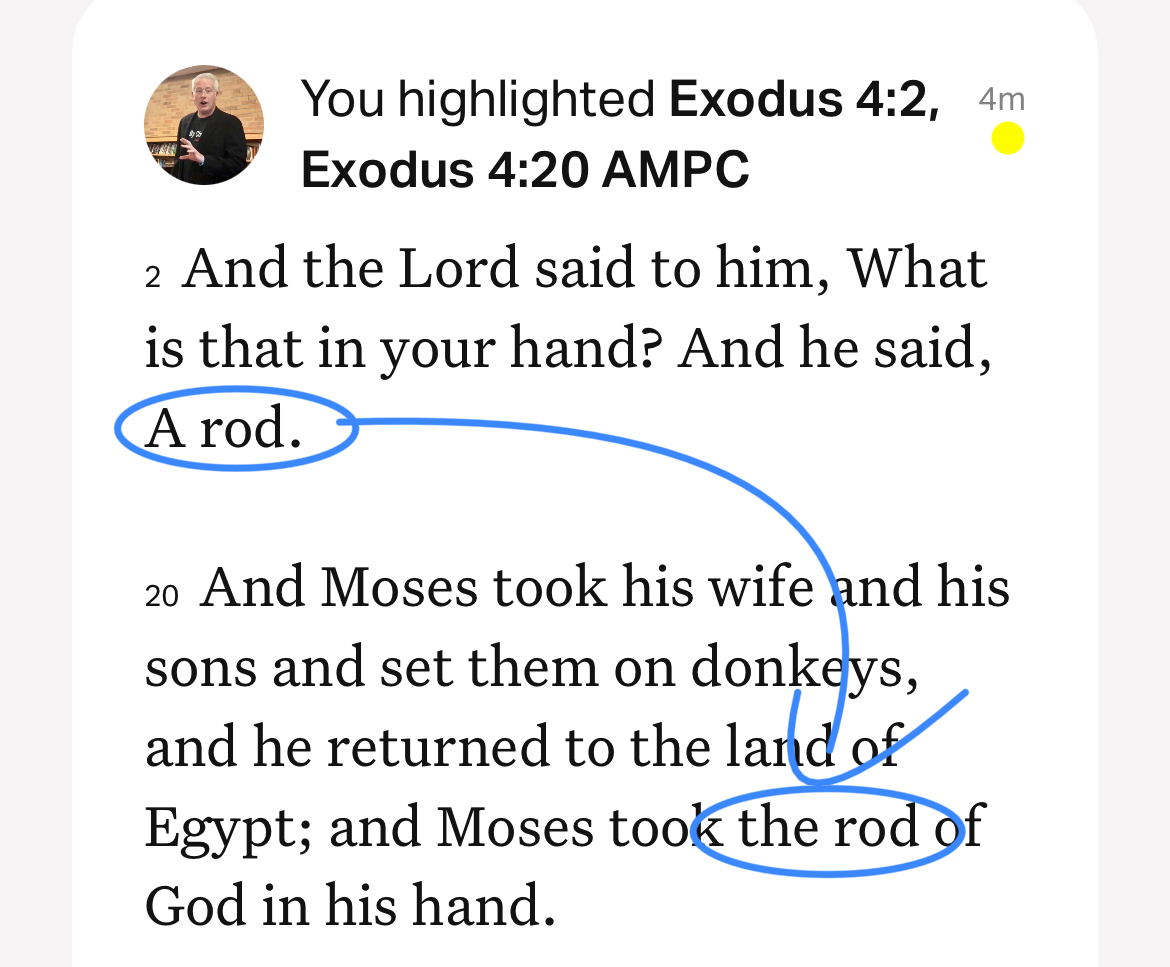
And the Lord said to [Moses], “What is that in your hand?” And he said, “A rod.” … And Moses took his wife and his sons and set them on donkeys, and he returned to the land of Egypt; and Moses took the rod of God in his hand. (Exodus 4:2, 20 AMPC)
What Moses originally called merely “a rod” he later called “the rod of God.” He recognized that what he thought was his was in actuality what God had given him to use.
When we recognize that what’s in our hands isn’t our creation, but a God-given talent, it marks a defining moment in both our maturity and our humility. Or to borrow a phrase I elaborate on in my book Shepherd Leadership, this helps us view our God-given talents or positions with confident humility (or, if you like, humble confidence).
With this shift in Moses’ understanding and language in mind, this is how we should treat every strength God has given us:
• I will have to give an account to God for how I invested or squandered what He entrusted to me
When we realize that we are not self-made men or women, but that any talents, abilities, or opportunities we have are God-appointed, we show a marked maturity in our understanding of our stewardship of God’s gifts. As our maturity grows, our confidence and our humility will grow proportionately. And as we become more confidently humbled in the way we steward God’s gifts, our leadership cannot help but exhibit more of God’s blessing on it.
All of this growth starts with just the simple recognition that what’s in my hands is there only because God placed it there.
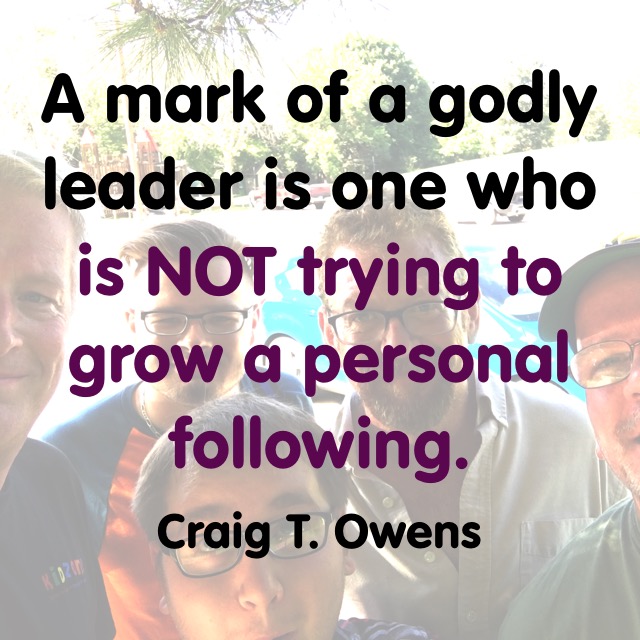
“First, they teach the Word of God faithfully (Hebrews 13:7). They aren’t trying to impress anyone with how clever, witty, or visionary they are personally. Their desire is that the Word of Christ might dwell in people richly, and all their teaching is based on that holy and inspired Word (Colossians 3:16).
“Second, their lives exemplify the things they teach (Hebrews 13:7). True leaders are people whom, as you follow them, you begin to become like in ways that reflect full faith in Jesus Christ (John 13:1-15).
“Third, true leaders care for our souls (Hebrews 13:17; 1 Thessalonians 5:12-13). They are interested in us, want to get to know us, do everything they can to serve and build us up; and they will go the extra mile when necessary to help us become people of full faith in Jesus.”
Leaders are needed for tough times. “Doing difficult creates natural separation” for your leadership, says Eric Thomas. Check out this full conversation from The Craig and Greg Show.
“Busier than a businessman, more sought out than a celebrity, wanted as a mother of many toddlers, and bearing a task as big as the world, Jesus prayed.” Check out Scott Hubbard’s post Never Too Busy To Pray.
“This is certain, that a man that studieth revenge keeps his wounds green, which otherwise would heal and do well.” —Sir Francis Bacon
“Do not have your concert first, and then tune your instrument afterwards. Begin the day with the Word of God and prayer, and get first of all into harmony with Him.” —Hudson Taylor
There are almost 12,000 species of snakes and lizards, but evolutionists still do not know where they came from. Vertebrate paleontologist Michael Benton stated, “The early history of squamates [snakes, lizards] is patchy,” and the debate of snake origin “is far from resolved.” ICR offers the most straightforward solution to this supposed evolutionary dilemma: “snakes and lizards have been created with the genetic ability to undergo “remarkably varied jaw shapes” that have led to “their extraordinary ecological success” as they move in and fill various niches.”
Seth Porch, in talking about the joy of daily reading the Bible, notes, “By itself, neither habit, shame, nor duty will lead you to open God’s word daily with a heart posture of humble expectation and joy. Such an attitude toward the Bible comes only from the astonished realization that in these pages God actually speaks.” I hope you find the joy in reading God’s Word throughout this new year. I love my YouVersion reading plans that take me through the Bible. You may also like the companion book by Dick Brogden called Missionary God, Missionary Bible. And I shared some Bible studies that may interest you here and here.









 Craig T. Owens