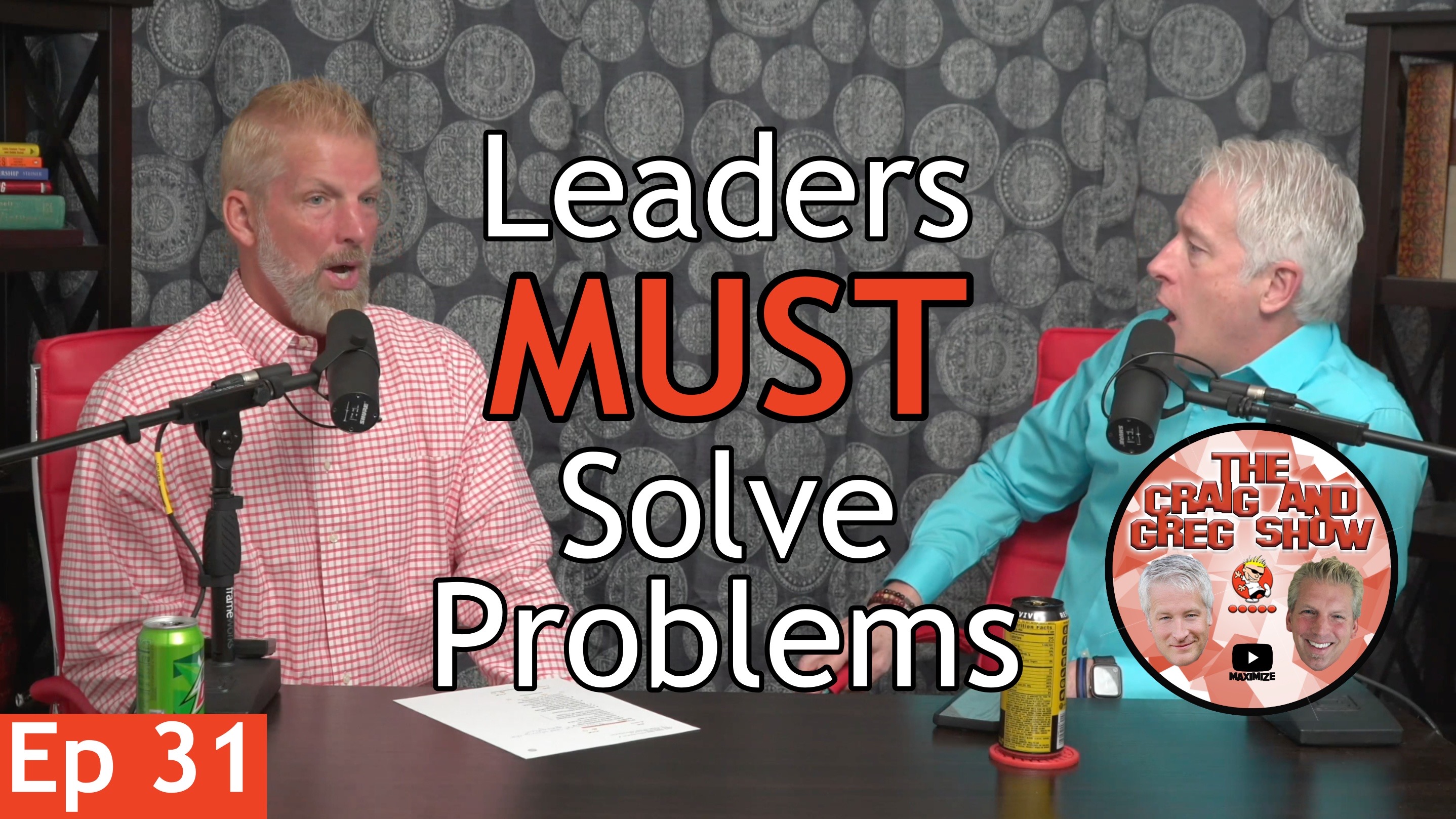
On a recent episode of our leadership podcast, Greg Heeres and I were discussing how easy it is for people to slip into a complaining attitude. One of the things I point out is that if we ask for compliments instead of complaints, we can begin to change the culture of our organization.
Listen to the podcast of this post by clicking on the player below, and you can also subscribe on Apple, Spotify, or Audible.
I love reading, and I love sharing my love of good books with others! Here is a list of the books I read and reviewed in 2021. Click on a title to be taken to that review.
“Stunningly, the Good Shepherd has put the care of His foolish flock into the hands of under-shepherds who tend to be somewhat stupid ourselves. The grand gamble only works if under-shepherds studiously lead in the way that Jesus instructed us to—and therein is the rub, for none of us naturally agrees with His model. Our flesh, culture, ambitions, and propensities all fight Shepherd Leadership like the plague. We may kiss the concept theoretically, but we fundamentally flee from it functionally. …
“It is good to be a sheep; it is good to be an under-shepherd. Just remember you are stupid, chosen by the Wise One, and as long as you serve as a shepherd, you and your flock will be safe.
“The book you are about to read is a refreshing look at leading as a sheep, of serving like our Chief Shepherd. I trust you will benefit from it as much as I did.”
[18:30] Legacy is determined by what our family says about us
[19:56] How leaders can set family leadership goals for the New Year
Check out this episode and subscribe on YouTube so you can watch all of the upcoming episodes. You can also listen to our podcast on Spotify and Apple.
Listen to the podcast of this post by clicking on the player below, and you can also subscribe on Apple, Spotify, or Audible.
On a recent episode of The Craig And Greg Show, Greg and I discussed the vitally important role of leading in our families.
Most parents know they should do this, but one of the things that gets in the way is trying to determine just how “success” should be defined in a family setting.
Greg and I talk about the distractions to meaningful interactions with our spouse and kids, and I share a story about how I helped my church board understand this concept so that they could support me in this.
The bottom line: Someone else can do our jobs, but we are the only ones who can be the godly spouse for our husband or wife, and the godly parent for kids. Let’s make sure this is always our priority!
If you would like to watch this full episode of The Craig And Greg Show, please click here. And if you would like to know more about my book which I mentioned in this podcast, please click here.
Listen to the podcast of this post by clicking on the player below, and you can also subscribe on Apple, Spotify, or Audible.
At a recent Q&A, I was asked how leaders in smaller markets or communities can avoid becoming discouraged if their measurable metrics aren’t continually rising.
I answered this by pointing to a simple three-word phrase that God laid on my heart a number of years ago.
This is an idea that I unpack throughout my book Shepherd Leadership: The Metrics That Really Matter. Please pick up a copy for yourself or as a gift for your friends who are in leadership positions. My book is available in print or ebook, and in audiobook through either Audible or Apple.
[1:27] what leaders do that will undermine their leadership
[2:48] why it’s more fun to be around grateful people
[4:12] Craig shared about the impact grateful teammates have had on him
[4:52] why is it so easy to complain?
[6:28] leaders need to speak positive things into this around them
[7:42] leaders need to shut down complaining teammates quickly
[8:39] Greg challenges leaders to confront their own negative attitude
[10:00] leaders need to create a place of safety to help others to develop to their full potential
[12:08] Greg reminds leaders that busyness can restrict gratitude
[13:29] criticism is both a mindset and a “heartset”
[13:59] how many of our criticism come from our assumptions about others?
[15:06] poor leaders have a misunderstanding of what gratitude does
[15:55] some ways leaders can express gratitude to their teammates
[17:57] another look at the problem of assumptions
[19:08] a grateful person attracts others to them
[21:00] Craig gives leaders a challenge to help bolster their attitude of gratitude
Check out this episode and subscribe on YouTube so you can watch all of the upcoming episodes. You can also listen to our podcast on Spotify and Apple.
Listen to the podcast of this post by clicking on the player below, and you can also subscribe on Apple, Spotify, or Audible.
Sometimes you might hear it said of someone’s leadership mettle or leadership philosophies that they are “battle-tested.” In the case of Hal Moore On Leadership, this is literally true!
Perhaps you’ve seen the movie “We Were Soldiers Once…And Young,” which recounts the first full-scale military battle in Vietnam between Moore’s 450-man force and the 2000 soldiers of the North Vietnamese Army. Despite being completely surrounded and severely out-gunned, Moore’s First Cavalry decisively defeated the NVA.
General Moore’s leadership principles won the day for his men in that battle. But even then, his principles had already been battle-tested under fire in the Korean War, and put to the test in the various assignments that Hal Moore faced in his highly-decorated military career. Moore was continually tasked by superior officers to re-tool underperforming units, or step in where tensions were high, or help reorganize when the Army was experiencing some growing pains.
Moore not only excelled at every assignment, but he kept meticulous notes that are now available to any leader in this excellent book.
Hal Moore On Leadership is partially a biography, but mostly his story is told as the backdrop for the leadership principles that were proven to be correct time and time again.
Students of both leadership and military history will find this book enjoyable and practical.
Listen to the podcast of this post by clicking on the player below, and you can also subscribe on Apple, Spotify, or Audible.
I’m a huge fan of NFL football. Growing up in the 1970s, ‘80s, and ‘90s it was fascinating to watch the “changing of the guard” among the dominate NFL teams—especially the Cowboys, Steelers, and 49ers. Right in the center of all of this was a legendary quarterback battle in San Francisco between Joe Montana and Steve Young. Steve Young gives us an inside look at this era in his autobiography QB: My Life Behind the Spiral.
As a student of leadership, I love reading biographies and autobiographies with an eye toward understanding what goes into the making of a leader: Is it genetics? Temperament? Hard work? Lucky breaks? The answer is a resounding “yes” to all of the above. In the case of Steve Young, his football-playing father played a factor, as well as Steve’s relentless drive to play quarterback in the NFL. His work ethic made his lucky breaks happen.
But what often is missed in the lives of overcoming leaders is the role challenges or limitations play. In Steve’s case, his lifelong battle against anxiety propelled him to many of his exceptional achievements. Steve is quite candid about the pull between his anxiety over failing and his nonstop pursuit of being the absolute best quarterback ever. The source of his anxiety was unknown to him for most of his career, until a counselor finally was able to help Steve both diagnose and address the underlying causes. It was after this discovery that Steve could finally find a place of satisfaction in his football pursuits.
QB is a very enjoyable read for football fans and students of leadership, but I think those who grew up watching these epic battles on the football field at such a pivotal time in the NFL’s history will really appreciate this front-row view from Steve Young.
Listen to the podcast of this post by clicking on the player below, and you can also subscribe on Apple, Spotify, or Audible.
In Proverbs 25–26 Solomon uses the word “like” 18 times. This small word gives leaders a huge teaching lesson.
Good leaders are constantly conveying to their team the vision that God has given them. We see this throughout the Bible, where past history is connected to the future promise God has given. Unless leaders are able to consistently, and frequently, refocus their people on the vision, the people “cast off restraint” and go their own way (Proverbs 29:18).
Leaders need to find fresh ways to make their messages stick. All of the Proverbs, but especially these two chapters, give us excellent lessons for this. Solomon makes memorable connections by starting with something that most people have experienced. Things like…
a beautiful piece of jewelry
a refreshingly cool drink on a hot day
an injured body part
the actions of nature and animals
Then Solomon connects these observations to a timely piece of wisdom…
The right words, delivered at the right time, in the right way are LIKE a beautiful piece of jewelry.
One who delivers timely and helpful words is LIKE a refreshingly cool drink on a hot day.
Trying to move around on an injured foot is LIKE having to rely on someone inconsistent during times of trouble.
Just LIKE honey is good for you in moderation, too much honey—and too much of any good thing—can make you sick.
This is a great teaching lesson for every leader. We need to continually find new and memorable ways to help our people grasp the vision, mission, and values of the organization. This teaching tip from King Solomon can go a long way in helping our messages stick.
A mark of a godly leader is one who is always finding new ways to teach the people around him.
This is part 59 in my series on godly leadership. You can check out all of my posts in this series by clicking here.