How To Respond To Evildoers

I’m sure if I asked for a show of hands, everyone of you would put up a hand (or maybe even two!) to the question, “Has someone done something bad to you?” 

The real issue is not if we’ve been the victim of evildoers doing evil things; the real issue is how to respond to evildoers that do evil things. 

In Psalm 52, David tells us that he wrote this prayer after a vile man named Doeg had done atrociously evil things to a whole town of innocent people. Worse yet: these people were simply trying to help David!

David was fleeing for his life from King Saul, forcing him to leave home with just the clothes on his back. He stopped at the village of Nob and asked Ahimelech the priest for food and a weapon. That act, in King Saul’s mind, was worthy of death. None of Saul’s soldiers would carry out his command to execute the priest, but Doeg quickly responded. Doeg not only killed Ahimelech, but he killed the 85 priests with him, and then he proceeded to annihilate everything and everyone left in the village of Nob. Only one man escaped to tell David what happened. 

When David begins this psalm, he uses the words you or your 14 times in just the first five verses. David is addressing Doeg, almost holding up a mirror to his evil deeds. By contrast, the word I is used five times in just the last two verses of this prayer. 

That tells me that we have to work on this problem of evil from two different directions. We need to see evildoers in their evil, and we need to see a godly response to evildoers. As with many Hebrew poems, the most important principle is in the middle—Surely God will bring evildoers down to destruction, but He will protect the righteous (v. 5). 

In the opening words, David asks Doeg, “Why do you boast of evil?” The word for boast in Hebrew is halal—this is usually the word we translate Hallelujah! In other words, Doeg has put his evil on the throne of his life and is saying “Hallelujah!” to it. A downward slide of all sorts of evil words and evil deeds spiral out from this until the climax: Surely God will bring judgment. 

Notice David says “God” (not you) “will” (not might) take care of this. 

Now let’s look at it from a righteous perspective. Working backwards from verse 9 to verse 5, we see whereas Doeg was praising his evil deeds, David is praising God. David recognizes that it’s only in God’s presence that he can be free, and it’s only God that can ultimately balance the scales of justice. 

▶️ My friend, you cannot make things right. Only God can do this. Please, please, take your eyes off the evildoer that did evil things to you, and put your eyes on the Perfect Judge. He alone can balance the scales of justice. ◀️

So here are four lessons for all of us to learn—

  1. When evildoers do evil things to you, talk to God about them; don’t talk to your enemies and don’t even talk to your friends.
  2. Continue to redirect your heart and thoughts to God’s unfailing love, and away from thoughts of retribution—even if you have to do this a hundred times a day.
  3. When evildoers afflict you, look in the mirror of God’s Word to see if there is anything for which you need to repent and then ask forgiveness.
  4. When judgment comes, don’t gloat. John Bradford, when he saw a cartful of men going off to be hanged said, “There goes John Bradford but for the grace of God.”

In this video I reference our series on the Selahs in the book of Psalms. If you missed any of these, please click here to find a list of the other topics we covered.
The Selah That Keeps Us From Sinning

There is a very natural emotion that we humans have when someone has hurt us, but if we don’t pause (Selah), that natural emotion can lead us into sin. David has good counsel for angry people in Psalm 4. 

Many scholars think that Psalm 4 is a continuation—or a part 2—of Psalm 3. As you will notice in the preface of Psalm 3, David is on the run from his son Absalom, who is trying to steal the kingdom of Israel from him. 

Look at the swing of David’s emotions:

  • Troubled/sad (v. 1) 
  • Anger (v. 4)
  • Contentment (v. 7)
  • Peace (v. 8)

The first time David tells his readers to Selah pause is between verses 2 and 3. The change is almost an about-face: 

Look at this: look who got picked by God! He listens the split second I call to Him. Complain if you must, but don’t lash out. Keep your mouth shut, and let your heart do the talking. Build your case before God and wait for His verdict (vv. 3-5 in The Message). 

My friend Josh Schram shared these truths: 

  1. Don’t sin by letting anger control you. 
  2. It’s right to be angry, but it’s not right to sin. 
  3. When someone hurts us, it’s tempting to break God’s law. We can almost justify it, but it is a sin to give in to anger. 

“Search your heart and be silent”Selah. This pause gives us hope that we can “build your case before God and wait for His verdict.” 

In Romans 12:17-21, Paul gives similar counsel when dealing with enemies:  As far as it depends on you…

  • Don’t repay evil for evil. 
  • Do repay evil with doing what’s right. 
  • Don’t take revenge. 
  • Do let God handle it. 
  • Don’t mistreat your enemies. 
  • Do bless your enemies. 
  • Don’t be overcome by evil. 
  • Do overcome evil by doing good. 

Since David let his anger go, that also means he didn’t sin! His clear conscience meant he could lie down and sleep in peace. 

You cannot hold a grudge and peace in the same heart. 

Please join me next week as we continue our look at the Selahs in the Book of Psalms. 

A Leader’s Priority

But now your kingdom must end…because you have not kept the Lord’s command (1 Samuel 13:14). 

How tragic! 

Saul, as the first king ever of Israel, could have set the standard. He could have raised the bar high. He could have been the measuring stick by which every other king in Israel’s history was judged. But he missed out on all that.

It was not only tragic but short-sighted too. The prophet Samuel told Saul, “How foolish! You have not kept the command the Lord your God gave you. Had you kept it, the Lord would have established your kingdom over Israel forever. 

Saul’s priority was about appearances. Saul’s priority was about betting on a sure winner. Saul’s priority was about working his agenda.

A mark of a godly leader is one who has made obedience to God’s Word his first priority. 

The psalmist tells us some of the benefits—

  • God’s Word keeps us pure
  • God’s Word keeps us from sin
  • God’s Word is the key to God’s blessings
  • God’s Word strengthens us
  • God’s Word preserves us
  • God’s Word does us good
  • God’s Word keeps us from going astray
  • God’s Word lights our path

Make God’s Word your first—and highest—priority! 

This is part 22 in my series on godly leadership. You can check out all of my posts on this topic by clicking here.

A.L.I.V.E.—The “L” Is For Lives Changed

A man named Paul was visiting Athens. While he was in the marketplace, he began to talk with people about Jesus Christ, specifically how Jesus had been crucified and then raised back to life.

His comments caught the attention of two groups of philosophers: the Epicureans who thought all religions were made up and were simply a crutch for the weak-minded and superstitious, and the Stoics who said that a divine power was in everything but wasn’t a Person that could be personally known. These groups said to Paul, “You are presenting some new teachings and strange ideas that we have never heard before! Would you come and address our next meeting?”

In 2004, renowned atheist Anthony Flew announced something that was a “strange idea” to the ears of his followers. Flew presented one of his first papers on atheism at the Socratic Club at Magdalen College, where the Christian literary giant C.S. Lewis served as the chairman. Over the years Flew had sharpened his rhetoric to become one of the best known and most outspoken atheists on the worldwide stage.

Yet in 2004, an 81-year-old Anthony Flew remarked, “I simply had to go where the evidence led,” as Flew announced to the world: there IS a God.

“My discovery of the Divine has been a pilgrimage of reason and not of faith,” wrote Flew in his book There Is A God, which is why last week I shared the first way we can know Jesus is alive in “A” is for apologetics. Today I submit to you the second way one can know that Jesus is A.L.I.V.E.: Lives changed.

Paul, who was asked to speak to the philosophers in Athens about his “strange ideas,” had been given the name Saul by his parents. When it came to religion, Saul took a backseat to no one! He was a purebred Israelite from the tribe of Benjamin (which gave Israel its very first king, who was also named Saul). Saul called himself a “Hebrew of Hebrews” because he kept the Law of Moses and the strict rules of the Pharisees absolutely faultlessly.

When he heard about Jesus (who claimed to be God), and about the followers of Jesus who claimed He had been resurrected from the dead, Saul persecuted these Christians so vehemently that he not only had many of them thrown into prison, but he had many of them killed as well.

That all came to a complete stop when Saul met Jesus for himself! You can read how Saul retold this story in Acts 22:1-16. After this encounter, Saul’s life was 180-degrees different! He even changed his name to Paul to signify his new outlook. Now he was just as adamant to tell people about Jesus as he was previously to harass and persecute Christians.

Paul’s conversion came at a steep price. The Jews with whom he used to associate now turned violently against him. Numerous times they attempted to kill him. In addition, Paul’s newfound faith in Jesus caused him to be persecuted by the Romans as well. The Roman Emperors wanted people to say, “Caesar is lord” but Paul and the other Christians were declaring, “Jesus is Lord.” Paul ended up being executed under Emperor Nero.

Paul had numerous opportunities to recant, but he never came close to doing so. His life was one that was under constant duress and distress and danger precisely because he refused to back down from his claim that Jesus was alive!

Paul isn’t alone. Millions of people around the globe have come to know Jesus as their personal Savior. Many, like Paul, have been harassed for their faith and some even violently persecuted and martyred, and yet they so firmly believed that Jesus is alive that they were willing to go to their early grave with “Jesus is my Lord” still on their lips!

What about you? Have you met Jesus for yourself?

Check out this video where my friend Scott tells his personal story of how an encounter with Jesus has completely changed the trajectory of his life.

Join me next Sunday as we continue with our 5-part series I can know Jesus is A.L.I.V.E. because of… where we will be looking at the letter “I.” You can join me either in person or on Facebook Live. If you missed the previous lesson, check out “A” is for apologetics by clicking here.

Appropriately Proactive

Saul realized that his troops were rapidly slipping away… (1 Samuel 13:8).

The men of Israel saw what a tight spot they were in; and because they were hard pressed by the enemy, they tried to hide in caves, thickets, rocks, holes, and cisterns. Some of them crossed the Jordan River and escaped into the land of Gad and Gilead. 

Meanwhile, Saul stayed at Gilgal, and his men were trembling with fear. Saul waited there seven days for Samuel, as Samuel had instructed him earlier, but Samuel still didn’t come. Saul realized that his troops were rapidly slipping away. So he demanded, “Bring me the burnt offering and the peace offerings!” And Saul sacrificed the burnt offering himself.

Saul stayed … Saul waited … and as a result, Saul sinned.

Saul ended up being inappropriately reactive, and thus committing a sin. His reaction to his men slipping away, hiding, and defecting was to act in a way that was inappropriate for anyone but the priest.

It’s been said that action has killed its thousands, and reaction has killed its tens of thousands. But if only Saul would have proactively sought God, or proactively formed a battle strategy, or proactively spoke an encouraging word to his men, or proactively moved out with his troops—anything(!) but just sit still—perhaps his legacy as king wouldn’t have been so short lived.

When leaders aren’t appropriately proactive, they risk becoming inappropriately reactive.

A mark of a godly leader is one who is appropriately proactive.

This is part 20 in my series on godly leadership. You can check out all of my posts on this topic by clicking here.

A Leader’s Appropriate Anger

…he became very angry (1 Samuel 11:6).

Sometimes we think of godly leaders as always being cool, calm, and collected. But to remain calm when the situation calls for a vigorous response is unbecoming of the title of “godly” leader, and may even be a sin.

The Israelite city of Jabesh-Gilead had been surrounded by the forces of King Nahash. His terms of surrender to these Israelites was unduly harsh: “I will gouge out the right eye of every one of you as a disgrace to all Israel! (v. 2).

When this message got to King Saul, “the Spirit of God came powerfully upon Saul, and he became very angry.” He sent messengers to all of Israel demanding all the able-bodied men to come out to join his army in counter-attacking King Nahash.

Notice that what prompted Saul’s anger was God’s Spirit coming upon him. Since Israel was about to be disgraced, Saul had to act! Also notice this: “And the Lord made the people afraid of Saul’s anger, and all of them came out together as one” (v. 7).

The opposite of love is not hate; the opposite of love is apathy. God expresses strong emotions without sinning. When the Spirit of God made Saul angry at the oppression and potential disgrace of His people, Saul acted. To not act—to shrug his shoulders in apathy and say, “That’s not my problem”—would have been a sin.

Sometimes Christians want to suppress a strong feeling of hate or anger. But when God hates something or is angry at something, we would do well to pay attention to that and feel and act as God would have us act. The Bible tells us not to sin in our anger, but it never tells us not to be angry. 

Anything that is keeping someone from God’s love or God’s presence should arouse our righteous anger to do righteous things.

A mark of a godly leader is one who knows the right things to hate.

This is part 19 in my series on godly leadership. You can check out all of my posts on this topic by clicking here.

For Crying Out Loud!

There’s a time when David was fainting and had no one to help him—my spirit was overwhelmed and fainted, throwing all its weight on me. I look for someone to come and help me, but no one gives me a passing thought! No one will help me; no one cares a bit what happens to me (Psalm 142:3-4).

Here’s the backdrop to this prayer. King Saul has tried to kill David twice, not including the time Saul sent assassins to David’s house to kill him there. Even Jonathan, Saul’s son, was embarrassed and grieved at his father’s shameful treatment of David.

David runs away from Saul so quickly that he doesn’t take any food or even a weapon. He literally only has the clothes on his back and the sandals on his feet. He’s able to get some day-old bread from Ahimelech the priest, and he also takes Goliath’s sword from the temple.

David is clearly not thinking clearly. He is wearing Goliath’s sword on his side. Remember that David killed Goliath. Goliath is from Gath. And where does David run? To Gath!! He has to pretend he’s gone insane in order to escape from Gath, and he flees to the cave of Adullam.

It’s here that he prays an intense prayer. How intense? David literally shouts this prayer. He uses phrases like:

    • I cry aloud to the Lord
    • I lift up a thundering voice to God to plead for mercy
    • I let my complaint gush out in front of God, not holding anything back
    • He cries to God, “You are all I really want in life” and “You’re my last chance, my only hope for life”
    • After he did all that, he still says, “God, listen to my even louder cry!

Just how desperate is your situation? Just how heavy is your burden? Have you come to the realization that God is your ONLY help? Then, like David, cry out louder and louder to Him until He answers you!

A blind man got the attention of Jesus by yelling at the top of his lungs, “Jesus, Son of David, have mercy on me!!” Jesus said that this man’s faith healed him. What was the demonstration of his faith? It was the persistent calling out to the only One who could help him.

Earlier in this chapter, Jesus says this: So what makes you think God won’t step in and work justice for His chosen people, who continue to cry out for help? Won’t He stick up for them? I assure you, He will. He will not drag His feet. But how much of that kind of persistent faith will the Son of Man find on the earth when He returns? (Luke 18:7-8).

Once again Jesus links a continual cry for help to the definition of persistent faith. 

So I’ll ask again: just how desperate are you for God to answer you? If you will cry out loud to Him, God will see your persistent faith and will step in and work for you.

Please join me on Sunday as we continue to learn more lessons from David’s prayers.

Help!

David and his men are on the run from King Saul, but they hear that the small town of Keilah is being harassed by the Philistines. The bad guys are stealing the harvest from the people of Keilah, making it a very real possibility that they would starve during the upcoming winter. In his usual habit, David prays and asks God if he should help the people of Keilah, and God gives him the go-ahead to attack.

David and his men defeat the Philistines, not only returning the crops that had been stolen but also delivering some livestock that they took from the defeated Philistines. You might expect that David and his men were given a ticker-tape parade. Instead, as soon as David was within the city’s walls, he finds out that the people of Keilah are planning to sell him out to King Saul. Talk about ingratitude!

David and his men flee to the Desert of Ziph, where they won’t be a bother to anyone. Except the Ziphites get word to King Saul that they will gladly turn him over to the King whenever he asks for it.

What is David’s response? As usual, it’s prayer. His prayer is short and straight to the point—

Help, Lord, for the godly are no more; the faithful have vanished from among men.

In other words, David asks God, “Where have all the decent people gone?” It’s no different in our day, as Paul told his friend Timothy that people will only become more hypocritical liars, with their conscience not bothering them a bit!

What I love about David’s prayer is that he quotes God back to God. Check out the quotation mark: “Because of the oppression of the weak and the groaning of the needy, I will now arise. I will protect them from those who malign them.” And then David is quick to add that God’s words never fail! 

I am convinced that our spiritual battles are largely lost or won in our minds. We need to recall God’s Word—Yet this I call to mind and therefore I have hope: Because of the Lord’s great love we are not consumed, for His compassions never fail (Lamentation 3:21-22).

So we cry, “Help!” to God because He is the only One who can help us: The Lord is my Helper; I will not be afraid. What can man do to me? (Hebrews 13:6).

But David has an important question to ask: “How long do we continue to call for help?” Have you ever asked God that?

Jesus said that the key to our successful praying is for us to remain in Him and for His Words to remain in us, like a branch remains connected to the vine (John 15:7). So let me ask you a question: How long should the branch remain connected to the vine before it’s ready to go off on its own?

The answer is simple—if the branch wants to remain alive and fruitful, it must stay in relationship with the vine forever!

So once again, look at how Jesus answers the “How long?” question—Keep on asking and it will be given you; keep on seeking and you will find; keep on knocking reverently and the door will be opened to you. (Matthew 7:7)

“Help!” is a great prayer that God loves to answer. “How long” do we pray that prayer? Until it’s answered … keep on, keep on, KEEP ON!

How To Respond To Bad Pastors

God has ordained that His leaders oversee and administer His ministry. But problems arise in the church when humans change the “His” to “my.”

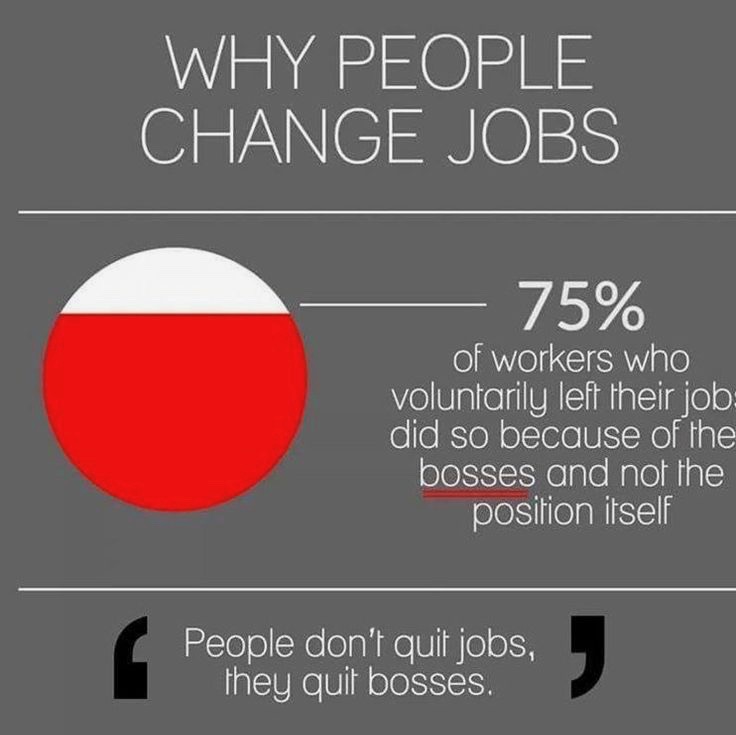
I read a statistic that 75% of people who voluntarily left their jobs did so because of a problem with their boss. In other words, 3-out-of-4 people didn’t quit their job, they quit their boss. In my personal experience this is equally as true in the church world—Most people don’t quit their church, they quit a bad pastor.

Sadly, those who do quit their church usually do so the wrong way. As a result they become either de-churched (they don’t attend anywhere), or cynical in the next church they do attend.

Who is a bad pastor?

  • One who is no longer effective because he is stuck in an old way of doing things
  • One who is theologically off
  • One who is unwilling to admit an error, ask forgiveness, and make amends
  • One who uses his position to build his kingdom instead of God’s kingdom

We have a great example of how to handle a bad spiritual leader in the story of David and Saul (see 1 Samuel 24). David had done nothing wrong, yet Saul was trying to kill him. At one point David’s men urged David to take matters into his own hands, and he almost did. He got close enough to Saul to cut off a corner of his robe, but quickly discovered that was too close. Immediately after doing so David was conscience-stricken!

Then look how David responded:

  • David rebuked his men as he reminded them that Saul was their “master” and “the Lord’s anointed.”
  • David “bowed down and prostrated himself” before Saul as he apologized.
  • David called him his “master,” “father,” and “the Lord’s anointed.”
  • David said he would leave the matter in God’s hands, allowing God to “judge between you and me.”
  • And twice David declared, “My hand will not touch you!”

This humble reply got Saul’s attention. Saul wept as he said, “You have treated me well, but I have treated you badly.” Saul then asked David to be kind to his descendants.

Then this conclusion—David gave Saul his oath, and then went away to a safe place.

The New Testament captures these same ideas for today’s Christians. We are told not to lightly entertain an accusation against spiritual leaders (1 Timothy 5:19), but to submit and obey to biblically-correct leaders (Hebrews 13:17).

The Bible gives us only two options for dealing with spiritual leaders…

SUBMIT & OBEY or WALK AWAY

Two wrongs don’t make a right. Responding in an unscriptural way to an unscriptural pastor’s way is just as wrong as what the pastor was doing wrong in the first place!

So give the bad pastor your oath that you will not lay a hand (or a word!) on them, and then remove yourself to a safe place. Submit and obey, or walk away and leave them in God’s capable hands.

If you’ve missed any messages in this series, you may find the complete list by clicking here.

12 More Quotes From “Chase The Lion”

chase-the-lionI loved Chase The Lion by Mark Batterson! If this book doesn’t inspire you to do great things for God, I’m not sure what will. Be sure to check out my review of this book by clicking here, and then enjoy some more quotes from this amazing book.

“You may doubt yourself because of your lack of education or lack of experience. But if God has called you, you aren’t really doubting yourself. You’re doubting God. God doesn’t call the qualified. God qualifies the called.”

“An opportunity isn’t an opportunity if you have to compromise your integrity. It’s the decisions when no one is looking that will dictate your destiny. In fact, your integrity is your destiny! Killing Goliath was an epic act of bravery. Not killing Saul was an epic act of integrity.”

“One of the most important decisions you make every single day is what time you set your alarm to go off.”

“God doesn’t promise us happily ever after. He promises so much more than that—happily forever after.”

“In God’s kingdom the outcome isn’t the issue. Success isn’t winning or losing; it’s obeying. … In God’s book success is spelled stewardship. It’s making the most of the time, talent, and treasure God has given you. It’s doing the best you can with what you have, where you are.”

“Just as courage is not the absence of fear, success is not the absence of failure. Failure is a necessary step in every dream journey.”

“Fighters don’t walk away when the going gets tough; they fight to the finish for their convictions. Fighters don’t give up when everyone is against them; they fight against the status quo. And fighters don’t shrink back when the odds are against them; they fight for what they believe in.”

“It’s okay to talk to God about your problems, but at some point you have to flip the script. You need to talk to your problems about God.”

“Valor is less an action and more a reaction. If you judge a person by his or her actions, you’re judging a book by its cover. Reactions are far more revealing than actions. How you react in difficult circumstances is the litmus test of character. And you never really know how you’ll react until you’re the one who crosses paths with a lion. Valor is running toward trouble when everyone else is running away. Valor is going above and beyond the call of duty. Valor is putting yourself in the line of fire for someone else.”

“You know why some of us have never killed the giant, chased the lion, or walked on water? We’re afraid of looking foolish. But it’s the fear of looking foolish that is foolish!”

“Sometimes the circumstances we’re trying to change are the very circumstances God is using to change us. … Instead of expending all your energy trying to get out of them, get something out of them.”

“Don’t be in such a hurry to begin the next chapter of your life that you fail to ace the lessons the current chapter is trying to teach you.”

You can check out the first set of quotes I shared from Chase The Lion by clicking here. And be sure to follow me on Tumblr and Twitter, where I daily share quotes from all sorts of inspirational authors.