Seeking God

…David sought the face of the Lord… (2 Samuel 21:1). 

בָּקַשׁ פָּנִים יְהֹוָה

The Hebrew phrase is baqash paniym YHWH: 

  • baqash is to ask for, beg, desire “specifically in worship or prayer.” It’s a “searching as done by touching.” 
  • paniym literally means the face, but it carries the idea of being in someone’s presence.
  • YHWH (Yahweh) is Jehovah God. 

David repeatedly asked, sought, and begged through both prayer and worship that he might be in God’s presence. “Almighty God, I want to be with You. I want to know your heart intimately. I want to see Your face. I’m not seeking help from any other source, but I am resolutely seeking You alone.” 

Perhaps Jesus had this in mind when He told us, “Keep on asking, keep on seeking, keep on knocking. You will get an answer, you will find what you’re seeking, the door to God’s presence will be opened to you. Your Father—YHWH, God Almighty—longs to reveal Himself to you.” 

Q: How long did David seek the face of the Lord? 

A: Until God spoke, until God delivered, until God opened the door. 

Q: How long am I willing to keep on seeking the face of the Lord? 

A: I hope I can say until God speaks, until God delivers, until God opens the door.

Thursdays With Spurgeon—Stick To The Revealed Word Of God

This is a weekly series with things I’m reading and pondering from Charles Spurgeon. You can read the original seed thought here, or type “Thursdays With Spurgeon” in the search box to read more entries.

Stick To The Revealed Word Of God

Remember your leaders, who spoke the Word of God to you. Consider the outcome of their way of life and imitate their faith. Jesus Christ is the same yesterday and today and forever. Do not be carried away by all kinds of strange teachings. It is good for our hearts to be strengthened by grace, not by eating ceremonial foods, which is of no benefit to those who do so. (Hebrews 13:7-9) 

     From the connection it is evident that our text refers to the teaching of Christ, who is ‘the same yesterday, today, and forever.’ This is not according to the so-called development folly. Theology, like every other science, is to grow, watered by the splendid wisdom of this enlightened age, fostered by the superlative ability of the gentlemen of light and leading of the present time, so much superior to all who came before them! 

     We think not so, brothers and sisters, for the Lord Jesus Christ was the perfect revelation of God. … In previous ages, God has spoken to us by His prophets, but in these last days He has spoken to us by His Son [Hebrews 1:1-2]. Now as to that which was a complete revelation, it is blasphemous to suppose that there can be any more revealed than has been made known in the Person and work of Jesus Christ, the Son of God! … And as He shuts up the book that contains the written revelation, He bids you never dare to take from it, lest He should take your name out of the Book of Life! And never dare to add to it, lest He should add to you the plagues that are written in this book [Revelation 22:18-19]!

From The Unchangeable Christ 

BEWARE when someone tells you they have discovered some new revelation from God that they—and they alone—have uncovered. God’s Word doesn’t need anyone’s “help.” 

But DO pray before you read the Bible to ask the same Holy Spirit that inspired the Word of God to now illuminate it to your mind as you read and study. 

(P.S. Oswald Chambers had some sobering words about false prophets.)


Interrupt Your Anxious Thoughts

Listen to the podcast of this post by clicking on the player below, and you can also subscribe on Apple or Spotify.

David taught us how to pray after we’ve been stabbed in the back. Aren’t you glad that you can pray this prayer just once and everything is all better?! 

Oh, wait. It doesn’t really work that way, does it? At least it hasn’t for me. After I’ve been hurt, it takes quite a while to get to a place of healing. We have cliches for this sort of thing—phrases like “Once bitten, twice shy” and “Fool me once, shame on you; fool me twice, shame on me.” 

We begin to react to the past instead of reflecting and responding in the present.  

It’s interesting that those who compiled the Psalter placed Psalm 55 where they did. There is no introduction that gives us a background or setting, but David still seems to be looking for those “Ziphites” that betrayed him to King Saul. 

Here’s an important physiological and psychological truth: Our brains cannot tell the difference between a real threat and an imagined threat. Our physical bodies react the same way in response to any threat. 

It’s interesting to note that both Selahs in Psalm 55 are in the middle of a sentence, almost as if David is interrupting his own thoughts. Which, I believe, is exactly what he’s doing. 

As this psalm opens David is still praying, but he’s praying about his internal threats: 

  • my thoughts trouble me 
  • I am distraught 
  • I notice the conversations and the stares of potential enemies  
  • my heart is in anguish 
  • I feel like terrors of death, fear and trembling, and horror are closing in on me! 

This leads to David’s fight/flight response (although really, it’s his flight response): “Oh, that I had the wings of a dove! I would fly away and be at rest—I would flee far away and stay in the desert.

David has been listening to himself, and he finally at least attempts to put a halt to these distressing thoughts with his first Selah—which means “pause, and calmly think of that.” 

Most of our natural reactions are driven by fear. But fear—by its very nature—is limiting. Fear keeps us tunnel-visioned on the perceived threat. Fear closes us off to accepting any new information. Fear limits our creative responses. Fear perpetuates more fear. 

So David tries a second time to Selah. He is attempting to interrupt his negative thoughts—to stop listening to himself and start talking to himself. To move from a self-preserving reaction to a God-glorifying response requires a Selah pause to reflect. Reflecting on things like:

  • Where will these thoughts ultimately take me? 
  • How has God responded before? 
  • What does God’s Word say? 
  • Could I imagine Jesus responding the way I’m responding? 
  • What changes can I make? 

I love David’s conclusion: “But as for me, I TRUST IN YOU.” He’s saying, “I’m not going to listen to those negative fears anymore. It’s time to put my trust in God.”  

David had to do this “evening, morning, and noon”—again and again and again! Until finally he could say, “I will cast all my cares on the Lord and He will sustain me; He will never let me fall” (Psalm 55:22). 

This is what Jesus promises us, “Come to Me, all of you who are tired and have heavy loads, and I will give you rest” (Matthew 11:28). 

If you’ve missed any of the messages in our Selah series, you can access them all by clicking here. 

Thursdays With Spurgeon—Thoughtful Meditation And Application

This is a weekly series with things I’m reading and pondering from Charles Spurgeon. You can read the original seed thought here, or type “Thursdays With Spurgeon” in the search box to read more entries.

Thoughtful Meditation And Application

Remember your leaders, who spoke the word of God to you. Consider the outcome of their way of life and imitate their faith. Jesus Christ is the same yesterday and today and forever. (Hebrews 13:7-8) 

     Observe, then, that God’s people are a thoughtful people. If they are what they are to be, they do a great deal of remembering and considering. … I wish, in these days, that professing Christians remembered and considered a great deal more, but we live in such a flurry, hurry, and worry, that we do not give time for thought. …  

     Our great Master never aimed at originality—He said that He did not even speak His own words, but the words that He had heard of His Father [John 12:49]. He was docile and teachable. As the Son of God and the Servant of God, His ears were open to hear the instructions of the Father, and He could say, ‘I always do those things that please Him’ (John 8:29). … 

     There is no difference whatever in the relationship of the Lord Jesus Christ to His people at this time! He is just as ready to comfort us tonight as He was to comfort those with whom He dwelt when here below! Sister Mary, He is as willing to come down to your Bethany and help you in your sorrow about Lazarus as He was when He came to Martha and Mary whom He loved! Jesus Christ is just as ready to wash your feet, my brother, after another day’s weary travel through the foul ways of this world. He is as willing to take the basin and the towel and to give us a loving cleansing as He was when He washed His disciples’ feet! Just what He was to them, He is to us! Happy is it if you and I can truly say, ‘What He was to Peter, what He was to John, what He was to Magdalene, that is Jesus Christ to me—the same yesterday, today, and forever.’ 

From The Unchangeable Christ 

If Charles Spurgeon thought the 19th century was a time of “flurry, hurry, and worry,” what adjectives might describe the supersonic, multi-tasking, get-everything-done-now 21st century?! 

Today, more than ever, we need to take time to reflect on God’s Word. Read it slowly. Put yourself in the story. What would you have observed if you were there? What would you have felt? Look around at the others who were there: how would they have perceived what was happening? 

You don’t meditate on God’s Word so that you can find something original, but you meditate so that the Holy Spirit can reveal the original truths that are already there! The Holy Spirit can show you how to apply the Bible to your life, if you will only slow down to give Him time to do so. 

Don’t race through your Bible reading time—slow down and take it all in. Then let the Holy Spirit work out what He has helped you put in your heart and mind.


Thursdays With Spurgeon—A Christian’s Waiting Activity

This is a weekly series with things I’m reading and pondering from Charles Spurgeon. You can read the original seed thought here, or type “Thursdays With Spurgeon” in the search box to read more entries.

A Christian’s Waiting Activity

They were looking intently up into the sky as He [Jesus] was going, when suddenly two men dressed in white stood beside them. “Men of Galilee,” they said, “why do you stand here looking into the sky? This same Jesus, who has been taken from you into heaven, will come back in the same way you have seen Him go into heaven.” (Acts 1:10-11)

     Despisers tell us nowadays, ‘Your cause is done for! Christianity is spun out! Your divine Christ is gone! We have not seen a trace of His miracle-working hands, nor of that voice that no man could rival.’ Here is our answer: We are not standing gazing up into heaven. We are not paralyzed because Jesus is away. He lives, the great Redeemer lives, and though it is our delight to lift up our eyes because we expect His coming, it is equally our delight to turn our heavenly gazing into an earthward watching and to go down into the city and there to tell that Jesus is risen, that men are to be saved by faith in Him, and that whoever believes in Him will have everlasting life! We are not defeated! Far from it—His ascension is not a retreat, but an advance! His tarrying is not for lack of power, but because of the abundance of His long-suffering. …  

     It is clear that He has not quit the fight nor deserted the field of battle. Our great Captain is still heading the conflict! He has ridden into another part of the field, but He will be back again, perhaps in the twinkling of an eye [Revelation 22:12; Matthew 25:21]. … 

     Brothers and sisters, do not let anybody spiritualize away all this from you! Jesus is coming as a matter of fact—therefore go down to your sphere of service as a matter of fact. Get to work and teach the ignorant, win the wayward, instruct the children, and everywhere proclaim the sweet name of Jesus! … Jesus is not coming in a sort of mythical, misty, hazy way. He is literally and actually coming—and He will literally and actually call upon you to give an account of your stewardship. Therefore now, today, literally not symbolically, personally and not by deputy, go out through that portion of the world that you can reach and preach the gospel to every creature according as you have opportunity, for this is what the men in white apparel meant—be ready to meet your coming Lord. … 

     If you would meet Him with joy, serve Him with earnestness! 

From The Ascension And The Second Advent Practically Considered

Jesus was about His Father’s business the whole time He was on earth. As He ascended to heaven, He promised us His authority and the empowerment of the Holy Spirit so we too could be about our Father’s business. 

In one of His parables about stewarding our Master’s gifts and resources until He returned, Jesus said, “Occupy until I return” (Luke 19:13). I love Spurgeon’s remind: “If you would meet Him with joy, serve Him with earnestness!” 

Yes, we are waiting for Jesus to return, but our waiting is an active waiting. With one eye toward the heavens and one eye toward earth, we actively tell others about our soon returning King. Occupy! Stay active! Stay alert! Meet Him with joy! 

Thursdays With Spurgeon—When A Natural Action Becomes A Disobedient Inaction

This is a weekly series with things I’m reading and pondering from Charles Spurgeon. You can read the original seed thought here, or type “Thursdays With Spurgeon” in the search box to read more entries.

When A Natural Action Becomes A Disobedient Inaction

They were looking intently up into the sky as He [Jesus] was going, when suddenly two men dressed in white stood beside them. “Men of Galilee,” they said, “why do you stand here looking into the sky? This same Jesus, who has been taken from you into heaven, will come back in the same way you have seen Him go into heaven.” (Acts 1:10-11)

     Hearts are not to be argued with. Sometimes you stand by the grave where one is buried whom you dearly loved—you go there often to weep. You cannot help it; the place is precious to you, yet you could not prove that you do any good by your visits. Perhaps you even injure yourself thereby and deserve to be gently chided with the question, ‘Why?’ It may be the most natural thing in the world, and yet it may not be a wise thing. The Lord allows us to do that which is innocently natural, but He will not have us carry it too far, for then it might foster an evil nature. Therefore He sends an interrupting messenger…. 

     Notice, then, that the apostles were doing that which seemed to be right and what was evidently very natural, but that it is very easy to carry the apparently right and the absolutely natural too far. Let us take heed to ourselves and often ask our hearts, ‘Why?’ … We may, under the influence of great love, act unwisely. … The apostles would be wise to cease gazing, for nobody would be benefited by it, and they would not themselves be blessed. … 

     If you have a command from God to do a certain thing, you need not inquire into the reason of the command. It is disobedient to begin to canvas God’s will. But when there is no precept whatever, why persevere in an act that evidently does not promise to bring any blessing?

From The Ascension And The Second Advent Practically Considered

Faith requires action (see James 2:14-26). Feelings may keep us inactive, or at the very least may make us feel active because we are “doing that which seemed to be right and what was evidently very natural.” 

Our natural emotional response may keep us inactive from the thing God has commanded us to do. In the case of these apostles, Jesus commanded them not to leave Jerusalem, but wait there for the baptism in the Holy Spirit. Their standing and gazing—though it seemed right and natural at first—was bordering on disobedience through omission. So God sent angels to ask, “Why are you still doing this? What will your continual gazing ultimately accomplish?” 

God still speaks those words to us today. Sometimes it’s through the prompting of the Holy Spirit and sometimes it’s through the loving voice of a friend: “What are you doing? This may have been right at first, but now it is keeping you inactive.” There is so much God wants to do through your life, but He cannot do it while you are standing still and gazing.


More Of Christ

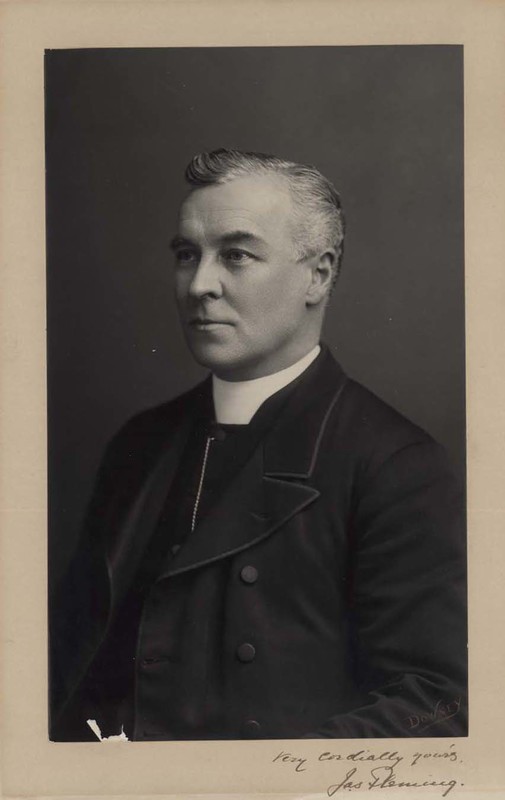
“Preacher and people, we need more of Christ. More of Christ would make that sad home bright, that wavering soul steadfast, that breaking heart happy, that mourning spirit glad, that burdened conscience light, that selfish nature generous, and make those who are parted in enmity stand with clasped and forgiving hands. More of Christ would smite down sectarian walls and win outcasts to the fold. More of Christ is what we all want in our hearts and homes, in our business and politics, in our schools and universities, in our churches and pulpits.” —Canon James Fleming

‘Tis I, Be Not Afraid

Tossed with rough winds, and faint with fear, 
Above the tempest, soft and clear, 
What still small accents greet mine ear?
“‘Tis I; be not afraid.”

“‘Tis I who led thy steps aright; 
‘Tis I who gave thy blind eyes sight; 
‘Tis I, thy Lord, thy Life, thy Light. 
‘Tis I; be not afraid.

“This bitter cup fear not to drink; 
I know it well—oh! do not shrink; 
I tasted it o’er Kedron’s brink. 
‘Tis I; be not afraid. 

“Mine eyes are watching by thy bed, 
Mine arms are underneath thy head, 
My blessing is around thee shed. 
‘Tis I; be not afraid.“

When on the other side thy feet 
Shall rest ‘mid thousands welcomes sweet, 
One well known voice thy heart shall greet. 
“‘Tis I; be not afraid.”

From out the dazzling majesty 
Gently He’ll lay His hands on thee, 
Whispering: “Beloved, lov’st thou Me? 
It was not in vain I died for thee,
‘Tis I; be not afraid.” —Anonymous

Thursdays With Spurgeon—Navel-Gazing?

This is a weekly series with things I’m reading and pondering from Charles Spurgeon. You can read the original seed thought here, or type “Thursdays With Spurgeon” in the search box to read more entries.

Navel-Gazing?

They were looking intently up into the sky as He [Jesus] was going, when suddenly two men dressed in white stood beside them. “Men of Galilee,” they said, “why do you stand here looking into the sky? This same Jesus, who has been taken from you into heaven, will come back in the same way you have seen Him go into heaven.” (Acts 1:10-11)

     It can never be wrong to look up; we are often bid to do so, and it is even a holy saying of the psalmist: ‘My voice you shall hear in the morning, O Lord; in the morning I will direct it to You, and I will look up’ (Psalm 5:3). And again, ‘I will lift up my eyes to the hills—from whence comes my help?’ (121:1). If it is right to look up into heaven, it must be still more right to look up while Jesus rises to the place of His glory! …  

     The truth is, there’s nothing wrong in their looking up into heaven. But they went a little further than looking—they stood gazing. A little excess in right may be faulty. … There is a gazing that is not commendable. This is when the look becomes not that of reverent worship but of an overweening curiosity; when there mingles with the desire to know what should not be known, a prying into that which it is for God’s glory to conceal. … 

     Thus certain things that you and I may do appear right and yet we may need to be chided out of them into something better—they may be right in themselves but not appropriate for the occasion, not seasonable or expedient. They may be right up to a point and then may touch the boundary of excess.

From The Ascension And The Second Advent Practically Considered

The word gazing reminds of another word: navel-gazing. The dictionary defines this as “excessive absorption in self-analysis or focus on a single issue.” This “excessive absorption” is, I believe, what caused the angels to chide the disciples of Jesus.  

Jesus was always on the move. Even His times of rest and recovery were strategic so that He could engage in ministry refreshed and refilled to do spiritual warfare effectively. The Gospels never show us a picture of Jesus wondering what to do next, or concerned about what people thought of Him, or even strategizing over His next ministry opportunities. He was empowered by the Holy Spirit to move forward. 

And this same forward momentum is exactly what Jesus commanded His disciples to undertake. “You will move forward into all the world, telling people about Me, baptizing them, and commissioning them to also be forward-looking to their mission field.” This mission was to be preceded by the baptism in the Holy Spirit, which was a 2-mile walk away from were the disciples were now gazing up into the heavens. 

The angels essentially said, “Your curiosity is on the verge of becoming procrastination. It’s time to head back to Jerusalem to wait for the empowerment that you will need to fulfill the mission on which Jesus sent you.” 

What about us? What “looking” can become unhealthy “gazing” for us? What excuses might we be making for our navel-gazing? What’s keeping us from being on-mission for Jesus? Let’s ask the Holy Spirit to show us where we have anything less than forward momentum for the sake of the Kingdom of God! 

7 Quotes From David Livingstone

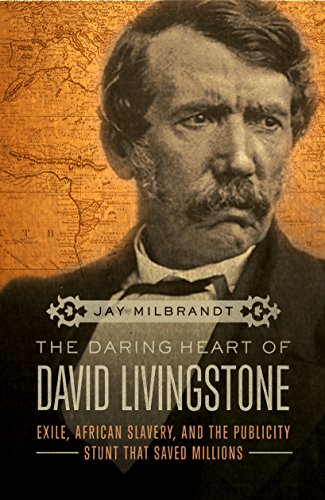
The Daring Heart Of David Livingstone by Jay Milbrandt is an amazing account of this man’s heroic and history-altering life. Check out my full book review by clicking here. Below are a few quotes that Milbrandt shared in his biography. 

“It is something to be a follower, however feeble, in the wake of the great Teacher and only model missionary that ever appeared among men.” —David Livingstone 

“People talk of the sacrifice I have made in spending so much of my life in Africa. Can that be called a sacrifice which is simply paid back as a small part of a great debt owing to our God, which we can never repay? Is that a sacrifice which brings its own blest reward in healthful activity, the consciousness of doing good, peace of mind, and a bright hope of a glorious destiny hereafter? Away with the word in such a view and with such a thought! It is emphatically no sacrifice. Say rather it is a privilege. Anxiety, sickness, suffering, or danger now and then with a foregoing of the common conveniences and charities of this life, may make us pause and cause the spirit to waver and the soul to sink; but let this only be for a moment. All these are nothing when compared with the glory which shall be revealed in and for us. I never made a sacrifice.” —David Livingstone 

“I shall hold myself in readiness to go anywhere, provided it be forward. … Our duty is to go forward … I have observed that people who have sat long waiting have sat long enough before they saw any indication to go.” —David Livingstone 

“As they are experts with the spear I don’t know how it missed, except that he was too sure of his aim and the good hand of God was upon me.” —David Livingstone, after surviving two spears thrown at him during an ambush 

“The Gospels reveal Jesus, the manifestation of the blessed God over all as minute in His care of all. He exercises a vigilance more constant, complete, and comprehensive, every hour and every minute, over each of His people than their utmost selflove could ever attain. His tender love is more exquisite than a mother’s heart can feel.” —David Livingstone 

“If the good Lord permits me to put a stop to the enormous evils of the inland slave-trade, I shall not grudge my hunger and toils. I shall bless His name with all my heart. The Nile sources are valuable to me only as a means of enabling me to open my mouth with power among men. It is this power I hope to apply to remedy an enormous evil [in the East African slave trade]. Men may think I covet fame, but I make it a rule never to read aught written in my praise.” —David Livingstone 

“I am a missionary, heart and soul. God had an only Son, and He was a missionary and a physician. A poor, poor imitation I am or wish to be. In this service I hope to live, in it I wish to die.” —David Livingstone