Pull The Weeds

Listen to the podcast of this post by clicking on the player below, and you can also subscribe on AppleSpotify, or Audible. 

When looking at the growth of Jesus, Luke says first that “Jesus grew in wisdom” (Luke 2:52), which is our indication that a healthy mind is the foundation for every other aspect of health. 

The first mental health strategy we learned was asking the Holy Spirit to help us see a new path. Instead of thoughtlessly, automatically allowing our minds to go down the well-worn paths they have always gone down before, the Spirit of Truth can help us see a new path. Let me share our second strategy with you. 

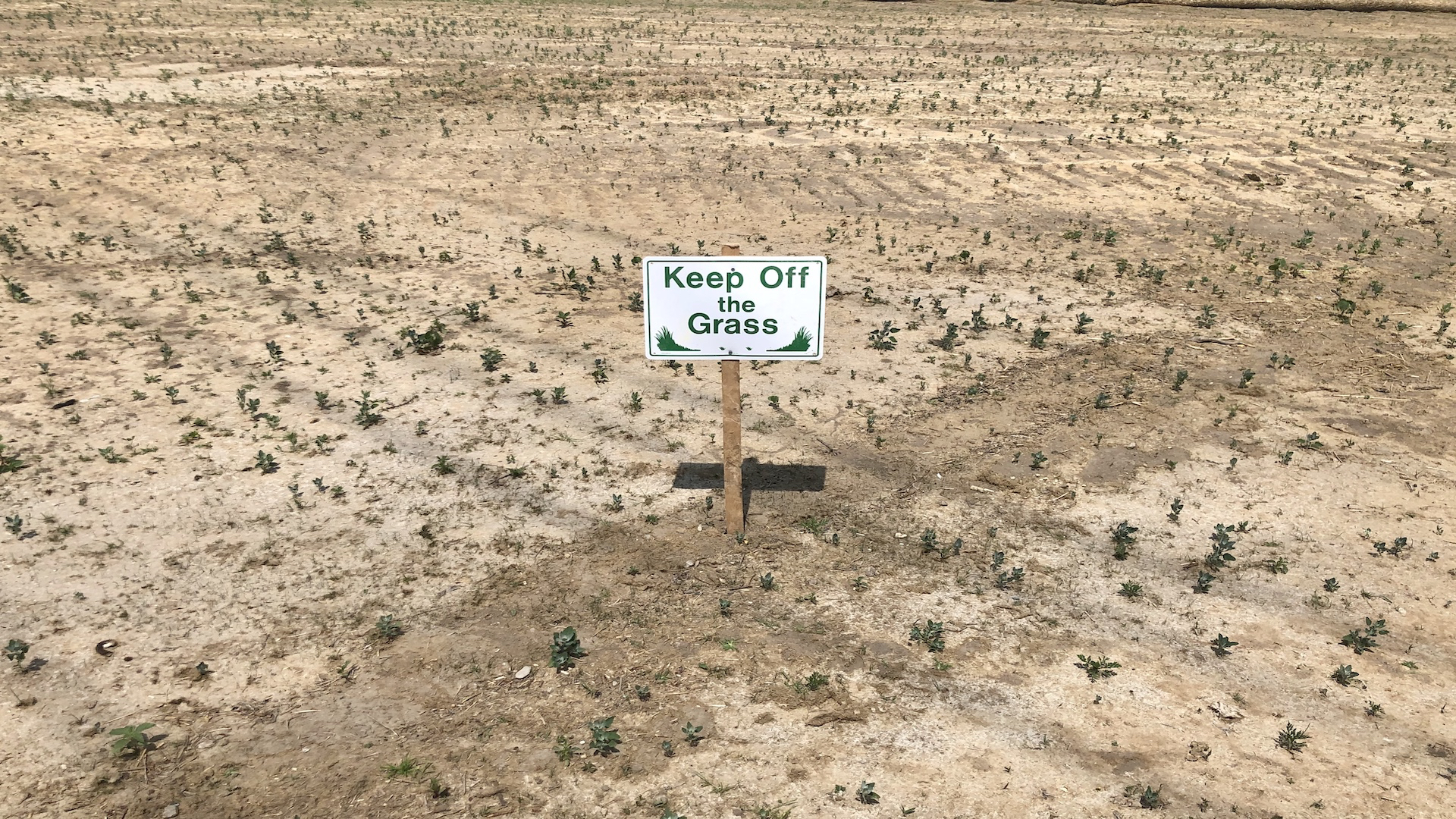
My wife and I had traveled to a neighboring community and when we got out of our car we saw an unusual sight. First of all, there was dirt and a few weeds where there used to be grass, and then there was this sign in the middle of that dirt field: Keep off the grass. That seemed like really wishful thinking to me! I may not have a green thumb—truthfully I probably have a “black thumb” when it comes to keeping plants alive—but I know enough to say that their grass wasn’t going to grow without a lot of effort. 

Weeds grow by apathy, they are removed with continual effort. Fruit-bearing plants grow by careful attention, fertilization, and pruning. So if we don’t put in any effort at all, it’s the same thing as fertilizing the weeds. 

Solomon made this observation: I went past the field of a sluggard, past the vineyard of someone who has no sense; thorns had come up everywhere, the ground was covered with weeds and the stone wall was in ruins (Proverbs 24:30-31). 

Without effort on our part, weeds take over, sap the nutrients, and take up the space that could be used for fruit-bearing plants. 

Jesus talked about this in His parable of the sower

A farmer went out to sow his seed. As he was scattering the seed, some fell along the path, and the birds came and ate it up. Some fell on rocky places, where it did not have much soil. It sprang up quickly, because the soil was shallow. But when the sun came up, the plants were scorched, and they withered because they had no root. Other seed fell among thorns, which grew up and choked the plants. Still other seed fell on good soil, where it produced a crop—a hundred, sixty or thirty times what was sown. (Matthew 13:3-8)

When Jesus says that the thorns grew up and choked the plants, He uses a Greek word that means overwhelmed or suffocated. It’s the same word that is translated as drowning (see Luke 8:33). What weeds do to our gardens, weed thoughts do to our minds. 

We all know that when we see a weed pop up above the ground, there is a root below the ground that is supporting it. The sooner we pull that weed, the more likely we are to remove the troublesome root as well. 

What about our minds? What are the roots? Jesus identified the roots this way: For out of the heart come evil thoughts—murder, adultery, sexual immorality, theft, false testimony, slander (Matthew 15:19). Jesus taught that we murder, commit adultery, lust, and slander in our hearts long before it ever happens in our words or physical actions. 

So when a “weed word” pops out, what do we do? If we do nothing, we fertilize that weed. If we ignore it, we allow that weed to strengthen its hold and begin to choke out the fruitful plants. If we simply say, “Oops, that was a slip of the tongue; I’ll do better to control it next time,” we haven’t pulled the weed, but we’ve fertilized it. 

Remember that weeds flourish by apathy, but fruitfulness requires effort.

Back in the parable of the sower, what is the difference between the seed among weeds and the seed in fertile soil? It’s simply the presence of weeds or thorns! If we allow the Holy Spirit to help us pull the weeds, we’ve increased the amount of ground that can be fruitful and produce a crop—a hundred, sixty or thirty times what was sown. 

Jesus concludes by reminding us that our ears need to hear—we need to hear His words, and we need to hear our own weed words that don’t align with His words. Then we have a choice: apathetically let the weeds remain, or allow them to be pulled up. 

Allow me to share my paraphrase of a passage in Hebrews 12—
My son, do not make light of the Lord’s pruning, and do not lose heart when He weeds your mind, because the Lord prunes the one He loves, and He weeds the garden of everyone He accepts as His son so they can be more fruitful. (my paraphrase of Hebrews 12:5-6)

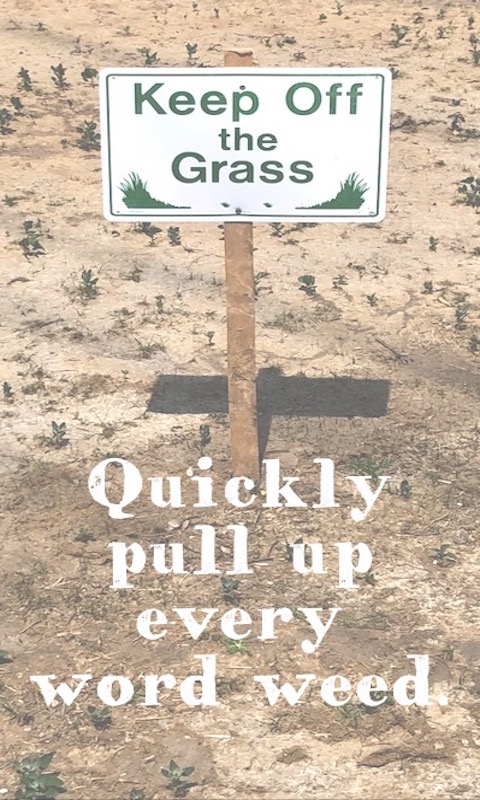
Our mental health matures when we acknowledge the word weeds we are shown, and then quickly allow the Father to prune those. The Holy Spirit can continue to help us weed the soil of our minds so that it remains a fertile growing place for the seed of God’s Word. By doing this, we will grow in God-pleasing fruitfulness. 

If you would like to download the graphic of this reminder for your phone, simply leave me a comment with the model of the phone, and I’ll get the right-sized graphic right out to you. And if you missed the first message in this series, you can review that lesson by clicking here. 

►► Would you please prayerfully consider supporting this ministry? My Patreon supporters get behind-the-scenes access to exclusive materials. ◀︎◀︎

Links & Quotes

Pastors, on Monday morning, as you debrief how things went on Sunday, if you are feeling a bit discouraged, I want you to consider something Jesus said. Your success in ministry is not exclusively seen in the harvest you reap, but in the seeds you are sowing. Keep sowing good seed faithfully and then let God help it grow.

Many people turn to pornography when they are feeling bad about themselves. Sadly, watching porn can actually diminish a person’s self-esteem. Check out this post from Fight The New Drug.

“We ought above all things to desire a heavenly happiness; to be with God and dwell with Jesus Christ. Though surrounded with outward enjoyments, and settled in families with desirable friends and relations; though we have companions whose society is delightful, and children in whom we see many promising qualifications; though we live by good neighbors, and are generally beloved where known; we ought not to take our rest in these things as our portion. We should be so far from resting in them, that we should desire to leave them all, in God’s due time. We ought to possess, enjoy and use them, with no other view but readily to quit them, whenever we are called to it, and to change them willingly and cheerfully for heaven.” —Jonathan Edwards

“Jesus didn’t preach to tell you to turn over a new leaf, but to turn you to a new life.” —Reinhard Bonnnke

Steven Lee has an excellent post entitled Good leaders are easy to follow. I wholeheartedly concur! “A church’s willingness to obey and submit affects the joy and the care they receive from their leaders. But the reverse is true as well. Leaders can lead in a way that makes obedience and submission easy and happy, or difficult and frustrating. Shepherds shape the habits of the sheep.”

T.M. Moore has a series of posts on apologetics, which I encourage you to check out. In one post he writes, “God is not a capricious Deity. He does not act in ways that make it difficult to know Him or His will. His purposes are carefully considered and prudentially engaged, and in such a way that human beings can understand what He is about. … God shows us that He Himself is reasonable in that He makes known Himself and His will in a wide range of rational ways—through types and symbols and teachings and verbal exchanges of many different sorts. Anyone who takes the time to read the Bible can understand it. Its stories are stories about people like us. The teachings of Scripture are not shrouded in arcane or mystical language. What God has done and what God requires can be clearly discerned by any reasonable person, because God reveals Himself and His will in terms amenable and accessible to reason.”

Parables 101

Listen to the podcast of this post by clicking on the player below, and you can also subscribe on AppleSpotify, or Audible. 

The disciples of Jesus heard His story and asked Him to explain to them what the parable meant. He said, “Don’t you understand this parable? How then will you understand any parable?” (Luke 8:9; Mark 4:13). 

The parable in question was the one we refer to as the parable of the sower. According to Christ’s own words, this is the most basic and understandable of all of His parables. If this was a college class, this would be Parables 101. 

The kingdom of heaven is so otherworldly, infinite, and utterly beyond a succinct description that even Jesus asked out loud, “What shall we say the kingdom of God is like, or what parable shall we use to describe it?” (Mark 4:30). Then time and time again, Jesus continued to reveal His kingdom with the phrase, “The kingdom of God is like….” 

Before we move on to Parables 201 or Parables 301, let’s make sure we know this most basic parable intimately. According to Jesus, this parable is the key to unlocking the meaning of all of His other parables. Approach this one again as you ask the Holy Spirit to reveal something new to your heart. 

For instance, as I read through this parable again this week I was captivated by those whom Jesus said had shallow roots. It reminded me that I need to temper my teaching with gentleness. If I’m too aggressive or too theologically deep, I may do damage these tender plants. On the other hand, if I’m too timid, I may leave these plants vulnerable to the ravages of disease or the scorching of the sun. Here again, I must rely on the Holy Spirit’s help. The message may be the same, but perhaps my delivery needs to be more appropriate to my audience. 

Let me leave you with this challenge: When was the last time you saw something for the first time in this simplest of parables? If it’s been a while, it may be time for a quick refresher in Parables 101, then you will have the key to go deeper into the other parables. Try it and let me know how it works for you. 

►► Would you please prayerfully consider supporting this ministry? My Patreon supporters get behind-the-scenes access to exclusive materials. ◀︎◀︎
Our Perfect King

Listen to the podcast of this post by clicking on the player below, and you can also subscribe on AppleSpotify, or Audible. 

Our country has a policy of separation of church and state, and that appears to be a good thing. When the head of the government starts telling the church how to worship, or when the head of the church starts telling the government how to run its affairs, strife typically results. 

There have been some notable examples of wise kings who were God-fearing rulers, and some examples of religious leaders who had the wisdom to make just laws. But history has most often shown us that when a king imposes on the church a mode of worship or a pastor imposes on the king religious ways of governing, clashes result. Some of them have been bloody civil wars and some have spread into international conflicts. 

That being said, wouldn’t it be better for everyone if there was a way that one person could hold both of those offices simultaneously? If only there was some way to bring those different offices together. Very few people could ever accomplish this because it would require a perfect person with both absolute wisdom and complete God-honoring selflessness, someone so confident in both their wisdom and their relationship with God that they would never be swayed unfairly one way or the other. 

Last week we saw the first bold claim from Jesus: “I am the I AM.” With this title and authority, Jesus claimed to be the Head of the Church. This is a title Paul uses several times in his letter to the church at Ephesus (Ephesians 1:22, 5:23). Paul goes on to remind us that our aim as the Church body is to grow into maturity under the Headship of Jesus (Ephesians 4:15). 

Consider two other notable rulers during this same time period. As the high priest, Caiaphas would have laid claim to the title of “head of the church.” As the Roman governor, Pilate would have laid claim to the title of “head of the government in Judea.” Yet both of them clearly demonstrated that they had “become the symbol of those who make religious decisions based on political expediency rather than truth and justice,” as Dr. Donald Stamps noted. 

Paul goes father than calling Jesus simply the Head of the Church—

And He [Jesus] is the head of the body, the church; He is the beginning and the firstborn from among the dead, so that in everything He might have the supremacy. (Colossians 1:18) 

Not just Headship over the Church, but Headship over “everything.” 

After the bold claim of Jesus that He was the I AM, the Sanhedrin wanted to have Him put to death, so they took Jesus to Pontius Pilate (Luke 22:71—23:2; Matthew 27:1-2; John 18:28-37). 

Pilate “knew it was out of self-interest that they had handed Jesus over to him” (Matthew 27:18), but he still asked Jesus, “Are You the king of the Jews?” Just as Caiaphas was trying to save his position of power by keeping a delicate balance between the Jews and the Romans, Pilate was also trying to save his skin. Pilate was trying to appease both the Sanhedrin and Tiberius Caesar. 

Jesus answers Pilate’s question in a way Pilate never expected. Twice Jesus says “My kingdom,” noting that His kingdom is other-worldly. His kingdom comes from outside this world and therefore supersedes any government of this world. Pilate clearly has never heard anything like this, so after hearing this statement he announces, “You are a king, then!” 

Just as Jesus had answered the Sanhedrin with, “You are right in saying I am the Messiah,” now He answers Pilate, “You are right in saying I am a king.” 

Combining those two bold claims—“I am God” and “I am a King”—Jesus is the only One who can perfectly hold both offices without any conflict. This is what the prophecy in Isaiah 9:1-7 foretold, and this is the fulfillment that John shows us at the end of time (Revelation 17:14, 19:11-16). 

What does this mean for us? How are we now supposed to live knowing Jesus as our God and as our King? We should live confidently before our King and humbled before our God. We don’t fear earthly kings, but neither do we fight them. We don’t have to try to convince earthly kings to rule a certain way because they are God’s servants to accomplish God’s plan. We don’t have to get caught up in the politics of the day because this day will come to an end. 

We are subjects of a kingdom not of this world, so the kings of this world don’t get to decide our final destiny!

(If you would like to explore this topic further, check out my series of messages from 1 Peter called Aliens and Strangers.)

If you’ve missed any of the messages in our series called Bold Claims, you can find the full list of messages by clicking here. 

►► Would you please prayerfully consider supporting this ministry? My Patreon supporters get behind-the-scenes access to exclusive materials. ◀︎◀︎

The Touch Of Jesus

Listen to the podcast of this post by clicking on the player below, and you can also subscribe on AppleSpotify, or Audible. 

“…He reached out His hand and touched the man…” (Mark 1:41). 

Jesus touched a leper. 

We have to be careful not to rush past this or make too light of this action. Those with leprosy were completely shut out of their old way of life—removed from their homes, from their places of work, and ostracized from their family and friends. Wherever they went, they lived with the shame of having to publicly cry out in a loud voice, “Unclean! Unclean!” so that everyone had a chance to scatter and not become contaminated by getting too close to them. 

But this leper asked Jesus for healing. Jesus touched the untouchable man and healing immediately appeared! Leprosy was gone, and the man was restored to his former life, to his family, to his friends! 

Look at the power of the touch of Jesus:

  • He touches the hand of a woman, and her fever immediately leaves (Matthew 8:15; Mark 1:31)
  • A woman with an incurable bleeding disorder touches Jesus, and immediately receives relief (Matthew 9:20–22; Mark 5:25–34; Luke 8:43–48)
  • Blind eyes are opened (Matthew 9:29–30, 20:34; Mark 8:22–25)
  • All manner of diseases are instantly cured (Matthew 14:35–36; Mark 3:10; 6:55–56; Luke 6:17–19)
  • Fear is banished (Matthew 17:7)
  • A mute tongue is loosed (Mark 7:33–35)
  • Children are blessed (Mark 10:13; Luke 18:15)
  • A dead man is raised back to life (Luke 7:13–15)
  • A severed ear is reattached and restored (Luke 22:50–51)

(Check out all of these verses by clicking here.)

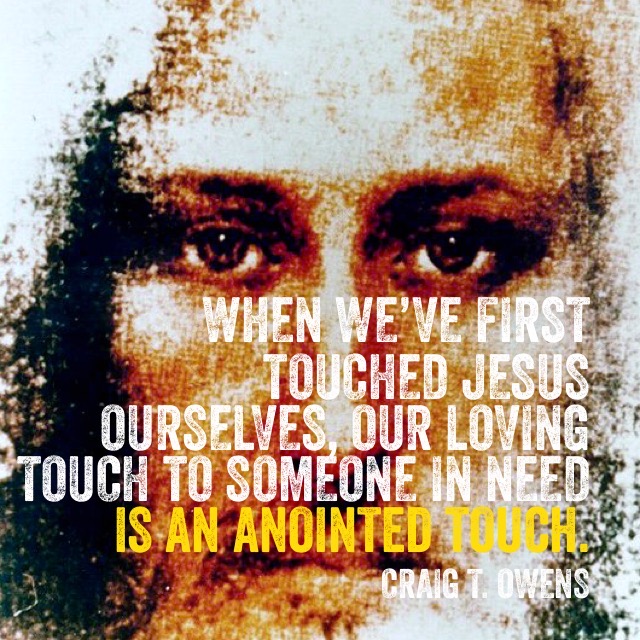
There is a power in touching someone that goes beyond words or any other actions. When we’ve first touched Jesus ourselves, our loving touch to someone in need is an anointed touch.

I am reminded of the words of the old song—

Oh to be His hand extended
Reaching out to the oppressed
Let me touch Him
Let me touch Jesus
So that others will know
And be blessed

My touch alone has very little lasting value. But when I’ve touched Jesus first, my touch carries His power and His love to the one whom I touch. Let us keep touching Jesus so that we can keep touching the untouchables around us and bringing to them the healing and deliverance and blessing that only Jesus can give.

►► Would you please prayerfully consider supporting this ministry? My Patreon supporters get behind-the-scenes access to exclusive materials. ◀︎◀︎
Is My Boldness Clearly Visible?

Listen to the podcast of this post by clicking on the player below, and you can also subscribe on AppleSpotify, or Audible. 

Some people are either afraid to say what they really think, or else they aren’t entirely confident in what they believe. As a result, they tend to take an indirect approach to communicate what they want someone else to hear. 

Some try to imply what they’re really trying to say: “Do you get what I’m saying? Can you read between the lines?” Others hope the other person will infer the right meaning. But bold claims are something completely different—there’s no implying, no hoping the other person will infer the right thing, but just a clear statement. Like Caiaphas’ statement that we looked at last week: “Jesus must die so that the rest of us can keep our cushy positions.” 

You can always tell if the message got through by how the recipients respond. Usually the stronger the reaction, the more clearly the message was received! 

Remember that I talked about the clout that Annas still held, even though he wasn’t officially the high priest anymore? We see it right after the arrest of Jesus. Instead of taking Him directly to the Sanhedrin, He was first taken to Annas. There Jesus was questioned about His followers and His teaching, and He simply replied, “Everything I taught is public knowledge. I’ve boldly and clearly proclaimed Who I am” (John 18:12-14, 19-24). 

All throughout His public ministry, Jesus did make it clear who He was. There are so many places we could read about this in the Gospels, but let me just show you three examples from the Gospel of Luke:

    1. He forgives sins and heals a paralytic to prove that He has the power of God to forgive—Luke 5:20-25 
    2. Demons recognize Him and submit to His power—Luke 8:28-35 
    3. His disciples recognize that Jesus is the Son of God—Luke 9:18-22

(Check out all of the above references by clicking here.) 

Finally, Jesus was asked directly by the Sanhedrin and He made His bold claim that He was indeed the Son of God (Luke 22:66-71). Remember I said earlier that you can tell how clearly the message got through by the response of the people? Well, check out this response—

Then the high priest tore his clothes and said, “He has spoken blasphemy! Why do we need any more witnesses? Look, now you have heard the blasphemy. What do you think?”

“He is worthy of death,” they answered. (Matthew 26:65-66)

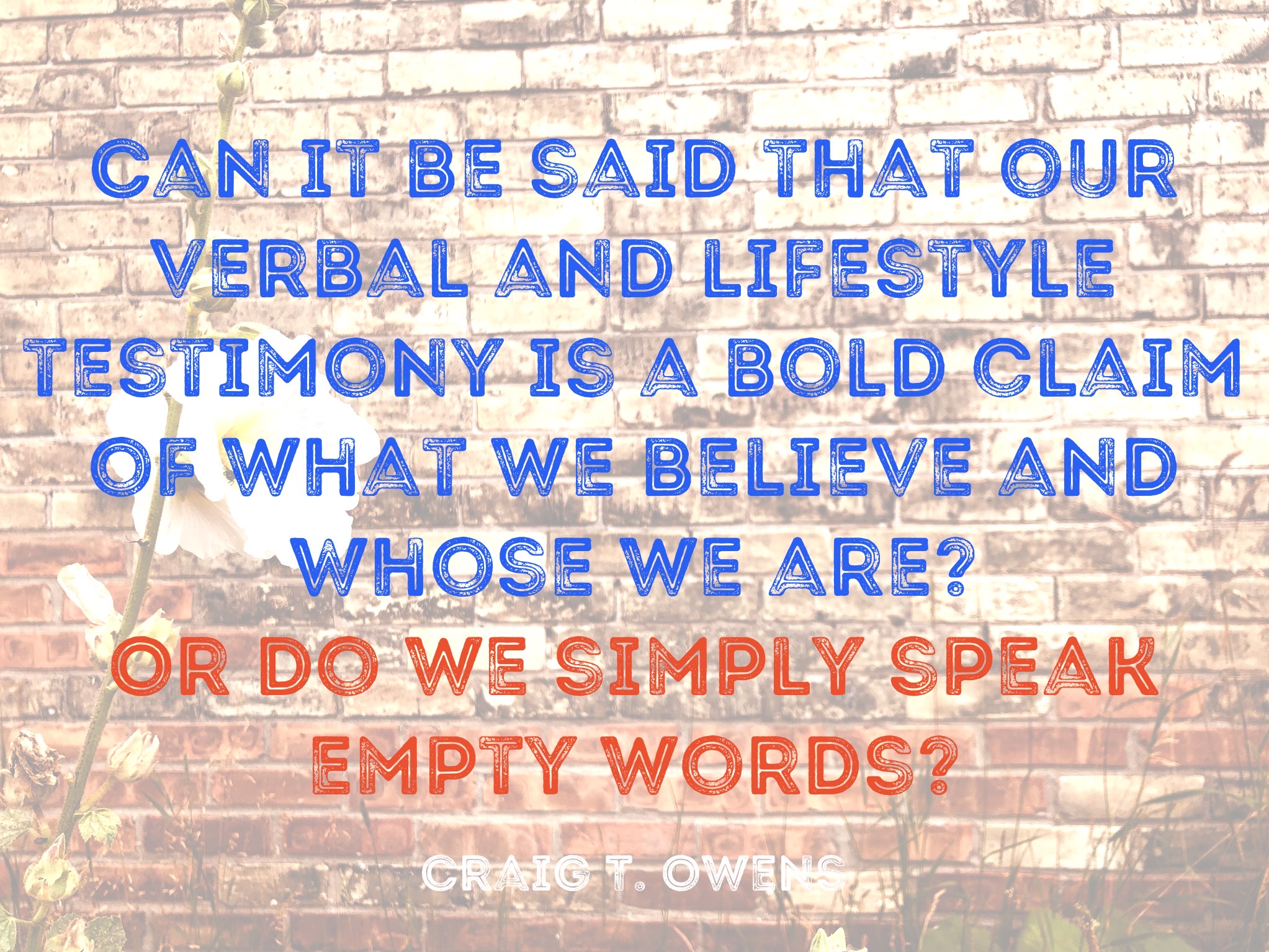
What about you and me? Do we have to imply that we believe Jesus is the Son of God? Do we have to hope the other person will infer that we are His disciples? Or can it be said that our verbal and lifestyle testimony is a bold claim of what we believe and Whose we are? 

The Book of Acts records the response of the Sanhedrin to the first Christians, and it appears to be identical to their response when they heard Jesus say, “I am the Son of God.” For instance: 

  • After Peter and John healed a lame man, the Sanhedrin could see “that these men had been with Jesus” but they ordered them not to talk about Jesus anymore. These men said they could not obey that directive (Acts 4:13-14). 
  • When they were called back in for a second appearance, Luke tells us the Sanhedrin “were furious and wanted to put them to death.” But they persisted in boldly proclaiming Jesus to everyone (Acts 5:30-39). 
  • Then there was an early church leader named Stephen. His bold preaching brought him before the Sanhedrin as well, who ended up stoning him to death (Acts 6:8-10, 15; 7:55-56).

(Check out all of the above references by clicking here.)

So let me repeat the question: Can it be said that our verbal and lifestyle testimony is a bold claim of what we believe and Whose we are? Or do we simply speak empty words? 

Jesus made His bold claim and He backed it up. What about us? Do we make the bold claim that we will stand for Jesus even if that means we will be ridiculed, persecuted, or killed? Is our bold claim backed up by a lifestyle of complete trust in our Savior? These are questions every Christian should ask and allow the Holy Spirit to help them answer honestly. 

If you’ve missed any of the messages in our series called Bold Claims, you can find them all by clicking here. 

►► Would you please prayerfully consider supporting this ministry? My Patreon supporters get behind-the-scenes access to exclusive materials. ◀︎◀︎
Proof!

Listen to the podcast of this post by clicking on the player below, and you can also subscribe on AppleSpotify, or Audible. 

Some of the resources I mention in this video:

►► Would you please prayerfully consider supporting this ministry? My Patreon supporters get behind-the-scenes access to exclusive materials. ◀︎◀︎

When “The End” Is Just The Beginning

Listen to the podcast of this post by clicking on the player below, and you can also subscribe on AppleSpotify, or Audible. 

We’ve all heard people make some audacious claims. But the real power is in being able to back up those claims. Without any proof, it’s all talk! As things were coming to a conclusion for Christ’s ministry—at least in the world’s eyes—there were some bold claims being made. Some were made by Jesus Himself, some by His rivals, and some by His supporters. 

The first bold claim we’re going to consider was made by the high priest: a man named Joseph Caiaphas. 

The Sanhedrin was the highest court in the land and was made up of 70 + 1 men. This comes from Numbers 11:16-17 (seventy leaders) plus Moses. After Moses, another person was always appointed to serve as the leader, which was usually the high priest. 

By the time of Jesus, this ruling body had become more political than religious. Very frequently, leadership would change because of the whims of the Romans or their puppet leaders (someone like a King Herod). The high priest in Christ’s early years was a man named Annas, who served from AD 6-15. During all of the public ministry of Jesus, the high priesthood had transferred to Caiaphas (AD 18-36), who was Annas’ son-in-law. Yet both of them still shared considerable influence (see Luke 3:2; John 18:13, 24; Acts 4:6). 

Caiaphas and his family were Sadducees. They didn’t hold to any beliefs of the supernatural—no angels or demons, no resurrection, no afterlife. Partly because of these unscriptural beliefs, the Jewish Qumran, who safeguarded the careful copying of the Scriptures, called Caiaphas “the wicked priest.”

Annas, Caiaphas, and their family member were the ruling party that wanted to stay in power. So their activities were always a balancing act: Trying to keep the Jewish community happy on one hand, while not offending the Romans or other political leaders on the other hand. 

It’s with this backdrop that we read the story of Lazarus’ resurrection in John 11. Jesus knew this miracle would validate His ministry, and sure enough, after the resurrection of Lazarus, more and more people put their faith in Jesus. So much so that the religious leaders wanted to kill both Jesus and Lazarus (11:53; 12:9-11). 

Ironically, these same religious leaders had previously asked Jesus for a sign to prove He was who He made the bold claim to be. To this demand, Jesus said that He would give them “the sign of Jonah” who was considered dead in the belly of the fish before he was “resurrected” to complete his mission (Matthew 12:38-40, 16:1-4). 

Since the religious leaders viewed everything through a political lens, they thought Jesus was also going to instigate a political or military uprising. The following that Jesus would gather would challenge the Sanhedrin’s hold on power, so Caiaphas proposed a political solution disguised as a prophecy (John 11:49-53). 

Caiaphas meant it like this: “We’re trying to keep the balance between the Jewish people and the powerful Romans. If we kill one Man (Jesus) in time, we may be a little out of favor with the Jews but we will save our position with the Romans. Later on, we’ll make things right with the common people.” 

Even to this day, people are trying to balance, juggle, control, appease, and bargain their way to get or keep the life they want to live. They will use religious dressing to do political things, thinking they will “make it right” later on. 

Caiaphas made this bold claim: “If Jesus dies, our position will be saved for us and our children.” But he had no power to back up his bold claim, so it was just talk. 

But Jesus made this bold claim: “I will die so that your souls can be saved for eternity.” He, on the other hand, had the power to back up His bold claim (John 10:17-18). 

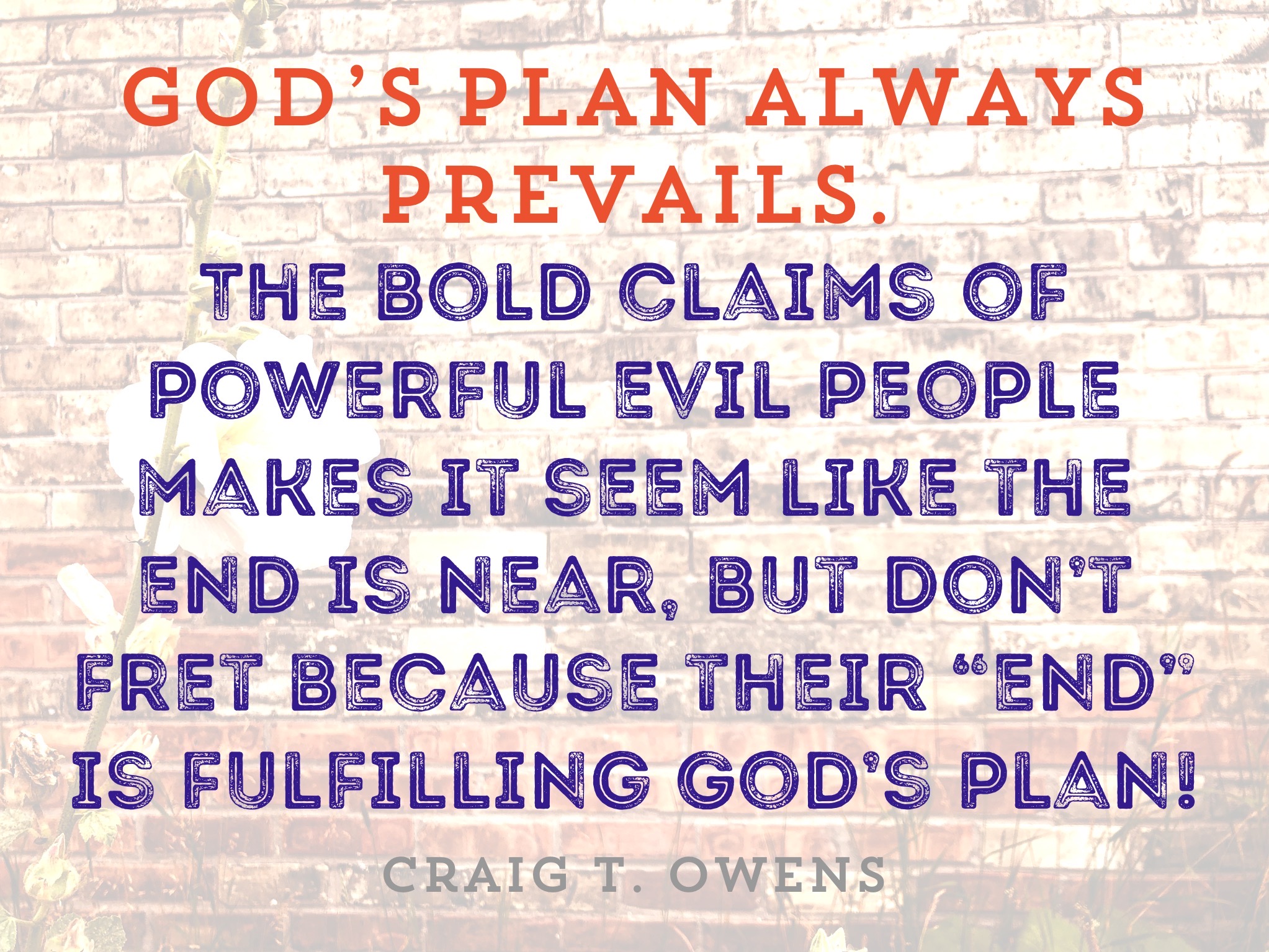
God’s plan always prevails! 

Caiaphas’ plan sounded like it would be the end of Jesus and His mission, but “the end” was really just another step in fulfilling what God had already planned! 

Let me say it again: God’s plan always prevails. The bold claims of powerful evil people may make it seem like the end is near, but don’t fret because their “end” is only fulfilling God’s plan! 

If you’ve missed any of the messages in this series of Bold Claims, you can check them all out by clicking here. 

►► Would you please prayerfully consider supporting this ministry? My Patreon supporters get behind-the-scenes access to exclusive materials. ◀︎◀︎
Bold Claims

“That’s a pretty bold claim. Are you prepared to back that up?” 

I’ll bet you have heard something like that said to you, and maybe you have even said that yourself to someone else who made a big, audacious statement. 

After Jesus is arrested by the religious leaders—an arrest that will ultimately lead to Jesus being crucified on the Cross—there are some incredibly bold claims spoken by key people in this part of the Story. For the most part, these are claims that we don’t read earlier in any of the Gospels, but as this story is heading toward its most crucial moment, we have these audacious statements pronounced. 

But here’s the most important part: These bold claims weren’t just made, but they were backed up with proof as well. 

As we head toward the remembrance of Christ’s death on the Cross and His resurrection three days later, please join us for this look at these eye-opening bold claims. I would love to have you join us in person, but if you are unable to do that, we will make all of the messages available on Facebook and YouTube. If you’ve missed any of the messages, or simply want to review what we’ve already learned, you can find all of these messages here:

Preaching To Bring Freedom

Listen to the podcast of this post by clicking on the player below, and you can also subscribe on AppleSpotify, or Audible. 

The biblical references I mention in this video:

If you are a pastor (or if you really want to encourage your pastor), I’ve got a super-special deal on my book Shepherd Leadership. Check it out by clicking here. 

►► Would you please prayerfully consider supporting this ministry? My Patreon supporters get behind-the-scenes access to exclusive materials. ◀︎◀︎