The Craig And Greg Show: Freedom Vs. Liberty

On this episode of “The Craig And Greg Show” we talk about: 

  • how does freedom differ from liberty [0:47]
  • I explain that we cannot have liberty without freedom, but we can have so much freedom that we can lose liberty [1:23] 
  • guardrails are extremely helpful for people to be succcessful [2:27]
  • liberty protects us from things that can be dangerous to a leader and his team [3:35]
  • how do controls and guardrails feel to a leader? how can leaders help their team with these feelings? [4:20]
  • why it is important to moderate our freedoms [6:00]
  • what is the difference between unity and conformity, and how do leaders promote the right thing [7:20]
  • we need to help independent people choose to be interdependent [8:27]
  • we unpack a quote Greg shares about trading doing what we want to do for doing what we ought to do [8:54]
  • we don’t want to be told what to do unless we understand why we need to do it—helping a team grasp this is how leaders get buy-in [10:23]
  • Greg shares a quote from Francis of Assisi about living out what we are talking about [12:00]

Check out this episode and subscribe on YouTube so you can watch all of the upcoming episodes. You can also listen to our podcast on Spotify and Apple.

5 More Quotes From “The Ministry Of God’s Word”

The Ministry Of God's WordThere was simply too many passages I highlighted in The Ministry Of God’s Word by Watchman Nee to share in just one post. Pastor, you must read this book! You can read my full book review by clicking here.

“Each man’s special characteristic is brought out only when he is subject to the Holy Spirit.” 

“No one today can have God’s Word extraneous to the Bible; even the New Testament cannot exist alone, nor can the words of Paul. You cannot cut the Old Testament away and retain much of the New Testament; neither can you excise the four Gospels and keep the letters of Paul. … All the ministries in the Bible are interdependent; none possesses an unconnected revelation totally unrelated to the others and entirely disconnected.”

“How does God interpreted the Bible? How does He explain the words of the Old Testament to the New Testament minister? There are at least three distinct ways of interpretation in the New Testament: (1) prophetic interpretation, (2) historical interpretation, and (3) comprehensive interpretation. When New Testament ministers study the Old Testament words, they will approach the Scriptures from these different angles: they look to the Holy Spirit for interpretation of prophetic words, historical records, or comprehensive messages.” 

“Let us remember that ministry of the Word in our day ought to be richer than that of those who wrote the New Testament. … How, then, do we say that today’s ministry of the Word should be richer? Because Paul had in his hand only the Old Testament as the basis of his speaking, but we have in our hand the writings of Paul and Peter and others in addition to the Old Testament. Paul had only 39 books in his hand, but we have 66 books. Hence our ministry should be richer in Word. We have more materials at the disposal of the Spirit of God, more opportunities for God’s Spirit to explain. Our ministry therefore ought not be poorer but richer.”

“One should never deceive himself by thinking he can be a minister of God’s Word if he simply reads the Bible. The question is not whether he has read the Bible: it is instead, how has he read it?”

You can read other quotes from this book by clicking here and here.

Thursdays With Oswald—All Of Me

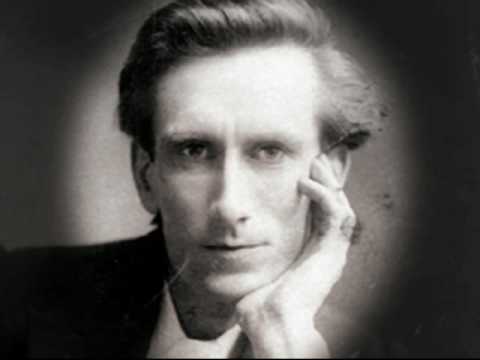
ChambersThis is a weekly series with things I’m reading and pondering from Oswald Chambers. You can read the original seed thought here, or type “Thursdays With Oswald” in the search box to read more entries.

All Of Me

     Never run away with the idea that you are a person who has a spirit, has a soul and has a body; you are a person that is spirit, soul and body. Man is one; body, soul and spirit are terms of definition. My body is the manifest “me.” Some of us are so dominated by the body that our spirit lives only in the physical domain, instead of the physical being slowly taken into the spiritual by a series of moral choices. Our spirit goes no further than we bring our body. 

From Conformed To His Image

God created us as a three-part, integrated being. Quite simply, all parts are interdependent on each other.

If my body is diseased, it’s hard for me to develop my soul and spirit. If my emotions are out-of-balance, it adversely affects by body and spirit. If my spirit is still weighed down by sin, it cannot but affect my body and soul.

I love the brief description Dr. Luke gives us about how Jesus grew up: Jesus grew in wisdom and in stature and in favor with God and all the people (Luke 2:52). Let me state this verse differently. Jesus grew healthily…

  • …in wisdom (His mind)
  • …in stature (His physical body)
  • …in favor with God (His soul)
  • …in favor with all the people (His emotions and relationships)

Jesus showed us well-round, healthy growth. If you are diseased in your body, talk to a doctor about remedies; if you are diseased in your soul, talk to a counselor or psychologist about your emotional health; if you are diseased in your spirit, talk to God about forgiveness.

Don’t let one part of you hold you back from being all the you God created you to be!

Getting A Checkup

Probably almost everyone has heard the so-called Golden Rule that Jesus gave us:

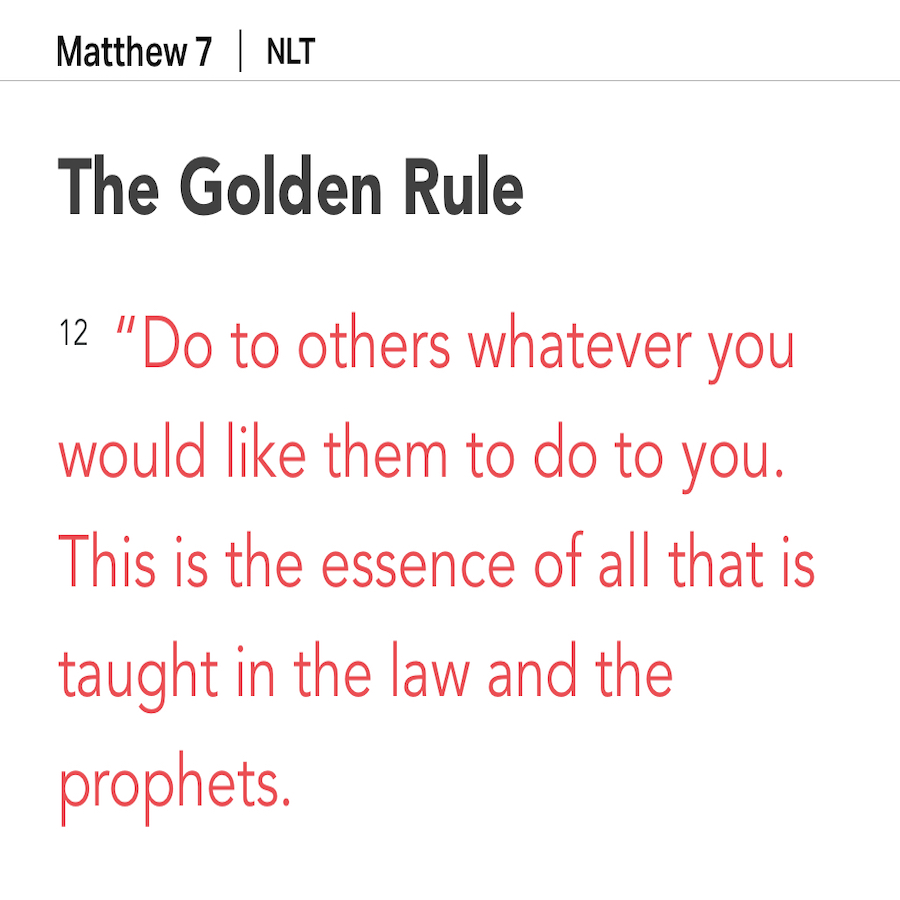
So in everything, do to others what you would have them do to you, for this sums up the Law and the Prophets. (Matthew 7:12)

Most of the time we apply this verse from an I-perspective. That is, we ask, “How would I want to be treated in this situation,” and then we treat others like that.

What about if we switch it? What if we took the time to find out how the other person wanted to be treated?

In Romans 12, Paul says we are all interdependent on one another (v. 6). And he gives us some ways to live out the Golden Rule from an others-perspective. So from his teaching, here’s a checkup I’m giving myself:

  • Am I truly devoted to others, like I would be to my own family members (v. 10a)?
  • Do I honor others’ wishes ahead of my own (v. 10b)?
  • Do I work to find harmony (v. 16)?
  • Am I willing to do what others think is right (v. 17)?
  • Do I work hard to find a peaceful solution for everyone involved (v. 18)?

Now here’s the real test:

  • How would others answer the above questions about me?
  • How would someone who doesn’t like me answer those questions about me (v. 20)?

This checkup is making me think. How about you?

Codependent?

Modern psychologists have coined the term codependent to mean someone who allows their life to be controlled by another person, much like the moon controls the tides on the earth’s oceans. Almost always this relationship ends up being a lose-lose relationship: both the person being controlled and the person doing the controlling are headed the wrong way.

Codependent is not a biblical term.

But there is a concept in Scripture that is the anti-codependent. I would call it interdependent. Here’s a couple of verses to back it up…

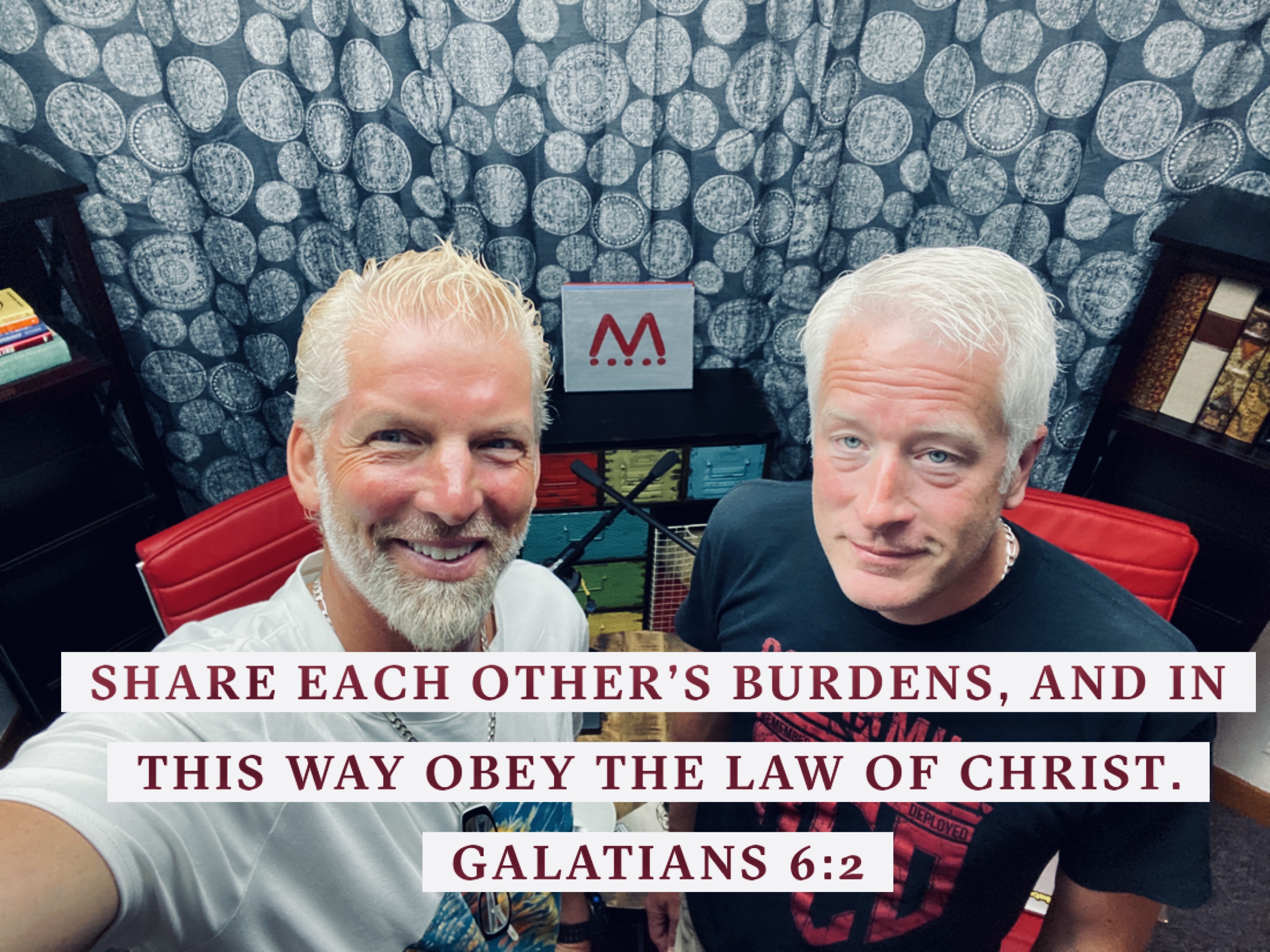
Dear brothers and sisters, if another believer is overcome by some sin, you who are godly should gently and humbly help that person back onto the right path. And be careful not to fall into the same temptation yourself. Share each other’s burdens, and in this way obey the law of Christ. (Galatians 6:1-2)

Wounds from a friend can be trusted, but an enemy multiplies kisses. (Proverbs 27:6)

It is absolutely clear that God has called you to a free life. Just make sure that you don’t use this freedom as an excuse to do whatever you want to do and destroy your freedom. Rather, use your freedom to serve one another in love; that’s how freedom grows. (Galatians 5:13)

God has given each of you a gift from His great variety of spiritual gifts. Use them well to serve one another. (1 Peter 4:10)

This isn’t excusing bad behavior, or winking at poor choices, or rescuing someone from the consequences of sin. Excusing, winking, and rescuing are symptoms of codependency.

Interdependency is saying, “I need you to be stronger—to be healthy—because I may need to lean on you someday.”

Christians try to get stronger and develop their own spiritual gifts so that they can help a friend-in-need get stronger and develop his/her spiritual gifts.

The Body of Christ needs you to be interdependent, which completely trumps codependent.