Micro-Adjustments

Listen to the podcast of this post by clicking on the player below, and you can also subscribe on AppleSpotify, or Audible. 

I had a great time on the Leading From Alignment podcast with Jim Wiegand and John Opalewski. 

One of the loudest, most persistent advertising messages is about speed: Take action now, get immediate results as soon as you sign up, don’t miss out, act today! Because of this sentiment that appears all around us, many people often think that any life changes they make should bring about immediate and lasting results. 

I’ve often joked that I wish I had the superpower to zap myself or a friend—“<Poof!> There, you’ve got it now. You’re all set!” Unfortunately, that’s usually not how it works. 

Instead, we need to be ready for a lengthy process—possibly even a lifelong process—of the Holy Spirit helping us to make the micro-adjustments that are necessary. 

Check out this part of my conversation with Jim and John as we discussed this idea. 

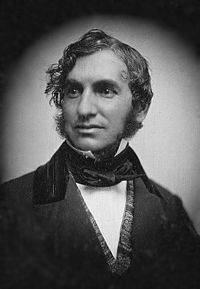
 I like this line from Henry Wadsworth Longfellow:

The heights of great men reached and kept,
Were not attained by sudden flight,
But they, while their companions slept,
Were toiling upwards in the night.

The Holy Spirit knows exactly where we need to change and how much we need to change. Let’s trust Him in this process. Then take some time to look back and celebrate how far the Holy Spirit has matured us so that we can be re-energized to stay in this lifelong process.  

If you would like to watch this full interview on the Leading From Alignment podcast, please go here.

I’ll be sharing more clips from this interview soon, so please stay tuned. My book Shepherd Leadership: The Metrics That Really Matter is available in print or ebook, and in audiobook through either Audible or Apple. 

►► Would you please prayerfully consider supporting this ministry? My Patreon supporters get behind-the-scenes access to exclusive materials. ◀︎◀︎

Poetry Saturday—The Children’s Hour

Between the dark and the daylight,
      When the night is beginning to lower,
Comes a pause in the day’s occupations,
      That is known as the Children’s Hour.

I hear in the chamber above me
      The patter of little feet,
The sound of a door that is opened,
      And voices soft and sweet.

From my study I see in the lamplight,
      Descending the broad hall stair,
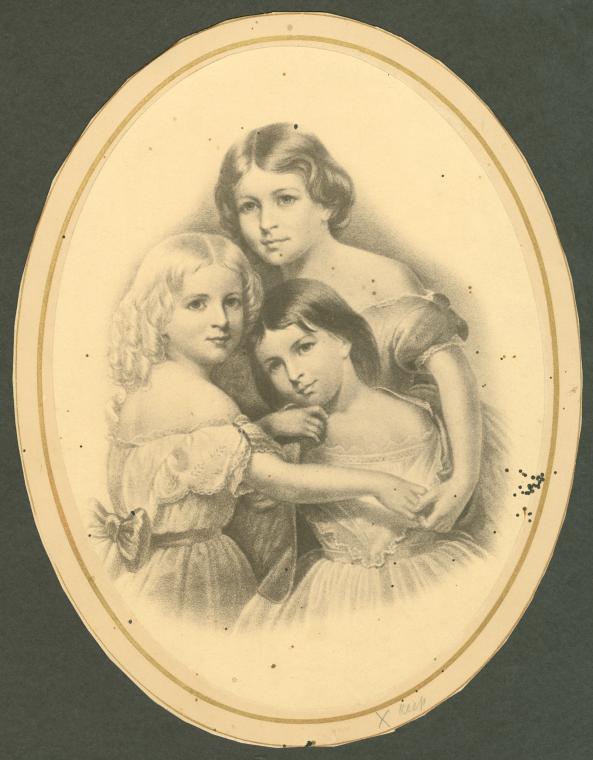
Grave Alice, and laughing Allegra,
      And Edith with golden hair.

A whisper, and then a silence:
      Yet I know by their merry eyes
They are plotting and planning together
      To take me by surprise.

A sudden rush from the stairway,
      A sudden raid from the hall!
By three doors left unguarded
      They enter my castle wall!

They climb up into my turret
      O’er the arms and back of my chair;
If I try to escape, they surround me;
      They seem to be everywhere.

They almost devour me with kisses,
      Their arms about me entwine,
Till I think of the Bishop of Bingen
      In his Mouse-Tower on the Rhine!

Do you think, O blue-eyed banditti,
      Because you have scaled the wall,
Such an old mustache as I am
      Is not a match for you all!

I have you fast in my fortress,
      And will not let you depart,
But put you down into the dungeon
      In the round-tower of my heart.

And there will I keep you forever,
      Yes, forever and a day,
Till the walls shall crumble to ruin,
      And moulder in dust away! —Henry Wadsworth Longfellow

Humbug?!

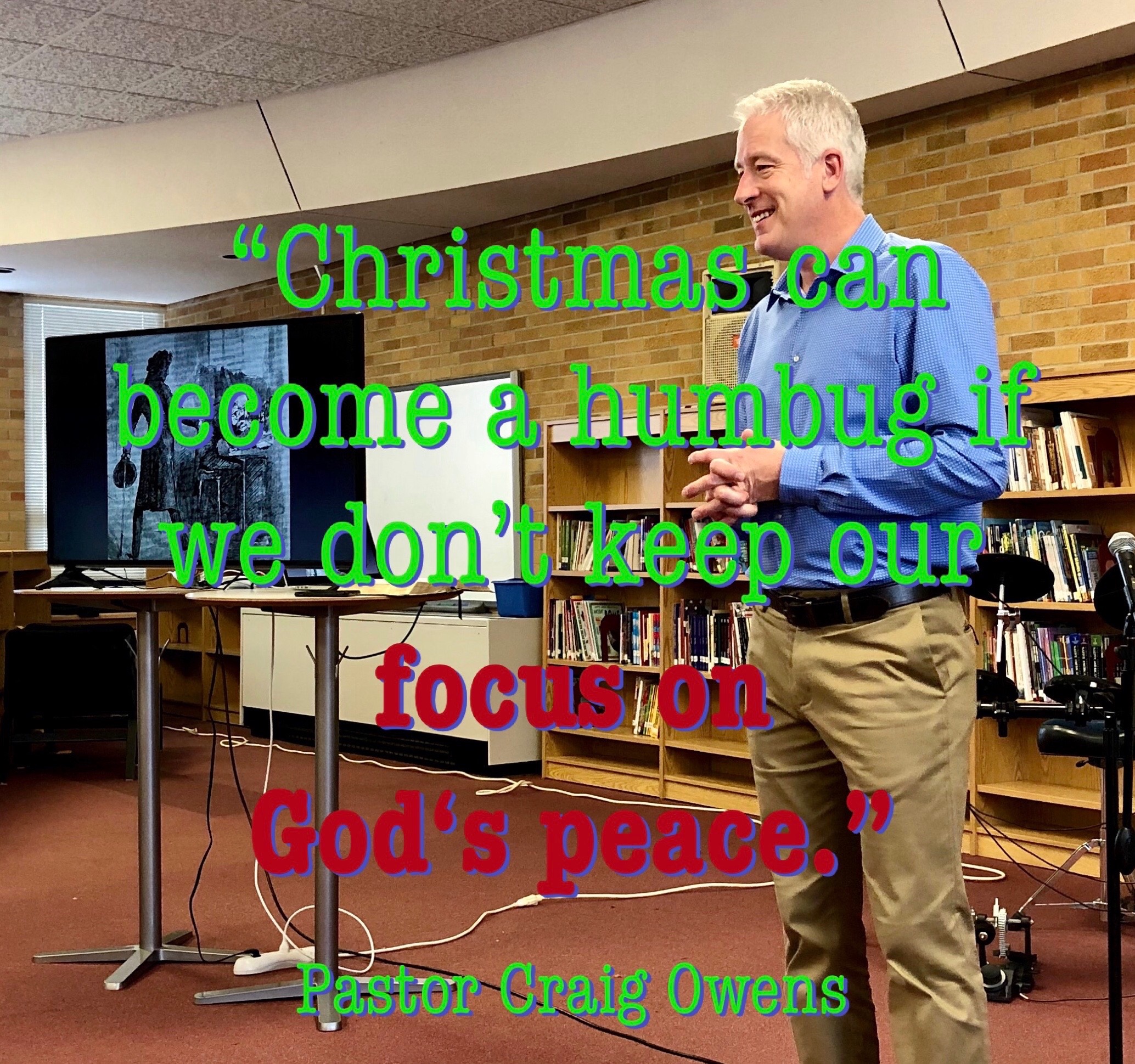
In Longfellow’s classic I Heard The Bells On Christmas Day every stanza ends with the phrase “peace on earth, goodwill to men.” Unless you’ve been living someplace that doesn’t get the daily news, you might be saying, “Peace on earth? Really? I just don’t see it….” Or as Ebenezer Scrooge might say, “Peace on earth? Bah! Humbug!” 

A humbug is an imposter, or something empty of meaning. 

The third stanza of I Heard The Bells seems almost to slide into that Christmas humbug note: “And in despair I bowed my head: ‘There is no peace on earth,’ I said. ‘For hate is strong and mocks the song of peace on earth, goodwill to men.’” 

Indeed, even for those who call themselves a Christian, Christmas could become a humbug if…

  • … it’s all about busyness or just trying to “survive the holidays” 
  • … we get more excited about Santa Claus coming down the chimney to fill stockings than we do about Jesus coming down to Earth to be born in a manger 
  • … our main focus is on gifts—both what you’re giving and what you’re getting—and then we regret putting ourselves into debt 

Between Malachi (the last book of the Old Testament) and Matthew (the first book of the New Testament) is a time span of about 400 years that is called “the dark period.” God had promised through Jeremiah that He would restore the Israelites and rebuild Jerusalem. There were promises of the Messiah coming to set things right, but after 400 years of darkness, the mindset of most Israelites was probably, “Messiah? Peace? Bah! Humbug!!” 

What God really promised through Jeremiah was a peace that came about as a result of two things: (1) forgiveness of sins and (2) restoration of a perfect relationship with God. The Hebrew word for “peace” is shalom, which means one’s personal sense of wholeness and well-being, free from anxiety and fear, knowing that all is well between my soul and God. 

This is what God promises—I will cleanse them from ALL the sin they have committed against Me and will forgive ALL their sins of rebellion against Me (Jeremiah 33:8). 

This shalom is what comes through the First Advent of Jesus! As Longfellow observed, “Then pealed the bells more loud and deep: God is not dead nor doth He sleep; the wrong shall fail, the right prevail, with peace on earth, goodwill to men.” 

And this is what Jesus brought—

  • She will give birth to a Son, and you are to give Him the name Jesus, because He will save His people from their sins (Matthew 1:21 NIV). 
  • Now you have been united with Christ Jesus. Once you were far away from God, but now you have been brought near to Him through the blood of Christ. For Christ Himself has brought peace to us… (Ephesians 2:13-14 NLT) 
  • Therefore, since we are justified (acquitted, declared righteous, and given a right standing with God) through faith, let us grasp the fact that we have…peace with God through our Lord Jesus Christ (the Messiah, the Anointed One) (Romans 5:1 AMP). 

The bells and carols and remembrances of Christ’s First Advent should send our hearts soaring in anticipation of Christ’s Second Advent—when Christ shall return to take all of His own to be with Him forever, where He will wipe away every tear and where we live forever with Him in the New Jerusalem (see Jeremiah 33:9; John 14:3; Revelation 21:1-4). 

Let us guard against Christmas ever becoming a humbug—an imposter, something empty of meaning—but let’s make sure the rich meaning of Christ’s peace dwells richly in us! 

If you’ve missed any of the message in this series, you can check them out by clicking here.  

The Carols Of Christmas

I heard the bells on Christmas Day

Their old familiar carols play,
And wild and sweet the words repeat
Of peace on earth, goodwill to men. (Henry Wadsworth Longfellow)

How many “old familiar carols” have you heard Christmas after Christmas, until the words have almost lost their meaning? If we’re not careful, any song repeated too often can lose the richness of its original intent.

There are some amazing messages in many of our old familiar Christmas carols, because many of those messages are saturated with the old familiar story of Redemption that the Bible tells over and over again.

Please join me this Sunday as we take a new look at the old familiar messages in our Christmas carols. These messages will bring a new appreciation of God’s love that was sung at Christ’s Advent, and reawaken the sweetness of meaning for this Christmas Day.

This has been an ongoing series, so if you would like to catch up with us you can see the Christmas carols we already discussed here, here, and here. Then the carols we have looked at this Advent season are:

I Heard The Bells On Christmas Day

john-14-1That first Christmas was supposedly a silent night and a holy night. Maybe there was some singing angels involved, but at least their message was about “peace on earth.”

Sometimes that idea of “peace” at Christmas time can make us feel like hypocrites. Sometimes it seems as if there is more turmoil than peace, and more ill-will than goodwill.

Even Henry Wadsworth Longfellow’s poem called I Heard The Bells On Christmas Day starts out in celebration, but then shifts to the dark words, “And in despair I bowed my head: ‘There is no peace on earth,’ I said, ‘for hate is strong and mocks the song of peace on earth, goodwill to men.’”

If you have had a hard time finding peace this Christmas, this short message will bring you hope and encouragement, so that you can truly say, “Merry Christmas!”

If you’ve missed any of the messages in our series The Carols Of Christmas, you can find the full list here.

The Carols Of Christmas

Carols Of ChristmasI heard the bells on Christmas Day
Their old familiar carols play,
And wild and sweet the words repeat
Of peace on earth, goodwill to men. (Henry Wadsworth Longfellow)

How many “old familiar carols” have you heard Christmas after Christmas, until the words have almost lost their meaning? If we’re not careful, any song repeated too often can lose the richness of its original intent.

There are some amazing messages in many of our old familiar Christmas carols, because many of those messages are saturated with the old familiar story of Redemption that the Bible tells over and over again.

Please join me this Sunday as we take a new look at the old familiar messages in our Christmas carols. These messages will bring a new appreciation of God’s love that was sung at Christ’s Advent, and reawaken the sweetness of meaning for this Christmas Day.

This has been an ongoing Advent series for us. To check out the Christmas carols we discussed in 2014, please click here, and the carols from 2015 are here. If you’ve missed any of the messages this Christmas, please check them out:

The Carols Of Christmas

Carols Of ChristmasI heard the bells on Christmas Day
Their old familiar carols play,
And wild and sweet the words repeat
Of peace on earth, goodwill to men. (Henry Wadsworth Longfellow)

How many “old familiar carols” have you heard Christmas after Christmas, until the words have almost lost their meaning? If we’re not careful, any song repeated too often can lose the richness of its original intent.

There are some amazing messages in many of our old familiar Christmas carols, because many of those messages are saturated with the old familiar story of Redemption that the Bible tells over and over again.

Please join me this Sunday as we take a new look at the old familiar messages in our Christmas carols. These messages will bring a new appreciation of God’s love that was sung at Christ’s Advent, and reawaken the sweetness of meaning for this Christmas Day.

If you’ve missed any messages in this series, check them out here:

Poetry Saturday—The Building Of The Ship

The poet creates so many analogies from the building of the perfect ship. The loving Master knew exactly what he was doing. But the poem closes with this analogy to the United States of America…

LongfellowHow beautiful she is! How fair
She lies within those arms, that press
Her form with many a soft caress
Of tenderness and watchful care!
Sail forth into the sea, O ship!
Through wind and wave, right onward steer!
The moistened eye, the trembling lip,
Are not the signs of doubt or fear.
Sail forth into the sea of life,
O gentle, loving, trusting wife,
And safe from all adversity
Upon the bosom of that sea
Thy comings and thy goings be!
For gentleness and love and trust
Prevail o’er angry wave and gust;
And in the wreck of noble lives
Something immortal still survives!


Thou, too, sail on, O Ship of State!
Sail on, O Union, strong and great!
Humanity with all its fears,
With all the hopes of future years,
Is hanging breathless on thy fate!
We know what Master laid thy keel,
What Workmen wrought thy ribs of steel,
Who made each mast, and sail, and rope,
What anvils rang, what hammers beat,
In what a forge and what a heat
Were shaped the anchors of thy hope!
Fear not each sudden sound and shock,
’T is of the wave and not the rock;
’T is but the flapping of the sail,
And not a rent made by the gale!
In spite of rock and tempest’s roar,
In spite of false lights on the shore,
Sail on, nor fear to breast the sea!
Our hearts, our hopes, are all with thee,
Our hearts, our hopes, our prayers, our tears,
Our faith triumphant o’er our fears,
Are all with thee, —are all with thee! —Henry Wadsworth Longfellow


Poetry Saturday—A Psalm Of Life

LongfellowTell me not, in mournful numbers,
   Life is but an empty dream!
For the soul is dead that slumbers,
   And things are not what they seem.

Life is real! Life is earnest!
   And the grave is not its goal;
Dust thou art, to dust returnest,
   Was not spoken of the soul.

Not enjoyment, and not sorrow,
   Is our destined end or way;
But to act, that each to-morrow
   Find us farther than to-day.

Art is long, and Time is fleeting,
   And our hearts, though stout and brave,
Still, like muffled drums, are beating
   Funeral marches to the grave.

In the world’s broad field of battle,
   In the bivouac of Life,
Be not like dumb, driven cattle!
   Be a hero in the strife!

Trust no Future, howe’er pleasant!
   Let the dead Past bury its dead!
Act,— act in the living Present!
   Heart within, and God o’erhead!

Lives of great men all remind us
   We can make our lives sublime,
And, departing, leave behind us
   Footprints on the sands of time;

Footprints, that perhaps another,
   Sailing o’er life’s solemn main,
A forlorn and shipwrecked brother,
   Seeing, shall take heart again.

Let us, then, be up and doing,
   With a heart for any fate;
Still achieving, still pursuing,
   Learn to labor and to wait. —Henry Wadsworth Longfellow

Two Angels

LongfellowThere are two angels, that attend unseen
Each one of us, and in great books record
Our good and evil deeds. He who writes down
The good ones, after every action closes
His volume, and ascends with it to God.
The other keeps his dreadful day-book open
Till sunset, that we may repent; which doing,
The record of the action fades away,
And leaves a line of white across the page.

—Henry Wadsworth Longfellow