The Power Of -Ing

Have you ever heard someone say something like:

  • “Wow, look at her. She arrived in style!”
  • “I think I’ve finally arrived.”

This is weird because arriving implies stopping. When I’m driving to the store and I arrive at the store, I don’t keep on driving; I stop at the store. That’s the whole reason I left my house in the first place.

So when we talk about people arriving, do we really mean that they are supposed to stop and park? Correct me on this, but I think the only time we stop in life is when life stops. In other words: We’re dead!

We don’t really want to arrive, do we? We want to hit goals and then keep on going. We want to keep on “ing”ing. Here’s how I’m trying to leverage the power of ing:

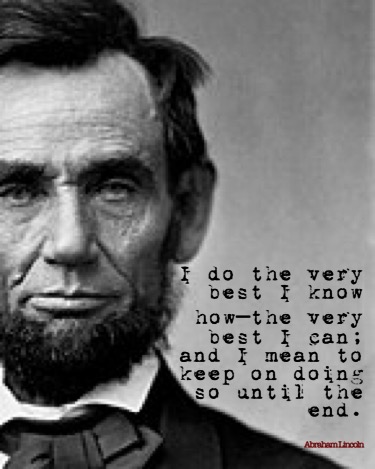
I love the words of Abraham Lincoln, who knew the power of ing:

“I do the very best I know how—the very best I can; and I mean to keep on doing so until the end.”

Don’t arrive. Don’t stop. Keep on “ing”ing the right things—God’s things—and see how God will bless your efforts. There is an incredible power in ing!

TomTom Directions

My wife is a beautiful, talented woman, but she tends to be, uh, directionally-challenged. That is to say, it’s not hard for her to get on the wrong road, heading the wrong direction. So a wonderful Christmas gift from my folks this year was a TomTom GPS unit.

Yesterday I took a trip and borrowed her TomTom. My first destination was a familiar one, but my second stop was somewhere I hadn’t been before. So I’m driving along when all of a sudden I hear a pleasant female voice tell me, “In two miles, exit to the right.”

Cool!

The Bible tells us that we can have a moral GPS system just like my wife’s TomTom. Check this out:

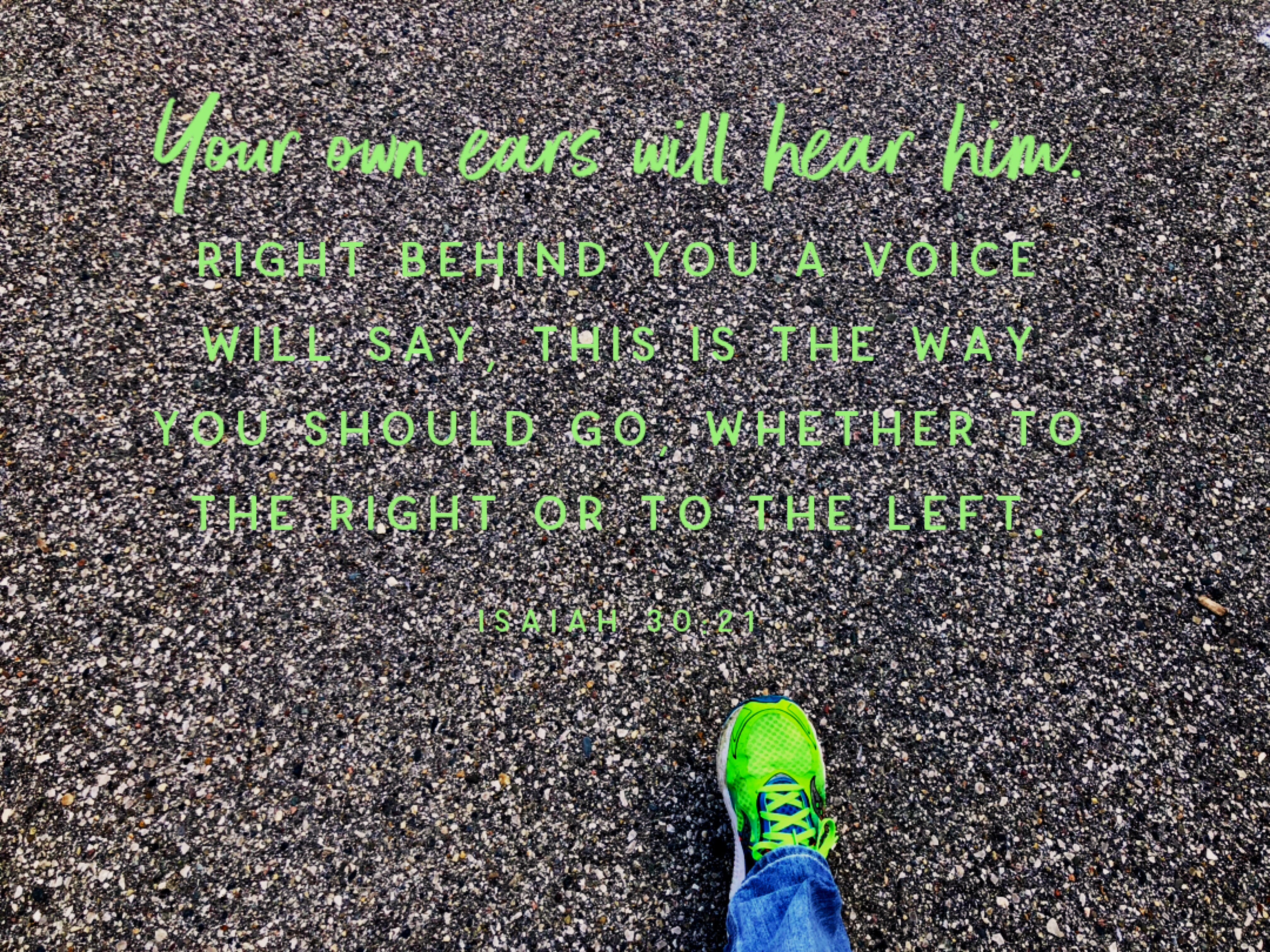
Whether you turn to the right or to the left, your ears will hear a Voice behind you, saying, “This is the way; walk in it.”

That Voice is the Holy Spirit. Jesus said the Holy Spirit would guide us in the right ways to go:

But when the Father sends the Advocate as My representative—that is, the Holy Spirit—He will teach you everything and will remind you of everything I have told you.

You have this moral GPS system at your disposal. Are you using it? Prayer is the power supply that activates the Voice. Turn Him on and make better decisions, live a better life, and do greater things for God.

Jesus Tweets

Listen to the podcast of this post by clicking on the player below, and you can also subscribe on AppleSpotify, or Audible. 

I began using 𝕏 (formerly known as Twitter) in 2009. There is something challenging about conveying what I’m doing or thinking or encouraging others in 280 characters or less. I also love the bite-sized flow of comments from others that keep me informed and entertained.

As with anything I commit myself to, it always has to pass the “Would Jesus Do This” test. So, would Jesus use 𝕏? Would we be reading @JesusChrist tweets if He were on earth today?

I think so!

Just a quick survey of the Gospels will show you how many of His profound statements were in the 𝕏-ready 280-characters-or-less format…

In refuting the temptations of satan, all three Old Testament passages Jesus quoted are 𝕏-length.

  • Man does not live on bread alone, but on every word that comes from the mouth of God.
  • Do not put the Lord your God to the test.
  • Worship the Lord your God, and serve Him only.

In His famous Sermon on the Mount, all of the “blessed are” beatitudes are tweetable.

  • Blessed are the poor in spirit, for theirs is the kingdom of heaven.
  • Blessed are those who mourn, for they will be comforted.
  • Blessed are the meek, for they will inherit the earth.
  • Blessed are those who hunger and thirst for righteousness, for they will be filled.
  • Blessed are the merciful, for they will be shown mercy.
  • Blessed are the pure in heart, for they will see God.
  • Blessed are the peacemakers, for they will be called sons of God.
  • Blessed are those who are persecuted because of righteousness, for theirs is the kingdom of heaven.
  • Blessed are you when people insult you, persecute you and falsely say all kinds of evil against you because of Me.

Each sentence of Jesus’ model prayer fits in the 𝕏 dialogue box.

  • Our Father in heaven, hallowed be Your name, Your kingdom come, Your will be done on earth as it is in heaven.
  • Give us today our daily bread.
  • Forgive us our debts, as we also have forgiven our debtors.
  • And lead us not into temptation, but deliver us from the evil one.

All of Christ’s powerful “I AM” declarations in the Gospel of John are less than 140 characters.

  • I am the bread of life. He who comes to Me will never go hungry, and he who believes in Me will never be thirsty.
  • I am the light of the world. Whoever follows Me will never walk in darkness, but will have the light of life.
  • I am the gate; whoever enters through Me will be saved.
  • I am the good shepherd; I know My sheep and My sheep know Me.
  • I am the resurrection and the life. He who believes in Me will live, even though he dies.
  • I am the way and the truth and the life. No one comes to the Father except through Me.
  • I am the true vine, and My Father is the gardener.
  • I am the vine; you are the branches.

Even the most well-known verse of all fits into the 𝕏 dialogue box:

For God so loved the world that He gave His one and only Son, that whoever believes in Him shall not perish but have eternal life.

The words of Jesus are just as timely and relevant today as they were the day He first spoke them, so let’s use our social media platforms to rebroadcast (or retweet) these life-changing truths.

►► Would you please prayerfully consider supporting this ministry? My Patreon supporters get behind-the-scenes access to exclusive materials. ◀︎◀︎

Loving Servanthood

Over the past couple of days I’ve been thinking a lot about something: What does it mean to serve? Or more specifically, what does God say about how we should serve?

The typical image that comes to mind when someone says “servant” is a person of lower status—someone who is at the lower end of the organizational chart, someone who is expected to do more with less, someone who doesn’t have many opportunities for advancement (or even a day off), or maybe someone who is expected to be tuned into everyone else’s needs but seldom has his own needs met.

Is being a servant the same thing as being a doormat?

Consider Jesus:

He now showed them the full extent of His love…. Jesus knew that the Father had put all things under His power, and that He had come from God and was returning to God; so He got up from the meal, took off His outer clothing, and wrapped a towel around His waist. After that, He poured water into a basin and began to wash His disciples’ feet, drying them with the towel that was wrapped around Him.

Jesus was the most important person in the room: Jesus KNEW that the Father had put all things under His power. He was also the most love-filled person in the room. What did He do with all of His love and power? He served others.

When He finished, John writes that He returned to His place, and asked His disciples a question, “Do you understand what I just did?” Then in the only instance of Scripture where Jesus Himself said this, “I have set you an example that you should do as I have done.”

Servants are people who use the power they have to lovingly serve others.

Servants don’t serve because someone else forces them to serve. Servants serve because the love of God empowers them to serve.

Do you love your spouse enough to serve him/her? Do you love your family enough to serve them? Do you love your coworkers enough to serve them? The greater the love we have for others, the greater the empowerment to serve. Love empowers us for service.

Greatest Story… Ever

LogosSome people say, “Print is dead.” Perhaps. Probably because there was never a word or a story like the greatest Story. There is a Word that not only came alive but is still alive. A Story that is still being told, still being lived out right before our eyes.

Listen to how John, the disciple who was so crazy-in-love with Jesus, said it:

  • The Word became flesh and made His dwelling among us. We have seen His glory, the glory of the One and Only, Who came from the Father, full of grace and truth. //NIV
  • And the Word (Christ) became flesh (human, incarnate) and tabernacled (fixed His tent of flesh, lived awhile) among us; and we [actually] saw His glory (His honor, His majesty), such glory as an only begotten son receives from his father, full of grace (favor, loving-kindness) and truth. //AMP
  • The Word became flesh and blood, and moved into the neighborhood. We saw the glory with our own eyes, the one-of-a-kind glory, like Father, like Son, generous inside and out, true from start to finish. //MSG

In our Impact! Youth service this week we’ll begin looking at this living Story: the Word that came to life and is being lived out right before our eyes even now. It’s a Story in which we play an important part too.

I love this Story. I love telling this Story again and again. I love being a part of this Story. I’d love it if you could join us on Wednesday evenings for a new look at the greatest Story ever.

Priceless Freedom

Turn it up!

I had a blast last night with a bunch of students at Calvary Assembly of God who are excited about Jesus. They are free, and they are hungry for more of God in their lives. It was awesome!

Jesus said, “My purpose is to give them a rich and satisfying life” (John 10:10 NLT). And He said, “If the Son gives you freedom, you are free!” (John 8:35 CEV).

Last night we looked at Paul’s instruction to Timothy where he reminded Timothy not to let anyone look down on him. If you dig a little deeper into the meaning of these words, it’s clear that you and I teach others how to treat us. In other words, Timothy was already devaluing himself, so others assumed that’s how they should treat him too.

Paul said, “Timothy, you are valuable. So hold your head up high and set an example worth imitating for everyone around you.”

God loves you so much that He created a cosmos to display His majesty, He gave you a conscience to prod you to look for Him, and He sent His one and only Son to earth to pay the price for so you could be in a personal relationship with Him.

You are of immense value to God. God bought you with a high price. And if you accept that incredible gift of Jesus, you are free to live… to REALLY LIVE!

When we closed the service last night, the students began to worship God, and they didn’t want to leave! They lifted their hands in freedom, they sang in freedom, they loved God in total freedom because they recognized their value in Him. And today I believe they are going to be living in that priceless freedom.

What about you? Are you living free today? Accept the gift Jesus already paid for your life and you can live free!

Winning The Argument Or The Battle

When I entered college, I did so as a science major: pre-med biomedical chemistry, to be exact. I still really enjoy all of the medical sciences: biology, microbiology, organic chemistry, inorganic chemistry, and the like.

As you might be aware many of the scientists today have a bent toward the theory of evolution. That means that a few of my professors and several of the authors I was reading taught and wrote from that paradigm.

This set up the environment for me to want to debate for my Creationist beliefs.

I had one professor who would specifically challenge me during lectures to refute what he had just said about evolution. An author who wrote a lengthy book about evolution carried on a year-long correspondence with me where we each brought out our best arguments. In all instances—although we believed passionately in our positions and could adequately defend them—the discussions never became shouting matches.

The Bible taught me how to do this.

(This week I’m discussing my favorite book—the Bible—from a couple of different aspects. You can read some of those thoughts here, here and here.)

At times I was tempted to “cross the line” to win the argument. And I may have won the argument, but I would have put myself in a position to lose the overall battle. There are two key passages of Scripture that I keep in mind to help me with this.

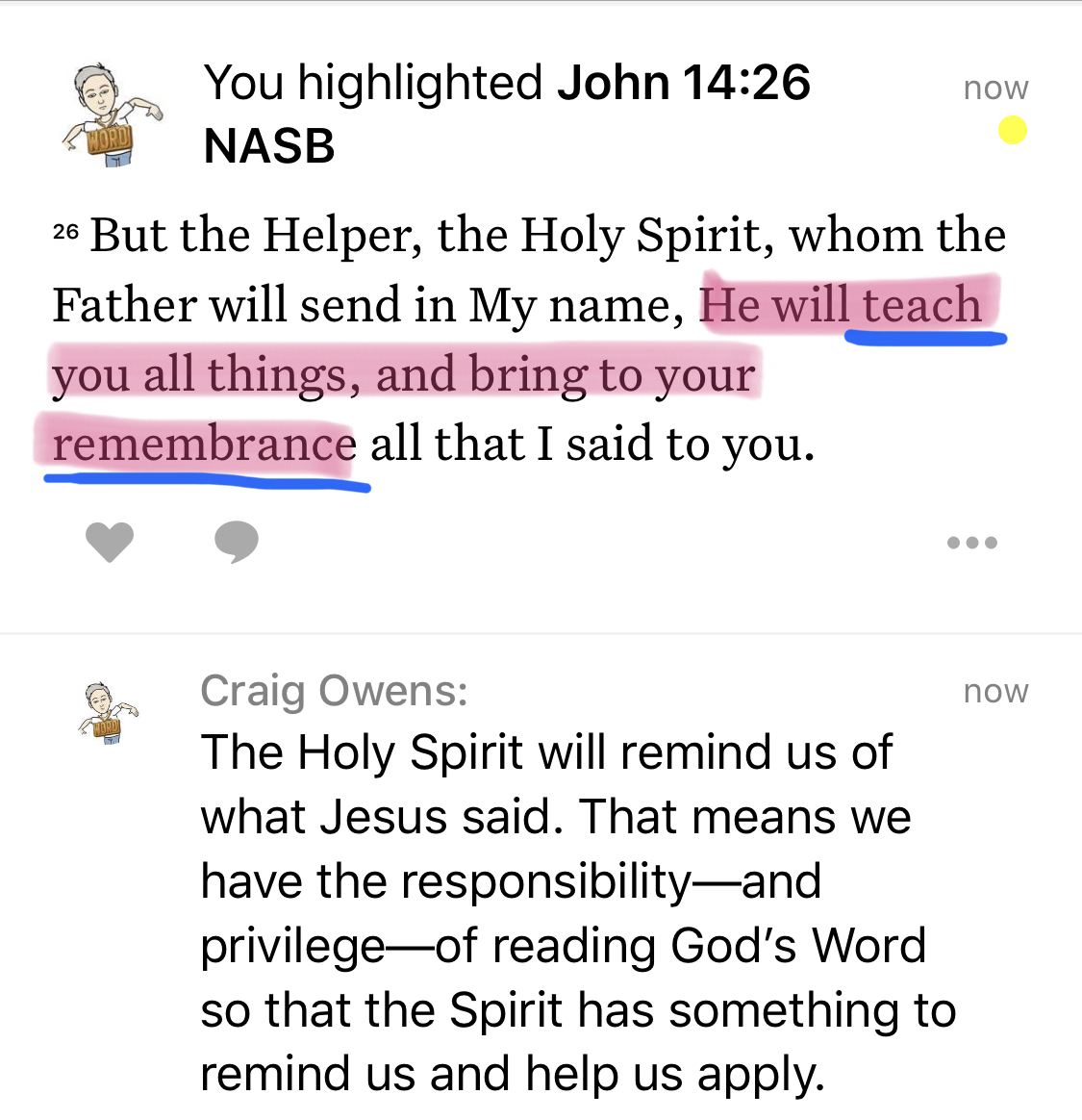
(1) In telling His followers about the Holy Spirit (John 14-16), Jesus said, “But when He, the Spirit of truth, comes, He will guide you into all truth” (John 16:13). And also, “But the Counselor, the Holy Spirit, whom the Father will send in My name, will teach you all things and will remind you of everything I have said to you” (John 14:26).

The Holy Spirit helps me apply biblical truths and principles to my everyday life. He guides me and reminds me of what I have studied.

(2) The second key passage is, “But in your hearts set apart Christ as Lord. Always be prepared to give an answer to everyone who asks you to give the reason for the hope that you have. But do this with gentleness and respect, keeping a clear conscience, so that those who speak maliciously against your good behavior in Christ may be ashamed of their slander” (1 Peter 3:15-16).

Yes, it is important for me to be prepared to give an answer, but this is the middle thought. First, I have to make sure what I’m saying is exalting Christ as Lord. Then I do my best to study and prepare to give an answer, but I must give that answer gently and respectfully.

Allowing the Holy Spirit to help you prepare from the Bible, and allowing Him to guide you into answering questions/critics gently and respectfully honors Christ. And that always wins the battle.

Still Learning

I live by the axiom, “If you’re through learning, you’re through.” So I try to learn something new every day.

I just finished a class called New Testament Survey: a quick overview of the 27 books that compromise the New Testament of the Bible. Here’s a couple of interesting factoids I picked up from my studies:

  • The earliest-written book was James. Interesting, because at one point James thought Jesus (his half-brother) was nuts.
  • Only Matthew uses the term kingdom of heaven; all of the other writers use kingdom of God.
  • Mark uses the word immediately more times than anyone else. Perhaps because his source (Peter) was always doing things so quickly… sort of a ready, FIRE!, aim kinda guy.
  • Luke wrote what is called “the global gospel” for everyone, so he included 45 teachings/events that no one else records.
  • John doesn’t record any of Jesus’ parables.
  • John uses the word believe nearly 100 times— way more than any other writer.
  • Luke talks about the Holy Spirit nearly 60 times in the 28 chapters of Acts.
  • Romans is the longest of Paul’s epistles with 7101 words; Philemon is the shortest with just 355 words.
  • With the exception of the pastoral epistles (1 Timothy, 2 Timothy, Titus) Paul’s letters are arranged in the Bible from longest to shortest.
  • In 1 & 2 Thessalonians (only 136 verses) Paul refers to God, Christ, the Holy Spirit, or a combination thereof more than 150 times.
  • Paul gives Timothy seven word pictures to describe the kind of pastor he should be: son, soldier, athlete, farmer, workman, instrument, and servant.
  • Hebrews is called “the book of better things” so better is used 13 times. This word is used only six times in the remaining 26 books of the New Testament.
  • James wrote 108 verses but issues 50+ direct commands.
  • In John’s three short epistles he uses the word know 33 times, and the word dear ten times.

Keep on learning! There’s a lot of good stuff out there. What have you learned lately?

More Than Okay

Most mornings when I wake up there is a song echoing in my mind. This morning it was Switchfoot’s song “More Than Fine” (lyrics here).

Lately, I’ve been noticing some clichés in our culture that are survival-oriented—

  • “I’m just trying to make a living.”
  • “Another day, another dollar.”
  • “Ugh, another Monday!”
  • “I just need to make it until the weekend.”
  • “If we can just survive today.”
  • “How are you?” “I’m fine… okay, I guess.”

I suppose for some, this is how they view life. But this should never be the mindset for followers of Jesus Christ.

Jesus didn’t die on a Cross for us, conquer death and rise again so we could have an okay life. He came to give us overflowing life. Of all people, those who are in a personal relationship with Jesus should be the most more-than-okay people of anyone!

You prepare a feast for me in the presence of my enemies. You honor me by anointing my head with oil. My cup overflows with blessings. (Psalm 23:5 NLT)

The thief comes only in order to steal and kill and destroy. I came that they may have and enjoy life, and have it in abundance (to the full, till it overflows). (John 10:10 AMP)

Because of the sacrifice of the Messiah, His blood poured out on the altar of the Cross, we’re a free people—free of penalties and punishments chalked up by all our misdeeds. And not just barely free, either. Abundantly free! (Ephesians 1:7-8 MSG)

Now to Him who is able to do immeasurably more than all we ask or imagine, according to His power that is at work within us, to Him be glory in the church and in Christ Jesus throughout all generations, for ever and ever! Amen. (Ephesians 3:20-21 NIV)

Today is the only today you will ever get. You don’t have to just survive today, you don’t have to just make it through this day, you don’t have to settle for just okay. You can live for more than okay today, you can experience God’s abundance, and you can revel in the overflowing life Jesus’ resurrection purchased for you!

What Jesus Didn’t Say

All throughout the first four books of the New Testament—Matthew, Mark, Luke, and John—there are lots of “red letters” (words spoken by Jesus). But as each of these gospel writers begins to recount the arrest and sham trial of Jesus, I’m struck by how many “black letters” there are. This fulfilled an Old Testament prophesy—

He was oppressed and treated harshly, yet He never said a word. He was led like a lamb to the slaughter. And as a sheep is silent before the shearers, He did not open His mouth (Isaiah 53:7).

The chief priests and the Sanhedrin brought out a string of witnesses to falsely accuse Jesus, but even then these witnesses couldn’t get their stories to jive, so Jesus remained silent. In exasperation the chief priest Caiaphas lashed out at Jesus, “Aren’t You going to answer these charges? Don’t You hear what they’re saying about You? Why won’t You defend Yourself?”

So here’s how Jesus responded to His accusers: But Jesus remained silent (Matthew 26:63). His silence resonated louder than any words could have!

How could Jesus do this? How could He stand silently when all of these nasty things were being said about Him?

He looked back—”…He had done no violence, nor was any deceit in His mouth…” (Isaiah 53:9). All four Gospels record Jesus saying, “You heard Me speaking in public all the time. My life has been on display for You. If I had said or done anything wrong, you could have arrested Me earlier, but the facts are: I haven’t said or done anything sinful.”

He looked forward—”…Because of the joy awaiting Him, He endured the Cross, disregarding its shame…” (Hebrews 12:2). He knew that one wrong word could undo all of the good words which He previously spoke, so He looked forward to the joy that would come after this was over.

I just went through a period of my life where people threw incredibly hurtful lies at me, but what was that compared to the horrific abuse heaped upon Jesus? If He could remain silent, how much more should I?

While I was in the midst of this difficult time, a prayerful friend handed me a notecard which I have kept close to me. Perhaps these words will be helpful to you, too—

May kindness be the response in you
where such a response is not expected.
May gentleness have the power
to overrule an offense and the power to heal. (David Teems)

May this Good Friday be a time of reflection in what Jesus didn’t say. And may I, along with you, learn this power of silence when falsely accused.