Micah believes our culture has watered down and diminished what love really means. And I heartily agree with him! There’s an old children’s song that says, “Jesus loves me this I know,” but Micah entitles one of his chapters: “Jesus loves me… this I don’t know.” This book is meant to help us recapture what real love is.
Weaving aspects of the rescuing love Hosea had for Gomer throughout the entire book, Micah teases out thoughts that many may not have considered. He then skillfully uses his own personal life journey to bring a modern-day feel to this love story. Each chapter opens a new facet of God’s love that is intended to dismantle all of the false definitions of love too many have previously taken to heart.
Although this book is a good reminder for a wide audience, I especially think this would be a good discussion guide for a mature Christian to use with someone who is struggling to believe that God can unconditionally love and forgive them.
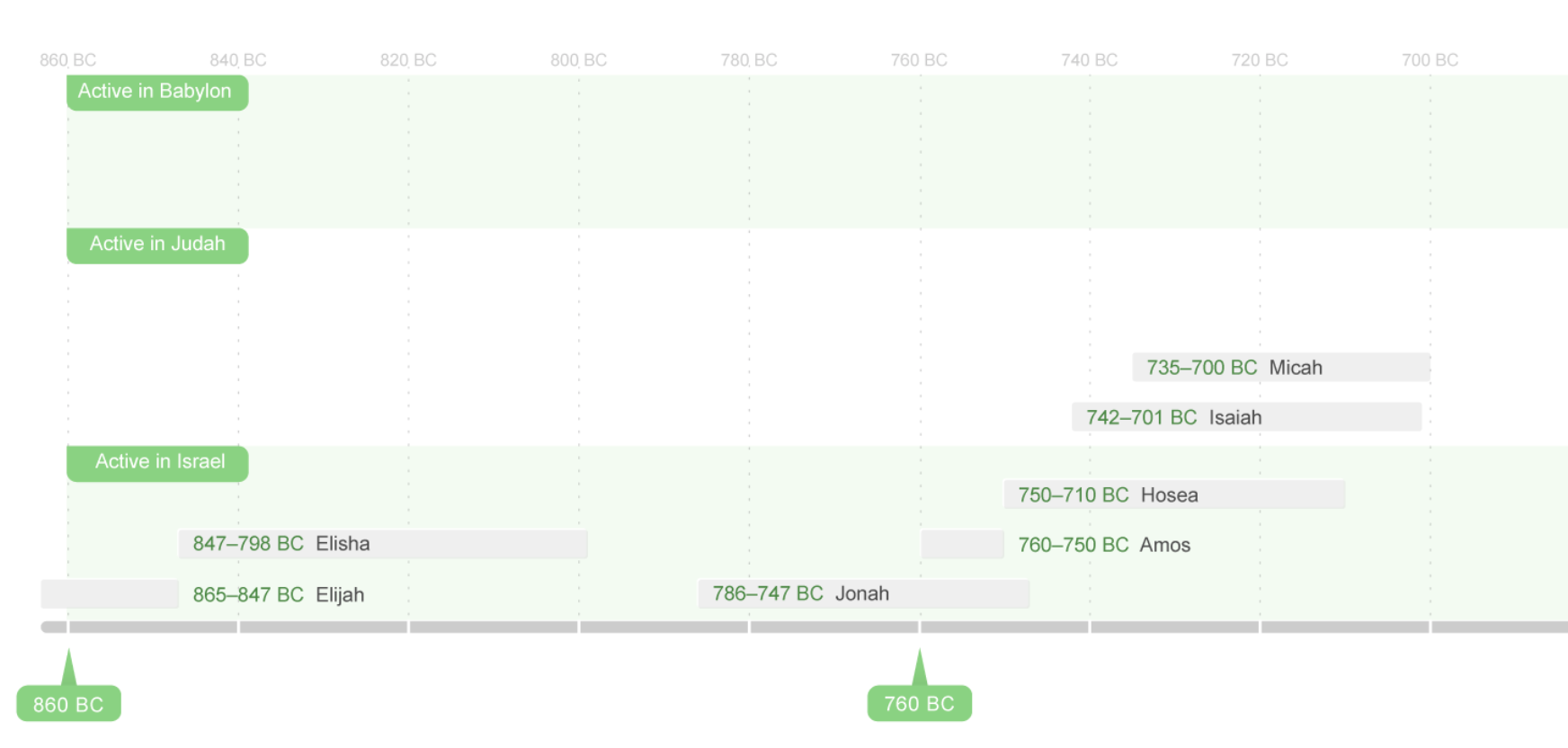
Hosea is the only prophet from Israel (he calls the Israelite king “our king” in 7:5), and along with Amos he is the only prophet to address the northern kingdom exclusively. Hosea addresses the northern tribes of Israel with brutal honesty—he calls them an adulteress wife! Hosea isn’t alone in saying this, as Isaiah, Jeremiah, and Ezekiel all same the same thing too.
But Hosea alone is called on to live out his message in a most unusual way: God instructs him to marry “an adulterous woman”! The question is: was she already a promiscuous woman before they married? Or did she become unfaithful after they were married?
I believe that she became unfaithful after marriage. When Gomer gives birth to their first son, Hosea writes that “she bore him a son”—indicating he is the father. But with Gomer’s second and third pregnancies, Hosea simply writes, “she gave birth,” leading me to think that Hosea wasn’t the father of those children.
Jezreel—This boy’s name means “God sows.” It is a neutral word meaning either sowing good seed and reaping a healthy harvest, or sowing godlessness and reaping punishment.
Lo-Ruhamah—Her name means “not pitied.” God indicates that He will bring a judgment on Israel that is deserved justice. He has been patiently calling them to repentance but they kept running farther away from Him.
Lo-Ammi—This boy’s name is saddest of all. It means “not My people.”
How sad! Can you imagine Hosea’s heartache?! Can you imagine God’s heartache?! God tells Hosea the penalty for their adulterous life (Hosea 2:2-13), which the apostle Paul would later sum up in these straightforward words: the wages of sin is death (Romans 6:23).
“YET” and “THEREFORE”…
In the middle of God expressing His heartache over His wayward wife He says two amazing words “Yet” and “Therefore” (1:10; 2:14).
“Yet I will bless you and reverse your misfortune”
“Therefore I will allure you and speak tenderly to you”
This is UNBELIEVABLE!! Who would respond like this to such vile unfaithfulness?!
God would.
God did! But God shows and clearly proves His own love for us by the fact that while we were still sinners, Christ—the Messiah, the Anointed One—died for us (Romans 5:8).
Hosea—whose name means salvation—is called on to do exactly what Jesus did for us. Hosea buys back his wife from her master. Hosea pays the price for Gomer’s sin, just as Jesus paid the price for our sin.
What amazing love God has for us!
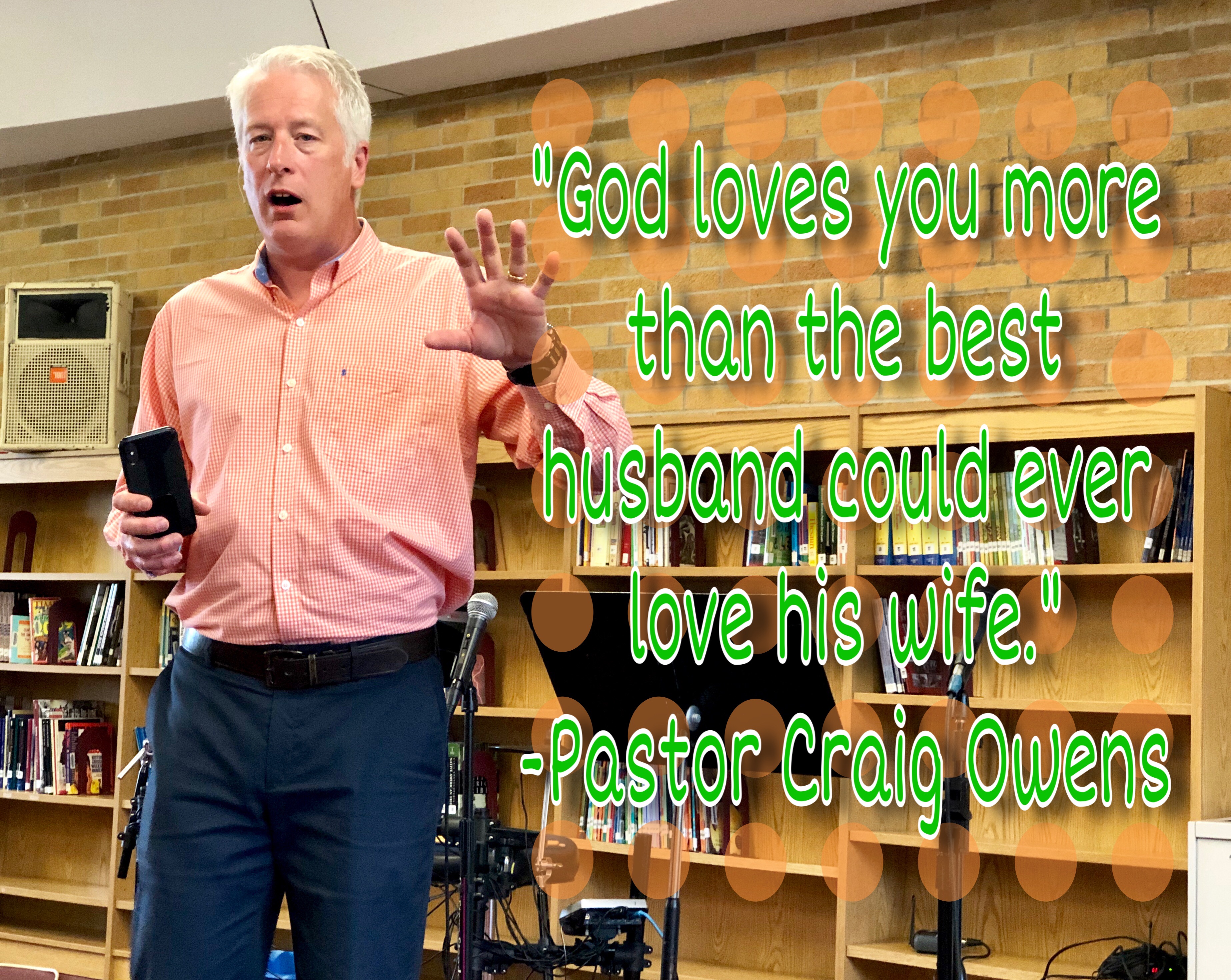
You have never lived an unloved day in your life. Not a single one! God loves you more than the best husband could ever love his wife. He paid for your forgiveness and your freedom. Will you receive that forgiveness and restoration today?
My dear friend Josh Schram relaunched our summertime series looking at the Selahs in the Psalms. “Selah” (or “Interlude” in some Bible translations) can mean either a time of reflection, a deep breath to go into something stronger, or a time to weigh the contrasts.
Psalm 44 is a classic example of a Selah calling us to weigh the contrasts! The first 8 verses of this psalm celebrate the recollections of God’s past victories, declarations of God being our King, and crescendoing to a note of continual praise—O God, we give glory to You all day long and constantly praise Your name!
Then comes the Selah—pause.
And after the pause, the scene turns dark. The psalmist now recounts how bad his situation is, descending to the low note of “we collapse in the dust, lying face down in the dirt” (v. 25).
Josh reminded us how our preferences change over time. Consider the telephone—we’ve gone from push-button corded phones, to phones with longer cords, to cordless phones, to bulk bag phones, to smaller cell phones, to smartphones. It’s very human for our preferences to want more and better.
But God’s preference never changes. God’s preference is YOU!
He can never love you any more than He already does. Nor can He love you any less.
The apostle Paul quotes Psalm 44:22—yet for Your sake we face death all day long; we are considered as sheep to be slaughtered—when he explains that absolutely nothing can separate us from God’s love (see Romans 8:31-39).
In marriage vows, we usually promise to love our spouse “for better or for worse, for richer or for poorer, in sickness or in health.” True love goes through it all!
God’s love goes through it all with us. That’s why the psalmist’s last words are so hopeful: Rise up and help us; rescue us because of Your unfailing love. His unfailing love is our assurance of His presence and His ultimate rescue. Paul also reminds us “indeed we share in His sufferings in order that we may also share in His glory” (Romans 8:17).
Josh said, “I want you to remember one thing: Nothing!” Nothing can separate you from God’s love. Ever!
Hillsong United has some memorable words in their song Highlands—“I will praise You on the mountain, and I will praise You when the mountain’s in my way. … You’re the heaven where my heart is, in the highlands and the heartache all the same.”
No matter what you’re facing, God’s preference is you. He loves you, and He wants you to grow closer to Him through this trial. Praise Him for His unfailing love on the mountain and in the valley, and then wait in eager expectation for Him to come to rescue you.
Listen to the podcast of this post by clicking on the player below, and you can also subscribe on Apple, Spotify, or Audible.
Jesus is on His passionate journey toward the Cross. Every step on this journey is a step of love.
After Jesus finished His last supper with His disciples, they all went to one of their favorite places to pray—the Garden of Gethsemane. It was a place they all knew well. Including Judas, who had been looking for an opportunity to turn Jesus over to the religious authorities when He was out of the public eye.
Jesus knew this time was coming (Matthew 10:33-34; John 13:1, 3; 18:4), and His knowing prompted His serving. So we can say that His foot-washing service was as much a reminder to Himself as it was to His followers.
But let us never forget that through all of this horrific, inhumane mistreatment and torture, Jesus remains the King of kings, the Son of God. In fact, very God Himself.
The Jewish religious leaders knew this too (John 8:54-59; 10:31-33). And without “knowing it” the soldiers that came to arrest Jesus knew it as well.
Just look at the absolute authority of the King of kings. Grown men—religious leaders and hardened soldiers—fall to their knees at just three words: “I am He.”
Christ’s kingdom has overruling authority. It collects no taxes, it has no standing army, it requires no checks-and-balances because its Sovereign IS Truth and Love. This unequaled, unrivaled power was contained in Jesus—“You would have no authority over Me unless it was given you from above.”
Which makes His submission to Pilate and others even more amazing! One word from Him could have crushed legions and toppled governments—yet for love’s sake, He submitted. Let that sink in—Sovereignty submitted.
What appeared to be the cruelty of man was the sovereignty of God.
No one can take My life from me. I sacrifice it voluntarily. For I have the authority to lay it down when I want to and also to take it up again. For this is what My Father has commanded. (John 10:18)
“Christ’s death was not the death of a martyr, who sinks at last overwhelmed by enemies, but the death of a triumphant conqueror, who knows that even in dying He wins for Himself and His people a kingdom and a crown of glory.” —J.C. Ryle
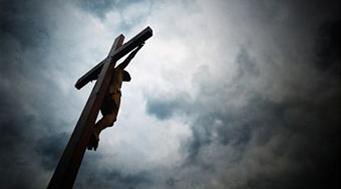
Christ has bought us out from under the doom of that impossible system by taking the curse for our wrongdoing upon Himself. For it is written in the Scripture, “Anyone who is hanged on a tree is cursed” (as Jesus was hung upon a wooden Cross). (Galatians 3:13 TLB)
Sovereign love submitted to the cruelty of man SO THAT you and I could be saved from the inescapable doom that will inevitably crash down on us. Jesus loved us so much that He allowed the Cross to happen to Him.
The question now remains—what are you doing with this sovereign love?
Do you know Jesus as your Savior? Have you received this gift He willingly, lovingly purchased for you on the Cross?
Max Lucado takes us in for a closer look at the Cross and all that Jesus did there for us. Please check out my full book review and then read this book—you will be glad you did!
“Maybe you’ve never spit on anyone, but have you gossiped? Slandered? Have you ever raised your hand in anger or rolled your eyes in arrogance, have you ever blasted your high beams in someone’s rearview mirror? Ever made someone feel bad so you would feel good? That’s what the soldiers did to Jesus. When you and I do the same, we do it to Jesus too. ‘I assure you, when you did it to one of the least of these My brothers and sisters, you were doing it to Me!’ (Matthew 25:40 NLT). How we treat others is how we treat Jesus. …
“Allow the spit of the soldiers to symbolize the filth in our hearts. And then observe what Jesus does with our filth. He carries it to the Cross. Through the prophet He said, ‘I did not hide My face from mocking and spitting’ (Isaiah 50:6). Mingled with His blood and sweat was the essence of our sin.”
“‘He canceled the record that contained the charges against us. He took it and destroyed it by nailing it to Christ’s Cross’ (Colossians 2:14 NLT). Between His hands and the wood there was a list. A long list. A list of our mistakes: our lusts and lies and greedy moments and prodigal years. A list of our sins. Dangling from the Cross is an itemized catalog of your sins. The bad decisions from last year. The bad attitudes from last week. There, in broad daylight for all of heaven to see, is a list of your mistakes. … The list God has made, however, cannot be read. The words can’t be deciphered. The mistakes are covered. The sins are hidden. Those at the top are hidden by His hand; those down the list are covered by His blood. Your sins are ‘blotted out’ by Jesus (KJV). ‘He has forgiven you all your sins: He has utterly wiped out the written evidence of broken commandments which always hung over our heads, and has completely annulled it by nailing it to the Cross’ (Colossians 2:14 Phillips).”
“Seats at God’s table are not available to the sloppy. But who among us is anything but. Unkempt morality. Untidy with truth. Careless with people. Our moral clothing is in disarray. Yes, the standard for sitting at God’s table is high, but the love of God for His children is higher. So He offers a gift.… a seamless robe… a robe worn by His Son, Jesus.”
“What appeared to be the cruelty of man was actually the sovereignty of God. Matthew tells us: ‘And when Jesus had cried out again in a loud voice, He gave up His spirit. At that moment the curtain of the temple was torn into from top to bottom’ (27:50-51). It’s as if the hands of heaven had been gripping the veil, waiting for this moment.”
“Why is the Cross the symbol of our faith? To find the answer look no farther than the Cross itself. Its design couldn’t be simpler. One beam horizontal—the other vertical. One reaches out—like God‘s love. The other reaches up—as does God’s holiness. One represents the width of His love; the other reflects the height of His holiness. The Cross is the intersection. The Cross is where God forgave His children without lowering His standards.”
“‘Just look what they did to me!’ we defy and point to our hurts. ‘Just look what I did for you,’ Jesus reminds and points to the Cross. Paul said it this way: ‘If someone does wrong to you, forgive that person because the Lord forgave you’ (Colossians 3:13). You and I are commanded—not urged, commanded—to keep no list of wrongs.”
“Knowing His last deeds would be forever pondered, don’t you think Jesus chose them carefully? Deliberately? Of course He did. There were no accidents that day. Jesus’ last moments were not left up to chance. God chose the path; He selected the nails. Our Lord planted the trio of crosses and painted the sign. God was never more sovereign than in the details of the death of His Son. … The message: ‘I did it for you. I did it all for you.’”