Review Your History

Listen to the podcast of this post by clicking on the player below, and you can also subscribe on AppleSpotify, or Audible.  

We saw in part one of this two-part series that we quickly go into crisis mode when we forget that God is in control, so we need to remain full of thanks all the time (Ephesians 5:20 AMPC). We called gratitude our inoculation against the pull from contentment to crisis, but inoculation doesn’t mean that we never experience some pangs of anxiety when a moment of darkness hits. Maturing Christians are learning how to spot the beginning of anxiety and move back into the contentment zone earlier and earlier (Romans 5:3-5; James 1:2, 12). 

(Check out all of the Scriptures in this post by clicking here.)

James says we “will receive the crown of life” from Jesus. There’s no doubt about that! In a trial, it’s important to be reassured that the trial can never cause us to lose out with our Heavenly Father (Romans 8:38-39). 

Psalm 107 starts out with this same assurance—“those He redeemed” (v. 2) is in the perfect tense. It’s complete and irrevocable! We walk out our redemption in circumstance after circumstance in a way that bring glory to God and draws others to Him as well. “Let the redeemed of the Lord say” is in the imperfect tense, which means giving thanks is an ongoing practice (v. 1). 

Redeemed once, but giving thanks always! 

Romans 8 gives a little snapshot of some of the situations that could have sent us spiraling into crisis mode, but remember the conclusion: None of those things can separate from God’s love. 

Last week we saw how the psalmist linked prayer and gratitude in a repeated theme. This practice is backward looking (vv. 7-8, 14-15, 20-22, 29-32). When we look back to see how God has moved and then we contemplate Who He is (Hebrews 13:8; Isaiah 59:1). 

Look at the closing verse (v. 43): 

  • heed = guard, watch over attentively; this is an imperfect verb—which means we keep on doing it 
  • consider = discern: to take apart the evidence and harvest the lessons 
  • great love = God’s limitless lovingkindness 

I love this verse in the New Living Translation: Those who are wise will take all this to heart; they will see in our history the faithful love of the Lord.
That means we… 

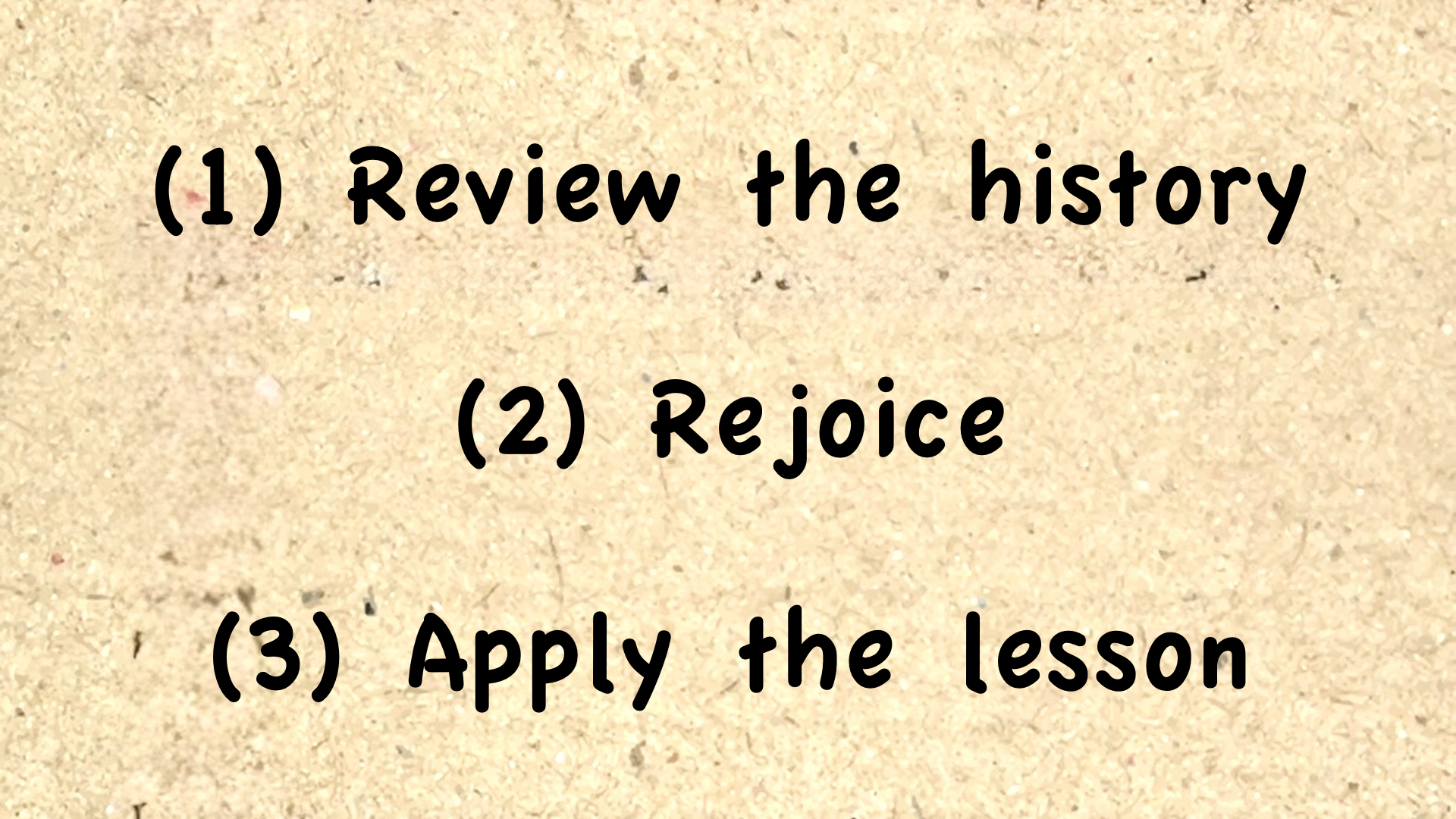
  1. Review the history of God’s faithfulness 
  2. Rejoice over it 
  3. Apply it to your current circumstance 

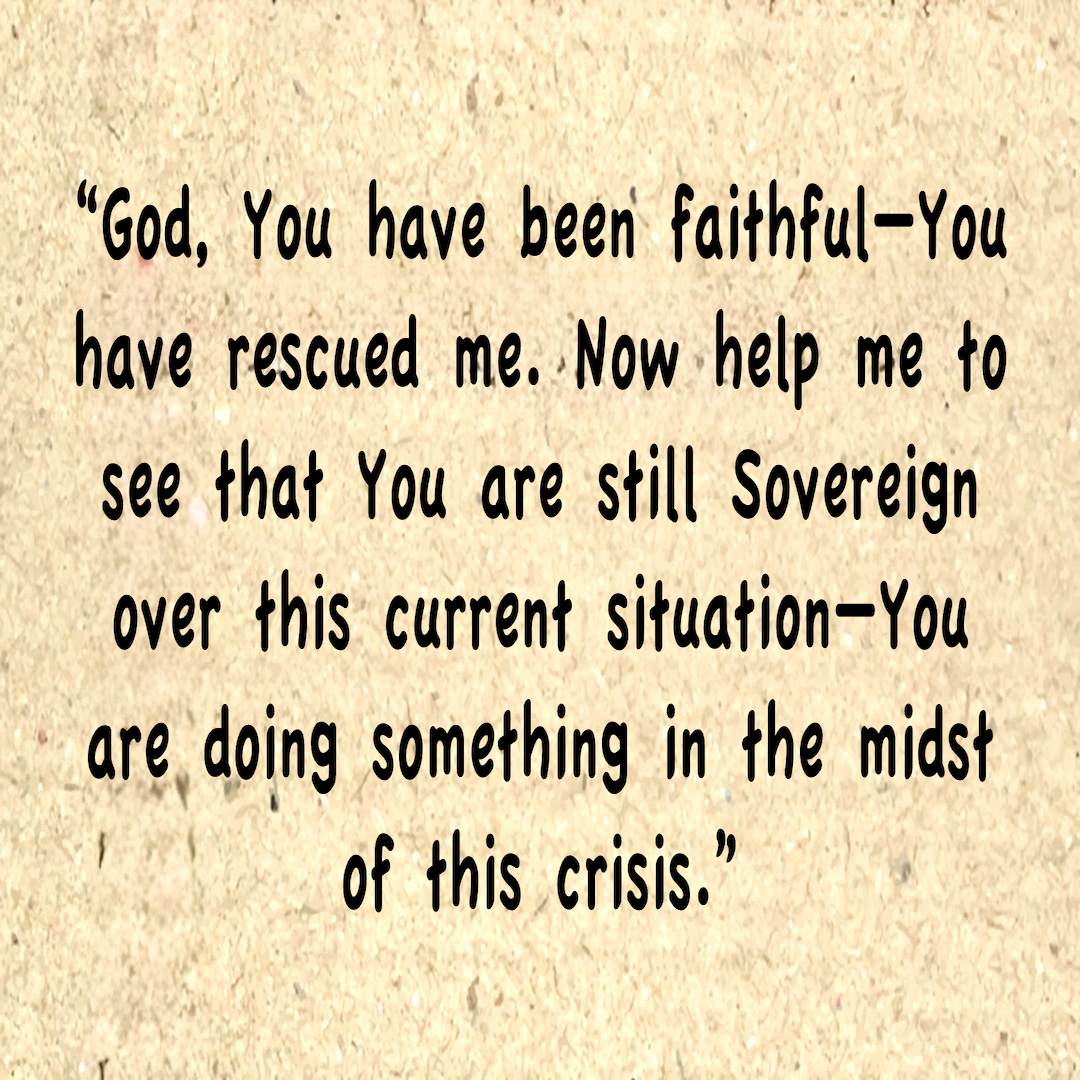
We can pray, “God, You have been faithful—You have rescued me. Now help me to see that You are still Sovereign over this current situation—You are doing something in the midst of this crisis.” 

In Romans 8:28, Paul tells us that God is working together all of our circumstances for His glory and our our good. Oswald Chambers noted, “In the Christian life we have no aim of our own, and God’s aim looks like missing the mark because we are too shortsighted to see what He is aiming at.” Reviewing our history and then giving thanks helps assure our anxious heart that God is going to hit the mark (Philippians 1:6). 

Praise the Lord! I will thank the Lord with all my heart as I meet with His godly people. How amazing are the deeds of the Lord! All who delight in Him should ponder them. Everything He does reveals His glory and majesty. His righteousness never fails. He causes us to remember His wonderful works. How gracious and merciful is our Lord! (Psalm 111:1-4 NLT) 

►► Would you please prayerfully consider supporting this ministry? My Patreon supporters get behind-the-scenes access to exclusive materials. ◀︎◀︎

God Provides For His Servants

Listen to the podcast of this post by clicking on the player below, and you can also subscribe on AppleSpotify, or Audible. 

God promised to provide for Jeremiah if he remained faithful to preach the word God had given him. Jeremiah did deliver a hard message that turned out to be highly unpopular, and as a result those who heard his sermon became quite angry with Jeremiah. 

In what I think is a very human response, Jeremiah began to complain to God—

   Your words were found, and I ate them; and Your words were to me a joy and the rejoicing of my heart, for I am called by Your name, O Lord God of hosts. I sat not in the assembly of those who make merry, nor did I rejoice; I sat alone because Your powerful hand was upon me, for You had filled me with indignation. Why is my pain perpetual and my wound incurable, refusing to be healed? Will You indeed be to me like a deceitful brook, like waters that fail and are uncertain? (Jeremiah 15:16-18 AMPC) 

God had to speak a correcting word to Jeremiah— 

   If you return and give up this mistaken tone of distrust and despair, then I will give you again a settled place of quiet and safety, and you will be My minister; and if you separate the precious from the vile—cleansing your own heart from unworthy and unwarranted suspicions concerning God’s faithfulness—you shall be My mouthpiece. Let them return to you—not you to the people. (v. 19) 

Jeremiah got over his pity party and once again continued to faithfully deliver God’s message, despite what people thought of him or said about him. Jeremiah even remained resolute in his devotion to God when the rulers of the people abused Jeremiah or threw him into prison or threatened to kill him. 

Just as God promised, as the Babylonians pressed in on Jerusalem, the people flocked back to Jeremiah to ask him to intercede before God on their behalf (21:1-2; 37:3; 42:2)

Remember that God had promised to take care of Jeremiah, assuring him of a place of quiet and safety. God also said, 

   Truly your release, affliction, and strengthening will be for good purposes; surely, Jeremiah, I will intercede for you with the enemy and I will cause the enemy to ask for your aid in the time of evil and in the time of affliction. (15:11) 

This promise was fulfilled when Nebuzaradan—the commander of the imperial guard in Nebuchadnezzar’s army—came to Jerusalem:

   Now Nebuchadnezzar king of Babylon had given these orders about Jeremiah through Nebuzaradan commander of the imperial guard: “Take him and look after him; don’t harm him but do for him whatever he asks.” … [Nebuzaradan] had found Jeremiah bound in chains among all the captives from Jerusalem and Judah who were being carried into exile to Babylon. When the commander of the guard found Jeremiah, he said to him, “The Lord your God decreed this disaster for this place. And now the Lord has brought it about; He has done just as He said He would. All this happened because you people sinned against the Lord and did not obey Him. But today I am freeing you from the chains on your wrists.” (39:11-12; 40:1-2) 

God never promises His servants their task will be easy, but He does promise both temporal provision and eternal rewards for His servants who remain faithful to Him and to His calling. 

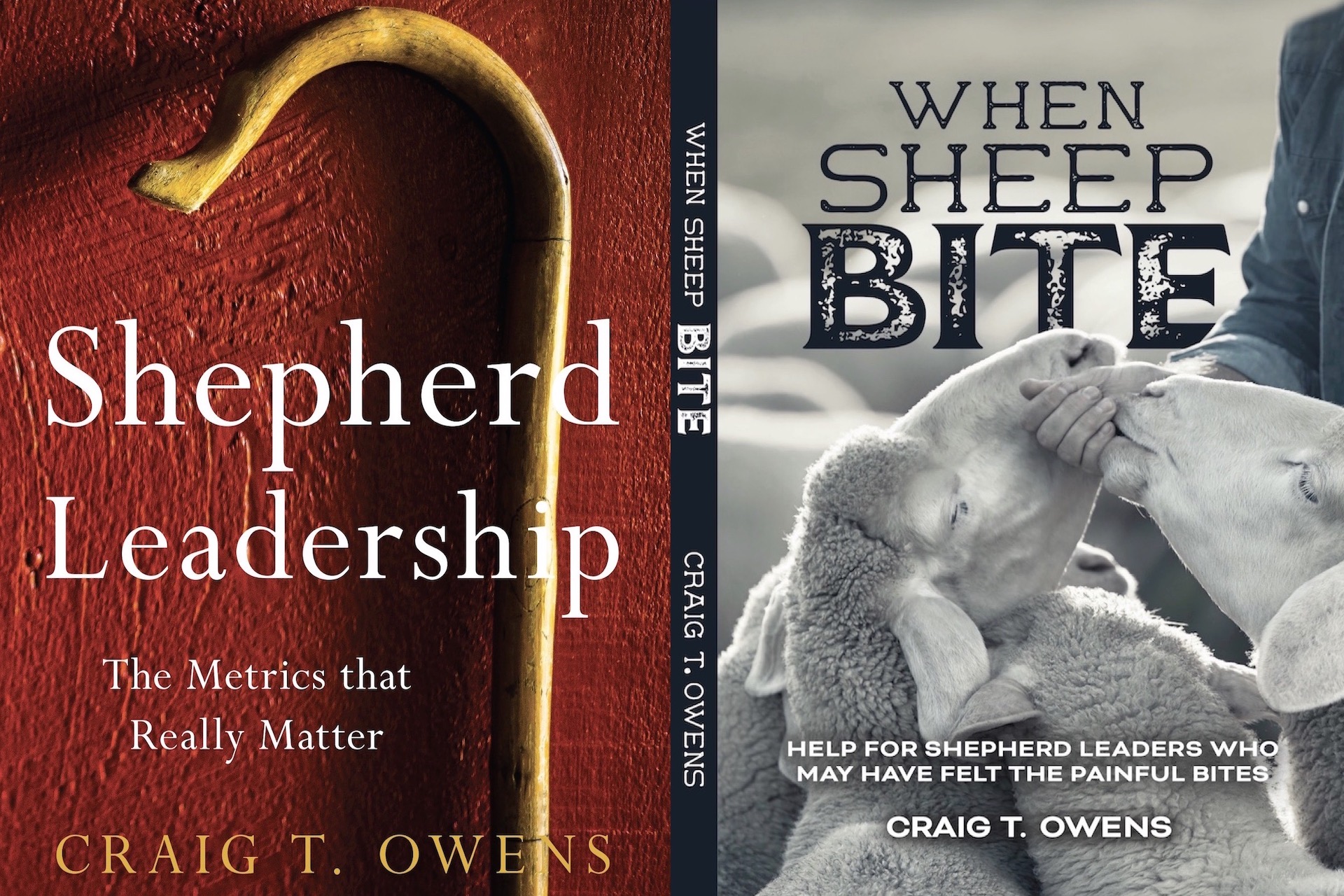
In my book Shepherd Leadership, I talk about a time God had to correct me when I was throwing myself a pity party. 

And in my book When Sheep Bite, the entire third section contains biblical strategies to help God’s servants not give in to the very natural response of fight-or-flight, but how to tap into the supernatural response of faithfulness. 

If you are a spiritual leader, I would encourage you to pick up a copy of both of these books. And keep in mind that God always provides for His servants. 

►► Would you please prayerfully consider supporting this ministry? My Patreon supporters get behind-the-scenes access to exclusive materials. ◀︎◀︎
Links & Quotes

When we pray the closing words of the prayer Jesus gave us—“For Yours is the kingdom, and the power, and the glory forever. Amen!”—we are both acknowledging God’s awesomeness and we are asking for our lives to display this reality.

I have a lot of new video content on my YouTube channel every week. Please check it out and subscribe so you don’t miss anything.

“He who loves iniquity does not love his fellow man, for ‘he who loves iniquity does not love, but rather hates his own soul.’ And certainly he who does not love his own soul will in no way be capable of loving the soul of another.” —Aelred of Rievaulx (1109-1167) 

Steven Lee shows us the biblical principles that God forms us through failure. One passage especially stood out to me because it is a central thought to both of my books. Lee writes, “God measures success according to faithfulness: ‘One who is faithful in a very little is also faithful in much’ (Luke 16:10). Do we strive for success as defined by God? Are we seeking to be faithful with all that he has entrusted to us—time, talents, and treasure? Or have we adopted the lying weights and measures of our world? Will our labors result in hearing the words ‘Well done, good and faithful servant’ (Matthew 25:23)? Put aside striving for the world’s facade of perfection.”

“The measure of who we are is what we do with what we have.” —Vince Lombardi 

T.M. Moore teases us with this: “The most important question we can ask guides us in answering many other questions besides, questions such as, ‘Whom should I marry?’ and ‘How can I stop wasting time?’ and ‘What’s the best way to use my wealth?’’ Any question that helps us answer those and a myriad other questions that might arise during the day must be pretty important. Indeed, it must be the most important question any of us could ask.” What is that most important question? Check out his thought-provoking answer. 

“Life is not a spectator sport. If you’re going to spend your whole life in the grandstand just watching what goes on, you’re wasting your life.” —Jackie Robinson 

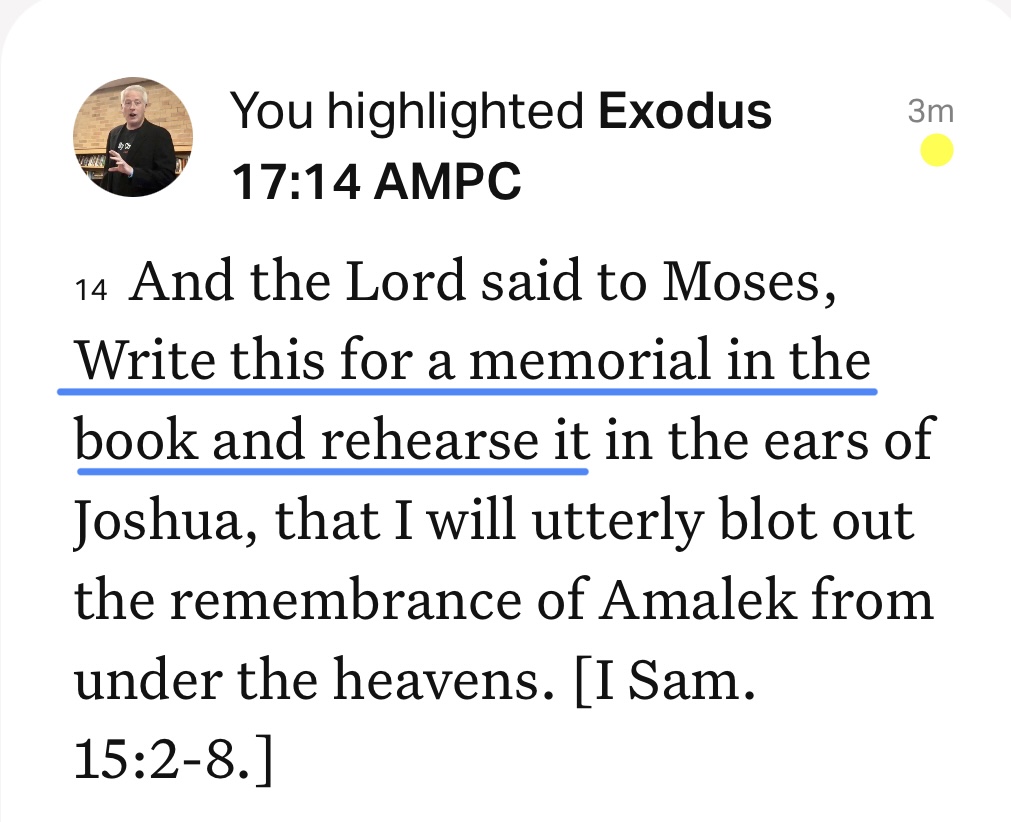
When God gives you a victory, write it down (see Exodus 17:14). When God gives you a promise, write it down. Then read it regularly so you don’t forget it. This will keep you grateful, it will keep you expectant, and it will keep you dependent on the victory-giving, promise-keeping God.

Wonder Worker

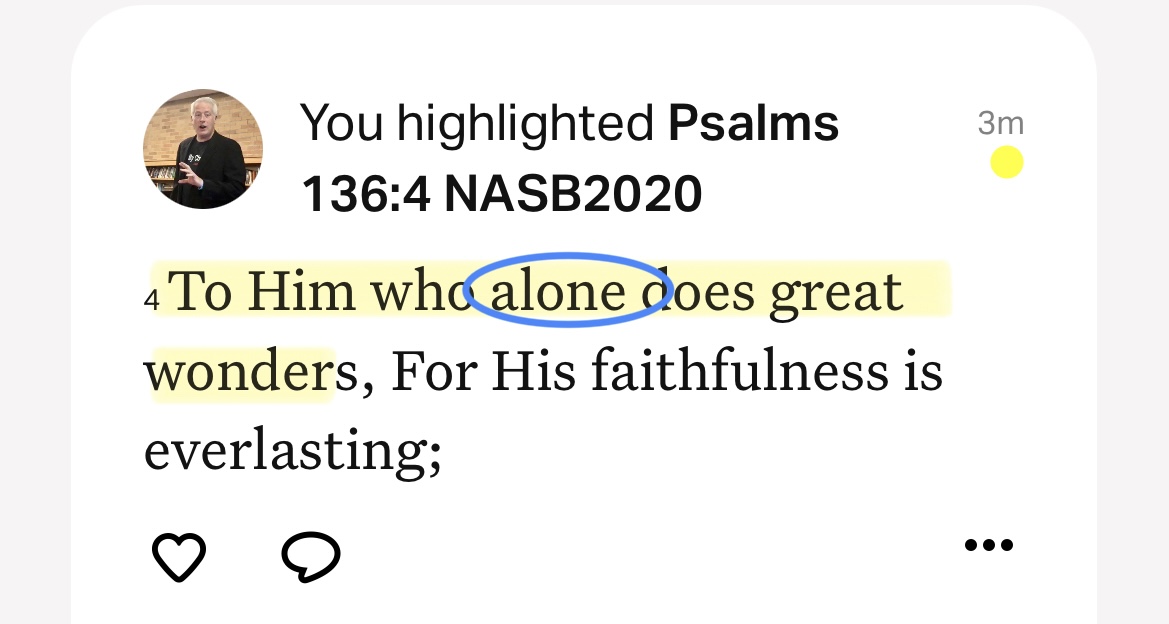
To Him who alone does great wonders, for His faithfulness is everlasting. (Psalm 136:4).

No one but our God can do the wondrous things He does because…

…no one is eternally existent like He is

…no one is self-sufficient like He is

…no one knows what He knows

…no one loves like He loves

…no one has the strength He has

…no one is as faithful as He is 

…no one gets the final word as He does

Ruth + Boaz—The Mother’s Day Version

Listen to the podcast of this post by clicking on the player below, and you can also subscribe on Apple or Spotify.

John Maxwell said, “We overestimate what we can do in a day; we underestimate what we can do in a year.” In the case of parents, I think we do the same thing: we lose sight of the big picture when we get bogged down in the details and the pressures of each day. As a result, many times we are unaware of the long-lasting rewards that come from our daily obedience and God’s eternal faithfulness. This was never more true than in the fantastic love story of Ruth + Boaz. 

Last week we looked at the history of Pentecost and what took place 50 days after the Passover, we saw a picture in the Old Testament that was fulfilled in the New Testament. The Jews saw this too. In the Hagiographa (Holy Writings), they picked one of the books of the Old Testament to read at each of the annual Jewish feasts, and the Book of Ruth was selected for Pentecost. I think this was because Ruth herself is in essence a “harvest” of God’s blessing. She is the firstfruits of the non-Jewish people whom God has engrafted into His holy family. 

The story of Ruth’s coming into God’s family is birthed out of heartache. Elimelech and Naomi live in Bethlehem, which means “house of bread,” but it was a time of famine; Elimelech’s name means “God is King,” but Israel had no king and everyone lived for themselves; Naomi’s name means “pleasant,” but her days were bitter (see Judges 21:25; Ruth 1:1-5). 

After Elimelech and his two sons die, Naomi changes her name to Mara (which means bitterness), and yet she hears “that the LORD had come to the aid of His people by providing food for them” (1:6) and she decides to return to Bethlehem. She counsels her daughters-in-law to remain with their families in Moab, but Ruth decides to cling to Naomi. 

In the face of utter hopelessness, Ruth could have chosen what was familiar—her family, her homeland, her gods—but instead she chose to cling to Jehovah. 

Perhaps when she heard that Jehovah had come to the aid of His people she realized, “I’ve never heard of Chemosh coming to the aid of his people. We sacrifice to him but he doesn’t do anything for us. This Jehovah cares for His people. I will put my faith in Him.” 

Ruth’s first step of obedience triggers a whole series of events, starting with one that the writer of this story introduces by saying, “As it turned out, Ruth found herself working in a field belonging to Boaz.” 

But this is no accident—God oversees and directs all of the details. All of history is His story. God is in charge of the tiniest of details: even down to directing Ruth to the right barley field. Ruth’s trust in Jehovah, her obedience in following Him, set things in motion that God had planned, just as Paul explained in Romans 8:28. 

Moms, at the end of the story of your life, you will look back and see so many as-it-turned-out moments. But that means you are living in an as-it-turned-out moment right now. If you believe God is overseeing the details of your life, then every moment is divinely orchestrated by Jehovah, every moment is strategic, every moment is God-directed. You must remain daily obedient to God. 

Don’t underestimate the legacy of God’s provision that is being established every single day that you remain obedient in following Him. Look at the amazing way God used Ruth and Boaz in the family tree of Jesus Christ (Ruth 4:16-22; Matthew 1:1-6).

Moms, your obedience today is preparing your children—and their future generations—for them to experience God’s provision in a coming famine (see Amos 8:11; Psalm 91).

Of course, Ruth can’t give birth to Obed without there being a father, which is why the story is called Ruth + Boaz. On Father’s Day we’ll look at the integrity of Boaz that made this possible too, so please make plans to join me then.

►► Would you please prayerfully consider supporting this ministry? ◀︎◀︎

Miracle Of Miracles

…Lord, the God of Israel, there is no God like You… (1 Kings 8:23).

Yahweh is unique. He isn’t #1 in the categories that men use to rank things—He embodies the categories; He is in those categories all by Himself. He has no peer, He has no rival. He is the I AM. 

This seemingly unapproachable God approaches us—miracle of miracles! He makes a covenant of love, and He keeps that covenant. He makes promises, and He fulfills all those promises. He is the Judge, and yet He provides for the atonement and total restoration of the guilty sinner. He knows every human heart (v. 39) and every human sin (v. 46), and yet He does not abandon, but saves!

Miracle of miracles! He is the one who gives to me a heart that wants to walk in obedience to Him…

  • …so that He can keep all of His promises that are reserved for those who walk in obedience to Him
  • …so that all the peoples of the earth may see and know “that the LORD is God and that there is no other” (v. 60)

Miracle of miracles! The unique I AM wants me to be in a relationship with Him. The One who is complete in Himself wants me to be in this blessed completeness with Him forever! How could I ever say no to such an invitation?! How could I ever refrain from telling others about this invitation?!

God loves me and He has done everything necessary for me to be in an eternal relationship with Him—miracle of miracles indeed!

God’s Promise IS Coming

When God made His promise to Abraham, since there was no one greater for Him to swear by, He swore by Himself, saying, “I will surely bless you and give you many descendants.” And so after waiting patiently, Abraham received what was promised. (Hebrews 6:13-15)

After waiting patiently…

God’s promise did come, but Abraham had to wait a long, long time! One translation says that Abraham waited long and endured patiently. Another says, Abraham stuck it out and got everything that had been promised to him. 

God’s promises DO come to those who patiently endure UNTIL the promise comes. 

Hang on.
Don’t fret.
Keep focused. 
Don’t lose heart.
Endure! 
Endure patiently.
Stick it out.
Don’t give up.
Keep going.
Don’t stop.
Persevere until it comes.

God has determined to show us the abundance of His promises, the faithfulness of His word, the trustworthiness of His promises. 

Ask Abraham. He’ll tell you that it’s so worth it to hang on until God fulfills His word.

God’s counsel is unchangeable. 
His wisdom is profound.
His treasures are immeasurable.
His delights are beyond comparison.
His hope is secure
His word endures.
His promises are sure.

Don’t give up. Patiently endure another day. God’s promise IS coming!

Thursdays With Spurgeon—God’s Faithful Provision

This is a weekly series with things I’m reading and pondering from Charles Spurgeon. You can read the original seed thought here, or type “Thursdays With Spurgeon” in the search box to read more entries.

God’s Faithful Provision

     My witness is, and I speak it for the honor of God, that He is a good provider. … My first income as a Christian minister was small enough in all conscience, never exceeding forty-five pounds a year, yet I was as rich then as I am now, for I have enough; and I had no more cares, nay, not half as many then as I have now; and when I breathed my prayer to God then, as I do now, for all things temporal and spiritual, I found Him ready to answer me at every pinch, and for many pinches I have had. … My faith has been often tried, but God has always been faithful and sent supplies in hours of need. If any should tell me that prayer to God is a mere piece of excitement, and that the idea of God answering human cries is absurd, I should laugh the statement to scorn, for my experience is not that of one or two singular instances, but that of hundreds of cases in which the Lord’s interposition, for the necessities of His work, has been as manifest as if He had rent the clouds and thrust fourth His own naked arm and bounteous hand to supply the needs of His servant. 

From The Autobiography Of Charles Spurgeon 

I, too, can declare with Spurgeon how many times God has faithfully provided for us just in time. Every instance of true need has been met by miraculous provision as we have prayed to Him. 

It’s a lie to think that God doesn’t care about your need, or that He is too busy with bigger matters, or that He only helps those who help themselves. 

God loves to help those who cannot help themselves, so that He receives all of the glory. 

Do not be anxious about anything, but in every situation, by prayer and petition, with thanksgiving, present your requests to God (Philippians 4:6). 

Poetry Saturday—O My Soul What Means This Sadness

O my soul! what means this sadness?
Wherefore art thou thus cast down?
Let thy griefs be turned to gladness,
Bid thy restless fears be gone;
Look to Jesus, look to Jesus,
And rejoice in His dear name.

What though satan’s strong temptations
Vex and grieve thee day by day,
And thy sinful inclinations
Often fill thee with dismay;
Thou shalt conquer,
Through the Lamb’s redeeming blood.

Though ten thousand ills beset thee
From without and from within,
Jesus saith He’ll ne’er forget thee,
But will save from hell and sin.
He is faithful
To perform His gracious Word.

Though distresses now attend thee,
And thou tread’st the thorny road,
His right hand shall still defend thee;
Soon He’ll bring thee home to God.
Therefore praise Him,
Praise the great Redeemer’s name.

Oh that I could now adore Him
Like the heavenly host above,
Who forever bow before Him,
And unceasing sing His love.
Happy songsters!
When shall I your chorus join? —W.B. Bradbury

Charles Spurgeon On Quiet Confidence

C.H. SpurgeonIn quietness and in confidence shall be your strength (Isaiah 30:15).

“It is always weakness to be fretting and worrying, questioning and mistrusting. What can we do if we wear ourselves to skin and bone? Can we gain anything by fearing and fuming? Do we not unfit ourselves for action and unhinge our minds for wise decision?

“We are sinking by our struggles when we might float by faith. Oh, for grace to be quiet!

“Why run from house to house to repeat the weary story which makes us more and more heart-sick as we tell it? Why even stay at home to cry out in agony because of wretched forebodings which may never be fulfilled? It would be well to keep a quiet tongue, but it would be far better if we had a quiet heart. Oh, to be still and know that Jehovah is God!

“Oh, for grace to be confident in God! The holy One of Israel must defend and deliver His own. He cannot run back from His solemn declarations. We may make sure that every word of His will stand though the mountains should depart. He deserves to be confided in; and if we would display confidence and consequent quietness, we might be as happy as the spirits before the throne.

“Come, my soul, return unto thy rest, and lean thy head upon the bosom of the Lord Jesus.” —Charles Spurgeon