Links & Quotes

The best way to quiet all the voices in our head is to tune in to the only Voice that really matters.

I have a lot of new video content on my YouTube channel every week. Please check it out and subscribe so you don’t miss anything.

“You have to expect things of yourself before you can do them.” —Michael Jordan 

“The sun, with all those planets revolving around it and dependent on it, can still ripen a bunch of grapes as if it had nothing else in the universe to do.” —Galileo Galilei 

“Physical care is vital to vigilance. HALT is the acronym often used by therapists to remind people of when they can be most vulnerable it stands for: hungry, angry, lonely, tired. Simply going to bed on a regular schedule to get a good night’s rest can help one’s brain be more focused on positive habits and more alert to fight temptations. Not only eating but also eating well can improve mood and feelings of well-being. Regular exercise keeps the mind more focused, the body feeling great, and improve sleep.” —Sam Black, in The Porn Circuit 

“Leadership can be a lonely business filled with great amounts of soul-draining human interactions but little soul-filling intimacy. Without some safe-harbor relationships where we can lay down all of the armor and weapons needed to face the world and relax in confidence and unguarded communion, we become vulnerable to two debilitating frames of mind and spirit—the victim and the martyr. Allowed to blossom into resentment or a self-justification for seeking EGO-soothing instant gratification, these twin demons have been the downfall of many a leader in every walk of life.” —Kenneth Blanchard and Phil Hodges, in Lead Like Jesus 
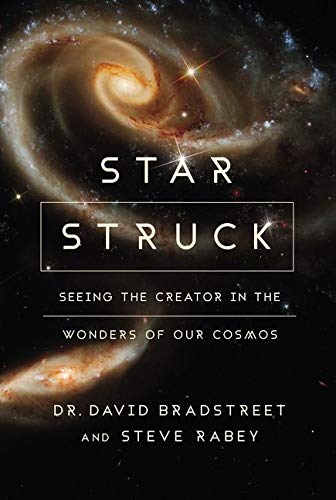
11 Quotes And 7 Astronomical Tidbits From “Star Struck”

Star Struck by Dr. David Bradstreet is an insightful book for astronomical issues, but I found it lacking in the way he missed multiple opportunities to use the mind-boggling discoveries in astronomy to point to a majestic Creator. Check out my full book review by clicking here. 

“Those who study the stars have God for a teacher.” —Tycho Brahe, a sixteenth-century astronomer 

“Almost all ancient civilizations believed that the universe had existed forever. Throughout the ancient world there was just one civilization that didn’t subscribe to this cyclical vision of eternity. Jewish Scripture, with the story of the Creation, stated clearly that the world had a beginning.” —Martin Gorst, historian 

“Science is great as science, but it makes a lousy religion.” —Guy Consolmagno 

“The atoms that so liberally and congenially flock together to form living things on Earth are exactly the same atoms that decline to do it elsewhere.” —Bill Bryson 

“Eratosthenes of Alexandria (276–194 BC) “did the math, concluding that the earth was 24,662 miles around. His results were shockingly accurate: within 1 percent of our current estimate of 24,859 miles.” —Dr. David Bradstreet 

“The sun is so powerful that we sometimes must shield ourselves from its heat, even after that heat has taken an eight-minute journey to earth, losing a third to half of its radiant energy to the protective atmosphere of our clouds. ‘Nothing is deprived of its warmth,’ says the psalmist (Psalm 19:6).” —Dr. David Bradstreet 

“I wanted to become a theologian. For a long time I was restless. Now, however, behold how through my effort God is being celebrated in astronomy.” —Johannes Kepler 

“Science keeps religion from sinking into the valley of crippling irrationalism and paralyzing obscurantism. Religion prevents science from falling into the marsh of obsolete materialism and moral nihilism.” —Dr. Martin Luther King, Jr. 

“If we study science without Scripture, we risk falling into the ditch of atheistic evolutionism; on the other hand, the study of Scripture separated from God’s laws in nature risks ideologies that misinterpret God and distort His character.” —Timothy Jennings 

“Holy Scripture and nature are both emanations from the divine Word.” —Galileo 

“God cannot be reduced to the role of a scientific hypothesis.” —Father Georges Lemaître 

Interesting astronomical tidbits: 

  1. Unlike everyone else in the neighborhood, Venus rotates backwards. 
  2. Jupiter rotates on its axis in slightly less than ten hours, faster than on any other planet. 
  3. Saturn is twice as far away from the sun, lowering its temperature and stretching out its orbital period to nearly thirty Earth years. 
  4. Neptune is so far away that it takes 164 years to orbit the Sun. 
  5. Uranus’ North Pole is tipped a whopping 98 degrees to its orbital plane. 
  6. Every day our powerful atmospheric shield hijacks some 100 tons of small rocks and other pieces of space stuff heading our way, breaking up and incinerating everything before it can hit us. 
  7. Our own Milky Way galaxy is home to more than 200 billion stars. There are more than 200 billion additional galaxies in the cosmos. These galaxies serve as gigantic star factories, each of which has its own 100 to 300 billion stars. Do the math and the numbers are mind-boggling: our Sun is merely one among some 100,000,000,000,000,000,000,000 stars.

Scientists + God

Modern-day scientists want to exclude the very mention of God from anything. This is not science, but scientism. It is a belief system as surely as any religion is.

But the one thing scientism overlooks is the reliance on God that the greatest scientific minds in the world had.

Johannes Kepler“Oh You who through the light of nature has aroused in us a longing for the light of grace, so that we may be raised in the light of Your Majesty, to You, I give thanks, Creator and Lord, that You allow me to rejoice in Your works. Praise the Lord you heavenly harmonies, and you who know the revealed harmonies. For from Him, through Him and in Him, all is, which is perceptible as well as spiritual; that which we know and that which we do not know, for there is still much to learn.” —Johannes Kepler, the astronomer who discovered the laws of planetary motion

“It is reasonable to believe, however, that the Creator, if He paid attention to the relation of the orbits [of the planets] in their general aspect, paid attention also to the relation of the varying distances of the individual orbits in detail….” —Johannes Kepler

“Nevertheless, all the observations which could possibly be made in so short a time, I was enabled, by Divine Providence, to complete….” —Jeremiah Horrox, astronomer who used Kepler’s principles to chart the orbit of Venus 

Galileo Galilei“All these facts were discovered and observed a few days ago by the help of a telescope devised by me, through God’s grace first enlightening my mind.” —Galileo Galilei, mathematician, philosopher and astronomer

“I do not feel obliged to believe that the same God who has endowed us with sense, reason, and intellect has intended us to forgo their use.” —Galileo Galilei 

“In the absence of any other proof, the thumb alone would convince me of God’s existence.” —Sir Isaac Newton, physicist and mathematician

Isaac Newton“Gravity explains the motions of the planets, but it cannot explain who set the planets in motion. God governs all things and knows all that is or can be done.” —Isaac Newton

“This most beautiful system of the sun, planets, and comets, could only proceed from the counsel and dominion of an intelligent and powerful Being.” —Isaac Newton

“We are compelled to acknowledge the effect of a cause; chance alone could not have given a form nearly circular to the orbit of all the planets.” —Pierre Simon, one of the fathers of the scientific revolution 

Book Reviews From 2011

Here is the complete list of books I read in 2011. Click on each title to be taken to my review…

7 Habits Of Highly Effective Teens

A Collection Of Wednesdays

A Treasury Of A.W. Tozer

Abandon The Ordinary

Average Joe

Be A People Person

Be The People

Biblical Ethics

Biblical Psychology

Bonhoeffer: Pastor, Martyr, Prophet, Spy

Bringing Sons Unto Glory

Chazown

City On Our Knees

Costly Grace

Doing Virtuous Business

Elite Prayer Warriors

Enemies Of The Heart

Experiencing The Spirit

Fasting

For Men Only

From The Library Of A.W. Tozer

Galileo

Generation iY

George Washington Carver

Get Off Your Knees And Pray

Go For Gold

God Is The Gospel

Has God Spoken?

Home And Away

How The Mighty Fall

How To Read The Bible

How To Win Friends And Influence People

I Knew Jesus Before He Was A Christian

In Visible Fellowship

Leadership Gold

Leadership Is Dead

Leadership Prayers

Lee: A Life Of Virtue

Letters From Leaders

MacArthur: America’s General

Max On Life

Me, Myself & Bob

Never Surrender

Night

On The Verge

Peach

Plugged-In Parenting

Radical Together

Remember Why You Play

Say It With Love

Secure Daughters, Confident Sons

Sherman: The Ruthless Victor

Smith Wigglesworth On Faith

Soul Work

Soulprint

Stuff Christians Life

Sun Stand Still

The Blessing Of Adversity

The Church In Exile

The Heart Of A Great Pastor

The Hour That Matters Most

The Next Christians

The Seed

Toxic Committees & Venomous Boards

untamed

Upside

Wandering In The Wilderness

We Shall See God

Whale Done

What The Bible Says About The Holy Spirit

Why God Won’t Go Away

Why Great Men Fall

You Were Born For This

Looking forward to sharing more great reads with you in 2012! Let me know if there are any books you would like me to review.

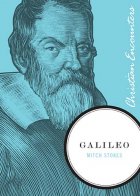
Galileo (book review)

You can quickly spot the influential people throughout history: they typically only need one name to distinguish them from all others. And Mitch Stokes does a masterful job showing why this noted scientist/mathematician/philosopher deserves the one-name designation in Galileo.

The first thing that stood out to me was how Galileo “found his way.” As the son of a musician, the field of science was never on his horizon. In fact, the start of his university career was in medicine. But as he quickly showed no aptitude nor passion for these pursuits, it was refreshing to see how his father let Galileo explore other areas of study to find his niche.

The next thing that amazed me was how Galileo’s new study and future employment in mathematics quickly evolved and expanded into areas such as philosophy, and later in life, astronomy and cosmology. Although Galileo is known today for his studies of the heavens through his improved telescope, those discoveries were only pursued to bolster his mathematic hypotheses.

Then it was amazing to see how deftly Galileo handled himself when he foresaw that his new discoveries that supported Copernicus’ claims of a heliocentric universe would upset those in the Catholic Church. Galileo said and wrote often that he was not trying to make new theology or correct old theology, but was simply trying to show how the Bible and science fit together. It was really the politically-minded (and Inquisition-minded) Cardinals in the Church that stirred up trouble for Galileo, but never the other way around.

Galileo demonstrated so beautifully through his observations and careful mathematic theorems how God had created an orderly and wonderfully-made universe. He believed that scientists had the responsibility to use their skills of observation and calculation to show how God and science are companions and not adversaries.

This is a part of Thomas Nelson’s Christian Encounters Series, and I not only highly recommend this book, but I’m looking forward to reading others in the series as well.

I am a Thomas Nelson book reviewer.