Saturday In The Psalms—No One!

The Lord reigns… (Psalm 93:1).


When biblical authors use repetition or parallelism, it’s important to take note. They are wanting to make sure their message is heard loud and clear. They want what they’re sharing to stand out from everything around it. This is sort of how we would use bold or italics, a different colored font, or even a LARGER FONT to make something stand out.

In this Psalm…

…the Lord is clothed in majesty and strength

…He is established, immovable, everlasting, from time immemorial, firm, unshakeable

…“God is mightier than the thunder of the great waters, mightier than the breakers of the sea—the Lord on high is mighty”

…His Word is very sure, lasting forever, holy, unchangeable, endless

The bottom line—

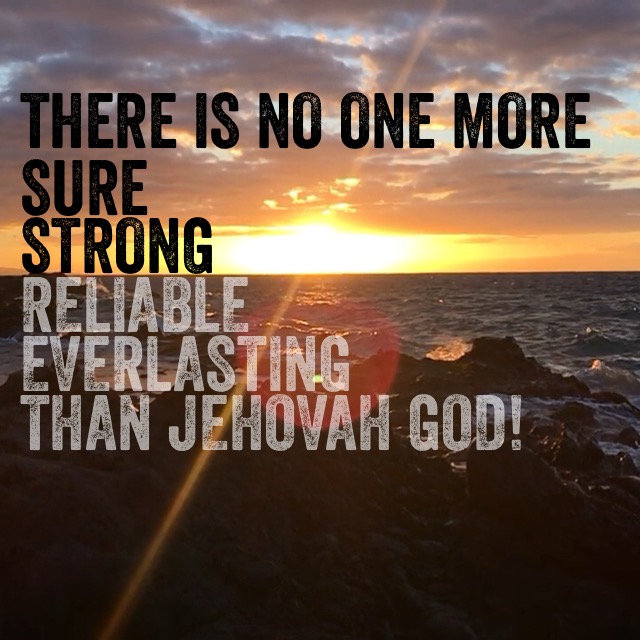
There is no one more sure, strong, reliable, and everlasting than Jehovah God!

Poetry Saturday—Prayer

Lord Jesus, Maker of creation, Word
and Son of God, Redeemer, Savior, Lord
and King, we worship You, because we know
You, and we know that You have loved us so
that we might never have to live in fear;
and when our sojourn has concluded here,
Your resurrection power, which now transforms
us into Your own image, and conforms
us to Your pleasure, will deliver, keep,
and bless us. Catch us up, Lord, in the sweep
of Your forever-marching-forward grace,
and bring us to Your glorious, waiting face,
where are we, with You, and like You, will abide
forever, in Your presence, by Your side.
Amen. —T.M. Moore, in To Know Him

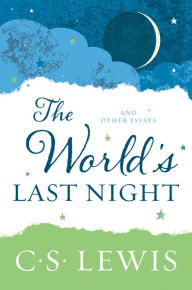
The World’s Last Night (book review)

I am a huge C.S. Lewis fan! His perspective on the spiritual world is unequaled in any other author I have read. In The World’s Last Night, Lewis shares seven essays ranging from how our prayers really impact things, to life on other planets, to the end of our world as we know it.

The title of this book (and the title of the concluding chapter) are taken from a question by John Donne: “What if this present were the world’s last night?” So all of Lewis’ essays are written from that perspective. If this is the world’s last night, why should we keep praying? If demons knew this was the world’s last night, why would they keep on tempting? If atheists knew this was the world’s last night, would they keep arguing the same way?

As with all of his writings, C.S. Lewis has a unique knack of giving his readers a perspective that is totally original. His skills in philosophy, literature, and understanding the human heart are unparalleled! If you are ready to have your horizons expanded, these essays will not disappoint!

(And for any fans of The Screwtape Letters, Screwtape himself makes a special appearance as he gives a toast in hell that is sure to evoke both smiles and chagrins.)

Poetry Saturday—Everlasting Love

Love, Thou bottomless abyss,
My sins are swallowed up in Thee!
Covered is my unrighteousness,
Nor spot of guilt remains on me,
While Jesus’ blood, through earth and skies,
Mercy, free, boundless mercy, cries. … 

Fixed on this ground I will remain,
Though my heart fail, and flesh decay;
This anchor shall my soul sustain,
When earth’s foundations melt away;
Mercy’s full power I then shall prove,
Loved with an everlasting love. —Johann Andreas Rothe

Poetry Saturday—A Hundred Years From Now

cloudsIt will not make much difference, friend,
A hundred years from now,
If you live in a stately mansion
Or on a floating river scow;
If the clothes you wear are tailor-made
Or pieced together somehow,
If you eat big steaks or beans and cake
A hundred years from now.

It won’t matter about your bank account
Or the make of car you drive,
For the grave will claim your riches and fame
And the things for which you strive.
There’s a deadline we all must meet
And no one will turn up late,
It won’t matter then all the places you’ve been,
Each one will keep that date.

We will only have in eternity
What we gave away on earth,
When we go to the grave we can only save
The things of eternal worth,
What matters, friend, the earthly gain
For which some men always bow?
For your destiny will be sealed, you see
A hundred years from now. —Walden Parker

5 Quotes On Love’s Endurance From “The Seven Laws Of Love”

The Seven Laws Of Love

In The Seven Laws Of Love, Dave Willis gives us some highly practical, biblically-based counsel for investing in all of our relationships. Normally when I share quotes from books, I share all of them at once, but for this book I felt like it would be good to share these quotes a bit more slowly, to give you time to read them and apply them.

The seven laws Dave identifies are:

  1. Love requires commitment (read the quotes here)
  2. Love selflessly sacrifices (read the quotes here)
  3. Love speaks truth (read the quotes here)
  4. Love conquers fear (read the quotes here)
  5. Love offers grace (read the quotes here)
  6. Love brings healing (read the quotes here)
  7. Love lives forever

From law #7, here are some quotes on how love lives forever—

“Make a deliberate decision right now to stop wasting time and start putting first things first. Give the very best of yourself to your loved ones, not the leftovers after you’ve given your best to everyone and everything else.”

“Don’t take yourselves too seriously, but don’t take your commitments too lightly. Live life with conviction and purpose, but make plenty of room for fun. Laughter should be the soundtrack of your relationships.”

“Fight for each other, but never fight against each other. In every disagreement, remember that your relationship is much more important than whatever you’re arguing about.”

“Love isn’t a story with a happy ending. Love is a story with no ending!”

“Don’t treat others the way they treat you; treat others the way God treats you.”

Check out my review of The Seven Laws Of Love by clicking here.

10 Quotes From C.S. Lewis

C.S. Lewis(When is it ever not a good day to share C.S. Lewis quotes?!)

“There is either a warning or an encouragement here for every one of us. If you are a nice person—if virtue comes easily to you—beware! Much is expected from those to whom much is given. If you mistake for your own merits what are really God’s gifts to you through nature, and if you are contented with simply being nice, you are still a rebel: and all those gifts will only make your fall more terrible, your corruption more complicated, your bad example more disastrous. The devil was an archangel once; his natural gifts were as far above yours as yours are above those of a chimpanzee.” —C.S. Lewis 

“The monstrosity of sexual intercourse outside marriage is that those who indulge in it are trying to isolate one kind of union (the sexual) from all the other kinds of union which were intended to go along with it and make up the total union. …You must not isolate that pleasure and try to get it by itself, any more than you ought to try to get the pleasures of taste without swallowing and digesting, by chewing things and spitting them out again.” —C.S. Lewis

“On the contrary, those who are seriously attempting chastity are more conscious, and soon know a great deal more about their own sexuality than anyone else. They come to know their desires as Wellington knew Napoleon, or as Sherlock Holmes knew Moriarty; as a rat-catcher knows rats or a plumber knows about leaky pipes. Virtue—even attempted virtue—brings light; indulgence brings fog.” —C.S. Lewis

“For there are two things inside me, competing with the human self which I must try to become. They are the Animal self, and the Diabolical self. The Diabolical self is the worse of the two. That is why a cold, self-righteous prig who goes regularly to church may be far nearer to hell than a prostitute. But, of  course, it is better to be neither.” —C.S. Lewis

 “A great deal of our anxiety to make excuses comes from not really believing in it, from thinking that God will not take us to Himself again unless he is satisfied that some sort of case can be made out in our favor. But that would not be forgiveness at all. Real forgiveness means looking steadily at the sin, the sin that is left over without any excuse, after all allowances have been made, and seeing it in all its horror, dirt, meanness, and malice, and nevertheless being wholly reconciled to the man who has done it. That, and only that, is forgiveness, and that we can always have from God if we ask for it.” —C.S. Lewis 

“To be a Christian means to forgive the inexcusable, because God has forgiven the inexcusable in you.” —C.S. Lewis

“The human lives in time but our enemy destines them to eternity. He therefore, I believe, wants them to attend chiefly to two things, to eternity itself, and to that point of time which they call the Present. For the Present is the point at which time touches eternity. Of the present moment, and of it only, humans have an experience analogous to the experience which our Enemy has of reality as a whole; in it alone freedom and actuality are offered them. He would therefore have them continually concerned either with eternity (which means being concerned with Him) or with the Present—either meditating on their eternal union with, or separation from, Himself, or else obeying the present voice of conscience, bearing the present cross, receiving the present grace, giving thanks for the present pleasure.” —C.S. Lewis

“War creates no absolutely new situation; it simply aggravates the permanent human situation so that we can no longer ignore it.” —C.S. Lewis

“The rescue of drowning men is, then, a duty worth dying for, but not worth living for.” —C.S. Lewis

“Christianity does not simply replace our natural life and substitute a new one; it is rather a new organization which exploits, to its own supernatural ends, these natural materials.” —C.S. Lewis

Poetry Saturday—The Loom Of Time

FullSizeRender 3Man’s life is laid in the loom of time
To a pattern he does not see,
While the Weaver’s work and the shuttles fly
Till the dawn of eternity.

Some shuttles are filled with silver threads
And some with threads of gold,
While often but the darker hues
Are all that they may hold.

But the Weaver watches with skillful eye
Each shuttle fly to and fro,
And sees the pattern so deftly wrought
As the loom moves sure and slow.

God surely planned the pattern:
Each thread, the dark and fair,
Is chosen by His master skill
And placed in the web with care.

He only knows its beauty,
And guides the shuttles which hold
The threads so unattractive,
As well as the threads of gold.

Not till each loom is silent,
And the shuttles cease to fly,
Shall God reveal the pattern
And explain the reason why.

The dark threads were as needful
In the Weaver’s skillful hand
As the threads of gold and silver
For the pattern which He planned. —Anonymous

Thursdays With Oswald—What Does Your Religion Mean?

Oswald ChambersThis is a weekly series with things I’m reading and pondering from Oswald Chambers. You can read the original seed thought here, or type “Thursdays With Oswald” in the search box to read more entries.

What Does Your Religion Mean? 

     To believe is literally to commit. Belief is a moral act, and Jesus makes an enormous demand of a man when He asks him to believe in Him. To be “a believer in Jesus” means to bank our confidence in Him, to stake our soul upon His honor. …

     Many of us use religious jargon, we talk about believing in God, but our actual life proves that we do not really believe one tithe of what we profess. … “The unsearchable riches of Christ”—yet we often live as if our Heavenly Father had cut us off with a shilling! We think it is a sign of real modesty to say at the end of a day—“Oh well, I have just got through, but it has been a severe tussle.” We carry our religion as if it were a headache, there is neither joy nor power nor inspiration in it, none of the grandeur of the unsearchable riches of Christ about it, none of the passion of hilarious confidence in God. …

     Christianity is the vital realization of the unsearchable riches of Christ. …

     We have made Christianity to mean the saving of our skins. Christianity means staking ourselves on the honor of Jesus; His honor means that He will see us through time, death and eternity. … 

     Why do you pray? Why are you religious? Because of a consuming passion for a particular set of your beliefs to be enthroned and proved right, or because of a consuming passion for Jesus Christ? 

From The Place Of Help

Wow, those are excellent questions to consider—What do I think Christianity really is? Do I really believe what Jesus did for me, or is it just jargon I use? Am I consumed in my passion for Christ, or is it only something I profess when things are going my way?

Links & Quotes

link quote

“Being in love is a good thing, but it is not the best thing. There are many things below it, but there are also things above it. You cannot make it the basis of a whole life. It is a noble feeling, but it is still a feeling. Now no feeling can be relied on to last in its full intensity, or even to last at all. Knowledge can last, principles can last, habits can last; but feelings come and go. And in fact, whatever people say, the state called ‘being in love’ usually does not last.” —C.S. Lewis, in Mere Christianity

“There must be nothing about our religion of our own inventing; it is for us to lay thought, and judgment, and opinion at the feet of Christ, and do what He bids us, simply because He gives the command.” —Charles Spurgeon

“The storms of life are no longer our point of reference when Jesus is our focal point.” —Dutch Sheets

Progressive Christians in 1800sMurray Vassar reminds Christians to speak up for morality!

“Policy, however, Sir, is not my principle, and I am not ashamed to say it. There is a principle above everything is political . . . And, Sir, when we think of eternity, and of the future consequences of all human conduct, what is there in this life that should make any man contradict the dictates of his conscience, the principles of justice, the laws of religion, and of God.” —William Wilberforce

Two imprisoned Christian pastors have been released from their prison sentence in Sudan. Kudos to the ACLJ!

J.Warner Wallace asks a great question: Can naturalism/evolution account for human dignity?

John Piper has a weighty post that is worth your time to read: satan and sodomy.