Links & Quotes

link quote

Some good reading from today.

“No man is better for knowing that God in the beginning created the heaven and the earth. The devil knows that, and so did Ahab and Judas Iscariot. No man is better for knowing that God so loved the world of men that He gave His only begotten Son to die for their redemption. In hell there are millions who know that. Theological truth is useless until it is obeyed.” —A.W. Tozer

Oh boy, here we go again. Pat Robertson calls creationists “deaf, dumb, and blind.”

Watch out! Sen. Harry Reid wants to restrict your First Amendment right to free speech.

I love the research and info graphics at The Bible Overview Project. Check out the 10 least popular books of the Bible.

Links & Quotes

link quote

Here are the links to some interesting reading I found this weekend.

“The dominant model of how speech works is that it is planned in advance—speakers begin with a conscious idea of exactly what they are going to say. But some researchers think that speech is not entirely planned, and that people know what they are saying in part through hearing themselves speak.” Check out more of this fascinating report You Don’t Always Know What Youre Saying.

A balanced approach is vital. “Beware any teacher or preacher who has little use for doctrine or church history.” —T.M. Moore

“Lastly, as the best advice I can give, seek more of the Spirit of God, for this is the way to become Christ-like. Vain are all your attempts to be like Him till you have sought His Spirit. Take the cold iron, and attempt to weld it if you can into a certain shape. How fruitless the effort! Lay it on the anvil, seize the blacksmith’s hammer with all your might; let blow after blow fall upon it, and you shall have done nothing. Twist it, turn it, use all your implements, but you shall not be able to fashion it as you would. But put it in the fire, let it be softened and made malleable, then lay it on the anvil, and each stroke shall have a mighty effect, so that you may fashion it into any form you may desire. So take your heart, not cold as it is, not stony, as it is by nature, but put it into the furnace; there let it be molten, and after that it can be turned like wax to the seal, and fashioned into the image of Jesus Christ.” —Charles Spurgeon

John Stonestreet has a timely reminder in his commentary Race And Redemption.

A great piece on euthanasia: What Happened To Switzerland?

Links & Quotes

link quote

Here are the links to some interesting reading I found this weekend.

“The Holy Spirit does not belong to you. Are you charismatic? He is bigger than your signs and wonders event. Are you Reformed? He will not be limited by your theology.” —R.T. Kendall

“The worst thing that can happen to a man is to succeed before he is ready.” —Martyn Lloyd-Jones

Where is the outrage in the American mainstream media?! Kidnapped School Girls In Nigeria Sold As Child Brides.

It’s funny that many secularists believe that Christian myths about Jesus evolved over time until they were written down generations later. This is the thesis in Bart Ehrman’s latest book. It’s not accurate. It’s funny because there are things believed by some of the same secularists that actually are myths that evolved over time to create the impression that Christianity is a science stopper and anti-intellectual. One of these myths is about the scientific revolution that was purportedly initiated by Copernicus and the supposed subsequent opposition from the church to his heliocentric theories.” Read more of this eye-opening post: Copernicus And The Scientific Revolution.

Disney’s Peter Rummell shares how the Imagineers keep the great ideas coming.

“The State exists simply to promote and to protect the ordinary happiness of human beings in this life. A husband and wife chatting over a fire, a couple of friends having a game of darts in a pub, a man reading a book in his own room or digging in his own garden— that is what the State is there for. And unless they are helping to increase and prolong and protect such moments, all the laws, parliaments, armies, courts, police, economics, etc., are simply a waste of time.” —C.S. Lewis

“When sin is pardoned, our greatest sorrow is ended, and our truest pleasure begins. Such is the joy which the Lord bestows upon His reconciled ones, that it overflows and fills all nature with delight. The material world has latent music in it, and a renewed heart knows how to bring it out and make it vocal.” —Charles Spurgeon

Links & Quotes

link quote

These are links to articles and quotes I found interesting today.

May God have mercy! Belgium Parliament Approves Euthanasia For Children

[VIDEO] Nailed it: Jon Stewart Calls Out Obama For Corrupt Ambassador Choices

Watch out! 7 Times Obama Ignored The Law With His Executive Orders

“The Christian who goes out without faith in ‘wonders’ will return without fruit. No one dare be so rash as to seek to do impossible things unless he has first been empowered by the God of the impossible. ‘The power of the Lord was there’ is our guarantee of victory.” —A.W. Tozer

Tim Elmore prepares us: Welcome To Our McCulture

So excited!! The Assembly of God and the United Pentecostal Council of the Assemblies of God Unite

Ronald & Nancy Reagan loved each other deeply: Valentine′s Day Advice From Ronald Reagan

“Our blunder (or shall we frankly say our sin?) has been to neglect the doctrine of the Spirit to a point where we virtually deny Him His place in the Godhead. This denial has not been by open doctrinal statement, for we have clung closely enough to the Biblical position wherever our credal pronouncements are concerned. Our formal creed is sound; the breakdown is in our working creed. This is not a trifling distinction. A doctrine has practical value only as far as it is prominent in our thoughts and makes a difference in our lives. By this test the doctrine of the Holy Spirit as held by evangelical Christians today has almost no practical value at all. In most Christian churches the Spirit is quite entirely overlooked. Whether He is present or absent makes no real difference to anyone. Brief reference is made to Him in the Doxology and the Benediction. Further than that He might as well not exist. So completely do we ignore Him that it is only by courtesy that we can be called Trinitarian. The Christian doctrine of the Trinity boldly declares the equality of the Three Persons and the right of the Holy Spirit to be worshipped and glorified. Anything less than this is something less than Trinitarianism.” —A.W. Tozer

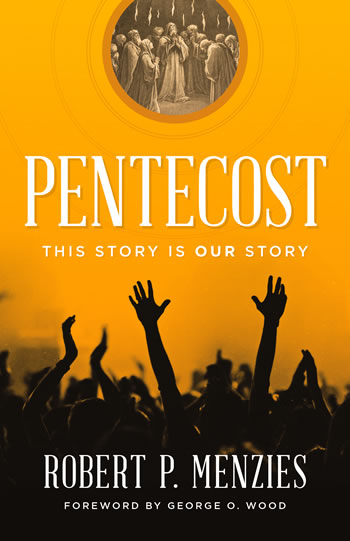
14 Quotes From “Pentecost”

Pentecost

I thoroughly enjoyed reading Pentecost by Robert P. Menzies, and learned quite a bit. You can read my full book review by clicking here. Here are a few quotes that stood out to me.

“It’s because Pentecostals fuse the biblical and contemporary horizons that we link baptism in the Holy Spirit with speaking in tongues, since that’s what Acts 2 does. It’s why we associate Spirit-baptism with empowerment for mission rather than with spiritual regeneration. And it’s why we expect God to perform ‘signs and wonders’ and to manifest spiritual gifts in worship services. All these things happened in the first Pentecostal community, and their story is our story.” 

“At its heart, the Pentecostal movement is not Spirit-centered but Christ-centered. The work of the Spirit, as Pentecostals understand it, centers on exalting and bearing witness to the Lordship of Christ.”

“Pentecostals are ‘people of the Book.’ Although Pentecostals certainly encourage spiritual experience, they do so with a constant eye to Scripture.”

“So, the stories of Acts are our stories, and we read them with expectation and eagerness: stories of the Holy Spirit’s power, enabling ordinary disciples to do extraordinary things for God. … The hermeneutic of the typical Pentecostal believer is straightforward and simple: the stories in Acts are my stories—stories that were written to serve as models for shaping my life and experience.”

“In Luke’s view, every member of the church is called (Luke 24:45–49; Acts 1:4–8/Isaiah 49:6) and empowered (Acts 2:17–21; cf. 4:31) to be a prophet. Far from being unique and unrepeatable, Luke emphasizes that the prophetic enabling experienced by the disciples at Pentecost is available to all of God’s people. … Through his two-volume work, Luke declares that the church, by virtue of its reception of the Pentecostal gift, is nothing less than a community of prophets. It matters not whether we are young or old, male or female, rich or poor, black or white; the Spirit of Pentecost comes to enable every member of the church, each one of us, to fulfill our prophetic call to be a light to the nations.” 

“Not long ago a Chinese house church leader commented, ‘When Western Christians read the book of Acts, they see in it inspiring stories; when Chinese believers read the book of Acts, we see in it our lives.’”

“Luke’s theology of the Spirit is different from that of Paul. Unlike Paul, who frequently speaks of the soteriological dimension of the Spirit’s work, Luke consistently portrays the Spirit as a charismatic or, more precisely, a prophetic gift, the source of power for service.” 

“Luke crafts his narrative so that the parallels between Jesus’ experience of the Spirit (Luke 3–4) and that of the disciples on the day of Pentecost (Acts 1–2) cannot be missed. Both accounts: 1. Are placed at the outset of Luke’s Gospel on the one hand, and the book of Acts on the other; 2. Associate the reception of the Spirit with prayer; 3. Record visible and audible manifestations; 4. Offer explanations of the event in the form of a sermon that alludes to the fulfillment of Old Testament prophecy.”

“Luke’s understanding of baptism in the Holy Spirit, I have argued, is different from that of Paul. It is missiological rather than soteriological in nature. … The tendency in Protestant churches has been to read Luke in the light of Paul. Paul addresses pastoral concerns in the church; Luke writes a missionary manifesto.” 

“Bold witness for Jesus is recognized as our primary calling and the central purpose of our experience of the Spirit’s power. Missions is woven into the fabric of our DNA.”

“I do not wish to minimize in any way the significance of the great doctrinal truths of Paul’s writings. I merely point out that since Paul was, for the most part, addressing specific needs in various churches, his writings tend to feature the inner life of the Christian community. His writings, with some significant exceptions, do not focus on the mission of the church to the world. … It is probably fair to say that while Paul features the ‘interior’ work of the Spirit (e.g., the fruit of the Spirit, Gal. 5:22–23); Luke features His ‘expressive’ work (Acts 1:8). Thus, by appropriating in a unique way the significant contributions of Luke-Acts, Pentecostals have developed a piety with a uniquely outward or missiological thrust.”

“The clarity of the Pentecostal message flows from the simple, straightforward manner in which we read the Bible. As I have noted, Pentecostals love the stories of the Bible. We identify with the stories that fill the pages of the Gospels and Acts, and the lessons gleaned from these stories are easily grasped and applied in our lives. For Pentecostals, the New Testament presents models that are to be emulated and guidelines that are to be followed. It should be noted that our approach to doing theology is not dependent on mastering a particular set of writings, say, the works of Luther; or coming to terms with a highly complex theological system. Pentecostals also do not worry much about cultural distance or theological diversity within the canon. We do not lose sleep over how we should understand the miracle stories of the Bible or how we might resolve apparent contradictions in the Bible. Our commitment to the Bible as the Word of God enables us to face these questions with a sense of confidence.”

“We must remember that whatever we do, God is measuring the work we do for Him in a qualitative, not quantitative way. … Only the work which is done by the power of the Holy Spirit can be acceptable in the Kingdom of God.” —David Yonggi Cho

“Some will still remain skeptical. They will ask: Is not this approach to church life, with its emphasis on ecstatic experience, emotional response, and spiritual power, filled with inherent dangers? Might it not encourage us to feature emotionally manipulative methods and to focus on superficial matters? Yes, undoubtedly, there are dangers. However, there is more danger in an approach that fails to make room for the full range of human experience, including the emotions, in our encounter with God.”

Links & Quotes

link quote

These are links to articles and quotes I found interesting today.

[VIDEO] A short video from John Maxwell: Pride

“Holiness is inwrought by the Holy Spirit, not because we have suffered, but because we have surrendered.” —Richard Shelley Taylor

[PICTURE] A cool father-son moment after the Broncos Super Bowl loss: Broncos’ Shaun Phillips Receives Touching Text From Son

[VIDEO] A powerful pro-life statement: Science Is Clear On When Life Begins

“We need to learn that truth consists not in correct doctrine, but in correct doctrine plus the inward enlightenment of the Holy Spirit.” —A.W. Tozer

“For it is not so much of our time and so much of our attention that God demands; it is not even all our time and all our attention; it is our-selves. … He cannot bless us unless He has us. When we try to keep within us an area that is our own, we try to keep an area of death. Therefore, in love, He claims all. There’s no bargaining with Him.” —C.S. Lewis

“We need an outside word of love, kindness, support, faith and confidence. We long for people we admire to put their arms around us and speak life into our being. We hunger for relationship. We crave intimacy.” —Bill Leach

Pentecost (book review)

PentecostI grew up with this stuff: I’m a fourth-generation Pentecostal, so I cut my teeth on this distinctive doctrine. But I was still amazed at the depth of insight into this dynamic theology that Dr. Robert Menzies shares in Pentecost: This Story Is Our Story.

Although Dr. Menzies shares a number of anecdotal stories to help illustrate certain points, this book is really a serious doctrinal work. Many people have written-off the operational gifts of the Holy Spirit seen in the book of Acts as something that ceased at the death of the apostles, or at the closing of the cannon of Scripture. But Dr. Menzies points out from the outset that Luke’s writings in the Gospel that bears his name and in the book of Acts are not just historical, but doctrinal too.

Many times people look at Paul’s writings as doctrinal, and the four Gospels and Acts as simply historical; thus giving more “weight” to the Pauline epistles. Dr. Menzies persuasively shows that Luke’s writing in Luke-Acts is just as doctrinal, and just as Holy Spirit-inspired, as every other book of the New Testament. In fact, he really goes beyond that to show how Luke’s writing is heavily influenced by Old Testament prophesies about the coming of the Messiah and the subsequent outpouring of the Holy Spirit.

This is not a sensational book, but a scholarly work. It is extensively referenced, as evidenced by the ample endnotes. But don’t let this scare you off as a book just for pastors and theologians, as Dr. Menzies’ writing style is very readable by all.

Anyone who is interested in this distinctive doctrine of the Holy Spirit should read Pentecost.

Thursdays With Oswald—The Right Context For Scripture

This is a weekly series with things I’m reading and pondering from Oswald Chambers. You can read the original seed thought here, or type “Thursdays With Oswald” in the search box to read more entries.

Oswald Chambers

The Right Context For Scripture 

     You study the Scriptures diligently because you think that in them you have eternal life. … Yet you refuse to come to Me to have life. (John 5:39-40) 

     These verses reveal how a knowledge of the Scriptures may distort the mind away from Jesus Christ. Unless we know the Living Word personally first, the literal words may lead us astray. The only way we can understand the Bible is by personal contact with the Living Word, then the Holy Spirit expounds the literal words to us along the line of personal experience. 

     … There is a context to the Bible, and Jesus Christ is that Context. The right order is personal relationship to Him first, then the interpretation of the Scriptures according to His Spirit. 

From Bringing Sons Until Glory 

Amen! Chambers is precisely on target with this.

7 Quotes from “The Baptism With The Holy Spirit”

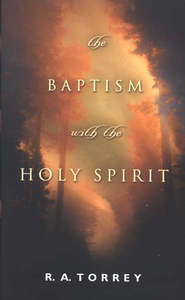
Baptism with the Holy SpiritR.A. Torrey’s book The Baptism With The Holy Spirit is a great study on this often overlooked member of the Trinity. You can read my full book review by clicking here. Below are some quotes that especially caught my eye…

“The baptism of the Holy Spirit is not for the purpose of cleansing from sin, but for the purpose of empowering for service.” 

“I fell into another error, namely, that anyone who received the baptism with the Holy Spirit would receive power as an evangelist or as a preacher of the Word. … There are three evils arising from the mistake just mentioned. First, disappointment. Many will seek the baptism with the Holy Spirit, expecting power as an evangelist, but God has not called them to that work and the power that comes from the baptism with the Holy Spirit manifests itself in another way in them. … The second evil is graver than the first, presumption. A man whom God has not called to the work of an evangelist or minister rushes into it because he has received, or thinks he has received, the baptism with the Holy Spirit. … The third evil is still greater, indifference.”

“While the baptism with the Spirit imparts power, the way in which that power will be manifested depends upon the work to which God has called us, and that no efficient work can be done without it. … It is not for us to select some field of service and then look to the Holy Spirit to impart to us power in that field which have chosen. It is rather for us to recognize the divinity and sovereignty of the Spirit, and to put ourselves unreservedly at His disposal.” 

“There are certainly few greater mistakes that we are making today, than that of setting men to teach Sunday school classes, and do personal work, and even to preach the Gospel, simply because they have been converted and received a certain amount of education—perhaps including a college and seminary course—but have not as yet been baptized with the Holy Spirit. Any man who is in Christian work, who has not received the baptism with the Holy Spirit, ought to stop his work right where he is, and not go on with it until he has been ‘clothed with power from on high.’”

“There are many who hold back from this total surrender because they fear God’s will. They are afraid God’s will may be something dreadful. Remember who God is. He is our Father. Never an earthly father had so loving and tender a will regarding his children as He has toward us. ‘No good thing will He withhold from them that walk uprightly’ (Ps. 84:11). ‘He that spared not His own Son, but delivered Him up for us all, how shall He not with Him also freely give us all things?’ There is nothing to be feared in God’s will. God’s will will always prove in the final outcome the best and sweetest thing in all God’s universe.” 

“One of the subtlest and most dangerous snares into which satan leads us is seeking the Holy Spirit, this most solemn of all gifts, for our own ends.”

“If we would continuously know the power of God, we should go often alone with Him, at the close of each day at least, and ask Him to show us if any sin, anything displeasing in His sight, has crept in that day; and if He shows us that there has, we should confess it and put it away then and there.” 

The Baptism With The Holy Spirit (book review)

Baptism with the Holy SpiritR.A. Torrey was successful as an evangelist, a pastor, a theologian, and an author. In The Baptism With The Holy Spirit he brings all four of these disciplines to bear on this major theological doctrine.

This book is fairly short, but if you take time to read all of the Scriptures that Rev. Torrey references, and if you take the time to contemplate all of his profound reasoning, there is enough here to keep you occupied for quite some time. I am a fourth generation Pentecostal (which means I grew up with these doctrines of the Holy Spirit being adhered to throughout my lifetime) and I still found quite a bit on which to think and search more deeply.

I sincerely appreciated the academic approach that Rev. Torrey brought to this book, and I would encourage anyone who wants to grow deeper in their relationship with God to take the time to really digest the material he has presented us.