Argument Vs. Experience

There is a curious word that shows up about 70 times in the Bible (almost all of them in the Psalms)—Selah. The best scholars can figure is that this word has some sort of musical meaning: 

  1. Pause / Interlude—to rest in silence. This might even be where the singers stopped while the music continued. 
  1. Accentuation—to lift up or exalt; as in the renewed vigor of the singer or musician after pausing for a deep breath. 
  1. Consideration—the root word for Selah means to weigh on a balance, with the idea of despising the things that are light or trivial, and valuing the things that carry weight or substance. The Amplified Bible uses the phrase “pause and calmly think of that.” 

All three are valid definitions, and all three are used in the Psalms. I think the context of the Psalm makes it clear which one is meant. Sometimes more than one meaning is implied, and sometimes all three meanings are implied. 

Selah first shows up in Psalm 3. This is also one of the few psalms that uses Selah multiple times. We also get a clue to the context in the introduction: A psalm of David. When he fled from his son Absalom [see 2 Samuel 15]. 

David has a lot of enemies ganging up on him? The Message says, “enemies past counting!” And David laments that his enemies are whispering something very negative: “There is no God” or “God is too disinterested or weak to help you” or “You don’t deserve to have God’s help.” 

In the midst of this noise, David pens his first  SELAH—David needs a pause. The enemies past counting have got his thoughts swirling. He needs to pause and calmly think: “I KNOW God can and will help me because He has already helped me in the past. You may have your arguments and reasons, but I have my personal experience with God!” 

Notice the very next word: But (v. 3). You ARE [not were or will be] a shield around me…. To the Lord I CRY aloud [not I used to cry or I will cry], and He ANSWERS [not He answered or He will answer] me… (v. 4).

The second SELAH (v. 4) is the renewed vigor after the pause. The Message says, His answers thunder from the holy mountain. This corresponds with what David wrote when God delivered him previously (see Psalm 18:4-13). Then in the next four verses, David lists all the blessings that come when God answers: 

    • sleep 
    • sustaining power 
    • no fear of the tens of thousands on every side
    • deliverance
    • retribution for enemies 
    • God’s blessing—Real help comes from God. Your blessing clothes Your people! (v. 8 in MSG) 

David concludes this psalm with one final SELAH (v. 8)—to weigh on a balance. On one side: accusations and threats (only words). On the other side: personal experience of past deliverance and confident assurance of God’s present presence and rock-solid hope in God’s future grace. Pause and calmly consider those scales: which side are you on? Do you have only words, or do you have personal experience? 

The one with an experience with God is NEVER at the mercy of the one with only an argument against God. 

Join me next Sunday as we continue our look at the Selahs in the Book of Psalms. You can join me in person or on Facebook Live. 

How NOT To Make A Decision

Adonijah thought he was the obvious heir to the throne so he stated what he believed, “I will be king” (1 Kings 1:5). 

On what evidence did Adonijah base his claim? 

  1. All of his friends said he would make a great king
  2. His father (the king) had always given him everything he wanted
  3. He was handsome and popular
  4. A couple members of the king’s court supported him
  5. No one had ever told him “no” 

While all of this sounded good, Adonijah overlooked some vital points. Like…

  1. …more men backed his brother Solomon to be king than backed him
  2. …his father had the decisive and definitive say in who would be king, and he chose Solomon
  3. …God had chosen Solomon to be king

It’s tempting for us to read the popular sentiment of the moment, or to listen to the cheering voices around us, or even to think that our plans are wise and well thought-out. But this is NOT the right way to make a decision.

Instead, we need to humbly consider three things that are external:

  1. The unbiased, wise counsel of others
  2. The buy-in of key stakeholders
  3. God’s clear “yes”

If these three things are in alignment, you cannot go wrong!

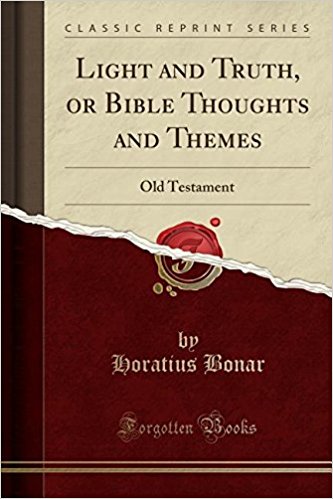
5 Quotes From “Light And Truth—The Old Testament”

I like to think of Horatius Bonar as a tour guide as I read through the Bible, pointing out themes and insights I might have otherwise missed. Check out my full review of Light and Truth—Old Testament by clicking here. 

The elders [1 Chronicles 21:16]. They acknowledge the stroke and the sin: ‘It is the Lord.’ They clothe themselves in sackcloth, they fall upon their faces. So far as we know, they had not shared David’s sin, yet they at once place themselves by his side in confession and humiliation. David had sinned (v. 8), Israel had sinned (2 Samuel 24:1). They identify themselves with both. It is thus that we should take up a ruler’s sin, or a brother’s sin, or a nation’s sin; not blazoning it abroad in private gossip, or in the newspapers, but taking it on ourselves, and carrying it to God.” 

“We do great injustice to the Old Testament saints and to their privileges, and no less so to the God who made them what they were, when we conceive of them as possessing an imperfect justification, or an imperfect and uncertain knowledge of their justification. Paul’s declaration was explicit on this point: ‘I know Whom I have believed’; and yet it was not a jot more explicit than that of Job: ‘I know that my Redeemer lives.’ When Paul said, ‘It is God that justifies, who is he that condemns?’ he was only speaking what Job had spoken in ages before: ‘I know that I shall be justified. Who is he that will plead with me?’” [Job 13:18-19]

“Everything in God’s character, has by the Cross of Christ been turned into a reason for trusting Him. The more man knows of Him the more he trusts. Trust is the natural and inseparable response of the soul to the divine revelation of the character of God. It is not what man sees in himself, of his good deeds or good feelings, of his graces, or his repentance, or his regeneration, or his faith; but what he sees in God, that calls out confidence.” 

“It is with no distant, unheeding God that we have to do; but with that God who fixes the bounds of our habitation, who counts our hairs, who feeds the ravens, notes a sparrow’s death, clothes the lilies of the field. He is nearer to us than the nearest earthly object or being; more closely in contact with us than we are with one another.” 

“We disjoined God from creation, and so see nothing in it of divine life and power. … The separation of God from His works is one of the awful features of human unbelief. How much more of Him should we know, were we to interpret His works aright. … These skies of His are not bent over us in beauty without a meaning. These seas of His do not roll for nothing. These flowers of His are not fragrant and fair for nothing. They do not say to us, ‘God is your enemy, He hates you’; but ‘God is your friend, He pities you, yearns over you, wishes to make you happy.’ How full a gospel does creation to preach to us, according to its kind and measure!”

Saturday In The Psalms—Childlike Not Childish

Lord, my heart is not haughty… (Psalm 131:1).

This psalm is only three verses long, but they are three verses of immense trust in God. Truly these verses reveal extraordinary childlike dependence on God.

My heart is not haughty—I am subduing my pride.

My eyes are not lofty—I’m not looking for great things for myself.

I do not concern myself with great matters—I stay away from burdens I don’t need to carry.

I have no interest in things too profound for me—I don’t spend time on the “what ifs,” but I quietly trust God to provide for me.

I have calmed and quieted my soul—if my emotions start running too far ahead, I remind myself that God knows best what I need.

Childlike not childish!

Childlike is lovingly dependent. Childish is selfishly independent.

Childlike is trusting someone wiser. Childish is believing I know best.

John Maxwell said, “The Christian leader is mature enough to not act childish, yet remains trusting enough to stay childlike.”

Think of it this way: a “weaned child” (v. 2) is able to eat more grown-up food than an infant, but it is still dependent on a loving parent to provide that food—food that is best. It’s not necessarily food I want, but it is food I need.

David implores us to adopt this childlike dependence on God, and give up our childish independence apart from God. This attitude, David says, starts in a humbled heart.

Holy Spirit, work in my heart today. Drive out any childish selfishness for what I want, and create in me a childlike trust in my God Who gives me all that I need. Amen.

The Wonder Of God’s Forgiveness

King David was intimately confident that God would hear his prayers. No matter what—even if David had sinned.

The prophet Nathan confronted David after David had committed adultery with another man’s wife, gotten her pregnant, and then had her husband killed to try to cover up their affair. David assumed he had gotten away with it, but God sent Nathan to tell David that He knew all about it.

David immediately went to prayer.

His prayer is instructive for us when we sin too. David’s appeal to God for forgiveness is based solely on God’s ability and willingness to forgive, not on any merits David brings.

In this prayer, David presents a tally sheet. On his side of the ledger, he lists my transgressions, my iniquity, my sin, my bloodguilt. He sums it up with, “Against You, You only, have I sinned and done what is evil in Your sight.

David also tallies up God’s side of the ledger: You are right, You are just, You are righteous.

We might be tricked into thinking that a Perfect Being like this wants nothing to do with a sinful creature like you and me. But this is completely wrong! David appeals to God’s unfailing love, and Your great compassion. He lists God’s desire to cleanse, wash, blot out sins, restore, and release from blood-guiltiness.

David said, “I have sinned against the Lord.” And immediately Nathan responded, “The Lord has taken away your sin.”

Sin is all on me! Restoration is all on God!

With this in mind, we learn that the mark of a maturing Christian is not one who never sins, but one who…

  1. …feels a broken heart because of their sin (see Psalm 51:10)
  2. …confesses my sin
  3. …confidently asks for His forgiveness
  4. …helps others who have sinned (v. 13)
  5. …continues to abide in Jesus (vv. 10-12)

God is quick to forgive. Are we equally as quick to ask for His forgiveness?

You can study more of the lessons from the prayers of David:

How Confident Are Your Prayers?

David hasn’t done anything wrong. He’s never tried to lead a rebellion against King Saul. In fact, he’s never even talked poorly about Saul. And yet Saul is out to kill David!

David tries to get as far away as he can, choosing to live in the desert so that he might get some relief from Saul. Still Saul comes after him with a force of 3000 men! Every time David moves, Saul’s men are hot on his trail. David described his situation like this

My mortal enemies surround me. Their hearts are cold and calloused toward me, and they speak terrible things about me. They track me down and surround me. They are like hungry lions, crouching, waiting to pounce on me!

If you were in David’s sandals, how confident would you be that God could get you out of the situation? Remarkably, David’s confidence was as high as it could be!

David not only was confident that God would hear him, but that He would listen to him. More than that, David knew God would pay attention to him. And then David boldly said, “I call on You, O God, for you WILL answer me.”

How could David pray such a confident prayer? The answer is in this principle…

There is a direct correlation between intimacy and confidence.

David made two very intimate claims about his relationship with God:

  1. You will keep me as the apple of Your eye
  2. You hide me in the shadow of Your wings

The apple of the eye is the pupil. Our eyes are amazingly designed to not only take in information but to protect themselves. If something is getting too close to our eye, the eyelids blink in protection faster than we can consciously tell them to. So David was claiming that God would protect him by reflex!

The shadow of Your wings was a reference to the top of the Ark of the Covenant; a place called the mercy seat. Here is where the priest sprinkled the blood of a sacrificial lamb to atone for the people’s sin and to appeal to God’s mercy. The mercy seat was over-shadowed by two angels’ wings.

David was saying that God kept him in this intimate place—covered by God’s mercy and protection!

Jesus also told us about intimate confidence when He said, “If you remain in Me, and My words remain in you, ask whatever you wish, and it will be given you” (John 15:7).

  • Intimacy: remain IN Jesus, and let His words remain IN you
  • Confidence: ask whatever you wish, and it will be given you

Are your prayers this confident? If not, don’t work on raising your confidence, but work on increasing your intimacy. Check your intimacy level with questions like:

  • Am I abiding in Jesus?
  • Are His words abiding in me?
  • Do I have any unconfessed sin?
  • Is my prayer a “Your kingdom come, Your will be done” prayer?

Focus on intimacy, and then watch your confidence soar! 

If you are interested in learning more about the prayers of David, I have also discussed his prayer for help, his prayer of crying out loud, and his prayer of praise.

Saturday In The Psalms—Resolutions

I will… (9x in Psalm 101).

Psalm 101 is only eight verses long, but David makes nine I will resolutions to God. Perhaps you might consider making these resolutions yourself—

(1) I will sing of mercy and justice. These are two sides of the same coin; in fact, it’s only when we know God’s justice that we can appreciate His mercy. Both God’s justice and His mercy need to be celebrated.

(2) I will sing praises. Regardless of our situation or setting, God is worthy to be praised.

(3) I will behave wisely in a perfect way AND (4) I will walk within my house with a perfect heart. A commitment to integrity, living a godly lifestyle, and leaving a godly legacy.

(5) I will set nothing wicked before my eyes AND (6) I will not know wickedness. A commitment to be childlike in regard to wickedness, and watchfulness of anything impure.

(7) I will destroy AND (8) I will not endure AND (9) I will destroy all the wicked. A resolution to cut-off all relationships that are not God-honoring.

Resolutions aren’t just for New Year’s Day. Resolutions can be made any time we sense something in our life isn’t as God-pleasing as it could be.

What resolutions are you willing to make?

Thursdays With Oswald—How God Prepares His Workers

Oswald ChambersThis is a weekly series with things I’m reading and pondering from Oswald Chambers. You can read the original seed thought here, or type “Thursdays With Oswald” in the search box to read more entries.

How God Prepares His Workers

     If the worker for God is going to go all lengths for God for the cure of souls, he has to allow God to examine to deep down the possibilities of his own nature. That is why it is hard to deal with the “two-faced.” That is why, Christian worker, God will take you through disciplines and experiences that are not meant for your particular life; they are meant to make you ready for God to send as He sent Nathan [2 Samuel 12:1]. … 

     Worker for God, before you go among the infirm, the sick, the subtle, the hypocritical, let God deal with you. A child cannot wield the sword of the Spirit; it must be wielded by one fed on strong meat, one who has been deeply dealt with and examined by God’s Spirit, in whom the last springs and possibilities of iniquity and wrong in his own nature have been disclosed to him that he may understand the marvel of God’s grace. …  

     God grant that we may understand that working for the cure of souls is not a babe’s work; it is a man’s work, requiring man’s power, grasped and transformed by God Almighty, so that God can get straight through the worker to the man He is waiting for. 

From Workmen Of God

Being used by God is no light, trivial matter. God wants to use you to reach those “He is waiting for.” But in order for you to “wield the sword of the Spirit,” you first have to allow God to strengthen and prepare you.

Are you willing to let God prepare you for His service? It will require us to pray, as Jesus did, “Father, not My will, but Yours be done.”

A “Hallelujah!” Lifestyle

David shows us a picture of a man who made prayer the cornerstone of all he did. He’s quick to cry, “Help!” when he’s in trouble, and he doesn’t hold back when he’s crying out to God.

But he also shows us that prayer isn’t just for times of trouble. Prayer should be an ongoing conversation with God so that we can get to know His heart. God knows what’s going to happen (Isaiah 46:10), and He wants us to ask Him to make things clear to us (Jeremiah 33:3).

In Psalm 145, David challenges us to lift up our praise to God, as well as our prayers. This psalm of praise teaches us that we don’t have to only praise God for what He’s done—although that’s a great thing to do—but we can also praise God simply for Who He is!

In this psalm, David says God is…

…worthy of praise (v. 3a) 
…great beyond comprehension (v. 3b) 
…majestic (v. 5)
…awesome (v. 6)
…abundantly good (v. 7)
…gracious, compassionate, slow to anger, rich in love (v. 8)
…good to all (v. 9)
…mighty (v. 11)
…everlasting (v. 13)
…strong (v. 14)
…righteous and loving (v. 17) 
…near to us (v. 18)
…fulfilling (v. 19)
…watchful (v. 20)

Let’s not be known just for our petitions, but for our praise.

Let’s not be known just for our “Help!” but for our “Hallelujah!

Please join me in our continuing look at the Prayers Of David.

For Crying Out Loud!

There’s a time when David was fainting and had no one to help him—my spirit was overwhelmed and fainted, throwing all its weight on me. I look for someone to come and help me, but no one gives me a passing thought! No one will help me; no one cares a bit what happens to me (Psalm 142:3-4).

Here’s the backdrop to this prayer. King Saul has tried to kill David twice, not including the time Saul sent assassins to David’s house to kill him there. Even Jonathan, Saul’s son, was embarrassed and grieved at his father’s shameful treatment of David.

David runs away from Saul so quickly that he doesn’t take any food or even a weapon. He literally only has the clothes on his back and the sandals on his feet. He’s able to get some day-old bread from Ahimelech the priest, and he also takes Goliath’s sword from the temple.

David is clearly not thinking clearly. He is wearing Goliath’s sword on his side. Remember that David killed Goliath. Goliath is from Gath. And where does David run? To Gath!! He has to pretend he’s gone insane in order to escape from Gath, and he flees to the cave of Adullam.

It’s here that he prays an intense prayer. How intense? David literally shouts this prayer. He uses phrases like:

    • I cry aloud to the Lord
    • I lift up a thundering voice to God to plead for mercy
    • I let my complaint gush out in front of God, not holding anything back
    • He cries to God, “You are all I really want in life” and “You’re my last chance, my only hope for life”
    • After he did all that, he still says, “God, listen to my even louder cry!

Just how desperate is your situation? Just how heavy is your burden? Have you come to the realization that God is your ONLY help? Then, like David, cry out louder and louder to Him until He answers you!

A blind man got the attention of Jesus by yelling at the top of his lungs, “Jesus, Son of David, have mercy on me!!” Jesus said that this man’s faith healed him. What was the demonstration of his faith? It was the persistent calling out to the only One who could help him.

Earlier in this chapter, Jesus says this: So what makes you think God won’t step in and work justice for His chosen people, who continue to cry out for help? Won’t He stick up for them? I assure you, He will. He will not drag His feet. But how much of that kind of persistent faith will the Son of Man find on the earth when He returns? (Luke 18:7-8).

Once again Jesus links a continual cry for help to the definition of persistent faith. 

So I’ll ask again: just how desperate are you for God to answer you? If you will cry out loud to Him, God will see your persistent faith and will step in and work for you.

Please join me on Sunday as we continue to learn more lessons from David’s prayers.