The Mercyseat

Listen to the podcast of this post by clicking on the player below, and you can also subscribe on Apple or Spotify.
Hear my cry for mercy … He has heard my cry for mercy (Psalm 28:2, 6).

For David, his cry for mercy was never a one-and-done action. The verb in verse 2 makes this verse read more like, “Hear my cry for mercy as I am continually calling to You for help, as I am continually lifting up my hands toward Your Most Holy Place.” 

Why the Most Holy Place? What was there? Inside the Most Holy Place was the ark of the covenant of the Lord which represented the presence of God. 

What was on top of the ark of the covenant, covering and superseding the Law that was inside the ark? It was the mercyseat (or the “atonement cover” in some translations). The mercyseat is where the high priest sprinkled the blood of the sacrificial lamb every year to make atonement for sins.

Jesus became the once-for-all sacrificial Lamb to make ultimate atonement for all who would believe in Him. When Jesus had finished His work on the Cross, the curtain separating us from the Most Holy Place was torn in two. The ark of the covenant of the Lord with its covering mercyseat—the presence of God—was now accessible to all of us! It was accessible because it was in Jesus, and when I have taken Jesus as my atonement, He is in me and He takes me in to the Father. The mercyseat of my heart has been sprinkled with the blood of the Lamb (see Hebrews 9:1-5, 11-14; 10:19-22). 

Whether David was saying, “Hear my cry,” or “He has heard my cry,” the Hebrew word means to listen with interest and full attention. Whenever you pray, God listens to you with interest and full attention because you are praying right in His presence! Your very breath can be a continual crying, a continual lifting of your voice toward the mercyseat where God meets with you! 

God is not far away from us. He is closer than we usually think. That’s why David says, “My heart leaps for joy, and with my song I praise Him”! 

Keep this in mind the next time you are asking God to hear your cry: He listens to you with full attention because Jesus has taken you right into His presence.

Would you please prayerfully consider supporting this ministry?

Thursdays With Spurgeon—God Wants To Bless You

This is a weekly series with things I’m reading and pondering from Charles Spurgeon. You can read the original seed thought here, or type “Thursdays With Spurgeon” in the search box to read more entries.

Listen to the podcast of this post by clicking on the player below, and you can also subscribe on iTunes or Spotify.

God Wants To Bless You

     It delights God to bestow His goodness. The cost was paid long ago on Calvary’s Cross, and that is over. Since the great sacrifice has been presented, God freely gives all the blessings of divine grace to us with a willingness that shows that His heart goes with them. …  

     Come along with you, you needy saint or sinner. The more you can take in, the better pleased will the Lord be with you. … The Lord desires you to open your mouth wide and He will fill it—it is easier for Him to give than for you to open your mouth. He encourages and requests you to bring large petitions with you when you come before His mercy seat. …  

     ‘How can I apprehend these blessings and make them my own?’ … ‘The natural man does not receive the things of the Spirit of God’ (1 Corinthians 2:14). The power to receive the things of God lies not in high gifts or attainments. … Do not sit down and say, ‘I am a poor stupid man and cannot be taught of God.’ Or, ‘I am a humble countryman, or a poor woman keeping house for others. I cannot know these precious things.’ It is not so. Read the words of Paul in the first chapter of this Epistle: ‘For you see your calling, brethren, that not many wise according to the flesh, not many mighty, not many noble, are called’ (1 Corinthians 1:26). The power to receive the blessings of God does not lie in talent at all, but it lies in the Spirit of God. …

     Grace is not tied to the rare gifts of genius, nor to the precious acquirements of experience, nor to the high attainments of learning. … The power to receive is still of the Holy Spirit, and the Holy Spirit does not find good in us but brings it to us.

From Grace For Grace

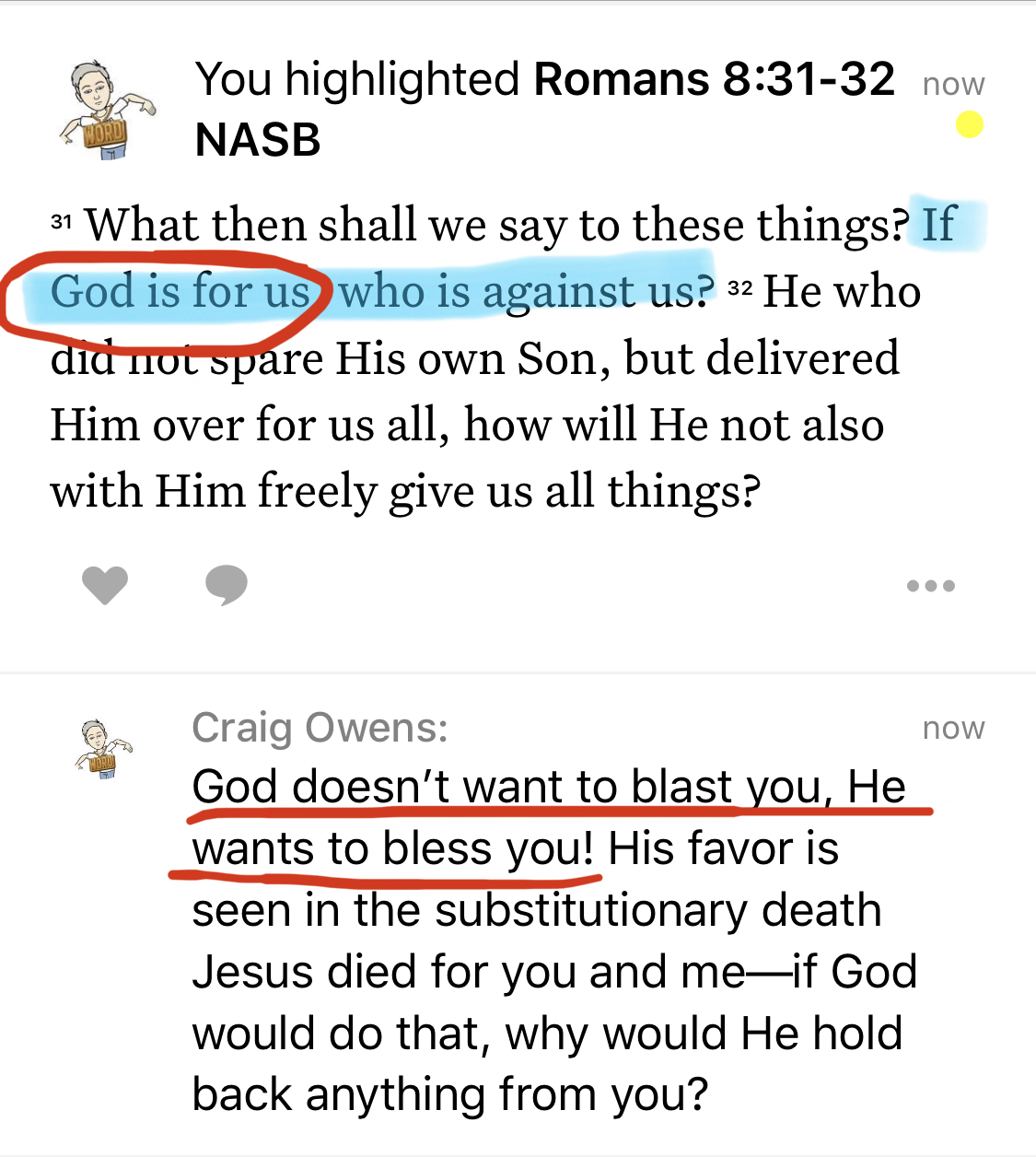
I truly believe that God wants to bless us more than we want to receive God’s blessings. Far too many times I encounter people who want to talk themselves out of their worthiness to receive anything from God. 

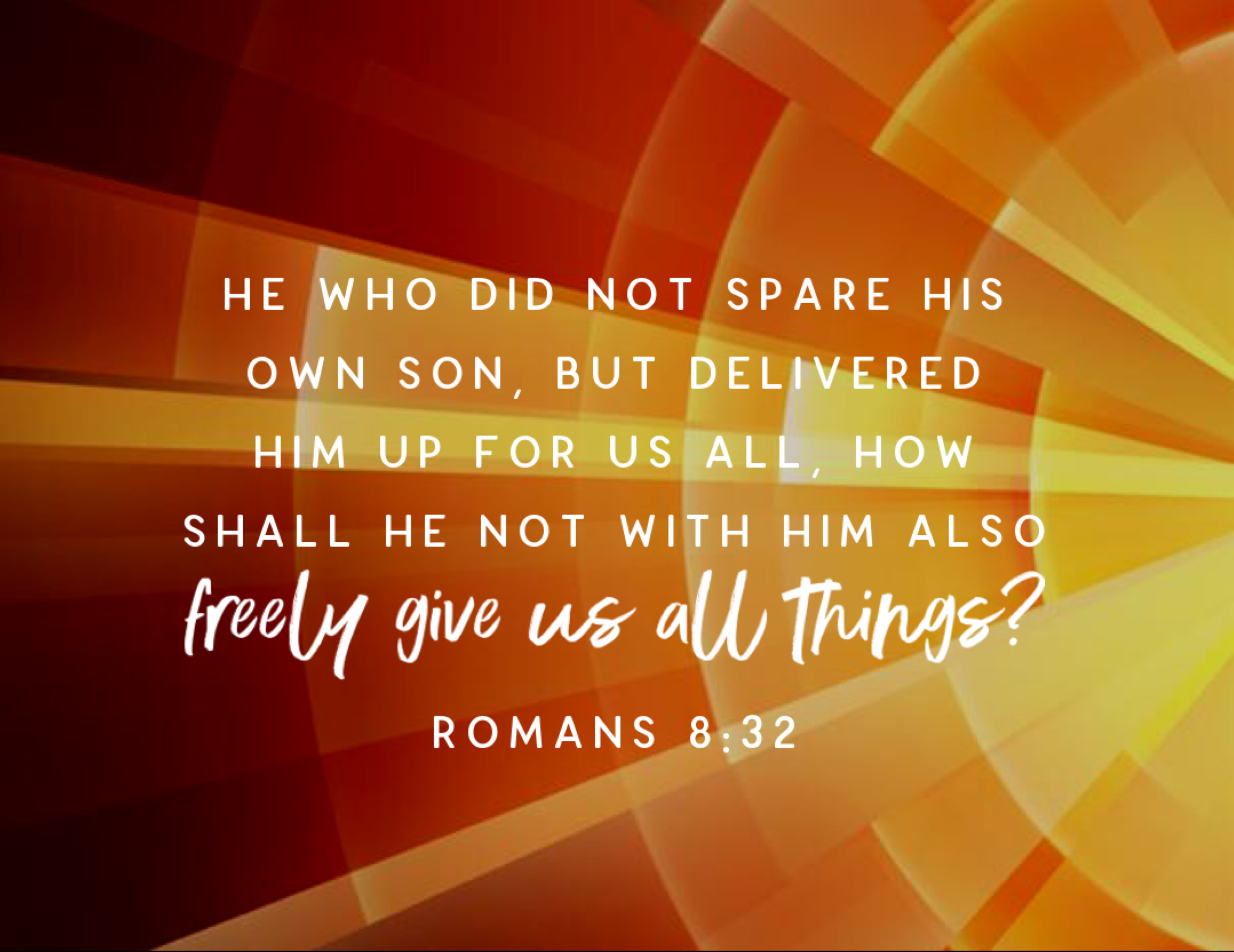
But remember this verse: Since He did not spare even His own Son but gave Him up for us all, won’t He also give us everything else? (Romans 8:32). If God the Father would give up His Son to make it possible for you to be reconciled to Him, why would He hold anything back from you. 

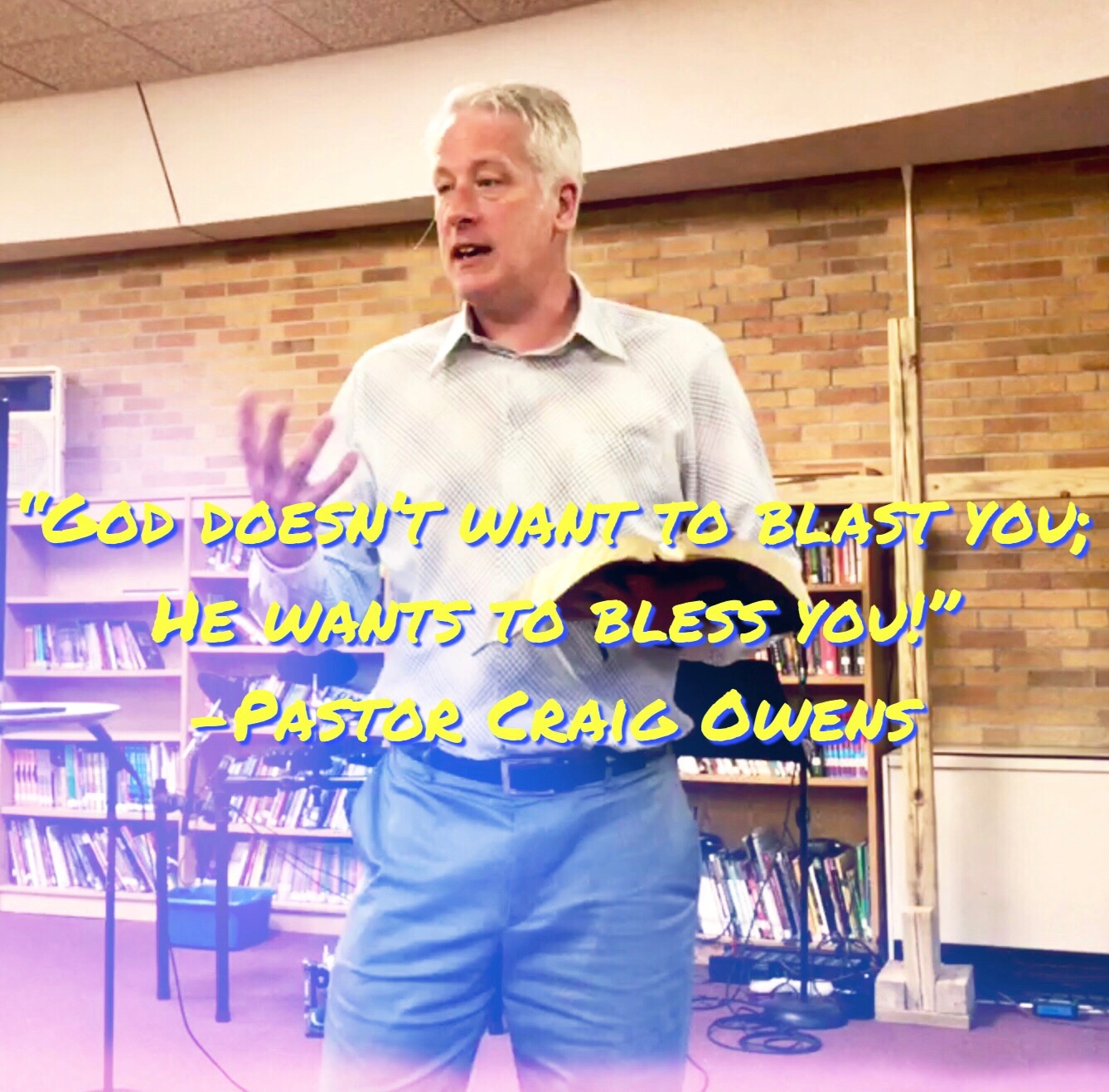
God’s doesn’t want to blast you, He wants to bless you!

Please, my friend, let Him bless you. His blessings aren’t because of anything you or I have done to deserve them. The definition of “grace” is an undeserved gift. God gives and He enables us to receive. Let Him pour out His blessings on you today!

Thursdays With Spurgeon—The Greatest Gift

This is a weekly series with things I’m reading and pondering from Charles Spurgeon. You can read the original seed thought here, or type “Thursdays With Spurgeon” in the search box to read more entries.

Listen to this post as a podcast by clicking here:

The Greatest Gift

Come…buy wine and milk without money and without price. … The gift of God is eternal life in Christ Jesus our Lord…. (Isaiah 55:1; Romans 6:23) 

     The free grace of God would be insulted by being put up for auction or set forth for sale. … It is a gift and not a prize. There are heavenly prizes to be run for, to be fought for, and to be obtained by divine help. There is a recompense of reward to which we are to look and a crown for which we are to strive, but the divine grace that forgives sin and works faith is no prize for exertion but rather a gift for those without strength. ‘It is not of him who wills, nor of him who runs, but of God who shows mercy’ (Romans 9:16). … 

     The blessings of salvation are freely given us of God; therefore they are not a loan, handed to us for a time and to be one day recalled. Our heavenly heritage is not held on lease, upon terms of annual payment. It is an unencumbered freehold to every man who has by faith put his foot upon it. … When He has given it, the deed is done outright and can never be reversed. O believer, if your sin is blotted out, it can never be written in again! God has declared that He has forgiven our transgressions. And then He adds, ‘Their sins and iniquities will I remember no more’ (Hebrews 10:17). … 

     God is unchangeable, and therefore what He has given He will give again. ‘Still there’s more to follow’ is a popular way of putting a great truth. The stream that has begun to flow will never cease flowing. The more the Lord gives, the more we may expect. Every blessing is not only in itself a mercy, but it is a note for more mercies.

From Grace For Grace

I shared a series of messages on God’s favor—His free gift that we call grace—that was one of the most downloaded and watched of any series I have presented. It almost seems inconceivable to people that God would give so freely and lavishly without expecting some sort of payment in return. 

Why would God “not spare even His own Son but [give] Him up for us all” (Romans 8:32)? Because if you feel distant from Him, how can you glorify Him? If you feel disconnected from His love, how will you draw others to Him? If you feel like your relationship with Him is hanging by a thread, how can you happily abide in His presence? 

Knowing God’s favor—His free gift—is the key to living the abundant life Jesus purchased for you on the Cross!

Thursdays With Spurgeon—The Plan Of The Cross

This is a weekly series with things I’m reading and pondering from Charles Spurgeon. You can read the original seed thought here, or type “Thursdays With Spurgeon” in the search box to read more entries.

The Plan Of The Cross

What we have received is not the spirit of the world, but the Spirit who is from God, so that we may understand what God has freely given us. (1 Corinthians 2:12) 

     The course of our fallen race has been a succession of failures. Whenever there has been an apparent rise, it has been followed by a real fall. Into ever-increasing darkness the human mind seems resolved to plunge itself in its struggles after a false light. When men have been fools, they have danced in a delirium of sin. When they have been sober, they have given themselves up to a phantom wisdom of their own that has revealed their folly more than ever. It is a sad story, the story of mankind! Read it in the light of God’s Word and it will bring tears from your very heart.

     The only hope for man was that God should interpose. And He has interposed, as though He began a new creation or worked a resurrection out of the kingdom of death. God has come into human history and here the bright lights begin. … See yonder avalanche rushing down the steep mountainside? Such is humanity left to itself. Lo, God in Christ Jesus throws Himself in the way. He so interposes as to be crushed beneath the descending rocks. But beloved, He rises from the dreadful burial. He stops the avalanche in its terrible path. He hurls back the tremendous mass and changes the whole aspect of history. … 

     The plan of the Cross is to conquer death by death, to remove sin by the endurance of the penalty, to work mightily by suffering terribly, and to glorify Christ by shame.

From Grace For Grace

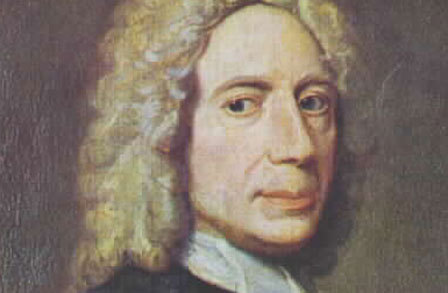
This sermon reminds me of the poignant words from Isaac Watts—

When I survey the wondrous Cross 
On which the Prince of Glory died, 
My richest gain I count but loss, 
And pour contempt on all my pride. 
Forbid it, Lord, that I should boast, 
Save in the death of Christ my God! 
All the vain things that charm me most, 
I sacrifice them to His blood.
 

All of man’s attempts to control his universe, or determine his fate, or even make himself acceptable to God have been an abysmal failure. So God Himself stepped in, but He came in a way that no one could have imagined and no one could claim as their idea. The prophet Isaiah said it this way, “The Lord looked and was displeased that there was no justice. He saw that there was no one, He was appalled that there was no one to intervene; so His own arm achieved salvation for Him, and His own righteousness sustained Him” (Isaiah 59:15-16). 

It is by grace alone, through faith alone, in Christ alone that we have hope of our salvation. And for that we give all glory to God alone. Sola Deo gloria!


Poetry Saturday—Hymn #120

What shall the dying sinner do
That seeks relief for all his woe?
Where shall the guilty conscience find
Ease for the torment of his mind?

How shall we get our crimes forgiv’n?
Or form our natures fit for heav’n?
Can souls all o’er defiled with sin
Make their own powers and passions clean?

In vain we search, in vain we try,
Till Jesus brings His gospel nigh;
‘Tis there such power and glory dwell
As save rebellious souls from hell.

This is the pillar of our hope
That bears our fainting spirits up:
We read the grace, we trust the Word,
And find salvation in the Lord.

Let men or angels dig the mines,
Where nature’s golden treasure shines;
Brought near the doctrine of the Cross,
All nature’s gold appears but dross.

Should vile blasphemers with distain
Pronounce the truth of Jesus vain,
I’ll meet the scandal and the shame,
And sing and triumph in His name. —Isaac Watts

Thursdays With Spurgeon—Christ’s Momentary Pain, Your Eternal Gain

This is a weekly series with things I’m reading and pondering from Charles Spurgeon. You can read the original seed thought here, or type “Thursdays With Spurgeon” in the search box to read more entries.

Christ’s Momentary Pain, Your Eternal Gain

After Jesus said this, He looked toward heaven and prayed: “Father, the hour has come. Glorify Your Son, that Your Son may glorify You. (John 17:1) 

     The Son of God was glorified while He was dying, and it was one part of His glory that He should be able to bear the enormous load of human guilt. As a race we lay crushed beneath it.

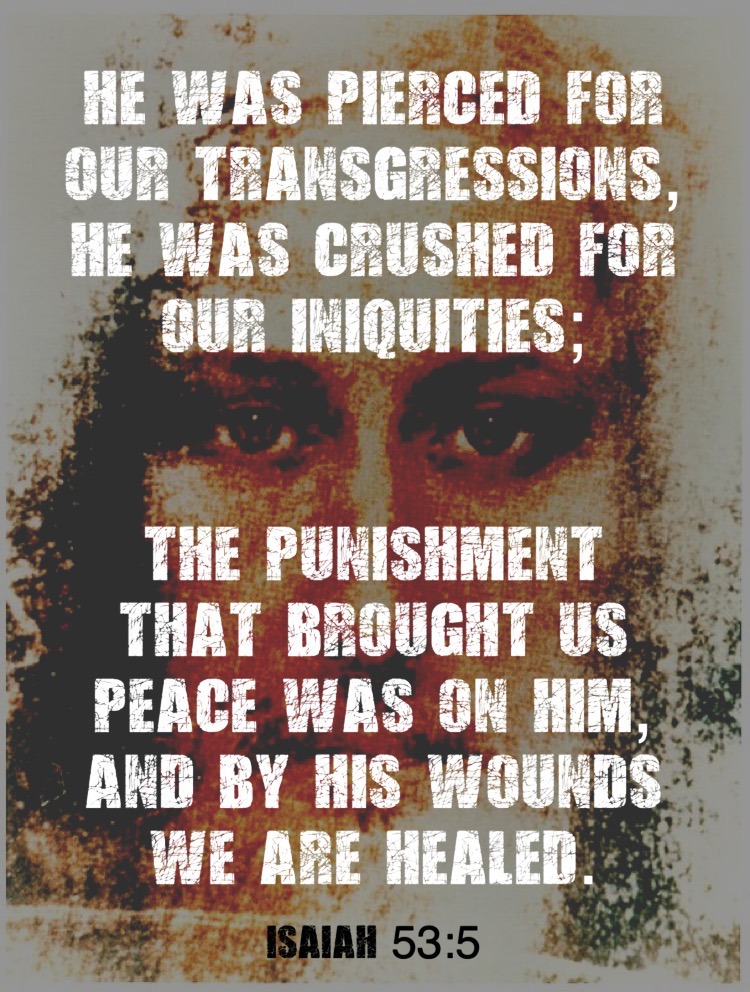
     A thousand Samsons could not relieve us! Angels and archangels, cherubim and seraphim could never lift the stupendous mass! But this one Man alone, with no help, in weakness of body and in death pains, bore away the enormous load of human guilt! The chastisement of our peace was upon Him. The Lord laid on Him the iniquity of us all! What a load it was! And that He could bear it was, indeed, a display of His glory. The lost in hell cannot bear the wrath of God! An eternity of suffering will not have discharged the dreadful penalty, and yet He bore that burden in an hour! Oh, marvelous strength of the incarnate God! Glorious are You indeed, O Christ, upon Your Cross! …  

     I say He was glorified in His passion and His prayer was heard! The Father did glorify His Son even on the Tree! It was an hour of glory that might dazzle angels’ eyes; that hour when He said, ‘It is finished!’ (John 19:30) and gave up the ghost. What had He finished? He had finished that which saved His people! He had peopled heaven with immortal spirits who will delight in Him forever and had shaken the gates of hell! God indeed glorified His Son in enabling Him to bear, and bear so well, all the weight of sin and the penalty that was due to it. …  

     When He died, He did not render the redemption of His people possible, but He ransomed them completely. By His agonies and death He did not merely give a bare hope of the pardon of sin, but He hurled the sin of all His elect into the depths of the sea in that same moment! He did not merely make the salvation of men a possibility if they would, but He saved His people then and there! He finished the work that He came to do, and proof of it is written that ‘this Man, after He had offered one sacrifice for sins forever, sat down at the right hand of God’ (Hebrews 10:12).

From The Son Glorified By The Father And The Father Glorified By The Son 

The enemy of your soul would love for you to believe his lies that you have to do something to secure your salvation, or that your most recent sin somehow made your salvation iffy, or that God is angry with you. 

THOSE ARE ALL LIES! 

Jesus didn’t make your salvation possible; He made it yours. This is what glorifies God: when you believe that the death of Jesus is all that is needed for your complete and eternal salvation! 

Jesus paid it all
All to Him I owe
Sin had left a crimson stain
He washed it white as snow

Thursdays With Spurgeon—Nothing Left Undone

This is a weekly series with things I’m reading and pondering from Charles Spurgeon. You can read the original seed thought here, or type “Thursdays With Spurgeon” in the search box to read more entries.

Nothing Left Undone

Day after day every priest stands and performs his religious duties; again and again he offers the same sacrifices, which can never take away sins. But when this Priest had offered for all time one sacrifice for sins, He sat down at the right hand of God, and since that time He waits for His enemies to be made His footstool. (Hebrews 10:11-13) 

     You see the superiority of Christ’s sacrifice rests in this: that the priest offered continually, and after he had slaughtered one lamb, another was needed. After one scapegoat was driven into the wilderness, a scapegoat was needed the next year, but this Man, after He had offered one sacrifice for sins, did what thousands of scapegoats never did and what hundreds of thousands of lambs could never effect. He perfected our salvation and worked out an entire atonement for the sins of all His chosen ones.

     I infer that His work is finished from the fact that He is described here [Hebrews 10:12] as sitting down. Christ would not sit down in heaven if He had more work to do. …

     But do you think my Savior would sit still if He had not done all His work? Oh no, beloved. He said once, ‘For Zion’s sake I will not hold My peace, and for Jerusalem’s sake I will not rest, until her righteousness goes forth as brightness, and her salvation as a lamp that burns’ (Isaiah 62:1). …

     Oh, if the last thread had not been woven in the great garment of our righteousness, He would be spinning it now. If the last particle of our debt had not been paid, He would be counting it down now. 

     Oh, glorious doctrine! This Man has done it. This Man has finished it. This Man has completed it. He was the Author. He is the finisher. He was the Alpha. He is the Omega. … You are accepted perfectly in His righteousness.… ‘By one offering He has perfected forever those who are being sanctified’ (Hebrews 10:14). 

From Christ Exalted

Friend, Jesus has left nothing undone that would keep you from God’s full favor! 

Christ’s work on the Cross and His resurrection from the grave have removed every impediment that would keep you from God’s presence. Not sin’s condemnation, nor chaotic world affairs, nor the clamoring or godless people, nor anything you can imagine can hinder God’s favor. 

Cling to this: He who did not spare His own Son, but gave Him up for us all—how will He not also, along with Him, graciously give us all things? (Romans 8:32)

Where’s God Today?

Transitions are always hard things. We are leaving the known for the unknown. Even if the known is unhealthy or painful, it’s still hard to go to the unknown. 

Why are these transitions so difficult? Perhaps it’s because I’ve learned how to cope with the known, or I’ve gotten used to this “normal” life, or even I’ve simply learned to navigate any dysfunctional areas.

But is that really living? Am I managing my life or is God? When I’m against transitions, aren’t I really saying that I’ve put God’s plan for my life in my box?

Those questions trigger even more questions in my mind: Where’s God in all of this? Why can’t He just make my known better? Why is He leading me (or maybe even pushing me) into this unknown? 

Jesus didn’t endure the unimaginable horrors of the Cross just so you could cope with life. Jesus came to bring us abundant life—not a barely-getting-by life or just a coping life!

How does He bring us into this abundant life? By leading us through transitions. And where is He in all our transitions? Closer than you think! 

Moses sang a song to conclude his sermon in Deuteronomy. In that song, he mentions God taking care of His people the way an eagle cares for its eaglets.

Adults eagles build their extremely large nests in the highest point they can find. Their nests are made of massive branches. In fact, they build some of the largest nests of all birds, and build them in the most inaccessible of places. Before their eggs are laid, the adult eagles will soften their nest with feathers pulled from their own body. From the time the eggs are laid until the eaglets leave the nest, they are never without a parent present—while one parent hunts, the other watches. 

Eaglets first test their stumpy wings by jumping around in the nest, mimicking their parents. Eventually they will start “branching”—jumping to nearby branches—and then “fledging”—taking their first short flights from the nest. All under the watchful eye of the parents. Finally, the adult eagles will “stir up” their nest by blowing away all of the comforts of their plucked feathers, encouraging the eaglets to soar. 

Moses said that this is how God cares for His children. First by shielding and guarding us, and then by stirring up our nest and encouraging us to soar! 

Much like when Jesus ascended back to Heaven. He was going to physically leave His disciples, but He knew He had adequately trained his “eaglets” to soar without Him with them in bodily form. 

But Jesus never leaves us spiritually. He said that His ascension back to heaven would allow for the Holy Spirit to be resident in each of His followers (see John 16:7-15). It is the Holy Spirit that continues to guide us, teach us, empower us, correct us, and lead us to SOAR into abundant, God-honoring, Christlike living. 

There are many, many times of transition as we soar, but He never leaves us. The Holy Spirit is our constant Counselor. God shows His love for us by caring for us. God also shows His love for us by making us uncomfortable with the status quo. 

May the times of transition cause us to rely even more on the very present help of the Holy Spirit.

Continue to follow along with me in a new series of posts looking at how the Holy Spirit helps us to soar!

Poetry Saturday—How Few Receive With Cordial Faith

How few receive with cordial faith
the tidings which we bring?
How few have seen the arm revealed
of heav’n’s eternal King?

The Saviour comes! no outward pomp
bespeaks His presence nigh;
No earthly beauty shines in Him
to draw the carnal eye.

Fair as a beauteous tender flow’r
amidst the desert grows,
So slighted by a rebel race
the heav’nly Saviour rose.

Rejected and despised of men,
behold a Man of woe!
Grief was His close companion still
through all His life below.

Yet all the griefs He felt were ours,
ours were the woes He bore:
Pangs, not His own, His spotless soul
with bitter anguish tore.

We held Him as condemned by Heav’n,
an outcast from His God,
While for our sins He groaned, He bled,
beneath His Father’s rod.

His sacred blood hath washed our souls
from sin’s polluted stain;
His stripes have healed us, and His death
revived our souls again.

We all, like sheep, had gone astray
in ruin’s fatal road:
On Him were our transgressions laid;
He bore the mighty load.

Wronged and oppressed how meekly He
in patient silence stood!
Mute, as the peaceful harmless lamb,
when brought to shed its blood.

Who can His generation tell?
from prison see Him led!
With impious show of law condemned,
and numbered with the dead.

’Midst sinners low in dust He lay;
the rich a grave supplied:
Unspotted was His blameless life;
unstained by sin He died.

Yet God shall raise His head on high,
though thus He brought Him low;
His sacred off’ring, when complete,
shall terminate His woe.

For, saith the Lord, My pleasure then
shall prosper in His hand;
His shall a num’rous offspring be,
and still His honours stand. 

His soul, rejoicing, shall behold
the purchase of His pain;
And all the guilty whom He saved
shall bless Messiah’s reign.

He with the great shall share the spoil,
and baffle all His foes;
Though ranked with sinners, here He fell,
a conqueror He rose.

He died to bear the guilt of men,
that sin might be forgiv’n:
He lives to bless them and defend,
and plead their cause in heav’n. —William Robertson

[Reblog] What’s So Good About Good Friday?

I posted this 10 years ago on Good Friday.

Good Friday? Good for whom?

For you and me? Yes.

Good for Jesus, no. It was Bad Friday for Him, wasn’t it?

Or was it?

The writer of Hebrews says, “For the joy set before Him, Jesus endured the Cross, scorning its shame.

What joy?

It was for the joy of what was nailed to the Cross.

So what exactly was nailed to the Cross?

Isaiah records an unusual statement from God—

Comfort, comfort My people, says your God. Speak tenderly to Jerusalem, and proclaim to her that her hard service has been completed, that her sin has been paid for, that she has received from the Lord’s hand double for all her sins.

That seems unfair! We receive double(!) for our sins! Here’s a 2-minute video where I explain what this means culturally—

Only when invoices were paid-in-full did they get doubled-up.

The Bible tells us that we’ve all sinned, and that the invoice or penalty for our sin is death. We have the IOUs of sin nailed to the door of our heart where God says “You owe Me your life!” But we cannot pay this debt by ourselves.

But Jesus can. And Jesus did! Check this out—

He personally carried our sins in His body on the Cross…. (1 Peter 2:24 NLT)

Having canceled and blotted out and wiped away the handwriting of the note with its legal decrees and demands which was in force and stood against us. This He set aside and cleared completely out of our way by nailing it to His Cross. (Colossians 2:14 AMP)

That’s what is good about Good Friday. Jesus knew that taking our sins on His body, and then allowing His body to be nailed to the Cross, would double-up and nail-down our sin once and for all!

When Jesus said, “It is finished!” He was really saying, “It is paid-in-full!”