15 Quotes From “I Like Giving”

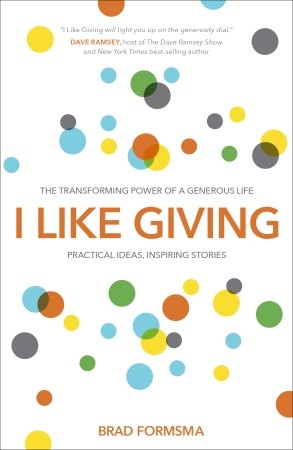
I Like GivingI Like Giving by Brad Formsma is a unique look at how to impact our communities. You can read my full book review by clicking here, but I strongly encourage anyone who wants to see their world changed to pick up a copy of this book. Below are some quotes I found thought-provoking in this book.

“Living generously is about giving your life to other people so that everything you do—whether it is your work, your charitable giving, or your contribution to your neighborhood—becomes both a gift to others and rewarding for yourself.” 

“Don’t make giving too big a project. Sometimes your best and most perfect gift might be as simple as a smile or a compliment. Maybe it’s paying for a stranger’s lunch.”

“Watch out for these nasty four-letter words: debt, fear, and busy. They steal the joy with the greatest of ease. Be aware of them as they compete with the nudge to do for others.” 

“The good news is that it’s never too late to give. If an opportunity comes your way and you don’t seize it, don’t get stuck in the downward spiral of regret. Smile, tell yourself all is well, and then ask for another one. If there are people around you, there will be more opportunities to give.”

“No matter how successful you are, it is giving your life away to others that makes you happy. … The right response, though, is not to shun success but to replace selfish ambition with other ambitions—doing things for others.” 

“Give daily, in small ways, and you will be happier. Give and you will be healthier. Give, and you will even live longer. … Giving protects overall health twice as much as aspirin protects against heart disease.” —Dr. Stephen Post

“Don’t let the occasional person who abuses the goodwill of others ruin your giving and deter you.”

“Compassion doesn’t mean giving every time, but when I give, I do it knowing that I’ve loved a fellow human being right where that person is, whether the money will be wasted or not.”

“One thing I’ve learned through the process is that I can’t force generosity. I can’t lead my family unless I’m going there myself. Simply keeping my eyes open for opportunities to give and ways to include the whole family sparks the idea in my kids. Kids are too young and innocent to believe they can’t be generous if they see adults living that way. … I never want to underestimate the example I am setting. My kids are watching how I live, and the choices I make have rippling effects down through the generations. I can choose to do nothing and let my children be swept up in the current of empty materialism that is rampant in our culture, or I can choose to live a different way by living generously.” 

“I don’t think we can ever overestimate just how profound the effects of giving can be. You can give without loving, but you can’t love without giving. The reality is that other people are watching how we live our lives, and what we do can have extraordinary effects in our communities. Generosity is for all of us. It is available to all of us, even when the cultural tide is moving in the opposite direction. Why not be brave and live differently?”

“Is weakness really that bad? Could it be that our specific weaknesses allow other people’s strengths to shine? Could it be that life sometimes throws us a curve that creates a need in our own lives? Once you experience the joy of giving, you realize that other people feel the same way when they give to you. Receiving might be harder than giving, but if you think about the joy the givers are receiving when they give to you, that will help you open up to receiving. You know that refusing the gift would deny them that joy.” 

“Focusing on what you don’t have or the bad hand you were dealt can actually make your life worse. What you think about affects who you become. It affects your relationships and the people you attract into your life. Keeping your focus on what you do have, what you have been given, and the good things in your life will make you happier and more grateful and will empower you to become a generous person yourself.”

“Often when we see someone in a bad situation, our natural response is to say, ‘Hey, if you need anything, let me know.’ Please don’t say that. Unknowingly you have put an added burden on the person. For some people the pressure is just too great, so they freeze and never respond. It’s a dangerous comment that produces a false sense of doing good. I encourage you to assess the situation and make something happen.”

“There are a lot of problems in the world. Sitting around talking about them or waiting for a large organization to do something about them doesn’t work. Finding opportunities to help others and change the world around us does work. We just have to take that scary step of actually doing something. We don’t need to overthink what we do. Sometimes we just know this is our opportunity to help. When we recognize an opportunity and dive in, amazing things happen! … So the question then becomes, are we willing? Will we decide to live generously and then be open to the opportunities that come our way?”

“You don’t have to make massive life changes, move to another city, or start your own nonprofit to become a gift to other people. You can start with who you are, right where you are, right now. In fact, you probably are already a gift to many people in many ways, but you might not always be aware of it.” 


Links & Quotes

link quote

These are links to articles and quotes I found interesting today.

“Truth wears well. Time tests it, but it right well endures the trial. … What a poor thing is the temporary triumph of falsehood!” —Charles Spurgeon, commenting on Proverbs 12:19

The “stimulus” that wasn’t: CBO Again Repeats Faulty Methodology

“The word ‘mercy’ here is extracted from misericordia, the Greek word for ‘misery.’ The full meaning of this word is: ‘to take to heart the misery of another, with the intention of giving him comfort and relief.’ So being merciful means taking on another person’s hurt!” Read more from David Wilkerson.

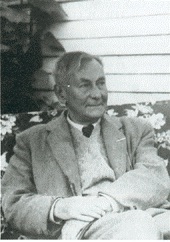
[PHOTOS] Amazing story captured in Life magazine of a 1950s nurse Maude Callen.

[VIDEO] Largest Lunar Impact Caught By Astronomers

What the IRS is trying now even has the ACLU upset: Stop The Assault

Wow! Check out this tweet from Russian chess champion Garry Kasparov

Don’t Exasperate Them

Pastoring is not for the faint of heart. Nor those easily offended. Nor those lacking in patience…. You get the idea!

ChrysostomJohn Chrysostom (347-407) gave this counsel to pastors—

Thus then must the Priest behave towards those in his charge, as a father would behave to his very young children; and as such are not disturbed either by their insults or their blows, or their lamentations, nor even if they laugh and rejoice with us, do we take much account of it; so should we neither be puffed up by the promises of these persons nor cast down at their censure, when it comes from them unseasonably.”

The Bible tells fathers not to irritate and provoke your children to anger [do not exasperate them to resentment], but rear them [tenderly] in the training and discipline and the counsel and admonition of the Lord. (Ephesians 6:4, Amplified Bible)

Instead we should follow the example of Jesus, the Great Shepherd—

When He saw the throngs, He was moved with pity and sympathy for them, because they were bewildered (harassed and distressed and dejected and helpless), like sheep without a shepherd. (Matthew 9:36, Amplified Bible)

Ask our Shepherd to give you His patience, and compassion, and tenderness, and wisdom to carry His sheep in your arms. After all, it’s His flock that we’ve been given the privilege and responsibility to care for!

Teach Compassion

Compassion means to not only feel what someone else is feeling, but then to make a move toward that person to help. In the life of Jesus you will often see the phrase “He was moved with compassion” and then Jesus taught or healed or acted to alleviate someone’s discomfort.

Pastors, we need to teach our congregations to be people of compassion: to feel the needs of those around them and then move to act in the love of Christ.

A.W. Tozer

A.W. Tozer

“The multitudes that were so dear to Christ shall not be less dear to me. If I cannot prevent their moral suicide, I shall at least baptize them with my human tears. I want no blessing that I cannot share. I seek no spirituality that I must win at the cost of forgetting that men and women are lost and without hope. If in spite of all I can do they will sin against light and bring upon themselves the displeasure of a holy God, then I must not let them go their sad way unwept. I scorn a happiness that I must purchase with ignorance. I reject a heaven that I must enter by shutting my eyes to the sufferings of my fellow men. I choose a broken heart rather than any happiness that ignores the tragedy of human life and human death. Though I, through the grace of God in Christ, no longer lie under Adam’s sin, I would still feel a bond of compassion for all of Adam’s tragic race, and I am determined that I shall go down to the grave or up into God’s heaven mourning for the lost and the perishing. —A.W. Tozer (emphasis added)

Run To The Pain

Listen to the podcast of this post by clicking on the player below, and you can also subscribe on AppleSpotify, or Audible.

We have become a numbed culture: we try to soften every blow, water down each negative report, ask only surface questions in the hopes that no one will really tell us how much they’re hurting, and then medicate away every symptom. But these symptoms are screaming to be noticed!

Dr. Paul Brand the renown hand surgeon and missionary to leprosy patients in India, wrote:

     “Pain contributes daily to a normal person’s quality of life…. Every normal person limps occasionally. Sadly, leprosy patients do not limp. Their injured legs never get the rest needed for healing…. This inability to ‘hear’ pain can cause permanent damage because the body’s careful responses to danger will break down. … A body only possesses unity to the degree that it possesses pain…. We must develop a lower threshold of pain by listening, truly listening, to those who suffer. … The body protects poorly what it does not feel.” —Dr. Paul Brand & Philip Yancey, In His Image

The Gospels often talk of the compassion of Jesus. His compassion led Him to teach the confused, feed the hungry, and heal the sick. The phrase usually used in the NKJV is descriptive: Jesus was moved with compassion. In other words His feelings moved Him to action.

The Old English way of describing compassion was to say someone was “moved in his bowels.” This is because when someone else is suffering it should be like a kick in my gut too.

Jesus gravitated toward the hurting, but in one story He told, Jesus related something different about His Father’s compassion. It’s the story we now call the story of the prodigal son. In this story Jesus said His Father watched the horizons every day to see if His wayward child would return. When He saw this child coming into view, God saw his slumped shoulders, He could detect his heavy heart and worn-out body. Then Jesus says something amazing, “The Father was moved with compassion and He RAN TO HIS SON!

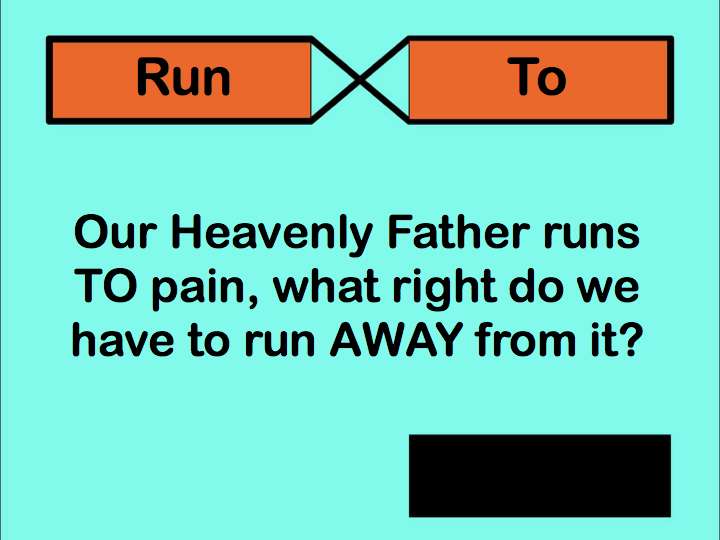
If our Heavenly Father runs TO another’s pain, what right do we have to ever run AWAY from it? 

If we are to be God-honoring in our interaction with others, we need to—as Dr. Brand says—lower our threshold of pain. We need to feel what others feel, to feel it like a kick in our own gut, and then move toward the pain with help and healing and restoration.

Christians—if we are truly Christ-like—should be known as the most compassionate people of anyone.

So we need to always be asking: What am I doing to let this compassion be seen in my life?

Check out all of the other messages in our series Live Together by clicking here.

►► Would you please prayerfully consider supporting this ministry? My Patreon supporters get behind-the-scenes access to exclusive materials. ◀︎◀︎

So We Become

The thought manifests the word;

The word manifests the deed;

The deed develops into habit;

And habit hardens into character.

So watch the thought and its ways with care,

And let them spring forth from love

Born out of compassion for all beings.

As the shadow follows the body, as we think,

So we become. —Juan Mascaro

Groaning

I’m a list kinda guy. I love making To Do lists, and shopping lists, and even prayer lists. These seem to work well for my temperament, helping me stay on task and feel like I am accomplishing something.

But I’ve noticed a danger built-in to these lists. I can use the lists to remove all emotion from my activities. I suppose that might be a good thing for my To Do lists and shopping lists, but it’s a bad thing for my prayer lists.

Many times when Jesus was moved to touch someone in need, the Bible says that Jesus groaned. Look at this:

  • Some people brought a man who could neither hear nor speak and asked Jesus to lay a healing hand on him. He took the man off by himself, put His fingers in the man’s ears and some spit on the man’s tongue. Then Jesus looked up in prayer, groaned mightily, and commanded, “Ephphatha!—Open up!” And it happened. (Mark 7:31-35)
  • When Jesus therefore saw her weeping, and the Jews also weeping which came with her, He groaned in the spirit, and was troubled. (John 11:33)
  • Now Jesus, again sighing repeatedly and deeply disquieted, approached the tomb. (John 11:38)

I love the words of G. Morgan Campbell:

“No man can pray for the world unless the Spirit interpret to him the world’s agony, and the Spirit cannot intercede the world’s agony to any man unless that man live in the midst of the world’s agony. Not by retirement from the world, not by hiding away within a monastic institution, not by seeking to develop my own spiritual life by removing myself from the agony of the world, can I ever pray for the world; but because I live every day in the midst of its busy life, am close to it and know it, and because the Spirit of God in me leads me into the secret deepest meaning of the world’s agony and pain so that I no longer treat it as a superficial disease that can be dealt with by the nostrums of humanity, but as a great heart trouble that needs blood and sacrifice to deal with it, am I able to pray. Out of that revelation of the meaning of the world’s agony created by the Spirit in the hearts of believing men they are able to pray. The Church of God in the economy of God was created an institute of prayer.”

Are you close enough to lost and hurting humanity to hear them groan?

Are you moved by their groans?

Can you groan on their behalf? That’s how we should be praying, and then the Spirit helps us in our weakness. We do not know what we ought to pray for, but the Spirit Himself intercedes for us with groans that words cannot express (Romans 8:26).

Don’t just pray for the hurting around you; groan for them!

Bringin’ It!

Everywhere you go today, you will be bringing something.

What is it?

Compassion … Empathy … Servanthood … Encouragement … A smile?

…or…

Disinterest … Apathy … Selfishness … Discouragement … A frown?

Lord, make me a channel of Thy peace, that
where there is hatred, I may bring love;
where there is wrong, I may bring forgiveness;
where there is discord, I may bring harmony;
where there is error, I may bring truth;
where there is doubt, I may bring faith;
where there is despair, I may bring hope;
where there are shadows, I may bring light;
where there is sadness, I may bring joy. —Francis of Assisi

So what are you going to bring today?

Gettin’ Messy

In any culture where it exists, leprosy makes its victim an outcast. People might feel bad for the afflicted, but they quickly look away. No one invites the leper to dinner, few even go to visit the leper. Shunned, closeted away, quickly forgotten.

In every culture where it exists today, pain and suffering are treated almost like leprosy. We’ll talk about the problem, pray for the victims, form organizations to address the problem, and even give money to address the issue. But few people do more.

We feel safe at a distance.

We feel sanitized if we don’t have to touch the hurting.

We feel we’ve done our part if we throw a few dollars at it.

But not Jesus. He handled the hurting … literally.

A man with leprosy came and knelt in front of Jesus. He said, “Lord, You have the power to make me well, if only You wanted to.” Jesus put His hand on the man and said, “I want to! Now you are well.” At once the man’s leprosy disappeared.

Jesus put His hand on the man. He didn’t just pray. He didn’t give money. He didn’t organize a rally to address the problem of leprosy. He touched a hurting man.

He got messy.

He conveyed love to a hurting man like nothing else could have.

Robert Shuller wisely noted, “Being a Christian is offering yourself to Him. Your mind for Christ to think through; your heart for Christ to love through; your lips for Christ to speak through; your hands for Christ to touch through.”

What about it? Are you ready to convey the love of Christ by touching—literally—people’s problems? Nothing says “I love you” like the human touch.

It’s Hard To Help Someone Up With Your Fists Clenched

Helpful people have to be openhanded people in order to help others.

Tightfisted people may try to help, but they’ll probably bring more hurt than help.

In just one chapter of Deuteronomy (the book that is helping prepare the people to live in the Promised Land) there are several starkly-contrasted words. In fact, these words hardly appear anywhere else in the book, except in this chapter, teaching us how to help the down-and-outer. Like this one:

If there is a poor man among your brothers in any of the towns of the land that the LORD your God is giving you, do not be hardhearted or tightfisted toward your poor brother. Rather be openhanded and freely lend him whatever he needs.

Throughout this chapter, look at the contrasting words…

  • Hardhearted  //  Openhearted
  • Tightfisted  //  Openhanded
  • Grudging heart  //  Give generously
  • Stingy  //  Freely lend
  • Empty-handed  //  Supply liberally

God tells us, “There should be no poor among you.” And, “Give to the poor as the Lord has blessed you.”

Do you know why we’re to give to the poor? So we can receive a greater blessing. Check this out:

Give generously to the poor and do so without a grudging heart; then because of this the LORD your God will bless you in all your work and in everything you put your hand to.(v. 10)

A tightfisted person cannot catch a blessing from God—only the openhanded person can.

A hardhearted person cannot feel God’s love—only the openhearted person can.

Pretty simple: if you want to be blessed, then generously bless others.

Now let’s go do it!