What’s Your Passion?

Listen to the podcast of this post by clicking on the player below, and you can also subscribe on AppleSpotify, or Audible. 

A quick recap: We are all gifted by God, but we typically restrict ourselves to a comfort zone which is much smaller than our God-given gift zone. In order to maximize our impact for the Kingdom of God, we are going to have to get uncomfortable with staying comfortable—we are going to have to trust God as we push out further into our gifts. 

Last week I gave you a homework assignment to think about the things you love to do. Why do we need to know this? Because it is one of the indicators of our areas of giftedness. 

In the whole carrot-versus-stick discussion, you will find that most people are motivated by reward way more than they are by the fear of punishment. Look at how these God-fearing men were motivated by the God’s rewards:

  • David—1 Samuel 17:26-27, 29-30 
  • Paul—1 Corinthians 9:24; 2 Timothy 4:8 
  • Jesus—Hebrews 12:2; Philippians 2:9-11 

(Check out all of the Scriptures in this post by clicking here.)

Who’s more likely to get the reward: the one who loves what they are doing or the one who hates what they are doing? We are more likely to stick with what we love doing, and you are going to love doing what you are gifted by God to do. 

Why we do what we do is much more important that what we do (Isaiah 1:11, 13, 15; Matthew 7:22-23). 

We have been gifted by God to do great things. When we do those great things, we are rewarded and it brings God glory. That realization should answer the question of why we do what we do (Ephesians 2:10). 

The way we see the world, what motivates us, and how we act are all determined by our gifts. We are working on the same Great Commission, but how we live that out will be different because of our different gifts. 

In the Old Testament, the saints wanted Zion to be strong and God-glorifying: 

  • David fought battles and wrote worship songs 
  • Solomon gave wise proverbs 
  • Josiah brought about reforms 
  • Ezra encouraged the Israelite governor and high priest 
  • Daniel encouraged the Babylonian rulers 
  • Nehemiah built the wall

In the New Testament era, the saints should all want the Body of Christ to be strong and God-glorifying. Toward that goal, we still need warriors, worshipers, wisemen, reformers, teachers, counselors, workers. 

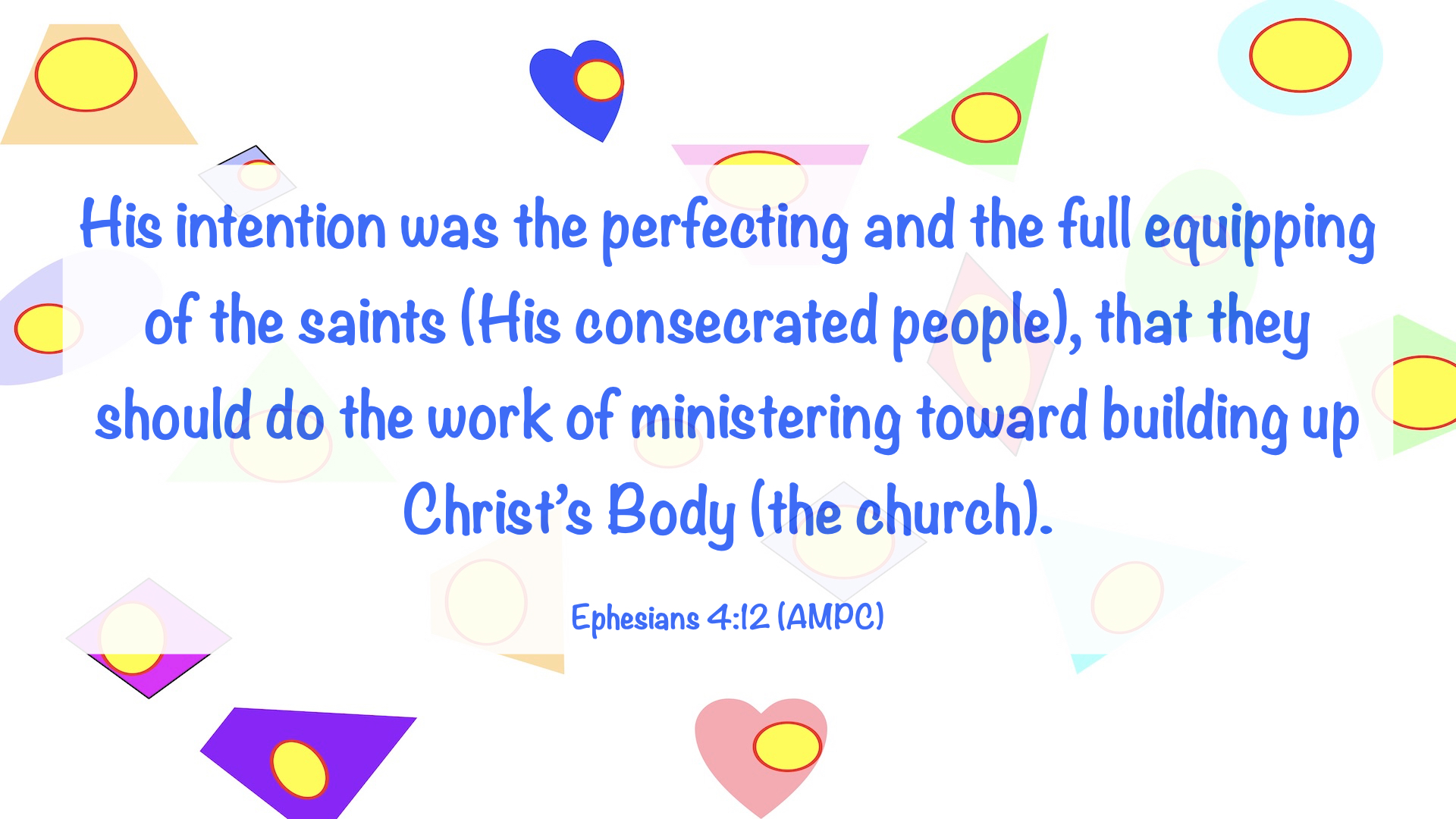
Toward that goal, we all have a part to play (Ephesians 4:12). Check out the example of Paul in…

  • …Thessalonica: Paul was in the synagogue on three Sabbaths (Acts 17:1-2; 2 Thessalonians 3:8)  
  • …Corinth: Paul was synagogue on the Sabbath days, but after Silas and Timothy arrived, Paul was able to be preaching every day for 18 months (Acts 18:1-5, 11) 

What’s the difference? Silas and Timothy used their gifts so that Paul could use his. Without the “enzyme” of Silas and Timothy’s gifting, the whole Body of Christ would have been impoverished. 

One of the things that will help your spot your areas of giftedness is noticing what you are passionate about—What do you love to do? 

Let me give you three things to consider:

  1. When can I do this again? vs. When will this be over? 
  2. When I do this, I’m tired but fulfilled vs. When I do this, I’m tired. 
  3. I would do this without pay vs. I would rather find something else to do. 

Our prayer should echo what Paul prayed:

For this reason, since the day we heard about you, we have not stopped praying for you. We continually ask God to fill you with the knowledge of His will through all the wisdom and understanding that the Spirit gives, so that you may live a life worthy of the Lord and please Him in every way: bearing fruit in every good work, growing in the knowledge of God. (Colossians 1:9-12)

If you’ve missed any of the messages in our series Living in Your Gift Zone, you can find them all here. 

►► Would you please prayerfully consider supporting this ministry? My Patreon supporters get behind-the-scenes access to exclusive materials. ◀︎◀︎
Not That Other Stuff, But Prayer

Listen to the podcast of this post by clicking on the player below, and you can also subscribe on AppleSpotify, or Audible. 

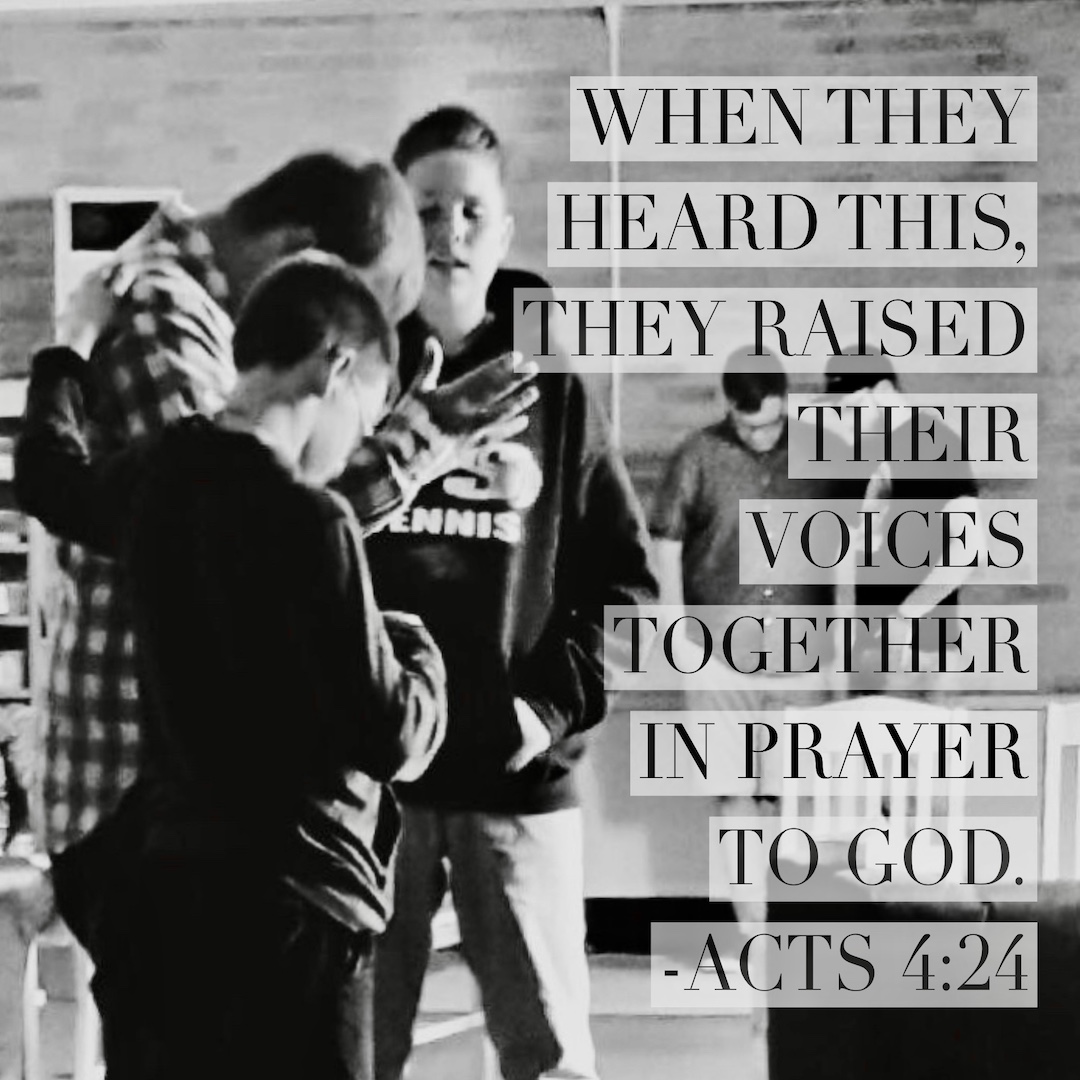
The Church heard the threats from the Sanhedrin, warning them not to talk about Jesus anymore. Their first response was to go to God: “When they heard this, they raised their voices together in prayer to God“ (Acts 4:24). 

Not signing a petition or organizing a protest, but praying.
Not telling their friends to gain support, but praying.
Not attacking, but praying.
Not discussing, but praying.
Not strategizing, but praying.
Not complaining, but praying.
Not individually, but together.
Not later, but immediately.
Not going through the motions, but passionately.
Not aimlessly, but guided by Scripture.
Not humdrum, but expecting God’s power from on high.
Not for vengeance, but for a testimony.

God answered the Church powerfully! 

Then the people moved out boldly—“And when they had prayed, the place where they were assembled together was shaken; and they were all filled with the Holy Spirit, and they spoke the word of God with boldness” (Acts 4:31). 

Oh, for this type of unifying action today! It starts with prayer!

You may also like my blog post and sermon 4 Holy Spirit-Enhanced Habits, and my whole series on prayer called Be A First Responder.  

►► Would you please prayerfully consider supporting this ministry? My Patreon supporters get behind-the-scenes access to exclusive materials. ◀︎◀︎

De-Sizing The Church

Listen to the podcast of this post by clicking on the player below, and you can also subscribe on AppleSpotify, or Audible. 

I’d like to tell you about a book that I think is an absolute must-read for those in church leadership. Check out my interview with Karl Vaters, the author of De-Sizing The Church, on this episode of The Podcast.

Purchase your copy of De-Sizing The Church here.

You can keep up with all that Karl is doing on his blog.

And if you would like to check out when Karl interviewed me about my book Shepherd Leadership, those videos are here.

Here are a bunch of ways to get in touch with me and follow along with other projects on which I am involved.

►► Would you please prayerfully consider supporting this ministry? My Patreon supporters get behind-the-scenes access to exclusive materials. ◀︎◀︎
Faithfulness And Excellence

Listen to the podcast of this post by clicking on the player below, and you can also subscribe on AppleSpotify, or Audible. 

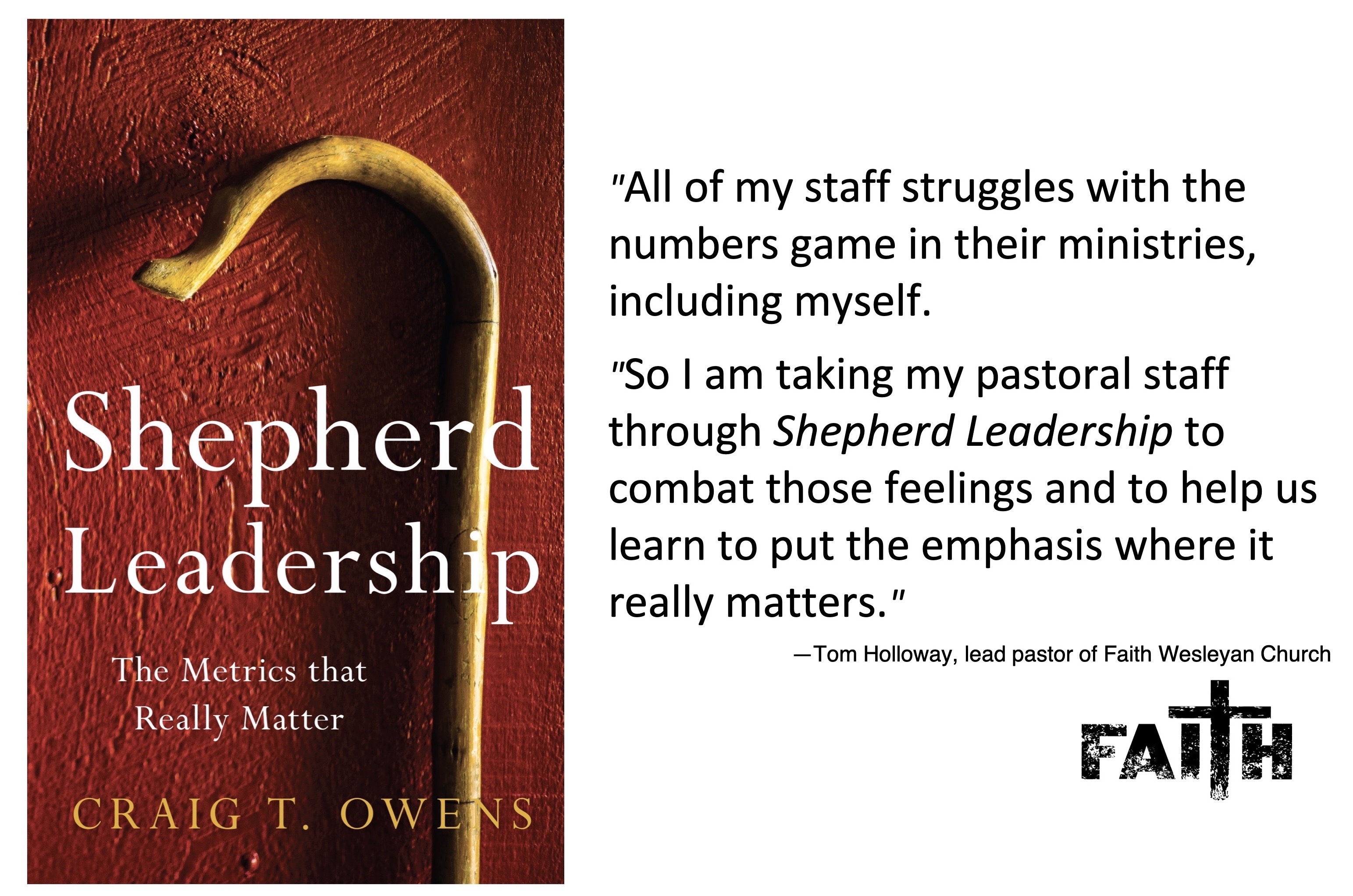
I had such a great time with Karl Vaters on his podcast called The Church Lobby. Right at the beginning of the conversation, Karl wanted to talk about the subtitle of my book: The metrics that really matter. 

Check this out…

Some resources for you to check out:

►► Would you please prayerfully consider supporting this ministry? My Patreon supporters get behind-the-scenes access to exclusive materials. ◀︎◀︎
We’re Not Anti-Growth

Listen to the podcast of this post by clicking on the player below, and you can also subscribe on AppleSpotify, or Audible. 

I had a great time on the Leading From Alignment podcast with Jim Wiegand and John Opalewski. 

Jim pastors a very large church, I pastor a small church, and John coaches pastors who pastor every size church in between. We are all in agreement that when it comes to the vitality of both the church and the pastor, the size of the church or its budget is not the best metric to monitor. Take a listen…

None of us are anti-growth when it comes to the church, but we are pro-health. Jim said it well: We will get what we focus on. If we just want numbers, the numbers may explode, but people may explode (or implode) in the process. But if we focus health, we will get healthy—both the pastor and the congregation. 

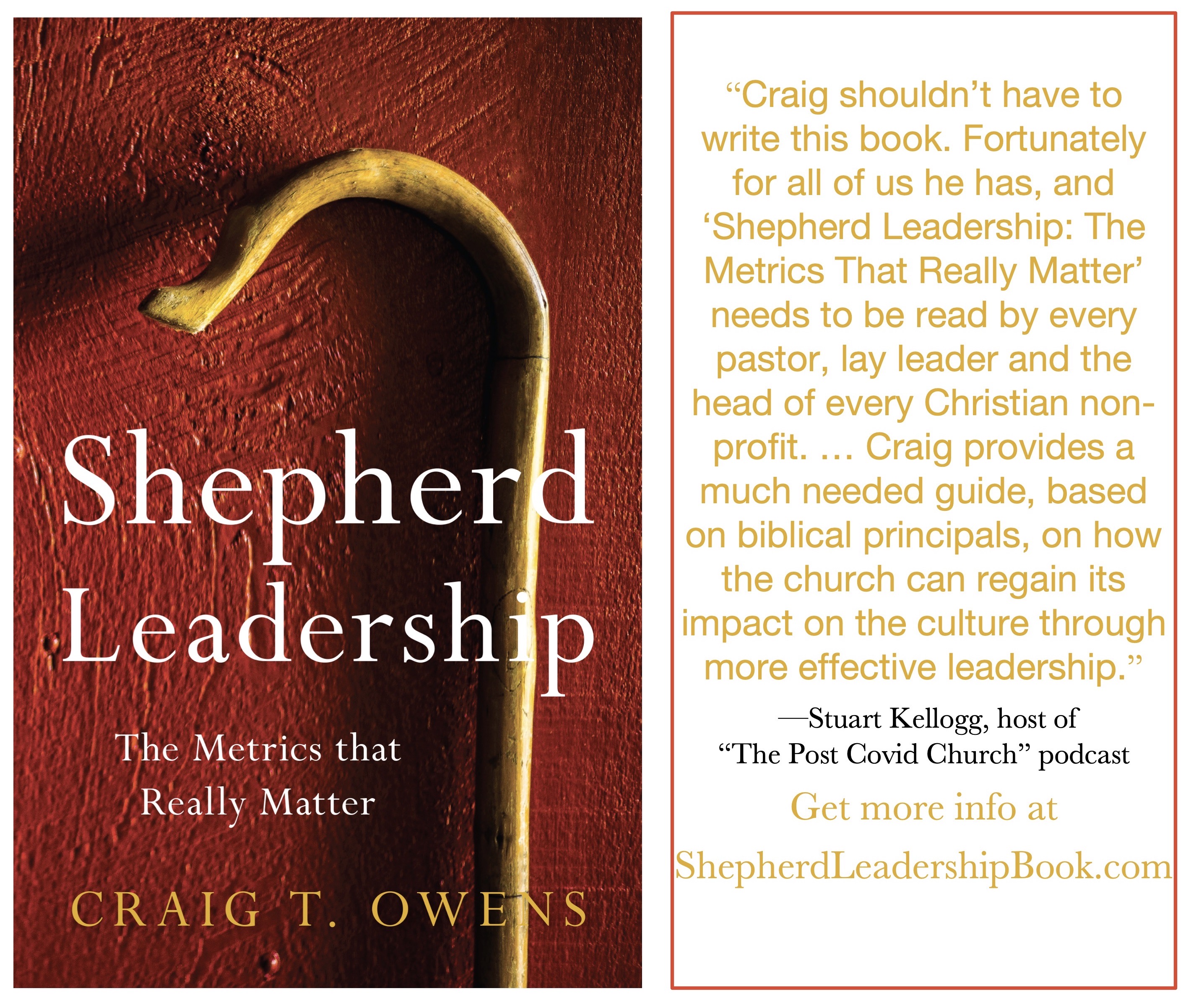
This idea is the reason behind my book Shepherd Leadership, especially the subtitle “The metrics that really matter.” I am so grateful to hear that my book is helping pastors and church boards realign their thinking along biblical practices, and that Shepherd Leadership is even being used as a textbook in a pastoral training school. I believe my book can be of assistance to you too.

I’ll be sharing more clips from this Leading From Alignment interview soon, so please stay tuned. Shepherd Leadership: The Metrics That Really Matter is available in print or ebook, and in audiobook through either Audible or Apple. 

►► Would you please prayerfully consider supporting this ministry? My Patreon supporters get behind-the-scenes access to exclusive materials. ◀︎◀︎
When Leaders Need To Call A “Time Out!”

Listen to the podcast of this post by clicking on the player below, and you can also subscribe on AppleSpotify, or Audible. 

I’ve discussed quite a bit the two ways that organizations—especially churches and non-profit ministries—can measure success: By quantity or by quality. And I think a good case can be made for both of these metrics from the Bible. 

My bigger concern is when we try to use bigger numbers as the sole gauge of success. In a training time I had with some ministry interns, we took a deep dive into the reasons why the metric of bigger and ever-increasing numbers became the sole measurement for success in our churches. During this training time, I took these interns to Paul’s teaching in 1 Corinthians and two Old Testament examples where people got this wrong. Take a listen…

It’s important for shepherd leaders to call a “time out” to get their teammates to step back for a moment to consider what metrics they are using. My book Shepherd Leadership can be a good resource to use in this evaluation process. I am currently working with pastors who are using my book as a discussion-starter for their team, and I would be happy to do this with you as well. If I can be of service to you, please contact me. 

Shepherd Leadership: The Metrics That Really Matter is available in print or ebook, and in audiobook through either Audible or Apple.

►► Would you please prayerfully consider supporting this ministry? My Patreon supporters get behind-the-scenes access to exclusive materials. ◀︎◀︎

Links & Quotes

I co-host a leadership podcast with my good friend of 30+ years Greg Heeres. In an episode that came out last week, we were discussing the importance of friendships for leaders. All of us need friends that are investing in our lives. You may check out the rest of the conversation Greg and I had by clicking here.

Jonathan Woodward writes, “The right use of authority or power can make people glad. In our age, however, power is often immediately viewed with skepticism or outright disdain.” He also talks about our responsibility to the incorrect use of leadership authority: “It’s absolutely necessary to identify, challenge, and rebuke sinful leadership. It ensures that people are cared for and God is honored.” Check out The Power to Bless: Six Dimensions of Good Leadership.

More and more scientists are dissatisfied with the lack of evidence supporting the theory of evolution. ICR reports, “Indiana University Biologist Armin Moczek told The Guardian, ‘We still do not have a good answer. This classic idea of gradual change, one happy accident at a time, has so far fallen flat.’”

The churches in my hometown of Cedar Springs, MI, have partnered together to make sure students who are food insecure on the weekend are supplied with nutritious food to carry them through the weekend. If you would like to know more, or if you would like to help us, please check out the Cedar Springs Ministerial Association website.

“Because we love something else other than this world, we love even this world better than those who know no other.” —C.S. Lewis

This is one of the best interviews I have done. I so enjoyed this! And the good news is this is only part 1. We had such a good conversation that the hosts asked me to stick around to record another episode with them. Here is the first session…

“Here’s the deal: the better you get, the harder you have to work.” —Albert King, speaking to Stevie Ray Vaughan

Here is a brief clip from a teaching I did for some ministry interns. You can check out more of this by clicking here.

“Let Us” Be The Church

Listen to the podcast of this post by clicking on the player below, and you can also subscribe on AppleSpotify, or Audible. 

I had a great time on the 200churches podcast with Jeff Keady. 

Jeff asked me what was different for our church during the pandemic shutdowns. I explained to him how our season of change had begun long before anyone was even talking about a coronavirus.

Of course one of the big things in my personal life during the last year was authoring a #1-selling book called Shepherd Leadership: The Metrics That Really Matter. As I commented to Jeff, those “let us” phrases in the Book of Hebrews so struck me that I wrote about it in my book. 

     Have you noticed that the word “saints” in the New Testament is always in the plural, never the singular? That’s because we need each other to bring out the saintly qualities in each other. This is why the writer of Hebrews stresses the camaraderie of “let us” so many times (Hebrews 10:22–25). I’ve found that many shepherd leaders tend to isolate. They are so involved in their own pasture of ministry that they seldom make the time to interact with other shepherds. In fact, isolation is one of the devil’s favorite tactics. I encourage you to find friends—fellow saints—who are also committed to healthy spiritual growth and avail yourself of their friendship and insight. —an excerpt from the chapter ‘Four Elements to Optimal Spiritual Health’ 

“Let us” be the church wherever God places us and however He chooses to use us. 

I’ll be sharing more clips from this 200churches interview soon, so please stay tuned. Shepherd Leadership: The Metrics That Really Matter is available in print or ebook, and in audiobook through either Audible or Apple. 

►► Would you please prayerfully consider supporting this ministry? My Patreon supporters get behind-the-scenes access to exclusive materials. ◀︎◀︎
Quality Over Quantity

Listen to the podcast of this post by clicking on the player below, and you can also subscribe on AppleSpotify, or Audible. 

I had a great time on the Ailbe Podcast with Rusty Rabon. 

Rusty referred to the opening chapter of my book Shepherd Leadership: The Metrics That Really Matter where I talk about how many of our churches and church leaders are attempting to climb the wrong ladder of success. Rusty noted how many people become frustrated because they are not seeing the success the way that so many people define it.

Before addressing frustrated pastors, I first spoke to the board members that are supporting that pastor. 

In Shepherd Leadership I wrote,

“Businesses think in terms of quantitative gains—things they can count—but churches and nonprofits should be thinking in terms of qualitative gains—a quality improvement that isn’t as easily counted. I think we all know this, and yet we still persist in wanting to define success in a church or a nonprofit by those quantitative standards such as attendance growth, donations, and the like. When we think qualitative over quantitative, suddenly what seemed “small” is so significant and so valuable that it cannot be calculated!”

I’ll be sharing more clips from this interview soon, so please stay tuned. If you would like to check out the other clips I have already shared from this podcast, please check them out here. Shepherd Leadership: The Metrics That Really Matter is available in print or ebook, and in audiobook through either Audible or Apple. 

►► Would you please prayerfully consider supporting this ministry? My Patreon supporters get behind-the-scenes access to exclusive materials. ◀︎◀︎
“Doing” Church

Listen to the podcast of this post by clicking on the player below, and you can also subscribe on AppleSpotify, or Audible. 

I had a great time on the 200churches podcast with Jeff Keady. 

Jeff and I talked about some of the changes pastors and churches were forced to confront during the COVID shutdowns. For me, this was a time for my leadership team to examine why we “do church” the way we do. These shutdowns helped us identify the things that were biblical and non-biblical. 

One of the reasons I gave the subtitle “The Metrics That Really Matter” to my book was because of the frustration I saw in so many pastors who were feeling unsuccessful. I discovered that their frustration was largely due to trying to live up to metrics that simply aren’t found in the pages of Scripture. As I wrote in the preface of my book—

My larger concern is that churches, parachurch organizations, and nonprofit ministries that are largely founded to fulfill a biblical mandate are straying from the simple, freeing truths found in the Bible. Or maybe I should say that they are adding things to their ministries that aren’t in the pages of Scripture. Whichever way you want to say it, the result is the same: We are using the wrong metrics to define “success” for our ministries. I fear that in our focus on unbiblical practices, we are missing the joy of really doing ministry. 

Our ministry should be joyful to us as leaders and joy-giving to those to whom we are ministering. If it’s draining instead of fulfilling, that may be an indication that we are trying to gauge success by monitoring non-biblical metrics. 

If you want to dig into this a bit more, check out two previous posts I wrote: 

I’ll be sharing more clips from this 200churches interview soon, so please stay tuned. Shepherd Leadership: The Metrics That Really Matter is available in print or ebook, and in audiobook through either Audible or Apple. 

►► Would you please prayerfully consider supporting this ministry? My Patreon supporters get behind-the-scenes access to exclusive materials. ◀︎◀︎