Thursdays With Oswald—Heavenly Minded & Earthly Good

This is a weekly series with things I’m reading and pondering from Oswald Chambers. You can read the original seed thought here, or type “Thursdays With Oswald” in the search box to read more entries.

Oswald Chambers

Heavenly Minded & Earthly Good 

     Entire sanctification puts a man’s breast and back as either should be, places his feet on earth and his head in Heaven, and gives him the royal insignia of the saints. 

From Christian Disciplines

Have you ever heard it said of someone, “He’s so heavenly minded that he’s no earthly good”? They are saying that man has ideas which sound spiritual but aren’t very practical.

Isn’t it also true that someone could be “so earthly minded that he’s no heavenly good”? Yes, sadly, many people fall into this category!

Oswald Chambers is saying that those people who allow the Holy Spirit’s total sanctification process in their lives are both heavenly minded and earthly good. Or, as Chambers says in If Ye Will Ask, “Jesus Christ does not make monks and nuns, He makes men and women fit for the world as it is (see John 17:15).”

Christians should be the most practical people on earth, because their feet remain on earth while their mind and hearts remain in Heaven, hearing and applying God’s timeless and practical truths. True Christians should sound and live differently.

Now More Than Ever

I am very challenged by this quote, and it is one I will attempt to live out this year.

Tozer

“Now more than at any other time in generations, the believer is in a position to go on the offensive. The world is lost on a wide sea, and Christians alone know the way to the desired haven. While things were going well, the world scorned them with their Bible and hymns, but now the world needs them desperately, and it needs that despised Bible, too. For in the Bible, and there only, is found the chart to tell us where we are going on this rough and unknown ocean. The day when Christians should meekly apologize is over—they can get the world’s attention not by trying to please, but by boldly declaring the truth of divine revelation. They can make themselves heard not by compromise, but by taking the affirmative and sturdily declaring, ‘Thus saith the Lord.’” —A.W. Tozer

Thursdays With Oswald—Prayer Works

This is a weekly series with things I’m reading and pondering from Oswald Chambers. You can read the original seed thought here, or type “Thursdays With Oswald” in the search box to read more entries.

Oswald Chambers

Prayer Works 

     The prayer of the feeblest saint on earth who lives in the Spirit and keeps right with God is a terror to satan. The very powers of darkness are paralyzed by prayer; no spiritualistic seance can succeed in the presence of a humble praying saint. No wonder satan tries to keep our minds fussy in active work till we cannot think in prayer. It is a vital necessity for Christians to think along the lines on which they pray. The philosophy of prayer is that prayer is the work. 

From Christian Disciplines

Pray is not getting ready to work; prayer is the work.

We don’t make time to pray; but by prayer our effective time is multiplied.

Christians need to stop seeing prayer as something to do before work, or something to do instead of work, or something that is done after our work doesn’t seem to work. Prayer is the work because prayer works!

In Name Only

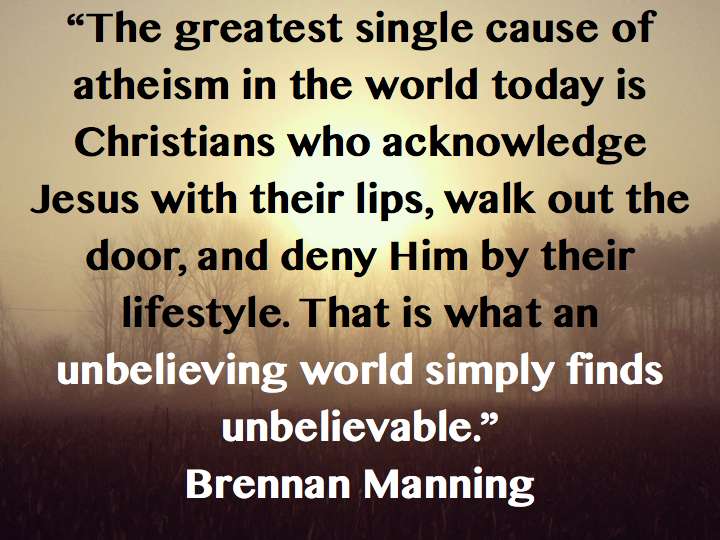
Brennan ManningPhiladelphia, as most people know is “The City of Brotherly Love.” The original Philadelphia in Asia Minor was founded in the second century BC by a man named Attalus who, quite the contrary to cultural norms, kept his brother in a position of power and influence alongside him.

Where many leaders were suspicious of anyone who could make a claim on the throne, Attalus loved (the Greek word is phileo) his brother (Greek adelphos meaning “from the same womb”), so the city took on this name and attitude as well. After the city was leveled by an earthquake in 17 AD, Emperor Tiberius sent the funds needed to rebuild. Out of gratitude to the emperor’s generosity there was a movement to rename the city Neocaesarea in his honor. But the people liked being known for their brotherly kindness, so the name Philadelphia stuck.

At least it stuck in name only. As the first century progressed, Philadelphians bowed more and more to Rome’s influence and this city once known for kindness to all began to persecute Christians.

This reminds me of the United States of America today. Our pledge of allegiance still includes “one nation under God,” and “in God we trust” is still on our currency, and we haven’t repealed the First Amendment which gives us freedom of religion. It appears that we are a “Christian nation,” but in name only.

Many cast the blame far and wide, but as Jesus addressed the people in the first city of Philadelphia (see Revelation 3:7-13), we see the blame is on those self-professing Christians who didn’t live Christ-like lives. They were Christians in name only.

For those who “have kept My Word and not denied My name” Jesus promises a list of rewards longer than the list for any of the other seven churches addressed in the book of Revelation! Those promises are still in effect for those who will not deny Christ. More specifically for those who by their words and their lifestyle hold true to Jesus Christ.

Brennan Manning was exactly right when he said, “The greatest single cause of atheism in the world today is Christians: who acknowledge Jesus with their lips, walk out the door, and deny Him by their lifestyle. That is what an unbelieving world simply finds unbelievable.”

My prayer is that Christians everywhere would be known not just by the name Christian, but by the way they hold true to Christ and His Word!

Please join me next Sunday as we look at the last of the churches in our series The 7-Star Church.

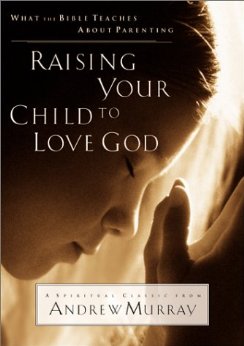
30 Quotes From “Raising Your Child To Love God”

Raising Your ChildIt’s a book I called a “must read for all parents” (you can read my full book review by clicking here). After typing up my notes of all the quotes I highlighted in this book, I ended up with 18 pages of notes, so these quotes from Andrew Murray’s book are, in my opinion, the cream of the crop. Tomorrow I will share some of the prayers Murray offered in his book.

“Example is better than precept. … Love that draws is more important than law that demands. … Let parents be what they want their children to be.”

“How terrible is the curse and power of sin! Through the father the child becomes a partaker of the sinful nature, and the father so often feels himself too sinful to be a blessing to his child; thus the home becomes a path to destruction rather than to eternal life. But—blessed by God!—what sin destroyed, grace restores. … Let God’s Father-heart and His Father-love be your confidence. As you know and trust Him the assurance will grow that He is fitting you for making your home, in ever-increasing measure, the bright reflection of His own.”

“God seeks a people on earth to do His will. The family is the great institution for this object; a believing and God-devoted father is one of the mightiest means of grace.” 

“What God says of Abraham gives us further insight into the true character of this grace: ‘For I have chosen him, so that he will direct his children and his household after him to keep the way of the Lord.’ The spirit of modern so-called liberty has penetrated even into our family life; and there are parents, who some from a mistaken view of responsibility, some from lack of thought as their sacred calling, somer from love of ease, have no place for such a word as ‘command.’ They have not seen the heavenly harmony between authority and love, between obedience and liberty. Parents are more than friends and advisers; God has clothed them with a holy authority to be exercised in leading their children in the way of the Lord.”

“Oh that Christian parents would realize, just as Judah did, what it means to stand in that place for their child! How often—when our children are in danger because of the prince of this world, when the temptations of the flesh or the world threatened to make them prisoners and slaves, holding them back from ever reaching the Father’s home—are we found careless or unwilling to sacrifice our ease and comfort in order to rescue them!” 

“Oh, that the eyes of God’s people might be opened to the danger that threatens the church! It is not infidelity or superstition, it is the spirit of worldliness in the homes of Christian families, sacrificing the children to the ambitions of society, to the riches or the friendship of the world—that is the greatest danger of Christ’s church. If every home once won for Christ were a training school for His service, we would find in this a secret of spiritual strength no less than all that ordinary preaching can accomplish.”

“With a parent’s love comes a parent’s influence. … The character of a child is formed and molded by impressions; continual communion with the parent can render these impressions deep and permanent. The child’s love for a parent rises to meet the parent’s love.” 

“The first four commandments have reference to God, the last five to our neighbor. In between stands the fifth. It is linked to the first four because to the young child the parent represents God; from him the child must learn to trust and obey God. And this command is the transition to the last five because the family is the foundation of society, and there the first experience comes of all the greater duties and difficulties with humankind at large.”

“The child can only honor what he sees to be ‘worthy of honor.’ And this is the parent’s high calling: always so to speak and act, so to live in the child’s presence, that honor may be spontaneously and unconsciously rendered. … Above all, let parents remember that honor comes from God. Let them honor Him in the eyes of their children, and He will honor them there too.”

“There is nothing that drive home the word of instruction as powerfully as a consistent and holy life. … The entrance of divine truth into the mind and heart, the formation of habits and the training of character—these are not attained by sudden and isolated efforts, but by regular and unceasing repetition.”

“Love knows no sacrifice, counts nothing a burden; love does not rest until it has triumphed.”

“We don’t want to be just another family with whom God dwells and is pleased. Ours must be wholly consecrated to God. And do not be afraid that strength will not be given to keep the vow. It is with the Father in heaven, calling and helping and tenderly working both to will and to do in us, that we are working.”

“We need renewed wisdom directly from above for the individual needs of each child. Daily prayer is the secret of training our children for God. … Those who have already communicated with God and received divine teaching about their children will be those who desire still more and pray earnestly for it.”

“Nothing open the fountains of divine love and renewed love for each other more than the prayerful desire to know how to raise our children to love God.”

“Not to restrain a child is to dishonor God and the child.”

“My duty is never measured by what I feel is within my power to do but by what God’s grace enables me to do.”

“Every thoughtful parent knows that there are times and places when the temptations of sin will be more apt to surprise even the most well-behaved child. Such are the times, both before and after the child goes into a situation or circumstance where he may be tempted, that a praying father and mother should do what Job did, bring the children before God in repentance and faith and where possible to confront them with questions concerning their behavior.”

“Let us ask God to make us very watchful and very wise in availing ourselves of opportunities to admonish our children and to pray audibly with them.”

“In our family’s life, the first thing of importance must not be our earthly happiness, or even the supply of our daily needs, nor seeing to the child’s education for a life of prosperity and usefulness, but rather the yielding of ourselves to God in order to be conveyors of His grace and blessing to our children. Let us live for God’s purpose: deliverance from sin. Thus our family life will forever be brightened with God’s presence and with the joy of our heavenly home to come, of which our earthly one is by the nursery and the image.”

“‘The children of Your servants will live in Your presence; their descendants will be established before You’ (Psalm 102:25-28). Death may separate one generation from another, but God’s mercy connects them as it passes on from one to another; His righteousness, which is everlasting, reveals itself as salvation from generation to generation. … It is God’s will that His salvation should be known from generation to generation in your family too, that your children should hear from you and pass on to their children the praises of the Lord.”

“God’s purpose is that the Holy Spirit should take possession of our sons and daughters for His service; that they should be filled with the Holy Spirit, consecrated for service. They belong to Him and He to them.” 

“Jesus desires that we rise above the experiences of fatherhood on earth to know more deeply the Father in heaven.”

“The earthly father must not only make the Father in heaven his model and guide, but he must so reflect Him that his child will naturally desire to emulate the One whom he so aptly represents. … In a Christian father a child ought to have a better picture than the best of sermons can give of the love and care of the heavenly Father and all the blessing and joy He wants to bestow.”

“If we are to watch over the heavenly quality of our children, we must ourselves be childlike and heavenly-minded. … Children lose their childlikeness all too soon because parents have so little of it.”

“Fathers, you have sons whom you would fain bring to Jesus to be saved, come and hear the lessons the Lord would teach you. Let these children first send you to Jesus in confession, prayer, and trust; your faith can bring them in.”

“Your motherhood is in God’s sight holier and more blessed than you realize.”

“The effect of the good advice parents give is more than neutralized by their own behavior.” 

“A child should never be allowed to feel that his immaturity is not taken into account, that his young reasoning is not regarded, that he has not received empathy, or help, or justice that he expects. This will take a kind of love and thoughtfulness that parents are all too short of.”

“If you feel that you do not know how to teach the Word to them, to make it interesting or exciting for them, take heart—God will make it come alive to them if you are faithful to read it and live it.”

“I am the giver of their physical life, the framer of their character, the keeper of their souls, the trustee of their eternal destiny. I was first blessed that I may bless them, first taught how my Jesus loved me and gave Himself for me that I may know how to love and how to give myself for them. … And the more tenderly my love to them is stirred up, the more I feel the need to be wholly and only the Lord’s, entirely given up to the love that loves and makes itself one with me. This will fill me with a love from which selfishness shall be banished, giving itself in a divine strength to live for the children that God has given me.”

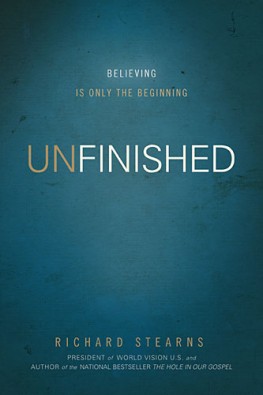
Unfinished (book review)

UnfinishedRichard Stearns—as he did in The Hole In Our Gospel—delivers another stirring wake-up call to the Church in Unfinished: Believing is only the beginning.

As the title implies Unfinished is about what is still left for Christians to do. It’s not enough, Richard Stearns says, to just believe that Jesus is our Savior and Lord, we have to do something with that belief. And until we do, the work that Jesus gave us to do is unfinished.

The words in this book are both confronting and motivating. As I was, I believe you will be too, challenged to realize that God has made me and placed me where I am on purpose. He has a plan for my life, and I must honestly answer the question, “Am I fulfilling that plan, or is the work still unfinished?” Far from feeling condemned for anything yet unfinished, you will feel a renewed zeal to complete the work.

The first part of Unfinished is directed to individual Christians, and the second part to the corporate body of Christians known as the Church. The accompanying study guide and discussion questions at the back of the book will help you clarify your thoughts into action steps.

Unfinished is a great read!

Note: Because I had previously read and reviewed The Hole In Our Gospel (you can read my review by clicking here), I was given a free copy of Unfinished to read and review as well. My review of this book conforms with the standards I have for all of my book reviews.

The Holy Spirit’s Power

Holy Spirit as powerHere are some of the quotes I used in my message this morning…

“The Holy Spirit is not a luxury, not something added now and again to produce a deluxe type of Christian once in a generation. No, He is for every child of God a vital necessity, and that He fill and indwell His people is more than a languid hope. It is rather an inescapable imperative.” —A.W. Tozer

“There is nothing so still and gentle as the checks of the Holy Spirit if they are yielded to, emancipation is the result; but let them be trifled with, and there will come a hardening of the life away from God. Don’t quench the Spirit. … Guard as your greatest gift the anointing of the Holy Spirit.” —Oswald Chambers

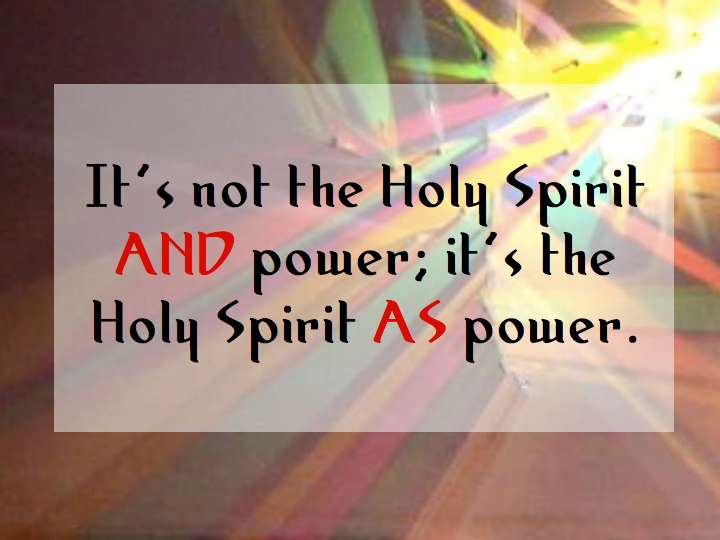
“Jesus doesn’t say we will baptized with the Holy Spirit and power (see Acts 1:8), but that we will be baptized with the Holy Spirit AS power. There’s a huge difference! It means we will have everything we need to always overcome, to never be at a loss!” —CTO

Miserable

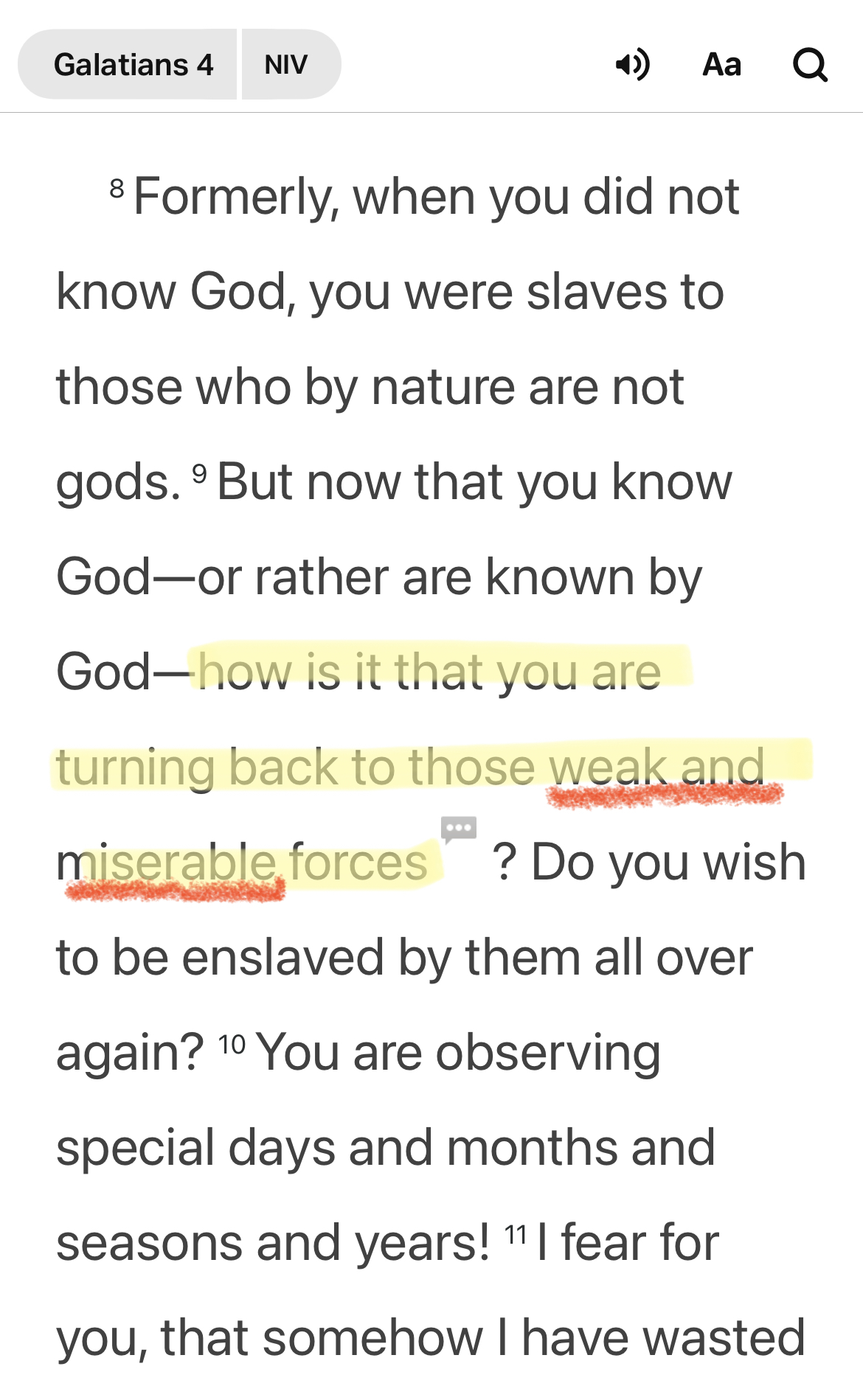
The Apostle Paul asked the Christians in Galatia an important question:

How is it that you are turning back to those weak and miserable principles? (Galatians 4:9)

The two words together in the Greek—weak and miserable—imply things that impoverish us and reduce us to lowly paupers and beggars. That’s not a pretty picture!

Look at the contrast between the princely life and the pauper’s life.

Those who follow Christ:

  • Are called sons of God (Galatians 4:6a)
  • Experience Abba Father’s favor (4:6b)
  • Are heirs to God’s Kingdom (4:7)

Those who don’t follow Christ:

  • Live as slaves (4:7)
  • Are separated from God’s favor (4:1-3)
  • Live as miserable beggars (4:9)

Why would anyone choose the miserable beggar’s life?

Here’s the principle: Everyone serves someone! I will either serve God and be called His son, or I will serve myself (my desires, my passions, my way of doing things) and be called a stranger to God.

Do I want to be in control, or do I want to let God be in control? When I try to control my own life, not only am I not in control, but I actually become a slave to my own passions. Ironic, isn’t it?

The choice is simple, but the choice must be made every day. I must choose to serve God in every moment of every day. It’s the only way to avoid the miserable life, and live the blessed life God has for me.

Savoring It

For those of you who asked, here is the quote I shared this morning from John Piper—

“If you don’t read the Word and memorize the Word and meditate on the Word daily and delight in the Word and savor it and have your mind and emotions shaped by the Word, you will be a weak Christian at best. You will be fragile and easily deceived and easily paralyzed by trouble and stuck in many mediocre ruts. But if you read the Word and memorize important parts of it and meditate on it and savor it and steep your mind in it, then you will be like a strong tree planted by streams of water that brings forth fruit. Your leaf won’t wither in the drought and you will be productive in your life for Christ.”

If You’re Going To Do It, Then Do It

Have you ever watched someone attempt something they really didn’t want to do? Like when a parent asks a child to pull weeds in the garden—they go grumbling, dragging their feet, finding excuses to delay starting, pull a couple of weeds, and then complain about the heat. Is it any wonder that the job takes twice as long and is completed half as well as it should have been?!?

Solomon wrote this:

Whatever your hand finds to do, do it with all your might… (Ecclesiastes 9:10).

In other words, it’s like my Mom used to always remind me: If anything’s worth doing, it’s worth doing well!

Don’t go halfway. Put all you’ve got into it and get it done. And done well.

I think Solomon (and my Mom) would have loved Seth Godin’s blog post called Outsmart

Outsmart

or…

Outlead

Outcare

Outmaneuver

Outinvest

Outlisten

Outconnect

Outgive

Outlearn

Outwork

Outspend

Outrespect

Outinnovate

Outrisk

Outpersevere

Outinspect

Outproduce

Outrisk

Outlove…

In my opinion, no one should work harder, more enthusiastically, better, smarter, and more lovingly than one who calls themselves a follower of Jesus Christ. Check out my ongoing series of posts on godly leadership.