Spirit-Filled Dads 

Listen to the podcast of this post by clicking on the player below, and you can also subscribe on AppleSpotify, or Audible. 

Last week I mentioned that there are numerous people who only appear in the Bible once. They come on the scene—many of them nameless to us—to play their part and then we never hear about them again. 

But we still hear from them because their lives are still teaching us. 

Remember that each of you is God’s gift to the world IF you are using God’s gift in you to glorify God in the world. We meet one of those gifts in the Book of Luke that can teach us Dads some valuable lessons. 

There are several “one-timers” listed by Luke in the Advent story. Luke was a first-rate historian, researching his subject and talking to eyewitnesses to the events. Some of these one-timers have a few details Luke shared with us: 

  • Zechariah and Elizabeth—we know their family lineage (priestly), Zechariah’s role in the temple, and the fact that Elizabeth was barren 
  • Shepherds—we know where they came from (the fields surrounding Bethlehem) and their occupation. 
  • Anna—we know her tribe (Asher), her father (Phanuel), and role (prophetess), and that she had been married and is now widowed. 

But all Luke can say of Simeon is, “There was a man called Simeon…” (Luke 2:25-35). 

Although, even that short introduction is packed with meaning. 

Simeon in Greek means harkening while Simeon in Hebrew means heard. So he was both one who heard God and one who was heard by God. This speaks to me of an intimacy of relationship. Simeon didn’t view his conversation with God as a monologue but as a dialogue. I think that far too often we view our Bible reading time as God simply speaking to us, and our prayer time as us speaking to God. But both of these activities should be a two-way dialogue.

A.W. Tozer has a great definition of a godly leader that I believe accurately portrays Simeon: “A true and safe leader is likely to be one who has no desire to lead but is forced into a position of leadership by the inward pressure of the Holy Spirit and the press of the external situation.” 

I think this means that a safe, godly leader is one who sees what is happening in a Christ-less culture, who then cries out in pain to God, and then who hears the Holy Spirit telling him how to live a holy life in that Christ-less culture.

We could call this external pressure grief over unrighteousness. Simeon so stood out in his culture that Luke calls him “righteous.” This is one whose way of thinking, feeling, and acting is wholly conformed to the will of God. 

He also calls Simeon “devout.” This is a compound Greek word that only Luke uses in the New Testament which means to catch good things and make them your own. Simeon took hold of the things of God, made them his own, and then observed them carefully.

Finally, Luke tells us that Simeon was “waiting for the consolation.” He was living expectantly to see God’s Word come to its fulfillment. He could do all of this because the Holy Spirit was upon him and the Holy Spirit had revealed truth to him. 

That phrase “revealed to him by the Holy Spirit” again speaks to the intimate relationship Simeon had with God. 

Simeon knew that what God promises, He fulfills. He knew the consolation God had promised through Isaiah (Isaiah 40:1-2), and then Simeon saw its fulfillment in Jesus the Christ—

“Sovereign Lord, as You have promised, You may now dismiss Your servant in peace. For my eyes have seen Your salvation, which You have prepared in the sight of all nations: a light for revelation to the Gentiles, and the glory of Your people Israel.” (Luke 2:29-32)

In today’s darkening, Christ-less culture, godly men like Simeon are needed again. 

Dads, do you feel the external pressure of today’s culture? If so, I pray that you will also feel the inward strengthening of the Holy Spirit drawing you into a more intimate relationship with Himself.

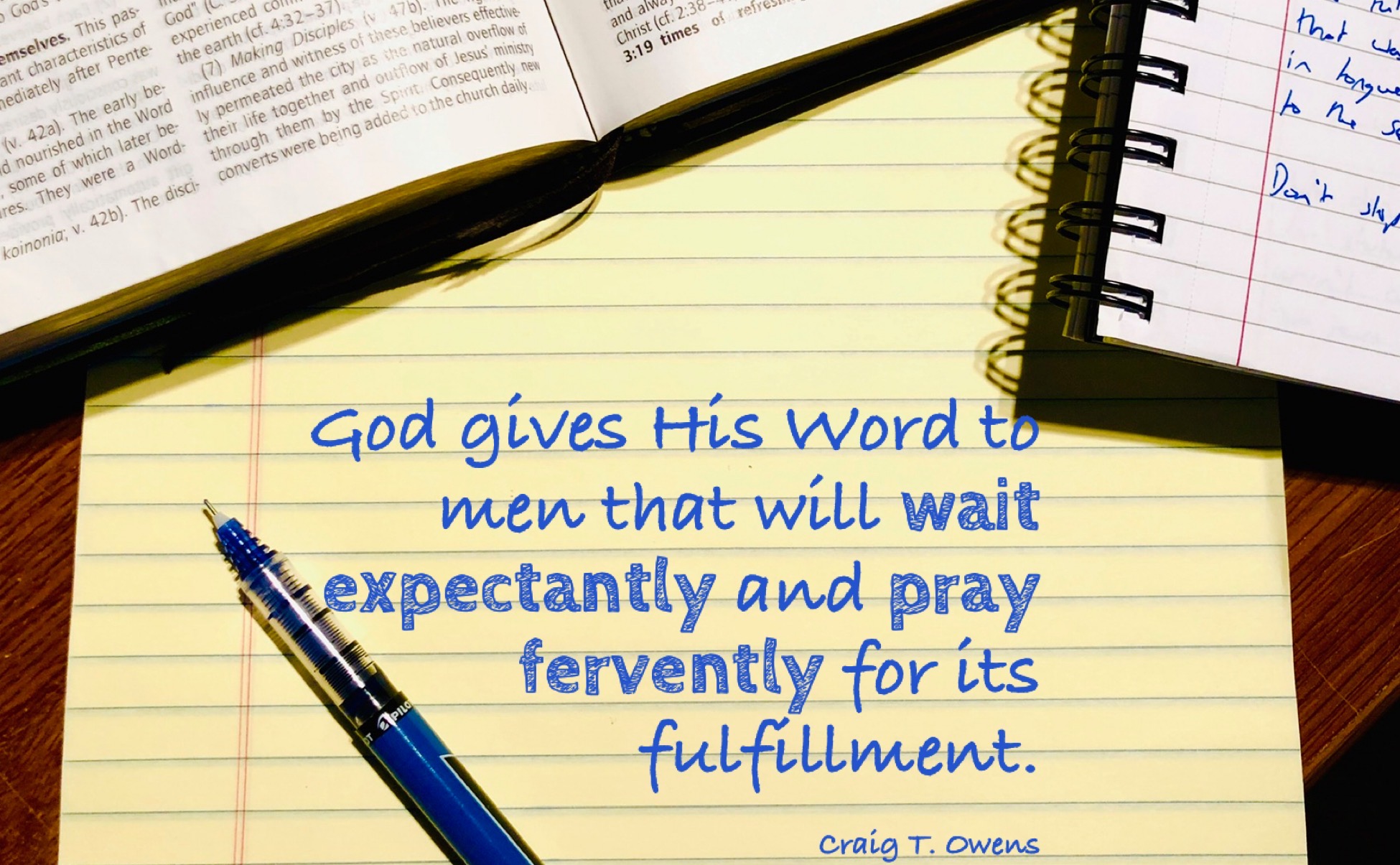
God gives His Word to men that will wait expectantly and pray fervently for its fulfillment. God is looking for men—for Dads—that will not cave in to cultural pressure. 

Guys, let the Holy Spirit’s inward pressure strengthen you to stand strong. As you see the external downward spiral away from God, don’t collapse, don’t complain, but hear God’s Word and remain a righteous and devout man for your family and your community. 

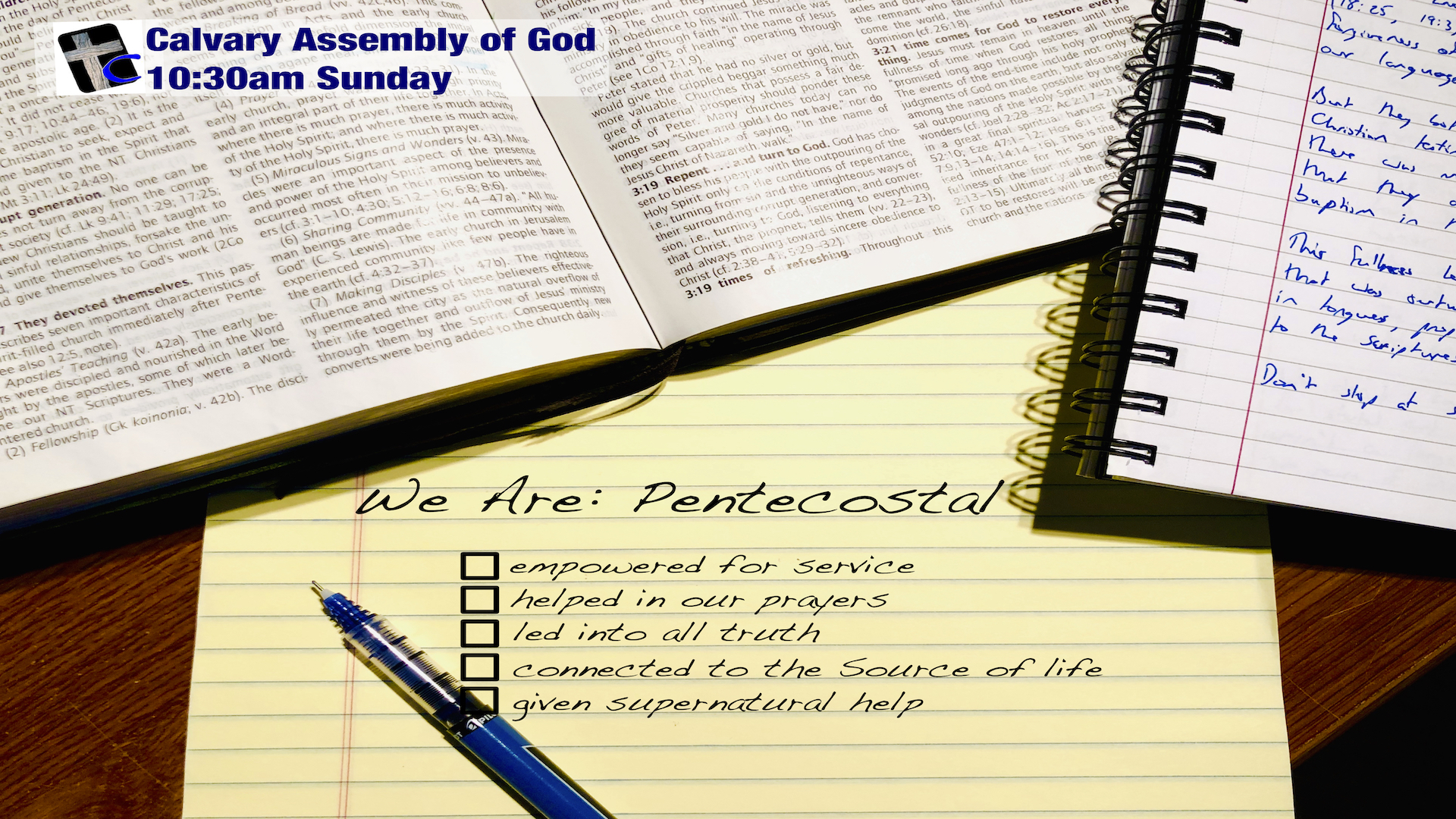
In our series We Are: Pentecostal, we talked much more in-depth about how the Holy Spirit wants to help us. You can check out all of those messages by clicking here.

►► Would you please prayerfully consider supporting this ministry? My Patreon supporters get behind-the-scenes access to exclusive materials. ◀︎◀︎

Go Deep Bible Study

I would like to invite you to an in-depth Bible study.

We will be meeting at 6:00 on Wednesdays to discuss how to apply to our daily lives the lessons from the most recent Sunday sermon. Even if you missed the Sunday message, there will be so much for you to learn at our mid-week Bible studies.

Each Bible study will last about an hour, and I will endeavor to make the video of the teaching available in a day or so following the class. You can get a map to the church by clicking here.

Completing The Body

Listen to the podcast of this post by clicking on the player below, and you can also subscribe on AppleSpotify, or Audible. 

One of the miracles we talked about last week was the Holy Spirit giving gifts to people that evangelize the sinner and edify the saint. Let me be more specific: YOU are God’s gift to the world if you are using God’s gift to glorify God in the world. 

You are a one-of-a-kind creation. God is infinitely creative so He never has to duplicate any of His creative works. He saw your life and implanted in you what you need to glorify Him (Psalm 139:13-18). But we need to think about this uniqueness the right way. 

Lucifer, an archangel, became satan, the Christian’s archenemy, because of his oversized pride. Pride is what turned Lucifer into satan, and it’s a tactic he still uses today on God’s creations. His other tactic is slander: attempting to get us to think we are insignificant and have no real purpose in the world. 

Just like Jesus did, we overcome satan’s lies with the truth in God’s Word.  

In Romans 12, Paul talks about our lives being used as a living, breathing, God-honoring sacrifice. But Romans 12:1 begins with the word “therefore,” so we need to back up a few verses. The final four verses of chapter 11 are a beautiful doxology that is praising God for His wisdom and sovereignty. Paul then offers this conclusion: Therefore we need to think correctly about our place in the world, allowing the Holy Spirit to transform our thoughts. 

Paul uses the word “think” twice in this passage. The root word is the same in each place (phroneo in Greek), but the prefix is what sets them apart from each other. The first has the prefix hyper-. That means it’s overly-analyzed thinking, overly self-concerned thinking, or self-focused.

The second time the prefix is soph- (which means “wise”). This is sound thinking, big-picture thinking, or others-focused. The Holy Spirit wants to give us sophroneo thinking to reveal our God-implanted gifts and talents that are to be used to benefit others—in fact, to benefit the whole Body of Christ.

In Romans 12, Paul uses the phrase “one body” twice as he talks about our spiritual gifts. He uses the same “one body” praise three times in 1 Corinthians 12 as he again talks about spiritual gifts (1 Corinthians 12:12-13, 20). 

All of our spiritual gifts are to be used in love and to build up others (1 Corinthians 12:31—13:3; 14:1, 12, 26, 40). 

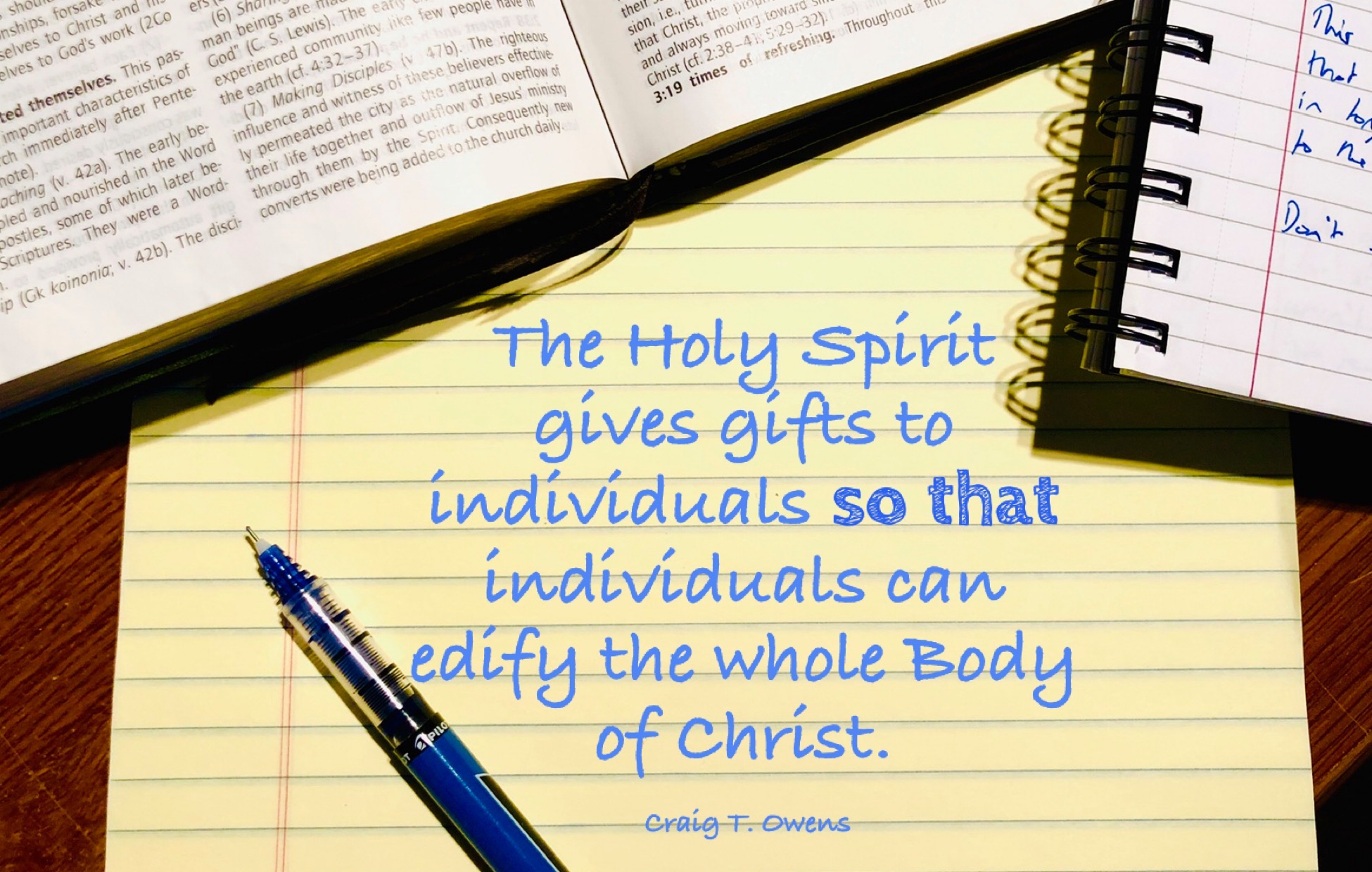
The Holy Spirit gives gifts to individuals so that individuals can edify the whole Body of Christ. It’s not competing with one another but completing one another. 

Remember: Saints is always plural in the New Testament! I need you to bring out the saintly qualities in my life, as much as you need me to bring out the saintly qualities in your life. 

This summer I will be offering an in-depth teaching on the spiritual gifts listed in the New Testament. We’ll take some assessments and discuss how these gifts can best be invested in the Body of Christ. I hope you can join me for an hour of learning on Wednesdays. 

If you’ve missed any of the messages in our series exploring our Pentecostal roots, you can find all of those messages by clicking here.

►► Would you please prayerfully consider supporting this ministry? My Patreon supporters get behind-the-scenes access to exclusive materials. ◀︎◀︎
Expecting Miracles

Listen to the podcast of this post by clicking on the player below, and you can also subscribe on AppleSpotify, or Audible. 

Last week we saw the in-ness of the Holy Spirit guiding us, teaching us, and empowering us to overcome evil. For what purpose? Why does the Holy Spirit lead us this way? Because the Spirit desires to draw everyone into this in-ness. His work in and through our lives is always unmistakable and irrefutable. 

A good word to describe the unmistakable and irrefutable work of the Spirit is: Miracles. 

Miraculous signs characterized the earthly ministry of Jesus, and they also should to the hallmark of Spirit-baptized Christians today who are sharing the Gospel with others (Acts 10:38; 2:43; Mark 16:20). 

Some may ask, “Why don’t we see as many miracles today?” And some skeptics even point to a decrease in miracles as proof of their cessationist paradigm. But consider this: Has God’s power been diminished? Have all needs been met? Are there no more sickness or unsolvable problems of human suffering? Is everyone free of the power of the devil? 

No, of course not! 

So that would mean if there is any diminishment in miracles, the diminishment would seem to be in us! Particularly I think it is that we no longer expect miracles to happen.

Not only should we expect miracles, but we should also expect to be the vessel through which the Holy Spirit demonstrates the miracle. 

Here are 8 miracles that we should be expecting:

  1. Minds opened that were blinded to the Gospel message—2 Corinthians 4:4-6 
  2. Thoughts transformed—Romans 12:2-3; Philippians 2:5 
  3. Invincible words spoken by us to others—Acts 6:10 
  4. Love tangibly expressed through our spiritual gifts—John 13:34-35; 1 Corinthians 12:1, 31—13:3 
  5. Gifts of the Spirit used constructively in the church to both evangelize the sinner and edify the saint—1 Corinthians 14
  6. Compassionate actions constantly initiated to address areas of human suffering—Philemon 4-7, 17
  7. Powerful prayers prayed and answered—Acts 3:6, 4:31, 13:2-3 
  8. Miracles consistently seen as authenticating the Gospel message—Acts 10:38, 19:11-12 

(Check out all of the above scripture verses by clicking here.) 

Don’t limit the Supernatural power of the Holy Spirit in you to only natural expressions. Constantly expect miracles! 

If you’ve missed any of the messages in our series We Are: Pentecostal, you can find them all by clicking here.

►► Would you please prayerfully consider supporting this ministry? My Patreon supporters get behind-the-scenes access to exclusive materials. ◀︎◀︎

In-ness

Listen to the podcast of this post by clicking on the player below, and you can also subscribe on AppleSpotify, or Audible. 

We said that when it comes to the Holy Spirit’s involvement in a Christian’s life: In > On. For instance, in our learning we don’t have to go to a tutor or attend classes only at set times, but we have The Tutor IN us. Or when need wisdom for decisions we don’t have to seek out the right advisors and try to coordinate their schedule with ours, but we have The Counselor IN us. 

As we saw with Samson, many times in the Old Testament we read of the Holy Spirit coming ON someone. But throughout that First Testament we also see people longing for the Spirit to be IN them. David, especially, recognized the value of the “in-ness” of the Holy Spirit in both his prayer of repentance (Psalm 51, especially vv. 10-11) and again in his beautiful prayer in Psalm 25. 

Let me point out the in-ness that permeates this 25th Psalm and then show you its fulfillment when the Holy Spirit comes to baptize believers in the New Testament. 

(1) “IN You I trust” (v. 2). Not in human abilities or personal pedigree or earthly riches, but IN the in-ness of the Holy Spirit. Jesus said, “He who believes IN Me—who cleaves to and trusts IN and relies on Me—as the Scripture has said, ‘From his INNERmost being shall flow continuously springs and rivers of living water.’ But He was speaking here of the Spirit, Whom those who believed (trusted, had faith) IN Him were afterward to receive…” (John 7:38-39 AMP). 

(2) “my hope is IN You” (vv. 3, 5, 21). A natural fruit of trusting IN the Holy Spirit’s empowerment is the hope that only that relationship brings. Paul talks abut this twice in his letter to the Romans. First, even in the midst of trials, Paul says we have this hope: “And hope does not put us to shame, because God’s love has been poured out INto our hearts through the Holy Spirit, who has been given to us” (Romans 5:5). And then Paul prays for his friends to experience this same in-ness of hope: “May the God of hope fill you with all joy and peace as you trust IN Him, so that you may overflow with hope by the power of the Holy Spirit” (Romans 15:13). 

(3) “guide me IN Your truth … guide me IN what is right” (v. 5, 9). Jesus identified the Holy Spirit as the Spirit of Truth Who guides us INto truth (John 14:17, 16:13). This is how Jesus lived (Matthew 4:1) and it’s how we can live too: “But I say, walk and live habitually IN the Holy Spirit—responsive to and controlled and guided by the Spirit—then you will certainly not gratify the cravings and desires of the flesh…” (Galatians 5:16 AMP). 

(4) “He instructs sinners IN His ways” (v. 8, 12). The Hebrew word David uses for “teach” in vv. 4, 5, 9 is “lamad.” It means being taught in a way that equips us to teach others. Jesus “gave instructions through the Spirit” to His disciples, and then He commanded them to teach others the same way (Acts 1:2; Matthew 28:20). The Spirit of Truth that inspired the Word of God can illuminate it to our hearts as He instructs us (see 2 Timothy 3:16-17). 

(5) “the Lord confides IN those who fear Him” (v. 14). The KJV says, “The secret of the Lord is with those who fear Him.” Isaiah said, “Whether you turn to the right or to the left, your ears will hear a voice behind you, saying, ‘This is the way; walk in it’” (Isaiah 30:21). And Jesus said that every word He spoke was directed by the Holy Spirit IN Him (John 12:49). 

(6) “I take refuge IN You (v. 20). We can take refuge IN the One whom we trust and hope, the One who leads us INto truth and instructs us, the One who confides IN us. This in-ness helps us thwart the enemy’s attacks against us. As John wrote, “But you belong to God, my dear children. You have already won a victory over those people, because the Spirit who lives IN you is greater than the spirit who lives in the world” (1 John 4:4 NLT). 

Don’t stop at salvation, but allow the Holy Spirit to baptize you and fill you. Don’t be satisfied with merely experiencing God’s presence ON you, but let His Spirit come IN you. 

This in-ness keeps us trustful of God, victorious over the devil, hopeful of our future, righteous in a wicked world, informed of God’s ways, peaceful in trials, and fully protected from the enemy of our souls. 

If you’ve missed any of the messages in our series called We Are: Pentecostal, you can check out all of the messages by clicking here. 

►► Would you please prayerfully consider supporting this ministry? My Patreon supporters get behind-the-scenes access to exclusive materials. ◀︎◀︎

http://https://youtu.be/6-n0z4FK9cg

Anointed To Minister

Listen to the podcast of this post by clicking on the player below, and you can also subscribe on AppleSpotify, or Audible. 

Last week I shared this key thought: The Holy Spirit’s empowerment ignites and then alines our light-bearing to a disaster-prone world. 

Despite what some people try to say, this empowerment from the Holy Spirit isn’t just for a select few. Jesus not only prayed for all of His followers to know this, but Peter also brought this out in his Pentecost Day sermon (John 17:20-23; Acts 2:21, 38-39). 

So why are some people not baptized in the Holy Spirit? I think there are numerable reasons, but allow me to share four broad headings: 

  1. They have impenetrable hearts to the Holy Spirit’s wooing (Acts 7:51)
  2. They are ignorant of the fact that this baptism is available to them (Acts 19:1-2) 
  3. They have impure motives regarding the baptism in the Holy Spirit (Acts 8:9-19) 
  4. They are too impatient (Luke 11:9-13)  

(Check out all of the above passages by clicking here.)

The bottom line: God wants to baptize you in His Spirit, Jesus wants you to be anointed with the same power He used, and the Spirit wants to bring out greater Jesus-exalting fruitfulness from your life. 

Two years ago in this series, I said that when it comes to the Holy Spirit’s involvement in a Christian’s life: In > On. 

In the Old Testament, Samson had the Spirit of God ON him, but he never allowed the Holy Spirit to come IN him and make important changes. Three times we read that “the Spirit of the Lord came upon him” (Judges 14:6, 19; 15:14), but after every one of these times we see Samson reverting to his childish, selfish, pouting ways again. 

By contrast, consider the life of Jesus. After He was baptized by John we read that Jesus was “full of the Holy Spirit” and “led by the Spirit.” That word for “full” means complete or lacking nothing. Jesus yielded to the Holy Spirit and allowed Him to lead and direct, as well as supply everything that was needed for ministry. Just a few verses later we read that “Jesus returned to Galilee, in the power of the Spirit.” And in His first recorded sermon, Jesus read from the prophet Isaiah about the Holy Spirit anointing Him for ministry (Luke 4:1, 14, 18). 

That word for “anointed” is chiro, from which we get the word Christ. That is the same root word in us as CHRISTians. 

We see this in Peter, Stephen, Barnabas, and Paul (Acts 4:8; 6:3, 5; 7:55; 11:24; 13:9). And then Paul writes that this anointing is for all Christians—“Now it is God who makes both us and you stand firm in Christ. He anointed us [that’s the word chiro again], set His seal of ownership on us, and put His Spirit in our hearts as a deposit, guaranteeing what is to come” (2 Corinthians 1:21-22). 

The anointing that characterized the life of Jesus in Acts 10:38—“How God anointed Jesus of Nazareth with the Holy Spirit and power, and how He went around doing good and healing all who were under the power of the devil, because God was with Him”—is the same anointing for ministry for all CHRISTians today! 

So…

Don’t dabble—dive in! 

Don’t settle for on—allow the Holy Spirit fully in! 

When we are yielded and baptized in the Holy Spirit, we have the anointing to shine brightly for Jesus in our generation. 

If you’ve missed any of the messages in our series We Are: Pentecostal, you can check them all out by clicking here. 

►► Would you please prayerfully consider supporting this ministry? My Patreon supporters get behind-the-scenes access to exclusive materials. ◀︎◀︎
Epiphany

Listen to the podcast of this post by clicking on the player below, and you can also subscribe on AppleSpotify, or Audible. 

After the outpouring of the Holy Spirit on that Day of Pentecost immediately following Christ’s ascension, Christians were speaking in languages that they had not learned. As they did so, they were “declaring the wonders of God” in all the languages of the world. Some people mocked, saying they were merely babbling drunks, but everyone in Jerusalem was “amazed and perplexed” at this remarkable event, which prompted Peter to preach a powerful sermon (Acts 2:8-21). 

Peter began his sermon by quoting words “spoken by the prophet Joel” (Joel 2:28-32). It’s unlikely that Peter had a copy of Joel with him, so this quotation was delivered from memory and Peter’s sermon was given spontaneously as the Holy Spirit empowered him. In looking at the passages in both Joel and Acts, I see three notable differences.

  1. Joel begins by saying, “And afterward I will pour out My Spirit,” but Peter begins with the words, “In the last days…I will pour out My Spirit.” I’ll address this point further in just a moment. 
  2. Peter inserts “and they will prophesy” at the end of verse 18, a phrase that Joel didn’t say at the end of Joel 2:29. I think this is the Holy Spirit emphasizing that what the crowd heard was indeed prophecy, not mindless babbling. 
  3. Joel concludes with “before the coming of the great and dreadful day of the Lord,” but Peter says, “before the coming of the great and glorious day of the Lord.” The word Joel uses for “dreadful,” meaning an awesome day worthy of reverence, was a day of sorrow for those about to be judged guilty, and a day of supreme rejoicing for those about to be judged innocent in God’s sight. The word Peter uses for “glorious” is the only time this Greek word is used in the New Testament. The word is epiphanes: where we get our English word “epiphany”—a light has dawned and the truth is finally realized! 

Let’s go back to the difference between “afterward” in Joel and “in the last days” in Acts. In a sense, the “afterward” for Peter was what everyone was experiencing right then—after the death, burial, and resurrection of Jesus, and after the outpouring of the Holy Spirit that Jesus had promised (John 16:7; Acts 1:4-5). 

Let’s also consider the “afterward” in Joel’s day. What came before was a disaster of locusts consuming the land, which prompted Joel to call for the solemn response of prayer and fasting. This heartfelt response from godly people trigged God’s outpouring of His Spirit—the afterward—that led to a blessing “before the coming of the great and dreadful day of the Lord” (Joel 2:1-3, 10-13). 

Both Joel and Peter conclude that it is God’s desire that “everyone…be saved”! The outpouring of the Holy Spirit was to help people have an epiphany of both their sin and the salvation that Jesus purchased on His Cross.

The word “disaster” comes from the Latin word disastros. The root word astros pertains to the heavenly lights (star, sun, moon), and the prefix “dis-” is a pejorative (something that has a belittling effect). So disaster really means no guiding lights, or hopeless darkness. 

Jesus was prophesied to step into this hopeless darkness and bring light and hope—“The people walking in darkness have seen a great light; on those living in the land of deep darkness a light has dawned” (Isaiah 9:2). Zechariah prophesied that Jesus was the fulfillment of this: “Because of the tender mercy of our God, by which the rising sun will come to us from heaven to shine on those living in darkness and in the shadow of death, to guide our feet into the path of peace” (Luke 1:78-79).  

Jesus is THE Epiphany, THE Ultimate Light, but He also tells us, “You are the light of the world (John 8:12; Matthew 5:14).  

In a world of hopeless darkness, Christians are to be Christ’s Light-bearers. 

We cannot do this on our own. 

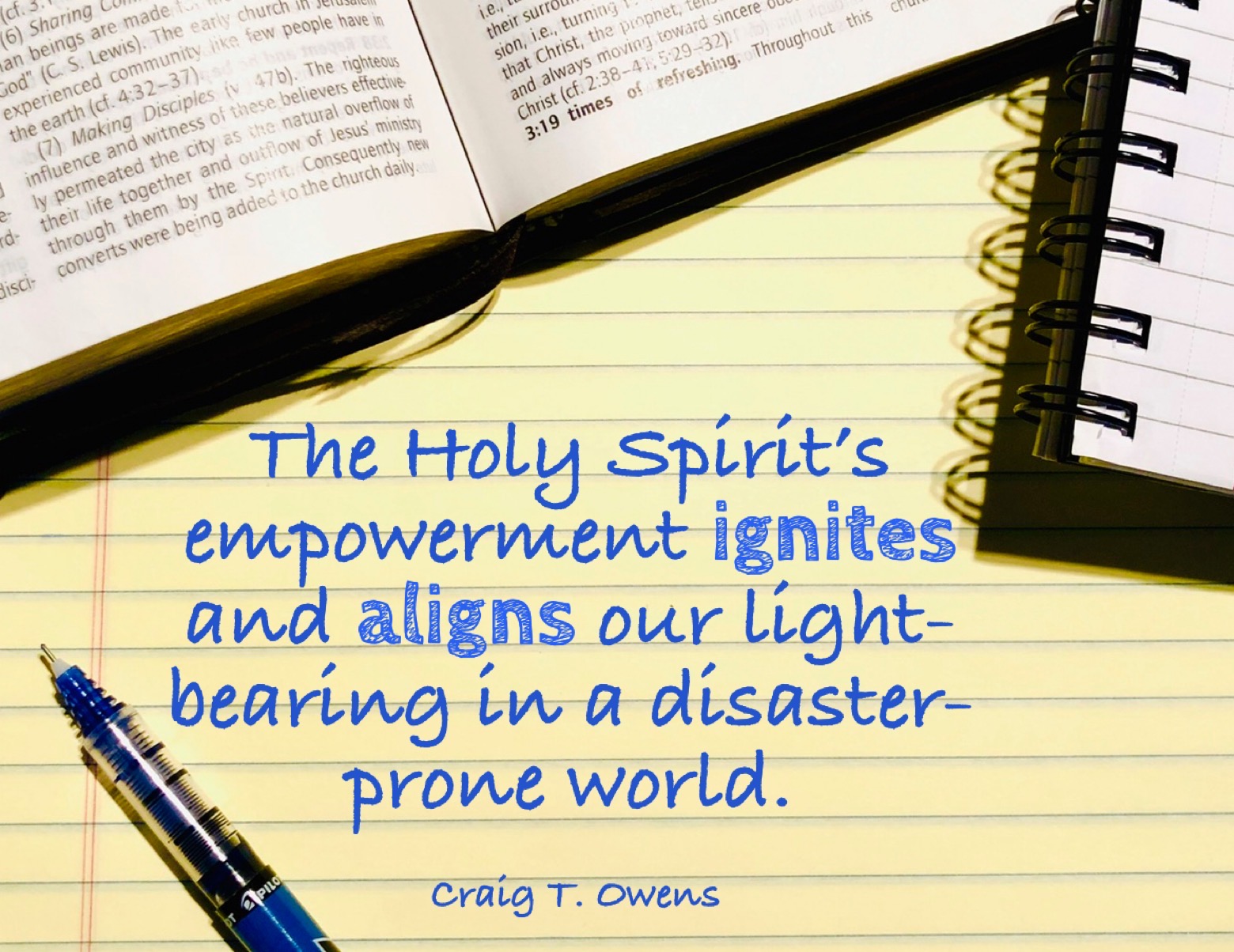
The Holy Spirit’s empowerment ignites and then aligns our light-bearing to a disaster-prone world. 

When Joel saw disaster coming, he called for a fast. This fast led to the outpouring of God’s empowerment on godly people, so they could take the Light to those lost in deep darkness. I think the same response is needed from Christians today. 

When it appears this world is plunging deeper into darkness—when we hear of disasters (remember that disastros means people are without Light)—we need to pray and fast so that the Holy Spirit can be reignited in us, so that we can then be realigned to best shine the light of Jesus brightly. 

Our lives can and should be the epiphany of Christ’s love for the world to see! Let’s all pray: “Holy Spirit, make us Your epiphany to a dark world!” 

If you’d like to check out the other messages in our series We Are: Pentecostal, please click here. 

►► Would you please prayerfully consider supporting this ministry? My Patreon supporters get behind-the-scenes access to exclusive materials. ◀︎◀︎
We Are: Pentecostal

Pentecost for over 1500 years was a celebration in Jerusalem that brought in Jews from all over the world. But on the Day of Pentecost which came just ten days after Jesus ascended back into heaven, the meaning of Pentecost was forever changed! 

Followers of Jesus—now empowered by an infilling of the Holy Spirit—began to take the good news of Jesus all over the world. These Spirit-filled Christians preached the Gospel and won converts to Christ even among hostile crowds, performed miracles and wonders, stood up to pagan priests and persecuting governmental leaders, and established a whole new way of living as Christ-followers. 

We, too, can be Pentecostal followers of Jesus Christ today. We can experience an anointing and an empowering in our lives that turns ordinary Christianity into extraordinary Christianity! 

Please join me this Sunday at Calvary Assembly of God as we rejoin this series. You can check out what I taught in this series in 2019 by clicking here, the messages from 2020 are here, and the messages from 2021 are here.

Check out the messages in the 2022 series:

Saved From The Consequences Of Folly

Listen to the podcast of this post by clicking on the player below, and you can also subscribe on AppleSpotify, or Audible. 

I am so grateful for the blessings of a godly mother and a godly wife! I can relate to Abraham Lincoln who said, “All I am, or can be, I owe to my angel mother. … I remember my mother’s prayers and they have always followed me. They have clung to me all my life.” 

Mothers—both the natural, physical, and adoptive mothers—can save the rest of us from a world of hurt. We see this in a story in the Bible of a mother that saved innumerable people from the consequences of folly. This is an amazing story in 1 Samuel 25, so please take some time to read it for yourself.  

King Saul and David have finally separated from each other, with Saul returning home to Gibeah and David returning to his stronghold at En Gedi. Eventually, David moved west from En Gedi to the Desert of Moan, where the town of Carmel was nearby. 

A prominent citizen of Carmel was a man named Nabal. He is described as “very wealthy,” owning 1000 goats and 3000 sheep. But he apparently gained his wealth through less-than-honorable means because he is described as “surly and mean in his dealings.” We find out later in the story that he’s also hard-hearted and hard-headed, not listening to any counsel others may offer him. 

That fits him because his name means “fool.” I find it hard to believe that his parents named him this from birth. If they did, it reminds me of the opening words of C.S. Lewis’ book The Voyage Of The Dawn Treader: “There was a boy named Clarence Eustace Scrubb, and he almost deserved it.” Instead, I think Nabal’s dealings were so mean, surely, and foolish that the name stuck. Perhaps he even wore that name as a badge of honor. 

It came sheep-shearing time—which is really payday for shepherds—so David sends some of his servants to Nabal to ask for whatever he might find to give as a gift to “your servants and your son David.” David’s men had been a constant source of protection for Nabal’s herdsmen, so a gift of gratitude does seem appropriate. 

Nabal doesn’t just say, “No,” but he insults David. As his foolish nature controlled him, he not only insulted David, but he insulted God too by implying that David wasn’t anointed by God, but was merely ruthlessly climbing a ladder of success. Probably Nabal thought this way because that’s how he himself gained his fortune. 

Nabal’s response lit David’s fuse! In fact, David’s response to his men was just four words long: “Put on your swords!” 

Fortunately, one of Nabal’s servants informed his wife Abigail of this. 

In the same verse where Nabal is described as mean and surely, Abigail is described as “intelligent and beautiful.” Whereas Nabal’s name means fool, Abigail’s name means “my father’s joy.” She must have been born at just the right time for her father and she continues to be a just-in-time woman! 

This servant brought Abigail word of Nabal’s foolish response, telling her that David’s men were indeed “a wall around us” while they were in the desert. And then he says, “Think carefully about what you should do because disaster is hanging over us!” 

Abigail acts quickly, wisely, and humbly. 

The first thing she does is send hundreds of pounds of food to David and his men. She sends the gift that Nabal probably should have sent. Then Abigail herself follows the gifts on her own donkey. When she encounters David and his armed men coming down the mountain pass, she humbly falls at his feet asking David to reconsider. 

Abigail doesn’t tell David he shouldn’t be angry, but she points him to something bigger and more long-lasting than his immediate thought of revenge. She reminds him that he is God’s anointed leader, and she asks, “When you become king, do you want this bloodshed on your conscience?” 

Abigail’s words have an immediate effect on David, who calls off the attack, praises Abigail, and praises God for sending Abigail to him. Abigail rescued Nabal’s family and workers from imminent destruction, and she saves David from the consequences of his rash response. 

The next morning, when she relates this story to Nabal, he has either a stroke or a heart attack, and then dies ten days later. Justice is served, but it’s served by God and not by David.

Later on, David takes the now-widowed Abigail as his wife. 

Abigail’s name scarcely appears anywhere else in the Bible, but there is one notable appearance: 

Sons were born to David in Hebron: His firstborn was Amnon the son of Ahinoam of Jezreel; his second, Kileab the son of Abigail the widow of Nabal of Carmel; the third, Absalom the son of Maakah daughter of Talmai king of Geshur; the fourth, Adonijah the son of Haggith; the fifth, Shephatiah the son of Abital; and the sixth, Ithream the son of David’s wife Eglah. (2 Samuel 3:2-5) 

Amnon, first in line for the throne, raped his half-sister Tamar and was then killed by Absalom, who was Tamar’s brother. Absalom, third in line for the throne, not only avenged his sister’s disgrace but led a coup against David, where he was killed in battle. 

That leaves Kileab as the obvious heir to King David’s throne, yet this is the only place he is mentioned in the Bible. I think Abigail’s wise influence saved Kileab from the drama of aspiring to be king, a painful future, and perhaps a premature death. 

From this amazing story, I would like to offer three takeaways for Moms:

  1. Use your inner beauty to persuade foolhardy men—1 Peter 3:2-3 
  2. Use your Holy Spirit-given wisdom to dissuade foolishness—Matthew 10:19 
  3. Use your prayer life to bring a legacy of peace—Psalm 116:16  

(Please read all of the above verses by clicking here.)

Godly mothers, please be encouraged today at how much influence you exert over others in your life. Your inner beauty, God-given wisdom, humility, and prayers are making more of an impact than you may ever know. I believe in heaven the full story will be shared, and you will be praised for being a wise and faithful servant. 

May God continue to bless, empower, and use our Moms to save us from the consequences of our foolishness! 

►► Would you please prayerfully consider supporting this ministry? My Patreon supporters get behind-the-scenes access to exclusive materials. ◀︎◀︎

Mother’s Day 2022

Our foolishness can get us into a lot of trouble, so thank God for mothers!

We are going to celebrate Moms by sharing three valuable lessons from a mother we meet in the Bible, as we learn how she saved her family from the consequences of their foolishness.

How wonderful to be able to say with Abraham Lincoln, “All I am, or can be, I owe to my angel mother. … I remember my mother’s prayers and they have always followed me. They have clung to me all my life.”  

If you don’t have a church home, we would love to have you join us.