7 Quotes From “Self-Improvement 101”

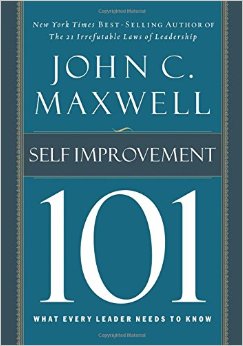
Self-Improvement 101In all of John Maxwell’s 101 books there is an overall theme, but there are also numerous snippets which we can immediately apply. Here are just a few of those thoughts from Self-Improvement 101.

“The ironic thing is that change is inevitable. Everybody has to deal with it. On the other hand, growth is optional. You can choose to grow or fight it. But know this: people unwilling to grow will never reach their potential.”

“The only way to improve the quality of your life is to improve yourself. If you want to grow your organization, you must grow a leader. If you want better children, you must become a better person. If you want others to treat you more kindly, you must develop better people skills. There is no sure way to make other people in your environment improve. The only thing you truly have the ability to improve is yourself.”

“There’s certainly nothing wrong with the desire to progress in your career, But never try to ‘arrive.’ Instead, intend your journey to be open-ended. Most people have no idea how far they can go in life. They aim way too low.”

“Pride is the number one hindrance to teachability. … While envy is the deadly sin that comes from feelings of inferiority, the deadly sin of pride comes from feelings of superiority. It creates an arrogance of success, an inflated sense of self-worth accompanied by a distorted perspective of reality. Such an attitude leads to a loss of desire to learn and an unwillingness to change. It makes a person unteachable.”

“People’s purpose in life is always connected to their giftedness. It always works that way. You are not called to do something that you have no talent for. You will discover your purpose by finding and remaining in your strength zone. Similarly, you cannot grow to your maximum potential if you continually work outside of your strength zone.” 

“What is the greatest obstacle you will face once you have achieved your goals and tasted success? I believe it is the ability to let go of what you have so that you can reach for something new.”

“Every new level of growth we hope to experience as leaders calls for a new level of change. You cannot have one without the other.”

You can check out my review of Self-Improvement 101 by clicking here.

Self-Improvement 101 (book review)

Self-Improvement 101As with all of the books in John Maxwell’s 101 series, Self-Improvement 101 is a quick-hitting introduction to the power of making personal changes.

When you attend college, the 101 level classes are the introductions to a subject that could be very deep and involved. That’s exactly what John Maxwell intended to do with all of his 101 books—give us just enough information to entice us to go deeper.

Self-Improvement 101 will introduce you to some of the concepts that Dr. Maxwell deals with in more depth (think a 301 or 401 level class) in his other books. He tells us the benefits that come from making improvements, the first steps we can take on the road to improvement, and hints at how we can live a life of continual improvement.

If you’d like to make some changes in your life, Self-Improvement 101 could be a great starting point for you, and could be a great introduction to some of John Maxwell’s other outstanding books.

I am a Thomas Nelson book reviewer.

12 Quotes From “Poke The Box”

10-1080R1 PoketheBoxMechSeth Godin really shakes up the status quo in his book Poke The Box. I loved it! You can read my full book review by clicking here. Below are some quotes I especially liked.

“The job isn’t to catch up to the status quo; the job is to invent the status quo.”

“Imagine that the world had no middlemen, no publishers, no bosses, no HR folks, no one telling you what you couldn’t do. If you lived in that world, what would you do? Go. Do that.”

“Creative people or those with something to say believe that they have to wait to be chosen. … ‘Pick me, pick me’ acknowledges the power of the system and passes responsibility to someone else to initiate. Even better, ‘pick me, pick me’ moves the blame from you to them. If you don’t get picked, it’s their fault, not yours. If you do get picked, well, they said you were good, right? Not your fault anymore. Reject the tyranny of picked. Pick yourself.”

“The fact that it doesn’t work every time should give you confidence, because it means you’re doing something that frightens others.”

“Poking successfully also requires tact. You are trying to change things, not have people recoil in anger or fear from your poking.”

“Excellence isn’t about working extra hard to do what you’re told. It’s about taking the initiative to do work you decide is worth doing. … It’s a personal, urgent, this-is-my-call/this-is-my-calling way to do your job.”

“Not-allowed lists exist in school, in relationships, and in jobs. The park near my house doesn’t allow dogs, non-residents, or birthday parties. It’s interesting that the allowed list is harder to remember and to write down. I think we might be afraid of how much freedom we actually have, and how much we’re expected to do with that freedom. It’s comforting to live with a list of what’s not allowed. We remember it, we push against it, but ultimately we enjoy the confinement that the limits bring us. When revolutions appear, when the list gets much shorter, it’s surprising how long it takes for us to take action.”

“‘This might not work.’ Is it okay to say these four words? Is your work so serious and flawless and urgent that each thing you do, every day, must work? Change is powerful, but change always comes with failure as its partner. ‘This might not work’ isn’t merely something to be tolerated; it something you should seek out. … Try is the opposite of hiding.”

“Starting means you’re going to finish. … To merely start without finishing is just boasting, or stalling, or a waste of time. … If you don’t finish, it doesn’t really count as starting, and if you don’t start, you’re not poking.”

“Starting something is not an event; it’s a series of events. … Keep starting until you finish. … Today, not starting is far, far worse than being wrong. If you start, you’ve got a shot at evolving and adjusting to turn your wrong into a right. But if you don’t start, you never get a chance.”

“I believe that if you’ve got the platform and the ability to make a difference, then this goes beyond ‘should’ and reaches the level of ‘must.’ You must make a difference or you squander the opportunity. Wasting the opportunity both degrades your own ability to contribute and, more urgently, takes something away from the rest of us. … To do less is to steal from them.”

“Failure is an event, though, and with rare exceptions, is not fatal. The process of starting, regularly, and of seeking out opportunities to do it more often, is never a failure. The process is now essential for those who seek to succeed.”

Poke The Box (book review)

10-1080R1 PoketheBoxMechSeth Godin is skilled at asking the uncomfortable questions, at demolishing our excuses, at getting us to look at age-old things in a new light. In short, he’s really good at poking the box. Poke The Box is an attempt to shake up the status quo, and wake us up to the value of starting something fresh and new.

On the opening page Seth says, “The job isn’t to catch up to the status quo; the job is to invent the status quo.” Indeed, this is what Poke The Box addresses head-on. Why do we accept the status quo? Why don’t we initiate something new? What fears are holding us back? What might happen if we try and fail?

Poke The Box is written in a similar style to Seth’s popular blog. In fact, the book itself is “poking the box” of the typical, tried-and-true publishing style. Instead of chapters organized around a particular thought, the whole book is one big chapter, with the constant theme of challenging the just-sit-there-and-do-the-usual-thing attitude.

I loved it!

If you are ready to shake some things up, Poke The Box might be the nudge you need. Seth closes the book with this word of encouragement—

“Speaking up is not safe. People might be offended. Innovation is not safe. You’ll fail. Perhaps badly. Now that we’ve got that out of the way, what are you going to do about it? Hide? Crouch in a corner and work as hard as you can to fit in? That’s not safe, either. Might as well do something that matters instead.”

12 Quotes From “God-Breathed”

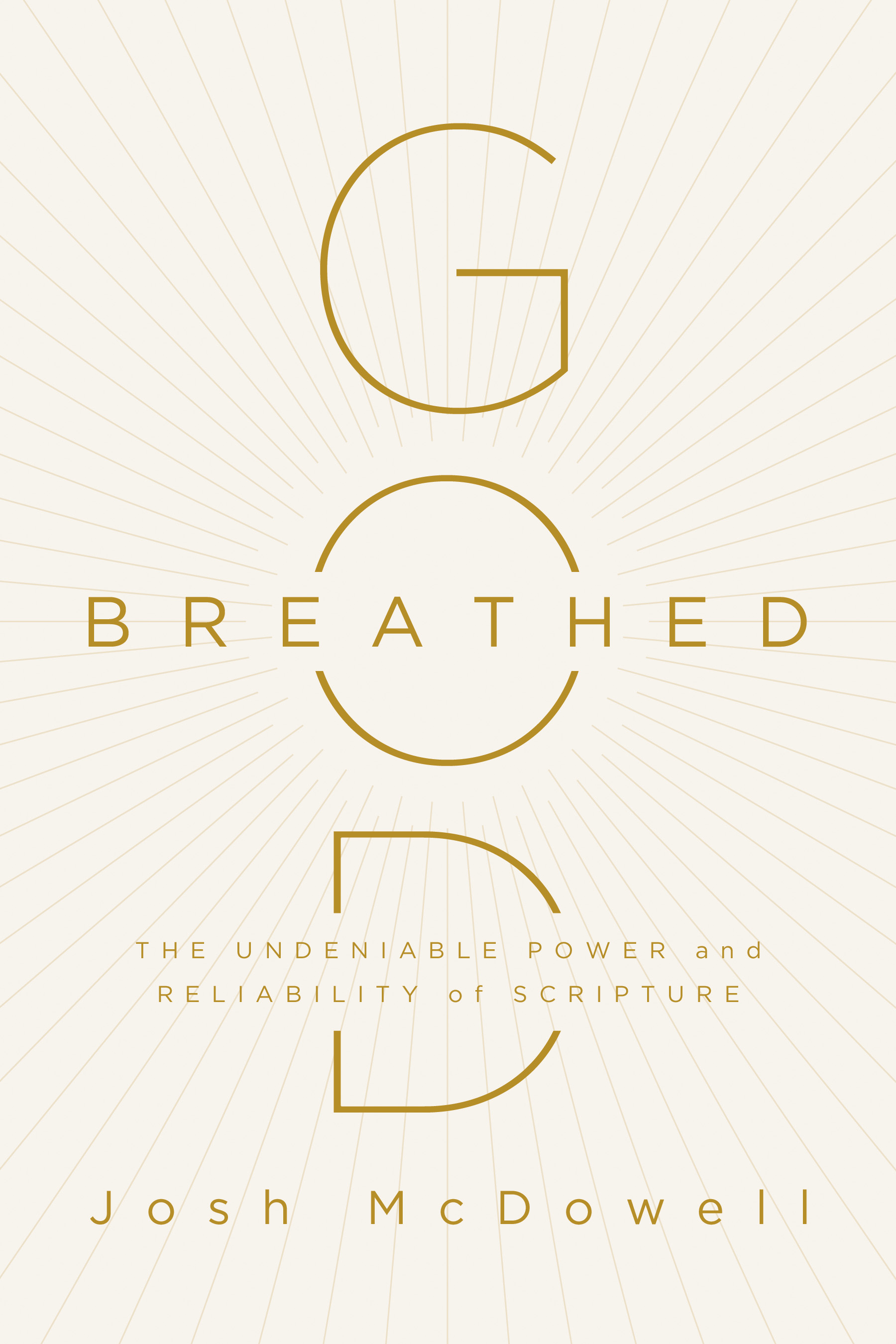
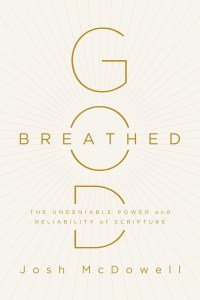
God-BreathedJosh McDowell has given us another outstanding Christian apologetic. In God-Breathed, Josh shares with us some astounding facts that show the amazing reliability of the Bible. You can read my book review of God-Breathed by clicking here. Below are some of the quotes I especially appreciated.

“The doctrines and commands of Scripture act as two guardrails to guide us down the right path of life. The teachings of Scripture (doctrine) keep us thinking and believing rightly. The instructions of Scripture (commands) keep us acting and living rightly. But without the proper context, we can miss the true purpose of Scripture, which is to guide us into keeping right thinking and right living in balance. … Scripture was given to lead us into a deeper love relationship with the One Who wrote the Book, and then also with everyone around us.” 

“The infinite God is personal. And because He is personal, we can love Him, worship Him, and please Him with our trust and obedience. Because He is personal, He can love us, rejoice with us, comfort us, and reveal Himself and His ways to us.”

“What is it that really parents our children? Is it the directives, instructions, and commands we give them? Those are behavioral guidelines, but they are not what raises our kids. It is not ‘parenting,’ as a concept, that brings up children; it is the parents themselves—relational human beings—who do the work and perform that role. That is the way God designed it. He wants kids to be brought up in loving relationships. Without relationship with another person, all attempts to instill right beliefs and right behavior will be ineffective, because they are detached from the necessary elements of personal love and care. … The Holy Spirit administers Scripture to us like a loving parent, in order to provide us with wisdom through its lessons (Proverbs 3:5), security through its boundaries (Exodus 20), caution through its warnings (Ephesians 4:17-22), and reproof through its discipline (Philippians 2:3-4).” 

“By AD 100, the apostles had died, but the Christian Church was still in its infancy, with fewer than twenty-five thousand proclaimed followers of Christ. But within the next two hundred years, the fledgling church experienced explosive multiplication of growth, to include as many as twenty million people. This means the church of Jesus Christ quadrupled every generation for five consecutive generations!”

“In AD 367, Athanasius of Alexandria compiled the first official list of books that we know today as the New Testament. There were twenty-seven books listed in all. These books were then canonized officially by the church at the councils of Hippo (AD 393) and Carthage (AD 397). Again, these councils didn’t authorize which writings were God-breathed works; rather, they recognized that these writings were authorized by God Himself.” 

“The Old Testament, comprised of thirty-nine books, was officially recognized as God-breathed Scripture as early as the fourth century BC and certainly no later than 150 BC.”

“The Bible is now the most translated book of all-time. The United Bible Society reports that, as of 2014, the Bible or portions of the Bible has been translated into 2,650 languages. Their Digital Bible Library now hosts more than 800 translations in 636 languages spoken by 4.3 billion people.” 

“Compared with other ancient writings, the Bible has more manuscript evidence to support it then the top ten pieces of classical literature combined.”

“No other work in all literature has been so carefully and accurately copied as the Old Testament.”

“Once archaeologists completed their search of the Qumran caves—eleven caves in all—almost 1,050 scrolls have been found in about 25,000 to 50,000 pieces (a number that varies depending on how the fragments are counted). Of these manuscripts, about 300 were texts from the Bible, and many of the rest had ‘direct relevance to early Judaism and emerging Christianity.’ Every book of the Old Testament was represented, except for the book of Esther, and the earliest copies dated from about 250 BC. … Once the Dead Sea Scrolls were translated and compared with modern versions of the Hebrew Bible, the text proved to be identical, word for word, in more than 95% of the cases. (The 5 percent deviation consists mainly of spelling variations. For example, of the 166 words and Isaiah 53, only seventeen letters are in question. Of those, ten are a matter of spelling, and four are stylistic differences; the remaining three letters comprise the word light, which was added to Isaiah 53:11.)”

“The writings of the most authoritative writers of the early church—the leaders scholars referred to collectively as the Apostolic Fathers—give overwhelming support to the existence of the twenty-seven authoritative books of the New Testament. Some Apostolic Fathers produced extensive, highly accurate quotes from the text of the New Testament. … Early church writers provide quotations so numerous and widespread that if no manuscripts of the New Testament were extant, ‘the New Testament could be reproduced from the writings of the early Fathers alone.’” —Norman Geisler and William Nix 

“The earliest preachers of the gospel knew the value of…first-hand testimony, and appealed to it time and again. ‘We are witnesses of these things,’ was there constant and confident assertion. And it can have been by no means so easy as some writers seem to think to invent words and deeds of Jesus in those early years, when so many of His disciples were about, who could remember what had and had not happened. … One of the strong points in the original apostolic preaching is the confident appeal to the knowledge of the hearers; they not only said, ‘We are witnesses of these things,’ but also, ‘As you yourselves also know’ (Acts 2:22). Had there been any tendency to depart from the facts in any material respect, the possible presence of hostile witnesses in the audience would have served as a further corrective.” —F.F. Bruce

God-Breathed (book review)

God-BreathedI have always been a fan of Josh McDowell’s work as a premiere Christian apologist. Christians hold closely to the Bible, so if that work can be proven to be faulty, all of the Christian’s arguments will fall flat. Josh McDowell, in his newest book God-Breathed, presents all of the evidence to show the undeniable reliability of the Bible.

Josh writes, “If used properly, words can effectively connect us relationally. Words are important, and the God-breathed words of Scripture are the most important of all. But we must listen to how words are being used in order to understand their true meaning. … How can we be sure that we have a Bible that accurately represents what God inspired people to write on His behalf? Since we have none of the original manuscripts, how can we know that the copies in our possession are reliable and accurate? … That is what this book is about: knowing with certainty that we can experience the power of God’s Word as revealed in the Bible, because it’s reliable.”

Josh systematically shares the evidence that leads to the conclusion that the Bible is indeed God’s inspired Word. You will learn about the care scribes took in copying the Scripture through generations; the literary evidences that can be used to verify the biblical message; the historical and archeological findings that corroborate the messages in Scripture; and so much more.

This is a fascinating book to study!

Put this on your bookshelf, and refer back to it often, and you will gain a greater appreciation for the amazing collection of books that we refer to as the Holy Bible.

I am a Shiloh Run Press book reviewer.

Trip Lee on Sex, Marriage & Pornography

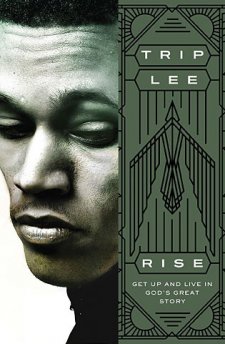
RiseTrip Lee’s book Rise is a great resource to put into the hands of a young person, but even better would be for teacher or parent or youth pastor to read it and discuss it with them. A huge issue young people deal with is their own sexuality, along with what the culture says about marriage and pornography. Check out this insight from Trip—

“Our world often treats sex as if it’s the greatest thing life has to offer us. It puts an incredible amount of pressure on us to explore and experienced everything as soon as we can. And they treat it like the experience is an end in itself. While it is an amazing gift, sex is certainly not an end in itself. It’s a glorious chapter of a much bigger and more glorious story. But by elevating it above everything else and separating it from it’s beautiful intended purposes, we actually lower its value and degrade it.”

“Marriage is a masterful illustration, and when we have sex outside of marriage, we’re messing with the clearest picture God’s embedded into creation of His love for His people. Marriage is a parable we get to take part in, so a lot is at stake with your purity.”

“When you look at porn, you’re rejecting God and His plan. You’re saying, ‘God, I know this person is not my spouse and I’m not meant to look at them with lust, but I refuse to except that. I will look at them this way, whether You like it or not.’” 

“Building habits of sexual sin is not something that can just be turned off easily after you say your vows. We shouldn’t imagine that the monster lurking in your soul will go dormant the minute you kiss your bride or groom.”

“Porn gives us a distorted view of the opposite sex. Those people whose bodies are captured in images on your computer screen or smartphones are made in the image of God. You’re objectifying them. You’re insulting God. You’re treating His image with disdain and perversion. You’re supporting an evil industry that destroys lives and marriages. You’re supporting an industry that is known to enslave and manipulate young women. Instead of caring for the weak, hurting, and confused, you’re supporting their pain and confusion. You’re encouraging them in it. With each click, you’re giving it a thumbs-up. Instead of seeing them how God sees them, you’re looking at them through broken lenses.”

You can read my review of Rise by clicking here.

You can check out more quotes from Rise by clicking here.

12 Quotes From “Rise”

RiseTrip Lee has given parents, teachers and anyone who mentors teens and 20-somethings an excellent resource in his book Rise. I read this book for myself, and now I’m reading it and discussing it with my teenage son. You can read my full book review by clicking here. Below are just a few of the quotes I especially appreciated in Rise.

“There are great benefits to living for Jesus in the present. Now is the time when we have the most strength. Now is the time when we have the most energy. Now is the time when we can give it everything we have. Now is the time to get up and live.”

“Every decision we make is a small piece of a larger puzzle. And without looking at the big picture for reference, we’ll place the pieces incorrectly every time. It’s tragic to treasure a moment in time more than an entire lifetime.”

“It’s loving of me to stop my son when he tries to put his finger in a socket or put a penny in his mouth. It’s loving of Jesus to tell me to say no to myself when I’m doing the wrong thing. … Let’s be clear, though. He’s not saying you can’t be yourself. He’s not calling you to ignore your personality and abandon your interests. Instead, He’s saying, ‘Submit all those things to Me.’ Your personality and your interests are His, and following Him shapes those things to bring you joy and bring God glory.” 

“One of our problems is that we think we belong to ourselves. Our assumption is that we are the masters of our lives and we get to make all the big decisions. That’s a myth. I belong to God. First, because He created me (Psalm 139:13), and second, because He purchased me (1 Corinthians 6:19-20). And that has serious implications for how I invest each hour of my day. I don’t have the right to rob God of time.”

“We allow our desire for approval to push us in directions we wouldn’t go otherwise. The answer is to be more content with the acceptance of Jesus, while praying that God would make us more passionate about pleasing Him than pleasing other people. … One of the quickest ways to ensure compromise is to obsess over what other people think of you.”

“Confession of sin can only be perceived as your enemy if you have a goal other than God’s glory. If your goal is your glory, then confessing your sin works against that goal and therefore should be avoided. But if you’re living for the glory of God, confessing your sin to the right people will only help.”

“With Christians or non-Christians, when we pretend, we are using them instead of loving them. Instead of saying or doing what would be most beneficial for them, we say or do what makes us look good. We’re using them to get to that end goal, the magical feeling of acceptance and approval, that sweet ego stroke. And that will eventually crush us and crush them.”

“The mature Christian doesn’t just ask, ‘What can I do?’ but ‘What can I do to glorify God?’”

“A Christian’s job is to live in such a way that shows off the real Jesus, the all-powerful, Almighty, sinner-loving King of the universe.”

“One of the reasons we struggle is because we forget that Jesus is the Lord of all. When I say Lord of all, I don’t just mean Lord of all people; I mean Lord of all things and spheres of life. It’s easy for us to section off our lives into little quadrants. There’s the fun stuff, the family stuff, the boring stuff, and the spiritual stuff. But the Bible doesn’t recognize any area of our lives that’s not spiritual. God made every sphere of life, He rules over every sphere of life, and He can be glorified in every sphere of life. This means everything is sacred.”

“The symptom of an encounter with the compassion of Jesus is compassion for others.”

“People go to hell because they haven’t seen the glory of God in the Gospel and trusted in Christ. Seeing the glory of God matters, and we want them to see it. Where the glorious light of Christ is not seen, sins are not forgiven and souls are not saved. This is why we share the Good News. The end goal of evangelism is that people would see the glory of God and worship Him forever.”

Rise (book review)

RiseI first knew of Trip Lee as a talented musician, but I have to admit that when I first heard he had written a book I had no idea what to expect. I am happy to say that Rise blew me away!

Trip himself states that his main target audience is teenagers and those in their early- to mid-twenties. Certainly the material in Rise is age-appropriate for them, but I found it to be challenging and confronting and reaffirming for me too. Trip’s message—as the title of the book suggests—is a call for Christians to not simply “go with the cultural flow,” but rise up to let Jesus be seen in a culture desperately searching for truth.

Trip talks about attitudes, involvement in church, sharing our Christian faith with others, having a great work ethic, and so many other topics that are relevant to young people. Perhaps I felt it relevant to me as well because of my work with students. In that case, I have two recommendations for this book: (1) Give it as a gift to those in Trip’s target audience (teens and 20-somethings), and (2) Get a copy for yourself and read/study/discuss the ideas in this book with the teens and 20-year-olds to whom you gave a copy. I really believe this will pay excellent dividends!

I am a Thomas Nelson book reviewer.

7 Quotes And A Helpful Memory Tool From “A Brilliant Mind”

A Brilliant MindIn his latest book, Dr. Frank Minrith tells us about a vital link between our vocabulary, and the growth in the human brain. It’s really quite fascinating! Check out my review of A Brilliant Mind by clicking here. Below are a few quotes from this book I wanted to share with you, along with a helpful list for increasing your memorization capacity.

“Only 3,500 words separate the culturally literate from others.”

“The average adult probably has a vocabulary of thirty to sixty thousand words. The highly literate may extend to one hundred thousand words. Yet the English language has well over one million words. Moving above the thirty-thousand-word range will greatly enhance our communication skills.”

“Many other tests since Dr. Johnson O’Connor’s have confirmed the correlation between career success and vocabulary knowledge.”

“Neuroplasticity simply means that the brain is capable of being molded: it can change and develop more connections between its many nerve cells so that, to a degree, it can even develop more cells. Neurogenesis is a similar term; it means that the brain is capable of growth and development. … You can increase the number of synapses in your brain by memorizing words. The more words you memorize, the more you can memorize because of the increase in neural synapses.”

“K. Warner Schaie, who investigated cognitive decline, found that the risk of cognitive decline could be reduced by three factors: higher education, extensive reading, and being married to a spouse with high cognitive status.” 

“We are, to a degree, what we repeatedly take into our brains. As we begin to expand our mental capacity through memorization, the brain chemistry is rearranged and memory is stored. Not only do we gain greater memory capability, but our brains actually change and improve. It is as if we program the brain with new software, and therefore we can respond to life around us in a healthier manner.”

Eight memory techniques:

  1. Review
  2. Employ visualization
  3. Use exaggeration
  4. Utilize association—synonyms, antonyms, subordination, relationships, etc.
  5. Use classification
  6. Command yourself—“When you direct the brain to do a task, it releases powerful chemicals in the direction requested. These chemicals are so powerful that if one hundred people with major medical depression—documented by a medical PET scan—are given a placebo, 33 percent will respond and their PET scan often returns to normal.” 
  7. Learn prefixes, suffixes, and roots
  8. See the origins in foreign words