Links & Quotes

link quote

“When we meet with our kinsfolk and acquaintances, let it be our prayer to God that our communion may be not only pleasant, but profitable; that we may not merely pass away time and spend a pleasant hour, but may advance a day’s march nearer heaven, and acquire greater fitness for our eternal rest.” —Charles Spurgeon

“When Scripture says that Christ died ‘for’ us, I think the word is usually υπερ (on behalf of), not αντι (instead of). I think the ideas of sacrifice, ransom, championship (over death), substitution et cetera are all images to suggest the reality (not otherwise comprehensible to us) of the atonement. To fix on any one of them as if it contained and limited the truth like a scientific definition would in my opinion be a mistake.” —C.S. Lewis

“Christ will really help us in our fight. He really will help you. He is on your side. He didn’t come to destroy sin because sin is fun. He came to destroy sin because it is fatal. It is a deceptive work of the devil and will destroy us if we don’t fight it. He came to help us, not hurt us.” —John Piper

A really cool timeline of the events surrounding Christ’s birth.

“You will not experience the real presence of Jesus until you have within you a growing hatred for sin—a piercing conviction for your failures and a deepening sense of your exceeding sinfulness. Those without Christ’s presence become less and less convicted by sin. The further they withdraw from His presence, the bolder, more arrogant and more comfortable in compromise they grow.” —David Wilkerson

Have you seen Unbroken or read the book? This post—Unbroken Uncut—is very interesting.

This is a disgusting twist of Scripture that perverts God’s Word to make it sound like those who are pro-abortion are the evildoers.

“You will never forgive anyone more than God has already forgiven you.” —Max Lucado

[VIDEO] A sweet video of a 10-year-old boy who finds out he is going to be a big brother—

The Illustrated Guide To The Authors Of The Bible (book review)

The Illustrated Guide To The Authors Of The BibleI have been a big fan of The Overview Bible Project ever since I discovered Jeffrey Kranz’s amazing Bible-based infographics and study tools. In The Illustrated Guide To The Authors Of The Bible Jeffrey and his wife Laura give us a helpful and beautiful way of learning more about the men whom God used to write His Word.

I recently had a chance to ask Jeffrey & Laura a few questions about this ebook.

Jeffrey, why do you think that it’s important for students of the Bible to learn about the biblical authors?

One of the most important things to know about any message is where it comes from. We know this from life. If you get a “happy anniversary” card from your spouse, it’s a loving gesture. If you get the same card from an ex … well, you get the picture. The whole message hinges on who sends it!

It’s that way with the Bible, too. If we’re going to understand what the authors of the Bible were trying to get across, we should spend a little time getting to know them: who they are, where they’re from, what they’ve been through, and even what time period they’re writing from.

So what was one of the most surprising discoveries you made while researching this book?

As I went into this project, I hadn’t expected so many of the authors to be from the tribe of Levi. But they are! About 42% of our Bible was written by Levites—45% if you count Matthew. No other tribe comes close.

I had expected a little more of a mix, but then I remembered a certain prophecy. Right before Israel enters the promised land, Moses blesses the nation tribe by tribe. When he gets to Levi, Moses says, “They shall teach Your ordinances to Jacob, And Your law to Israel. They shall put incense before You, And whole burnt offerings on Your altar.” (Dt 33:10)

And indeed they did.

Laura, what was your inspiration for giving a “face” to the biblical authors? How do you think this will help someone learn about these authors?

Actually, the initial idea was Jeffrey’s. He was working on pulling together the information on the authors, and asked me if I’d be willing to do an art series to go with it. I thought it would be a great way to help people connect the facts to actual people. There’s a lot of information to digest, and I hope that having images to go with it allows more of the personhood of each author to sink in. I also thought it would be a nice way to help visual learners simply find the facts about who wrote the Bible to be more interesting. Obviously, the pictures are hypothetical—we don’t know much at all about how these guys looked—but using the stats and stories Jeffrey compiled to try to draw out personalities and faces was a really fun challenge.

Can the two of you give us any hints on what you next book and/or art project might be?

We have a few in the works:

  1. For the new year, we’re launching a special email course that sends people a 3–minute summary of a book of the Bible every week. This will help new students of the Word to get an idea of what each book is about, and it should be a nice refresher for the seasoned Bible geeks out there.
  2. Thus far our readers have really enjoyed these character surveys, so we’re thinking of launching an illustrated guide to the 40 most important characters of the Bible.
  3. In 2015 Laura and I hope to collaborate with more people in the Bible geekery space. One project on the table is a book of illustrations for the Songs of Ascent (Ps 120–134), which would include more of our friends in the Christian art community.
  4. And of course, plenty of infographics, a few study guides, and possibly some video and music!

I strongly encourage you to download the FREE ebook The Illustrated Guide To The Authors Of The Bible by clicking here. Then also subscribe via RSS feed or email to the great stuff Jeffrey & Laura produce and share at The Overview Bible Project.

Links & Quotes

link quote

“How shall a holy and just God treat us sinners with so much kindness as to give us the greatest Reality in the universe (His Son) to enjoy with the greatest joy possible? The answer is that God put our sins on His Son, and judged them there, so that He could put them out of His mind, and deal with us mercifully and remain just and holy at the same time.” —John Piper

This Christmas, enjoy the fruit of the first coming, but anticipate the glory of the second. We live between the advents. Let the first one whet your appetite for the final one.” Read more in Max Lucado’s post Between The Advents.

I marvel at the discovering scientists make, but I also marvel at how adamant these scientists are that there isn’t a Creator. In this study on how the earth’s deep crust could support life, one scientist says, “If you identify a source of energy that’s everywhere, it’s no longer a limiting factor for the spread of life.” The Bible does identify The Source of life!

If you love studying the Bible, here is a list of 5 free Bible study tools on the web.

[VIDEO] Lecrae gives us a good word on how to engage race issues—

How Bad Guys Can Help You

Bad guysThe Old Testament prophet Jeremiah never held back when God told him to speak up. As you might imagine, this didn’t make Jeremiah too popular among the people who weren’t doing things God’s way. In fact, many of them started a plot on how they could eliminate Jeremiah.

God gave Jeremiah the heads-up on the bad guys who were trying to take him out (Jeremiah 11:18), to which Jeremiah said, “Go get ‘em, God!” (11:20). God promised Jeremiah that He would indeed take care of them (11:21-22). So Jeremiah pulled up a chair to watch how God was going to punish them. I’m not sure exactly what Jeremiah thought would happen, but one thing I do know: he certainly thought it would happen right away.

“God? Hello! Are You going to take care of these bad guys? Didn’t You say You’d get ‘em? I’m waiting. Anytime now You can zap ‘em with lightning … or make them fat and ugly … or at least give them bad breath and make them lose their jobs. Anything? Hello? Hey, what is going on here?! Not only are you not punishing them, it looks like things are actually going better for them! What in the world are You doing?!?” (12:1-2)

Ever been there where it looks like the bad guys are not only getting away with their badness, but even being blessed in the process?

God told Jeremiah that He was using these bad guys to actually help Jeremiah. God had big plans for Jeremiah’s life, but He needed Jeremiah to be stronger and have greater endurance. God said it this way—

If you have raced with men on foot and they have worn you out, how can you compete with horses? If you stumble in a safe country, how will you manage in the thickets? (12:5)

God reassured Jeremiah that the evildoers would indeed be punished but—and this is the important thing—God would do it in His own time (12:13).

In the meantime, God was going to use these bad guys to bless Jeremiah with increased strength and endurance, if Jeremiah would allow God to mold him and teach him.

Do you have some bad guys in your life? Hang in there! God doesn’t waste a thing. He is using even these evil people to bless you and accomplish His plans (Romans 8:28).

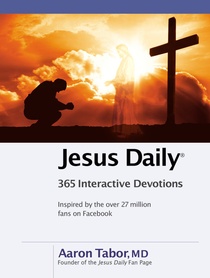
Jesus Daily (book review)

Jesus DailyIn just a minute I’ll tell you how to win a FREE copy of the Jesus Daily book, and one other winner will get a free copy of the book and a really cool Jesus Daily t-shirt.

Some people have asked, “Would Jesus tweet?” The answer, I believe, is a resounding yes! Jesus used all of the methods available to Him to share the Good News. Dr. Aaron Tabor is essentially doing the same thing. What has become the Jesus Daily book began by Dr. Tabor asking, “What more can I do to share the good news about Jesus Christ?” That turned into a Facebook page, which has now become this inspirational book.

Jesus Daily is a 365-day devotional book. Each day you will find a verse from the Bible, a short 1-page devotional thought which springs from that verse, followed by a way to interact with others online in sharing the good news.

For example, on my birthday I see, “Surely, O Lord, You bless the righteous; You surround them with Your favor as with a shield” (Psalm 5:12). The devotional thought reminds me that God as my Heavenly Father loves spending time with me, and that in His surrounding presence I find restoration. I don’t have to “earn” time with Him, but He longs for me to come to Him. Then I’m challenged to post one of my favorite verses on-line, and ask others to do the same.

It’s a powerfully-simple concept. Just a few minutes each day, and you will not only draw closer to God, but you will share the good news about Jesus with all of your on-line connections.

Okay, here’s how you can win one of the two prizes. To be entered into the drawing, do as many of the following as you’d like. You will be entered one time for each of these things:

  • Post a comment below with one of your favorite Bible verses.
  • Click one of the share buttons to share this post on one or all of your social media outlets. Make sure that you use the hashtag #JesusDailyBook, and also tag me (@craigtowens) so I can get you entered.

Winners will be selected by a random drawing at 5pm EST on Saturday, December 6, 2014. If your name is drawn, I will contact you. Even if you don’t win a free copy, Jesus Daily will make a great devotional book for you.

I am a FaithWords book reviewer.

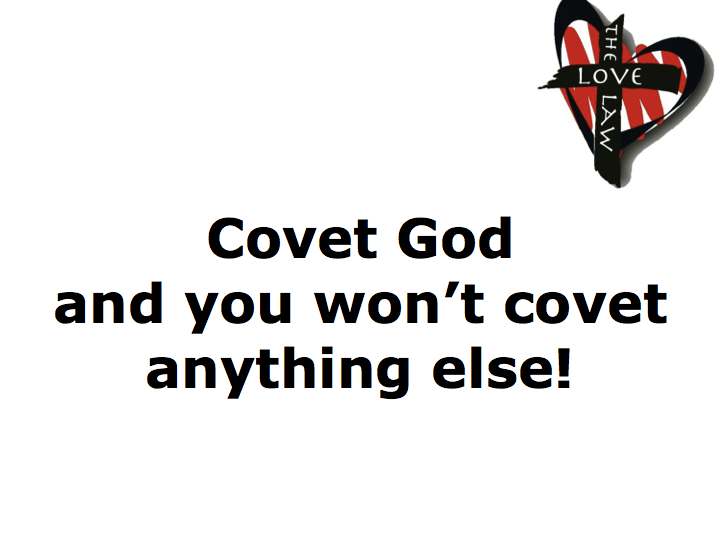
Good Coveting

Covet GodIf we simply state the last of the Ten Commandments like this—You shall not covet—we have missed the true intention of that commandment. You see, God created us to covet. The issue is not if we will covet, but what we will covet.

The word covet means (1) long for greatly, (2) take pleasure in, or (3) find desirable. Throughout the Old Testament this word is used twice as many times in the positive sense as in the negative. The Bible, in fact, encourages us to covet after a deeper relationship with God; to covet God’s ways; to covet our spouse … to covet all of the good and moral things God created for us.

The tenth commandment prohibits us from coveting immorally.

If we restate the first commandment like this—I am the Lord your God. You shall covet a relationship with Me alone—then we will immediately be able to obey all of the other commandments. But if we break the tenth commandment by coveting things other than God, we are liable to break every commandment.

Check this out:

  • Adam & Eve—their immoral coveting led to violating commandments 1, 5 and 8.
  • Achan—his immoral coveting led to violating commandments 2, 8 and 6.
  • David—his immoral coveting led to violating commandments 7, 8, 9 and 6.
  • Judas Iscariot—his immoral coveting led to violating commandments 1, 9, 3 and 6.

Augustine said, “I call the love to God the motion of the soul toward the enjoyment of God for His own sake, and the enjoyment of one’s self and of one’s neighbor for the sake of God.” Coveting God is good!

We were made to covet Him. satan wants us to covet our neighbor’s house, spouse, lifestyle, and possessions, but if we listen to him, we will end up miserable.

God coveting = good coveting!

If you have missed any of the messages in our series The Love In The Law, you can find them all by clicking here.

The 10 Commandments In The New Testament

I have heard far too many people say, “The laws of the Old Testament were for ‘back then.’ We live in the New Testament era, so those laws don’t apply to us any longer.” This is a blatant disregard of facts.

Not only are every single one of the Ten Commandments reiterated in the New Testament, they are also amplified. Consider this example: Under the Old Testament law, as long as I hadn’t slept with someone other than my wife I hadn’t broken the 7th commandment (do not commit adultery). Jesus not only reiterated that 7th commandment, but He amplified it to say my lustful thoughts toward someone not my wife made me a violator of that commandment.

Here’s the list of the commandments reiterated and amplified—

10 Commandments In The New Testament

You may download a PDF version of this chart here → 10 Commandments In The New Testament


From The Cutting Room Floor: The Love In The Law

Love In The LawWhenever I am working on a series of messages, I always end up with way more material than I could possibly share. But it’s still really good stuff! I remember a movie director once remarking that some of his best and favorite scenes ended up on the cutting room floor during the movie’s editing process. So here are some of the quotes and thoughts I really liked, recovered from “the cutting room floor” as I prepared our Love In The Law series.

“True obedience to God (not just to lists of laws) means more than outward performances which can be tallied in percentages (like 80 percent obeyed). Rather, true obedience is to be so transformed that we delight to do God’s will at multiple levels. We delight in His will as the excellent expression of His wisdom and justice and love. We delight in personal, close communion with Him as our guide, which we would lose, at least for a season, if we acted against His counsel. We delight in His gift of a clean conscience. We delight in the smile of His approval. We delight in God Himself whom we see and know more clearly when we walk in unbroken fellowship and obedience. We delight in the prospect of ongoing assurance and hope, which is jeopardized and weakened if we gradually slip away from Him in callous disobedience.” —John Piper

I delight to do Your will, O my God; yes, Your law is with in my heart. —Psalm 40:8

“To detect ourselves thus balancing a transgression here, against many observances there, ought at once to startle us into the conviction that the whole principle of our lives must be faulty. Our aim is, not to love God, or to obey Him, but to get to heaven, or at least escape hell, on the cheapest terms.” —Alfred Plummer

“Our will is morally and spiritually flawed. Nevertheless we are responsible to do the commandments of God. The moral corruption that cripples us does not relieve us of our responsibility to do what is right and good to do.” —John Piper

“I call the love to God the motion of the soul toward the enjoyment of God for His own sake, and the enjoyment of one’s self and of one’s neighbor for the sake of God.” —Augustine

“If thou neglect thy love to thy neighbor, in vain thou professest thy love to God; for by thy love to God, the love to thy neighbor is begotten, and by thy love to thy neighbor, thy love to God is nourished.” —Francis Quarles

“A pennyweight o’ love is worth a pound o’ law.” —Scottish Proverb

It pleased the Lord for the sake of His righteousness to make His law great and glorious. —Isaiah 42:21

All God’s Alls

All God's Alls“His greatness no one can fathom” (Psalm 145:3).

God’s kingdom is everlasting and endures through all generations (v. 13). Look at all of God’s “alls”—

  • He is good to all (v. 9)
  • He has compassion on all (v. 9)
  • He is faithful to all His promises (v. 13)
  • He is loving toward all (v. 13)
  • He upholds all who fall (v. 14)
  • He lifts up all who are bowed down (v. 14)
  • All eyes look to Him (v. 15)
  • He satisfies all desires (v. 16)
  • He is All-righteous (v. 17)
  • He is All-loving (v. 17)
  • He is near to all who call on Him (v. 18)
  • He watches over all who love Him (v. 20)

My only appropriate response to all God’s “alls”—I will praise Your name for ever and ever. Every day I will praise You and extol Your name for ever and ever. … My mouth will speak in praise of the Lord. Let every creature praise His holy name for ever and ever (vv. 1, 2, 21).

ALL praise to God FOREVER!

12 Quotes From “Keeping The Ten Commandments”

Keeping The Ten CommandmentsJ.I. Packer wrote a very readable, but scholarly, book examining how 21st-century people should live out the biblical Ten Commandments. You can read my full book review by clicking here, but I’m sharing some of my favorite quotes below.

“God’s love gave us the law just as His love gave us the gospel, and as there is no spiritual life for us save through the gospel, which points us to Jesus Christ the Savior, so there is no spiritual health for us save as we seek in Christ’s strength to keep the law and practice the love of God and neighbor for which it calls.”

“Where the law’s moral absolutes are not respected, people cease to respect either themselves or each other; humanity is deformed, and society slides into the killing decadence of mutual exploitation and self-indulgence.”

“The negative form of the Commandments has positive implications. ‘Where a sin is forbidden, the contrary duty is commanded’ (Westminster Larger Catechism, Question 99). The negative form was needed at Sinai (as in the West today) to curb current lawlessness that threatened both godliness and national life.” 

“Moral permissiveness, supposedly so liberating and fulfilling, is actually wounding and destructive: not only of society (which God’s law protects), but also of the lawless individual, who gets coarsened and reduced as a person every time.”

“Law-keeping is that life for which we were fitted by nature, unfitted by sin, and refitted by grace, the life God loves to see and reward; and for that life liberty is the proper name.”

“The Bible, however, takes promises very seriously; God demands full faithfulness of our vows. Why? Partly because trustworthiness is part of His image, which He wants to see in us; partly because without it society falls apart.”

“We honor God by respecting His image in each other, which means consistently preserving life and furthering each other’s welfare in all possible ways.”

“We have in us capacities for fury, fear, envy, greed, conceit, callousness, and hate that, given the right provocation, could make killers out of us all. … When the fathomless wells of rage and hatred in the normal human heart are tapped, the results are fearful.”

“When you lie to put someone down, it is malice; when you lie to impress, move, and use him, and to keep him from seeing you in a bad light, it is pride.”

“Reformed theologians said that God’s law has three uses or functions: first, to maintain order in society; second, to convince us of sin and drive us to Christ for life; third, to spur us on in obedience, by means of its standards and its sanctions, all of which express God’s own nature.”

“What is God’s ideal? A God-fearing community, marked by common worship (commandments 1, 2, 3) and an accepted rhythm of work and rest (commandment 4), plus an unqualified respect for marriage and the family (commandments 5, 7), for property and owner’s rights (commandments 8, 10), for human life and each man’s claim on our protection (commandment 6), and for truth and honesty in all relationships (commandment 9).”

“When God’s values are ignored, and the only community ideal is permissiveness, where will moral capital come from once the Christian legacy is spent? How can national policy ever rise above material self-interest, pragmatic and unprincipled? How can internal collapse be avoided as sectional interests, unrestrained by any sense of national responsibility, cut each other down? How can an overall reduction, indeed destruction, of happiness be avoided when the revealed way of happiness, the ‘God first, others next, self last’ of the Commandments, is rejected? The prospects are ominous. May God bring us back to Himself and to the social wisdom of His Commandments before it is too late.”