My Part

The apostle Paul wrote to Timothy—

…God our Savior, Who wants all men to be saved and to come to a knowledge of the truth (1 Timothy 2:4).

And we all say, “Yes!!” Then I quickly ask, “So what’s my part in this?

The quick and easy answer springs to my mind, “I have to tell others about Jesus!” This is true—and it is needed—but this is NOT what Paul says here.

Did you notice the ellipsis (the …) at the beginning of the verse I quoted above? Here’s the part that comes before—

I urge, then, first of all, that requests, prayers, intercession and thanksgiving be made for everyone—for kings and all those in authority, that we may live peaceful and quiet lives in all godliness and holiness. This is good, and pleases God our Savior, Who wants all men to be saved and to come to a knowledge of the truth. (verses 1-4)

My part in all men coming to a knowledge of the truth is PRAYER. Specifically, prayer for those in authority over us. These prayers translate into an environment where we may live peaceful and quiet lives in all godliness and holiness.

It’s in this peaceful environment that we are better able to be “a teacher of the true faith” (verse 7).

My part is not to add to the noise.

My part is not to argue my position.

My part is not to protest.

My part is to pray.

I hope you will join me in prayer not only for the upcoming election but all year round for those in authority so that all…may come to a knowledge of the truth.

Attaboy!

October has been designated as Clergy Appreciation Month. Some pastors live from “Attaboy!” to “Attaboy!” from their congregation, so October is like a feast for them!

But the apostle Paul has a slightly different perspective on this. More than getting an “Attaboy!” from a church congregation, he is joyful over the “Attaboy!” he hears from God.

For what is our hope, our joy, or the crown in which we will glory in the presence of our Lord Jesus when He comes? Is it not you? Indeed, you are our glory and joy.

For now we really live, since you are standing firm in the Lord. How can we thank God enough for you in return for all the joy we have in the presence of our God because of you? (1 Thessalonians 2:19-20; 3:8-9)

Paul’s goal is seeing people who have been changed because of their relationship with Jesus. And these changed lives are all the reward he desires!

YOU ARE OUR GLORY AND JOY! 

Pastor, it’s nice when you get the “Attaboys!” from your congregation. But what’s even better is to help your congregation enter into a deeper relationship with Christ, and then hear the “Attaboy!” from God Himself!

What an amazing joy that we get to play a small role in helping people stand firm in the Lord!

Democracy, Immoral Laws, And A Christian’s Responsibility

We know the law is good if one uses it properly. (1 Timothy 1:8)

Whether laws are labeled spiritual or civil, the IF in that verse is very important. Law is intended to restrain unbecoming or immoral activities. Laws are aimed at lawbreakers. But in order for any law to carry weight, it has to be backed up by something more solid than a man’s opinion of what is “right” or “wrong.”

According to Scripture, a law must…

  • …be supported by sound doctrine (1 Timothy 1:10). What defines “sound doctrine” is the word of God, not man-made opinion. Jesus said about the Pharisees, “They worship Me in vain; their teachings are but rules taught by men” (Matthew 15:9). The New Living Translation renders this verse: “Their worship is a farce, for they teach man-made ideas as the commands of God.”
  • …conform to the gospel (1 Timothy 1:11). Literally this means filtered through Scripture. Any law that does not have its foundation set on a biblical principle is, by definition, an immoral, man-made law.

So what is the Christian’s role in the legislative process? I see four responsibilities for Christians:

1. Pray for our elected officials that they would have a God-fearing, biblically-sound perspective in their legislative activities (see 1 Timothy 2:1-2).

2. Stay informed on the law-making activities on both the local, state, and national levels (see Acts 17:11; 1 Chronicles 12:32).

3. Speak out against unbiblical, immoral laws (see Esther 4; 1 Peter 2:17).

4. Disobey immoral laws. The Bible commands us to “give to Caesar what is Caesar’s, and to God what is God’s” (Luke 20:25). We must never give to Caesar what is God’s (see Acts 5:29)!

I love Martin Luther King Jr’s Letter From Birmingham Jail where he addresses Christian pastors about the rightness of peacefully disobeying immoral laws. If you haven’t read this masterpiece, please take time to do so. In this letter, Dr. King wrote:

Over the last few years I have consistently preached that nonviolence demands that the means we use must be as pure as the ends we seek. So I have tried to make it clear that it is wrong to use immoral means to attain moral ends. But now I must affirm that it is just as wrong, or even more, to use moral means to preserve immoral ends.

Christian, you have a responsibility. Pray, be informed, respectfully speak out against immoral laws, and then peacefully disobey when it is necessary.

Worthy Of Imitation

I pray that my life is worthy of imitation. And, pastor, I pray yours is too!

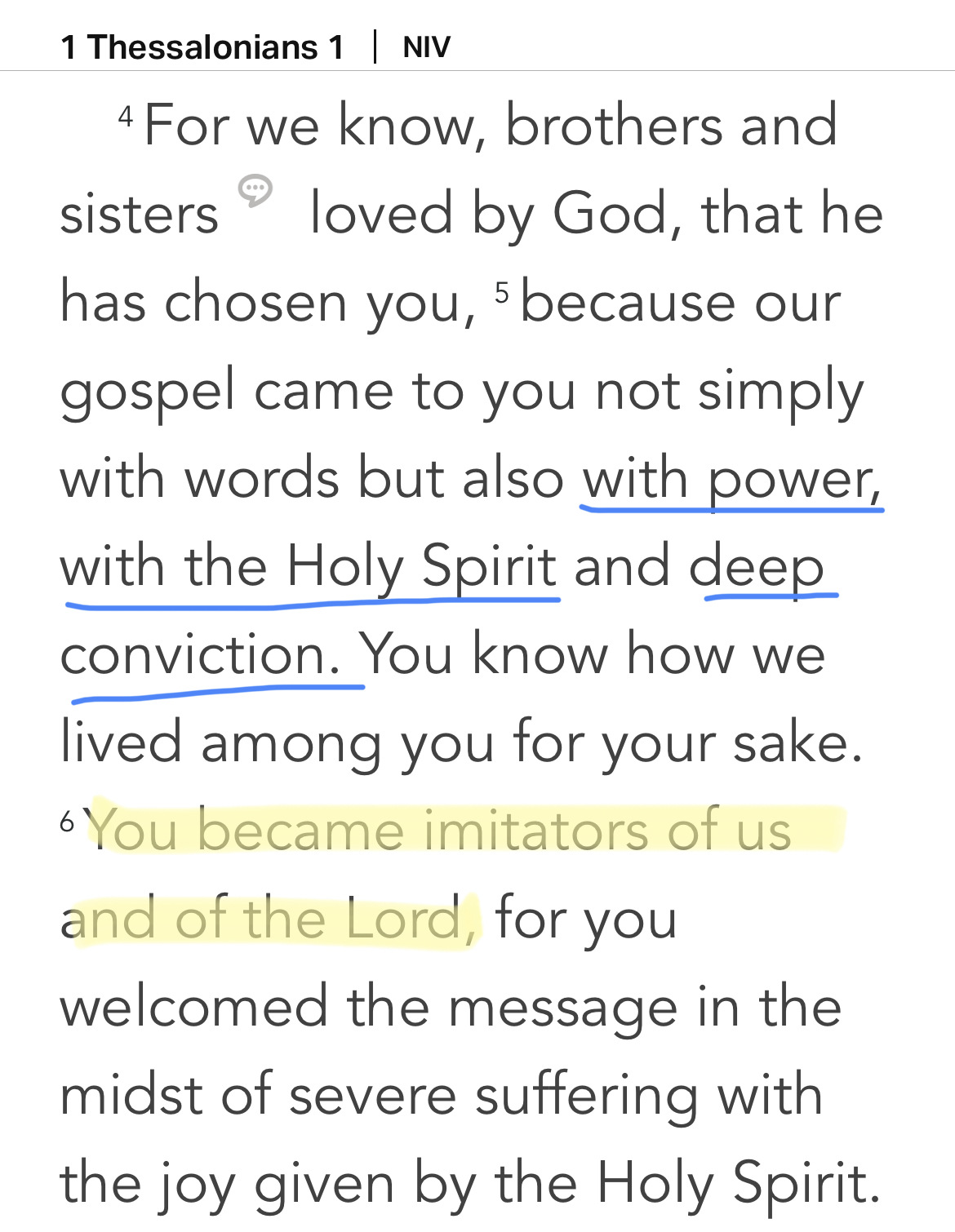
Here’s how to make sure it is an imitable life: I can’t just talk a good life. Paul wrote, Our gospel came to you not simply with words.” Words are important, but they shouldn’t be a replacement for a life that backs up those words. Paul continues his thought:

Our gospel came to you not simply with words, but also with power, with the Holy Spirit and with deep conviction…. (1 Thessalonians 1:5)

Their sermons were backed up by the help of the Holy Spirit, and the deep conviction that Paul, Silas, and Timothy lived by. This was all outwardly focused toward others. Look how Paul concludes this verse, …you know how we lived among you for your sake.

They never attempted to use the gospel or their calling to benefit themselves, but always for the benefit of others and for the glory of God.

The result (v. 6):

You became imitators of us and of the Lord. 

I pray that all of us can say this about our congregations!

Thursdays With Oswald—I Hope I Am Insane!

This is a weekly series with things I’m reading and pondering from Oswald Chambers. You can read the original seed thought here, or type “Thursdays With Oswald” in the search box to read more entries.

I Hope I Am Insane!

     Insanity simply means that a man is differently related to affairs from the majority of other men and is sometimes dangerous. Paul was charged with madness (Acts 26:24-25), and the same charge was brought against Jesus Christ—“For they said, He is beside Himself.” 

     Have you ever noticed the wisdom of the charge? Both Jesus Christ and Paul were unquestionably mad, according to the standard of the wisdom of this world; they were related to affairs differently from the majority of other men, consequently, for the sake of self-preservation, they must be got rid of. Our Lord was crucified, and Paul was beheaded. When we are imbued with Jesus Christ’s Spirit and are related to life as He was, we shall find that we are considered just as mad according to the standard of this world. 

From Biblical Psychology (emphasis added)

The teachings of Jesus are not only counter-cultural, but they are also are 180-degrees out-of-sync with worldly wisdom. I don’t want to be worldly wise; I want to be called insane by the “wise” men of this world!

Later in this same chapter Oswald Chambers writes:

Read the expositions of the Sermon on the Mount today and you will find some of the cleverest dialectics that have ever been written. The writers try to prove that Jesus is not mad according to the standards of this world; but He is mad, absolutely mad, and there is no apology needed for saying it. Either the modern attitude to things must alter, or it must pronounce Jesus Christ mad. 

Holy Spirit, may I never live my life by the “sane” beliefs and practices of this world’s culture, but may I be imbued with Jesus Christ’s Spirit and related to life as He was.

More And More

Listen to the podcast of this post by clicking on the player below, and you can also subscribe on AppleSpotify, or Audible.

There’s a popular cliché that many motivators use to challenge people to go beyond where they are. They will cheer them on by saying, “C’mon, let’s raise the bar!” The only problem is, once someone clears the bar’s next height, they usually celebrate and then stop trying to go any higher.

Christians should be especially on guard against this mindset. It’s not a one-time thing. I don’t simply invite Jesus into my life and then set Him on a shelf. If I’m going to live a life that pleases God, I must learn how to do so more and more.

…We instructed you how to live in order to please God, as in fact you are living. Now we ask you and urge you in the Lord Jesus to do this more and more (1 Thessalonians 4:1).

The KJV says, “abound more and more.” This means that there is no set level I’m trying to reach, but that the level is always higher—there’s always more, my capacity is always increasing.

More and more is a single word in the Greek language. It means:

  • More willingly
  • More readily
  • Sooner

When the Holy Spirit speaks to me, do I respond and obey more willingly? more readily? sooner? If I do, then I am truly abounding more and more.

The mark of my maturity is a more willing, faster obedience.

This relentless focus on pleasing God more and more then overflows in the way I cheer on and encourage my brothers and sisters. Paul uses the exact same Greek word for more and more when he says a few verses later: “We urge you, brothers, to [express brotherly love] more and more” (vv. 9-10).

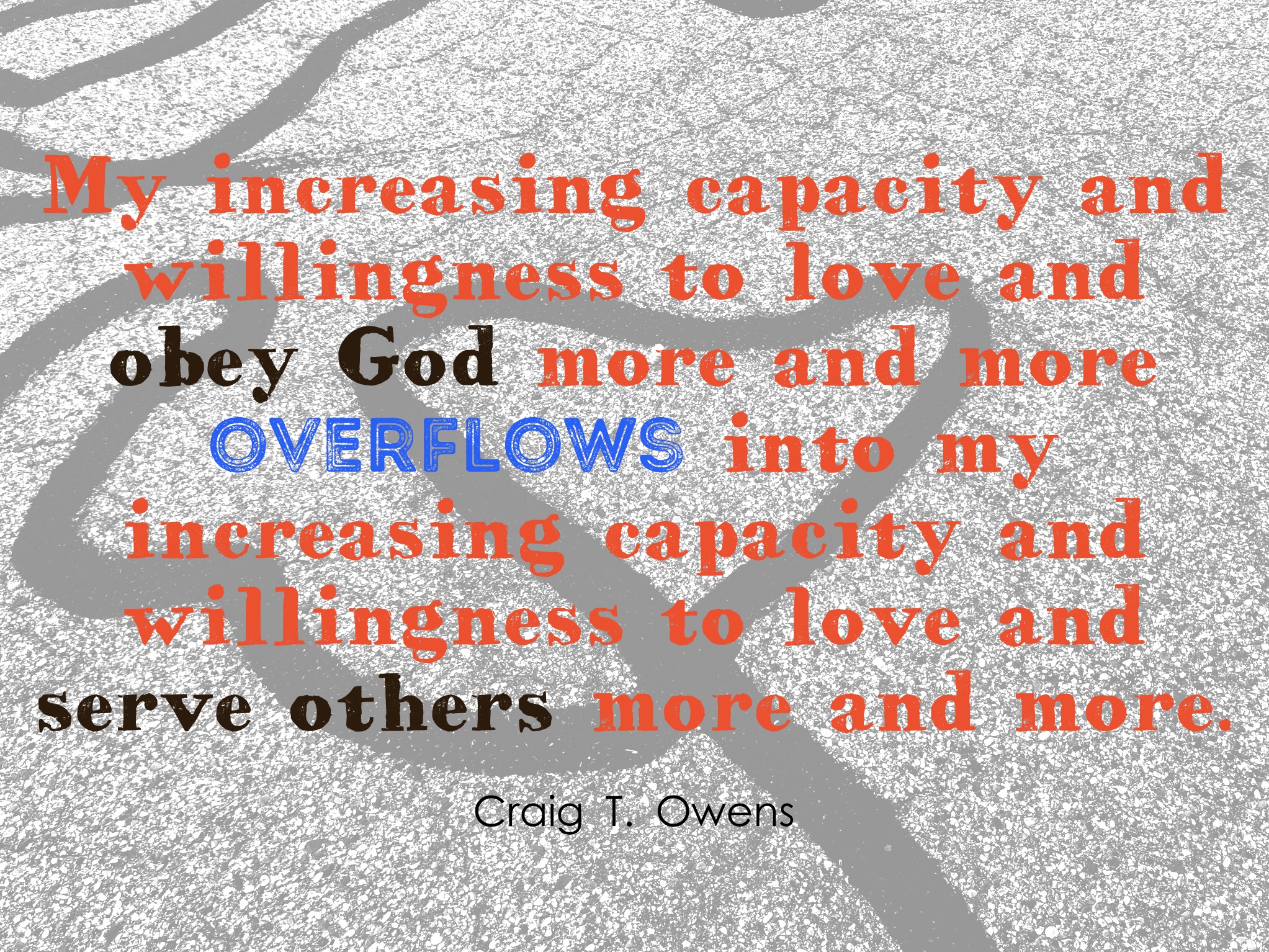
My increasing capacity and willingness to love and obey God more and more overflows into my increasing capacity and willingness to love and serve others more and more.

My prayer for you and for me: Holy Spirit, help us to hear Your voice, to abound more and more in our obedience to Your direction, and to express our love more and more to others.

►► Would you please prayerfully consider supporting this ministry? My Patreon supporters get behind-the-scenes access to exclusive materials. ◀︎◀︎

How To Earn R-E-S-P-E-C-T

Here’s how the apostle Paul said it…

Make it your goal to live a quiet life, minding your own business and working with your hands, just as we instructed you before. Then people who are not Christians will respect the way you live, and you will not need to depend on others. (1 Thessalonians 4:11-12)

Pretty straightforward, isn’t it? To live a life that those who are not Christians will respect:

  • Live with the right ambition. The Greek word for ambition means hard work that brings honor.
  • Mind your own business.
  • Do your own work to provide for yourself.
  • Repeat it again tomorrow.

I want to live a life that glorifies God and earns the respect of others. This seems like a pretty doable list.

Intercession

Listen to the podcast of this post by clicking on the player below, and you can also subscribe on AppleSpotify, or Audible.

Intercession is prayer for others. How it must please our Heavenly Father when we long for—and pray for—the advancement of others.

Since the day we heard about you, we have not stopped praying for you. (Colossians 1:9)

The apostle Paul prayed that the Colossians would grow in the knowledge of God’s will, in spiritual wisdom, and in godly understanding. He knew that with these tools they would be able to live a life worthy of the Lord and [be able to] please Him in every way (v. 10). The outward signs of this worthy life, Paul explains, are:

  • Doing good works
  • Knowing God more intimately
  • Developing greater endurance, patience, and empathy
  • Overflowing in thankfulness
  • Building up other saints (vv. 11-12)

Did you catch that last point: building up other saints. One of the “other saints” would be Paul himself!

So when my prayers shift from petition (praying for what I need) to intercession (praying for what others need), as other people grow in God, they build me up!

What an amazing thought:

The way I get what I need from God is to stop thinking about myself and praying for myself, and to start interceding for others.

That is the power and the blessing of intercessory prayer!

►► Would you please prayerfully consider supporting this ministry? My Patreon supporters get behind-the-scenes access to exclusive materials. ◀︎◀︎

Commissioned = Struggling

As I like to do on Fridays, this post is especially for my fellow pastors.

I have become [the church’s] servant by the commission God gave me to present to you the Word of God in its fullness. (Colossians 1:25)

Let’s be honest: What pastor wouldn’t say he/she wants to “serve” the church?

But look at Paul’s definition of a servant of the church (Colossians 1:24-2:5):

  • Suffering
  • Rejoicing in that suffering
  • Proclaiming the gospel
  • Admonishing the saints
  • Teaching with all wisdom
  • Maintaining a passion for everyone’s perfection
  • Laboring
  • Struggling

That’s quite a list!

Paul also says, “I want you to know how much I am struggling for you” (2:1). The word here and in 1:29 come from the same root word meaning: A contest (whether sports or a courtroom trial) in which there is a large audience, and in which one contestant is representing a larger group.

It’s like an Olympic athlete competing for his country, or an attorney speaking on behalf of her clients.

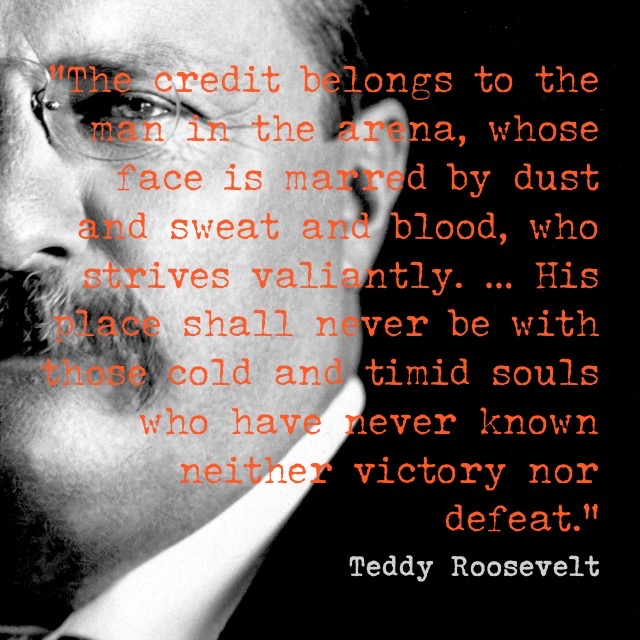
Then Paul adds, “I tell you this so that no one may deceive you by fine-sounding arguments” (2:4). In other words, actions speak louder than words. As Teddy Roosevelt famously said—

“It is not the critic who counts; nor the many who point out how the strong man stumbles, or where the doer of deeds could have done them better. The credit belongs to the man in the arena, whose face is marred by dust and sweat and blood, who strives valiantly…who knows the great enthusiasms, the great devotions, who spends himself in a worthy cause, who at the best knows in the end the triumph of high achievement, and who at the worst, if he fails, at least fails while daring greatly, so that his place shall never be with those cold and timid souls who have never known neither victory nor defeat.”

Pastor, stay in the arena!

Don’t walk away from the struggles!

Persevere through the difficulties!

People are watching you. What people? Specifically those sheep whom God has commissioned you to shepherd in His pasture. So stay in the fight!

I’m praying for you!

A Checklist For Influencers

Listen to the podcast of this post by clicking on the player below, and you can also subscribe on AppleSpotify, or Audible.

As the apostle Paul is wrapping up his letter to his friends in the Church at Philippi, he encourages them to be people others want to be around. After all…

The #1 Rule of Influence: You can only influence people who are close to you.

The #2 Rule of Influence: People won’t get close to you unless you are approachable.

So here’s a quick checklist from Paul to Christians who want to be influencers from Philippians 4:4-9:

  • Rejoice in God. Always.
  • Be gentlemen and gentlewomen. Manners matter.
  • Understand God is always with you.
  • Don’t be anxious or fretful.
  • Pray about everything.
  • Be a thank-full person.
  • Be discerning of what goes in your eyes and ears.
  • Continue to learn and practice godly, biblical principles.

A short list, but a lifetime of growth opportunities.

The more you exhibit these qualities, the more approachable you will be. And the more approachable you are, the more you can influence people to learn about the life-changing power of a personal relationship with Jesus.

►► Would you please prayerfully consider supporting this ministry? My Patreon supporters get behind-the-scenes access to exclusive materials. ◀︎◀︎