5 Quotes From Albert Einstein In “There Is A God”

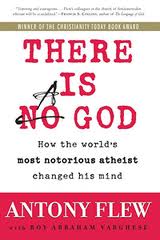
There Is A GodAs I said in my book review of Anthony Flew’s There Is A God, the real value of this book is in the arguments which contributed to Flew’s shift from atheism to theism. You can read my full book review by clicking here.

Frankly, it’s hard to share a lot of the quotes because the context of the full argument would be lacking, but I’ve begun sharing some of them over several posts. To continue, below are some quotes from Albert Einstein.

“I am not a positivist. Positivism states that what cannot be observed does not exist. This conception is scientifically indefensible, for it is impossible to make valid affirmations of what people ‘can’ or ‘cannot’ observe. One would have to say ‘only what we observe exists,’ which is obviously false.” —Albert Einstein

“The man of science is a poor philosopher.” —Albert Einstein

“I want to know how God created this world. … I want to know His thoughts, the rest are details.” —Albert Einstein

“I’m not an atheist, and I don’t think I can call myself a pantheist. We are in the position of a little child entering a huge library filled with books in many languages. The child knows someone must have written those books. It does not know how. It does not understand the languages in which they are written. The child dimly suspects a mysterious order in the arrangement of the books but doesn’t know what it is. That, it seems to me, is the attitude of even the most intelligent human being toward God. We see the universe marvelously arranged and obeying certain laws but only dimly understand these laws. Our limited minds grasp the mysterious force that moves the constellations.” —Albert Einstein

“Every one who is seriously engaged in the pursuit of science becomes convinced the laws of nature manifest the existence of a spirit vastly superior to that of men, and one in the face of which we with our modest powers must feel humble.” —Albert Einstein

More quotes are forthcoming. You can read some direct quotes from Anthony Flew by clicking here.
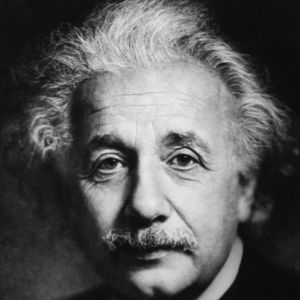
Where Are The Churches Of Courage?

EinsteinI am becoming more and more concerned about pastors and churches who will not take a stand. So many seem apathetic to what is happening in our world, seldom taking a stand or speaking out against unbiblical cultural trends or the misdeeds of evil.

If not Christians or churches, then who will speak up for truth?

“Being a lover of freedom, when the [Nazi] revolution came, I looked to the universities to defend it, knowing that they had always boasted of their devotion to the cause of truth; but no, the universities were immediately silenced. Then I looked to the great editors of the newspapers, whose flaming editorials in days gone by had proclaimed their love of freedom; but they, like the universities, were silenced in a few short weeks. … Only the Church stood squarely across the path of Hitler’s campaign for suppressing truth. I never had any special interest in the Church before, but now I feel a great affection and admiration for it because the Church alone has had the courage and persistence to stand for intellectual and moral freedom. I am forced to confess that what I once despised I now praise unreservedly.” —Albert Einstein

Pastor, are you standing “squarely across the path” of the things “suppressing truth”? Are you teaching and arming your congregations to do the same?

Atomic Spiritual Power

Atomic spiritual powerI was so excited while listening to Tom Kaastra’s message in our series on Ephesians yesterday! To really reflect on the power God wants to see operating in our lives is almost mind-blowing! 

In Paul’s lengthy prayer for the Christians in Ephesus, he three times says he is praying, “For this reason” (Ephesians 1:15; 3:1; 3:14). And every one of the reasons has to do with power or strength. In fact, Paul uses four Greek words for power in his prayer to try to convey the magnitude of God’s awesome power. This power can be summed up two ways:

  • Quantity (resurrection power): That power is the same as the mighty strength He exerted when He raised Christ from the dead (1:19-20).
  • Quality (love power): And I pray that you, being rooted and established in love, may have power… to grasp how wide and long and high and deep is the love of Christ, and to know this love surpasses knowledge (1:17-19).

Notice that this power only comes to me through the Holy Spirit, and resides in my “inner being” (3:16) and “within us” (3:20). It is power waiting to be released! 

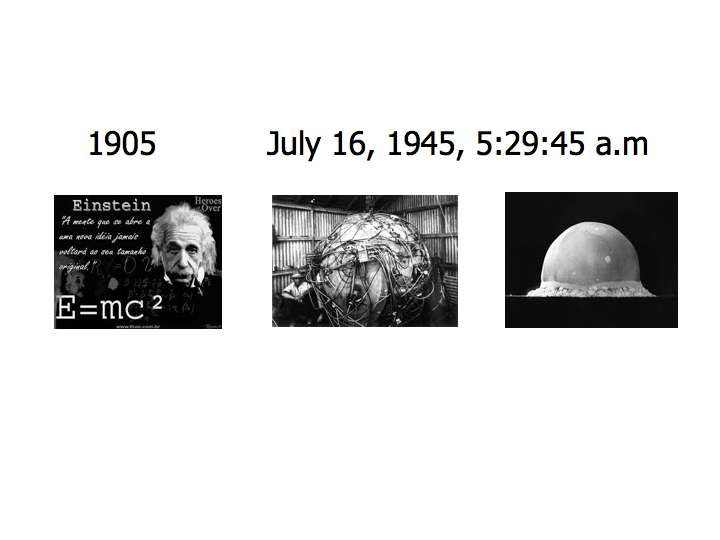
Think of this Holy Spirit power in terms of atomic energy power. The awesome power in the atom has been around since Genesis 1:1, but it was hidden from human awareness until July 16, 1945, at 5:29:45 AM, when the first atomic bomb was detonated. People couldn’t release the power because they didn’t know that it was there! In similar fashion, Paul wants us to know what sort of atomic spiritual power is available to us.

Paul’s prayer is that we will intimately know this power (1:18), and that we will release this power (Ephesians 3:20; Colossians 1:29; Philippians 2:12-13). The Holy Spirit is not released through dormant people, but through people who are moving toward Him and willing to let Him move through them.

There are three kinds of people in the world. Those who are…

1. …designed by God to be adopted into His family and to do great things, but are dead apart from Him.

2. …designed by God to be adopted into His family and to do great things, adopted into His family, but not using the power He has provided.

3. ..designed by God to be adopted into His family and to do great things, adopted into His family, and fully operating in His awesome atomic-like power.

In what category are you? What’s holding you back for all that God has planned for you?

Christianity & Pantheism

C.S. Lewis at his deskI recently re-read C.S. Lewis′ book Miracles (you can read my full book review by clicking here). As you may have noticed, after reading and reviewing books on this blog, I also like to share some quotes that caught my attention. Doing this with Lewis is difficult because in order to get the context of a particular quote, I think I would have to cite almost a full page or more. So over the next few weeks, I plan to share some quotes from Miracles that require not as much context, or I will provide a bit of background to set the stage.

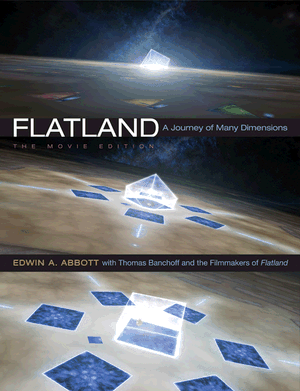
In this passage, Lewis refers to Flatlanders. This is a reference to a fascinating book called Flatland by Edwin Abbott, in which a 3-dimensional Sphere visits the 2-dimensional world called Flatland and speaks with Square. It was a favorite book of not only Lewis but Albert Einstein as well.

“The popular ‘religion’ excludes miracles because it excludes the ‘living God’ of Christianity and believes instead in a kind of God who obviously would not do miracles, or indeed anything else. … If ‘religion’ means simply what man says about God, and not what God does about man, then Pantheism almost is religion. … The old atomic theory is in physics what Pantheism is in religion—the normal, instinctive guess of the human mind, not utterly wrong, but needing correction. Christian theology and quantum physics are both, by comparison with the first guess, hard, complex, dry and repellent. … The Pantheist and Christian agree that we are all dependent on God and intimately related to Him. But the Christian defines this relation in terms of Maker and made, whereas the Pantheist (at least of the popular kind) says, we are ‘parts’ of Him, or are contained in Him. … Pantheist and Christian also agree that God is super-personal. The Christian means by this that God has a positive structure which we could never have guessed in advance, any more than a knowledge of squares would have enabled us to guess at a cube. He contains ‘persons’ (three of them) while remaining one God, as a cube contains six squares while remaining one solid body. We cannot comprehend such a structure any more than the Flatlanders could comprehend a cube. But we can at least comprehend our incomprehension, and see that if there is something beyond personality it ought to be incomprehensible in that sort of way. The Pantheist, on the other hand, though he may say super-personal really conceives God in terms of what is sub-personal—as though the Flatlanders thought a cube existed in fewer dimensions then a square.”

For other quotes from this book, see Miracles Or “Cheating”? and Miracle And Nature.

Links & Quotes

link quote

These are links to articles and quotes I found interesting today.

“Be sure you put your feet in the right place, then stand firm.” —Abraham Lincoln

The “settled science” of the origin of the universe is far from settled: Einstein’s Lost Theory Uncovered

“Pastors must be students of God’s Word, continually reviewing and digging deeper into the Scriptures in order to discern what is right and true and essential for the equipping of the saints. The pastor’s study of the Word must be, first, for his own edification and enrichment. From there, he must consider the application of Scripture to the needs of his congregation and the temper of the times. The more we are furnished with the sure Word of God, the more we will grow to be like Jesus, and be equipped to help others in this same calling.” —T.M. Moore

“Jesus observed the law and fulfilled the law. He did not throw the law away, for the sake of love. For the sake of love, He threw Himself away. That’s another counterintuitive lesson He gave to us, as we all proceed together, slouching toward ‘tolerance’ and carrying our consciences along the way ” —Elizabeth Scalia. Read more of her post Jesus Might Bake The Cake, But Would He Perform The Nuptials?

Disgusting! Michigan’s ‘House Of Horrors’

“God wants worshipers before workers; indeed the only acceptable workers are those who have learned the lost art of worship.” —A.W. Tozer

Responding To The Voice

FlatlandIn 1880, Edwin A. Abbott wrote Flatland, a book that would later become a favorite of Albert Einstein. Abbott was a college-trained mathematician and a theologian; in fact he was actually better known for his theological writings than for Flatland. Later on Einstein would say that “things should be made as simple as possible, not simpler.” In other words, don’t dumb-down the concept, but state it on a level where more people can grasp it. That’s why, I believe, Einstein loved Flatland.

Flatland is told through the eyes of Square, a two-dimensional shape that lives in Flatland. Square has length and width, but no height. So the inhabitants of Flatland can move back-and-forth, and side-to-side, but not up-and-down. To get an idea of this, put your eye right on the level of a tabletop, and look at an item on the table. Imagine you can only see what is touching the tabletop (but nothing that rises any higher or lower than that), and you will get an idea of Square’s two-dimensional world.

One day Sphere visits Flatland. Sphere is three-dimensional, so he can move up-and-down. This means that Square can only see the part of Sphere that happens to be in his line of sight at that immediate moment. So he sees just a “slice” or “layer” of Sphere as Sphere moves through Flatland. Sometimes Sphere is nothing more than a disembodied voice when he is hovering above Flatland.

This gives us a little bit of an idea of how we perceive God. He exists in dimensions that we cannot fully comprehend, so we only see “slices” of Him as He passes though our line of sight. Sometimes He is just a disembodied Voice—or as the Bible calls Him, the Word of God.

But the Word of God compressed Himself into our dimension (John 1:14). All of the fullness—all of the other-dimension-ness—of His omnipotence, omnipresence, omniscience came to our “level” in the Person of Jesus Christ (Philippians 2:6-7). The Word was the complete and total fullness of God (John 1:1-3; Colossians 2:9). But unlike Square who couldn’t fully know Sphere, God is fully knowable in The Word—in Jesus Christ!

The question is: What are you going to do with The Word? The Word of God (the Bible) allows us to fully know The Word of God (Jesus). But we need to be willing to let the Holy Spirit strip away our puny, smaller-dimensioned, finite thinking of God.

Alvin TofflerAlvin Toffler wrote, “The illiterate of the future are not those who cannot read or write, but those who cannot learn, unlearn, and relearn.”

I would modify this to say, “Those illiterate of The Word (Jesus) are not those who cannot read The Word (the Bible), but those who won’t let the Holy Spirit help them learn, unlearn, and relearn who God is.” 

There is so much more to learn about The Word (Jesus), so let the Holy Spirit guide you in your reading of The Word (the Bible). I pray as Paul did that you will begin to experience more of the multi-dimensional-ness of God as revealed in The Word—

I pray that out of God’s glorious riches He may strengthen you with power through His Spirit in your inner being, so that Christ may dwell in your hearts through faith. And I pray that you, being rooted and established in love, may have power, together with all the Lord’s holy people, to grasp how wide and long and high and deep is the love of Christ, and to know this love that surpasses knowledge—that you may be filled to the measure of all the fullness of God. (Ephesians 3:16-19)

If you have missed any of the messages in this series called Who Is Jesus?, you can find them all here.

Set Up

I absolutely love this quote from Albert Einstein:

“‎Everybody is a genius. But if you judge a fish by its ability to climb a tree, it will spend its whole life believing that it is stupid.”

This is so right on. And can be so sad.

I run into so many people that have this terrible message playing over and over and over in their minds, “I’m stupid … I’m worthless … I don’t have any talent …”

Perhaps we need to find some water for these fishes!

Get it? Instead of trying to change people’s wrong perspective of themselves, let’s get them set up for success. Help them discover where they are a genius … where they are invaluable … where they are talented.

Gotta go… I have a few fishes I need to point to water.

Holy Curiosity

Brandon and I spent the morning at the Van Andel Science Institute for a great father-son time called “Science On Saturday.”

What fun we had exploring God’s creation close-up and hands-on. Albert Einstein talked about the value of continual learning. He said, “Never lose a holy curiosity.” I’m a big believer in science and exploration because I believe the more we learn, the better we can worship God.

Here’s to lifelong learning and a greater wonder and awe of our Creator.

By the way, pictures of our exploration time are here.

Contending For The Faith

This Wednesday we’re starting an important series in our Impact youth group called “Spiritual Self-Defense.” Training our students how to defend what they believe. Jude wrote that we need to learn how to earnestly contend for the faith.

I’m also mindful of Peter’s instruction: But in your hearts set Christ apart as holy [and acknowledge Him] as Lord. Always be ready to give a logical defense to anyone who asks you to account for the hope that is in you, but do it courteously and respectfully.

As I’m preparing for this, here are a few things I’m trying to keep in mind. Perhaps you will have some additional things to share with me:

  • Earnestly means wholeheartedly. So I want to convey passion for biblical truths.
  •  Faith means an added dimension beyond scientific proof. Not in place of science, but beyond it. Albert Einstein observed, “Science without religion is lame. Religion without science is blind.”
  • Focusing on the lordship of Christ is the primary focus of Christian apologetics.
  • I need to prepare to answer.
  • My answers need to be logical and well thought out.
  • My answers need to lead people to the hope that is only found in a personal relationship with Jesus.
  • My defense of biblical truths need to be courteous and respectful.

In addition to our training times on Wednesday, we’ll also offer “sparing lessons” in our weekly men’s and women’s Bible studies. If you’re interested to learn more, come and join us at 7PM over the next few Wednesdays.

A Silly Dream World Or The Real Deal?

“What is ‘real’? How do you define ‘real’? If real is what you can feel, smell, taste, and see, then ‘real’ is simply electrical signals interpreted by your brain. … Have you ever had a dream, Neo, that you were so sure was real? What if you were unable to wake from that dream? How would you know the difference between the dream world and the real world?” —“Morpheus” in The Matrix

We are created in God’s image. God is eternal and unrestricted, yet we are contained in finite bodies and constrained to the time-space dimension of our universe. That hardly seems “real.” Yet our souls—the “real” part of us—were made to be timeless and unbound. It seems like a dream, and yet sounds real.

To help humanity navigate the dream-real state in which we find ourselves, God gave us incredible insights into His Word: the Bible. The answers to our dream-real questions are there if we’re willing to search for them.

C.S. Lewis wrote, “What we see when we think we are looking into the depths of Scripture may sometimes be only the reflection of our own silly faces.” The Apostle James talks about God’s Word as a mirror in his letter to the church (1:22-25). In this, I see three people.

(1) One who never looks in the mirror; one who simply accepts what’s presented to him. Again “Morpheus” comes close: “You have the look of a man who accepts what he sees because he is expecting to wake up.” James says this is a man who attends church regularly, but never applies what he hears. In fact, he probably never even hears anything other than what he thinks the pastor said. That man is silly, shallow, and stunted in his spiritual growth (if there is even any growth at all!).

(2) One who looks in the mirror but doesn’t do anything about what he sees. He hears the Word of God at church and perhaps even reads his Bible often at home; he knows all the stories and how everything should be. But he, too, never makes any changes in his spiritual “appearance.” He is content with where he is. If he ever feels the pull of desire that there could be more real to his dream-real world, he quickly explains it away. He is at the same spiritual maturity level today as he was years ago.

(3) One who looks into the mirror, recognizes that he is silly-looking, and then does something about it. It’s hard work and often this man feels like he’s not growing because he continues to see his silly face reflected back to him. As Albert Einstein noted, “As a sphere of light increases, so does the circumference of darkness around it.”

James says only this third man has been freed from his dream-real constraints and is called blessed by God. Only he is beginning to understand how to make the dream real.

In which category are you? Are you brave enough to look into the depths of God’s Word and see your silly face? Are you willing to make the changes the Bible shows you to free your soul?