Using The Bible To Pray

Listen to the podcast of this post by clicking on the player below, and you can also subscribe on AppleSpotify, or Audible.

During the first year of [Darius’] reign, I, Daniel, learned from reading the Word of the Lord, as revealed to Jeremiah the prophet, that Jerusalem must lie desolate for seventy years. So I turned to the Lord God and pleaded with Him in prayer and fasting. I also wore rough burlap and sprinkled myself with ashes. (Daniel 9:2-3 NLT) 

Reading the Word of God prompted Daniel to pray to the God that is revealed in the Word, and the prayer he offered to God was grounded in biblical promises—in God’s own promises (vv. 4-19). 

It’s like when children are speaking to their earthly fathers and say, “Dad, you promised,” it gets the attention of that father’s heart because he wants to keep his word. 

God hasn’t forgotten His promises; in fact, He is always at work to fulfill what He has said. But when we pray, “Father, according to Your promise to me,” we are praying words that resonate with His heart. He delights for His children to see Him at work. And He is glorified when we praise Him for fulfilling what He has promised. 

When we end our prayer with “in the name of Jesus, Amen,” that is not just some magical phrase that we tag on, but it is a reminder that we can come boldly before God’s throne with our petition. And prayers that are aligned with the heart of God—prayers that are grounded in the Word of God—have the “Amen” of Jesus added to them (Hebrews 10:19-22; 2 Corinthians 1:20). 

We never need to be at a loss for words when we go to our Heavenly Father in prayer. Read His Word, see the Holy Spirit illuminate and apply the Word to your circumstances, and then pray confidently in the name of Jesus.

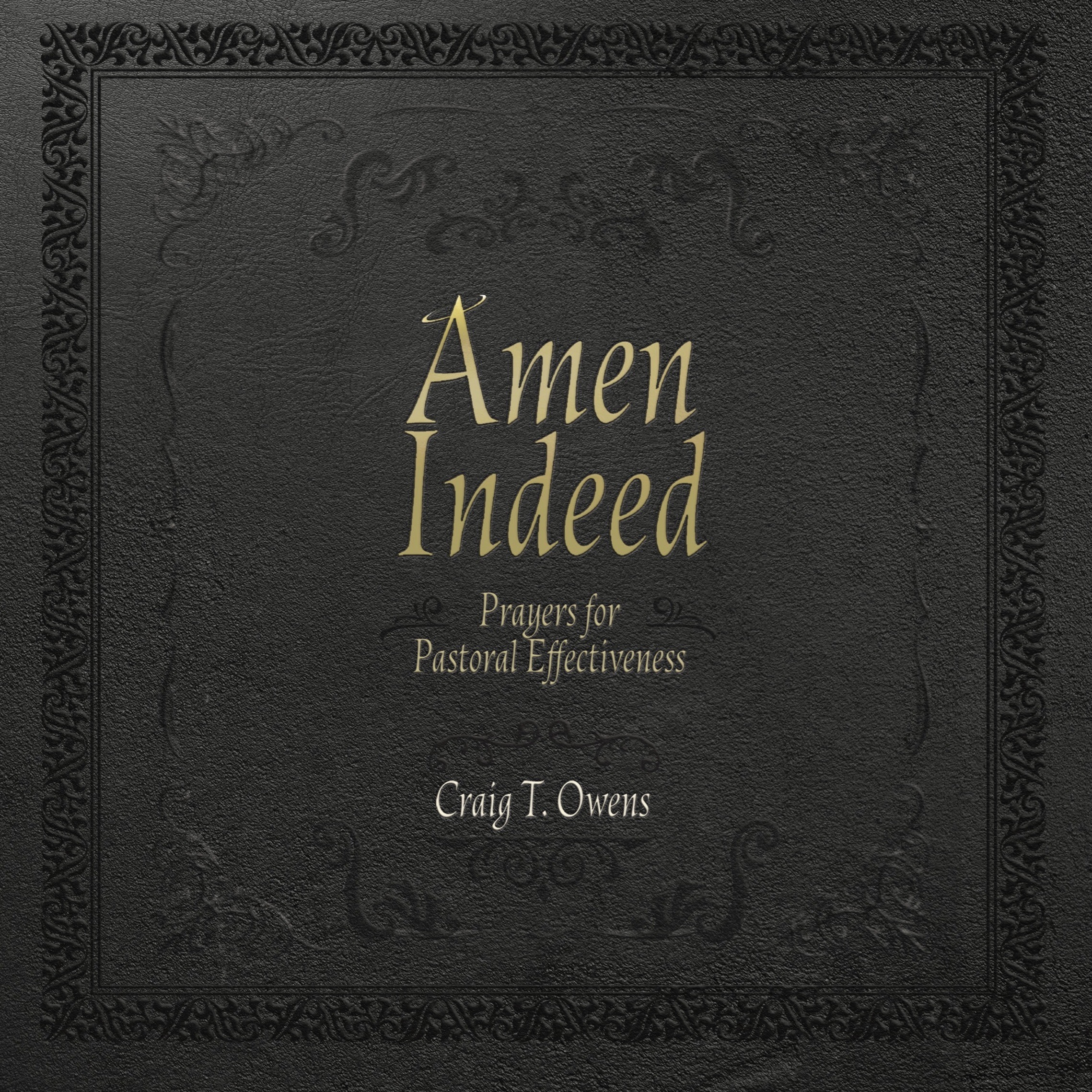
For pastors and shepherd leaders, my book Amen Indeed contains over 100 biblically-based prayers for many of the situations we face in our ministries. My prayer for you is that this book will help you learn how to use the Bible as your Prayer Book.

►► Would you please prayerfully consider supporting this ministry? My Patreon supporters get behind-the-scenes access to exclusive materials. ◀︎◀︎
Don’t Cross The Line

Listen to the podcast of this post by clicking on the player below, and you can also subscribe on AppleSpotify, or Audible. 

The apostle Paul writes something pretty straightforward: “Do not be anxious about anything” (Philippians 4:6). What might not seem so straightforward for us is this: What exactly is anxiety? 

The root word for anxious simply means to care for something or to care about something. Paul uses this word in a positive sense earlier in this letter when he praises Timothy for his concern for the wellbeing of the saints (2:19-22). In another letter, Paul told the Corinthians he had a deep concern for their spiritual growth (2 Corinthians 11:28) and that he desired for them to care in a similar way for their fellow saints (1 Corinthians 12:25). All of these instances use the same Greek word. 

(Check out all of the Scriptures in this post by clicking here.) 

The problem is when care crosses the line to become worry. 

A clear example of this is seen in the activities of Martha. She cared deeply about providing for the needs of Jesus, wanting to provide appropriate hospitality for Him, but her focal point switched from Jesus to food (Luke 10:38-42). Luke tells how Martha crossed the line from concern to anxiety by stating that “Martha was distracted by all the preparations.” Jesus redirected her to the one thing that “is better,” which was a devotion to Him. 

Care can turn to worry in the simplest of areas. 

Being careful about my physical health—food, clothing, shelter—is a legitimate concern, but Jesus warns about these things becoming a focal point and causing me to cross the line from concern to worry (Matthew 6:25-34). Wanting to answer well those who criticize my Christian faith is a noble concern, but obsessing over my word choices crosses the line (Matthew 10:19). Desiring to please my wife is perfectly natural and even commendable, but putting her on a pedestal crosses the line into worry (1 Corinthians 7:32-34). 

The crucial discipline to keep me from crossing the line from concern to worry and anxiety is to keep the right focal point. I am not my own provider; God is (James 1:17; Matthew 6:8; Luke 11:11-13). 

So in the same verse that Paul tells us “do not be anxious about anything” he also tells us to pray about everything. Peter says essentially the same thing this way, “Give all your worries and cares to God, for He cares about you” (1 Peter 5:7 NLT). God cares about me and the things I care about more than I do. He wants me to focus on Him, not on the things I care about, because He can provide for me perfectly. His provision keeps me from worrying about anything. 

Don’t worry about anything; pray about everything. 

That is my safeguard against crossing the line from legitimate concern to anxiety-causing worry. 

►► Would you please prayerfully consider supporting this ministry? My Patreon supporters get behind-the-scenes access to exclusive materials. ◀︎◀︎
7 Images Of The Church

Husbands, love your wives, just as Christ loved the church and gave Himself up for her to make her holy, cleansing her by the washing with water through the Word. (Ephesians 5:25-26)

Dr. Henry Halley points to seven images the Bible portrays of how Jesus interacts with His saints.

“1. The Shepherd and the sheep emphasizes both the warm leadership and protection of Christ and the helplessness and dependency of believers (John 10:1-18). 

2. The vine and the branches points out the necessity for Christians to depend on Christ’s sustaining strength for growth (John 15:1-8).

3. Christ as high priest and the church as a kingdom of priests stress the joyful worship, fellowship, and service which the church can render to God through Christ (Hebrews 5:1-10; 7:1; 8:6; 1 Peter 2:5-9). 

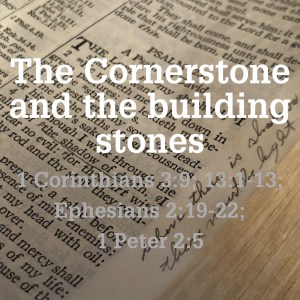
4. The cornerstone and building stones (Matthew 21:42) accents the foundational value of Christ to everything the church is and does, as well as Christ’s value to the unity of believers. Love is to be the mortar which solidly holds the living stones together (1 Corinthians 3:9; 13:1-13; Ephesians 2:19-22; 1 Peter 2:5). 

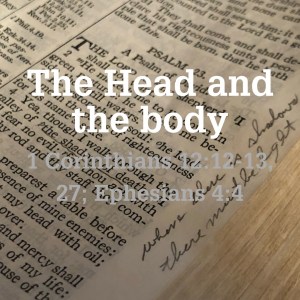
5. The head and many-membered body, the church, is a vibrant organism, not merely an organization; it draws its vitality and direction from Christ, the Head, and each believer has a unique and necessary place in its growth (1 Corinthians 12:12-13, 27; Ephesians 4:4). 

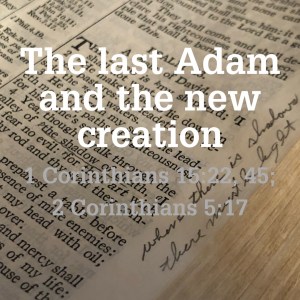
6. The last Adam and new creation presents Christ as the initiator of a new creation of believers as Adam was of the old creation (1 Corinthians 15:22, 45; 2 Corinthians 5:17). 

7. The bridegroom and bride beautifully emphasizes the intimate fellowship and co-ownership existing between Christ and the church (Ephesians 5:25-33; Revelation 19:7-8; 21:9).

You can read all of the Bible verses listed in this post by clicking here. 

Interceding For Others

Listen to the podcast of this post by clicking on the player below, and you can also subscribe on AppleSpotify, or Audible. 

Sanctification (“saint-ification”) is an ongoing process that usually involves the help of other saints. We learn this by having a biblical worldview (that’s the “B”), being accountable with saints (“A”), and serving the Body of Christ (“S”). These are the things that bring out increased fruitfulness in our lives, make us more joy-full people, and enhance our testimony to others.   

What a blessing it is to be involved in all of these saint-ification things alongside other brothers and sisters. Isn’t nice to know that you’re not all alone on your journey? 

Two brothers walked up the hill to the park every afternoon to play baseball. One day a neighbor who lived near the bottom of the hill saw the younger brother pulling his older brother up the hill in a wagon. He observed this for a couple of days before he finally asked what was going on. 

The younger brother said, “My big brother broke his leg so I pull him in the wagon so he can watch us play baseball and can be our coach.” 

“He must be heavy,” the neighbor replied. 

“He’s not heavy,” the little boy said, “he’s my brother!” 

In the first brothers that the Bible shows us, we see the origin of the phrase “brother’s keeper.” Cain was jealous of the way God was blessing his younger brother, and so he murdered Able. God came to Cain and asked him, “Where is your brother Able?” 

Cain responded with another question, “Am I my brother’s keeper?” (Genesis 4:9). 

(Check out all of the Scriptures in this post by clicking here.)

The word brother is someone connected to me by blood or some other common bond. Cain used the same word for brother but then asked if He was supposed to be his brother’s keeper—his guard, helping to keep him in bounds, celebrating his victories. 

The clear teaching of Scripture is that the answer to Cain’s question is an emphatic “Yes!”  

That definition of brother’s keeper sounds a lot like the definition of an intercessor. In the Hebrew, that word mean to go to God on someone else’s behalf (Genesis 25:21; 2 Samuel 24:25). The Greek of the New Testament sounds more intense (hyperentygchano): to meet a person of the purpose of conversation in behalf of someone else. 

Remember that the Hebrew word for brother was pretty narrow? The Christians in the New Testament took the word for relative-by-blood (adelphos) and made it a synonym for fellow saint, regardless of where they are from (Acts 9:17; 2 Corinthians 13:11). 

John used Cain’s misunderstanding of brother’s keeper to show us the spiritual responsibility we have to our adelphos (1 John 3:12, 15-16). 

When we intercede for our adelphos—our fellow saints—we are participating in the same work as both the Spirit and Jesus (Romans 8:26-27, 34; Hebrews 7:25; 1 John 5:16). 

A couple of weeks ago we looked at Philemon’s service to the Body of Christ. Look at how Paul’s intercession may have released Philemon to do this (Philemon 7, 16, 20). 

As Paul said to Philemon, I say to you—

I appeal to you on the basis of love: Be your brother’s keeper! 

Guard your adelphos, keep them in bounds, and celebrate both their righteousness and God’s blessing on their lives. 

If you’ve missed any of the other messages in this series, you can find them all here. 

►► Would you please prayerfully consider supporting this ministry? My Patreon supporters get behind-the-scenes access to exclusive materials. ◀︎◀︎
Comforting The Distressed

Listen to the podcast of this post by clicking on the player below, and you can also subscribe on AppleSpotify, or Audible. 

Comfort is an important word in the apostle Paul’s letter to the saints at Corinth. In just five verses in the opening of his second letter to the Corinthians, he uses the word “comfort” nine times! 

   Praise be to the God and Father of our Lord Jesus Christ, the Father of compassion and the God of all comfort, who comforts us in all our troubles, so that we can comfort those in any trouble with the comfort we ourselves receive from God. For just as we share abundantly in the sufferings of Christ, so also our comfort abounds through Christ. If we are distressed, it is for your comfort and salvation; if we are comforted, it is for your comfort, which produces in you patient endurance of the same sufferings we suffer. And our hope for you is firm, because we know that just as you share in our sufferings, so also you share in our comfort. (2 Corinthians 1:3-7) 

The Greek word conveys the sense of someone who comes near to help us. They come physically near, their heart draws near to us in empathy, and even their words are right on target to provide the help we need. 

If that description sounds familiar, it may be because it comes from the same Greek word that Jesus uses for the Holy Spirit—

   And I will ask the Father, and He will give you another Comforter (Counselor, Helper, Intercessor, Advocate, Strengthener, and Standby), that He may remain with you forever. (John 14:16 AMPC) 

As Paul says, God is “the God of all comfort,” which we would expect. But notice that Paul also says that the Comforter comforts us for a specific purpose: “so that we can comfort those in any trouble with the comfort we ourselves receive from God.” 

We cannot give to others what we do not have. 

How do we get comfort? The Holy Spirit—the Comforter—comforts us. 

When does He comfort us? When we are in distress. 

What happens with this comfort we receive? Three things:

  1. We have something to give to others who are in distress
  2. It builds patient endurance in us
  3. It makes our hope in God more firm

Perhaps you’re in a time of distress right now and you’re wondering why you are going through this difficulty. Can I challenge you to reframe this thought: You are going through this so that you may increase your capacity to be a comforter to others. Your comforted distress is allowing you to come alongside another struggling saint with greater empathy and patience and understanding and strength than you would have had before your time of distress. 

This is why Paul says, “Praise be to the God and Father of our Lord Jesus Christ.” He is trying to help us see the blessings that can come from this time of distress that could have come in no other way. Don’t allow self-pity to rob you of the comfort the Comforter wants to give to you so that you are able to be a comforter to others who are in distress. 

►► Would you please prayerfully consider supporting this ministry? My Patreon supporters get behind-the-scenes access to exclusive materials. ◀︎◀︎
The King’s Aroma

Listen to the podcast of this post by clicking on the player below, and you can also subscribe on AppleSpotify, or Audible. 

Throughout history, kings had their own “signature scent”—an incense that was exclusively theirs. 

This is true for King Jesus as well! 

The Scriptures I reference in this clip are Song of Songs 1:3, 12; 2 Corinthians 2:14-15. 

You can check out the full sermon from which this clip came here. 

I’ve blogged previously about the powerful things the Bible says about this aroma from Jesus and the aroma from our lives too:

►► Would you please prayerfully consider supporting this ministry? My Patreon supporters get behind-the-scenes access to exclusive materials. ◀︎◀︎
God-ability

Listen to the podcast of this post by clicking on the player below, and you can also subscribe on AppleSpotify, or Audible. 

The last time we were together, Pastor Caleb mentioned that I was the only one he knew that put hot sauce on my eggs. But then several of you let him know that you do that too. After the service, someone told me that they like Tabasco sauce on their pizza, which isn’t something I enjoy. 

We all have different tastes. Our tastebuds are just one of the things that makes us unique creations. Unique means one-of-kind, no one else like me. We don’t need to add something like “very unique” because just by itself the word means that God made a once-in-eternity masterpiece when He made you and me. 

It’s a good thing that we are unique. I see what you don’t see, and you see what I don’t see. There are some things I know how to do well, but perhaps you struggle doing them. That’s okay because there are things you can do that I won’t have the opportunity to do. Combined together we saints make an amazing team! 

The apostle Paul understood the value of unique individuals. 

(Check out all of the Scriptures in this post by clicking here.) 

Titus was probably the one who carried Paul’s letter to the Corinthians and then had the responsibility to teach those saints how to carry out what was in the letter (2 Corinthians 2:12-13; 7:6-7, 13-15; 8:6, 16-17). Titus was the pastor that Paul sent to Crete. Paul quoted a poet who said, “Cretans are always liars, evil brutes, lazy gluttons” (Titus 1:12). Titus was confident and bold to stand his ground for what he believed (Galatians 2:1-3). 

Timothy was more soft-spoken and tenderhearted, so Paul had to encourage him more (1 Timothy 4:7, 12), but he was the one who could soothe troubled spots. Timothy stepped in to help behind the scenes (Acts 18:1-5) and he was the one Paul reached out to with his last letter form prison, asking Timothy to come to him (2 Timothy 4:12). 

What a great thing it is to have unique saints in our lives! 

One person—not matter how gifted—cannot do it all. Look at Moses in Exodus 18:13-18. Even an anointed team like the 12 apostles cannot to it all. Look at Acts 6:1-2. 

These leaders recognized the need to other uniquely gifted people to come alongside them. Moses was advised to choose capable men. In other words, those with the ability to judge disputes wisely (Exodus 18:19-25). The apostles chose those who were full of the Holy Spirit and wisdom (Acts 6:3-6). The Greek word for wisdom (sophia) means someone with heaven-sent wisdom that also has the ability to apply that wisdom effectively. 

Israel in the Old Testament and the Church in the New Testament would have been constricted if those other people hadn’t agreed to let their God-given abilities be used. 

God’s talent + My ability = God-ability

In 2 Corinthians 8-9, Paul is specifically talking about the ability of people to give their offerings to help the growing church, but there is a phrase that I think is appropriate for any application of our gifts: They gave themselves first of all to the Lord (2 Corinthians 8:5). 

When what we do is a cheerful “get to” and not an obligatory “got to” it is noticed by everyone. Those two chapters in 2 Corinthians are filled with words like cheerful, eagerness, and enthusiasm. 

In our Hand2Hand food ministry, some people have…

  • Give-ability to give financially 
  • Shop-ability to find deals
  • Organize-ability to make all the parts work
  • Strength-ability to lift and move 
  • Deliver-ability to get the needed items to those who need them

But none of these work without availability. This is the attitude that makes our God-ability a blessing and not a chore. 

There is a place in ministry for every Christian. When you are available, God will allow the talent that He has given you to be a blessing to the Church. You benefit, the other saints benefit, and the watching world sees a living witness that will draw them to Jesus. 

►► Would you please prayerfully consider supporting this ministry? My Patreon supporters get behind-the-scenes access to exclusive materials. ◀︎◀︎
The Freedom In Fear

Listen to the podcast of this post by clicking on the player below, and you can also subscribe on AppleSpotify, or Audible. 

Our Royal Psalms take us from King David to King Jesus. David went from the anointed king on the run from King Saul, to being king over Judah (2 Samuel 2:4), to being king over “all the tribes” (2 Samuel 5:1-3; 8:15). 

(Check out all of the Scriptures in this post by clicking here.) 

David’s kingdom stretched far and wide (1 Chronicles 22:14-16; 29:10-13). This absolute control King David now wields over every nation surrounding Israel puts fear into the hearts of Israel’s enemies. Fear of David brings freedom for the people of his kingdom.

As the Sons of Korah think about this fear that brings them freedom, they look beyond their earthly king to the King of Heaven and compose this Royal Psalm recorded in Psalm 47. This psalm has majestic terminology for God in almost every verse; including, Lord Most High, great King over all the earth (vv. 2, 7, 9), God reigns over the nations; and God is seated on His holy throne. 

I’m especially intrigued by the word awesome in verse 2. The KJV says “the Lord Most High is terrible” because it does take two Hebrew words to give us the full definition of awesome. First, “Most High” is best thought of with the suffix -est: greatest, highest, noblest. In other words, there is nothing above Him. Then “terrible” is to be held in awe, to be honored, to be reverenced. 

Just as the Israelites had no fear of enemies because David was on the throne, God says the same thing to us: Because the Most High is on the throne, His people have no fear of their enemies. 

When we fear God we need not fear anything else. 

When we fear God: 

…we hate our own sin (Psalm 36:1-3) 

…we love His mercy that forgives our sin (Psalm 103:2-3, 10-12) 

…we hate sin in the world (2 Timothy 2:26) 

…we love sinners (2 Timothy 2:24-26; Acts 10:38; Jude 20-23) 

…we hate the darkness that traps people (2 Corinthians 4:4) 

…we love shining the light of King Jesus (Philippians 2:15-16) 

…we hate this life (John 12:25) 

…we love eternal life (Romans 3:23-24, 8:18)

When the people of Israel reverenced David as their king, they would be able to know his blessings. When we fear our awesome God, we will also receive His blessings. Take a look at the amazing blessings Jesus Himself—the King of kings—lists for those who reverence His awesome Kingship (Revelation 2:7, 11, 17, 26-28; 3:5, 11-12, 21)! 

God is awesome and asks us to reverence Him and then enjoy life in His freedom. 

If you have missed any of the other royal psalms we have covered, you can find the full list by clicking here. 

►► Would you please prayerfully consider supporting this ministry? My Patreon supporters get behind-the-scenes access to exclusive materials. ◀︎◀︎

A Tour Of The Tabernacle

Listen to the podcast of this post by clicking on the player below, and you can also subscribe on AppleSpotify, or Audible. 

I was absolutely fascinated by a Messianic Jew’s insights on the Old Testament Tabernacle, and how every aspect of it pointed to Jesus the Messiah. 

The overview of the construction of the Tabernacle starts in Exodus 25 and covers the next fifteen chapters in that book. Here are a few of my main takeaways from my friend’s teaching. 

All of the Scriptures I mention can be found here. 

The materials for the Tabernacle are brought as a freewill offering given by freed slaves (Exodus 25:1-2). This gold, silver, bronze, linens, and other materials were gifts from the Egyptians when the Israelites left on the night of the Passover. 

The Tabernacle is at the center of the Israelite camp (Numbers 2:1-34), signifying God’s presence in the center of our lives. When the Israelite community moved out, the tribe of Judah went first. Judah means “praise.” What a great reminder to let praise to God be at the forefront of all we do! 

In Exodus 27:16, the materials to be used for the curtains compromising the entrance to the Tabernacle are blue, purple, and scarlet. The blue is for sky (Heaven), the purple designates royalty, and the scarlet signifies the blood of the sacrifices. Jesus came to earth as royalty from Heaven, and by His shed blood He opens the way for all of us to be with Him in Heaven forever! Jesus said He was the only way to Heaven (Hebrews 2:14-15; John 14:6). 

The bronze altar for cleansing was just inside the entrance (Exodus 27:1-8). The worshiper offered this sacrifice in place of their sin. The priests would then move to the laver to wash off the dirt of the world. It’s important to note that the priests wash at the laver, not in the laver. Jesus is the One who washes us and cleanses us (Ephesians 5:26). 

There are four different coverings over the Holy Place. As the priest progresses farther into the Holy Place, the coverings become thicker, so less outside light is visible. 

  • First covering (Exodus 26:1) was blue, purple, and scarlet yarns (like the colors at the entrance) with cherubim woven into the fabric. The priests looking up would see these angels. 
  • Second covering (v. 7) was goat’s hair. Goats were used for sin offerings, reminding the priests that there was a sacrifice to cleanse them so they could approach the presence of God. 
  • Third covering (v. 14) was a red-dyed ram skin, showing the blood that covers us. 
  • Fourth covering (v. 14) was the durable leather of a badger. Now there would have been very little light from outside, but the angels would still be seen for those inside the Holy Place. 

In the Holy Place was the showbread (sometimes called the bread of presence) pointing to Jesus as our Bread of Life (Exodus 25:23-30; John 6:35). Also in the Holy Place was the lampstand filled oil (vv. 31-37). Only one stick holds the oil and supplies the other six branches. The priests could only work by the light of God. Jesus is our light (John 8:12). And we also find the altar of incense here (30:1-7). This was a unique perfume that wasn’t used anywhere else. The prayers of the saints that arise before the throne in Heaven as said to rise as incense (Psalm 141:2; Revelation 5:8). Worshipers in God’s presence are saturated with the aroma of Jesus (2 Corinthians 2:14-15). 

In the Holy of Holies is the ark of the covenant of the Lord (25:10-22). Inside the ark were the stone tablets that contained the Ten Commandments. On top of the ark, overshadowed by the wings of two huge cherubim angels, was the mercyseat or atonement cover. Notice that mercy is over the Law, and that the blood of the sacrifice of Jesus covers my disobedience and makes me at one with God (the literal definition of atonement). 

How beautifully all of these aspects of the earthly Tabernacle point to Jesus (Hebrews 8:5, 10:1)! And even more amazingly, Jesus fulfilled every requirement in this Tabernacle to make it possible for all who put their faith in Him to enter the Heavenly Tabernacle and remain in His presence for ever and ever! 

►► Would you please prayerfully consider supporting this ministry? My Patreon supporters get behind-the-scenes access to exclusive materials. ◀︎◀︎
The King’s Bride

Listen to the podcast of this post by clicking on the player below, and you can also subscribe on AppleSpotify, or Audible. 

How many of you have taken time to watch a royal wedding? It captivates the attention of so many people when actress Grace Kelly becomes Princess Grace of Monaco, or when a Kate Middleton becomes the Princess Catherine of Wales. There is something that enthralls us when someone who isn’t born to royalty is elevated to such a special place in a fairy tale-like romance and wedding. 

Remember that these Royal Psalms are pointing through the earthly representative to the heavenly Reality. Psalm 45 is a wedding song, quite probably a wedding march for King David’s bride. 

(Check out all of the Scriptures in this post by clicking here.)

I’m intrigued by the preamble to this Psalm, as it is longer and more descriptive than most. 

  • For the director of music—appears 55x in the Psalter. 
  • To the tune of “Lilies”—appears only here and Psalms 69 and 80. 
  • Of the Sons of Korah—these are the skilled worship leaders. There are 11 songs written by them or for them. 
  • A maskil—this means it is to be a reflective song and is used 13 times. 
  • A wedding song—sometimes called a “song of love” in some translations. This Hebrew word is used 9 times in the Old Testament, always in poetic form, but Psalm 45 is the only instance it is said to be a wedding song. 

When we combine the beauty of lilies, the reflection of a maskil, and the skill of the Sons of Korah, we have a unique arrangement for a fairy tale-like romance that is culminating in a royal wedding. 

So I ask you to imagine this royal wedding ceremony where this song is sung from the perspective of the bride who is about to become royalty. As we see King David standing at the front awaiting his bride, let’s watch the scene expand to find King Jesus standing and awaiting His Church. 

  • Psalm 45:1-2 … Hear the bride, “How handsome You are, my Beloved! Oh, how charming!” (Song of Songs 1:16), and hear the wedding guests Revelation 19:6-7. 
  • vv. 3-7 … see the King standing with all the trophies of victories He has won. Verse 7 is quoted by the writer of Hebrews, specifically stating, “But about the Son [God] says…” (Hebrews 1:8-9). Also see Revelation 19:11-16. 
  • v. 8 … the aroma of victory is on the King and imputed to the Bride (Song 1:3; 2 Corinthians 2:14-15; Song 1:12). 
  • vv. 9-15 … the King is enthralled with the beauty of His Bride (Revelation 19:7-8; Song 1:15; Ephesians 5:25-27). 
  • vv. 16-17 … a blessing is pronounced on the couple (Ephesians 5:32). 

When we are enthralled with our King—when we only have eyes and hands and heart for Him—we are a pure virgin in His sight (2 Corinthians 11:2). But we are also a testimony to those who watch us watching our King.  

Just as royal weddings on earth captivate people who are watching the fairy tale-like wedding celebration, so will our devotion to the King intrigue and captivate a watching world. Notice again verse 17, “the nations will praise You for ever and ever.” When we love our King with all our heart, soul, mind, and strength, and then love others with that same love, we will draw the nations to our King (Revelation 22:17). 

If you have missed any of the other messages in our series looking at the Royal Palms, you can find them all here. 

►► Would you please prayerfully consider supporting this ministry? My Patreon supporters get behind-the-scenes access to exclusive materials. ◀︎◀︎