Read More And Read Better

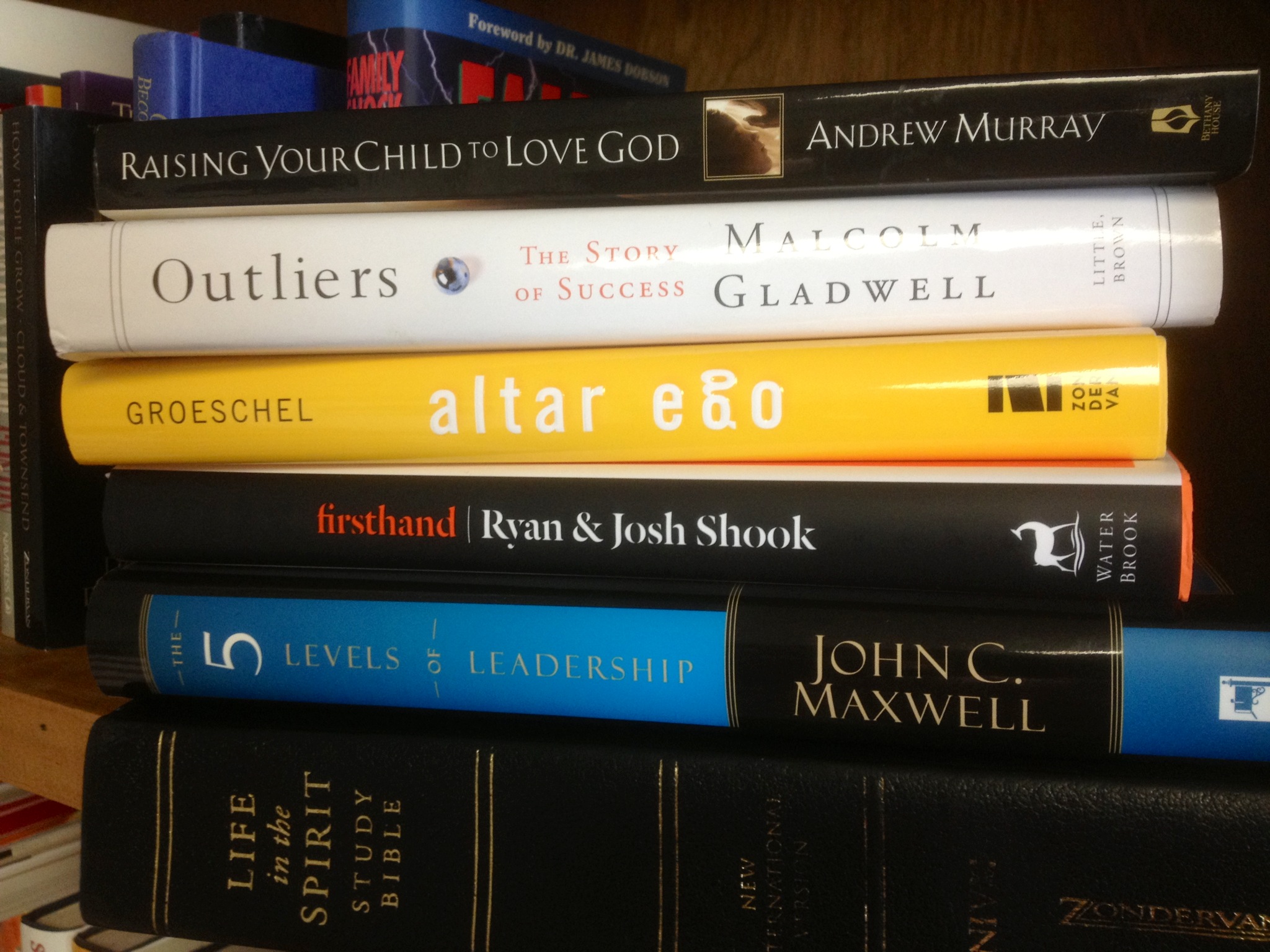
It’s no secret that I like to read. I read a little for pleasure, but mostly I read because it makes me a better Christian, a better husband, a better dad, a better preacher. It expands my horizons. It gives me new ideas. It teaches me life lessons. It gives me insights to share with others.

My first priority is to read my Bible every day, and then all of my other reading is filtered through that prism of Scripture. I don’t read only “Christian” books, but I do only read good books.

It’s true: Leaders are readers. If you want to lead more and lead better, read more and read better.

“When a very young minister, I asked the famous holiness preacher, Joseph H. Smith, whether he would recommend that I read widely in the secular field. He replied, ‘Young man, a bee can find nectar in the weed as well as in the flower.’ I took his advice (or, to be frank, I sought confirmation of my own instincts rather than advice) and I am not sorry that I did. John Wesley told the young ministers of the Wesleyan Societies to read or get out of the ministry, and he himself read science and history with a book propped against his saddle pommel as he rode from one engagement to another.” —A.W. Tozer

“Keep yourself full with reading. Reading gives you a vocabulary. Don’t read to remember; read to realize.” —Oswald Chambers

“It is a dreadful deception that learning and mental growing are strictly associated with school. Good reading should be the vocation of a lifetime.” —John Piper

“Paul says to Timothy, so he says to everyone, ‘Give yourself to reading.’ He who will not use the thoughts of other men’s brains proves that he has no brains of his own. You need to read. Renounce as much as you will all light literature but study as much as possible sound theological works, especially the Puritans and expositions of the Bible. The best way for you to spend your leisure is to be either reading or praying.” —C.H. Spurgeon

“The reading of all good books is like conversation with the finest men of past centuries.” —Rene Descartes 

“After all that professors may do for us, the real University is a collection of good books.” —Thomas Carlyle

“Ignoring good books enfeebles vision and strengthens our most fatal tendency; the belief that the here and now is all there is.” —Allan Bloom
Habitudes (book review)

HabitudesWhen you combine a memorable visual image with the challenge of a new leadership habit you create something powerful: a habitude. That’s exactly what Dr. Tim Elmore does in his series of exceptional books called Habitudes.

Our minds store information in picture format. For example, when you read “elephant,” you don’t think of the letters e-l-e-p-h-a-n-t, but you think of a huge, floppy-eared, tusk-bearing, mammal on the African savannah. So combining visual images (a right-brained exercise) with life-changing data (a left-brained activity) creates a concept that really sticks with us.

For each one of the 13 habitudes in this book, an image is first presented (for instance, a flood-ravaged home, with the brown swirling water flowing through the front door). Then add to this image some powerful insights from Dr. Elmore about a leader’s responsibility to keep everyone’s energies inside the banks for maximum effectiveness. If a leader doesn’t keep the river’s flow within the banks where it can do some good, the flood of misguided energies can lead to devastation.

Each habitude includes some workspace to help you work through the concepts presented with each image. The pictures create a great “hook” for the concepts to hang in your mind, and the follow-up exercises in each chapter help make the concepts applicable to your unique circumstances.

Each chapter is fairly short, but as the cliche goes, “A picture is worth a thousand words,” so expect each habitude to teach you a lot without using a lot of written words.

This is a great resource for anyone wanting to improve his or her leadership capabilities. But it would be especially useful for young leaders-in-training in a mentoring/protege role.

Check out some notable quotes from this book here.

At Last!

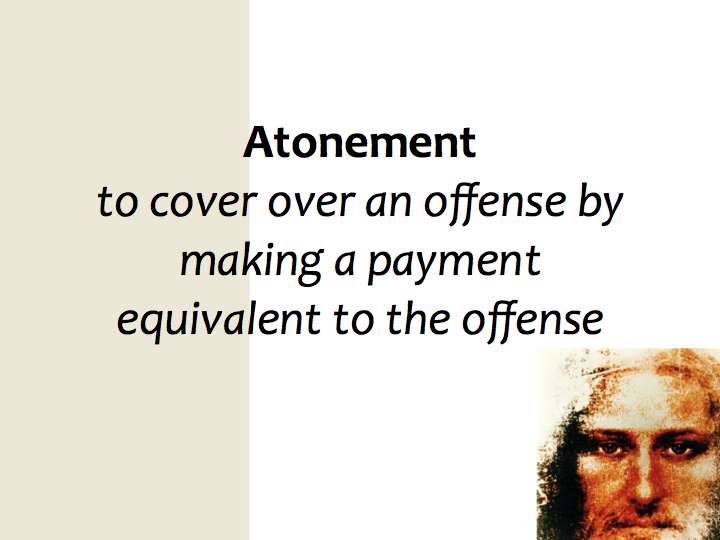
Jesus is our atonementThe Day of Atonement was a very special day for the Jewish people. It was called by some the Sabbath’s Sabbath, as it was the most holy day of the year. It was the day everyone looked forward to, because finally they could have forgiveness for their sins.

The word atonement in the Hebrew meant that a payment was made that was equivalent to the offense that was committed. The offense was huge: Sin was open rebellion against Almighty God, it was to spit in the face of our Heavenly Father, it was to slap away His hands that were reaching out to embrace us. Nothing short of a death could atone for that sort of offense!

So the high priest would go through an elaborate ceremony of washing himself and putting on special garments that were only to be worn on this Day of Atonement. Because the high priest was also a sinner himself, his first sacrifice was a bull. The blood from this sacrifice was taken by the high priest into the Most Holy Place of the temple to cover his own sins, before he could even approach God to ask for the forgiveness of the sins of anyone else.

After having completed this step, the high priest could then proceed. He would sacrifice a goat as a sin offering for the people. As he did with the bull’s blood, he would take the goat’s blood back into the Most Holy Place to ask God to show mercy toward people who had sinned, to turn away His holy wrath against their rebellion. Then the priest would lay his hands on a second goat, one that was still alive, and confess all of the sins of the people. This goat (called the scapegoat) was then taken out into the desert. This symbolized the removal of the people’s guilt, making it possible for them to be in relationship with God once again.

This was repeated year after year after year. It was repeated because the people continued to sin. It was repeated because these rituals were only a shadow of what God really wanted to accomplish. David wrote about the futility of these sacrifices—

Sacrifice and offering You did not desire—but a body You have given me—burnt offerings and sin offerings You did not require. Then I said, “Here I am, I have come—it is written about me in the scroll. I desire to do Your will, my God; Your law is within my heart.” (Psalm 40:6-8)

A beautiful thing happened through the ministry of Jesus on earth. Jesus came to be both the perfect high priest (one without sin, who did not need to purify Himself), and the perfect sacrifice. Jesus is called the once for all sacrifice of atonement for us, as He embodied the cry David made nearly 1000 years earlier. Hebrews 10:5-7 says that the words uttered by David prophetically were repeated by Jesus: “Here I am, I have come—it is written about me in the scroll. I desire to do Your will, my God; Your law is within my heart. I will be the once for all sacrifice.”

When Jesus told us the the new covenant was in His shed blood on Calvary’s Cross, He was saying that no longer would we have to wait until the Day of Atonement to find forgiveness; no longer would we have to wait upon an imperfect earthly priest to offer a sacrifice for us; no longer would we have to carry around the guilt of our sin and feel separated from God’s presence while waiting for a special ceremony. AT LAST! We can have immediate forgiveness, eternal redemption, and an everlasting relationship with God because of what Jesus did for us once for all!

As you celebrate Holy Week, be thrilled with the truth that Jesus’ death on the Cross makes it possible for you to have complete atonement. Our Savior has redeemed us AT LAST!

If you have missed any of the messages in this series called Who Is Jesus?, you can find them all here.

Leaking Influence

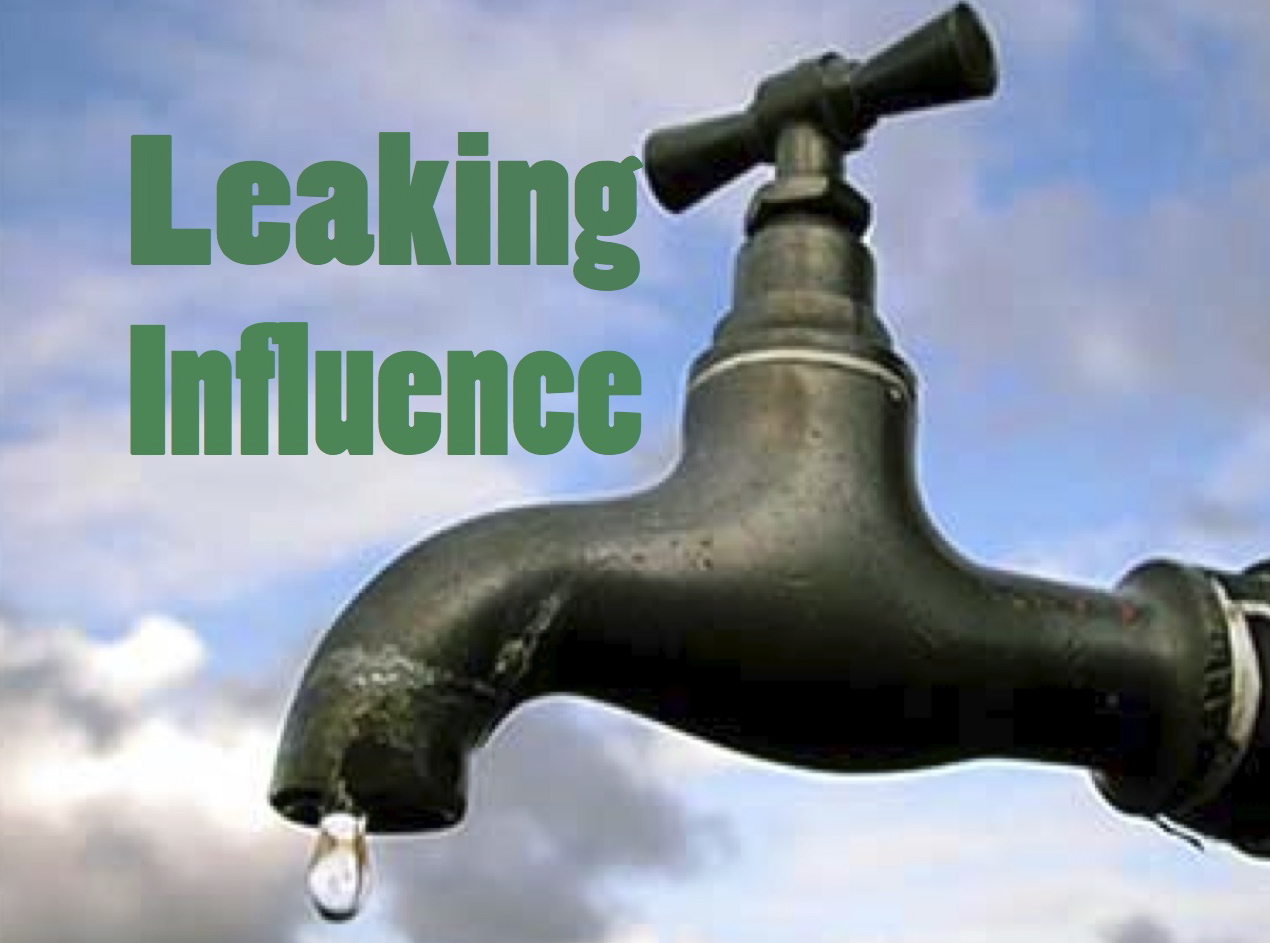
Leaking influenceJim Collins has great advice for leaders: When things are going well, look out the window (at your people); when things aren’t going well, look in the mirror (at yourself). This is as true for business CEOs as it is for pastors.

Pastor, you leak.

I leak.

We all leak.

It’s impossible to just maintain where we are. There needs to be a constant refreshing, a constant refilling. We need to keep learning, keep changing, keep renewing. If we don’t, well, this is how Oswald Chambers described it—

“If you are in a position of authority and people are not obeying you, the greatest heart-searching you can have is the realization that the blame does not lie with them, but with you; there is always leakage going on spiritually. Get right with God yourself, and every other one will get in touch with God through you.” (my emphasis)

Pastor, don’t wait: Look in the mirror today, get right with God, replenish what’s leaked out of you, and then watch to see how others in your congregation will begin to move toward God themselves.

The Man Who Knew Too Much (book review)

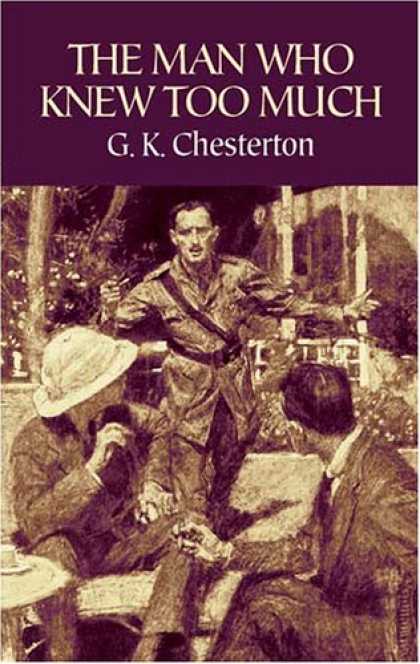
The Man Who Knew Too MuchRegular readers of this blog have probably noticed that I don’t read very much fiction. Partly this is because I have so much to read that I need to keep strict requirements on my reading list, and partly because many fictional works are so much mental cotton candy. By that I mean it’s sweet for the moment, but it’s quickly gone. But there are exceptions, and The Man Who Knew Too Much by G.K. Chesterton is a notable exception.

Chesterton is usually known for his non-fiction theological writings. But the wit, insight, wisdom and humor he uses in his non-fiction work is also on full display in this book, which chronicles the observation skills of Mr. Horne Fisher.

Fisher is the man who knows too much. Because he knows too much, he solves mysteries and riddles “backwards” from the way a typical detective would. Although Fisher is not a detective, but just a man who is well-known and well-connected, he seems to stumble upon the most bizarre settings. Fisher knows too much, so he spots what’s missing, and then works “backwards” to unravel the conundrum. It’s quite fascinating to watch him at work, and Chesterton’s insights into the human spirit make his characters very engaging.

These are not your typical detective stories, but the uniqueness of Horne Fisher’s crime-solving technique makes The Man Who Knew Too Much an enjoyable and enlightening book.

I typically share some of my favorite quotes from the books I review, but in this case I have included some of the wittier lines and descriptions that Chesterton employs. Check it out in the comment below.

Thursdays With Oswald—Stair-step Growth

Listen to the podcast of this post by clicking on the player below, and you can also subscribe on AppleSpotify, or Audible. 

This is a weekly series with things I’m reading and pondering from Oswald Chambers. You can read the original seed thought here, or type “Thursdays With Oswald” in the search box to read more entries.

Stair-step Growth

     There are stages in spiritual development when God allows us to be dull, times when we cannot realize or feel anything. It is one of the greatest mercies that we have those blank spaces, for this reason, that if we go on with spiritual perception too quickly we have no time to work it out; and if we have no time to work it out, it will react in stagnation and degeneration. 

From Bringing Sons Unto Glory

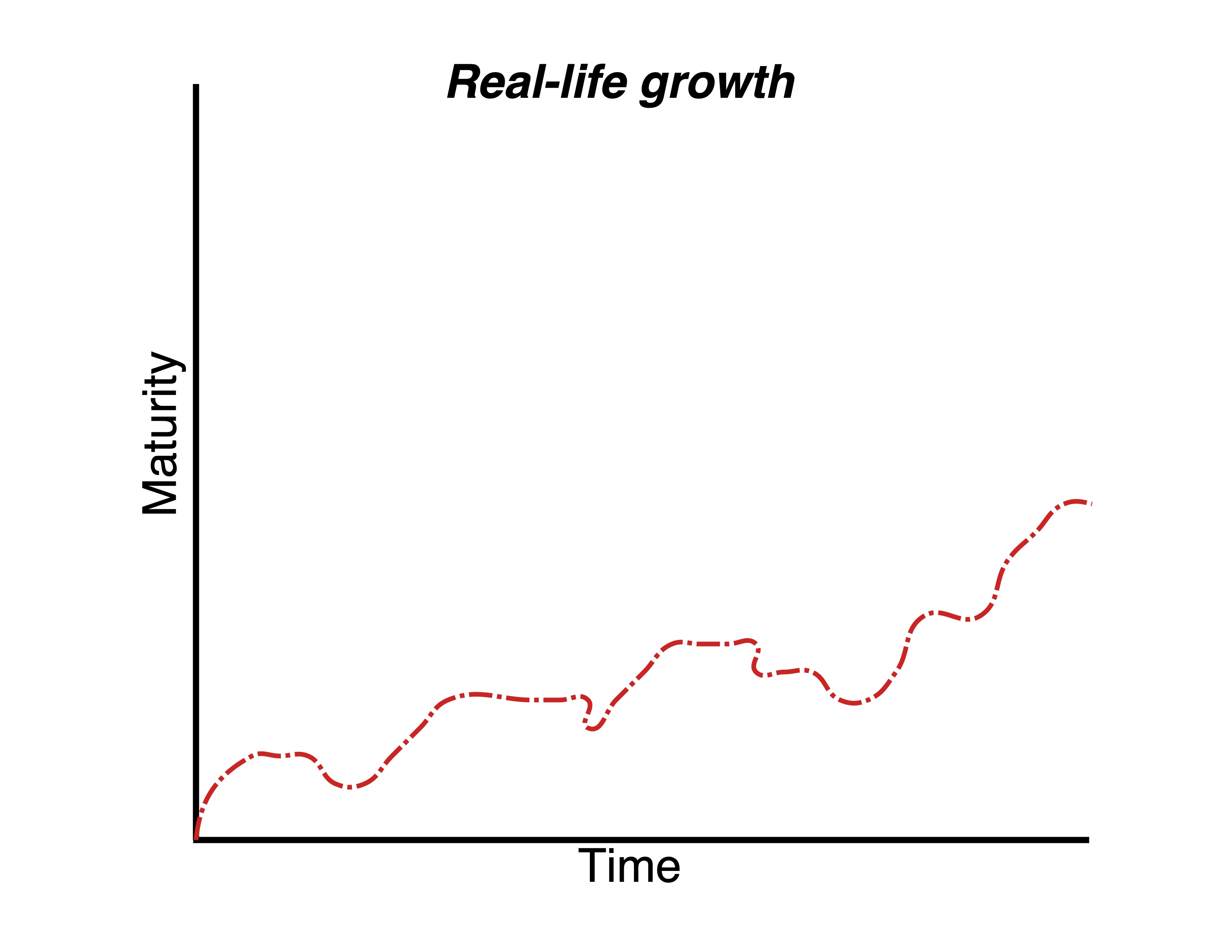
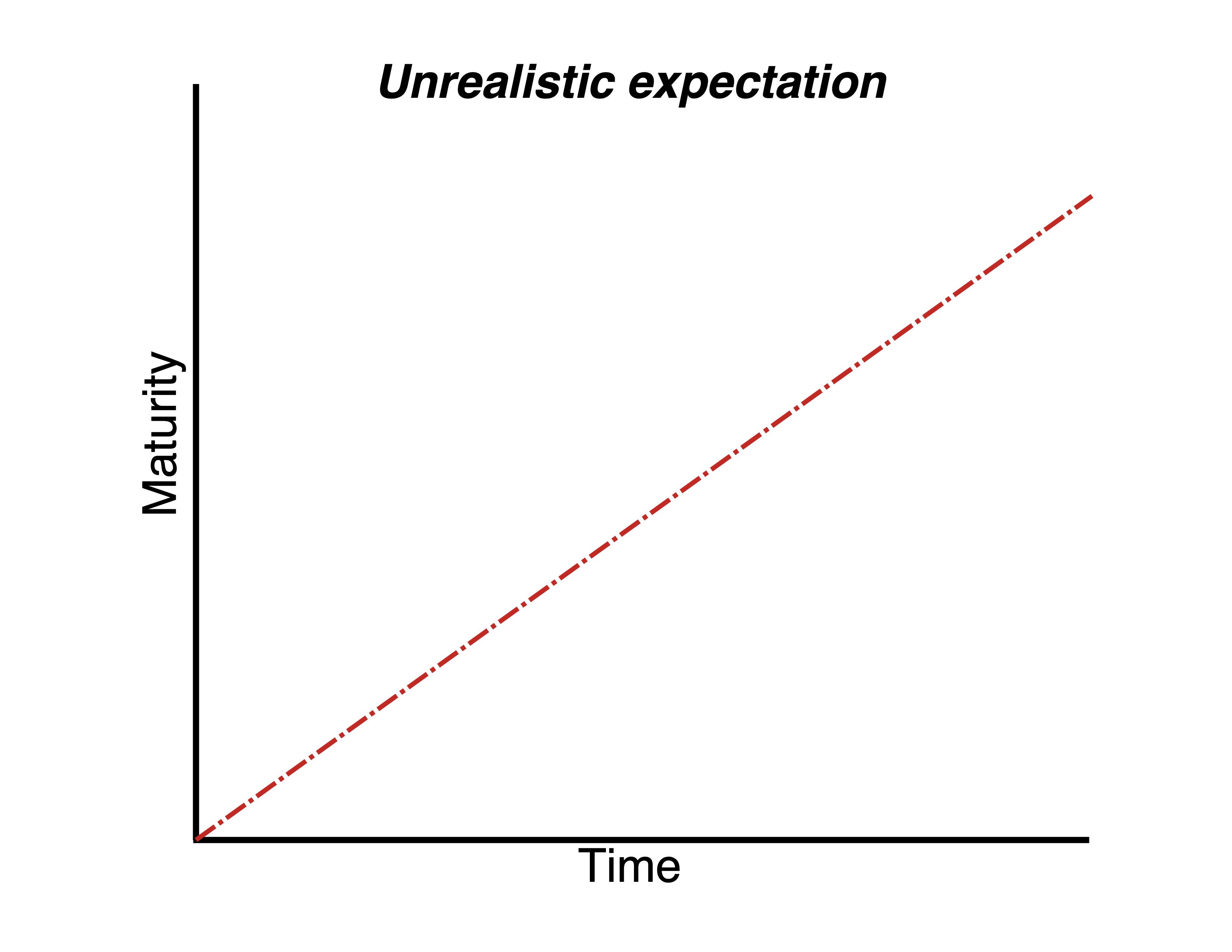
Many people mistakenly think that their growth in spiritual maturity should be a steady, unbroken climb. They think that the line on the “spiritual growth graph” should always move upward and to the right. This is not only an inaccurate view, but an unhealthy view as well. It simply isn’t possible.

In reality, our growth looks more like a staircase. There are times of growth, times of relapse, and times of plateau. Growth and relapse we usually understand, but many of us have a hard time with the “blank spaces” when we don’t feel anything going on one way or the other. But God purposely gives us these flat times.

I’ve learned that these God-given plateaus are for two things:

  1. Assimilating what we have learned <or>
  2. Preparing for the next upward climb

So don’t get frustrated by the plateaus, for they are, as Chambers say, one of the greatest mercies God gives us.

►► Would you please prayerfully consider supporting this ministry? My Patreon supporters get behind-the-scenes access to exclusive materials. ◀︎◀︎

Love The Sinner

Love the sinnerIf anyone sees his brother commit a sin…he should pray…. (1 John 5:16)

The King James Version says this a little more poetically, “If any man see his brother sin a sin.” The Greek does not have the indefinite “a” in front of sin, and the verb tense makes this an ongoing process, so it’s probably more accurate to say it like this: “If anyone sees his brother sinning sins.”

The apostle John is head-over-heels in love with Jesus. So time and time again his counsel is for us also to fall more in love with God, and to demonstrate this by loving others. There is no more loving thing we can do for someone sinning sins than to pray for them (see also Galatians 6:1 and James 5:19-20).

John doesn’t ask us to catalogue their sins; otherwise he would have said “a sin” or even “their sinS.” We are not to be the sin police trying to document each and every infraction! Instead, when we see a brother or sister with a lifestyle that is separated from the love of God, we need to pray for them.

I think John might ask us to pray that they would see the love of God so clearly that the love of sin would become cold and pale and unattractive.

“Home Run” (movie review)

Home RunHome Run opens in theaters on April 19, 2013, but Betsy and I were privileged to see an advanced screening of this movie.

I’ll be honest with you: Going into the theater I was a bit skeptical. From what I had been told, and the little blurbs I had read and watched, it seemed like it was going to be a bit over-the-top Christianese. I am happy to tell you I was totally wrong!

Home Run follows a baseball player who has been suspended from his team because of his alcohol problem. One of the conditions of his return to the diamond is his attendance at some sort of 12-step program. Cory chose a Celebrate Recovery program.

I loved seeing the stark contrast between the messages of hope Cory was hearing in his Celebrate Recovery meetings, with the lack of success he was having outside of the meetings. Cory attempts to use his own willpower to overcome his addiction, and the emotional scars that led to it, but is unsuccessful at almost every attempt. In his Celebrate Recovery meetings he is hearing how people who surrendered to the love of Jesus (not just “a higher power”) were finding a freedom they had never known before.

I also like how the movie didn’t lead to an all-too-typical Hollywood fairy tale, they-all-lived-happily-ever-after ending. Instead we see Cory on the road to recovery, but with many relationships and situations still to be reconciled.

The movie is rated PG-13 for the subject matter of alcoholism (and the other addictions discussed in the Celebrate Recovery meetings), and for a rather intense scene with Cory’s drunk, emotionally-abusive father. So I wouldn’t recommend this to families with younger children, but anyone else who is struggling with an addiction, or who knows someone who is, should see Home Run when it opens on April 19.

10 Quotes From “You Don’t Need A Title To Be A Leader”

You Don't Need A Title To Be A LeaderMark Sanborn has given us a wonderful book to help people be more well-rounded in their leadership, whether they have a title or not. You can read my full book review by clicking here. These are some of the quotes from this book that caught my eye.

“Leaders, untitled or otherwise, realize the extraordinary impact they can have on others and the world around them. They consciously choose to exercise their abilities, skills, and knowledge to help make a difference.”

“The reality is that we all work ‘backstage’ in our lives at times. Real leaders bring the same commitment to excellence to whatever they do, whether on the stage or behind it.”

“I began to see what happened to me as an opportunity rather than an obligation. And it made all the difference. Now when the phone rings, I respond to each call as an opportunity to serve, earn, learn, influence, network, encourage, or teach. The difference isn’t in the caller or the purpose for the call; the difference is in my response. … Genuine, authentic leadership infuses meaning into your life, because you know that your efforts count and that you are serving the needs of others as well as your own.”

“I think of the ‘self-mastery index’ as the ratio between promises made and promises kept—both to oneself and to others. If your mouth keeps making promises that you can’t keep, there is a great deal of room for improvement. Integrity, after all, is measured by the distance between your lips and your life. If you want to be a leader in your own life and in the lives of others, you’ve got to follow through on your own promises, whether you have a title or not.”

“You don’t necessarily have to be smarter or better educated to succeed. Your power lies in your ability to focus on doing what is important. If you focus on the right things, and work at them often, you will achieve exceptional results.”

“People do things for their own reasons, not for yours. To be an effective leader, you need to know how to motivate others.”

“One of the greatest compliments you can be paid as a leader is to have someone say that you helped them be better than they thought they could be.”

“People remember stories. Stories are the coat pegs of the mind. They are where people hang their ideas. Once they have a memorable story to help them remember, they can recall whatever important moral or point you have to make. … Telling an entertaining story is important, but being the story is better.”

“When something doesn’t happen, there is always an explanation. But never accept an explanation as an excuse. … Instead, use explanations to figure out what happened, then look for the lesson that will prevent that something from happening again.”

“Everyone makes a difference. The choice we all have is whether we want to make positive difference or a negative one.”

Catch ‘Em Doing Right

Listen to the podcast of this post by clicking on the player below, and you can also subscribe on AppleSpotify, or Audible. 

Ken Blanchard is right: we spend way too much time trying to catch someone doing something wrong (or worry that they’re going to do something wrong), and not enough time trying to catch them doing something right.

…if anything is excellent or praiseworthy, think about these things…. (Philippians 4:8)

…love rejoices in the truth…. (1 Corinthians 13:6)

I should be praying for and looking for praiseworthy things. Why? Because people generally live up to someone’s expectations (they live down to their expectations too)—especially someone who has demonstrated they care about them.

Listen to the apostle John’s right-catching statement:

It gave me great joy to have some brothers come and tell about your faithfulness to the truth and how you continue to walk in the truth. I have no greater joy than to hear that my children are walking in the truth. (3 John 3-4)

“The truth” is sometimes taught in a Christian home or in a church, or maybe it’s caught there. The child or the churchgoer has heard the truth, but then do we honestly believe the truth—along with the Holy Spirit reminding them of that truth—somehow becomes ineffectual?

We often act like that.

We seem to be more willing to believe the negative reports than the positive reports. Perhaps, like John, I need to be more ready to catch others doing right. Perhaps I need to be more ready to rejoice in the success stories. Perhaps I need to pray for greater discernment to see the positive changes the truth is making in those I love.

If we make this a matter of prayer, I believe the Holy Spirit will help us catch others doing right.

►► Would you please prayerfully consider supporting this ministry? My Patreon supporters get behind-the-scenes access to exclusive materials. ◀︎◀︎