George Whitefield On Developing Godly Attributes

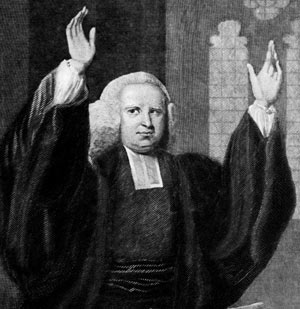
George Whitefield“The fruit of the Spirit (Galatians 5:22-23) do not automatically become evident in our lives. If we are not discerning enough to recognize their availability to us, to desire them, and then to nourish them in our thoughts, they will never become embedded in our nature or behavior. Every further step of spiritual growth in God’s grace must be preceded by acknowledging our lack of a godly attribute and then by exhibiting a prayerful determination to obtain it. …

“Today many people are attempting to use their mental capacity and logical thinking to obtain sanctification, yet this is nothing but a religious fabrication. They believe that if they just mentally put themselves on the altar and believe the altar provides the gift of sanctification, they can then logically conclude they are fully sanctified. Then they go happily on their way, expressing their flippant, theological babble about the ‘deep’ things of God.

“Yet the heartstrings of their old nature have not been broken, and their unyielding character, which they inherited from Adam, has not been ground to powder. Their soul has not throbbed with the lonely, gushing groans of Gethsemane. Having no scars from their death on Calvary, they will exhibit nothing of the soft, sweet, gentle, restful, victorious, overflowing, and triumphant life that flows like a spring morning from an empty tomb.” —George Whitefield

The Blessing Of Humility (book review)

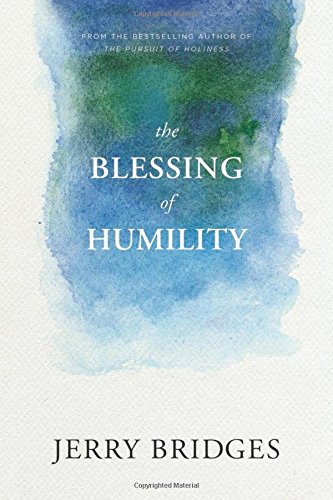
The Blessing Of HumilityIt’s not very often that someone would describe humility as a “blessing,” but Jerry Bridges solidly makes the case that Jesus taught and exemplified humility as one of the greatest blessings of all. As with every other Jerry Bridges book I have read, The Blessing Of Humility is a paradigm-changer.

Bridges introduces the topic of his book like this: “The character trait of humility is the second-most frequently taught trait in the New Testament, second only to love. At one time I counted fifty instances of love taught, either by precept or example, in the New Testament; I counted forty instances of humility. I regard these two traits as the foundational stones of Christian character. All other character traits, in one way or another, are built upon love and humility” (emphasis mine).

The longest recorded sermon from Jesus in the gospels is the Sermon on the Mount (Matthew 5-7). This sermon begins as Jesus is addressing His followers, and He lists eight “blessed are” statements which we now call The Beatitudes. Jerry Bridges believes that each of the Beatitudes point us to the lovingly humble lifestyle that should characterize all Christians. So one-by-one, Bridges unpacks each Beatitude, showing us how Jesus lived it out, and how His followers can too.

In fact, Bridges says, “Our guide will be Jesus Himself, Who began His longest recorded sermon with a litany of countercultural blessings known to us as the Beatitudes. Taken together, they offer a portrait of humility in action, something which God commands and which God promises to bless.”

This book isn’t very long, and probably could be read through quite quickly. However, if you will read this book slowly, allowing time to “soak in” each Beatitude and its implications for your life, I believe your spiritual heart will be unalterably changed.

I am a Tyndale book reviewer.

15 Quotes On America’s Greatness

(c) craigtowens

(c) craigtowens

A few quotes that capture the essence of America’s greatness.

“The citizens of the United States of America have a right to applaud themselves for having given to mankind examples of an enlarged and liberal policy, a policy worthy of imitation. All possess alike liberty of conscience and immunities of citizenship. It is now no more that toleration is spoken of as if it was by the indulgence of one class of people that another enjoyed the exercise of their inherent natural rights. For, happily, the government of the United States, which gives to bigotry no sanction, to persecution no assistance, requires only that they who live under its protection should demean themselves as good citizens in giving it on all occasions their effectual support.” —George Washington, in a letter to a Jewish congregation

“I always consider the settlement of America with reverence and wonder, as the opening of a grand scene and design in Providence for the illumination of the ignorant, and the emancipation of the slavish part of mankind all over the earth.” —John Adams

“We’ve staked the whole future of American civilization, not upon the power of government. Far from it. We have staked the future upon the capacity of each and every one of us to govern ourselves, to sustain ourselves according to the Ten Commandments of God.” —James Madison

“We go forward with complete confidence in the eventual triumph of freedom. Not because history runs on the wheels of inevitability; it is human choices that move events. Not because we consider ourselves a chosen nation; God moves and chooses as He wills. We have confidence because freedom is the permanent hope of mankind, the hunger in dark places, the longing of the soul. When our Founders declared a new order of the ages; when soldiers died in wave upon wave for a union based on liberty; when citizens marched in peaceful outrage under the banner ‘Freedom Now’—they were acting on an ancient hope that is meant to be fulfilled. History has an ebb and flow of justice, but history also has a visible direction, set by liberty and the Author of Liberty.” —George W. Bush

“To live under the American Constitution is the greatest political privilege that was ever accorded to the human race.” —Calvin Coolidge

“Nowhere in the world is presented a government of so much liberty and equality. To the humblest and poorest amongst us are extended the highest privileges and positions. The present moment finds me at the White House, yet there is as good a chance for your children as there was for my father’s.” —Abraham Lincoln

“America was not built on fear. America was built on courage, on imagination and an unbeatable determination to do the job at hand.” ―Harry Truman

“America is another word for Opportunity. Our whole history appears like a last effort of the Divine Providence in behalf of the human race.” —Ralph Waldo Emerson

“As soon as I make sure everyone else is out.” —Rick Rescorla, World Trade Center security chief for Morgan Stanley, on September 11, 2001, responding to a colleague who told him he must get out of World Trade Center Tower 2. Rescorla led the evacuation of nearly 2700 Morgan Stanley employees. He died when Tower 2 collapsed. 

“I believe that every right implies a responsibility; every opportunity, an obligation; every possession, a duty.” —John D. Rockefeller Jr.

“We must be the great arsenal of democracy.” —Franklin Delano Roosevelt

“Let each citizen remember at the moment he is offering his vote that he is not making a present or a compliment to please an individual—or at least that he ought not so to do; but that he is executing one of the most solemn trusts in human society for which he is accountable to God and his country.” —Samuel Adams

“Some things have not changed at all since 1776. For one thing, freedom is still expensive. It still costs money. It still costs blood. It still calls for courage and endurance, not only in soldiers, but in every man and woman who is free and who is determined to remain free.” —Harry Truman, on the 175th Anniversary of the Declaration of Independence

“The preservation of the sacred fire of liberty, and the destiny of the republican model of government, are justly considered as deeply, perhaps as finally staked, on the experiment entrusted to the hands of the American people.” —George Washington

“The thing they forget is that liberty and freedom and democracy are so very precious that you do not fight to win them once and then stop. Liberty and freedom and democracy are prizes awarded only to those peoples who fight to win them and then keep fighting eternally to hold them.” —Sergeant Alvin C. York, in reply to those who asked, “What did war get you?”

Poetry Saturday—Is It Raining?

FullSizeRender 12Is it raining, little flower?
     Be glad of rain;
Too much sun would wither one;
     It will shine again.
The clouds are very dark, it’s true;
But just behind them shines the blue.

Are you weary, tender heart?
     Be glad of pain:
In sorrow, sweetest virtues grow,
     As flowers in rain.
God watches, and you will have sun,
When clouds their perfect work have done. —Lucy Larcom

20 More Useful Maxims

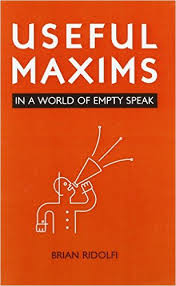
Useful MaximsFor anyone who would like to get your message to “stick” with others—like parents, pastors, teachers, coaches, mentors—I highly recommend Useful Maxims by Brian Ridolfi. You can read my book review to get more background info on this innovative book.

I previously shared 20 useful maxims from Brian’s book, and now here is my next set of 20…

  1. Strong men do not always lift weak men, but weak men always bring down strong men. The lowest common denominator dominates.
  2. You cannot force someone to be tolerant without being intolerant toward their intolerance.
  3. Offending the truth for the sake of the offended is most offensive.
  4. Just fitting in fits in with just giving in.
  5. Prayer is a slayer. To not pray is to become prey.
  6. People aligned with good are maligned by evil.
  7. There is little success when little is involved.
  8. Better to make the last move than to make the first one.
  9. Smart men run from danger; wise men avoid it altogether. Better to prevent than to lament.
  10. Your life becomes a job whenever a job becomes your life.
  11. Those with no time to spare have no time to care.
  12. Wisdom becomes foolishness when foolishness becomes wisdom.
  13. A Christian without a Bible is like a knight without a sword.
  14. Relativists believe in relativism until they or their loved ones are victims.
  15. Vinegar is not bitter to those who have not tasted honey.
  16. Questions cannot be answered if answers cannot be questioned.
  17. Sound wisdom sounds odd in a world deaf to God.
  18. Bad entertainment entertains bad behavior.
  19. Good guys look bad when bad guys look good.
  20. To help the helpers is to help the helpless.

To read some of the other quotes from Useful Maxims that I am sharing, be sure to follow me on Twitter and on Tumblr.

F.B. Meyer On The Access God Gives Us

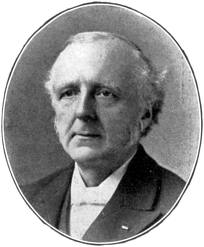
F.B. Meyer“Think how often Jesus, during His earthly ministry, put others in a position to command Him. ‘As Jesus and His disciples were leaving Jericho,’ Jesus stopped and responded to two blind men who had called out to Him. ‘What do you want Me to do for you?’ (Matthew 20:29, 32). It was as though He said, ‘I am yours to command.’ Could we ever forget how Jesus yielded the keys to His resources to the Greek woman from Syrian Phoenicia because of her reply to Him? In effect, He told her to help herself to all that she needed (see Mark 7:24-30). What human mind can fully realize the total significance of the lofty position to which God lovingly raises His little children? He seems to be saying, ‘All My resources are at your command.’ And I will do whatever you ask in My name (John 14:13).” —F.B. Meyer

Thursdays With Oswald—Thinking Like Christians

Oswald ChambersThis is a weekly series with things I’m reading and pondering from Oswald Chambers. You can read the original seed thought here, or type “Thursdays With Oswald” in the search box to read more entries.

Thinking Like Christians 

     The New Testament insists on an instructed mind as well as a vital experience. … 

     There is always a quarrel between our common sense and the revelations made in God’s Book. We must lose our soul in order to find it. We have to be born from above and receive the Holy Spirit into our spirit, and then begin to construct another soul, or way of reasoning, and to do this we must accept not only the facts that come to us through our common sense, but the facts that come by revelation. We say seeing is believing, but it is not. We must believe a thing is possible before we should believe it even though we saw it (John 20:29). … 

     Our beliefs will mock us unless something comes into us from God, because nothing has any power to alter us save the incoming of the life of God. The Holy Spirit is the One Who makes experimentally real in us what Jesus Christ did for us. … The great need for men and women is to receive the Holy Spirit. Our creeds teach us to believe in the Holy Spirit; the New Testament says we must receive Him (Luke 11:13). Are you powerless in your life? Then, for Christ’s sake, get at Reality! Ask God for the Holy Spirit. … 

     We starve our minds as Christians by not thinking, and we cannot think as Christians until we are born from above. So many of us have a good spiritual experience, but we have never thought things out on Christian lines. It is just as true that a man may live a Christian life without thinking as that a man may think a Christian life without living it. We have to learn to combine the two, and to do this we must build up our minds on these great truths. 

From The Psychology Of Redemption

How are you doing at thinking AND living a Christian life? To do both, you must receive the Holy Spirit, and begin to rely on Him for both Christian thinking and living.

Bernard Of Clairvaux On Discontentment

Bernard of Clairvaux“It is natural for a man to desire what he reckons better than that which he has already, and be satisfied with nothing which lacks that special quality which he misses. Thus, if it is for her beauty that he loves his wife, he will cast longing eyes after a fairer woman. If he is clad in a rich garment, he will covet a costlier one; and no matter how rich he may be he will envy a man richer than himself. … No matter how many such things one has, he is always lusting after what he has not; never at peace, he sighs for new possessions. Discontented, he spends himself in fruitless toil, and finds only weariness in the evanescent and unreal pleasures of the world. In his greediness, he counts all that he has clutched as nothing in comparison with what is beyond his grasp, and loses all pleasure in his actual possessions by longing after what he has not, yet covets. … They wear themselves out in vain travail, without reaching their blessed consummation, because they delight in creatures, not in the Creator.” —Bernard of Clairvaux

20 Useful Maxims

Useful MaximsI thoroughly enjoyed reading Useful Maxims by Brian Ridolfi (check out my review of his book by clicking here). Here are 20 of Brian’s useful maxims that caught my highlighter.

  1. Going to church is good; going to God is better.
  2. Progress is not good if you are progressing in the wrong direction.
  3. Good demeanor does not validate bad behavior.
  4. Broken commandments break down integrity.
  5. The Bible’s meaning is not hidden from men; men hide from its meaning.
  6. Actions are better indicators of character than rhetoric.
  7. The indifferent make no difference.
  8. Remaining weak takes strength. It takes power not to use power.
  9. Great men step in when everyone else steps out.
  10. Moral arguments which are entirely material are entirely immaterial.
  11. Peacemakers and saltshakers dispense enrichment.
  12. A grudge will keep you deep in sludge. Points of contention are points of retention.
  13. Revenge is hard to reverse.
  14. Never put faith in people who have no faith.
  15. Everything goes when anything goes.
  16. Your sin is not just your problem.
  17. Parental neglect prompts government parenting.
  18. Where no one fears God, everyone fears man.
  19. The right battle is lost with the wrong weapon.
  20. Insecurity secures instability.

Watch for more maxims soon. Or follow me on Twitter and Tumblr to read some of Brian Ridolfi’s maxims.

T.M. Moore On Using Time

T.M. Moore“We measure time, from the human perspective, in various ways—seconds, minutes, days, weeks, months, years, and so forth. But these are not true quantitative measurements of some material quantity—like a half gallon jug measures a certain amount of milk. Our measures of time are more on the order of estimates (as we think of the future), experiences (with respect to the present), and records (as we think about the time that is gone by).

“All time comes from the Word of God (John 1:1-3), is sustained by the Word of God (Hebrews 1:3), and returns—like the talents in Jesus’ parable—to its Creator and true Owner (Romans 11:34-36). There is as yet no future time, and the time we’ve used up is gone forever; we cannot return to it. Every moment of your time comes fresh from the Word of God, and returns immediately to Him for His review.

“The only time we ever have is the present moment, and each of those is supplied for us, as an act of free grace, by the eternal God and His Word.” —T.M. Moore