12 Quotes From “The Art Of War”

Sun Tzu wrote in China in the fifth century BC to help military leaders hone their warcraft, but you might be surprised at the truths you can apply to your life today. Check out my full book review by clicking here. 

“Hence to fight and conquer in all your battles is not supreme excellence; supreme excellence consists in breaking the enemy’s resistance without fighting.” 

“Thus we may know that there are five essentials for victory: (1) He will win who knows when to fight and when not to fight. (2) He will win who knows how to handle both superior and inferior forces. (3) He will win whose army is animated by the same spirit throughout all its ranks. (4) He will win who, prepared himself, waits to take the enemy unprepared. (5) He will win who has military capacity and is not interfered with by the sovereign.” 

“Hence the saying: If you know the enemy and know yourself, you need not fear the result of a hundred battles. If you know yourself but not the enemy, for every victory gained you will also suffer a defeat. If you know neither the enemy nor yourself, you will succumb in every battle.” 

“The good fighters of old first put themselves beyond the possibility of defeat, and then waited for an opportunity of defeating the enemy. To secure ourselves against defeat lies in our own hands, but the opportunity of defeating the enemy is provided by the enemy himself.” 

“That general is skillful in attack whose opponent does not know what to defend; and he is skillful in defense whose opponent does not know what to attack.” 

“Disciplined and calm, to await the appearance of disorder and hubbub amongst the enemy—this is the art of retaining self-possession. To be near the goal while the enemy is still far from it, to wait at ease while the enemy is toiling and struggling, to be well-fed while the enemy is famished—this is the art of husbanding one’s strength.” 

“Do not linger in dangerously isolated positions. … If, on the other hand, in the midst of difficulties we are always ready to seize an advantage, we may extricate ourselves from misfortune.” 

“The art of war teaches us to rely not on the likelihood of the enemy’s not coming, but on our own readiness to receive him; not on the chance of his not attacking, but rather on the fact that we have made our position unassailable. There are five dangerous faults which may affect a general: (1) Recklessness, which leads to destruction; (2) cowardice, which leads to capture; (3) a hasty temper, which can be provoked by insults; (4) a delicacy of honor which is sensitive to shame; (5) over-solicitude for his men, which exposes him to worry and trouble.” 

He who exercises no forethought but makes light of his opponents is sure to be captured by them.” 

“Regard your soldiers as your children, and they will follow you into the deepest valleys; look upon them as your own beloved sons, and they will stand by you even unto death. … If, however, you are indulgent, but unable to make your authority felt; kind-hearted, but unable to enforce your commands; and incapable, moreover, of quelling disorder: then your soldiers must be likened to spoilt children; they are useless for any practical purpose.” 

“Carefully study the well-being of your men, and do not overtax them. Concentrate your energy and hoard your strength.” 

“Keep your army continually on the move.”

The Art Of War (book review)

You don’t have to be a military officer to appreciate some of the timeless and widely applicable lessons in the classic text from Sun Tzu called The Art Of War.

The Art Of War was written in roughly the fifth century BC in China. Just by knowing those brief facts, many people might dismiss the book from their potential reading list because it doesn’t appear to “fit” where they are. Granted, Sun Tzu’s thrust is to help military generals win the battles against their enemies, but I found many of his strategies and observations helpful to other areas of life. 

    • … business leaders can glean strategies for marketing victories 
    • … sports coaches can learn how to motivate their teams during training
    • … pastors can see spiritual warfare tactics
    • … teachers could learn the best times and ways to motivate students for academic success
    • … even those who want to be lifelong learners can discover how to self-motivate and organize their daily lives

The Art Of War is a fairly short read, and each of the chapters are presented in bite-size verses (almost like the biblical book of Proverbs), so it is a book you can read in short bursts in between other tasks. 

If you really want to “shake up” your regular reading routines, this little classic might be just the thing for you! 

Let It Go

Scholars are unsure of the date that Obadiah wrote his book. We know that it took place after invaders had caused problems in Judah and Edom responded in a way that angered God. Some scholars place this date after Nebuchadnezzar’s conquest of Judah in 586 BC, and others think it’s more likely to have occurred during the reign of Jehoram around 840 BC. The bottom line is that the date doesn’t matter because the underlying feud which led to God’s pronouncement of judgment had been smoldering for hundreds and hundreds of years! 

The feud was between Jacob (the father of the nation of Israel) and his twin brother Esau (the father of the nation of Edom). Esau was born first and should have received his father Isaac’s blessing, but Jacob took the birthright that was supposed to belong to Esau. 

As you might imagine, “Esau seethed in anger against Jacob because of the blessing his father had given him; he brooded, ‘The time for mourning my father’s death is close. And then I’ll kill my brother Jacob’” (Genesis 27:41). Jacob escaped Esau’s initial rage, but 400+ years later, when the Israelites left Egypt and were on their way to Canaan, the Edomites—trying to even the score—refused to let the Israelites pass through their territory. 

Now another few hundred years have passed and when Judah was invaded, the Edomites not only didn’t do anything to help their brothers, but they piled on with the invaders (vv. 10-14). Once again, their rage at the descendants of Jacob exploded!  

For this, God pronounced judgment on the nation of Edom through His prophet Obadiah. 

Edom’s downfall is very instructive because we are ALL liable to the same fate! 

  1. It starts with pride. Pride keeps us from forgiving our offenders because we think WE have to be the one to even the score. As C.S. Lewis noted, “Pride is a spiritual cancer: it eats up the very possibility of love, or contentment, or even common sense.”
  1. It then becomes thoughts of plotting our revenge. Jesus warned us of the dire consequences for dwelling on these kinds of thoughts (Matthew 5:21-22). 
  1. It next morphs into cheering on those who attack our offenders.
  1. It eventually becomes our revenge in action, which then brings God’s judgment against us!

Always remember this: It is God’s place to judge, but our place is to forgive our enemies and “get revenge” by blessing them beyond what they deserve (Romans 12:17-21). 

You might say, “But what they did to me is absolutely inexcusable!” You are probably right, but you are not going to make anything right. Making things right—handing out appropriate justice—is God’s business. Again, C.S. Lewis reminds us, “To be a Christian means to forgive the inexcusable, because God has forgiven the inexcusable in you.”

There are three important words to remember when someone has wronged you: LET IT GO!

Carrying a grudge against someone who has inexcusably wronged you is toxic to your life and doesn’t leave room for God’s justice. LET IT GO!

If you missed any messages in our series called Major Lessons From Minor Prophets, you can check them out here. 

Poetry Saturday—Want Of Understanding

The wretch in me is not a scheming or
mendacious, violent spirit; nor is he
the sort to kill, or other treachery
indulge to gain a another’s vineyard for
himself. He does not with his neighbor’s wife
conspire for fleeting pleasure, or to buy
prestige or safeguard pride, some little lie
compose. He does not plot against the life
of those who scorn, spite, torment, or betray
him; and he holds no grudges, has no need
of vain revenge, avoids self-serving greed,
and keeps content within his given way.
   No, he is worse than all of the above,
   who honors not the wife he’s sworn to love. —T. M. Moore (1 Peter 3:7)

Thursdays With Spurgeon—Our Secure Future Hope

This is a weekly series with things I’m reading and pondering from Charles Spurgeon. You can read the original seed thought here, or type “Thursdays With Spurgeon” in the search box to read more entries.

Our Secure Future Hope

     First, Christ is all. Next Christ is in all His people, but the consummation, the top-stone of all, is that God may be all in all [1 Corinthians 15:22-28]. … 

     The fact is, our Lord Jesus Christ has performed and is still performing a work that will end in putting everything into its proper order. …

     Christ is come into the world that all of the evil that is in the world should be subdued. And He will drive it out of the world. There will remain no power that will dare revolt against the Majesty of Heaven! Over the whole surface of this globe, beneath the new heavens and on the new earth, there will yet be the kingdom established all of which Jesus Christ will be the Supreme Head and over which He will reign forever, King of kings and Lord of lords! The Lord hasten it in His own time! … 

     I don’t know whether you catch my thought yet, but it is just this: all evil subdued, all the saints having Christ dwelling in them, Christ the head of all these saints, and then God, still as God, all the more surely and securely supreme over all things, or the head of Christ is God and God is all in all. … 

     I want to you, beloved friends, so to live as to be persuaded that it will be so one day, that God will be all in all—that there will come a time when we will stand before the throne of God, God in us all, and everything in us of God, when all His elect, all His redeemed, all to whom Christ is all, and all in whom Christ is, will only know God as their All-in-All!

From All And All In All

What a glorious future hope is secured for God’s saints! 

If we know what is coming, why would we fear today? If our hope is secure, that means our today is secure as well. That’s why David could confidently say: I keep my eyes always on the Lord. With Him at my right hand, I will not be shaken (Psalm 16:8).

12 Quotes From “Love Changes Everything”

Micah Berteau dismantles all of the false definitions of “love” the culture has concocted. Love Changes Everything is a great book! Check out my full book review by clicking here. 

“Do not let your perception of reality shape God’s voice in your life. Rather, let God’s voice shape your reality.” 

“It is difficult to know God’s values when we keep telling Him ours.” 

“The world will always define love in a way that makes us thirst for a version that only benefits self.” 

“If the culture is going to be obsessed with the thought of love, we must become possessed by the truth of it.” 

“The dictionary defines a mirage as ‘something illusory, without substance or reality.’ Too often we find ourselves chasing an image mirage that has no substance or reality. We try to wear other people’s opinions, only to realize that’s the wrong measurement for our lives. Stop running after what you think you see and start running after what you know. Don’t chase an image mirage. Chase the Image Maker, Jesus Christ.” 

“Real love pushes you away from a cycle of sin. Authentic love encourages you not to sit on your calling. Perfect love casts out all fear because the love of God will cause you to leave all that is comfortable.” 

“God’s love does not equal God’s approval. … Love is not an approval to continue living a sinful life. Love is the power that possesses you to change everything. … Love is not a stamp of approval but a fire that consumes.” 

“Hosea was not becoming the culture, he was bringing love to a dark place. Jesus was a friend of sinners. How can we win a world that we are distanced from? We do not embrace immorality to reach people; that is a ridiculous idea. However, we are called to love all people and to be a light in the darkness. It is time to get out of the pews and show Jesus in the streets.” 

“Feelings are fleeting things that we buy into. Emotions then begin to disguise themselves as truth. When we start listening to our emotions, we even weigh them against the voice of God. It then becomes difficult to discern which voice is leading you—your own or God’s?” 

“Do not let what’s happened in your past stop you from receiving God in your present.” 

“Loneliness is not the result of being alone but of not letting God fill that missing void. … No other person can fill the emptiness that plagues our souls. Don’t put that pressure on another human being. Fulfillment is the job of the Almighty; submission is our job.” 

“Love does not magically change things in your life. It does not do the work for you. Love is an altering agent that must be received and applied. Love has to be in charge. Once this love is in you, then it can do work within you. Once it is working within you, it must come out of you. You are not loved just so you can walk around being loved. You are loved so you can be love. The places where love does not reach go unchanged.” 

Love Changes Everything (book review)

One of the most fascinating love stories in the Bible is between Hosea and Gomer. In this story, we see a picture of God’s unconditional love so clearly. Using this story as a backdrop, Micah Berteau explains how this love is still potent for all of us today. His book is called Love Changes Everything.

Micah believes our culture has watered down and diminished what love really means. And I heartily agree with him! There’s an old children’s song that says, “Jesus loves me this I know,” but Micah entitles one of his chapters: “Jesus loves me… this I don’t know.” This book is meant to help us recapture what real love is. 

Weaving aspects of the rescuing love Hosea had for Gomer throughout the entire book, Micah teases out thoughts that many may not have considered. He then skillfully uses his own personal life journey to bring a modern-day feel to this love story. Each chapter opens a new facet of God’s love that is intended to dismantle all of the false definitions of love too many have previously taken to heart. 

Although this book is a good reminder for a wide audience, I especially think this would be a good discussion guide for a mature Christian to use with someone who is struggling to believe that God can unconditionally love and forgive them. 

I am a Revell book reviewer. 

The Whole Story

When my father-in-law was still on his faith journey he asked me, “How can you reconcile the differences in God’s temperaments in the Bible? In the Old Testament He is full of judgment and in the New Testament He is all mercy.” 

Quite simply, both are God’s character. They are two sides of the same coin. In fact, we more dearly appreciate God’s mercy and grace when we’ve clearly seen how we are subject to His justice and wrath. 

Amos talked about both of these attributes, too, but he does so in a masterful way in which mercy and justice swirl around each other. It’s almost as if Amos can’t talk about justice without mentioning mercy or vice versa. 

How do we know God’s judgment is coming? Because God said so! Amos quotes God saying judgment is coming “because of three sins, even for four” (see these verses in Amos’ first and second chapters). Even as Amos uses that phrase he is pointing to God’s mercy. He’s stating, “God could have punished you the very first time you sinned, but He is giving you another chance, and another chance, and another chance….” 

But make no mistake: a day of judgment is coming. God concludes, “Now then I will crush you” (2:13). 

God tries to get people’s attention by sending famines and plagues and disasters, but after each one of these God sadly notes “yet you have not returned to Me”—five times He says this in Amos 4!

But even as God calls them out on their lack of repentance He reminds them twice of the solution—“Seek Me and live” (5:4-6). 

Finally, Amos concludes his book by letting us know God’s judgment IS coming, but so is God’s mercy (9:1-4, 11-15)!  

Dear Christians, our responsibility is to let people know that there is a Heaven to gain and a Hell to shun. We must boldly and lovingly tell people of…

  • … God’s justice AND His mercy 
  • … God’s wrath AND His grace 
  • … Heaven for the repentant AND Hell for the unrepentant 

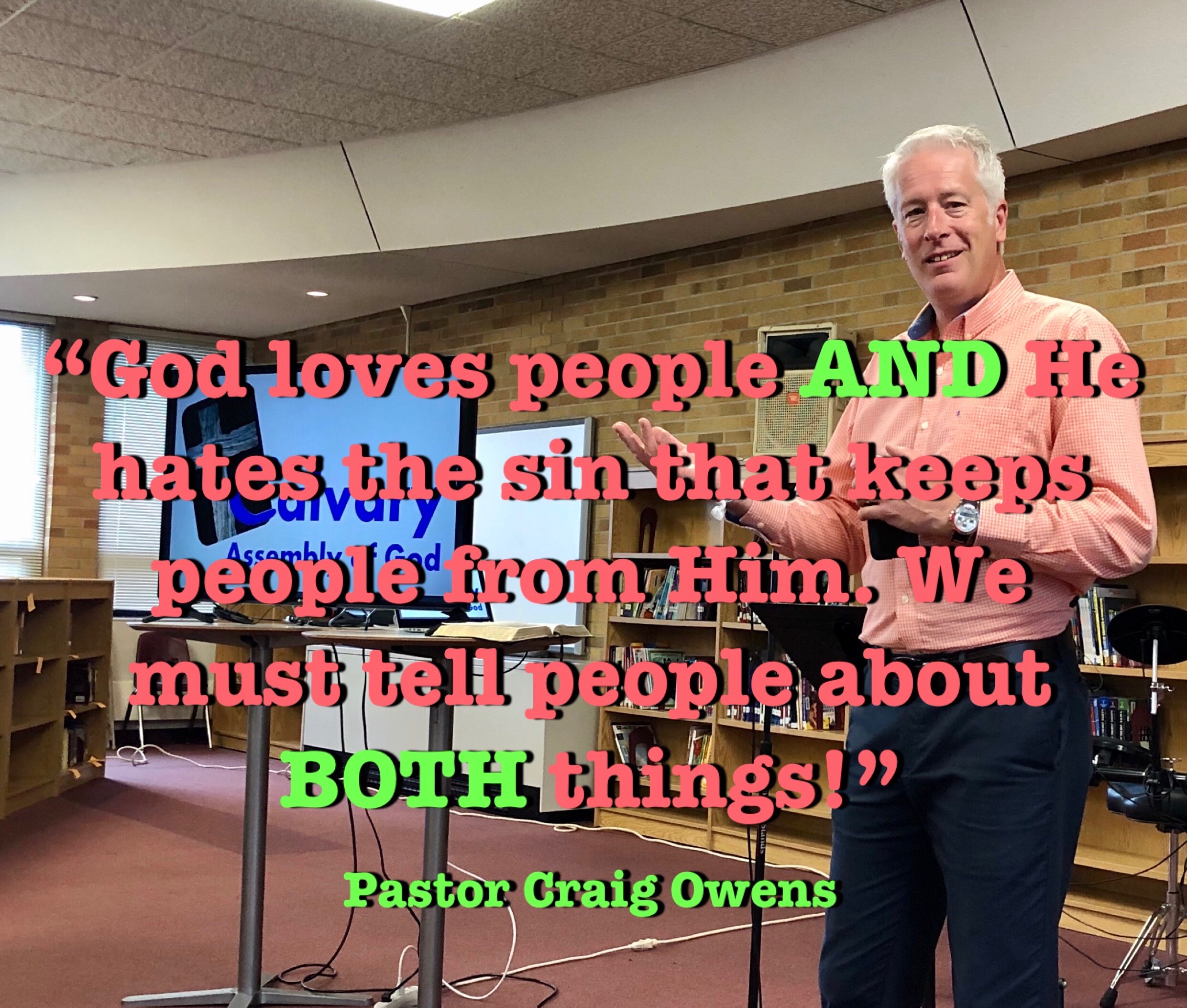
God loves people AND He hates the sin that keeps people from Him. It’s a message people need to hear, although they may not like to hear it. Like Amos, can God use you to warn this world of His judgment AND to woo this world by His love? Our world needs to hear BOTH-AND. They need to hear the whole story. 

Join me next week as we continue our journey of learning the major lessons that the minor prophets teach us. 

Poetry Saturday—Hark! The Sound Of Jubilee

Hark! the song of jubilee,
Loud as mighty thunders roar,
Or the fullness of the sea,
When it breaks upon the shore:
“Hallelujah! for the Lord
God Omnipotent shall reign;
Hallelujah!” let the word
Echo round the earth and main.

Hallelujah! hark! the sound,
From the depths unto the skies.
Wakes above, beneath, around
All creation’s harmonies;
See Jehovah’s banner furled,
Sheathed His sword; He speaks; ‘tis done;
And the kingdoms of this world
Are the kingdoms of His Son.

He shall reign from pole to pole
With illimitable sway;
He shall reign when, like a scroll,
Yonder heavens have passed away.
Then the end; beneath His rod
Man’s last enemy shall fall:
Hallelujah! Christ in God,
God in Christ is All in All. —James Montgomery

Thursdays With Spurgeon—Christ Is Glorified In Your Uniqueness

This is a weekly series with things I’m reading and pondering from Charles Spurgeon. You can read the original seed thought here, or type “Thursdays With Spurgeon” in the search box to read more entries.

Christ Is Glorified In Your Uniqueness

     To my mind it is a very beautiful thing that the Lord Jesus Christ, when He comes into the soul, does not annihilate any part of the personality, but shines in each separate being, for He is not only all, but He is in all His people [Colossians 3:11]! Very well, the grace of God does not turn the Gentile into a Jew. He remains a Gentile, but Christ is in him, and therefore he is made into a new creature [Colossians 3:9-10]. … Then comes the Jew. When he is saved, Christ is in him. … The Lord Jesus Christ, dwelling in the Jew, leaves him still a member of the house of Abraham, but through the presence of the Lord Jesus within him, how wondrously his whole character is exalted! …

     Yes, let a man be a brown man, or a yellow man, or a red man, or whatever color God made him! The more he keeps to his own nationality and reflects the glory of Christ from that angle, the more will Christ’s gospel triumph and the more will Christ Himself be honored! … 

     Christ is all, and Christ is in all His people, each one remaining the same in his individuality, but Christ shining in each one! … So note again that because Christ dwells in him, every believer becomes a copy of Christ.  

     What is more, Christ in each one of these believers creates them all into one body [Colossians 3:14-15]. … Christ in you all makes you into one body in a mysterious and unique manner.

From All And All In All

God isn’t in the cloning business. He made all of us unique. Think of that: in all of human history there has never been another YOU. In all the 7.5 billion people on planet Earth right now YOU aren’t duplicated. And for however long history goes on there will never be another YOU! 

When Jesus is your Lord and Savior, He doesn’t want to turn YOU into a copycat. He wants YOU to be YOU, with all your glorious, inimitable uniqueness. His Holy Spirit in YOU, helps YOU to be more YOU because the One who created YOU is now living in YOU. 

How amazing is that?! 

YOU be YOU. That is how God is most glorified through YOU!