Listen to the podcast of this post by clicking on the player below, and you can also subscribe on Apple, Spotify, or Audible.
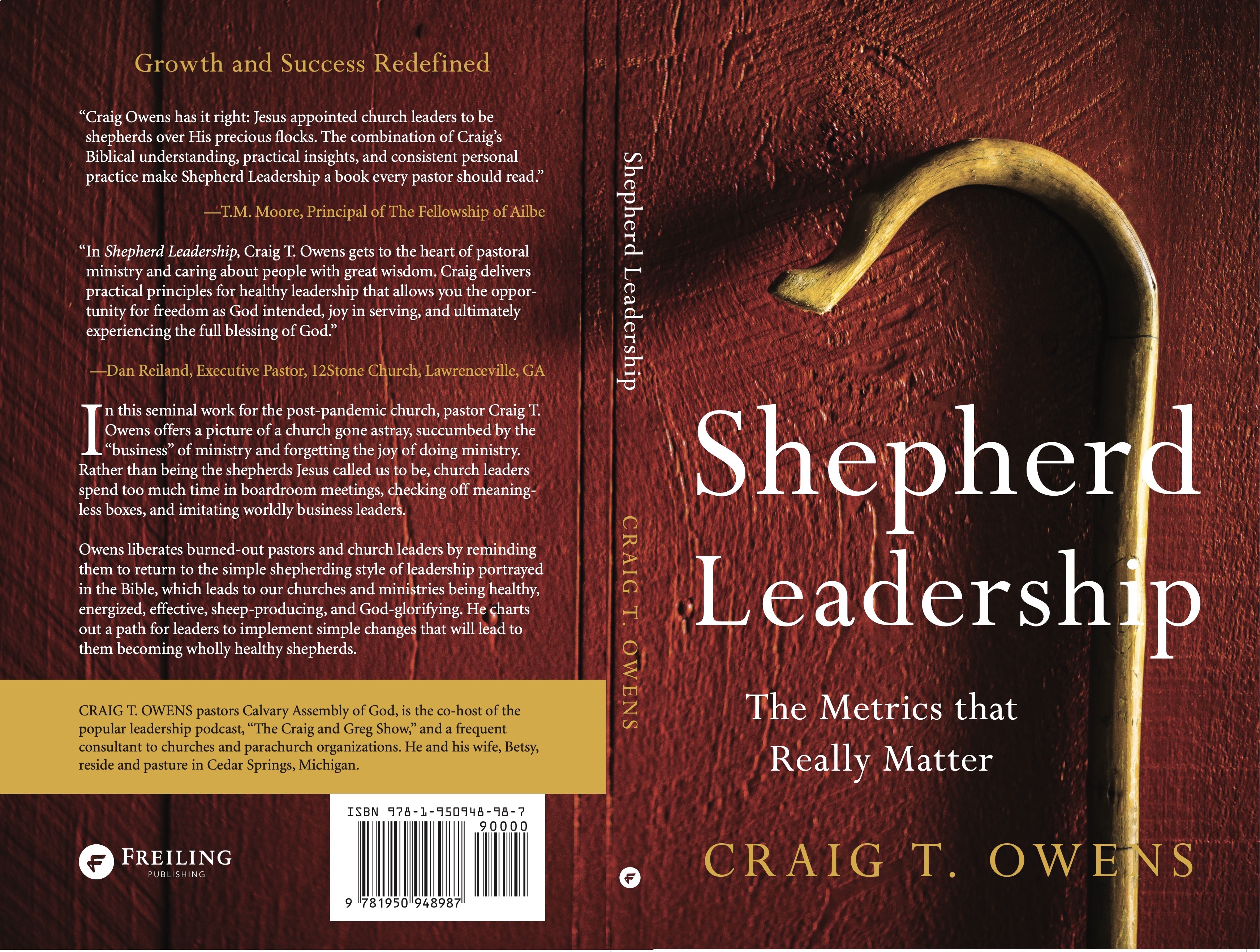
At a Q&A event for my my book Shepherd Leadership: The Metrics That Really Matter, I explained how I started writing this book. The bottom line is you learn to write by writing!
Check it out…
In all seriousness, the process of writing goes something this:
Start writing.
Write something every day.
Read your work to others who really care about you.
This is a weekly series with things I’m reading and pondering from Charles Spurgeon. You can read the original seed thought here, or type “Thursdays With Spurgeon” in the search box to read more entries.
Listen to the podcast of this post by clicking on the player below, and you can also subscribe on Apple, Spotify, or Audible.
Hypocrites Who Hurt The Church
Only let your conversation be as it becometh the gospel of Christ (Philippians 1:27 KJV).
Dear friends, I might just continue, for the subject is a very wide one. But I stop because, unhappily for me, though perhaps happily for your patience, my time has gone. Having just indicated what the Christian life ought to be, I must, in a few words, plead with you that by the power of God’s Holy Spirit you will seek to make your lives such. I could mention many reasons, but I will only give you one or two.
The first is, if you do not live like this, you will make your fellow members who are innocent of your sin, suffer. … It is very hard when [skeptics] can say to you, ‘Look at So-and-So, he is a church member! Look at what he did. You are all a parcel of hypocrites!’ …
And then, remember, dear friends, unless your conversation is such, you will pull down all the witness that you have ever borne for Christ. … Oh, the great thing the church needs is more holiness! The worst enemies of the church are not the infidels. … No, the worst enemies of the church are the hypocrites, the formalists, the mere professors, and the inconsistent walkers. …
May the Eternal Spirit, Who still winnows His church, blow away the chaff and heave only the good golden wheat upon the floor! And if you know yourselves to be living in any sin, may God help you to mourn over it, to loathe it, to go to Christ about it….
From The Gospel’s Power In A Christian’s Life
I have defined a hypocrite as a Christian who carries the name of Jesus Christ but not the nature of Jesus Christ.
I remember once when a man who was virtually a stranger to me—but apparently knew that I was a pastor—walked up to me and said, “What do you think about your boy So-and-So?” The So-and-So he mentioned was a prominent pastor in another state who had just been caught doing some very sinful and embarrassing things. This stranger quickly painted me with the same brush!
The phrase “one another” is so prominent in the New Testament, which means that we truly are all in this together. That’s why Charles Spurgeon warns us that a hypocritical lifestyle is not only damaging to the hypocrite’s life, but to the entire Christian community as well.
So I also call for every Christian to “examine themselves” (1 Corinthians 11:28) for both known and hidden sins. We ought to regularly ask the Holy Spirit to point them out so that we can repent of them, make restitution, and strengthen the testimony of all Christians everywhere!
Let me close with a final word from Dwight Moody, “The world finds plenty of difficulties on the way; let us see that we Christians do not add more stumbling-blocks by our un-Christlike walk.”
Listen to the podcast of this post by clicking on the player below, and you can also subscribe on Apple, Spotify, or Audible.
Josh had just graduated from high school when I came to pastor in Cedar Springs. As I sat with this outstanding young man I asked him what he wanted to do next.
“I’m not exactly sure,” he told me, “but I really feel like it’s something involved with ministry.”
“Great!” I responded. “Let’s start experimenting.”
I told Josh that our church was going to be a safe place to experiment: to plan new things, to try new things, to prayerfully evaluate the results, and then to use those results to plan new things. Josh jumped in right away, and over a short period of time we were eventually able to ascertain just how God had wired Josh for his niche of ministry.
But this would have never happened without some missteps along the way.
That’s okay.
Leaders need to create an environment where it’s safe to make mistakes, because mistakes are a vital component of learning.
Leaders can help those around them grow through their mistakes by constantly reinforcing these six principles:
When someone complains, “This is too hard,” remind them, “This may take some time and effort.”
When someone says, “I’m not good at this,” prompt them to ask, “What am I missing?” and then encourage them to add, “I’m not good at this yet.”
When someone wants to settle with, “It’s good enough,” challenge them to ask themselves, “Have I given this my best effort?”
When someone wants to throw in the towel by saying, “I made a mistake,” remind them, “I failed is not the same thing as I am a failure,” and then remind them, “Mistakes help me learn.”
When someone is exasperated and says, “I give up,” come alongside them with, “Let’s try a strategy we’ve already learned.”
When someone says, “I can’t do this,” you need to lovingly encourage them with, “You can do this!”
These responses will help foster an abundance-mindset environment where people aren’t defeated by their mistakes, but they’re energized to reengage and try again. As the brilliant inventor Thomas Edison quipped, “I’ve had a lot of success with failure.”
Leaders, let’s make our spaces the safest places for the mistakes that lead to discovery, growth, and success.
Listen to the podcast of this post by clicking on the player below, and you can also subscribe on Apple, Spotify, or Audible.
I think most people are familiar with the saying, “Behind every good man there is a good woman.” In the case of Samuel and Susanna Wesley almost the opposite is true: Susanna excelled as a godly mother despite the obstinacy and shortcomings of her husband Samuel. Arnold A. Dallimore delivers a fair overview of their lives in his biography of Susanna Wesley.
Rev. Dallimore does an admirable job of telling Susanna’s story through the first person accounts of almost all of the Wesley family members. He has culled through the historical records, reading the letters of Samuel, Susanna, their children, and their relatives to give us a fairly unbiased look at this notable family. The subtitle of the book is, “The mother of John and Charles Wesley,” which is no small gift to the world! The preaching and song-writing ministries of these two brothers has had a huge impact on both the secular and church worlds, which is still being felt today.
Samuel Wesley at times was distant from his family, to the extent of even abandoning them for a period of time, and was a very poor provider for his family. They were constantly in debt and struggling for the basic necessities. But despite these obstacles, Susanna created her own curriculum to instruct her children, and continued to correspond with them into their adulthood to give them her motherly wisdom.
What a debt of gratitude we owe to this godly woman for not only persevering but thriving in the face of challenges that would have thwarted most people. And we also should be grateful to Arnold Dallimore for his well-researched biography of this amazing woman.
Listen to the podcast of this post by clicking on the player below, and you can also subscribe on Apple, Spotify, or Audible.
There is only one Jesus, but He is presented to us in the Bible with many facets, and we get to pray in all of those facets of His name!
One of the facets of Jesus is His preeminence. The dictionary defines preeminent as “above and before others; superior; surpassing.”
The Bible uses the word preeminence to mean “holding the first place.” The apostle Paul uses this idea of Christ’s supremacy when He describes Him this way—
The Son is the image of the invisible God, the FIRSTBORN over all creation. For in Him ALL things were created: things in heaven and on earth, visible and invisible, whether thrones or powers or rulers or authorities; ALL things have been created through Him and for Him. He is BEFOREALL things, and in Him ALL things hold together. And He is the HEAD of the body, the church; He is the BEGINNING and the FIRSTBORN from among the dead, so that in EVERYTHING He might have the SUPREMACY. For God was pleased to have ALL His fullness dwell in Him. (Colossians 1:15-19, emphasis mine)
Therefore God exalted Him to THE HIGHEST PLACE and gave Him the name that is above EVERY name,that at the name of Jesus EVERY knee should bow, in heaven and on earth and under the earth,and EVERY tongue acknowledge that Jesus Christ is Lord, to the glory of God the Father. (Philippians 2:9-11, emphasis mine)
Praying in Christ’s preeminence means that we never have to settle for less than God’s best!
When we began this series, I mentioned that there were some people who misuse the words of Jesus. Specifically the phrase where Jesus says, “I will do whatever you ask in My name” (John 14:13, 15:16, 16:23). They have taken this as license to ask for things for their own comfort, or claiming that praying “in the name of Jesus” means that we never have to experience pain, poverty, or any setbacks.
But preeminence ≠ prosperity!
Prosperity wrongly says Christians will never have trouble, never experience poverty or lack, and can claim and obtain lavish things just by invoking “in the name of Jesus.”
Jesus didn’t pray to be removed from trials. The godly apostle Paul experienced ample trouble, and so did the heroes of faith (John 12:27-28; 2 Corinthians 11:23-27; Hebrews 11:35-38). Yet even in all of these troubles and pain and hardship, Christ’s preeminence prevails!
As Paul said in Colossians 1, Jesus was the “firstborn from among the dead,” meaning that He is now preeminent even over death! Jesus said that His followers will—not “may”—experience persecution here, just as those heroes of the faith listed in Hebrews 11 did, but that the rewards in eternity are beyond compare (see 1 Corinthians 15:55, 57-58; Matthew 5:11-12; Hebrews 11:39-40).
Horatio Spafford wrote the hymn It Is Well With My Soul. One of the stanzas reminds us:
Though satan should buffet though trials should come
Let this blest assurance control
That Christ has regarded my helpless estate
And has shed His own blood for my soul
Praying in the name of the preeminent Jesus does at least four things for us:
Gives us a surpassing victory—Romans 8:31-32, 37
Keeps us humble and God glorified—2 Corinthians 4:7
Detaches us from earthly things that would take our eyes off of Jesus—Philippians 3:8
Let me say it again: Praying in Christ’s preeminence means that we never have to settle for less than God’s best!
God’s best is not awaiting us here on earth, but it is our promised eternal reward for persevering to the end. It may seem tough at times, but our preeminent Savior walks with us every step of the way!
John Piper wrote to pastors, “That is the main task of preaching, and the main purpose of small groups and all the ministries of the church: helping people see the greatness of what Christ has purchased for everyone who will value it above the world. Helping people see it and savor it, so that God’s superior worth shines in their satisfaction and in the sacrifices that come from such a heart.”
“The gospel of Christ, what is it? We look at the last two words, ‘of Christ.’ Indeed, if you understand Christ, you understand the gospel. Christ is the Author of it. He, in the council chamber of eternity, proposed to become the Surety for poor fallen man! He, in the fullness of time, worked out eternal redemption for as many as His Father had given Him. He is the Author of it as its Architect and Builder. We see in Christ Jesus the Alpha and the Omega of the gospel. He has provided in the treasury of grace all that is necessary to make the gospel the gospel of our salvation. And as He is the Author of it, so He is the matter of it. It is impossible to preach the gospel without preaching the Person, the work, the office, and the character of Christ. If Christ is preached, the gospel is promulgated, and if Christ is put in the background, then there is no gospel declared.” —Charles Spurgeon
Would you prayerfully consider supporting my Patreon page at only $5 per month?
Marshall Seagal wrote an insightful article about patience. He notes, “Patience exists only in a world of disruption, delays, and disappointment. It grows only on the battlefield. We cannot practice patience unless our circumstances call for it—and the circumstances that call for it are the kinds of circumstances we wouldn’t choose for ourselves.”
The Biblical Archeological Report has a history of Egyptian Pharaoh Hophra that is quite fascinating. It’s always so interesting to me to watch how these archeological finds square with the historical records contained in the Bible.
This is a weekly series with things I’m reading and pondering from Charles Spurgeon. You can read the original seed thought here, or type “Thursdays With Spurgeon” in the search box to read more entries.
Listen to the podcast of this post by clicking on the player below, and you can also subscribe on Apple, Spotify, or Audible.
The Christian Lifestyle
Only let your conversation be as it becometh the gospel of Christ (Philippians 1:27 KJV).
The text says we are to ‘let our conversation be such as becomes the gospel.’ What sort of conversation, then, will we have? In the first place, the gospel is very simple. It is unadorned. No meretricious ornaments to clog the pile. It is simple and ‘not with persuasive words of human wisdom’ (1 Corinthians 2:4). … The Christian man ought always to be simple in all respects. I think wherever you find him, you ought not to need a key to him. He should not be like certain books that you cannot make out without having somebody tell you the hard words. He should be a transparent man like Nathaniel, who was ‘an Israelite indeed, in whom is no deceit’ (John 1:47). …
The Christian’s lips should speak truth when falsehood drops from the lips of all other men. A Christian man should never need to take an oath, because his word is as good as an oath. His yes should be yes, and his no, no. …
The gospel of Jesus Christ is a very fearless gospel. … As the gospel is very fearless in what it has to say, so let the Christian always be. It strikes me that a living that becomes the gospel of Christ is always a bold and fearless kind of living! …
But again, the gospel of Christ is very gentle. Hear it speak: ‘Come to Me, all you who labor and are heavy laden, and I will give you rest’ (Matthew 11:28). Here is its spirit in its Founder: ‘A bruised reed He will not break, and smoking flax He will not quench’ (Matthew 12:20). Moreover, bad temper, snapping off of people’s heads, making men offenders for a word—all this is quite contrary to the gospel. … If you have a lion’s heart, have a lady’s hand. Let there be such a gentleness about your carriage that the little children may not be afraid to come to you and the publican and harlot may not be driven away by your hostility, but invited to goodness by the gentleness of your words and acts. …
The world ought to point to us and say, ‘See, how these Christians love one another? Not in word only, but in deed and truth!’ …
The gospel of Christ is mercy, generosity, and liberality. It receives the beggar and hears his cry! It picks up even the vile and undeserving and scatters lavish blessings upon him, and it fills the bosom of the naked and of the hungry with good things. Let your conversation be such as becomes the gospel of Christ!
From The Gospel’s Power In A Christian’s Life
We’ve had a tagline at our church for years: Come and see why so many people around here say, “I ♥ my church!” I believe Christians can—and should—live in such a way that everyone in their communities would sit up and take notice of the positive changes.
Let’s all examine our lifestyle. Is it simple, truthful, bold, gentle, loving, merciful, generous, and hospitable? If not, what changes do we need to make? But if it is all these things, God’s blessing is sure to follow this lifestyle that so clearly portrays the gospel of Jesus Christ!
I’ve shared some other posts about a church’s reputation here, here, and here.
Listen to the podcast of this post by clicking on the player below, and you can also subscribe on Apple, Spotify, or Audible.
Why is it that so many people have a worst-case mindset as their guiding factor?
As a leader responsible for programs, and large groups of people, and the financial well-being of organizations, I know that I frequently fell into this trap. When we began making plans for the future, I wanted to keep a “fallback plan” in place. I frequently found myself saying to our leadership team, “Even in the worst case scenario we can….”
But then I realized how much vitality this was sapping from our team.
If we as leaders want to infuse more energy and excitement in our teams it may take some paradigm shifts on our part. Here are three shifts that I have endeavored to implement in my life:
Shift scarcity to abundance.
Shift fear to hope.
Shift worst-case to best-case.
On a recent episode of our leadership podcast, my friend Greg Heeres and I discussed the limitations that come as a result of a leader’s limiting fears.
As a Christian, I believe the greatest Helper in these three paradigm shifts is the Holy Spirit. When I take time to pray about the big decisions for my personal life and for the organizations I lead, I find that His guidance helps me tap into God’s abundance, which gives me hope for the best-case scenarios to be realized. This hope in me quickly translates to hope and expectation in my team.
Leaders, start with prayer and then try these three paradigm shifts. As the Holy Spirit transforms your heart and mind, I believe you will begin to see a greater energy and excitement in the organizations that you lead.
Let’s stop asking, “What’s the worst thing that could happen?” and shift to asking, “What’s the best thing that could happen?”
[12:42] How can leaders use the priority vs. priorities paradigm to create margin in their life?
[14:36] We throw out the “Not-To-Do List Challenge” for leaders.
Check out this episode and subscribe on YouTube so you can watch all of the upcoming episodes. You can also listen to our podcast on Spotify and Apple.

















 Craig T. Owens