Catch ‘Em Doing Right

Listen to the podcast of this post by clicking on the player below, and you can also subscribe on AppleSpotify, or Audible. 

Ken Blanchard is right: we spend way too much time trying to catch someone doing something wrong (or worry that they’re going to do something wrong), and not enough time trying to catch them doing something right.

…if anything is excellent or praiseworthy, think about these things…. (Philippians 4:8)

…love rejoices in the truth…. (1 Corinthians 13:6)

I should be praying for and looking for praiseworthy things. Why? Because people generally live up to someone’s expectations (they live down to their expectations too)—especially someone who has demonstrated they care about them.

Listen to the apostle John’s right-catching statement:

It gave me great joy to have some brothers come and tell about your faithfulness to the truth and how you continue to walk in the truth. I have no greater joy than to hear that my children are walking in the truth. (3 John 3-4)

“The truth” is sometimes taught in a Christian home or in a church, or maybe it’s caught there. The child or the churchgoer has heard the truth, but then do we honestly believe the truth—along with the Holy Spirit reminding them of that truth—somehow becomes ineffectual?

We often act like that.

We seem to be more willing to believe the negative reports than the positive reports. Perhaps, like John, I need to be more ready to catch others doing right. Perhaps I need to be more ready to rejoice in the success stories. Perhaps I need to pray for greater discernment to see the positive changes the truth is making in those I love.

If we make this a matter of prayer, I believe the Holy Spirit will help us catch others doing right.

►► Would you please prayerfully consider supporting this ministry? My Patreon supporters get behind-the-scenes access to exclusive materials. ◀︎◀︎

You Don’t Need A Title To Be A Leader (book review)

You Don't Need A Title To Be A LeaderFar too many people confuse a title with “arriving” at a place of leadership. In Mark Sanborn’s book You Don’t Need A Title To Be A Leader, he not only shows the fallacy of this, but also shows that anyone, anywhere can lead, even if they are untitled.

Mark Sanborn is an excellent storyteller. He uses this skill to make his points about leading from any place in an organization, instead of writing a point-by-point academic outline of how to lead where you are. Mark uses stories from his own life, and from other friends and colleagues to show us that (as the subtitle of the book says) anyone, anywhere can make a positive difference.

Because this book contains several quotes and anecdotes, many left-brained folks will find it “fluffy.” But don’t be fooled by the power of a good story! Mark correctly shares how impacting telling stories is, but he says it’s even more effective to live your story. In other words, be the leadership story that others will follow. Leadership is not left-brained nor right-brained, but it is whole-brained, and this book will help awaken the creative side which far too many leaders leave dormant.

For anyone who wants to grow as a leader, this is a great book to add to your library.

I am a Random House book reviewer.

I have shared some quotes from this book here.

I Am Jehovah

Listen to the podcast of this post by clicking on the player below, and you can also subscribe on AppleSpotify, or Audible.

One of the misconceptions about Jesus is that He first appears on the scene in a manger in Bethlehem. Nothing could be further from the truth! Jesus appears in the opening words of the BibleIn the beginning God created—and in the last words of the BibleYes, I am coming soon. And He appears in every word in between!

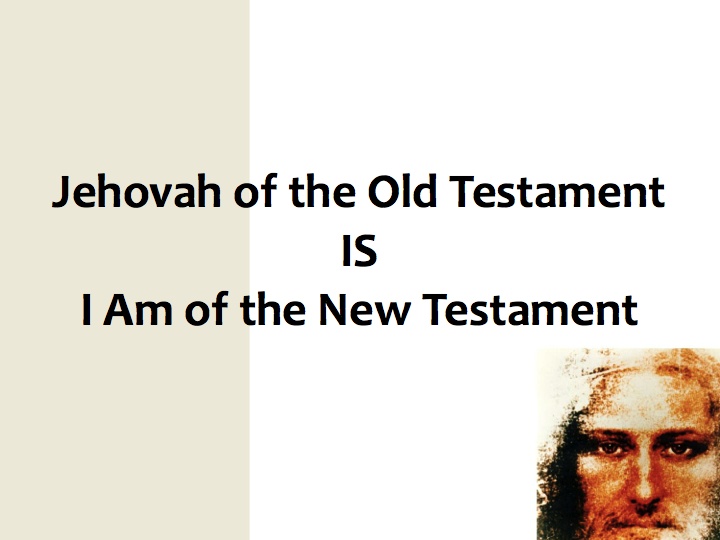
It was Christ’s claims of being one with the Father that enraged the Jewish religious leadership. When He proclaimed His “I Am” statements in the New Testament, they knew He was tying Himself to the “Jehovah” titles of the Old Testament.

B.B. Warfield has a great picture of the Old Testament being a mansion with richly-decorated, beautifully-ornate rooms, but which are dimly lit. So with just the Old Testament by itself, it is hard to appreciate the magnificent beauty that’s there. In Jesus, the light is turned on, and we can now appreciate the glory and majesty that was always there!

So notice how the “I Am” statements shine a bright light on the titles of “Jehovah”

  • Jehovah Jireh (I Am Your Provider) → I am the Bread of Life (John 6:35)
  • Jehovah Rapha (I Am Your Healing) → I am the Resurrection and the Life (John 11:25-26)
  • Jehovah Nissi (I Am Your Source) → I am the Vine (John 15:5)
  • Jehovah Shalom (I Am Your Peace) → I am the Light of the world (John 8:12)
  • Jehovah Raah (I Am Your Shepherd) → I am the Good Shepherd (John 10:11)
  • Jehovah Sabaoth (I Am Your Wall Of Protection) → I am the Gate (John 10:9)
  • Jehovah Tsid-kenu (I Am Your Righteousness) → I am the Way, Truth, and Life (John 14:6)
  • Jehovah Shammah (I Am Here) → I am the Alpha and Omega (Revelation 1:8; 22:13).

(Check out all of the above Scriptural references here.)

In essence Jesus is saying “I Am Jehovah in all His fullness.” So what are we to make of that? What are we to make of Jesus Christ? Here’s how C.S. Lewis addressed that very question:

   “This is a question which has, in a sense, a frantically comic side. For the real question is not what are we to make of Christ, but what is He to make of us? The picture of a fly sitting deciding what it is going to make of an elephant has comic elements about it. But perhaps the questioner meant what are we to make of Him in the sense of ‘How are we to solve the historical problem set us by the recorded sayings of this Man?’ 

  “The problem is to reconcile two things. On the one hand you have got the almost generally admitted depth of sanity of His moral teaching, which is not very seriously questioned, even by those who are opposed to Christianity. In fact, I find when I am arguing with very anti-God people that they rather make a point of saying, ‘I am entirely in favor of the moral teaching of Christianity….’ 

  “On the one side clear, definite moral teaching. On the other, claims which, if not true, are those of a megalomaniac, compared with whom Hitler was the most sane and humble of men. There is no halfway house and there is no parallel in other religions. If you had gone to Buddha and asked him, ‘Are you the son of Bramah?’ he would have said, ‘My son, you are still in the vale of illusion.’ If you had gone to Socrates and asked, ‘Are you Zeus?’ he would have laughed at you. If you had gone to Mohammed and asked, ‘Are you Allah?’ he would first have rent his clothes and then cut your head off. If you had asked Confucius, ‘Are you Heaven?’ I think he would have probably replied, ‘Remarks which are not in accordance with Nature are in bad taste.’ 

  “The idea of a great moral teacher saying what Christ said is out of the question. In my opinion, the only person who can say that sort of thing is either God or a complete lunatic suffering from that form of delusion which undermines the whole mind of man.” (emphasis mine)

In this quote, C.S. Lewis gives us three choices about Jesus. We can either say (1) He is a liar, (2) He is a lunatic, or (3) He is who He says He is.

What do you say about Him?

(You may also be interested in my post and sermon about the divinity and humanity of Jesus.)

If you have missed any of the messages in this series called Who Is Jesus?, you can find them all here.

►► Would you please prayerfully consider supporting this ministry? My Patreon supporters get behind-the-scenes access to exclusive materials. ◀︎◀︎

Love To The Uttermost (book review)

Love To The UttermostAs we approach Easter, we approach one of the most pivotal times in the greatest story ever told: They story of Jesus Christ’s victory over satan and death! Each year I look forward to allowing the Holy Spirit to show me something new about this amazing story. A great resource this year is going to be Love To The Uttermost by John Piper.

This is a FREE ebook from Desiring God which will guide you through Palm Sunday to Resurrection Sunday. For each of the eight days of this week Pastor Piper gives us a new angle to explore in Christ’s love that led Him to the Cross, and overcame the grave. Each day’s reading will only take you a few minutes, but the central truth shared will give you something to meditate upon all day.

I read through this entire book quickly in order to write this review, but now I’m looking forward to re-reading it beginning on Palm Sunday!

You can download this FREE ebook by clicking here.

I promise you that you will discover something fresh and exciting about our Savior’s love each day that you read Love To The Uttermost.

Check out some quotes I shared from this book here.

Enter The Pulpit Without Embarrassment

A.W. Tozer

“I am afraid of the pastor that is another man when he enters the pulpit from what he was before. Reverend, you should never think a thought or do a deed or be caught in any situation that you couldn’t carry into the pulpit with you without embarrassment. You should never have to be a different man or get a new voice and a new sense of solemnity when you enter the pulpit. You should be able to enter the pulpit with the same spirit and the same sense of reverence that you had just before when you were talking to someone about the common affairs of life.” —A.W. Tozer

My dear fellow pastor, your congregation wants a pastor-shepherd who is authentic, not plastic. One who is real and approachable, not high-and-mighty. One who is a tour guide on the journey with them, not a travel agent that stays behind. One who is the same in the pulpit, in the restaurant, on the ball field, in the “unguarded” moments.

UPDATE: I elaborate much more on this in my book especially for pastors and church leaders called Shepherd Leadership.

Thursdays With Oswald—Our Father

This is a weekly series with things I’m reading and pondering from Oswald Chambers. You can read the original seed thought here, or type “Thursdays With Oswald” in the search box to read more entries.

Our Father

     Think for one minute, have you behaved today as though God were your Father or have you to hang your head in absolute shame before Him for the miserable, mean, unworthy thoughts you have had about your life? 

     It all springs from one thing, you have lost hold of the idea that God is your Father. Some of us are such fussy, busy people, refusing to look up and realize the tremendous revelation in Jesus Christ’s words—Your heavenly Father knows what you need…. 

From He Shall Glorify Me 

What an amazing thought that when Jesus taught us to pray, He said we could address Almighty God with the affectionate title of “Our Father.” In his book Who Do You Think You Are?, Mark Driscoll points out:

     “In the thirty-nine books of the Old Testament, God is referred to only as Father roughly fourteen times—and each time it’s impersonally, in reference to the nation of Israel, not to individuals. Everything radically changed with Jesus. He spoke of God as Father more than sixty times in the New Testament.

Your heavenly Father loves you more than you can possibly imagine! Let that truth sink in. Don’t give in to the thoughts that your life is not very valuable, or even that God doesn’t like you very much.

God loves you as if you were the only person on earth to love! And He sent Jesus to earth to make it possible for you to be adopted into His family, to call Him Father. Even more than that, to call Him “Daddy God” (see Romans 8:15-17).

Live in your heavenly Father’s love today.

11 Quotes From “Jesus Is _____”

Jesus Is _____Judah Smith has a fresh, clear way for us to view Jesus and His love for us. You can read my full review of Jesus Is _____ by clicking here. Below are 11 quotes from this book that got me thinking—

“The Pharisees were zealous for the law, but they didn’t understand the love of God. They imposed judgment without mercy, punishment without love, criticism without understanding. In the name of hating sin, the Pharisees ended up hating sinners. Perhaps worst of all, they concluded that their aloofness from sinners was what made them holy. The measuring stick of their goodness was the badness of the people they rejected. …Before we get too furious at the Pharisees, though, realize that inside each of us is a Pharisee trying to get out. It’s happened to me. No sooner do I conquer a bad habit than I become the biggest critic of anyone who still does what I just stopped doing. I find that righteous indignation comes a lot easier than humility and compassion. Mentally chastising the bad deeds of other people is more comfortable than dealing with my own.”

“Rather than rejecting people out of a false sense of superiority, rather than judging and condemning those whose lives don’t measure up to my standard of holiness, I need to remember that I am still desperately in need of Jesus’ grace.”

“Besides writing off bad people, we too quickly write off ourselves. We swing from the self-righteous side of the pendulum (That filthy sinner deserves to go to hell!) to the self-condemning side (I’m a filthy sinner who deserves to go to hell!). Both extremes come from focusing on rules rather than on a relationship with Jesus.”

“I think if Jesus had one shot at fixing us, He’d tell us how much He loves us. …Jesus loves us right now, just as we are. He isn’t standing aloof, yelling at us to climb out of our pits and clean ourselves up so we can be worthy of Him. He is wading waist-deep into the muck of life, weeping with the broken, rescuing the lost, and healing the sick.”

“When we realize that grace is a Person, not a principle, abusing grace is no longer an option. It’s easy to abuse a principle, to manipulate a system, or to excuse away a doctrine. But it’s much harder to abuse a person or violate a relationship.”

“Rules are not bad, but they can’t save anyone. The best a rule or a law can do is set a boundary and threaten punishment for crossing that boundary. People still decide to obey the rule or not. …Rules are meant to lead us to relationship, not to replace relationship. …Focusing too much on rules and too little on grace tells children that what they do is more important than who they are. …These principles aren’t just for parenting. This is how our relationship with God works. For God, it’s more about relationship than about rules. Far more.”

“When we make up rules because we are afraid people will sin, we end up doing an end run around faith. It’s not fear that saves us—it’s faith. Fear of failure has a sneaky way of becoming a self-fulfilling prophesy. …Make rules and follow rules as needed, but don’t focus on rules. Focus on faith. Focus on grace. Focus on Jesus. …Here’s the bottom line: everything that rules can do, grace can do better, and more besides.”

“Rules address behavior, but they don’t deal with the heart. They don’t adjust attitudes. They don’t heal the inconsistencies and fractures deep in our souls that could destroy us in the end. Grace, on the other hand, is internal. It works on a heart level. Where rules attempt to force us to do the opposite of what we want, grace actually changes what we want. It creates internal consistency and integrity. Doing what is right becomes much easier. …When we focus on Jesus instead of a code of conduct, when grace changes our desires so we are internally motivated and not just externally restrained, we become a lot more fun to be around.”

“Grace wasn’t free for Jesus. It cost Him everything. That is precisely why we should receive it freely. The most insulting thing we could do is reject this costly gift and say, ‘No thanks, God, I got this.’ Please don’t tell me Jesus was beaten and mutilated and tortured so we could try to save ourselves through our paltry good deeds. Don’t cheapen Jesus’ sacrifice by trying to pay Him back.”

“The point isn’t to quit thinking about sin. It’s to quit thinking about self and to think about Jesus. It’s to become God-conscious, not me-conscious. Do you know what law does? Law makes us self-conscious. When we are self-conscious, we become sin-conscious. We take our eyes off Jesus, and we focus on our failures, our weaknesses, our shortcomings. And we end up sinning even more because that’s all we can think about. But grace makes us God-conscious. When we live by grace, we are continually amazed by the love, goodness, and holiness of God. When we think about Him, that motivates us to act like Him. Are you struggling with sin? You don’t need more willpower. You need more of Jesus. Loving Jesus, not avoiding sin, is the focal point of our lives.”

“Holiness results in happiness, and happiness is an expression of holiness. The two go together. I am happier because I am holy, and it’s easier to be holier because I am happy. Because of the good news, because of Jesus, I can be both holy and happy—what a concept!”

Get Some Face Time

Listen to the podcast of this post by clicking on the player below, and you can also subscribe on AppleSpotify, or Audible. 

The apostle John closed his second and third letters very similarly—

I have much to write to you, but I do not want to use paper and ink. Instead I hope to visit you and talk with you face to face, so that our joy may be complete. (2 John 12; 3 John 13)

John didn’t use his advanced years, or the difficulty and expense of travel, or the busyness of his schedule, or even the inconvenience of trying to work something into someone else’s schedule as an excuse to stay home and fire off letters.

Certainly letters have their value, but they are a one-way talking TO people. Personal visits are face to face time. They are a two-way talking WITH people. And this, John says, leads to joy for both parties!

How many excuses could I use today?

  • My schedule is so busy
  • Technology is very convenient to use
  • I’m not sure if they have the time
  • I really don’t have that much to say

Can I paraphrase John’s desire in a modern setting?

I have much to say to you, but I do not want to use Facebook or Twitter or texting. Instead I hope to visit you and talk with you face to face, so that our joy may be complete.

Make some time for face time, and you’ll be increasing both your joy and the joy of your friend as you talk WITH each other.

You may also be interested in a related post called Our Growing Communication Problem.

►► Would you please prayerfully consider supporting this ministry? My Patreon supporters get behind-the-scenes access to exclusive materials. ◀︎◀︎

Jesus Is _____. (book review)

Jesus Is _____If someone asked you to fill in the blank to this question, could you do it quickly: “Jesus is ______”? After reading Judah’s Smith book by this title, you will find it much easier to get a clearer picture of just who Jesus is.

Through the 2000 years since Jesus Christ’s public ministry, many people have made statements trying to define Jesus. In Jesus Is_____, Pastor Judah Smith confronts head-on a lot of the incorrect stereotypes that exist for those both in the Christian tradition, and those outside of it. They are really quite simple statements—Jesus is your friend, Jesus is grace, Jesus is the point, Jesus is happy, Jesus is here, and Jesus is alive—but it’s amazing how complicated and messy we have made these simple thoughts.

Pastor Smith is very candid and personable in his writing, so he let us see inside his own thought processes as he wrestled with these concepts about who Jesus is. In each section, he brings a fresh perspective to help us cut through the haze created by so many people’s misunderstanding of Jesus Christ.

Whether you have had a relationship with Jesus for years, or whether you’ve only heard His name but aren’t really sure about much else concerning Him, Jesus Is _____ will help you see Jesus Christ more clearly. This is an excellent book to use in a small group discussion, as together the group can move into a clearer, biblically-sound picture of Jesus.

I am a Thomas Nelson book reviewer.

Check out some quotes from this book here.

Love Cycle

Listen to the podcast of this post by clicking on the player below, and you can also subscribe on AppleSpotify, or Audible.

…Whoever loves God must also love his brother. … This is how we know that we love the children of God: by loving God and carrying out His commands. (1 John 4:21, 5:2)

Love cycleThis is a really cool cycle! I know I love God because I obey His command to love others, which I can only do because I love God and obey His commands.

Here’s the cycle breaker: If I don’t love others, it’s a clear indications that I don’t love God, and the cycle of love-obedience-love is shattered.

Loving God is the natural fuel to obey Him. He is love. He demonstrated this by loving unloveable, sinful me. If He loved me, how could I do anything less than love Him? If I truly love Him, I will naturally want to obey Him. His commands aren’t difficult because He empowers me to do them. His command is to be like Him—He is love so I must love.

I know I am loving God because I am loving others. I can only love others because the love of God is in me. This love inspires me to obey Him and love others. This obedience draws me closer to God, which fuels me for even greater love.

Love fuels my obedience. Obedience fuels my love. And this virtuous cycle can go on and on and on and on and on!

►► Would you please prayerfully consider supporting this ministry? My Patreon supporters get behind-the-scenes access to exclusive materials. ◀︎◀︎