5 More Quotes + 2 Graphics From “The Beauty Of Intolerance”

This is the fourth set of quotes I’ve shared from Josh McDowell and Sean McDowell’s book The Beauty Of Intolerance. You can check out the other quotes here, here, and here; and if you missed my review of this book, please click here to read that.

“Respecting the boundaries of sexual morality and prohibitions for extramarital and premarital sex does bring protection and provision. Here are just a few ways it does this:
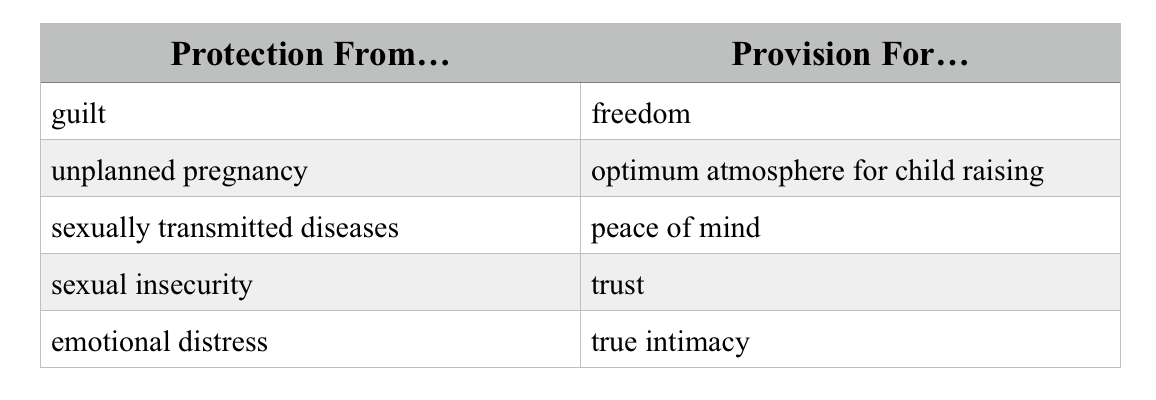
boi-protection-and-provision

“Although sin has separated us from God, His original intent for us and the reality that we were created in His image have not changed. What we do or don’t do may distort that image, but our worth to God as human beings never changes.”

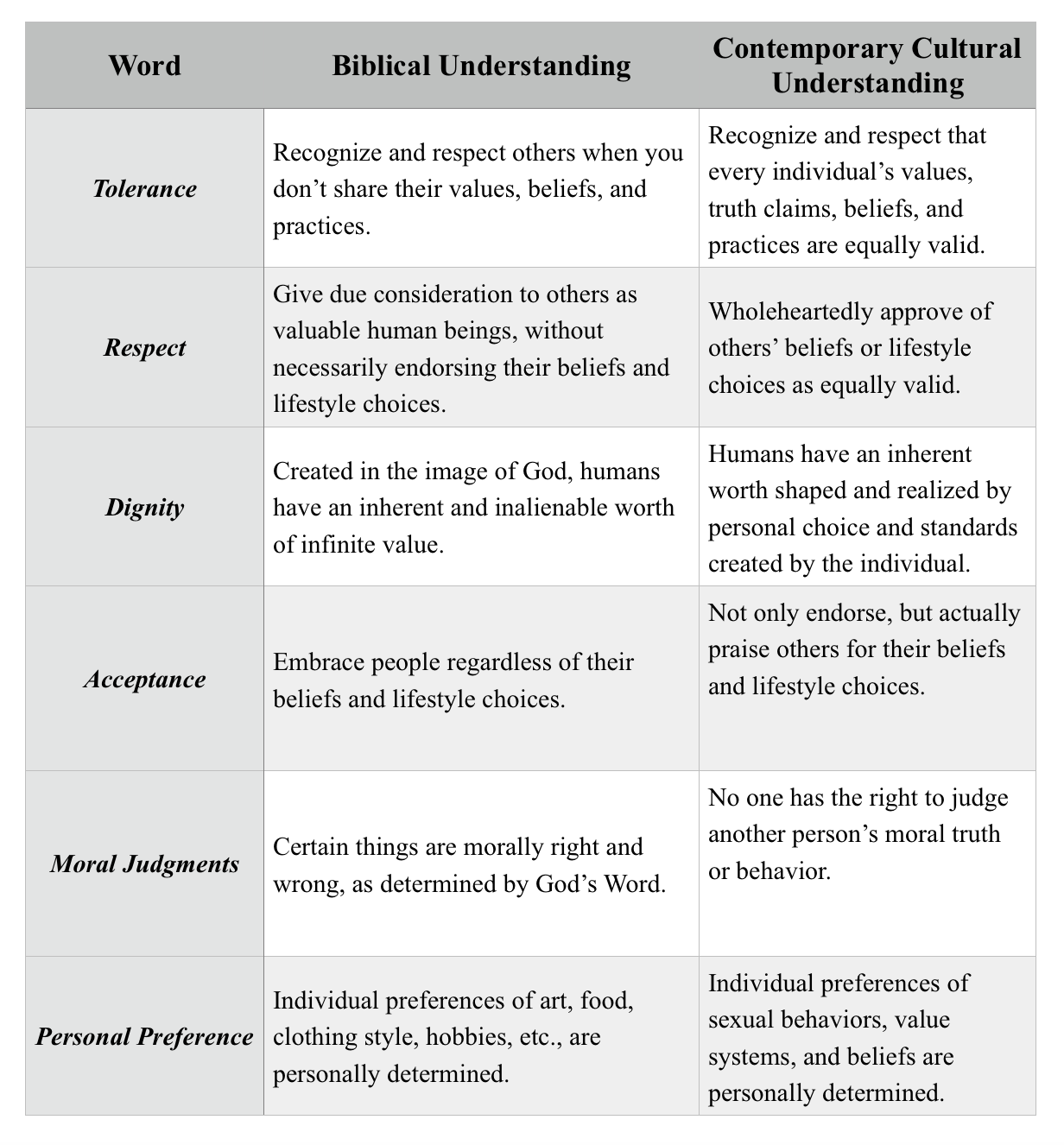
 “So how has Christ loved you? He values all people for their inherent worth and offers grace freely to all people without exception. Cultural tolerance, on the other hand, claims to accept everyone’s differing beliefs, values, and lifestyles, yet it qualifies that acceptance. …  What distinguishes God’s unconditional acceptance from that of our culture is authentic love. His love is intended to make the security, happiness, and welfare of another as important as His own. It is other-focused, not performance-focused. … Real valuing of another’s personhood expressed in the context of authentic love separates doing from being and sees the acts of sin distinct from the sinner (which, by the way, is all of us).”

“The beauty of intolerance is its opposition to wrong and evil in the world—in alignment with God’s righteous and perfect standard of justice, equality, human rights, and caring for others. Intolerance of evil is not mean-spirited and condemnatory; it is actually the only way to be loving and caring. Far from being judgmental, it advances God’s righteous kingdom.”

“Most people in America subscribe to a view of morality called ‘cultural ethics.’ In other words, they believe that whatever is acceptable in that culture is moral; if the majority of people say a thing is right, then it is right. … But there’s a problem with that. If that is true, then how can we say the ‘aborting’ of six million Jews in the Holocaust was wrong? In fact, the Nazis offered that very argument as a defense at the Nuremberg Trials. They argued, ‘How can you come from another culture and condemn what we did when we acted according to what our culture said was acceptable?’ In condemning them, the tribunal said that there is something beyond culture, above culture, that determines right and wrong.”

“We are all entitled to our own beliefs, but this doesn’t mean each of us has our own truths. Our beliefs describe the way we think the world is. Truth describes the objective state of the world regardless of how we take it to be. Beliefs can be relative, but truth cannot. … Moral truth was never meant to be spoken or understood outside of a loving relationship. Being like Christ and speaking the truth in love are synonymous.”
boi-definitions

10 Quotes From “Shaken”

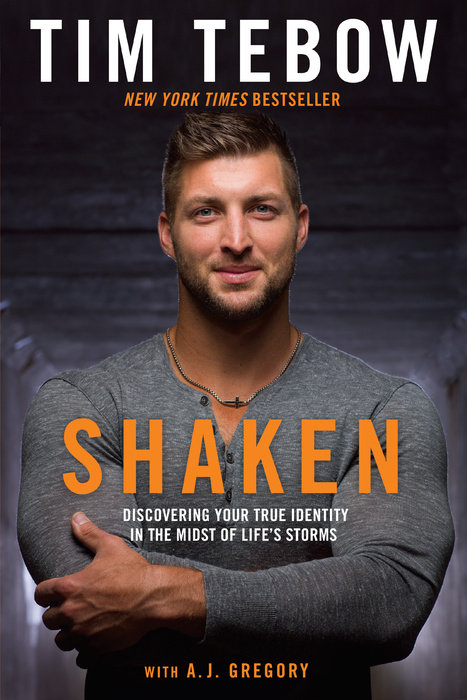
shakenTim Tebow explores what happens when your nice, neat world is shaken by the unexpected. It’s a phenomenally encouraging book! Check out my book review by clicking here. Then enjoy these quotes from Shaken.

“Sure, God loves the world, but He also loves each one of us individually. With billions of people on the planet, I know it can be hard to comprehend His love for us personally. God is infinite and focuses all of His love on you and me. He can’t spread Himself too thin. He cannot exhaust Himself. He cannot overextend Himself. And so every single person on the planet is the object of His love.”

“God can do a lot with what we think is a little. He can take something that can be described as ‘insignificant’ or ‘not enough’ or ‘small’ or ‘meaningless’ and use it to perform a miracle.”

“There will always be people in your life who will underestimate your potential, saying that you’ll never reach your dream or make that goal, or try to hold you back in some way. … Here’s the good news. What God knows about us is more important than what others think.”

“Being normal is safe. And easy. It doesn’t require much work or effort or change on our part. But it always leads to mediocrity. When we strive to be just like everyone else, we never have a chance to be special. When you start to embrace and even celebrate how special and different God made you, you can begin to do extraordinary things. You can begin to see yourself through His eyes. You can begin to live in the uniqueness with which you were created. You can be motivated and inspired to go against the grain. What does that mean? When everyone around you is picking on someone, stand up for that person. When everyone around you is using foul language, say kind things. When you see injustice and everyone else turns a blind eye, try to make it right.”

“Don’t get beat down by the stares, whispers, or obnoxious opinions of others who points out how different you are, look, or act. They don’t know God’s plan for your life. They don’t know how God can use what they may view as a weakness. If you focus on how much you hate those scars or those burns, you might missed the opportunity to encourage or inspire someone else who is going through a similar journey. … When you begin to accept how God purposely created you, you can begin to appreciate your uniqueness and allow Him to use those gifts.”

“While self-confidence is important and we should believe we can achieve great things, there must be a balance. We must be proud of our accomplishments without letting them define us.”

“When is the last time you did something different? Something beyond your comfort zone? Something that wasn’t familiar but could do a world of good in the life of another? When you stay put in your comfort zone, you don’t grow. You don’t stretch. You’re not challenged. You stay the same.”

“The stand you take may not be the biggest deal to the entire world, but it can be a big deal for one person. … A stand doesn’t always mean doing something radical. Sometimes God will use something you’ve always done in a way that’s bigger than you can imagine. Sometimes He’ll use something He puts on your heart, or maybe He’ll use your convictions, your search for the truth, your desire to do the right thing for a greater purpose.”

“We don’t have to feel led into full-time ministry before we can help the homeless or share a message of hope to someone who may need it. The only qualification necessary is willingness. I know not everyone has the opportunity to visit hospitals or prisons or make wishes come true. But there is always something you can do, even when you’re in a busy season in life. Give someone a hug. Send a text with an inspiring quote. Mail someone a heartfelt card. Donate blood. Tell someone how much you appreciate him or her. If we open our eyes, each day presents us with opportunities to do something kind or nice for someone else.”

“Don’t limit what God can do based on how you limit yourself. Be you, and let God be God.”

Poetry Saturday—Plea To Science

Ella Wheeler WilcoxO Science, reaching backward through the distance,
   Most earnest child of God,
Exposing all the secrets of existence,
   With thy divining rod,
I bid thee speed up to the heights supernal,
   Clear thinker, ne’er sufficed;
Go seek and bind the laws and truths eternal,
   But leave me Christ.

Upon the vanity of pious sages
   Let in the light of day;
Breaking down the superstitions of all ages—
   Thrust bigotry away;
Stride on, and bid all stubborn foes defiance,
   Let Truth and Reason reign:
But I beseech the, O Immortal Science,
   Let Christ remain.

What canst thou give to help me bear my crosses,
   In place of Him, my Lord?
And what to recompense for all my losses,
   And bring me sweet reward?
Thou couldst not with thy clear, cold eyes of reason,
   Thou couldst not comfort me
Like One who passed through that tear-blotted season
   In sad Gethsemane!

Through all the weary, wearing hours of sorrow,
   What word that thou hast said
Would make me strong to wait for some tomorrow
   When I should find my dead?
When I am weak, and desolate, and lonely—
   And prone to follow wrong?
Not thou, O Science—Christ, my Savior, only
   Can make me strong.

Thou art so cold, so lofty, and so distant,
   Though great my need might be,
No prayer, however constant and persistent,
   Couldst bring thee down to me.
Christ stands so near, to help me through each hour,
   To guide me day by day
O Science, sweeping all before thy power—
   Leave Christ, I pray! —Ella Wheeler Wilcox

5 Quotes On Love, Sex & Marriage From “The Beauty Of Intolerance”

Beauty Of IntoleranceIn any modern-day discussion on the topic of “tolerance” the conversation is sure to come around to sexual dos and don’ts. Josh McDowell and Sean McDowell speak to this subject so well in their book The Beauty Of Intolerance.

“The reason we think there are such concepts as ‘fair’ and ‘unfair’ is because our Maker is a just God and we have been made in His image (Genesis 1:27). The reason love is a virtue and hatred a vice is because the God of relationships who formed us is a God of love. The reason honesty is right and deceit is wrong is because God is true. The reason fidelity in marriage is honorable and infidelity is not is because God is faithful. The reason chastity is moral and promiscuity is immoral is because God is pure. … All truth claims cannot be equal because Jesus didn’t claim to be ‘a’ truth—one among viable others. His claim was exclusive.”

“True love commits wholeheartedly. … When two lovers marry, they are making a public vow committing to provide for and protect each other through thick or thin. That kind of committed love compels a couple to wait to engage in sex until after marriage—which is the context in which love makes it right.”

“Purity is God’s boundary that provides for a maximum sex life and protects us from the negative consequences of sexual immorality.”

“What your children hear about the ‘gay versus Christian’ morality debate is often centered on how Christians allegedly discriminate against same-sex marriages and wrongfully label the gay community as sinful. We need to help them refocus the argument. It needs to shift away from who is accusing whom of judging or whether it’s right to legislate morality. We must focus our young peoples’ discussion on who has the right to define morality in the first place. … Be a student of God’s Word. Know why you believe sexual immorality is wrong—know the positive provision and protection that comes by following God’s instructions on morality. And then seek to speak the truth in love. Capture God’s heart, knowing that He wants only what is best for us. Share how your own obedience to God’s Word has brought you protection and provision.”

First, marriage is two human beings becoming one in every way possible. . . In marriage, two become one, united in mind and body and purpose. 

“Second, marriage is oriented toward procreation. The act of two becoming one flesh makes God’s intent, that humans should ‘fill’ and ‘form’ His world, possible. … Scripture sees marriage as being closely tied to procreation. . . . 

“Third, marriage comes with an expectation of permanence. The Genesis account implies marriage is a permanent relationship, [but] Jesus’ words are explicit: ‘What therefore God has joined together, let not man separate’ (Matthew 19:6). . . . 

“Therefore we shouldn’t think of marriage as a political institution that belongs to the state. It is a pre-political institution. The state doesn’t create marriage; it can only recognize it. The state, despite all its efforts, will never be able to redefine marriage. Marriage will always be what marriage was created to be, no matter what activist judges, runaway legislatures or majority of voters decide.” —John Stonestreet & Sean McDowell 

If you haven’t read my review of The Beauty Of Intolerance, you can read it here. I have also shared some other quotes from this book here and here.

Poetry Saturday—Great Truths

Horatius BonarGreat truths are dearly bought. The common truth,
Such as men give and take from day to day.
Comes in the common walk of easy life.
Blown by the careless wind across our way.

Great truths are dearly won; not found by chance,
Nor wafted on the breath of summer dream;
But grasped in the great struggle of the soul.
Hard buffeting with adverse wind and stream.

Sometimes, ‘mid conflict, turmoil, fear and grief,
When the strong hand of God, put forth in might,
Ploughs up the subsoil of the stagnant heart,
It brings some buried truth-seeds to the light.

Not in the general mart, ‘mid corn and wine;
Not in the merchandise of gold and gems;
Not in the world’s gay hall of midnight mirth,
Nor ‘mid the blaze of regal diadems;

Not in the general clash of human creeds,
Nor in the merchandise ‘twixt church and world,
Is truth’s fair treasure found, ‘mongst tares and weeds;
Nor her fair banner in their midst unfurled.

Truth springs like harvest from the well-ploughed fields.
Rewarding patient toil, and faith, and zeal.
To those thus seeking her, she ever yields
Her richest treasures for their lasting weal. —Horatius Bonar

10 More Quotes From “The Beauty Of Intolerance”

Beauty Of IntoleranceI found Josh and Sean McDowell’s book The Beauty Of Intolerance to be such a timely book! Parents, teachers, pastors, and anyone who works with youth should definitely read this book to help navigate through the tolerance-saturated world we live in. You can check out my review of this book by clicking here.

“God gave Moses pages and pages of highly specific rules to govern the relationships and morality of His people. Each of those rules, which we call precepts, applies to a specific situation. But each is important because it is grounded in a principle, which is a fundamental, primary law from which other laws—the precepts—are derived. Each principle, in turn, is grounded in a Person—in the very character of God Himself. … God is not behind the principles and precepts simply to validate the rules; He is there as a Person for the purpose of relationship.”

“When moral truth becomes a matter of opinion, personal preference, or the individual’s views and feelings, then practically anything goes. … In a culture of tolerance where the individual decides morality, morality has no bounds.”

“An entire generation tends to go to the Bible not to discover the truth and bend their lives to it accordingly but to use it as sort of a self-help book to help them form their own version of what’s true and false, good and evil, right and wrong.”

“When you discuss the Bible, do not refer to it simply as a spiritual book that teaches us how to live, but as a road map leading one toward the discovery of true reality. … The one true God’s communication to humanity and the whole of Christianity as a religion is based on three primary realities supported by evidences: (1) The historic reliability of Scripture; (2) The deity of Christ; and (3) Christ’s bodily resurrection.”

“While we all may have a sense of what is evil and what is good, under the philosophy of cultural tolerance, evil and good can only be relative ideals. Without an objective truth—a set of universal moral values—good and evil are defined by the individual, community, or society. Therefore we have no moral basis by which to judge another person, community, or nation for what they do or don’t do.”

“Unless justice is rooted in a moral authority beyond those with the most power or even with the most votes, there cannot be true justice for all. … Justice, charity, and human rights are grounded in the fact that we are created in God’s image with value, dignity, and worth. … God’s mercy and justice as our model has fostered societal justice and provided more positive contributions to society in general than any other force in history.”

“The intolerance of the early Christians was a beautiful thing. They believed that everyone—including the poor, the homeless, the handicapped, the sick—was made in the image of God with dignity and worth. They were utterly intolerant of injustice, and they did whatever they could to correct the injustices they saw in society.”

“Real love—biblical, Godlike love—exposes cultural tolerance as the counterfeit of love because cultural tolerance fails to point people to a universal standard of morality designed to save them from serious harm. Cultural tolerance does not address what is in the best interest of a person—it possesses no moral standard that aligns to what is universally right and good. Real love, on the other hand, looks out for the best interest of others.”

“Every truth, every rule, and every guideline coming from God’s Word is issued from the loving heart and character of God for our own good.”

“Love is making the security, happiness, and welfare of another person as important as your own. Biblical love is not merely focused on another but on the good of another, even if the other does not recognize or accept the reality of the good.”

To read the first set of quotes I shared from The Beauty Of Intolerance, please click here. And be sure to follow me on Twitter and Tumblr to read more quotes from this book, and from lots of other profound thinkers, that I share daily.

7 Quotes From “The Beauty Of Intolerance”

Beauty Of IntoleranceTolerance and intolerance are definitely the buzzwords of today’s culture. But depending upon whom you’re asking, the definition of these words may be dramatically different. This is where Josh McDowell and Sean McDowell’s book The Beauty Of Intolerance can help. Please be sure to check out my book review here, and then check out some of the quotes from this very important book below.

“It’s natural—and if done properly, even healthy—for the people of each new generation to establish a unique identity apart from their parents. Yet what we are experiencing today is far from the typical generation gap. We are seeing a cultural shift that is separating Christian parents from their children perhaps unlike anything seen before.”

“Your narrative about truth is probably based on your understanding of the Bible. Whether they realize it or not, our young people today largely derive their narrative about truth from a culture that says moral truth is found within the individual. These two narratives can be expressed in terms of the biblical narrative about truth and the cultural narrative about truth. When our young people accept the cultural narrative, it becomes the lens by which they interpret relationships and much of the world around them.”

“If each person is a valid, independent source of applied truth, then there can be no basis for external disapproval. There is no overarching standard by which to apply judgment. That means tolerance as the culture defines it is the only appropriate response to each individual’s moral choices. That kind of tolerance—what we will call cultural tolerance—propagates the notion that all moral truth is equal. From that perspective it only seems right to respect, accept, and approve of diverse views and the behavior of others, since doing otherwise would be intolerant and judgmental. … But what many of today’s young people don’t understand is that they have unwittingly bought into cultural tolerance, which is a faulty narrative about moral truth that fundamentally changes the traditional meaning of words like tolerance, acceptance, respect, and the like. They tend to think that they have the right to determine what is right and wrong for themselves.”

“God is not only the standard of what is true—He is truth—but He is also the perfect standard for tolerance. That is, He is the standard for tolerance in the original and traditional meaning of the word—a tolerance that loves us without approving of our sinful condition. Both truth and traditional tolerance reside in the character of God, and they are inseparable.”

“While the Incarnation is the personification of love and acceptance, God’s disdain for sin reflects His holy intolerance. What sin did to humans broke His heart. Separated from God, the human race wallowed in greed, lust, jealousy, hatred, and conflict. Human sin has rippled down from one generation to another with the same tragic results: pain and suffering, heartache and ruin, destruction and death. God’s hatred of evil and injustice—of everything that hurts us—prompted Him to be radically intolerant of sin and its devastating effects on His creation. His amazing love for us prompted Him to do something to save us from it. That something cost Him the death of His only Son, but He considered you and me worth it. God’s intolerance is an amazing and beautiful thing.”

“Moral truth isn’t simply an abstract concept; it originates in a Person who is the original and standard for morality. Jesus said, ‘I am the way, the truth, and the life’ (John 14:6). Moral truth ultimately finds its source in a ‘Who,’ not merely in a ‘what.’ In other words, moral claims are true if they correspond to the character of God—Who is the objective source for morality. God is the source of all moral truth.”

“The reason we think there are such concepts as ‘fair’ and ‘unfair’ is because our Maker is a just God and we have been made in His image (Genesis 1:27). The reason love is a virtue and hatred a vice is because the God of relationships who formed us is a God of love. The reason honesty is right and deceit is wrong is because God is true. The reason fidelity in marriage is honorable and infidelity is not is because God is faithful. The reason chastity is moral and promiscuity is immoral is because God is pure. … All truth claims cannot be equal because Jesus didn’t claim to be ‘a’ truth—one among viable others. His claim was exclusive.”

I will be posting more quotes from The Beauty Of Intolerance in the near future. If you would like to be notified when these quotes appear, please enter your email address in the form on the right to subscribe.

Also check out quotes from this and other books that I share daily on Twitter and Tumblr.

6 Quotes On Purity From “The Blessing Of Humility”

The Blessing Of HumilityAs I stated in my review of Jerry Bridges’ book The Blessing Of Humility, reading through these thoughts slowly—Beatitude by Beatitude—would bring about the most life-changing impact. In that spirit, I will be sharing some noteworthy quotes one Beatitude at a time. Here are some quotes on blessed are the pure in heart (Matthew 5:8)…

“The word pure is used of clothing that has been washed, of grain from which all chaff has been removed, and of gold that has been refined until all impurities have been removed. A pure heart, then, is one from which all sinful desires have been removed. Positively it means to love God with all my heart, soul, and mind (Matthew 22:37). It means to live all of my life to the glory of God (1 Corinthians 10:31).”

“Once we acknowledge God’s ownership of us, our responsibility becomes clear: Whatever we do must serve God’s purposes. And central among God’s purposes, as demonstrated throughout the Scriptures, is God’s glory.”

“To present our bodies (and our hearts also) is to recognize Christ as the ‘Owner’ of our lives [Romans 12:1]. It is the subjective, experiential response to the objective truth that we are His own possession.”

“Our minds can only be transformed as they are regularly exposed to the Word of God. This means we need to regularly read and study our Bibles and apply what we find there to our daily lives.”

“To be—or better, to seek to be—pure in heart produces humility in action as we become more God-focused in our daily lives.”

“To acknowledge how far short we fall from purity of heart will send us back to the first Beatitudes: to be poor in spirit and to mourn because our hearts are so often divided. That is humbling. But that honest humility should drive us back to the gospel, where we see ourselves united to the One Who had the only perfectly pure heart in all of history. This will motivate us and empower us to see what we can never fully attain: to be pure in heart.”

 I have previously shared quotes on:

Quotes on the next Beatitude will be posted soon. Stay tuned…

20 More Useful Maxims

Useful MaximsFor anyone who would like to get your message to “stick” with others—like parents, pastors, teachers, coaches, mentors—I highly recommend Useful Maxims by Brian Ridolfi. You can read my book review to get more background info on this innovative book.

I previously shared 20 useful maxims from Brian’s book, and now here is my next set of 20…

  1. Strong men do not always lift weak men, but weak men always bring down strong men. The lowest common denominator dominates.
  2. You cannot force someone to be tolerant without being intolerant toward their intolerance.
  3. Offending the truth for the sake of the offended is most offensive.
  4. Just fitting in fits in with just giving in.
  5. Prayer is a slayer. To not pray is to become prey.
  6. People aligned with good are maligned by evil.
  7. There is little success when little is involved.
  8. Better to make the last move than to make the first one.
  9. Smart men run from danger; wise men avoid it altogether. Better to prevent than to lament.
  10. Your life becomes a job whenever a job becomes your life.
  11. Those with no time to spare have no time to care.
  12. Wisdom becomes foolishness when foolishness becomes wisdom.
  13. A Christian without a Bible is like a knight without a sword.
  14. Relativists believe in relativism until they or their loved ones are victims.
  15. Vinegar is not bitter to those who have not tasted honey.
  16. Questions cannot be answered if answers cannot be questioned.
  17. Sound wisdom sounds odd in a world deaf to God.
  18. Bad entertainment entertains bad behavior.
  19. Good guys look bad when bad guys look good.
  20. To help the helpers is to help the helpless.

To read some of the other quotes from Useful Maxims that I am sharing, be sure to follow me on Twitter and on Tumblr.

5 Quotes On Grace From “The Seven Laws Of Love”

The Seven Laws Of LoveIn The Seven Laws Of Love, Dave Willis gives us some highly practical, biblically-based counsel for investing in all of our relationships. Normally when I share quotes from books, I share all of them at once, but I felt like it would be good to share these quotes a bit more slowly, to give you time to read them and apply them.

The seven laws Dave identifies are:

  1. Love requires commitment (read the quotes here)
  2. Love selflessly sacrifices (read the quotes here)
  3. Love speaks truth (read the quotes here)
  4. Love conquers fear (read the quotes here)
  5. Love offers grace
  6. Love brings healing
  7. Love lives forever

From law #5, here are some quotes on grace—

“If we deserved forgiveness, it wouldn’t be called grace. If we can earn it, it wouldn’t be real love.”

“Jesus was the perfect embodiment of both love and truth. He never told a lie, but at the same time He was never cruel or judgmental with the truth. Every word He spoke was wrapped in love, so even when the truth hurt, He never broke anyone’s trust. Jesus not only modeled how to speak the truth in love, but He also showed us how to offer grace when trust is broken. … Jesus loved Peter enough to give him the opportunity to be forgiven and rebuild trust. That opportunity for grace wasn’t an exclusive offer for Peter; it’s an opportunity God freely extends to all of us who have broken trust (which is everybody). It’s also a command. We can’t receive God’s grace without being willing to extend grace to others.”

“Some people get stuck in a cycle of grudges and mistrust because they wrongly assume that forgiveness and trust are the same thing. It’s vital that we understand their distinctions. Forgiveness can’t be earned; it can only be given freely. That’s why it’s called grace. Trust, however, can’t be given freely; it can only be earned. When someone breaks your trust, you should give your forgiveness instantly, but give your trust slowly as it is earned through consistency of actions by whoever broke your trust. During this period of rebuilding, fight the urge to punish or retaliate. Those actions won’t do anything to promote healing, and healing always needs to be our ultimate objective. Love, after all, is a healing force. You don’t have to trust someone in order to forgive, but you do have to forgive someone in order to make trust possible again.”

“When you’ve broken trust, you must be willing to take immediate action to rebuild it. When someone has broken your trust, you must be willing to provide that person the opportunity to rebuild. Giving someone the chance to reestablish trust is one of the most loving acts you can do for someone.”

“Our responses to present difficulties will often determine our level of future opportunities.”

Check out my review of The Seven Laws Of Love by clicking here.

Watch for the last few quotes from the other laws of love over the next couple of days.