Thursdays With Spurgeon—Our Tricky Tongues

This is a weekly series with things I’m reading and pondering from Charles Spurgeon. You can read the original seed thought here, or type “Thursdays With Spurgeon” in the search box to read more entries.

Listen to the podcast of this post by clicking on the player below, and you can also subscribe on AppleSpotify, or Audible. 

Our Tricky Tongues

I said, “I will guard my ways, lest I sin with my tongue; I will restrain my mouth with a muzzle, while the wicked are before me.” I was mute with silence, I held my peace even from good; and my sorrow was stirred up. My heart was hot within me; while I was musing, the fire burned…. (Psalm 39:1-3)

     Tongue sins are great sins; like sparks of fire ill words spread and do great damage. ‘I will guard my ways, lest I sin with my tongue’ (v. 1). If believers utter hard words of God in times of depression, the ungodly will take them up and use them as a justification for their sinful courses. If parents’ own children rail at them, no wonder if their enemies’ mouths are full of abuse. 

      Our tongue always wants watching, for it is fidgety as an ill-broken horse, but especially must we hold it in when the sharp cuts of the Lord’s rod excite it to rebel. 

     David was not quite so wise as our translation would make him; if he had resolved to be very guarded in his speech, it would have been altogether commendable. When he went so far as to condemn himself to entire silence, ‘even from good,’ there must have been at least a little sullenness in his soul.

From Spurgeon And The Psalms

Oh, how often our tongues trip us up! More times than we would like to admit, our tongues completely undo the good example we have previously shown. James spends almost an entire chapter talking about the fire our tongues can kindle, concluding that our tongues are “a restless evil, full of deadly poison” (James 3:1-18)! 

Part of David’s solution was to notice who was around him so that his words would not add fuel to their skepticism about God. But notice that he went too far because he didn’t speak out the good that he should have spoken. 

Clearly, there is a time to speak and a time to be silent. David’s son Solomon talked about the wisdom of speaking the appropriate words at the appropriate time (see especially Proverbs 10).  

In Mere Christianity, C.S. Lewis talks about a valuable discipline: A personal review of our words and actions at the end of the day. After all, it’s hard to correct something of which we are unaware. Here’s what Lewis wrote—

“When I come to my evening prayers and try to reckon up the sins of the day, nine times out of ten the most obvious one is some sin against charity; I have sulked or snapped or sneered or snubbed or stormed. And the excuse that immediately springs to mind is that the provocation was so sudden or unexpected. I was caught off my guard, I had not time to collect myself…. Surely what a man does when he is taken off guard is the best evidence of what sort of man he is. Surely what pops out before the man has time to put on a disguise is the truth. If there are rats in the cellar you are most likely to see them if you go in very suddenly. But the suddenness did not create the rats; it only prevents them from hiding. In the same way the suddenness of the provocation does not make me an ill-tempered man: it only shows what an ill-tempered man I am.” 

We would do well to pause and ask the Holy Spirit to show us the rats in our cellar—evil words spoken that shouldn’t have been uttered, and helpful words left unspoken at the moment they should have been said. If we will humbly listen, the Holy Spirit will help us mature in this vital area of taming our tricky tongues. 

►► Would you please prayerfully consider supporting this ministry? My Patreon supporters get behind-the-scenes access to exclusive materials. ◀︎◀︎

A “Slip Of The Tongue”?

Have you ever said something and then immediately thought, “Where in the world did that come from?!?” 

You might have thought it was just a slip of the tongue, but it’s not. That slip of the tongue is actually a gift to us to help us know what’s really going on in our heart. 

Check out this 2-minute clip—

The Scriptures I reference in this passage are Psalm 39:1; Jeremiah 17:9; and Matthew 15:19. 

This is a snippet from a longer message on putting other things in our life in perspective. You can check out the full video by clicking here, or you can read the list of the 5 things we need to keep in proper perspective by clicking here.

6 Quotes On Peacemakers From “The Blessing Of Humility”

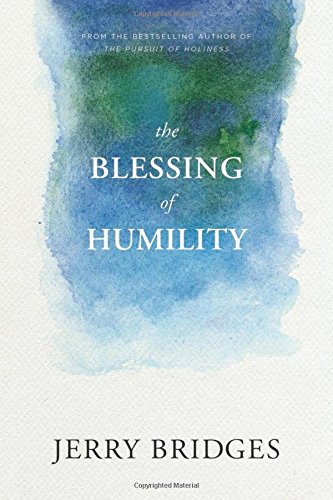
The Blessing Of HumilityAs I stated in my review of Jerry Bridges’ book The Blessing Of Humility, reading through these thoughts slowly—Beatitude by Beatitude—would bring about the most life-changing impact. In that spirit, I will be sharing some noteworthy quotes one Beatitude at a time. Here are some quotes on blessed are the peacemakers (Matthew 5:9)…

“Jesus was speaking of making peace when we ourselves are involved in conflict with others.”

“It is often the sinful use of our tongues that cause conflict. But the tongue is only an instrument. The real problem is the heart. … To become peacemakers, then, we must begin with ourselves. We must ask ourselves, ‘Why do I make cutting remarks to another person? Why do I make demeaning remarks about them?’ We must also ask us ourselves, ‘What causes my resentment toward that person?’ or ‘Why do I continue to nurse hurts by that person instead of forgiving them? What is it that causes me to be envious or jealous of that person?’ In order to even ask those questions, we have to admit that we have those attitudes. But because we know they are sinful, we tend to live in denial that we have them.”

“Peacemaking where there is conflict with someone else is not an option for us. It is God’s commandment. We are to strive for peace with everyone (Hebrews 12:14). The word strive is a translation of the Greek word dioko. It is a very intense word and is most often used for the word pursue. (See also Philippians 3:12, 14; 2 Timothy 2:22; 1 Peter 3:11.)”

“Jesus tells us, ‘Love your enemies and pray for those who persecute you’ (Matthew 5:44). Are we willing to pray for those who have hurt us, that God will bless them? To be a peacemaker, then, means we absorb the hurtful words or actions of others without becoming resentful, retaliating, or even cutting off a relationship with the person.”

“To be a peacemaker means taking the initiative to restore such broken or damaged relationships, even when the major cause of the rupture lies with the other person.”

“To be a peacemaker means we must seek to be delivered from self-interest and not look at everything in terms of how it affects us. Instead we must be concerned about the glory of God and how we can best promote that glory in situations of conflict.”

 I have previously shared quotes on:

Quotes on the final Beatitude will be posted soon. Stay tuned…

17 More Quotes From “Our Brilliant Heritage”

Our Brilliant HeritageThis is the second batch of quotes from Our Brilliant Heritage. You can read the first set of quotes here, and my review of this book is posted here.

“God does not supply us with character, He gives us the life of His Son and we can either ignore Him and refused to obey Him, or we can so obey Him, so bring every thought and imagination into captivity, that the life of Jesus is manifested in our mortal flesh. It is not a question of being saved from hell, but of being saved in order to manifest the Son of God in our mortal flesh. Our responsibility is to keep ourselves fit to manifest Him.” 

“We cannot do anything for our salvation, but we must do something to manifest it; we must work it out. Am I working out my salvation with my tongue, with my brain, and with my nerves?”

“We are not called to success but to faithfulness.”

“The marvelous thing about spiritual wealth is that when we take our part in that, everyone else is blessed; whereas if we refused to be partakers, we hinder others from entering into the riches of God.”

“It is a crime to allow external physical misery to make us sulky with God. There are desolating experiences, such as the Psalmist describes in Psalms 42-43, and he says, ‘Then will I go…unto God my exceeding joy’—not ‘with joy,’ but unto God Who is my joy. No calamity can touch that wealth. No sin is worse than self-pity because it puts self-interest on the throne; it ‘makes the bastard of self seem in the right’; it obliterates God and opens the mouth to spit out murmurings against God; and the life becomes impoverished and mean, there is nothing lovely or generous about it.” 

“The witness of the Holy Spirit is that we realize with growing amazement Who Jesus is to us personally, our Lord and Master. The baptism of the Holy Ghost makes us witnesses to Jesus, not wonder-workers. The witness is not to what Jesus does, but to what He is.”

“When we say—‘But it is common sense to do this and that,’ we make our common sense Almighty God, and God has to retire right out, then after a while He comes back and asks us if we are satisfied.”

“There is no condition of life in which we cannot abide in Jesus. We have to learn to abide in Him wherever we are placed.”

“Pride is the deification of myself.” 

“‘Oh, I’m no saint.’ To talk like that is acceptable to human pride, but it is unconscious blasphemy against God. It literally means I defy God to make me a saint. The reason I am not a saint is either that I do not want to be a saint or I do not believe God can make me one.”

“The greatest hindrance of our spiritual life lies in looking for big things to do; Jesus Christ ‘took a towel….’”

“We say we do not expect God to carry us to heaven on ‘flowery beds of ease,’ but we act as if we did!”

“We can all shine in the sun, but Jesus wants us to shine where there is no sun, where it is dark with the press of practical things.”

“Our Lord never taught us to deny sin: sin must be destroyed, not denied. Nothing sinful can ever be good.”

“Never say you will pray about a thing; pray about it. … It is not part of the life of a natural man to pray. We hear it said that a man will suffer in his life if he does not pray; I question it. What will suffer is the life of the Son of God in him, which is nourished not by food but by prayer.”

“The five minutes we give to the words of Jesus the first thing in the morning are worth more than all the rest of the day.”

“Are we in the habit of listening to the Words of Jesus? Do we realize that Jesus knows more about our business than we do ourselves? Do we take His Word for our clothes, our money, our domestic work; or do we think we can manage these things for ourselves?”