what is the difference between unity and conformity, and how do leaders promote the right thing [7:20]
we need to help independent people choose to be interdependent [8:27]
we unpack a quote Greg shares about trading doing what we want to do for doing what we ought to do [8:54]
we don’t want to be told what to do unless we understand why we need to do it—helping a team grasp this is how leaders get buy-in [10:23]
Greg shares a quote from Francis of Assisi about living out what we are talking about [12:00]
Check out this episode and subscribe on YouTube so you can watch all of the upcoming episodes. You can also listen to our podcast on Spotify and Apple.
the difference between patriotism and nationalism both in our country and in your organization [1:35]
Greg explains how leaders need to lead inside out [2:42]
I share one sure-fire way for leaders to evaluate potential new leaders, and how this relates to citizenship [3:27]
leaders can change the culture without having an office or a title [4:25]
the value of team building and how it relates to patriotism [5:10]
Chuck Colson said politics are downstream from culture, so what happens in your backyard will ultimately affect Washington, D.C. [5:45]
how my grandfather changed his business culture [6:43]
Greg explains how gratefulness and patriotism are directly related [8:13]
wherever you are, you can make a difference—your daily actions have a cumulative effect [12:43]
Check out this episode and subscribe on YouTube so you can watch all of the upcoming episodes. You can also listen to our podcast on Spotify and Apple.
a previous episode where we discussed how leaders handle general problems [0:28]
the distinction between conflict management and conflict leadership [1:30]
managers who try to make people get along vs. leaders who empower people to solve their own issues [2:44]
my 3 tips to prepare yourself before a meeting with your teammates [3:38]
how to look beyond the “triggers” to the root issue of a problem [5:04]
most people share the same values but conflict happens when they express that value differently [6:17]
leaders allow for the differences in style and personality [7:15]
how leaders can proactively prepare themselves and their team members to navigate personnel conflicts [8:00]
Greg relates conflict leadership to parenting terminology [10:15]
leaders need to stay among their team members [11:29]
what “peace” really is and where conflicts usually originate [12:50]
team members bring their past experiences with them [14:20]
Craig & Greg are ready to help coach you [16:30]
Check out this episode and subscribe on YouTube so you can watch all of the upcoming episodes. You can also listen to our podcast on Spotify and Apple.
Check out this episode and subscribe on YouTube so you can watch all of the upcoming episodes. You can also listen to our podcast on Spotify and Apple.
the first in our series of leadership builders and killers, and I go negative right away!
the danger with apathy is that you don’t know that you don’t care—Greg says apathy is a nebulizer
the value of an honest, loving friend
it takes a lot more energy to get to a boiling point than it does to keep your passion at the boiling point
apathy is “have to” but passion is “get to”
Greg likes to exchange heartstorming for brainstorming
I talk about the warning signs for leaders, and how to build passion-fueling activities into our daily agendas
good feelings follow good actions
leaders need to be the thermostats for their team
Check out this episode and subscribe on YouTube so you can watch all of the upcoming episodes. You can also listen to our podcast on Spotify and Apple.
Greg cautions that either we address change or we avoid change, but if we avoid changing, our group may move on without us
just because we are changing doesn’t mean we are growing
Greg offers counsel on what leaders need to evaluate when considering changes
“unhealthy leaders change things to gain more control; healthy leaders change things to help the whole team get better,” Greg says
we don’t grow in areas of comfort: we learn most of our lessons moving forward, but we learn very few lessons sitting still
good leaders reassure other leaders to make thoughtful changes
the right way for leaders to partner with their team to effect positive changes
Check out this episode and subscribe on YouTube so you can watch all of the upcoming episodes. You can also listen to our podcast on Spotify and Apple.
Check out this episode and subscribe on YouTube so you can watch all of the upcoming episodes. You can also listen to our podcast on Spotify and Apple.
Check out this episode and subscribe on YouTube so you can watch all of the upcoming episodes. You can also listen to our podcast on Spotify and Apple.
Listen to the podcast of this post by clicking on the player below, and you can also subscribe on Apple, Spotify, or Audible.
The seed thought for me was this quote from John Maxwell:
“Nothing you do will be perfect, so embrace the reality and benefits of failure by releasing yourself from the burden of not making mistakes.”
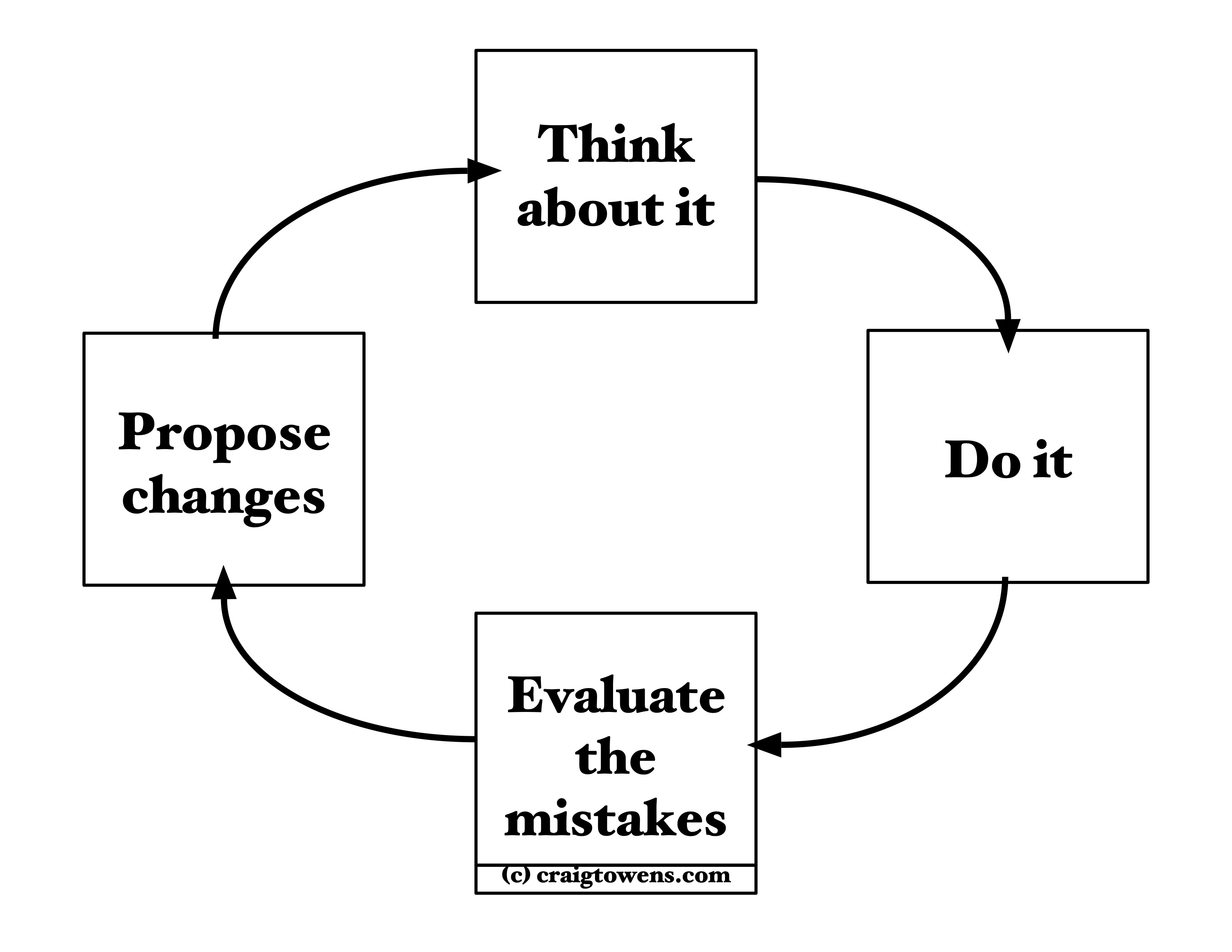
Here’s what I am endeavoring to implement: Think, Do, Evaluate, Propose. And then Repeat.
THINK ABOUT IT—It’s important to put some thought into what you want to do before you do it, but we cannot camp-out here forever. I like to think in terms of goals I want to accomplish, whether those are for me personally or for organizations I lead.
DO IT—At some point, I must launch out. Many people point out that Peter began to sink under the waves when he took his eyes off Jesus and began to look at the storm. But let’s not forget that Peter was the only one of the disciples who actually got out of the boat and walked on water! I often remind people who are hesitant to begin something that you cannot steer a parked car. We have to get moving first.
EVALUATE THE MISTAKES—Let’s remove all doubt: you will make mistakes. But those mistakes are beneficial because it gives you something on which to work. Get some wise friends around you that can help you evaluate your mistakes. And always remember I failed ≠ I am a failure (here’s another post where I elaborate on this point).
PROPOSE CHANGES—After evaluating your mistakes or shortcomings, you now have evidence that can be processed for your next attempt. This evidence can be taken back into the laboratory of the “Think” box as you prepare to try again, except now you are more informed than you were in your first attempt.
Leaders, walk through this process with your team members. Help guide their thinking, and then move them to action. Let them know that mistakes are okay because they have given you some invaluable feedback you can use as you make your proposals for your next attempt.
Success is a continual run through the Think-Do-Evaluate-Propose cycle, with each revolution moving you closer to success.
And David became more and more powerful because the Lord Almighty was with him (1 Chronicles 11:9).
David had followers from all twelve tribes of Israel—warriors, leaders, talented men, fierce men. David wasn’t recruiting them or promising them any rewards, but they volunteered, coming in “one accord” and creating “joy in Israel” in the process (12:1-40).
David was prepared to go alone. He fled from Saul without a single helper. David’s attitude was one of all-in trust in God, so all of these warriors came to David because of what he represented, not because of what he advertised. It was David’s wholehearted commitment to God that won the wholehearted commitment of these valiant men.
Their unity of purpose—“fully determined … one mind” (12:38)—was not because of a compelling vision that David cast but because of a mighty God David fully feared and loved.
A leader’s focus should never be on building a following or casting a compelling vision, but on wholehearted, single-minded love and commitment to God. Any power or following only comes “because the Lord Almighty was with him.”
A mark of a godly leader is his wholehearted devotion to God which creates a wholehearted devotion in his followers.
This is part 52 in my series on godly leadership. You can check out all of my posts in this series by clicking here.



 how does freedom differ from liberty [0:47]


 Craig T. Owens